- The Rise of AI Agents in Vietnam’s IT Landscape
- 1. Defining AI Agents: Autonomous Systems
- 2. Current Adoption Trends in Vietnamese Companies
- 3. Key Drivers for AI Integration in Vietnam
- Reshaping IT Workforce: Job Evolution and New Roles
- 1. Automation of Routine IT Tasks in Vietnam
- 2. Emergence of AI-centric Roles and Specializations
- 3. Upskilling and Reskilling for the Future IT Professional
- Boosting Productivity and Innovation in Vietnamese IT
- 1. Streamlining Development Cycles and Operations
- 2. Enhancing Cybersecurity with AI-powered Agents
- 3. Fostering Innovation in Product and Service Development
- The Demand for New Skills and Educational Reforms
- 1. Data Science and Machine Learning Expertise
- 2. AI Ethics and Responsible AI Development
- 3. Collaborative Skills for Human-AI Interaction
- Challenges and Opportunities for Vietnam’s IT Sector
- 1. Addressing Infrastructure and Data Readiness
- 2. Navigating Regulatory and Ethical Considerations
- 3. Vietnam’s Potential as an AI Innovation Hub
- Partner with Shelby Global
- References
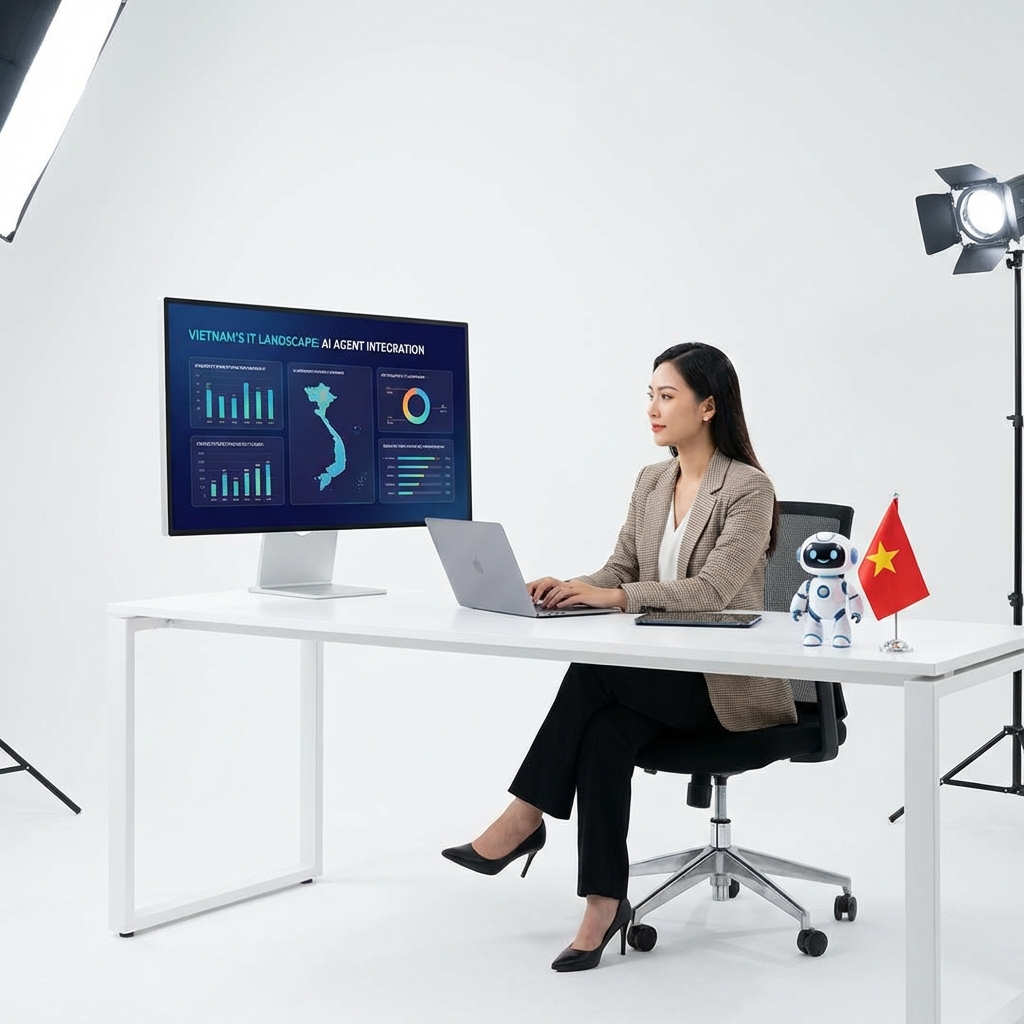
The Rise of AI Agents in Vietnam’s IT Landscape
Vietnam’s IT landscape is undergoing a profound transformation, driven by rapid digitalization and an insatiable demand for innovation. At the heart of this evolution lies the burgeoning influence of Artificial Intelligence (AI) agents. These autonomous systems represent a fundamental shift in how businesses operate, interact with customers, and manage internal processes. As Vietnam solidifies its position as a key player in the global tech arena, understanding how AI agents affect the IT field in Vietnam becomes paramount for sustainable growth and competitive advantage.
This section delves into the definition of AI agents, their current adoption trends within Vietnamese companies, and the pivotal drivers fueling their integration across sectors, highlighting their transformative impact.
1. Defining AI Agents: Autonomous Systems
At its core, an AI agent is an intelligent software entity capable of perceiving its environment, making decisions, and executing actions autonomously to achieve specific goals, without constant human intervention. Unlike traditional software, AI agents are designed to learn, adapt, and optimize their performance over time. They encompass a wide spectrum of applications, from sophisticated chatbots and robotic process automation (RPA) bots to advanced predictive analytics systems and self-optimizing industrial controls. These intelligent agents are characterized by their proactive nature, ability to process vast data, and capacity to infer patterns and make informed judgments. For the IT field, this signifies a move beyond mere automation to intelligent automation, where systems not only execute tasks but also understand context, learn from past interactions, and anticipate future needs. The impact on software development, infrastructure management, and data science roles is immense, demanding new skill sets and innovative approaches within Vietnam’s tech workforce.
2. Current Adoption Trends in Vietnamese Companies
The adoption of AI agents in Vietnam is no longer a futuristic concept but a tangible reality for a growing number of enterprises. While nascent compared to global leaders, the pace of integration is accelerating, particularly in sectors where efficiency and customer experience are critical. E-commerce giants leverage AI chatbots for 24/7 customer support and personalized recommendations. Fintech companies deploy AI agents for fraud detection, credit scoring, and automated investment advice, enhancing security and accessibility. In manufacturing, AI-powered systems optimize supply chains, predict equipment failures, and improve quality control. Even traditional industries explore how AI agents can streamline administrative tasks and data analysis. This rapid uptake is largely driven by a young, tech-savvy population and a government keen on digital transformation. Vietnamese companies are actively investing in AI agent technologies, recognizing their potential to dramatically improve operational efficiency, reduce costs, and deliver superior customer engagement. This trend illustrates a clear pathway for how AI agents affect the IT field in Vietnam, pushing companies to upgrade their tech infrastructure and talent pools.
3. Key Drivers for AI Integration in Vietnam
Several factors are propelling the integration of AI agents across Vietnam’s IT and business landscapes:
- Economic Efficiency and Productivity: Automation of repetitive and time-consuming tasks through AI agents leads to substantial cost savings and allows human capital to be redirected towards more strategic and creative endeavors. This boosts overall productivity and competitiveness.
- Addressing Talent Scarcity and Enhancement: While concerns about job displacement exist, many Vietnamese businesses view AI agents as tools to augment their existing workforce, bridging skill gaps in specialized IT areas and enabling employees to focus on higher-value activities that require uniquely human intelligence.
- Global Competitiveness: To compete on the international stage, Vietnamese companies must embrace cutting-edge technologies. AI agents offer a pathway to enhanced innovation, faster time-to-market for products and services, and a more robust digital presence.
- Government Support and Digital Transformation Initiatives: The Vietnamese government has been a strong advocate for digital transformation and the development of a domestic AI ecosystem. Policies and investments encourage businesses to adopt advanced technologies, creating a conducive environment for AI agent integration.
- Evolving Consumer Expectations: Modern consumers expect personalized, instant, and seamless interactions across all channels. AI agents, particularly in customer service and personalization, are crucial for meeting these elevated expectations and fostering stronger brand loyalty.
- Data Availability and Processing Power: The proliferation of digital data and advancements in cloud computing and processing power provide the necessary fuel and infrastructure for AI agents to learn, operate, and scale effectively.
These drivers collectively underscore the pivotal role AI agents play in reshaping the capabilities, strategies, and future direction of Vietnam’s IT field, paving the way for a more intelligent and efficient digital economy.
Reshaping IT Workforce: Job Evolution and New Roles
The advent of artificial intelligence (AI) agents is fundamentally altering the global IT landscape, and Vietnam is no exception. As businesses across the nation embrace How AI agent effect to IT field in Vietnam, a core concern for many revolves around the job impact. Far from simply replacing human roles, AI is catalyzing a profound evolution, changing existing responsibilities, augmenting human capabilities, and creating entirely new avenues for growth and specialization. This section delves into how the AI impact on IT jobs Vietnam is not merely about displacement but about a strategic pivot towards a more dynamic and intelligent future of IT workforce Vietnam, necessitating a re-evaluation of skills and career paths within the rapidly evolving tech sector.
1. Automation of Routine IT Tasks in Vietnam
One of the most immediate and tangible effects of AI agents is the AI automation in Vietnamese IT. Repetitive, rule-based tasks that have historically consumed a significant portion of IT professionals’ time are increasingly being handled by intelligent systems. This includes areas such as network monitoring, incident response, data entry, system maintenance, and even basic customer support through AI-powered chatbots. For instance, AI agents can continuously monitor server health, predict potential failures before they occur, and even initiate automated recovery processes, drastically reducing downtime and the need for constant human oversight. Similarly, automated testing frameworks, powered by machine learning, can identify bugs more efficiently and comprehensively than manual testing. This shift frees up valuable human resources, allowing IT teams in Vietnam to pivot from mundane operational tasks to more strategic, creative, and complex problem-solving endeavors. Rather than fearing job loss, IT professionals can view this as an opportunity to offload less engaging work, enabling them to focus on innovation, system design, and higher-level architectural planning, thus enhancing overall productivity and strategic value.
2. Emergence of AI-centric Roles and Specializations
As AI technologies mature, they are not only automating existing tasks but also generating a whole spectrum of new AI roles Vietnam. The demand for specialists who can design, implement, maintain, and ethically govern AI systems is skyrocketing. We are witnessing the rise of positions such as AI Developers and Machine Learning Engineers, who are crucial for building and deploying AI models. Data Scientists and AI Architects are in high demand to design robust AI infrastructures and derive meaningful insights from vast datasets. Beyond technical development, roles like Prompt Engineers are emerging, focusing on crafting effective queries and instructions for generative AI models. Furthermore, the ethical implications of AI are giving rise to AI Ethicists, who ensure AI systems are fair, transparent, and unbiased, a critical consideration for responsible digital transformation Vietnam. These roles require a blend of technical expertise, critical thinking, and often, a deep understanding of domain-specific knowledge. The evolution signifies a shift towards a more specialized IT workforce, where understanding AI principles and applications becomes a foundational skill, opening up exciting new career paths for those willing to adapt.
3. Upskilling and Reskilling for the Future IT Professional
To navigate this transformative period, IT upskilling Vietnam and reskilling are no longer options but imperatives. The skills gap between traditional IT roles and the requirements of an AI-driven environment is widening, making continuous learning essential for survival and growth. Future-proof IT professionals will need to develop competencies in areas such as machine learning algorithms, data analytics, cloud computing, and cybersecurity, all of which are increasingly intertwined with AI applications. Beyond technical proficiencies, soft skills like critical thinking, complex problem-solving, creativity, adaptability, and collaboration will be paramount. The ability to understand and interpret AI outputs, communicate effectively with AI systems (e.g., through prompt engineering), and apply AI ethics in IT Vietnam principles will define success. Governments, educational institutions, and businesses in Vietnam are increasingly collaborating to provide training programs and certifications designed to equip the existing workforce with these vital new skills. This proactive approach to education and professional development will ensure that Vietnam’s IT sector remains competitive and that its workforce is ready to harness AI’s full potential, transforming challenges into unprecedented opportunities for innovation and economic growth. According to the World Economic Forum’s Future of Jobs Report, AI adoption is projected to create more jobs than it displaces in many sectors, underscoring the importance of this strategic investment in human capital.
Boosting Productivity and Innovation in Vietnamese IT
The rapid integration of Artificial Intelligence (AI) agents is revolutionizing the Vietnamese IT sector, promising a new era of unprecedented growth and technological leadership. This section explores the profound positive aspects of AI agent integration, from significantly increased operational efficiency and streamlined development cycles to driving new technological advancements and fostering a culture of innovation across the entire industry. Understanding How AI agent effect to IT field in vietnam is crucial for stakeholders looking to leverage these transformative tools.

1. Streamlining Development Cycles and Operations
AI agents are becoming indispensable tools for Vietnamese IT companies, significantly enhancing the efficiency of software development and IT operations. These intelligent systems automate repetitive, time-consuming tasks, such as code generation, bug detection, and testing. For instance, AI-powered coding assistants can suggest code snippets, identify potential errors in real-time, and even refactor existing code for better performance and maintainability. This dramatically reduces the manual effort required from developers, allowing them to focus on more complex problem-solving and creative design. Furthermore, in operations, AI agents can proactively monitor system performance, predict potential outages, and automate routine maintenance tasks. This predictive capability minimizes downtime and optimizes resource allocation, ensuring smoother and more reliable service delivery. The ability to automate large portions of the development and operational pipeline means projects can be completed faster, with fewer errors, and at a lower cost, contributing directly to higher productivity and faster time-to-market for new products and services in the competitive Vietnamese tech landscape. This acceleration is a key aspect of how AI agent effect to IT field in Vietnam. The shift towards automated processes is not just about speed but also about consistency and quality, leading to more robust IT efficiency in Vietnam.
2. Enhancing Cybersecurity with AI-powered Agents
In an increasingly interconnected digital world, cybersecurity remains a paramount concern for all IT entities, and Vietnamese firms are no exception. AI-powered agents are at the forefront of bolstering defenses against sophisticated cyber threats. Unlike traditional security systems that rely on predefined rules, AI agents can learn from vast datasets of threat intelligence, detect anomalous behaviors, and identify new, evolving attack patterns in real-time. This proactive and adaptive approach is critical for combating zero-day exploits and advanced persistent threats that often bypass conventional security measures. These intelligent agents can automate threat hunting, incident response, and vulnerability management. They can continuously monitor network traffic, endpoints, and cloud environments, flagging suspicious activities and even initiating automated responses to neutralize threats before they can cause significant damage. By reducing the reliance on human intervention for initial threat detection and response, AI agents free up cybersecurity professionals to focus on strategic analysis, threat intelligence, and more complex investigative tasks. This dramatically enhances the resilience and robustness of the IT infrastructure against an ever-growing array of cyber risks, a vital contribution to Cybersecurity AI Vietnam. According to a recent IBM Security report, organizations leveraging AI and automation in their security operations significantly reduce the time required to detect and contain breaches, illustrating the global impact of this technology.
3. Fostering Innovation in Product and Service Development
Beyond efficiency and security, AI agents are powerful catalysts for innovation across the Vietnamese IT sector. By automating routine tasks and providing advanced analytical capabilities, AI frees up human talent to concentrate on creative problem-solving, strategic planning, and exploring new technological frontiers. AI agents can analyze vast amounts of market data, identify emerging trends, and even predict consumer preferences, providing invaluable insights that drive the development of innovative products and services tailored to specific market needs. In fields like data science, machine learning, and natural language processing, AI agents are not just tools but also partners in innovation. They can help design and optimize complex algorithms, develop personalized user experiences, and create entirely new forms of interactive technology. This enables Vietnamese IT companies to push the boundaries of what’s possible, from developing intelligent urban solutions and smart manufacturing systems to creating groundbreaking applications in e-commerce, healthcare, and education. The integration of AI agents thus not only optimizes current operations but also actively shapes the future of technology in Vietnam, paving the way for the nation to become a leader in the global digital economy. This drive for innovation highlights a significant way How AI agent effect to IT field in vietnam impacts the future of tech advancements in Vietnam.
The Demand for New Skills and Educational Reforms
The rapid evolution of artificial intelligence, particularly the proliferation of AI agents, is fundamentally reshaping the global technology landscape. For Vietnam’s burgeoning IT sector, this transformation presents both immense opportunities and significant challenges. Understanding how AI agent effect to IT field in vietnam is crucial for stakeholders, from policymakers to individual professionals. The traditional skill sets that once defined a successful IT career are rapidly becoming obsolete, creating a pressing demand for new competencies and, consequently, necessitating comprehensive educational reforms. This shift is driving an IT workforce transformation Vietnam, requiring a proactive approach to prevent a widening AI skills gap Vietnam and ensure that the nation’s talent pool remains competitive in the AI era. The future success of AI integration Vietnam IT depends heavily on effective Vietnamese tech education update and robust upskilling IT professionals Vietnam initiatives. To thrive in this dynamic environment, the focus must shift towards developing capabilities that complement, rather than compete with, AI technologies.
1. Data Science and Machine Learning Expertise
At the forefront of the new skill demands is a profound need for expertise in data science and machine learning. As AI agents become more sophisticated and data-driven, professionals capable of designing, developing, and deploying these systems are invaluable. This encompasses a deep understanding of machine learning algorithms, statistical modeling, predictive analytics, and big data technologies. IT professionals in Vietnam must move beyond basic programming to master areas like data preprocessing, feature engineering, model training, evaluation metrics, and deployment pipelines. The ability to work with various machine learning frameworks (e.g., TensorFlow, PyTorch) and cloud platforms (AWS, Azure, Google Cloud) is becoming non-negotiable. Furthermore, practical experience in interpreting complex models and translating data insights into actionable business strategies is paramount. This specialized AI-driven skill demand is not just for dedicated AI engineers; even roles traditionally less focused on data are now seeing the integration of ML concepts, making foundational knowledge indispensable for future IT jobs Vietnam.
2. AI Ethics and Responsible AI Development
As AI agents become more pervasive and powerful, impacting critical aspects of daily life and society, the ethical considerations surrounding their development and deployment have grown exponentially. This necessitates that IT professionals acquire a strong foundation in AI ethics and responsible AI development. This skill set involves understanding principles such as fairness, transparency, accountability, privacy, and safety in AI systems. It’s about being able to identify potential biases in data and algorithms, mitigate unintended discriminatory outcomes, and ensure that AI applications are developed with human values and societal well-being at their core. Education must equip individuals with the frameworks and methodologies to conduct ethical impact assessments, implement robust data governance, and comply with evolving AI regulations. For Vietnam, fostering a culture of Ethical AI training Vietnam is vital to building public trust, avoiding detrimental social consequences, and positioning the country as a responsible developer of cutting-edge AI technologies on the global stage. This is a crucial element of digital literacy for AI era.
3. Collaborative Skills for Human-AI Interaction
The rise of AI agents is not about replacing human intellect entirely but rather augmenting it, creating a need for seamless human-AI collaboration. This paradigm shift underscores the importance of a new class of “soft” skills, specifically those focused on effective human-AI interaction. Professionals must develop strong analytical thinking, problem-solving abilities, and creative thinking to identify where AI can best enhance human capabilities. Key skills include prompt engineering – the art of crafting effective inputs for generative AI models – and understanding how to design user interfaces that facilitate intuitive interaction with AI systems. Furthermore, the ability to communicate effectively, both with AI (through clear instructions) and about AI (explaining its capabilities and limitations to non-technical stakeholders), is becoming essential. The World Economic Forum’s Future of Jobs Report consistently highlights the growing importance of these human-centric skills alongside technical prowess. Human-AI collaboration skills will differentiate the workforce of tomorrow, enabling Vietnamese IT professionals to leverage AI as a powerful tool rather than perceiving it as a threat, driving innovation and efficiency across various sectors.
Challenges and Opportunities for Vietnam’s IT Sector
The advent of artificial intelligence (AI) agents is rapidly redefining the global technology landscape, presenting both significant hurdles and unprecedented prospects for Vietnam’s burgeoning IT industry. The profound AI agent effect to IT field in Vietnam necessitates strategic foresight and proactive development to position the country for future growth and competitive advantage. As AI-driven solutions become integral across sectors, Vietnam’s ability to adapt, innovate, and regulate will determine its trajectory as a key player in the digital economy.

1. Addressing Infrastructure and Data Readiness
One of the primary challenges for Vietnam’s IT sector in leveraging AI agents lies in its foundational infrastructure and data readiness. While significant strides have been made in digital transformation, robust digital infrastructure challenges persist. High-speed, reliable internet connectivity, advanced computing resources, and scalable cloud infrastructure are essential to support the computational demands of AI agent development and deployment. Furthermore, the quality and quantity of accessible data are paramount. Training sophisticated AI models requires vast datasets that are clean, diverse, and ethically sourced. Ensuring adherence to high data governance standards and developing secure data sharing protocols will be crucial. Investment in modern data centers, expanding 5G networks, and fostering a culture of data collection and curation are vital steps. This also includes developing robust cybersecurity measures to protect sensitive data, ensuring trust and integrity in AI applications across industries.
2. Navigating Regulatory and Ethical Considerations
As AI agents become more autonomous and pervasive, establishing a clear and comprehensive AI policy framework is another critical challenge for Vietnam. The absence of specific regulations concerning AI development, data privacy, intellectual property for AI-generated content, and liability for AI errors could hinder innovation and adoption. Ethical concerns surrounding bias in algorithms, transparency in decision-making, and job displacement also require careful consideration. Vietnam must proactively address these issues by developing robust legal and ethical guidelines. For instance, the government’s approval of a national strategy on AI by 2030, which aims to transform Vietnam into an AI innovation hub, demonstrates a commitment to this area. This strategy underscores the importance of fostering responsible ethical AI deployment while simultaneously nurturing technological advancement. Engaging stakeholders from academia, industry, and civil society will be essential to create policies that support innovation while protecting societal values and individual rights.
3. Vietnam’s Potential as an AI Innovation Hub
Despite the challenges, Vietnam possesses immense potential to emerge as a significant Vietnam AI innovation hub. The country boasts a young, tech-savvy population and a growing pool of engineering talent. Strategic investment in AI skill development Vietnam is already underway, with universities and vocational schools adapting curricula to meet the demands of the AI era. Government initiatives, such as the aforementioned national AI strategy, provide a supportive framework for research, development, and application of AI. This focus on nurturing talent and providing an enabling environment positions Vietnam favorably. Furthermore, the imperative for IT workforce re-skilling and upskilling ensures that existing professionals can adapt to new AI-driven roles and technologies. Vietnam can leverage its strengths in specific sectors like manufacturing, agriculture, and e-commerce to develop niche AI solutions, creating unique value propositions. By fostering collaboration between domestic companies and international tech giants, encouraging startups, and attracting foreign investment, Vietnam can accelerate its journey towards becoming a leading force in AI development and deployment, driving substantial economic growth and technological advancement across its IT sector.
Partner with Shelby Global
You are looking for reliable HR Sevice Suppliers? Contact Shelby Global Now! To connect with verified talents and upgrade your orginization.
—————————————
References
– The Rise of Intelligent Agents: How AI Is Reshaping Business – Forbes: https://www.forbes.com/sites/forbestechnologycouncil/2023/10/02/the-rise-of-intelligent-agents-how-ai-is-reshaping-business/?sh=70691e841f39
– World Economic Forum: Future of Jobs Report 2023: https://www.weforum.org/agenda/2023/05/future-of-jobs-2023-ai-automation/
– :
– World Economic Forum – Future of Jobs Report 2023: https://www.weforum.org/agenda/2023/05/future-jobs-report-2023-ai-impact-jobs-skills/
– Vietnam approves national strategy on AI by 2030: https://vietnamnet.vn/en/vietnam-approves-national-strategy-on-ai-by-2030-V68858.html