
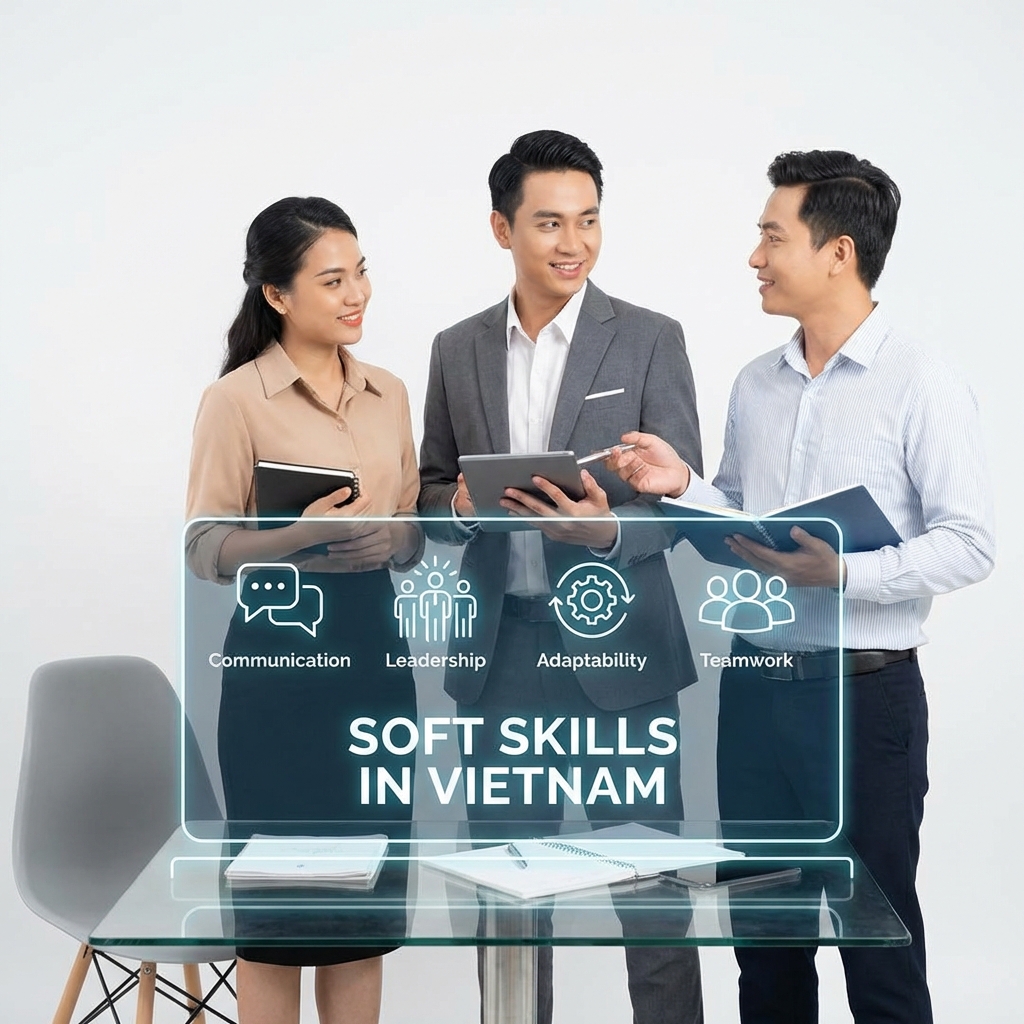
- The Growing Importance of Soft Skills in Vietnam’s Workforce
- 1. Meeting Employer Demands: Bridging the Skills Gap
- 2. Impact on Career Progression and Retention
- 3. Vietnam’s Economic Shift and Global Integration
- What to Look for in a Top Soft Skill Development Program
- Customized Curriculum and Industry Relevance
- Experienced Trainers and Interactive Methodologies
- Measurable Outcomes and Post-Training Support
- Key Soft Skills for Success in Vietnam (2026 Focus)
- 1. Effective Communication & Presentation Skills
- 2. Leadership, Teamwork & Collaboration
- 3. Critical Thinking, Problem-Solving & Adaptability
- Leading Providers of Soft Skill Training in Vietnam
- 1. International Training Centers
- 2. Local Corporate Training Consultancies
- 3. University-Affiliated Programs & Online Platforms
- Investing in Your Future: Benefits of Soft Skill Training
- 1. Enhanced Productivity and Innovation
- 2. Improved Employee Engagement and Workplace Culture
- 3. Long-Term Career Resilience and Personal Growth
- Partner with Shelby Global
- References
The Growing Importance of Soft Skills in Vietnam’s Workforce
Vietnam’s economy is undergoing a remarkable transformation, shifting from an agrarian and manufacturing-centric model to a more service-oriented and knowledge-based powerhouse. This rapid evolution, fueled by foreign direct investment and burgeoning domestic industries, has created a dynamic yet demanding labor market. While technical expertise remains foundational, employers across Vietnam are increasingly recognizing that “hard skills” alone are insufficient for sustained success. The spotlight is now firmly on soft skills – the interpersonal, communication, problem-solving, and critical thinking abilities that empower individuals to navigate complex workplace challenges, collaborate effectively, and drive innovation. This paradigm shift underscores why robust soft skill development program Vietnam initiatives are no longer a luxury but a strategic imperative for both professionals aiming for career advancement and businesses striving for competitive advantage.
As Vietnamese enterprises expand their global reach and embrace digital transformation, the nature of work itself is changing. Roles are becoming more collaborative, requiring adaptability, emotional intelligence, and proactive engagement. The demand for employees who can communicate persuasively, resolve conflicts constructively, lead teams empathetically, and adapt to rapidly evolving circumstances is skyrocketing. This fundamental re-evaluation of what constitutes a valuable employee highlights a crucial need for focused investment in soft skills across all levels of the workforce.
1. Meeting Employer Demands: Bridging the Skills Gap
One of the most pressing challenges facing Vietnamese employers today is a significant skills gap, particularly in soft skills. While graduates often possess strong academic foundations, many lack the practical interpersonal and professional competencies required for immediate productivity and long-term growth. Businesses report difficulties in finding candidates who exhibit strong critical thinking, effective communication, teamwork, and leadership potential. This deficiency hinders project efficiency, impedes innovation, and affects overall organizational performance. To bridge this gap, companies are actively seeking partners and solutions for soft skill development in Vietnam. Investing in training that cultivates skills such as active listening, constructive feedback, negotiation, and resilience can significantly enhance an employee’s value, making them more adaptable and effective in diverse work environments. Such programs are essential for transforming raw talent into well-rounded professionals capable of contributing meaningfully from day one.
2. Impact on Career Progression and Retention
For individual professionals, mastering soft skills is increasingly a prerequisite for career progression and leadership roles. Technical expertise might open the door to entry-level positions, but it is soft skills that unlock pathways to management and executive leadership. Employees who demonstrate strong problem-solving abilities, emotional intelligence, and the capacity to motivate and inspire others are naturally positioned for advancement. Furthermore, a workforce equipped with robust soft skills tends to be more engaged and satisfied, leading to higher retention rates. Companies that prioritize and invest in their employees’ soft skill development foster a culture of continuous learning and growth, which in turn reduces turnover costs and builds a more stable, experienced team. This symbiotic relationship between individual growth and organizational stability underscores the long-term benefits of comprehensive soft skill training.
3. Vietnam’s Economic Shift and Global Integration
Vietnam’s proactive integration into the global economy, marked by numerous free trade agreements and increased foreign direct investment, necessitates a workforce that is globally competitive. As Vietnamese companies collaborate with international partners and expand into new markets, cross-cultural communication, adaptability, and an understanding of diverse business protocols become paramount. Soft skills such as negotiation, cultural intelligence, and strategic thinking are vital for navigating international business landscapes successfully. Furthermore, the country’s aspiration to move up the global value chain from a manufacturing hub to an innovation-driven economy demands a highly skilled workforce capable of complex problem-solving and creative collaboration. This shift is consistently highlighted by institutions like the World Bank’s overview of Vietnam’s economy, emphasizing the need for robust human capital development. Therefore, investing in a holistic soft skill development program Vietnam is not just about individual career paths or corporate efficiency; it’s about fortifying the nation’s economic future and ensuring its continued success on the global stage.
In conclusion, the growing importance of soft skills in Vietnam’s workforce is undeniable. They are the bedrock upon which successful careers are built, innovative businesses thrive, and national economic ambitions are realized. As the economy continues its dynamic trajectory, the strategic development and enhancement of these essential human attributes through targeted soft skill development program Vietnam initiatives will be critical for both individual prosperity and collective progress.
What to Look for in a Top Soft Skill Development Program
When it comes to enhancing workforce capabilities and fostering a thriving organizational culture, investing in a robust soft skill development program in Vietnam is no longer a luxury but a strategic imperative. In today’s dynamic business landscape, employees equipped with strong communication, leadership, problem-solving, and emotional intelligence skills are invaluable assets. However, with numerous providers claiming to offer the best solutions, discerning organizations need a clear roadmap to identify a truly effective program. This section guides readers on key criteria for evaluating and selecting effective soft skill training, ensuring they choose a program that delivers tangible results and real-world applicability for their teams in Vietnam.
-
Customized Curriculum and Industry Relevance
A generic, one-size-fits-all approach rarely yields optimal results in soft skill training. The most impactful soft skill development program in Vietnam will offer a curriculum that is meticulously tailored to the specific needs, industry context, and organizational culture of the client. This means moving beyond standard modules to address unique challenges faced by your team, whether it’s enhancing leadership training Vietnam for middle managers, improving cross-cultural communication for an international team, or fostering innovation within a specific department.
An excellent program provider will begin with a thorough needs assessment, often involving stakeholder interviews, surveys, and analysis of current performance gaps. This diagnostic phase is crucial for designing professional development courses Vietnam that are directly relevant to your business objectives. For instance, a manufacturing company might prioritize problem-solving and collaboration, while a tech startup might focus on adaptability and creative thinking. The best corporate training Vietnam solutions understand that relevance dictates engagement and, ultimately, the applicability of learned skills. Look for providers who demonstrate a deep understanding of the local Vietnamese business environment and can integrate industry-specific case studies and examples, making the learning resonate more profoundly with participants. This ensures that the skills taught are not just theoretical but immediately actionable in the workplace.
-
Experienced Trainers and Interactive Methodologies
The efficacy of any soft skill development program in Vietnam heavily relies on the expertise of its trainers and the methodologies employed. Effective soft skill acquisition isn’t about passive listening; it’s about active participation, reflection, and practice. Therefore, look for programs led by experienced facilitators who possess not only deep subject matter knowledge but also proven pedagogical skills. These trainers should have a track record of delivering engaging and impactful sessions, capable of adapting their style to suit diverse learning preferences and group dynamics. They should ideally have practical industry experience, allowing them to provide authentic insights and real-world scenarios that resonate with participants.
Beyond the trainers, the methodologies are paramount. A top-tier program will utilize interactive and experiential learning techniques such as role-playing, simulations, group discussions, case studies, and practical exercises. These methods encourage participants to step out of their comfort zones, practice new behaviors, and receive constructive feedback in a safe environment. For example, in communication skills training Ho Chi Minh City, instead of just lecturing on active listening, participants might engage in listening exercises with peer feedback. Similarly, team building workshops Hanoi should involve collaborative tasks that highlight communication breakdowns and resolutions. The goal is to move beyond theoretical understanding to practical application, fostering true behavioral change. Providers who simply present information without opportunities for practice are unlikely to deliver lasting results, as soft skills are developed through doing, not just knowing. The World Economic Forum emphasizes these “human” skills as critical for the future workforce, underscoring the importance of programs that actively cultivate them through engaging methods.
-
Measurable Outcomes and Post-Training Support
Investing in a soft skill development program in Vietnam should yield tangible returns. A high-quality program doesn’t just promise improvement; it provides clear mechanisms for measuring progress and ensuring long-term skill retention. Before training commences, ask about the program’s approach to setting clear, measurable objectives aligned with your organizational goals. Post-training, how will success be evaluated? This could involve pre- and post-assessments, 360-degree feedback, performance reviews, or even direct observation of behavioral changes in the workplace. Effective programs will integrate these evaluation methods to demonstrate a clear return on investment (ROI).
Crucially, learning doesn’t end when the workshop concludes. Sustainable employee training solutions Vietnam include robust post-training support to reinforce learning and facilitate real-world application. This might take the form of follow-up coaching sessions, online resources, peer support groups, or manager-led initiatives to embed new skills into daily routines. Without this reinforcement, participants often revert to old habits, diminishing the long-term impact of the training. Look for providers who offer a continuous learning journey rather than a one-off event. This commitment to sustained growth distinguishes merely good programs from exceptional ones, especially when aiming for comprehensive workplace skills development Asia. When selecting a soft skill development program in Vietnam, consider partners like Shelby Global, known for their holistic approach to talent development and measurable impact. Their comprehensive offerings ensure that your investment translates into lasting improvements for your team and organization.
Key Soft Skills for Success in Vietnam (2026 Focus)
This section highlights specific soft skills that are most valuable for professionals working in Vietnam today and in the near future, considering local business culture and global trends.
Vietnam’s vibrant economy and globalized business landscape offer immense opportunities, demanding a highly skilled workforce. While technical prowess is crucial, robust soft skills are increasingly critical for career advancement and organizational growth. For professionals to thrive, cultivating these nuanced abilities is paramount. Investing in a tailored soft skill development program Vietnam is essential for individuals and companies to stay competitive in 2026 and beyond.

1. Effective Communication & Presentation Skills
In Vietnam’s business environment, effective communication involves understanding cultural subtleties and building strong relationships. Vietnamese business culture often values indirect communication, respect for hierarchy, and saving face, requiring professionals to adeptly read between the lines and express ideas diplomatically. Developing strong communication skills Vietnam means mastering verbal and non-verbal cues, practicing active listening, and providing constructive feedback in a culturally intelligent manner in Vietnam.
Furthermore, delivering engaging and clear presentations is increasingly vital, whether addressing local teams or international stakeholders. Professionals must articulate complex ideas concisely, utilize visual aids effectively, and adapt their style to diverse audiences. Polished presentation skills Vietnam significantly enhance influence and drive collaboration. A comprehensive soft skill development program Vietnam focuses heavily on these aspects, equipping individuals for effective communication.
2. Leadership, Teamwork & Collaboration
As Vietnamese companies expand and adopt agile methodologies, the demand for strong leadership skills fostering innovation and collaboration is surging. Traditional hierarchies are evolving, necessitating leaders who inspire, empower, and mentor rather than simply command. Effective leadership skills Vietnam in 2026 will prioritize emotional intelligence, strategic thinking, and consensus-building within diverse groups.
Similarly, fostering exceptional teamwork skills Vietnam and a collaborative spirit is paramount. Projects often involve cross-functional and international teams, requiring individuals to work harmoniously, share responsibilities, and leverage collective strengths. Understanding diverse working styles, practicing empathy, and resolving conflicts constructively are key. A successful soft skill development program Vietnam emphasizes practical exercises building these capabilities, preparing professionals for cohesive and productive work environments. International bodies, such as the World Bank, consistently highlight the importance of fostering human capital and skills development for Vietnam’s inclusive growth, future prosperity, and global competitiveness [1].
3. Critical Thinking, Problem-Solving & Adaptability
Vietnam’s dynamic economic landscape, with rapid technological adoption and evolving market demands, places a premium on analytical prowess. Professionals must possess robust critical thinking and problem-solving skills Vietnam to analyze complex situations, identify root causes, and devise innovative solutions. This involves an inquisitive mindset, objective information evaluation, and well-informed decision-making under pressure. Proactive identification of issues and strategic planning are vital.
Furthermore, adaptability Vietnam is non-negotiable. The ability to quickly adjust to new technologies, changing market conditions, and unforeseen global disruptions is crucial for career longevity and organizational resilience. This includes learning new skills, embracing new methodologies, and pivoting strategies. Professionals demonstrating flexibility and a growth mindset will be highly valued. Comprehensive training through a soft skill development program Vietnam specifically targets these areas, ensuring participants navigate modern business uncertainties with confidence.
In conclusion, as Vietnam continues its impressive economic ascent, the competitive edge for its workforce will increasingly depend on refined soft skills. Mastering effective communication, nurturing collaborative leadership, and cultivating agile thinking are essential competencies. Investing in a targeted soft skill development program Vietnam will empower professionals to navigate cultural intricacies, lead diverse teams, and innovate in a rapidly evolving global market, ensuring sustained success in 2026 and beyond.
Leading Providers of Soft Skill Training in Vietnam
This section showcases reputable organizations and institutions offering excellent soft skill development programs across Vietnam, providing options for various learning preferences and needs. In today’s dynamic professional landscape, the demand for adept soft skills is escalating, making a robust soft skill development program Vietnam an indispensable asset for individuals and organizations alike. From enhancing workplace communication to fostering effective leadership, these programs are crucial for career advancement and organizational success.
1. International Training Centers
International training centers play a pivotal role in elevating the standards of professional capabilities in Vietnam. These institutions often bring globally recognized curricula and methodologies, ensuring that participants receive training aligned with international best practices. Organizations like Dale Carnegie Vietnam and FranklinCovey Vietnam are prominent examples, offering a wide array of courses focused on areas such as effective public speaking, leadership, and interpersonal relations. Their programs are typically structured, comprehensive, and led by experienced trainers, many of whom have extensive international exposure. For companies seeking to equip their workforce with world-class competencies, enrolling in these centers provides access to advanced training paradigms that are crucial for navigating a competitive global market. They are particularly sought after for specialized leadership training Vietnam and comprehensive professional development Vietnam programs, often catering to multinational corporations and high-potential individuals aiming for global career paths.
2. Local Corporate Training Consultancies
Vietnam’s local corporate training consultancies offer highly customized and culturally attuned solutions for businesses across various sectors. These firms possess an intimate understanding of the local market dynamics, business culture, and specific challenges faced by Vietnamese enterprises. Companies such as PACE Institute of Management and SME Training are examples of consultancies that excel in delivering bespoke corporate training solutions. They typically begin with a thorough needs assessment, working closely with clients to design programs that directly address their pain points and strategic objectives. Whether it’s fostering better teamwork training Hanoi for a growing startup or conducting problem-solving workshops HCMC for a large manufacturing firm, these consultancies offer flexibility, practical applicability, and cost-effectiveness. Their trainers are often local experts with hands-on industry experience, making the learning highly relatable and immediately actionable for participants. This localized approach ensures that the soft skills acquired are not just theoretical but deeply integrated into the Vietnamese professional context.
3. University-Affiliated Programs & Online Platforms
The academic sector and digital learning environments have significantly expanded access to quality soft skill development in Vietnam. Numerous universities, recognizing the importance of holistic education, have established programs or partnerships to offer soft skill certifications and courses. These university-affiliated programs often combine academic rigor with practical application, making them ideal for students, recent graduates, and professionals seeking a structured learning path. They frequently cover essential skills like critical thinking, presentation skills, and professional ethics. Alongside traditional university offerings, the rise of online platforms has democratized access to soft skill training. Global platforms like Coursera and edX, alongside local Vietnamese e-learning providers, offer a vast library of courses ranging from communication skills Vietnam to advanced emotional intelligence courses. These platforms provide unparalleled flexibility, allowing learners to study at their own pace and from any location, often at a lower cost than traditional models. Many online courses also offer certifications, which are increasingly recognized by employers. This blend of academic credibility and digital accessibility makes university-affiliated programs and online platforms invaluable resources for continuous learning and professional growth in Vietnam’s evolving job market.
Investing in Your Future: Benefits of Soft Skill Training
In today’s rapidly evolving global landscape, the conventional definition of professional competence has expanded beyond technical expertise. While hard skills remain foundational, it is the mastery of soft skills that truly differentiates individuals and propels organizations forward. Prioritizing soft skill development program Vietnam is not merely an investment in employee well-being; it’s a strategic move towards building resilient, innovative, and highly adaptable workforces. This section delves into the profound, long-term advantages for both individuals and companies who consciously cultivate these essential human attributes, emphasizing personal growth, career resilience, and overarching organizational success.
The demand for well-rounded professionals who can navigate complex interpersonal dynamics, lead with empathy, and think critically is at an all-time high. From burgeoning startups to established multinational corporations in Vietnam, the recognition that a workforce adept in areas like effective communication, teamwork, and problem-solving holds a significant competitive edge is growing exponentially. These ‘people skills’ are no longer optional add-ons but core competencies critical for sustained success in any industry.
1. Enhanced Productivity and Innovation
A workforce equipped with superior soft skills inherently operates at a higher level of efficiency and creativity. Take, for instance, **communication skills training**. When team members can articulate ideas clearly, listen actively, and provide constructive feedback, misunderstandings decrease, projects run smoother, and decisions are made more effectively. This directly translates into reduced friction, fewer errors, and a streamlined workflow, boosting overall productivity. Furthermore, programs focused on **critical thinking workshops** empower employees to analyze problems from multiple perspectives, generate novel solutions, and challenge conventional wisdom. This cultivates an environment ripe for innovation, where creative ideas are not just welcomed but actively fostered and refined. When employees possess strong **teamwork building programs**, collaboration becomes seamless, leading to synergistic outcomes that individual efforts alone cannot achieve. Investing in a comprehensive soft skill development program ensures that your team isn’t just performing tasks but actively contributing to the organization’s strategic growth and innovative edge.
2. Improved Employee Engagement and Workplace Culture
The impact of soft skills extends significantly into the realm of employee satisfaction and the overall workplace environment. When leaders undergo **leadership development Vietnam**, they learn to inspire, motivate, and mentor their teams more effectively, fostering a sense of psychological safety and belonging. Similarly, **emotional intelligence courses** help employees understand and manage their own emotions, as well as empathize with colleagues. This leads to reduced workplace stress, fewer conflicts, and a more harmonious atmosphere. Effective **conflict resolution training** ensures that disagreements are handled constructively, preventing them from escalating and damaging team morale. A positive and supportive culture, underpinned by strong interpersonal skills, naturally leads to higher employee engagement, lower turnover rates, and a more attractive employer brand. As Bryan Robinson highlighted in Forbes, soft skills are increasingly becoming the “hard skills of the future,” indispensable for navigating complex organizational dynamics and fostering a thriving work environment. You can read more about this perspective on Forbes.
3. Long-Term Career Resilience and Personal Growth
For individuals, soft skill training is a lifelong asset, offering profound benefits for career longevity and personal development. In a job market increasingly disrupted by automation and AI, skills like adaptability, creativity, and problem-solving become paramount. **Adaptability skills Vietnam** programs, for example, equip professionals to embrace change, learn new technologies quickly, and thrive in uncertain environments. These transferable skills are highly valued across industries and roles, making individuals more resilient to economic shifts and technological advancements. A strong foundation in soft skills not only enhances current job performance but also opens doors to new opportunities, promotions, and leadership roles. Individuals with well-honed soft skills are better equipped to network effectively, present themselves confidently, and navigate career transitions successfully. This continuous self-improvement pathway contributes significantly to personal growth, boosting self-confidence, improving relationships both inside and outside the workplace, and fostering a sense of continuous learning. Investing in a comprehensive soft skill development program is, therefore, an investment in an individual’s enduring professional relevance and personal fulfillment.

In conclusion, the strategic prioritization of soft skill development offers a multifaceted return on investment for both organizations and their employees. From sparking innovation and fostering a vibrant company culture to ensuring individual career resilience and personal growth, the advantages are undeniable. For companies aiming to future-proof their workforce and individuals committed to lifelong learning, a dedicated soft skill development program Vietnam is not just an advantage—it’s an absolute necessity in the modern professional landscape.
Partner with Shelby Global
You are looking for reliable HR Sevice Suppliers? Contact Shelby Global Now! To connect with verified talents and upgrade your orginization.
—————————————
References
– World Bank’s overview of Vietnam’s economy: https://www.worldbank.org/en/country/vietnam/overview
– The Future of Jobs Report 2023 – World Economic Forum: https://www.weforum.org/reports/the-future-of-jobs-report-2023/
– Vietnam Needs to Invest More in Human Capital and Technology for Inclusive Growth – World Bank: https://www.worldbank.org/en/news/press-release/2021/11/17/vietnam-needs-to-invest-more-in-human-capital-and-technology-for-inclusive-growth
– The Future of Jobs Report 2023 – World Economic Forum: https://www.weforum.org/reports/the-future-of-jobs-report-2023/
– Why Soft Skills Are The Hard Skills Of The Future – Forbes: https://www.forbes.com/sites/bryanrobinson/2022/08/29/why-soft-skills-are-the-hard-skills-of-the-future/?sh=11d51a667104






2 Comments