
Understanding the Evolving Need for Consultants
The modern business environment is characterized by unprecedented volatility, uncertainty, complexity, and ambiguity (VUCA). Companies today face a constant barrage of technological disruptions, shifting market dynamics, geopolitical uncertainties, and evolving consumer behaviors. In this relentless landscape, the traditional model of relying solely on internal teams often proves insufficient to navigate complex strategic challenges and seize emerging opportunities. Consequently, there’s an escalating and undeniable demand for external management consulting expertise, particularly for headhunt management consultants who can bring specialized knowledge and objective perspectives to the table. This section delves into the factors driving this growing need, examining the strategic gaps created by a dynamic market, the distinct value offered by elite consultants, and the inherent limitations of internal talent pools.

1. The Shifting Business Landscape and Strategic Gaps
The digital revolution, globalization, and rapid innovation cycles have fundamentally reshaped industries, forcing organizations to continually reassess their strategies, operations, and even their core business models. Companies must constantly innovate, adapt, and transform to remain competitive and relevant. This necessitates a proactive approach to identifying emerging threats and opportunities, developing agile strategies, and implementing disruptive technologies. However, few organizations possess all the requisite expertise internally to address these multifaceted challenges.
These rapid shifts inevitably create strategic gaps. An internal team might excel in day-to-day operations but lack the specialized foresight to predict future market trends, navigate complex regulatory changes, or implement cutting-edge digital transformations. For instance, understanding the nuances of artificial intelligence integration or developing a robust cybersecurity framework often requires deep, niche expertise that isn’t typically cultivated within a generalist internal workforce. This is where external consultants step in, offering a fresh, informed perspective and a deep well of cross-industry experience to bridge these critical knowledge and capability gaps. The need for specialized knowledge has become so acute that even highly successful firms often engage external partners to validate strategies or accelerate new initiatives, recognizing that external insights are crucial for navigating a world characterized by continuous disruption and rapid change. According to Harvard Business Review, the value of outside advice often lies in its objectivity and fresh perspective, enabling companies to see beyond their inherent biases and long-held assumptions.
2. The Unique Value Proposition of Elite Consultants
Elite management consultants offer a unique and compelling value proposition that goes far beyond simply providing extra hands. They bring a combination of unparalleled expertise, objective analysis, and a results-oriented approach. These highly sought-after professionals have typically worked across multiple industries and diverse client situations, equipping them with a vast repository of best practices, innovative solutions, and proven methodologies.
Their primary value lies in their ability to:
- Provide Objectivity: Unencumbered by internal politics, biases, or historical perspectives, consultants can offer an unbiased assessment of a company’s challenges and opportunities, leading to more rational and effective decision-making.
- Inject Specialized Expertise: Whether it’s supply chain optimization, M&A strategy, organizational restructuring, or digital transformation, consultants possess deep domain knowledge that would take years, if not decades, to cultivate internally.
- Accelerate Problem-Solving and Implementation: With a focus on delivering tangible outcomes, consultants are adept at quickly diagnosing problems, formulating actionable strategies, and often assisting in the implementation phase, thereby accelerating critical projects.
- Transfer Knowledge and Build Capabilities: Beyond solving immediate problems, top-tier consultants also work to upskill internal teams, transferring valuable knowledge and capabilities that empower organizations for future challenges.
For companies looking to fill critical strategic leadership roles or spearhead complex transformations, the ability to headhunt management consultants becomes paramount. These are not merely temporary staff but strategic partners who can profoundly influence a company’s trajectory and long-term success.
3. Limitations of Internal Talent Pools
While internal talent forms the backbone of any organization, there are inherent limitations that often make external consulting indispensable, especially for high-stakes, transformative projects.
- Lack of Specialized Expertise: Even well-resourced companies may not have internal experts for every niche area, particularly for emerging technologies or highly specialized strategic initiatives. Recruiting such expertise for a single project might not be cost-effective or practical.
- Bandwidth Constraints: Existing internal teams are typically fully occupied with their day-to-day responsibilities. Assigning them to a complex, time-consuming strategic project can stretch resources thin, leading to delays, burnout, and a decline in regular operational performance.
- Internal Biases and Groupthink: Internal teams can suffer from organizational inertia, deeply ingrained assumptions, and a resistance to radical change. Groupthink can prevent objective assessment and limit innovative solutions. Consultants, by contrast, offer an outside-in perspective, challenging status quo thinking.
- Lack of Objectivity and Authority: An internal team’s recommendations might be perceived differently due to internal politics or departmental rivalries. External consultants, with their independent status and reputation, often lend greater credibility and authority to their findings and recommendations, facilitating buy-in and implementation.
In essence, while internal talent is crucial for operational continuity and incremental improvements, the dynamic nature of today’s business world frequently necessitates the strategic augmentation provided by external management consultants. Their unique blend of expertise, objectivity, and focus on results ensures that businesses can navigate complex challenges, seize opportunities, and achieve sustainable growth in an ever-evolving marketplace. The strategic deployment of external expertise, often secured through the specialized services of headhunt management consultants, is no longer a luxury but a strategic imperative.
Defining Your Ideal Management Consultant Profile
In the competitive landscape of modern business, securing the right management consultant can be the decisive factor between stagnation and transformative growth. However, the success of your consultant engagement hinges not just on finding ‘a’ consultant, but on identifying ‘the ideal’ consultant who perfectly aligns with your organizational needs, strategic objectives, and cultural fabric. Effective headhunting for management consultants begins with a meticulous articulation of requirements, moving beyond generic job descriptions to paint a precise picture of the desired candidate. This guidance will walk you through the critical steps to define your ideal profile, ensuring your headhunting efforts are targeted, efficient, and ultimately successful in securing a truly impactful professional.
1. Identifying Specific Project Scope and Deliverables
Before embarking on the search to headhunt management consultants, the foundational step involves a crystal-clear definition of the project scope and its anticipated deliverables. This isn’t merely about outlining a problem; it’s about envisioning the desired future state and the concrete outcomes required to get there. Start by dissecting the core challenge or opportunity your organization faces. Is it a strategic repositioning, operational efficiency improvement, digital transformation, or market entry strategy? Each distinct area demands different expertise.
Once the macro-scope is clear, break it down into specific deliverables. What reports, frameworks, implementation plans, or strategic recommendations are expected? Will the consultant guide execution, mentor internal teams, or purely advise? For instance, a project focused on supply chain optimization might require a detailed process map, a vendor rationalization strategy, and a roadmap for technology integration. Defining these specifics allows you to filter candidates based on their proven ability to deliver similar outcomes, rather than just possessing general consulting skills. A vague scope leads to a broad search, wasting time and resources, whereas a precise scope empowers a targeted approach to finding the exact fit.
2. Key Skills and Industry-Specific Expertise to Prioritize
With a clear project scope, the next step is to pinpoint the exact skills and industry-specific expertise that will drive success. Management consultants possess a diverse toolkit, but not all tools are relevant for every project. General consulting skills such as analytical prowess, problem-solving, communication, and project management are foundational. However, the truly impactful consultant often brings specialized knowledge. For example, a fintech firm seeking growth strategy guidance would prioritize consultants with deep experience in financial technology, regulatory environments, and market trends, in addition to strong strategic thinking. Conversely, a manufacturing company aiming for operational excellence would look for expertise in Lean Six Sigma, supply chain management, and potentially Industry 4.0 technologies.
It’s crucial to differentiate between “nice-to-have” and “must-have” skills. Does the project require someone who can build complex financial models, or interpret existing data? Do they need to be experts in a specific software platform (e.g., Salesforce, SAP) or merely conversant? When prioritizing, consider not just technical acumen but also soft skills relevant to the project’s nature. For instance, a change management project demands exceptional interpersonal, negotiation, and stakeholder management skills. Understanding these nuances helps narrow the field, ensuring that the consultants you headhunt possess the practical abilities to hit the ground running. As David Maister highlighted in Harvard Business Review, the top consultants excel not just in technical expertise but also in building trust and understanding client needs deeply.
3. Assessing Cultural Fit and Leadership Attributes
Beyond skills and experience, the ultimate success of a management consultant engagement is heavily influenced by cultural fit and leadership attributes. A consultant, however brilliant, who cannot integrate seamlessly with your existing team, understand your organizational dynamics, or adapt to your working style, is unlikely to achieve optimal results. Cultural fit encompasses aspects like communication style, work ethic, approach to collaboration, and alignment with company values. Does your organization thrive on direct, data-driven communication, or is a more consensus-based, relationship-oriented approach preferred? Is the pace fast-moving and agile, or more deliberate and structured?
Leadership attributes are equally critical, especially for senior consulting roles. Will the consultant be expected to lead internal teams, influence executive stakeholders, or drive significant organizational change? Look for evidence of strong initiative, resilience, adaptability, and the ability to inspire confidence. A consultant should not just offer solutions but also empower your team to implement them and sustain the changes. This requires strong mentorship and coaching capabilities. During the interview process, probe for examples of how candidates have navigated complex organizational politics, managed conflicting interests, and successfully influenced outcomes in previous roles. Leveraging expert headhunting services for management consultants can significantly aid in this assessment, as they possess the nuanced understanding and assessment tools to evaluate these less tangible, yet profoundly important, attributes for a truly synergistic partnership.
By meticulously defining your ideal management consultant profile across these three dimensions—project scope and deliverables, key skills and industry expertise, and cultural fit and leadership attributes—you transform the daunting task of headhunting into a strategic, precise, and highly effective endeavor. This structured approach not only streamlines the selection process but also significantly increases the likelihood of a successful, value-generating consulting engagement.
Effective Strategies for Headhunting Top Talent
Identifying, approaching, and successfully engaging leading management consultants requires a sophisticated and multi-faceted approach. In today’s competitive landscape, simply posting job openings is insufficient; organizations must proactively headhunt management consultants with precision and strategic foresight. This involves not only understanding where top talent resides but also how to effectively communicate value propositions that resonate with their career aspirations and professional expertise. From specialized search firms to direct networking and cultivating a magnetic employer brand, a blend of traditional and innovative tactics is essential to secure the industry’s brightest minds.

1. Leveraging Specialized Executive Search Firms
One of the most effective and time-efficient strategies for securing high-caliber management consultants is partnering with specialized executive search firms. These firms possess deep industry knowledge, extensive networks, and a proven methodology for identifying passive candidates who are not actively seeking new roles but might be open to the right opportunity. They understand the nuances of the consulting sector, including specific skill sets, project experience, and cultural fit required for senior roles. A reputable search firm acts as an extension of your talent acquisition team, discreetly approaching potential candidates, vetting their qualifications, and managing the initial stages of engagement. This allows your organization to focus on core business activities while benefiting from expert-driven candidate sourcing and negotiation. Their ability to conduct confidential searches is particularly valuable when targeting high-profile individuals or when market sensitivity is a concern, ensuring a streamlined and professional process from initial contact to successful placement. According to Forbes, the art of executive search lies in understanding the candidate’s career trajectory and matching it with suitable strategic roles, a task at which these specialized firms excel.
2. Direct Outreach and Professional Networking Tactics
Beyond traditional recruitment channels, direct outreach and strategic professional networking are indispensable for headhunting management consultants. This involves actively engaging with professionals through platforms like LinkedIn, attending industry conferences, seminars, and alumni events, and leveraging existing professional connections. Personalized direct messages that highlight specific opportunities and demonstrate a clear understanding of the consultant’s career path are far more effective than generic recruitment pitches. Building genuine relationships over time, rather than just transactional interactions, is key. This could mean connecting with consultants even when there isn’t an immediate opening, offering insights, sharing relevant articles, and becoming a valuable contact in their network. Referrals from trusted sources within your organization or industry also represent a powerful avenue for identifying top talent. Encouraging employees to recommend former colleagues or respected peers can tap into hidden pools of qualified candidates who might be more receptive to an introduction through a familiar face. Developing a proactive, long-term networking strategy ensures that your organization stays top-of-mind among leading consulting professionals.
3. Building an Attractive Employer Brand for Consulting Talent
To consistently attract and retain elite management consultants, organizations must cultivate a compelling employer brand that speaks directly to their unique aspirations. Top consultants are often driven by intellectual challenge, opportunities for impactful work, professional development, and a culture that values innovation and autonomy. Highlighting these aspects through various channels—your corporate website, social media, thought leadership content, and employee testimonials—is crucial. Showcase your most exciting projects, the innovative solutions your teams are developing, and the tangible impact your consultants are making for clients. Emphasize continuous learning, mentorship programs, and clear pathways for career progression. A strong employer brand also communicates your commitment to work-life integration, diversity, equity, and inclusion, which are increasingly important factors for modern professionals. Transparently sharing success stories and the positive experiences of current consultants can significantly enhance your appeal. Ultimately, positioning your organization as a place where management consultants can truly thrive, grow, and contribute meaningfully is paramount to successfully headhunt management consultants and build a formidable team.
Attracting and Retaining High-Caliber Consultants
In the intensely competitive landscape of professional services, the ability to attract and retain top-tier consulting talent is not merely an HR function but a strategic imperative. Firms that excel in this area differentiate themselves, secure high-value projects, and build formidable reputations. This section delves into the multifaceted approach required to not only headhunt management consultants effectively but also to cultivate an environment where these highly sought-after professionals choose to thrive long-term. It’s about crafting compelling offers and fostering a culture that resonates with the aspirations and professional goals of the most brilliant minds in the industry.
1. Crafting Competitive Compensation and Benefits Packages
At the foundation of attracting and retaining high-caliber consultants lies the bedrock of a truly competitive compensation and benefits package. While money isn’t the sole motivator, it’s a critical hygiene factor that signals a firm’s valuation of its talent. Beyond attractive base salaries, leading firms offer performance-based bonuses, profit-sharing schemes, and, in some cases, equity options that align individual success with the firm’s overall prosperity. Understanding current market rates and trends is crucial; firms must benchmark their offerings against top competitors to ensure they remain at the forefront.
However, compensation extends beyond the immediate paycheck. Comprehensive benefits packages, including premium health and wellness programs, robust retirement plans, generous paid time off, and flexible work arrangements, play an increasingly significant role. Many consultants prioritize work-life integration, and firms that offer support for personal development, childcare, or elder care can significantly enhance their appeal. Professional development budgets, covering certifications, executive education, and industry conferences, are also highly valued, as they demonstrate an investment in the consultant’s long-term career growth. By meticulously designing and regularly reviewing these packages, firms can ensure their offerings are not only competitive but also reflect a holistic understanding of what consultants seek in a modern professional environment.
2. Highlighting Growth Opportunities and Impactful Projects
For ambitious consultants, career progression and the opportunity to work on challenging, impactful projects are often as, if not more, compelling than financial rewards. Top-tier talent is driven by intellectual curiosity, a desire to solve complex problems, and the ambition to make a tangible difference. Firms must articulate clear and structured career paths, demonstrating how consultants can advance from junior roles to leadership positions, whether through project management, specialized expertise, or client relationship development. Mentorship programs, sponsored leadership training, and opportunities for cross-functional or international assignments are powerful draws.
During the recruitment process and throughout a consultant’s tenure, it’s essential to showcase the breadth and depth of projects available. Highlight engagements that involve cutting-edge technologies, strategic transformations for industry leaders, or initiatives with significant societal impact. Emphasize the autonomy consultants will have, the direct client exposure, and the unique challenges they will tackle. Providing a platform for continuous learning – through internal knowledge-sharing, access to expert networks, and opportunities to publish thought leadership – further reinforces the firm’s commitment to intellectual stimulation and professional growth. When consultants see a clear trajectory for personal and professional development and the chance to contribute meaningfully, their engagement and loyalty deepen.
3. Fostering an Engaging and Collaborative Work Environment
Even the most competitive compensation and exciting projects won’t retain talent long-term if the work environment is toxic or uninspiring. Cultivating an engaging and collaborative culture is paramount for retention. This begins with leadership modeling the desired behaviors: transparency, empathy, and a commitment to psychological safety. A supportive environment encourages consultants to innovate, take calculated risks, and learn from failures without fear of reprisal. Promoting diversity, equity, and inclusion ensures that all voices are heard and valued, fostering a sense of belonging for everyone.
Collaboration is key in consulting; complex problems are best solved by diverse teams. Firms should invest in tools and processes that facilitate seamless teamwork, knowledge sharing, and peer support. Beyond project work, creating opportunities for social interaction, team-building events, and informal mentorship can strengthen camaraderie and build a cohesive culture. Importantly, recognizing and celebrating achievements, both individual and team-based, validates efforts and motivates continued excellence. Finally, while the consulting lifestyle is demanding, firms that genuinely strive to support work-life balance—through flexible scheduling, reasonable travel expectations, and robust wellness resources—demonstrate a profound respect for their employees’ well-being. According to insights from Harvard Business Review on talent management, a positive culture significantly impacts employee retention and overall performance. By integrating these elements, firms can create a workplace where consultants not only excel but genuinely want to stay and contribute to the firm’s long-term success.
Common Pitfalls and Best Practices in Consulting Recruitment
Description: A review of typical mistakes to avoid during the headhunting process and proven strategies for achieving successful and sustainable recruitment outcomes.
The competitive landscape of management consulting demands an elite talent pool—individuals with sharp analytical minds, exceptional problem-solving skills, and a proven ability to drive impact. For firms looking to expand or enhance their capabilities, the process to headhunt management consultants is fraught with challenges. Generic approaches, superficial vetting, and a lack of strategic follow-through often lead to misfires, wasted resources, and missed opportunities to secure top-tier talent. This section delves into the common pitfalls that undermine consulting recruitment efforts and outlines best practices for achieving successful and sustainable outcomes.
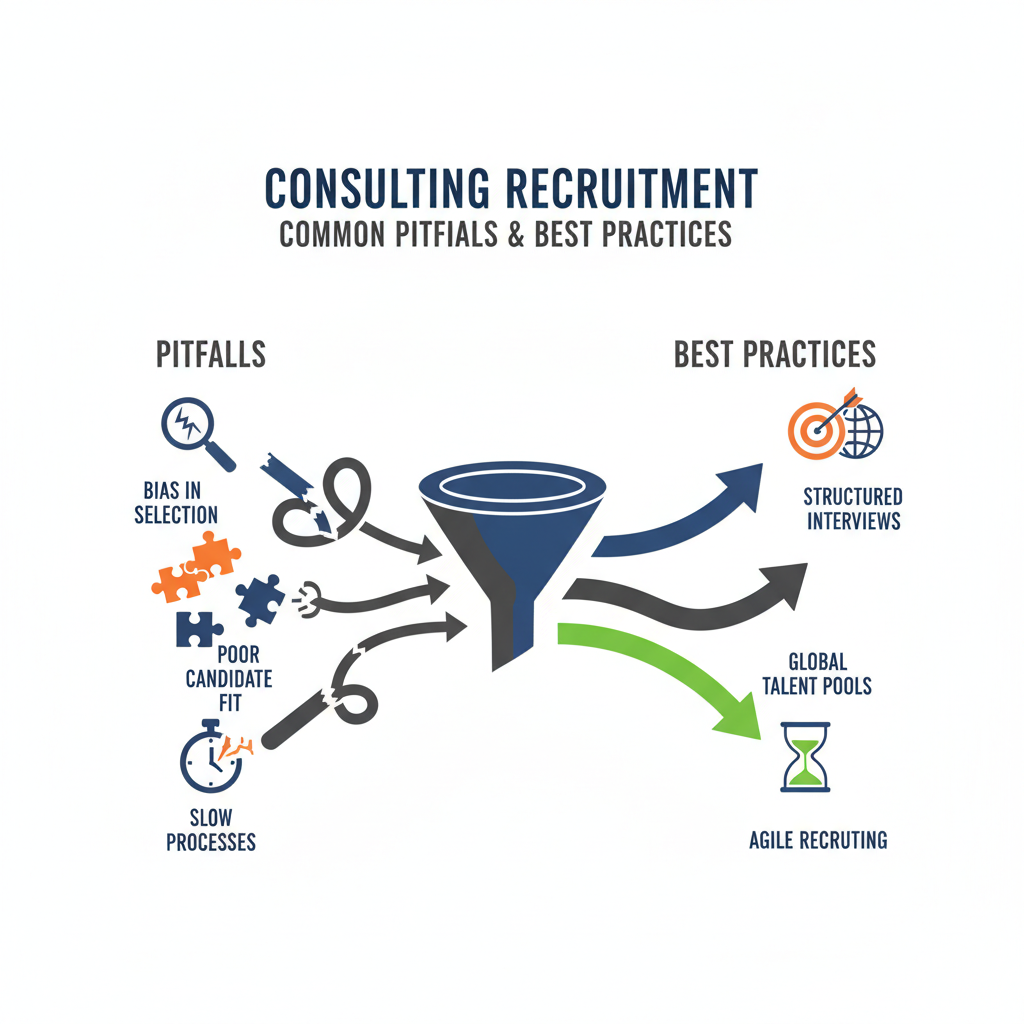
1. Avoiding Generic Approaches and Ensuring Precision
One of the most significant errors in consulting recruitment is adopting a one-size-fits-all strategy. Unlike other industries, management consulting roles often require a nuanced blend of technical prowess, industry-specific knowledge, and robust soft skills such as client management, communication, and leadership. A generic job description thrown onto multiple platforms, or a broad outreach campaign without targeted messaging, rarely attracts the caliber of candidates truly needed. This approach not only alienates high-potential individuals who seek challenges aligned with their unique strengths but also floods recruiters with unsuitable applications, consuming valuable time and resources.
Best practice dictates a highly precise and tailored approach. Begin by clearly defining the specific needs of the role and the unique culture of the firm. What specific industry experience is crucial? What level of analytical rigor is non-negotiable? What leadership qualities are paramount for success within the team? Craft compelling and detailed job descriptions that articulate these specific requirements and highlight the unique value proposition of the role and the firm. Furthermore, leverage targeted sourcing channels—niche professional networks, industry-specific forums, and direct outreach through trusted recommendations—to reach passive candidates who might not actively be looking but possess the exact profile required. Personalize all communications, demonstrating a clear understanding of the candidate’s background and how their skills align with the specific opportunity. This precision in targeting and communication is fundamental to attracting and engaging the right talent in the competitive consulting arena, ensuring that efforts to headhunt management consultants yield genuinely suitable prospects.
2. Implementing a Robust Due Diligence and Vetting Process
Another critical pitfall is an insufficient or superficial vetting process. In the rush to fill open positions, some firms may rely too heavily on resumes and initial interviews, overlooking deeper assessments. While a candidate’s impressive background might look good on paper, it doesn’t always translate directly into on-the-job performance, especially in the high-stakes world of consulting. Failing to conduct thorough due diligence can lead to costly mis-hires, impacting team morale, client relationships, and ultimately, the firm’s reputation and bottom line. The cost of a bad hire extends far beyond salary; it includes lost productivity, recruitment fees, and the ripple effect of poor performance.
A robust vetting process is therefore non-negotiable. This involves going beyond standard interviews to incorporate multiple assessment stages. Structured behavioral interviews, case studies simulating real-world consulting challenges, and psychometric assessments can provide invaluable insights into a candidate’s problem-solving abilities, cultural fit, and resilience under pressure. Furthermore, comprehensive reference checks, ideally conducted with former direct supervisors, should delve into specific performance metrics, collaborative skills, and ethical conduct. Background checks verifying educational qualifications and employment history are also essential. For senior roles, consider even deeper forms of assessment, such as 360-degree feedback or executive assessments, to gain a holistic view of leadership potential and fit. This meticulous approach to vetting, as championed by recruitment experts and outlined in resources like the Harvard Business Review on effective recruitment strategies, significantly reduces the risk of mis-hiring and ensures that new consultants are truly equipped to excel and contribute meaningfully from day one.
3. Measuring Success and Adapting Future Headhunting Strategies
A common oversight in recruitment is the failure to measure the effectiveness of headhunting strategies and adapt them based on data. Many firms simply track hires made, without delving into the quality of those hires, their retention rates, or the efficiency of the recruitment process itself. Without clear metrics and continuous feedback loops, organizations repeat ineffective strategies, leading to a perpetual cycle of inefficient recruitment and inconsistent talent acquisition. This lack of strategic foresight prevents firms from optimizing their approach to consistently attract the best management consulting talent.
To overcome this, firms must establish clear Key Performance Indicators (KPIs) for their headhunting efforts. Beyond basic metrics like time-to-hire and offer acceptance rates, focus on quality-of-hire metrics, such as new hire performance reviews, retention rates over the first 1-2 years, and feedback from hiring managers and project teams. Track the sourcing channels that yield the highest quality candidates and the most efficient hires. Analyze interview-to-offer ratios, and identify bottlenecks in the recruitment funnel. Gather feedback from candidates—both successful and unsuccessful—to improve the candidate experience and refine communication strategies. By regularly reviewing these metrics, firms can identify what works and what doesn’t, allowing for continuous optimization of their headhunting strategies. This data-driven approach ensures that future recruitment efforts are more targeted, efficient, and ultimately more successful in securing the high-caliber management consultants crucial for sustained organizational growth and client satisfaction.
Partner with Shelby Global
You are looking for reliable HR Sevice Suppliers? Contact Shelby Global Now! To connect with verified talents and upgrade your orginization.
—————————————
References
– the value of outside advice: https://hbr.org/2016/10/the-value-of-outside-advice
– What Top Consultants Really Do: https://hbr.org/1990/11/what-top-consultants-really-do
– The Art Of Executive Search: How To Recruit Top Talent In A Competitive Market: https://www.forbes.com/sites/forbeshumanresourcescouncil/2023/11/06/the-art-of-executive-search-how-to-recruit-top-talent-in-a-competitive-market/?sh=205e46dd20a9
– Harvard Business Review on Talent Management: https://hbr.org/topic/talent-management
– Harvard Business Review on effective recruitment strategies: https://hbr.org/2012/05/what-great-recruiters-actually-do