
Why Headhunt Management Consultants?
In today’s dynamic global marketplace, businesses frequently encounter complex challenges and opportunities demanding specialized, unbiased perspectives. While internal teams possess invaluable institutional knowledge, strategic junctures often necessitate external, high-caliber management consultants. Headhunting these professionals isn’t merely about filling a temporary gap; it’s a strategic investment injecting transformative expertise, accelerating growth, and securing a competitive edge. Consultants offer analytical rigor, cross-industry experience, and cutting-edge methodologies, making them indispensable for organizations targeting significant strategic shifts, operational optimizations, or market expansion.

1. Accessing Specialized Expertise & Niche Skills
A primary driver to headhunt management consultants is the immediate access they provide to highly specialized expertise and niche skills often absent internally. From navigating intricate regulatory landscapes to implementing advanced digital transformation, or optimizing complex supply chains, top-tier consultants bring years of dedicated, cross-industry experience. They arrive with a profound understanding of best practices, emerging trends, and proprietary frameworks, significantly reducing the client’s learning curve. This external perspective is crucial for challenges requiring a fresh outlook or for initiatives demanding skills too expensive or time-consuming to develop internally. Headhunting a consultant offers a swift, effective solution to plug critical skill gaps with proven talent, ensuring projects move forward with precision and speed, bypassing lengthy permanent recruitment processes.
2. Driving Objective Insights & Innovation
Internal teams, however dedicated, can be constrained by organizational politics, entrenched paradigms, or natural biases. Management consultants, by virtue of their external position, offer crucial objectivity and a fresh pair of eyes. Unencumbered by internal histories or loyalties, they critically assess operations, strategies, and assumptions without predisposition, identifying blind spots and challenging the status quo. Beyond problem-solving, consultants are catalysts for innovation, introducing cutting-edge thinking and pioneering new approaches from diverse sectors. This focus on objective, data-driven insights and strategic advisory is key to developing sustainable solutions, fostering continuous improvement, and empowering leadership to make informed decisions that drive significant progress.
3. Accelerating Project Timelines & Business Results
Time is critical in business; delays translate into missed opportunities and significant financial losses. Headhunting management consultants powerfully accelerates project timelines and achieves tangible business results faster. Consultants are hired to deliver specific outcomes within defined timeframes, operating with an intensity and focus challenging for internal teams juggling multiple responsibilities. Their expertise in project management, stakeholder coordination, and efficient execution means they can fast-track complex initiatives. Inherently outcome-oriented, their reputation depends on delivering measurable value and positive ROI. By leveraging structured methodologies and dedicated resources, organizations compress project timelines, mitigate risks, and reach critical milestones more rapidly. This acceleration ensures the consultant’s engagement maximizes positive impact, with ROI often far outweighing their fees.
Ultimately, headhunting management consultants is a strategic move for organizations facing pivotal moments or seeking a competitive edge. It’s about harnessing world-class expertise to navigate complexity, drive innovation, and achieve accelerated, sustainable growth. By leveraging their specialized skills, objective insights, and results-driven approach, businesses can confidently address their most pressing challenges and seize new opportunities, ensuring long-term success in a dynamic global landscape.
Identifying Top-Tier Management Consulting Talent
This section focuses on the various channels and methods for pinpointing highly sought-after management consultants who align with your organizational goals. To successfully headhunt management consultants, organizations must adopt a strategic, multi-pronged approach.
The competitive landscape of management consulting necessitates a critical approach to identifying and attracting exceptional talent for strategic growth and operational excellence. Sourcing individuals with requisite analytical prowess, industry expertise, cultural fit, and leadership potential is paramount. This guide explores proven methodologies to secure these invaluable assets, ensuring your team is equipped with the best minds.
1. Leveraging Professional Networks & Referrals
The power of personal connections is undeniable in executive recruitment. Trusted referrals access a hidden talent pool – individuals not actively seeking new roles but open to compelling opportunities. These candidates come pre-vetted, endorsed by a mutual connection understanding both your organizational needs and the consultant’s capabilities.
- Internal Networks: Encourage senior leaders to tap their professional circles: former colleagues, mentors, and mentees.
- Alumni Networks: Business school and former consulting firm networks are rich sources of experienced professionals, fostering trust and shared experience.
- Industry Associations: Active participation in professional bodies (e.g., Association of Management Consultants) allows for organic networking and insights into leading practitioners.
- Direct Outreach: Personalized outreach based on recommendations significantly increases response rates. When you need to headhunt management consultants, starting with your trusted network provides a significant advantage, often leading to candidates who are not just competent but also culturally aligned.
2. Utilizing Specialized Recruitment Firms & Executive Search
For senior-level or highly specialized consulting roles, partnering with dedicated recruitment firms and executive search agencies is often the most effective strategy. These firms possess deep market intelligence, extensive networks within the consulting sector, and sophisticated methodologies for identifying, assessing, and attracting top-tier talent.
- Niche Expertise: Specialized recruiters understand the intricacies of the consulting market, including compensation benchmarks and industry-specific skills.
- Discreet Searches: They conduct confidential searches, crucial for targeting passive candidates or sensitive leadership positions.
- Rigorous Vetting: Beyond resume screening, these firms employ advanced assessment techniques (competency-based interviews, psychometric testing, thorough reference checks), ensuring candidates possess both hard and soft skills vital for success.
- Access to Passive Candidates: A significant portion of top-tier consultants aren’t actively job searching. Executive search firms excel at engaging these passive candidates, presenting compelling opportunities aligned with their career aspirations. For insights into the value proposition of executive search, see this Harvard Business Review article on hiring the best consultants. Their expertise is invaluable when you need to specifically target and recruit proven leaders.
3. Online Platforms, Databases, & Industry Events
The digital age offers powerful complementary tools for talent acquisition. A multi-channel approach integrating online strategies with in-person engagement ensures comprehensive market coverage.
- Professional Networking Platforms (e.g., LinkedIn): These platforms allow direct search capabilities based on specific skills, experience, and employers. Active engagement, content sharing, and direct messaging can initiate valuable conversations. Building a strong employer brand is also key.
- Specialized Job Boards & Databases: Niche platforms dedicated to consulting or executive roles yield focused results. Proprietary talent databases can also be mined for suitable profiles.
- Industry Conferences & Webinars: Attending and sponsoring key industry events provides unparalleled opportunities for direct engagement with thought leaders. These events allow for informal networking, identifying individuals shaping industry trends, and showcasing your organization. Speaking engagements by your executives further elevate your profile.
- Thought Leadership & Content Marketing: Publishing articles, case studies, or whitepapers demonstrating your organization’s intellectual capital attracts consultants who resonate with your mission. This passive recruitment strategy positions your firm as an attractive destination.
Successfully identifying and attracting top-tier management consulting talent requires a deliberate, diversified strategy. By leveraging professional networks, engaging specialized recruitment partners, and harnessing online platforms and industry events, organizations can effectively headhunt management consultants who will drive innovation, foster growth, and deliver exceptional value. A proactive, relationship-centric approach is key to building a robust talent pipeline.
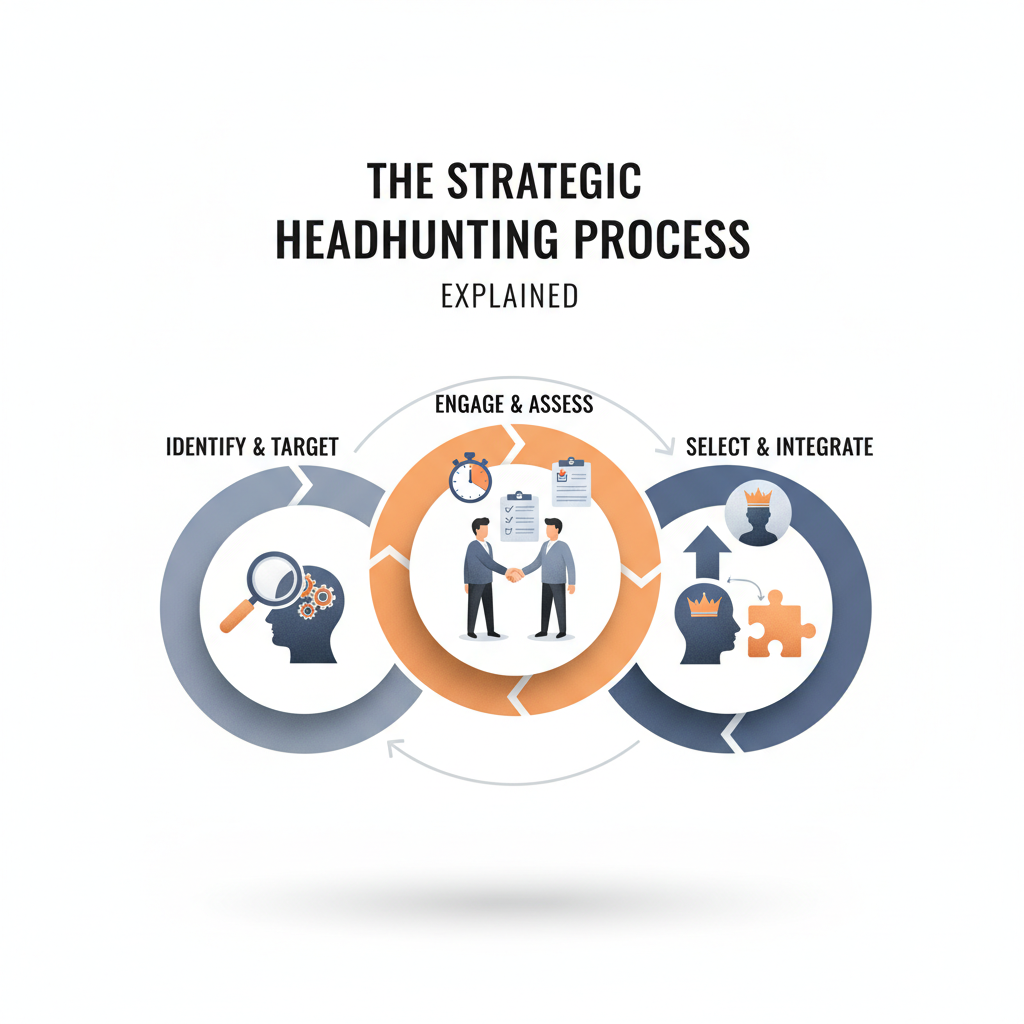
The Strategic Headhunting Process Explained
Details the step-by-step approach to effectively engaging, assessing, and recruiting management consultants, from initial contact to final offer.
In the highly competitive landscape of global business, securing top-tier talent is paramount, especially when it comes to headhunting management consultants. These individuals are not just employees; they are strategic assets capable of driving significant change, optimizing operations, and delivering unparalleled value to clients. A systematic and sophisticated approach is essential to successfully identify, attract, and onboard these highly sought-after professionals. This process goes beyond traditional recruitment, focusing on proactive engagement and a deep understanding of the unique motivations and career aspirations of high-calibre consultants.
To effectively headhunt management consultants, firms must adopt a meticulous, multi-stage strategy. This involves much more than simply identifying individuals with the right skill set; it requires building rapport, demonstrating clear value, and conducting thorough assessments to ensure a perfect fit for both the consultant and the organization. The following outlines the critical steps in executing a strategic headhunting process designed to secure the industry’s best minds.
1. Crafting an Irresistible Value Proposition & Outreach Message
The initial contact with a potential management consultant is crucial. These professionals are frequently approached, making it imperative to stand out. An irresistible value proposition must clearly articulate the unique opportunities, challenges, and career trajectory offered by your firm that align with their ambition. This isn’t just about salary; it’s about intellectual stimulation, the impact they can make, leadership opportunities, and the firm’s culture. The outreach message itself must be highly personalized, demonstrating that you understand their background, achievements, and potential career aspirations. Generic emails or LinkedIn messages will be ignored. Highlight specific projects, client engagements, or growth paths that resonate with their expertise and future goals. Researching their previous work, publications, or public profiles allows for a tailored approach that speaks directly to their professional journey and signals genuine interest, setting the stage for meaningful engagement.
2. Effective Communication & Relationship Building Strategies
Once initial contact is made, the focus shifts to nurturing a relationship built on trust and mutual respect. Effective communication strategies are key to this phase. Management consultants operate in environments where discretion and confidentiality are paramount. Therefore, all interactions must reflect professionalism, transparency, and a deep understanding of their current commitments. This involves active listening, providing insightful feedback, and offering valuable perspectives on their career development, even if it doesn’t immediately lead to a placement. Building this rapport is a long-term investment. It often involves multiple, informal conversations over weeks or months, exploring their motivations, understanding their concerns, and positioning your opportunity as a natural progression in their career. This consultative approach helps overcome the inherent skepticism often found among top performers who are comfortable and successful in their current roles, making them more receptive to exploring new horizons. According to insights on proactive recruiting strategies, cultivating these relationships long before a role opens is a hallmark of successful talent acquisition.
3. Rigorous Screening, Assessment, & Interview Techniques
The assessment phase for management consultants must be comprehensive and rigorous, reflecting the complexity and demands of their future roles. Beyond reviewing resumes, this involves a multi-layered approach to evaluate not only their technical skills and intellectual prowess but also their problem-solving capabilities, cultural fit, and leadership potential. Initial screens might focus on validating their project experience, understanding their methodologies, and assessing their communication skills. Subsequent stages typically include in-depth behavioral interviews designed to uncover how they’ve handled challenging situations, demonstrated resilience, and influenced stakeholders. Case studies are frequently employed to evaluate their analytical thinking, strategic vision, and ability to structure complex problems. Psychometric testing can offer insights into personality traits, cognitive abilities, and leadership styles, ensuring alignment with the firm’s values and team dynamics. The goal is to create a holistic profile that predicts success within your specific organizational context, ensuring that every recruited consultant is not just competent but truly exceptional and a long-term asset.
Overcoming Challenges in Headhunting Elite Consultants
Headhunting elite management consultants is an intricate process, fraught with unique challenges that distinguish it from standard recruitment. These top-tier professionals are not merely skilled; they possess a rare blend of analytical prowess, strategic insight, and leadership capabilities honed at the pinnacle of their field. Attracting and securing such talent demands a sophisticated approach, one that recognizes the nuances of their career aspirations and the competitive landscape in which they operate. This section delves into the primary obstacles faced when attempting to headhunt management consultants of this caliber and outlines actionable strategies to successfully navigate them.
1. Navigating Competitive Talent Pools & Scarcity
The demand for elite management consultants consistently outstrips supply, creating an intensely competitive talent pool. Global consulting firms, Fortune 500 companies, and even burgeoning startups are all vying for the same limited pool of exceptional individuals, often those with experience at MBB (McKinsey, Bain, Boston Consulting Group) or similar prestigious firms. This scarcity is compounded by the specialized nature of their expertise, making traditional recruitment methods largely ineffective.
To overcome this, successful headhunting strategies must focus on proactive and persistent engagement. Building robust talent pipelines long before a specific need arises is crucial. This involves continuous networking, attending industry events, and leveraging advanced AI-powered sourcing tools to identify passive candidates who may not be actively seeking new roles. Developing a compelling employer brand that highlights challenging projects, growth opportunities, and a unique company culture is paramount. For example, showcasing how new hires can make a significant impact or work on cutting-edge innovations can differentiate your organization. Furthermore, understanding the growth trajectory of the global management consulting market, which is projected to continue its expansion, underscores the increasing competition for these experts. According to Statista, the global management consulting market size reached over 200 billion U.S. dollars in 2023, reflecting a robust and ever-growing demand that fuels this scarcity.
2. Addressing Compensation Expectations & Benefits
Elite management consultants, by virtue of their expertise and impact, command premium compensation packages. Their earning potential in established consulting firms is already substantial, meaning any prospective offer must be exceptionally attractive to entice them away. This challenge extends beyond a high base salary to include a comprehensive suite of benefits, bonuses, and long-term incentives.
Successful headhunting necessitates a deep understanding of market-rate compensation for this highly specialized talent. It’s not just about matching current salaries but often exceeding them, or at least offering a superior “total compensation” package that includes equity, performance-based bonuses, and attractive health and retirement plans. Beyond monetary incentives, professional development opportunities, access to cutting-edge projects, and the potential for rapid career progression are critical non-monetary motivators. Articulating a clear growth path within the new organization, coupled with mentorship from senior leadership and opportunities for continuous learning, can significantly enhance an offer’s appeal. The goal is to present a holistic value proposition that aligns with their career ambitions and financial expectations.
3. Ensuring Cultural Fit and Long-Term Retention
Attracting an elite consultant is only half the battle; ensuring they thrive and remain with the organization long-term is equally vital. A misalignment in cultural fit can quickly lead to disengagement and costly turnover. These professionals often come from environments with demanding yet structured cultures, and their integration into a new, potentially very different, organizational setting requires careful consideration.
To ensure cultural fit, the headhunting process must go beyond assessing technical skills and experience. Incorporate behavioral interviews, realistic job previews, and interactions with potential team members and leaders to gauge alignment with company values, working style, and leadership philosophy. Clearly articulate the company’s mission, vision, and operational culture upfront. Post-hire, successful retention strategies involve continuous engagement, providing meaningful work, and fostering a supportive and collaborative environment. Offering opportunities for leadership, autonomy, and significant impact within strategic initiatives can significantly boost job satisfaction. Regular feedback, recognition for achievements, and a commitment to their professional growth, including specialized training and development, are key to retaining these invaluable assets. For comprehensive insights into optimizing the search, explore effective strategies for headhunt management consultants.
Maximizing Your Investment: Onboarding & Integration
Successfully integrating new management consultants into your team is not merely a formality; it is a critical strategic imperative to ensure maximum impact and value for your organization’s projects. The decision to headhunt management consultants often comes with significant investment, and the return on that investment hinges heavily on how effectively these high-caliber professionals are brought into the fold and empowered to contribute from day one.

1. Effective Onboarding Strategies for Consultants
A well-structured onboarding process is the cornerstone of successful consultant integration. Unlike permanent hires, consultants often have a shorter runway to deliver tangible results, making an expedited yet comprehensive onboarding essential. This process should go beyond mere HR paperwork, immersing them quickly into your company’s culture, strategic objectives, and operational nuances. Provide access to critical documents, internal systems, and key stakeholders early on. A dedicated internal sponsor or buddy can significantly accelerate their understanding of internal dynamics and unwritten rules. Introduce them formally to the project team and relevant department heads, clarifying their role and the team’s expectations. This proactive approach helps management consultants feel valued and part of the team, fostering a sense of belonging that drives engagement and efficiency. When you headhunt management consultants, remember that their expertise is amplified by their understanding of your unique context.
2. Setting Clear Expectations, Scope, & KPIs
Ambiguity is the enemy of efficiency, particularly when working with external experts. From the outset, it is crucial to establish crystal-clear expectations regarding the project’s objectives, the consultant’s specific scope of work, and measurable Key Performance Indicators (KPIs). Define the problem statement precisely, outline the desired outcomes, and detail the deliverables expected, including timelines and reporting formats. Clearly communicate what success looks like and how their performance will be measured. This includes not just technical outputs but also soft skills like communication, collaboration, and stakeholder management. Regular check-ins and feedback loops are vital to ensure alignment and address any deviations promptly. This foundational clarity empowers management consultants to focus their expertise where it will yield the most value, preventing scope creep and ensuring resources are optimally utilized. Best practices for consultant integration emphasize that clear communication of roles and responsibilities significantly boosts project success, as detailed in various studies on how to work with consultants effectively.
3. Fostering a Collaborative & Productive Environment
The true value of management consultants is unlocked in an environment that champions collaboration, open communication, and mutual respect. Treat consultants as an extension of your internal team, rather than external vendors. Encourage knowledge sharing from both sides, allowing your internal staff to learn from the consultants’ methodologies and experiences, while consultants gain deeper insights into your organizational context. Ensure they have access to necessary resources, information, and direct lines of communication with decision-makers. Avoid creating an “us vs. them” mentality; instead, cultivate a partnership where both internal teams and consultants work cohesively towards shared goals. This includes inviting them to relevant internal meetings, encouraging informal interactions, and recognizing their contributions publicly. A supportive and inclusive environment not only makes consultants more productive but also enhances the transfer of knowledge and capabilities back into your organization, providing lasting benefits long after their engagement concludes. When you headhunt management consultants, you’re bringing in a wealth of experience; creating a welcoming environment ensures that experience translates directly into improved organizational performance.
By prioritizing effective onboarding, clearly defining expectations, and nurturing a collaborative atmosphere, organizations can significantly enhance the impact of their management consulting engagements. This strategic approach ensures that the investment in high-caliber external expertise translates into tangible results, driving innovation, solving complex challenges, and ultimately, securing a competitive advantage.
Partner with Shelby Global
You are looking for reliable HR Sevice Suppliers? Contact Shelby Global Now! To connect with verified talents and upgrade your orginization.
—————————————
References
– Strategic Advisory in Management Consulting – HBR: https://hbr.org/topic/management-consulting
– :
– The Future of Recruiting Is Proactive: https://hbr.org/2022/10/the-future-of-recruiting-is-proactive
– Management consulting market size worldwide: https://www.statista.com/statistics/309605/management-consulting-market-size-worldwide/
– How to Work with Consultants Effectively: https://hbr.org/2016/06/how-to-work-with-consultants