
Understanding Vietnam’s Labor Law Landscape for Healthcare
Navigating the complex regulatory environment is crucial for any organization operating in Vietnam’s healthcare sector, especially concerning human resources. The nation’s dynamic economic growth and evolving legislative framework demand a foundational understanding of the legal landscape governing employment. For medical facilities, pharmaceutical companies, and health-tech enterprises, strict adherence to Vietnamese labor laws is not merely a compliance issue but a strategic imperative to attract, retain, and manage talent effectively. This section provides an overview of the Legal HR terms & conditions for medicine field in vietnam, highlighting key legislation and recent updates that shape the employment landscape in this vital sector.

1. Key Labor Codes and Decrees Impacting Healthcare HR
The bedrock of Vietnam’s labor law system is the Labor Code, with the latest iteration, Labor Code No. 45/2019/QH14 (effective January 1, 2021), being the primary regulatory instrument. This comprehensive code sets out the fundamental rights and obligations of both employers and employees across all sectors, including healthcare. For HR professionals in the medical field, understanding its provisions is paramount. It covers critical areas such as employment contracts (types, terms, termination), working hours and rest periods (including specific provisions for roles requiring extended or irregular hours, common in healthcare), wages, bonuses, social insurance contributions, and occupational safety and health requirements.
Beyond the Labor Code, numerous implementing decrees and circulars issued by the government and the Ministry of Labor, Invalids and Social Affairs (MOLISA) provide more specific guidance. For instance, Decree 145/2020/ND-CP details the implementation of certain articles of the Labor Code concerning working conditions and labor relations. Healthcare entities must also consider sector-specific regulations issued by the Ministry of Health (MOH) that might influence working environments, professional conduct, and the qualifications required for medical practitioners, ensuring that HR policies align with both general labor law and industry-specific mandates.
2. Specific Regulations for Foreign Medical Practitioners
With Vietnam’s healthcare sector increasingly seeking international expertise, the employment of foreign medical practitioners is a significant area of focus. Foreign doctors, nurses, and medical specialists are subject to stringent regulations beyond the general Labor Code. Key requirements include obtaining a valid work permit, which necessitates proof of professional qualifications, experience, and often a clean criminal record from their home country. The process is governed by Decree 152/2020/ND-CP, which outlines the conditions for foreign workers in Vietnam. Furthermore, foreign medical practitioners must also secure a professional practice license issued by the Vietnamese Ministry of Health. This often involves demonstrating proficiency in Vietnamese, passing professional examinations, or having their foreign licenses recognized through specific agreements.
Employers in the healthcare sector must meticulously manage the documentation and application processes for foreign staff, understanding that delays or non-compliance can lead to severe penalties. The regulations aim to ensure that all practitioners, regardless of nationality, meet Vietnam’s high standards for patient care and medical ethics. For a detailed guide on labor and employment laws in Vietnam, including provisions for foreign workers, you can refer to authoritative legal resources like DLA Piper’s Doing Business in Vietnam: Labor and Employment Laws.
3. Recent Amendments and Their Implications (e.g., Labor Code 2019)
The promulgation of the Labor Code 2019 marked a significant overhaul of Vietnam’s labor legislation, bringing several key changes with substantial implications for healthcare HR. One notable amendment expanded the definition of “employee” to include individuals working under non-written agreements, which impacts the classification and rights of certain contract workers. Changes to probationary periods, especially for high-skill positions, now allow for longer maximum durations, offering employers more flexibility in assessing suitability for specialized medical roles.
The new code also introduced stricter regulations around unilateral termination of employment by employers, requiring more robust justifications and procedural adherence, thereby enhancing job security for employees. Furthermore, the Labor Code 2019 strengthened provisions related to sexual harassment in the workplace, mandating employers to establish clear policies and reporting mechanisms, which is particularly relevant in healthcare environments. It also revised regulations concerning collective bargaining agreements and internal labor rules, encouraging greater employee representation and transparency. For healthcare HR, these amendments necessitate a thorough review and potential revision of existing employment contracts, internal policies, and compliance procedures to ensure full alignment with the updated legal framework and mitigate potential legal risks. Staying informed about these changes is vital for fostering a fair, compliant, and productive work environment in the healthcare sector.
Crafting Compliant Employment Contracts for Medical Professionals
In Vietnam’s rapidly evolving healthcare landscape, ensuring legal compliance in human resources is paramount, especially when drafting employment contracts for medical professionals. From doctors and nurses to specialized medical staff, robust contracts are essential to protect both employer and employee, mitigate disputes, and adhere to the intricate framework of Vietnamese labor law. This section delves into the critical legal requirements and best practices for creating secure and compliant employment agreements within the Vietnamese medical sector, focusing on key provisions and common pitfalls. Understanding these elements is crucial for any healthcare institution seeking to maintain a stable, legally sound workforce.
-
Mandatory Clauses for Healthcare Employment Contracts
Vietnamese labor law, primarily governed by the Labor Code 2019, mandates specific clauses in all employment contracts, with additional considerations for the healthcare sector. For medical professionals, contracts must explicitly state the job title (e.g., General Practitioner, Head Nurse, Specialist Surgeon), specific duties aligned with professional licenses, the workplace address (often a clinic or hospital), and the contract term. Crucially, compensation details must be clear, including salary, allowances, and any specific benefits common in the medical field (e.g., on-call pay, hazard pay, medical indemnity insurance contributions). Working hours, rest periods, and occupational safety provisions, which are particularly stringent in healthcare due to inherent risks, must also be detailed. Beyond these, agreements should cover social insurance contributions, professional training commitments, and termination procedures, all in strict adherence to the Labor Code. Given the sensitive nature of medical data, explicit clauses on patient confidentiality and data protection are not just best practices but often legally required under specific healthcare regulations. Employers should also outline the professional ethics and conduct expected, aligning with the Ministry of Health’s guidelines for medical practitioners in Vietnam.
-
Fixed-term vs. Indefinite-term Contracts in Medicine
Choosing between fixed-term and indefinite-term employment contracts carries significant implications for healthcare institutions in Vietnam. Fixed-term contracts, typically for a duration of 12 to 36 months, are often used for newly hired medical staff, projects with defined timelines, or to assess a professional’s fit within the organization. While offering flexibility, Vietnamese law limits their renewal to a maximum of one additional fixed-term contract. After the second fixed-term contract expires, if the employee continues working, the contract automatically converts into an indefinite-term contract, unless specific exceptions apply (e.g., for elderly employees or directors of state-owned enterprises). Indefinite-term contracts, on the other hand, provide greater stability for both parties and are generally preferred for core medical staff, fostering long-term commitment and reducing turnover. For specialized roles requiring extensive training or institutional knowledge, indefinite-term contracts help retain valuable talent. Healthcare employers must carefully assess their staffing needs and strategic objectives when deciding on the contract type, understanding the legal progression and implications for employee rights, particularly regarding termination notice periods and severance pay, which differ between contract types. Navigating these distinctions is a key aspect of effective Legal HR terms & conditions for medicine field in Vietnam.
-
Non-compete Clauses and Confidentiality Agreements
In the competitive and knowledge-intensive medical sector, non-compete clauses and confidentiality agreements are increasingly vital. A well-drafted confidentiality agreement protects proprietary information such as patient records, treatment protocols, operational strategies, and financial data. For medical professionals, this extends to sensitive patient information and institutional know-how. These clauses are enforceable in Vietnam, provided they are reasonable in scope, duration, and geographical limitations, and often accompanied by appropriate compensation for the employee during the non-compete period. Non-compete clauses, which restrict an employee from working for a competitor or setting up a similar practice after leaving, require careful drafting to be legally valid. While the Labor Code 2019 does not explicitly regulate non-compete clauses in detail, their enforceability typically hinges on their reasonableness, clear identification of protected interests, and often, an agreed-upon compensation for the employee during the restricted period. It is crucial that such agreements are not overly broad or punitive, as Vietnamese courts may deem them unenforceable. Expert legal advice is highly recommended when incorporating these clauses to ensure they align with Vietnamese jurisprudence and adequately protect the healthcare institution’s interests without unfairly restricting the medical professional’s future employment prospects. For a deeper understanding of the legal framework surrounding employment in Vietnam, refer to the Labor Code 2019 of Vietnam.
Drafting compliant employment contracts for medical professionals in Vietnam requires meticulous attention to detail and a thorough understanding of the country’s labor laws and healthcare-specific regulations. By incorporating mandatory clauses, judiciously selecting contract types, and implementing robust non-compete and confidentiality agreements, healthcare institutions can establish a strong legal foundation for their workforce. This proactive approach not only ensures legal compliance but also fosters a stable, professional, and secure working environment, ultimately contributing to higher quality healthcare services across Vietnam.
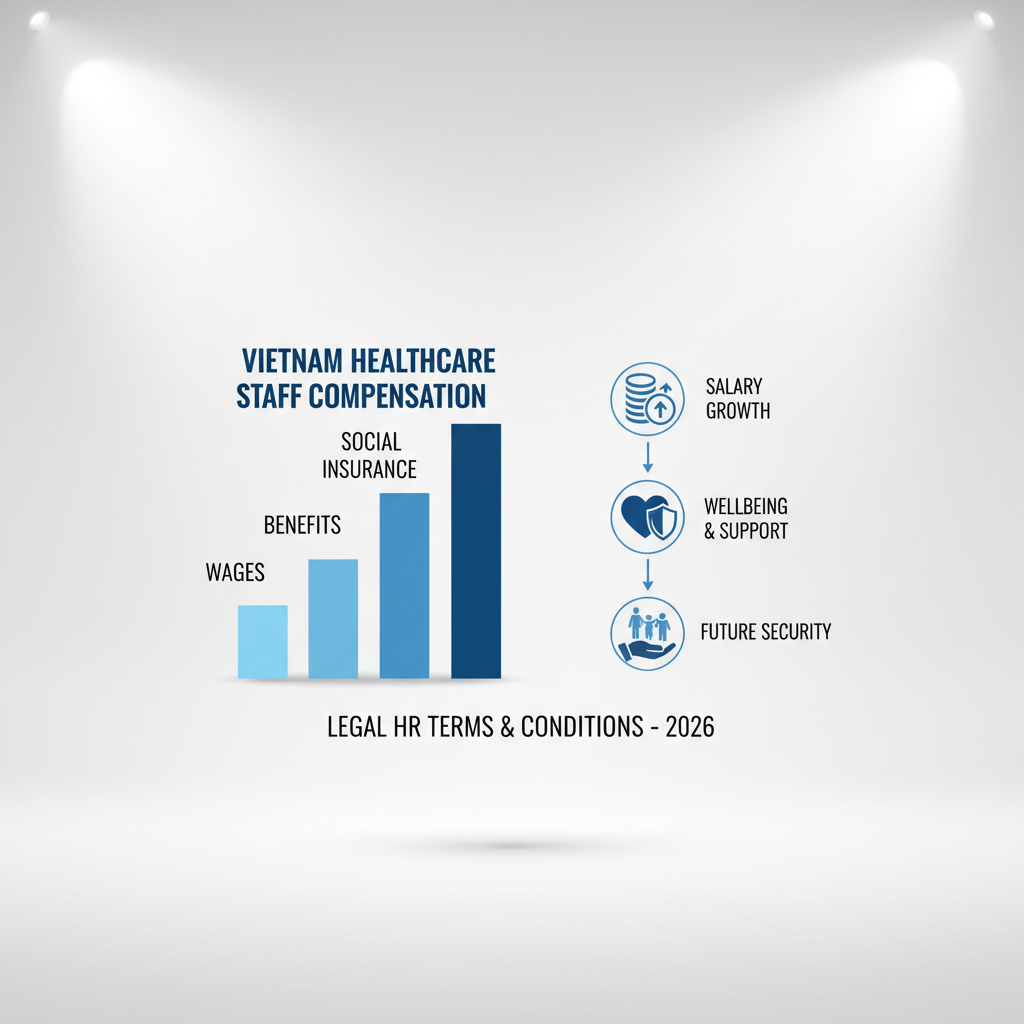
Wages, Benefits, and Social Insurance for Healthcare Staff in Vietnam
Understanding the intricate landscape of compensation, social security, and other entitlements is crucial for both healthcare providers and human resource professionals operating within Vietnam’s medical sector. This section details the legal obligations and entitlements regarding compensation, social security, and other benefits specific to the medical field in Vietnam, ensuring compliance and fostering an attractive work environment for valuable healthcare personnel. Navigating the specific legal HR terms & conditions for the medicine field in Vietnam requires a keen eye on the national labor code and sector-specific regulations.
1. Minimum wage, overtime, and shift differential regulations
Vietnam’s labor laws establish clear guidelines for worker compensation, which healthcare institutions must strictly adhere to. The country operates on a regional minimum wage system, categorizing cities and provinces into four regions, each with its own minimum wage rate. Employers in the healthcare sector must ensure that the basic salaries of their staff meet or exceed the minimum wage applicable to their region. For healthcare professionals, whose work often extends beyond standard hours, regulations on overtime pay are particularly relevant. Overtime work is compensated at higher rates: typically 150% of the normal hourly wage for weekdays, 200% for weekends, and 300% for public holidays and paid annual leave. Given the 24/7 nature of healthcare services, understanding night shift differentials is equally important. Employees working night shifts (generally from 10 PM to 6 AM) are entitled to an additional payment of at least 30% of their normal hourly wage, on top of any overtime rates if applicable. This ensures fair compensation for the demanding schedules inherent to the medical profession and aligns with the broader legal HR terms & conditions for the medicine field in Vietnam.
2. Mandatory social, health, and unemployment insurance contributions
A cornerstone of employee benefits in Vietnam is the mandatory social security system, comprising Social Insurance (SI), Health Insurance (HI), and Unemployment Insurance (UI). Employers in the healthcare sector are legally obligated to contribute to these funds on behalf of their employees, with specific contribution rates for both employers and employees. Social Insurance covers benefits such as sickness, maternity, occupational diseases, labor accidents, retirement, and death. Health Insurance provides coverage for medical examinations and treatments, a critical benefit for healthcare staff themselves. Unemployment Insurance offers support during periods of job loss, including unemployment benefits and vocational training assistance. As of recent regulations, employer contributions typically hover around 17.5% for SI, 3% for HI, and 1% for UI, while employee contributions are generally 8% for SI and 1.5% for HI. These contributions are calculated based on the employee’s monthly salary, capped at a certain multiple of the common minimum wage. Adherence to these regulations is not only a legal requirement but also a vital component of providing comprehensive protection and welfare for healthcare staff. For detailed information on these contributions, authoritative sources like the International Labour Organization’s overview of Vietnam’s Social Insurance Law offer valuable insights.
3. Professional allowances and performance-based incentives
Beyond basic wages and mandatory insurance, Vietnamese labor law and sector-specific practices allow for a range of professional allowances and performance-based incentives to attract and retain talent in the medical field. Common professional allowances in healthcare include hazardous work allowances (for staff dealing with infectious diseases or dangerous substances), responsibility allowances (for those in supervisory or critical roles), and allowances for specific professional certifications or advanced degrees. These allowances recognize the specialized skills and inherent risks associated with medical professions. Furthermore, performance-based incentives play a significant role in motivating healthcare staff. These can include bonuses tied to achieving specific Key Performance Indicators (KPIs), such as patient satisfaction rates, treatment outcomes, or efficiency metrics. Profit-sharing schemes, end-of-year bonuses, and recognition awards are also common practices, designed to reward high-performing individuals and teams. While the specific structure and quantum of these incentives are often at the discretion of the employer, they must comply with labor laws regarding transparency, non-discrimination, and inclusion in the calculation of social insurance contributions if they are regular and fixed. Effectively structuring these allowances and incentives is key to developing a competitive and fair compensation package for healthcare staff in Vietnam.
Ensuring Safe Working Conditions and Workplace Health in Medical Facilities
In Vietnam’s rapidly evolving healthcare landscape, ensuring safe working conditions and robust workplace health provisions for medical professionals is not merely a best practice—it’s a legal imperative. The unique challenges within medical facilities, ranging from exposure to infectious diseases and hazardous substances to intense work schedules and high-stress environments, necessitate a stringent adherence to regulatory frameworks. Understanding the intricate Legal HR terms & conditions for medicine field in vietnam is paramount for healthcare institutions to protect their workforce, maintain operational integrity, and deliver quality patient care. This section delves into the critical legal requirements governing occupational safety, health, and professional risk prevention, tailored specifically for the Vietnamese healthcare sector.
1. Occupational Health and Safety Standards for Hospitals/Clinics
Vietnam’s commitment to worker protection is enshrined in the Law on Occupational Safety and Health (No. 84/2015/QH13), which provides a comprehensive framework applicable across all sectors, including healthcare. For hospitals and clinics, this law, complemented by various decrees and circulars, imposes specific obligations to mitigate risks inherent in medical environments. Employers are mandated to conduct thorough risk assessments, identifying potential hazards such as biological agents (viruses, bacteria), chemical substances (disinfectants, pharmaceuticals), radiation, ergonomic stressors, and psychosocial risks (burnout, violence). Based on these assessments, facilities must implement preventative measures, provide appropriate personal protective equipment (PPE), ensure proper ventilation and waste management systems, and establish emergency response protocols.
Furthermore, regular health examinations for medical staff, especially those exposed to specific hazards, are compulsory to monitor and prevent occupational diseases. Comprehensive training programs on occupational safety and health (OSH) are essential, covering everything from proper handling of medical equipment to infection control protocols. The Law on Occupational Safety and Health in Vietnam also stipulates the rights and responsibilities of employees, empowering them to report unsafe conditions without fear of reprisal and obliging them to adhere to safety regulations. Compliance with these standards is not only a legal requirement but a fundamental pillar in fostering a secure and healthy environment for healthcare providers and, by extension, patients.
2. Working Hours, Rest Periods, and Leave Entitlements
The demanding nature of healthcare work necessitates careful attention to working hours, rest periods, and leave entitlements, as stipulated by Vietnam’s Labor Code 2019 and subsequent guiding regulations. For most employees, standard working hours are capped at 8 hours per day or 48 hours per week. However, the medical field often requires flexibility due to emergencies and continuous patient care, leading to provisions for overtime. Strict rules govern overtime work, including limits on hours and mandatory additional pay, ensuring that healthcare professionals are adequately compensated and not subjected to excessive strain.
Adequate rest periods are crucial for preventing fatigue and medical errors. The Labor Code mandates daily rest breaks, weekly days off, and specific provisions for shift work, which is common in hospitals. Moreover, healthcare workers are entitled to annual leave, which varies based on years of service and the hazardous nature of their work, with those in highly dangerous environments often receiving additional days. Other crucial leave types include sick leave, maternity and paternity leave, and public holidays. Ensuring strict adherence to these entitlements is vital for maintaining employee well-being, reducing burnout, and upholding professional standards, which directly impacts the quality and safety of patient care.
3. Handling Professional Medical Malpractice and Liability
The inherent risks in medical practice make the legal framework surrounding professional medical malpractice and liability a critical aspect of HR terms and conditions in Vietnam. The Civil Code, in conjunction with the Law on Medical Examination and Treatment (No. 15/2023/QH15, effective January 1, 2024), outlines the responsibilities of healthcare professionals and institutions. Liability can arise from professional errors, negligence, or breaches of the standard of care, leading to harm to patients. Key considerations include the duty to provide adequate care, obtain informed consent, and maintain patient confidentiality.
In cases of alleged malpractice, a thorough investigation process is typically followed, often involving expert medical committees. Consequences can range from disciplinary action within the institution, civil liability (compensation for damages), to, in severe cases, criminal charges. To mitigate these risks, medical facilities must establish clear protocols for diagnosis, treatment, and documentation. Continuous professional development, adherence to ethical guidelines, and robust internal review mechanisms are essential. Furthermore, professional liability insurance plays a crucial role, offering protection for both individual practitioners and healthcare organizations against claims. Understanding these liabilities is fundamental for fostering a culture of accountability and safeguarding the reputation and legal standing of medical professionals and institutions alike.
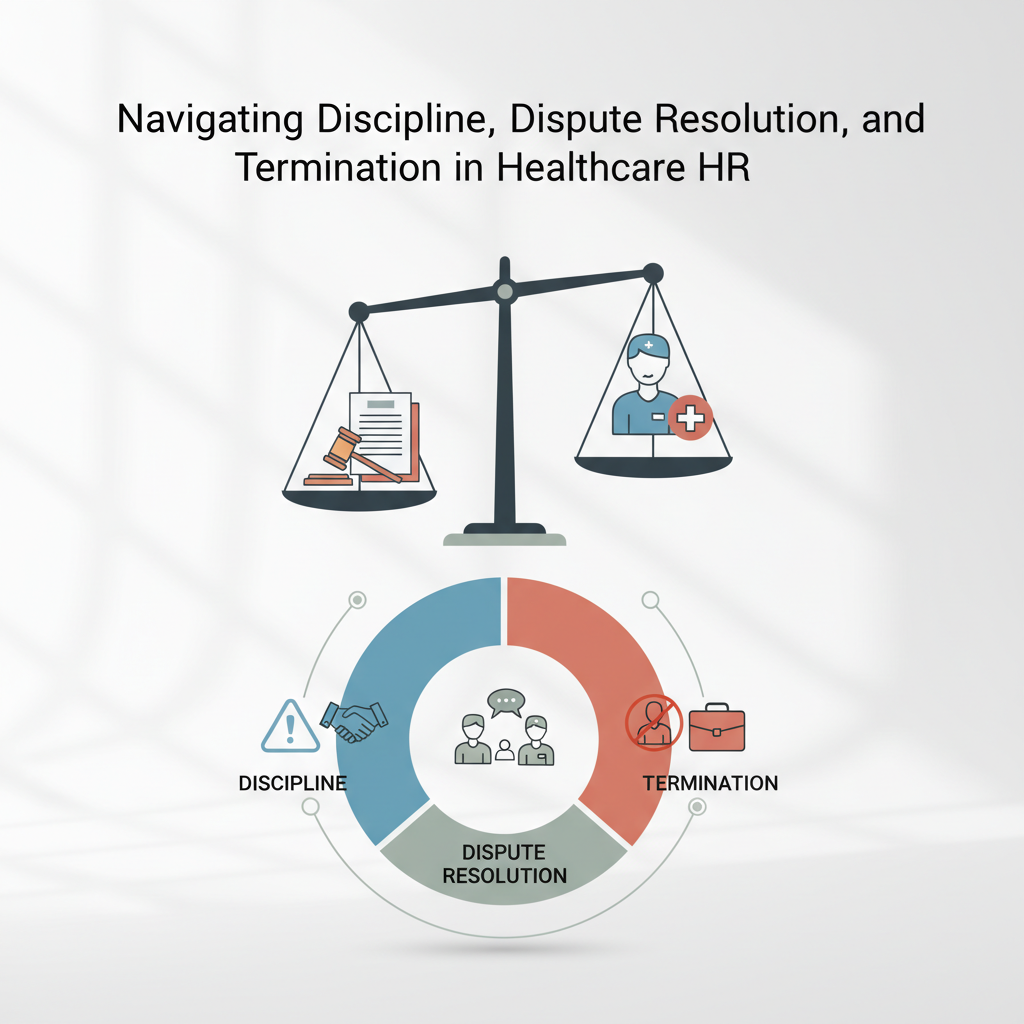
Navigating Discipline, Dispute Resolution, and Termination in Healthcare HR
Managing human resources in Vietnam’s dynamic healthcare sector presents unique challenges, particularly when it comes to employee conduct, workplace disputes, and the intricate process of employment termination. Adhering to the robust legal framework outlined in Vietnam’s Labor Code is paramount for medical institutions to ensure fairness, compliance, and a stable working environment. This section delves into the critical legal processes that healthcare HR professionals must master to effectively manage their workforce, mitigate risks, and uphold the integrity of medical services.
Understanding the specific Legal HR terms & conditions for medicine field in Vietnam is not just about avoiding penalties; it’s about fostering a professional atmosphere where healthcare providers can focus on patient care without undue organizational friction.
1. Disciplinary procedures and grounds for dismissal
In Vietnam’s healthcare sector, maintaining high standards of professionalism and patient safety is non-negotiable. Therefore, understanding the legal framework for disciplinary actions and dismissals is crucial. The Labor Code of Vietnam 2019 meticulously outlines the grounds and procedures for employee discipline. Grounds for dismissal can range from serious violations of labor discipline, such as theft, embezzlement, or intentional damage to property, to repeatedly failing to perform job duties despite prior warnings. For medical professionals, specific grounds might also include breaches of medical ethics, patient mistreatment, or negligence leading to adverse patient outcomes.
The disciplinary process is strictly procedural. Employers must conduct a thorough investigation, provide the employee with an opportunity to explain their actions, and ensure the presence of a trade union representative (if applicable) during disciplinary meetings. Decisions must be made in writing, clearly stating the grounds for dismissal and the legal basis. Any deviation from these procedures can render a dismissal unlawful, potentially leading to significant financial penalties and reinstatement orders by labor courts. Healthcare organizations must develop clear internal regulations that align with the Labor Code and effectively communicate them to all employees, especially given the sensitive nature of their work.
2. Mediation and arbitration for labor disputes
Workplace disputes are an inevitable part of any organization, and healthcare is no exception. Vietnam’s legal system encourages the resolution of labor disputes through non-judicial mechanisms before resorting to court litigation. The primary methods are mediation and arbitration.
Mediation is the first mandatory step for most collective and individual labor disputes. A labor conciliator, often appointed by the district-level labor agency, facilitates discussions between the employer and employee(s) to reach a mutually agreeable solution. This process is confidential and aims to preserve the employment relationship where possible, which is particularly vital in healthcare settings where team cohesion impacts patient care. If mediation fails, or if one party objects to the conciliator’s proposal, the dispute may proceed to arbitration or court.
Arbitration, conducted by a Labor Arbitration Council, offers a more formal but still non-judicial alternative. The Council’s decisions are legally binding unless challenged in court within a specific timeframe. Both mediation and arbitration offer faster, less costly, and more flexible dispute resolution compared to lengthy court proceedings. Healthcare HR managers should be adept at navigating these processes, understanding their nuances, and preparing their cases effectively to ensure fair outcomes while minimizing disruption to critical medical services.
3. Severance pay and notice period requirements
Lawful termination of employment in Vietnam requires strict adherence to notice periods and the provision of severance or job loss allowances, depending on the circumstances. The length of the notice period varies based on the type of labor contract (e.g., indefinite-term, definite-term) and the reason for termination. Generally, employers must provide 45 days’ notice for indefinite-term contracts, 30 days for definite-term contracts of 12 to 36 months, and 3 days for definite-term contracts of less than 12 months, when terminating without cause (e.g., due to organizational restructuring or technological changes).
Regarding financial entitlements, employees terminated due to organizational restructuring, technological changes, or the employer’s economic reasons are entitled to a job loss allowance. This amounts to one month’s salary for each year of service, with a minimum of two months’ salary. For other lawful terminations, such as the expiry of a definite-term contract or a unilateral termination by the employer not due to the employee’s fault (unless serious misconduct), employees are entitled to a severance allowance. This is calculated at half a month’s salary for each year of service. It’s crucial for healthcare HR to correctly calculate these entitlements and ensure timely payment to avoid legal disputes and maintain the organization’s reputation. Navigating these requirements demands careful planning and meticulous record-keeping to ensure full compliance with Vietnam’s Labor Code.
Partner with Shelby Global
You are looking for reliable HR Sevice Suppliers? Contact Shelby Global Now! To connect with verified talents and upgrade your orginization.
—————————————
References
– DLA Piper’s Doing Business in Vietnam: Labor and Employment Laws: https://www.dlapiper.com/en/vietnam/insights/publications/2023/07/doing-business-in-vietnam-labor-and-employment-laws
– Vietnam: Labour Code (Law No. 45/2019/QH14): https://www.ilo.org/dyn/natlex/natlex4.detail?p_lang=en&p_isn=111623
– :
– Law on Occupational Safety and Health in Vietnam: https://www.indochinecounsel.com/publications/the-new-law-on-occupational-safety-and-health
– :