
Overview of Vietnamese Labor Law for Healthcare
Understanding the foundational legal framework governing employment in Vietnam is crucial for any entity operating within the medicine and healthcare sector. This section introduces the core principles and specific regulations that shape the Legal HR terms & conditions for medicine field in vietnam, ensuring compliance and fostering a productive working environment for medical professionals.
Navigating the intricacies of Vietnamese labor law requires a detailed understanding, especially given the unique demands and ethical considerations inherent in healthcare. From general employment principles to sector-specific mandates, adherence to these regulations is paramount for hospitals, clinics, pharmaceutical companies, and individual practitioners alike.
1. Key Labor Codes and Decrees (e.g., Labor Code 2019)
The bedrock of Vietnamese labor law is the Labor Code 2019, which came into effect on January 1, 2021. This comprehensive legislation governs all aspects of employment relationships, including contracts, working hours, wages, social insurance, and dispute resolution. It establishes the minimum standards and rights for employees across all sectors, including healthcare. Employers in the medicine field must meticulously adhere to its provisions, which cover recruitment processes, probation periods, termination procedures, and the protection of workers’ rights.
Beyond the primary Labor Code, numerous decrees and guiding circulars issued by the government and the Ministry of Labor, Invalids and Social Affairs (MOLISA) provide detailed implementation instructions. For instance, specific decrees regulate minimum wages, overtime compensation, occupational safety and health (OSH) standards, and the resolution of labor disputes. Keeping abreast of these evolving legislative documents is essential for healthcare organizations to maintain compliance and avoid legal pitfalls. The Labor Code 2019 represents a significant modernization of Vietnam’s labor framework, aiming to align with international labor standards and promote fairness in the workplace. Understanding its nuances is the first step towards sound HR practices in the medical sector.
2. Specific Regulations for Medical Professionals
While the Labor Code 2019 provides a general framework, the healthcare sector is subject to additional specific regulations tailored to the unique nature of medical practice. The Law on Medical Examination and Treatment (most recently updated in 2023) and its guiding decrees are paramount here. These laws dictate licensing requirements for doctors, nurses, pharmacists, and other medical practitioners, professional ethics, scope of practice, and responsibilities towards patients. They also address issues like mandatory continuous professional development (CPD) and professional liability, which are critical for maintaining high standards of care.
Furthermore, specific regulations often govern working hours for medical professionals, acknowledging the demanding nature of their roles, including provisions for on-call duties, night shifts, and emergency response. These sector-specific rules often provide special allowances or compensation structures that differ from general labor law provisions. Healthcare employers must ensure their internal policies and employment contracts reflect these specialized requirements to avoid non-compliance and ensure the well-being of their staff, while also upholding patient safety and quality of care. Adhering to these specialized legal HR terms & conditions for medicine field in vietnam is not just a legal obligation but also a commitment to public health.
3. General Employment Contracts vs. Industry-Specific Clauses
In Vietnam, employment contracts must generally adhere to the templates and requirements outlined in the Labor Code 2019, specifying terms like job title, salary, working hours, and social insurance contributions. However, contracts for medical professionals often incorporate industry-specific clauses that address the unique aspects of healthcare employment. These might include stringent confidentiality agreements regarding patient information, non-compete clauses to protect proprietary knowledge or patient lists (especially for specialized clinics), and clauses related to professional ethics and conduct as dictated by medical associations and governmental bodies.
Furthermore, given the significant investment in specialized training and certifications, healthcare employers often include provisions for training bonds, requiring employees to serve a minimum tenure after completing employer-sponsored professional development. Clauses related to occupational health and safety are also particularly critical in healthcare, covering exposure to infectious diseases, hazardous materials, and mental health support. Employers in the medicine field must ensure that their employment contracts are not only compliant with the general Labor Code but also legally robust enough to incorporate these specific healthcare industry considerations, safeguarding both the employer’s interests and the professional responsibilities of the medical staff.
Recruitment & Onboarding Compliance in Medicine
Navigating the intricate landscape of human resources within Vietnam’s medical field demands a meticulous approach to recruitment and onboarding. Ensuring full compliance with national labor laws, healthcare regulations, and ethical standards is paramount, not only to avoid legal repercussions but also to foster a professional and high-performing workforce. This section outlines the essential legal requirements and best practices for hiring and integrating new employees, focusing on the specific challenges and nuances inherent in the Vietnamese medical sector.
-
Legal Requirements for Recruitment Advertisements
Recruitment advertisements in Vietnam’s medical sector must adhere strictly to the provisions of Vietnam’s robust Labor Code, particularly regarding non-discrimination. Employers are prohibited from specifying preferences or exclusions based on gender, age (unless legally required for specific roles), race, religion, disability, or marital status. Job descriptions must be precise, transparent, and accurately reflect the responsibilities and qualifications required for the role, such as specific medical degrees, specializations, or years of clinical experience. Any mention of salary or benefits, if included, must also be truthful and compliant with minimum wage laws and industry standards. For medical positions, advertisements should clearly state the necessity of professional licensing and registration with the Ministry of Health or relevant provincial health departments. Misleading or false advertising can lead to significant penalties, making it crucial for healthcare facilities to draft their recruitment materials with utmost care and legal scrutiny. Professional organizations and recruitment agencies specializing in the medical field can offer valuable guidance to ensure advertisements meet all regulatory standards.
-
Background Checks & Professional Licensing Verification
For any role within the medical field in Vietnam, thorough background checks and the diligent verification of professional licensing are non-negotiable. This process is critical for ensuring patient safety and maintaining the integrity of healthcare services. Employers must meticulously verify all academic qualifications, including medical degrees, diplomas, and certifications from accredited institutions. Crucially, the validity and current status of professional practice licenses, issued by the Ministry of Health or local health authorities, must be confirmed. This often involves direct communication with the issuing bodies or cross-referencing against official registries. Beyond professional credentials, organizations may conduct criminal record checks, subject to legal permissions and the sensitive nature of personal data protection under Vietnamese law, such as outlined in Decree 13/2023/ND-CP. Reference checks from previous employers are also vital to assess a candidate’s professional conduct, work ethic, and suitability for the demanding environment of a medical facility. Adhering to these stringent background check protocols is a cornerstone of effective Legal HR terms & conditions for medicine field in vietnam, mitigating risks and ensuring only qualified and ethical professionals are entrusted with patient care.
-
Mandatory Onboarding Documents & Procedures
Once a suitable candidate is selected, the onboarding process in the Vietnamese medical sector involves several mandatory legal and procedural steps. The cornerstone of employment is a written employment contract, which must be executed in Vietnamese (with an optional English translation) and include essential clauses as stipulated by the Labor Code. These include the job title, working hours, salary and benefits, social insurance contributions, duration of the contract, and terms of termination. Healthcare employers must also ensure prompt registration of new employees with the social insurance agency for mandatory health insurance, social insurance, and unemployment insurance. Tax registration with the General Department of Taxation is another critical step. Beyond these administrative requirements, medical facilities must implement comprehensive orientation programs. These programs should cover internal policies unique to healthcare, such as patient confidentiality protocols (adhering to data privacy laws), ethical guidelines, infection control procedures, and safety training specific to medical equipment and emergency response. Furthermore, clarity on probationary periods, performance expectations, and pathways for professional development must be communicated effectively, ensuring that new medical professionals are not only compliant with regulations but also fully integrated into the facility’s culture and operational standards from day one.
By rigorously adhering to these recruitment and onboarding compliance standards, medical facilities in Vietnam can build a highly skilled, ethical, and legally sound workforce. Such diligence not only protects the institution from legal challenges but also significantly contributes to the delivery of high-quality patient care, fostering trust within the community and upholding the esteemed reputation of the medical profession.
Wages, Benefits & Working Conditions Unique to Healthcare
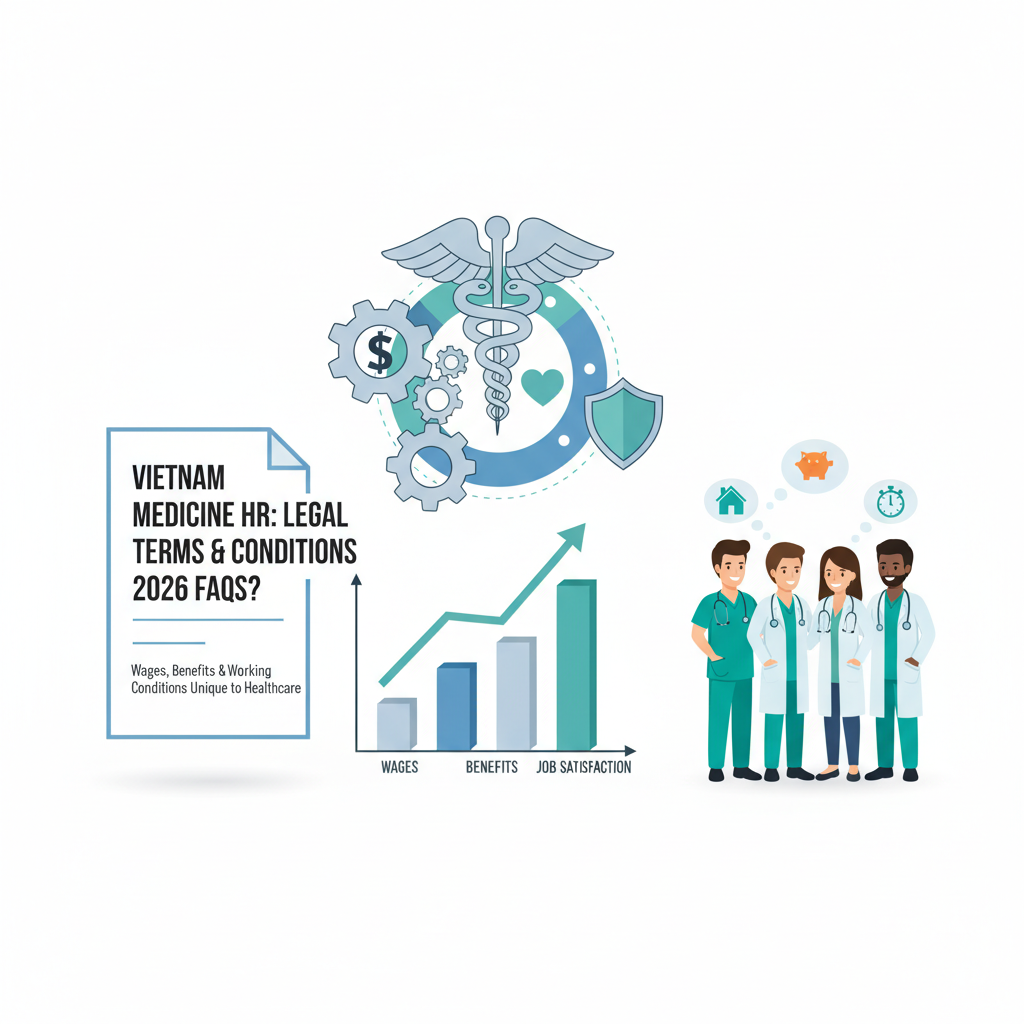
The healthcare sector in Vietnam operates under a unique set of demands, requiring a meticulous approach to human resources management. From urgent patient care to continuous service delivery, the legal stipulations surrounding compensation, benefits, and workplace standards for medical professionals are distinct and rigorously enforced. Navigating these complexities is crucial for both employers and employees to ensure compliance, fairness, and the well-being of the workforce. This section delves into the Legal HR terms & conditions for medicine field in Vietnam, highlighting the specific regulations that govern wages, insurance mandates, and working environments for medical staff.
-
Minimum Wage & Overtime Regulations for Medical Staff
Vietnam’s labor laws establish a multi-tiered regional minimum wage system, which healthcare providers must adhere to when compensating their staff. While the base salary for medical professionals often exceeds these minimums due to their specialized skills and qualifications, understanding the foundational wage structure is essential for legal compliance. Beyond basic pay, overtime regulations are particularly pertinent in the demanding healthcare environment. The Labour Code stipulates premium rates for work performed beyond standard hours, on weekends, national holidays, or during night shifts. For medical staff, who frequently work extended hours, are on call, or respond to emergencies, employers must ensure accurate calculation and timely payment of these overtime premiums. This includes clear policies for recording working hours and transparent compensation structures, mitigating potential disputes and ensuring fair treatment for dedicated healthcare workers.
-
Health Insurance, Social Insurance, & Unemployment Insurance Mandates
A cornerstone of employee welfare in Vietnam, mandatory social insurance contributions are critical for healthcare professionals. This comprehensive scheme includes Health Insurance, Social Insurance, and Unemployment Insurance, each designed to provide a safety net for workers and their families. Employers and employees are legally required to contribute a percentage of the employee’s salary to these funds. Health Insurance ensures access to medical services and covers a significant portion of healthcare costs, which is especially relevant for those working within the system. Social Insurance provides benefits related to sickness, maternity, work accidents, occupational diseases, retirement pensions, and survivor’s benefits. Lastly, Unemployment Insurance offers financial support and job placement assistance during periods of involuntary unemployment. Adherence to these mandates is not just a legal obligation but also a vital component of attracting and retaining talent in the healthcare sector, offering crucial protection and security to medical staff. For more detailed information on these provisions, the official Vietnam Social Security website serves as an authoritative resource.
-
Specific Working Hours, Shift Regulations, and Occupational Safety
The nature of healthcare mandates specific considerations for working hours and shift patterns. While the general Vietnamese labor law sets standard working hours, the medical field often requires flexible and extended schedules, including continuous service, on-call duties, and rotating shifts. Regulations are in place to ensure adequate rest periods between shifts, manage fatigue, and prevent burnout among medical personnel. Crucially, occupational safety and health (OSH) are paramount in healthcare. Medical staff face unique risks, including exposure to infectious diseases (e.g., COVID-19, TB), hazardous chemicals, radiation, ergonomic strains from patient handling, and even workplace violence. Employers are legally bound to implement robust OSH programs, provide necessary personal protective equipment (PPE), conduct regular risk assessments, offer safety training, and establish clear protocols for managing accidents and emergencies. Creating a safe and healthy working environment is not only a legal requirement but also fundamental to the well-being and productivity of healthcare professionals, directly impacting the quality of patient care.
Understanding and meticulously implementing the specific Legal HR terms & conditions for medicine field in Vietnam is indispensable for healthcare institutions. From ensuring competitive and compliant wage structures and comprehensive social security benefits to upholding stringent occupational safety standards and managing unique shift requirements, the regulatory landscape is intricate. Proactive adherence to these frameworks not only safeguards the rights and welfare of medical staff but also underpins the operational integrity and reputation of healthcare providers, fostering a stable and productive environment critical for delivering high-quality medical services across the nation.
Performance Management & Disciplinary Actions
In Vietnam’s rapidly evolving healthcare sector, effective human resource management is not just about recruitment and retention; it fundamentally involves establishing robust frameworks for performance management and handling disciplinary matters. Navigating the intricate landscape of Vietnamese labor law is crucial for healthcare institutions to ensure compliance, foster a productive work environment, and mitigate legal risks. This section delves into the Legal HR terms & conditions for medicine field in vietnam, specifically exploring the legal framework surrounding employee performance evaluation, grievance procedures, and disciplinary measures tailored for the unique context of the Vietnamese healthcare industry.
1. Performance Appraisal Legality & Documentation
The foundation of fair and effective performance management in Vietnam lies in strict adherence to legal requirements, particularly those outlined in the Labor Code 2019 and its guiding decrees. For healthcare professionals, performance appraisals must be based on clear, objective, and quantifiable criteria directly related to job roles, responsibilities, and the standards of medical practice. These criteria should be communicated transparently to employees at the outset of their employment or review period. Legally, employers are required to develop internal labor regulations that include specific provisions on performance evaluation, ensuring consistency and impartiality across the organization.
Crucially, documentation is paramount. Every stage of the appraisal process – from setting objectives and regular feedback sessions to the final evaluation and appeals – must be meticulously recorded. This includes appraisal forms, performance improvement plans (PIPs), training records, and any related communications. Such documentation serves as vital evidence should performance issues escalate to disciplinary action or be challenged by an employee. Healthcare institutions must ensure that performance reviews are conducted regularly, providing employees with opportunities for self-assessment, feedback, and professional development. The objective is not merely to assess past performance but to foster continuous improvement, align individual goals with institutional objectives, and ensure the highest standards of patient care.
2. Disciplinary Procedures & Termination for Cause
Addressing underperformance or misconduct among healthcare personnel requires a well-defined and legally compliant disciplinary procedure. Vietnamese labor law, particularly the Labor Code 2019, sets forth stringent requirements for imposing disciplinary actions, up to and including termination for cause. Employers must have clearly established internal labor regulations (ILRs) that detail specific grounds for disciplinary action, the corresponding penalties, and the procedural steps to be followed. Common grounds for disciplinary action in the healthcare sector might include breaches of professional ethics, negligence leading to patient harm, repeated absenteeism, or serious violations of internal policies.
Before any disciplinary measure is imposed, the employer must conduct a thorough investigation, allowing the employee ample opportunity to provide an explanation and present evidence. The presence of a representative from the grassroots trade union or an employee’s organization (if applicable) is often required during disciplinary meetings. Strict timelines must be observed for conducting investigations and issuing disciplinary decisions. Termination for cause, considered the most severe disciplinary measure, can only be invoked for specific, legally defined reasons, such as serious breaches of labor discipline or repeated violations after prior written warnings. Any deviation from these legal procedures can render the disciplinary decision invalid, potentially leading to costly disputes and reinstatement orders. Healthcare providers must therefore be acutely aware of and scrupulously adhere to these procedural safeguards to ensure lawful and defensible disciplinary actions. For an overview of key changes in Vietnamese labor law, refer to resources like Vietnam Labor Code 2019: An Overview of Key Changes.
3. Handling Employee Grievances and Disputes
Even with robust performance management and disciplinary frameworks, employee grievances and disputes are an inevitable part of any workplace. In the Vietnamese healthcare context, effective dispute resolution mechanisms are vital to maintain morale, prevent escalation, and ensure continuous, quality patient service. Vietnamese labor law provides a multi-tiered approach to dispute resolution, starting with internal mechanisms. Employees are typically encouraged to first seek resolution through direct negotiation with their supervisor or HR department. If internal resolution fails, the dispute may proceed to conciliation, often involving a labor conciliator appointed by the local labor authority.
Should conciliation prove unsuccessful, the dispute can be referred to a labor arbitration council or directly to a competent court, depending on the nature of the dispute. Healthcare institutions must have clear internal policies for handling grievances, ensuring employees feel heard and disputes are addressed fairly and promptly. The role of grassroots trade unions is particularly significant here, as they often represent employees in grievance procedures and collective labor disputes. Proactive measures, such as fostering open communication, regular feedback channels, and comprehensive training on employee rights and responsibilities, can significantly reduce the incidence of disputes. Understanding and applying the Legal HR terms & conditions for medicine field in vietnam related to dispute resolution is critical for maintaining a stable and compliant working environment.
Termination & Severance Requirements
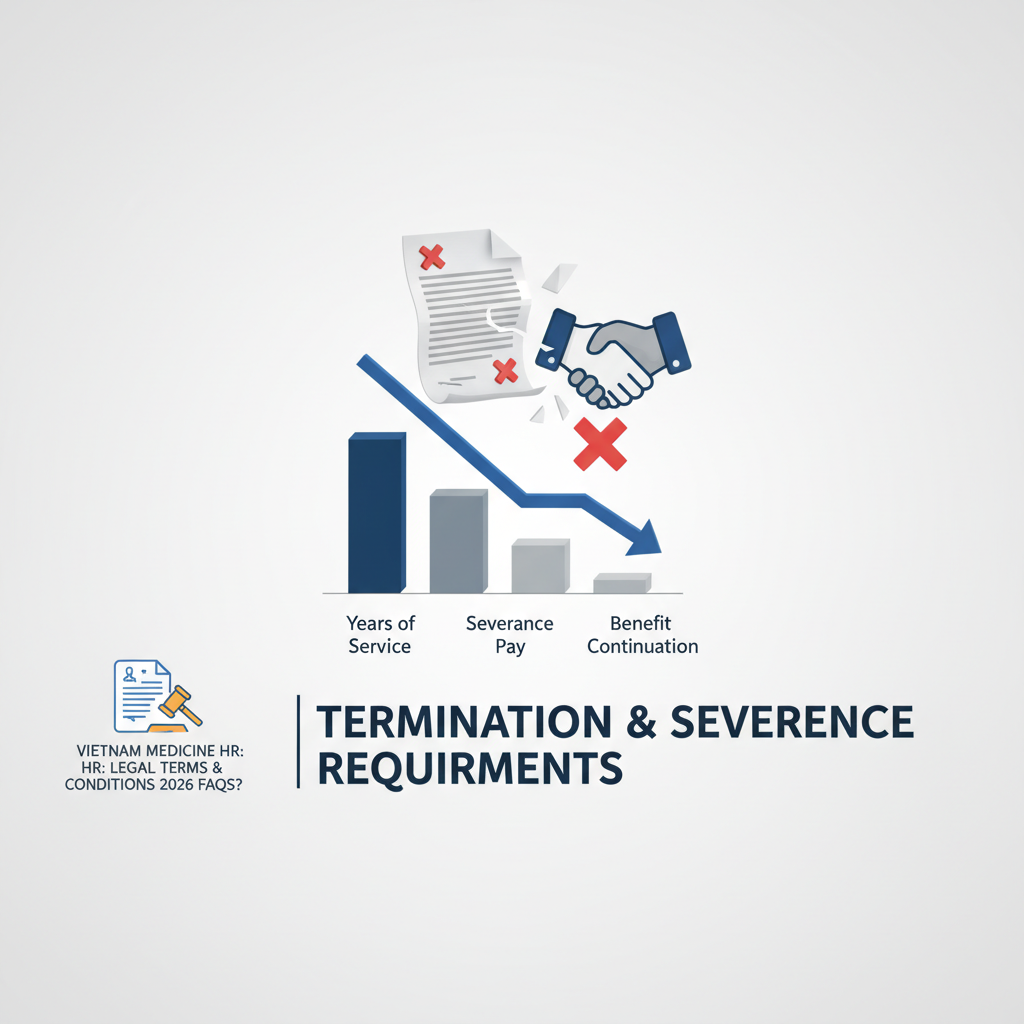
Navigating employment termination and severance in Vietnam’s dynamic medicine sector requires employers to adhere to strict legal processes and obligations. From private clinics to international hospitals, understanding these requirements is crucial for compliance, risk mitigation, and fostering a fair working environment. This section details the critical legal aspects governing the cessation of employment, including permissible grounds for termination, mandatory notice periods, and the calculation and disbursement of severance benefits, all within the unique context of the Vietnamese medical field.
1. Legal Grounds for Termination
Under Vietnam’s Labor Code 2019, employment termination must align with specific legal grounds. For the medicine field, these are particularly relevant given the high standards of professionalism and public trust. Key grounds include:
- Mutual Agreement: Both parties agree to end the contract, often involving negotiation of terms.
- Unilateral Termination by Employer: Permitted under specific conditions:
- Employee consistently fails to perform duties (after disciplinary action/retraining).
- Employee is incapacitated due to illness/accident for prolonged periods (e.g., 12 consecutive months for indefinite-term contracts).
- Due to force majeure (e.g., epidemics impacting operations).
- Employee absence without legitimate reason (e.g., 5+ working days within 30 days, or 20+ days within 365 days).
- Restructuring, technological changes, or economic reasons leading to redundancy.
- Employee commits disciplinary offense leading to dismissal (e.g., professional misconduct, breach of patient confidentiality).
- Employee reaches statutory retirement age.
- Employer ceases operations, is dissolved, or declares bankruptcy.
- Unilateral Termination by Employee: Employees can terminate with notice, or without notice under certain conditions (e.g., non-compliance with contract terms by employer, sexual harassment).
Understanding these Legal HR terms & conditions for medicine field in vietnam is crucial for ensuring lawful and ethical termination practices, safeguarding both the employer’s reputation and employee rights.
2. Notice Period Requirements for Different Contract Types
The notice period is a critical aspect, allowing both parties to prepare for the end of employment. Required notice periods vary based on the labor contract type:
- Indefinite-Term Labor Contracts:
- Employer Termination: At least 45 days’ notice.
- Employee Termination: At least 45 days’ notice.
- Definite-Term Labor Contracts (12 to 36 months):
- Employer Termination: At least 30 days’ notice.
- Employee Termination: At least 30 days’ notice (exceptions apply for termination without notice under specific adverse conditions).
- Seasonal or Specific Job Contracts (Under 12 months):
- Employer Termination: At least 3 working days’ notice.
- Employee Termination: At least 3 working days’ notice.
It is always advisable to consult the latest Vietnamese Labor Code 2019 or legal counsel to ensure precise adherence, especially within the sensitive healthcare sector.
3. Severance Pay Calculation & Obligations
Severance pay is a statutory entitlement for employees whose labor contracts are terminated under specific circumstances. Medical field employers must correctly calculate and disburse these benefits. Key aspects include:
- Conditions for Severance Pay: An employee is generally entitled if their contract is terminated due to:
- Unilateral termination by the employer (excluding disciplinary dismissal or retirement).
- Expiration of a definite-term contract not renewed (if not eligible for unemployment insurance).
- Termination by mutual agreement (if specified).
- Restructuring, technological changes, or economic reasons (may trigger job loss allowance instead or in addition).
Employees terminating lawfully with notice, or those dismissed for disciplinary reasons, are typically not entitled.
- Calculation of Severance Pay: Calculated as half a month’s average salary for each year of actual working service.
- Service Period: Total period worked, minus unemployment insurance contribution periods and any previously paid severance. Rounded up/down (e.g., 6 months to under 12 months counts as 1 year).
- Salary Basis: Average salary of the last 06 months preceding termination (including salary, allowances, and regular supplements).
Example: An employee earning VND 10,000,000/month for 5 years receives (5 * 0.5 * 10,000,000) = VND 25,000,000.
- Job Loss Allowance (Redundancy): For redundancy (economic, restructuring, tech changes), employees with 12+ months service get an allowance: one month’s salary for each year of service, minimum two months’ salary. This can be alternative or supplementary to severance pay.
Timely and accurate payment of severance benefits is a legal obligation, crucial for a smooth transition and maintaining a positive employer brand in Vietnam’s competitive medical labor market. Adhering to these regulations helps prevent disputes and upholds commitments.
Partner with Shelby Global
You are looking for reliable HR Sevice Suppliers? Contact Shelby Global Now! To connect with verified talents and upgrade your orginization.
—————————————
References
– Vietnam: The New Labor Code 2019 – Dentons: https://www.dentons.com/en/insights/alerts-and-publications/2020/january/15/vietnam-the-new-labor-code-2019
– Vietnam’s Labor Code (Law No. 45/2019/QH14): https://www.ilo.org/dyn/natlex/natlex4.detail?p_lang=en&p_isn=109575
– Vietnam Social Security: https://www.vss.gov.vn/
– Vietnam Labor Code 2019: An Overview of Key Changes: https://www.vietnam-briefing.com/news/vietnam-labor-code-2019-an-overview-of-key-changes.html
– Vietnamese Labor Code 2019: https://thuvienphapluat.vn/van-ban/Lao-dong-Tien-luong/Bo-luat-lao-dong-2019-338270.aspx