Overview of Singapore’s Finance Field & Its Current Standing
Singapore has solidified its position as a preeminent global financial hub, renowned for its strategic location, robust regulatory framework, and an unwavering commitment to innovation. This dynamic city-state serves as a crucial gateway to Asia’s burgeoning economies, attracting significant international investment and fostering a vibrant ecosystem for financial services. Understanding the current standing and future trajectory of this sector is paramount for anyone seeking a comprehensive market demand trend report of finance field in singapore. The nation’s finance landscape is characterized by its adaptability, forward-thinking policies, and a continuous drive towards digitalization and sustainability, making it a critical player in global finance.

1. Singapore’s Role as a Global Financial Hub
Singapore’s journey to becoming a top-tier global financial hub is a testament to its strategic vision and consistent execution. Its strong financial hub status is underpinned by a stable political environment, a transparent legal system, and a highly skilled workforce. The Monetary Authority of Singapore (MAS), the nation’s central bank and financial regulator, plays a pivotal role in maintaining trust and stability while fostering growth and innovation. Singapore’s unparalleled connectivity, both physical and digital, positions it as an ideal location for international businesses looking to access Asian markets. Its commitment to free trade and capital flows, coupled with a highly efficient infrastructure, makes it an attractive destination for capital raising, treasury management, and regional headquarters. This foundational strength is crucial for any meaningful analysis of Singapore’s financial sector performance and future market demand trends.
2. Key Segments: Banking, Asset Management, Insurance
Singapore’s financial field is diversified across several robust segments, each contributing significantly to its overall strength and generating distinct market demand. The banking sector is a cornerstone, comprising universal banks, wholesale banks, and a rapidly expanding cohort of digital banks. This sector is undergoing significant digital transformation, driven by consumer expectations and technological advancements, leading to increased demand for FinTech innovation specialists. Asset management is another powerhouse, with Singapore emerging as a leading global wealth management centre. The city-state’s assets under management (AUM) continue to grow, fuelled by a rising tide of private wealth from Asia and beyond, with increasing focus on alternative investments and sustainable finance. This segment’s growth underscores a strong demand for portfolio managers and ESG (Environmental, Social, and Governance) investment professionals. Lastly, the insurance sector is dynamic, witnessing innovation in product offerings, particularly in health, life, and general insurance, alongside the rise of InsurTech solutions. The evolving risk landscape and new regulatory frameworks are shaping this sector, creating new opportunities and specialized talent demand. These core segments collectively form the backbone of the finance field in Singapore, influencing the broader market demand trend report of finance field in singapore.
3. Recent Regulatory & Policy Developments
The MAS is proactive in shaping Singapore’s financial landscape through progressive regulatory and policy developments designed to foster innovation, ensure stability, and promote sustainable growth. Recent initiatives include the issuance of digital bank licenses, which has intensified competition and spurred digital transformation across traditional banking. The emphasis on sustainable finance is another critical development, with MAS launching various schemes and frameworks, such as the Green Finance Action Plan, to integrate environmental considerations into financial practices and products. This has led to a surge in demand for green finance expertise. Furthermore, Singapore continues to refine its regulatory sandbox for FinTech innovation, encouraging experimentation while ensuring consumer protection. Policies aimed at strengthening cybersecurity and combating financial crime remain high priorities, reflecting a commitment to maintaining the integrity of the financial system. These regulatory shifts not only ensure Singapore’s competitiveness but also significantly influence the skills and expertise required, making them crucial considerations for any comprehensive market demand trend report of finance field in singapore.
In conclusion, Singapore’s finance field stands at the forefront of global innovation, continuously adapting to new technologies, evolving market demands, and a dynamic regulatory environment. Its robust ecosystem across banking, asset management, and insurance, coupled with forward-looking policies on digital transformation and sustainable finance, positions it for sustained growth. Professionals and businesses looking to thrive in this vibrant market must stay abreast of these developments, leveraging insights from a detailed market demand trend report of finance field in singapore to navigate its complexities and capitalize on its abundant opportunities.
Singapore stands as a pivotal global financial hub, renowned for its stability, innovation, and strategic location. Understanding the evolving landscape of its financial sector is crucial for businesses, investors, and policymakers alike. This requires a deep dive into the current market demand trend report of finance field in singapore, identifying the key drivers and high-growth areas that are reshaping the industry.
Decoding Key Market Demand Trends in Singapore Finance
Singapore’s financial sector is in a perpetual state of evolution, driven by technological advancements, shifting investor priorities, and a dynamic regulatory environment. This section dives into the specific trends shaping demand within the financial sector, identifying high-growth areas and spotlighting where the future opportunities lie for Singapore financial sector growth.
1. Rise of Sustainable Finance (ESG)
One of the most significant and rapidly accelerating trends in Singapore’s financial market is the surge in demand for sustainable finance solutions. Environmental, Social, and Governance (ESG) factors are no longer niche considerations but have become central to investment decisions and corporate strategies. Singapore aims to be a leading global centre for green finance, with the Monetary Authority of Singapore (MAS) actively promoting sustainable practices and products.
Investors, both institutional and retail, are increasingly conscious of the environmental and social impact of their portfolios. This has led to a burgeoning market for green bonds, sustainability-linked loans, ESG funds, and other sustainable investment products. Financial institutions are responding by integrating ESG considerations into their core offerings, developing expertise in climate risk assessment, and enhancing transparency in reporting. The demand for robust ESG investing trends analysis and advisory services is at an all-time high, driven by a global push towards a more sustainable economy and Singapore’s proactive sustainable finance frameworks. This shift is creating substantial opportunities for innovative financial products and services that align profitability with positive societal impact.
2. Growth in Digital Payments & FinTech Adoption
The digital transformation of financial services continues unabated, with Singapore at the forefront of FinTech innovation Singapore. The demand for seamless, secure, and efficient digital payment solutions has exploded, accelerated further by the pandemic. Consumers and businesses alike are embracing cashless transactions, mobile banking, and digital wallets, leading to a significant push for enhanced digital infrastructure and user experience.
FinTech adoption extends beyond payments, encompassing areas like artificial intelligence in financial advisory, blockchain for secure transactions, and cloud-based banking platforms. Regulatory sandboxes and government initiatives, such as the Smart Nation drive, have fostered an environment ripe for innovation, attracting global FinTech players and nurturing local start-ups. The increasing digital banking demand reflects a broader consumer preference for convenience and accessibility, pushing traditional banks to accelerate their digital strategies and collaborate with FinTech firms. This trend not only reshapes how financial transactions are conducted but also opens new avenues for personalized financial services and data-driven insights. For a comprehensive market demand trend report of finance field in singapore focusing on these digital shifts, further analysis is available.
3. Increased Focus on Wealth Management & Private Banking
Singapore has long been recognized as a premier wealth management hub, and this sector continues to witness robust demand. The rising affluence across Asia, coupled with Singapore’s political stability, strong regulatory framework, and sophisticated financial ecosystem, makes it an attractive destination for high-net-worth individuals (HNWIs) and ultra-high-net-worth individuals (UHNWIs) seeking to preserve and grow their wealth. The increasing focus on wealth management opportunities is evident in the expansion of private banks and wealth advisory firms, along with the diversification of their service offerings.
Clients are seeking more personalized wealth management, holistic financial planning, and sophisticated investment solutions that cater to their unique circumstances, including family office services, succession planning, and philanthropic advice. The integration of technology, particularly in areas like robo-advisory and digital client onboarding, is also transforming the delivery of wealth management services, making them more accessible and efficient. Furthermore, the convergence of sustainable finance with wealth management means that HNWIs are increasingly looking for ESG-integrated portfolios, aligning their investments with their values. This demand underscores Singapore’s enduring appeal as a centre for comprehensive and innovative private banking and wealth solutions.
In conclusion, Singapore’s financial sector is characterized by dynamic growth across several key areas. From the imperative of sustainable finance and the ubiquity of digital payments to the sophisticated demands of wealth management, these trends collectively paint a picture of an industry rapidly adapting to global shifts and local opportunities. Staying abreast of these demands is essential for stakeholders looking to thrive in this vibrant market.
The Talent Landscape: In-Demand Skills & Gaps
This section analyzes the skills employers are seeking and highlights any existing talent shortages within Singapore’s finance industry.
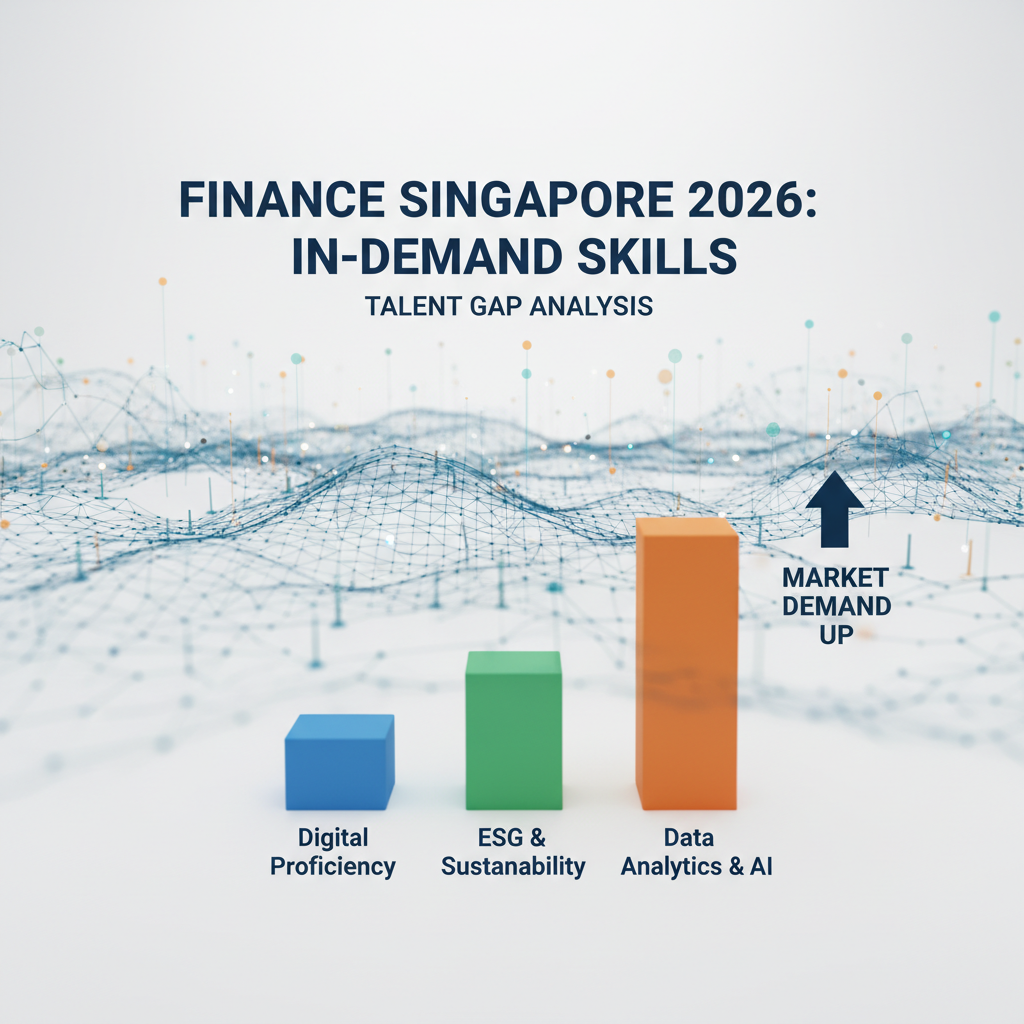
The dynamic financial sector in Singapore, a leading global financial hub, is undergoing a profound transformation driven by technological advancements and evolving client expectations. As a result, the market demand trend report of finance field in Singapore reveals a significant shift in the competencies required for success. Financial institutions are actively seeking professionals equipped not just with traditional financial acumen but also with advanced digital capabilities, strategic foresight, and adaptability. This rapidly evolving landscape presents both opportunities for skilled individuals and critical challenges in talent acquisition for firms grappling with specific skill shortages, particularly in areas intersecting finance and technology. To maintain its competitive edge, Singapore’s finance industry must proactively address these talent gaps and foster continuous upskilling.
1. Data Analytics & AI/ML Expertise
The explosion of data is fundamentally reshaping the financial industry. From predictive analytics for market trends to algorithmic trading, fraud detection, and personalized customer experiences, data science and artificial intelligence (AI) are no longer nascent technologies but core operational components. Consequently, professionals proficient in data analytics, machine learning (ML), and artificial intelligence are exceptionally high in demand. This includes roles such as data scientists, data engineers, AI/ML specialists, and quantitative analysts who can develop, implement, and interpret complex models. Expertise in programming languages like Python and R, coupled with a deep understanding of statistical modeling, big data platforms, and data visualization tools, is paramount. Despite the growing interest, Singapore faces a significant talent gap in this area, particularly for those with domain-specific financial knowledge combined with advanced analytical skills. Financial technology, or FinTech, advancements heavily rely on these capabilities, driving a fierce competition for talent. According to a MAS Financial Sector Talent & Skills overview, cultivating these future-enabled skills is crucial for the sector’s growth.
2. Cybersecurity & Risk Management Skills
As financial operations become increasingly digitized and interconnected, the threat landscape intensifies. Safeguarding sensitive financial data and critical infrastructure from sophisticated cyber threats is a top priority for every institution. This has led to an escalating demand for professionals with robust cybersecurity and regulatory compliance expertise. Roles such as cybersecurity analysts, information security managers, risk management specialists, and ethical hackers are essential in developing resilient defense mechanisms and ensuring adherence to stringent regulatory frameworks. Beyond technical prowess in areas like threat intelligence, incident response, and security architecture, these professionals must also possess a keen understanding of financial regulations (e.g., PDPA, AML/CFT) and operational risk. The talent pool equipped with both deep cybersecurity knowledge and specific financial industry context remains constrained, creating a critical gap. The continuous evolution of cyber threats means that these skills require constant updating, further challenging firms to find and retain qualified personnel capable of managing complex financial technology risks.
3. Digital Transformation & Project Management
The widespread adoption of digital transformation strategies across the financial sector necessitates a new breed of leaders and project managers. These are individuals who can drive large-scale technological implementations, integrate innovative solutions, and manage the organizational change that accompanies such shifts. Beyond traditional project management certifications, employers are seeking agile project managers, business analysts with a digital-first mindset, and transformation consultants who can bridge the gap between business objectives and technology solutions. This involves a strong understanding of agile methodologies, design thinking, and stakeholder management, combined with an ability to navigate complex digital ecosystems. Professionals who can effectively manage the lifecycle of digital initiatives, from conceptualization and development to deployment and post-implementation support, are highly valued. This demand is further fueled by the need for financial institutions to innovate rapidly and adapt to new market conditions, requiring skilled individuals to orchestrate complex projects and ensure seamless integration of new technologies and processes. For a comprehensive overview of the shifts, refer to a detailed market demand trend report of finance field in singapore.
In conclusion, Singapore’s finance industry is at an inflection point, with a clear imperative to cultivate a workforce capable of thriving in a digitally advanced and globally interconnected environment. The persistent talent gaps in areas like data analytics, AI adoption, cybersecurity, and digital transformation highlight the need for concerted efforts from both employers and educational institutions. Investing in upskilling current employees, attracting global talent, and fostering a culture of continuous learning will be pivotal for Singapore to maintain its status as a leading financial hub and ensure its future competitiveness in the evolving global economy.
Impact of Technology & Digital Transformation
The financial landscape is undergoing an unprecedented transformation, driven by rapid technological advancements and aggressive digital adoption. In Singapore, a leading global financial hub, this shift is particularly pronounced, fundamentally reshaping job roles, operational demands, and the very structure of financial services. Understanding these dynamics is crucial for anyone keen on the market demand trend report of finance field in singapore. From the rise of FinTech startups to the pervasive integration of Artificial Intelligence (AI) and the burgeoning potential of Blockchain, digital innovations are not just enhancing efficiency but are creating entirely new paradigms for value creation, risk management, and customer engagement across the sector.
-
FinTech Innovation & Startup Ecosystem
Singapore has firmly established itself as a vibrant FinTech hub, fostering an ecosystem ripe for innovation. Government initiatives, regulatory sandboxes by the Monetary Authority of Singapore (MAS), and significant investment have propelled the growth of FinTech startups specializing in payments, lending, wealth management (robo-advisors), InsurTech, and regtech. This dynamism has profound implications for traditional financial institutions, compelling them to either innovate in-house, acquire FinTechs, or forge strategic partnerships. The demand for professionals skilled in agile methodologies, data analytics, product management, and user experience (UX) design, particularly within a financial context, has surged. Furthermore, new roles such as FinTech Solution Architects, API Integration Specialists, and Digital Transformation Consultants are becoming indispensable. This evolution demands a workforce capable of navigating complex technological landscapes while understanding the intricate regulatory environment of finance.
-
Automation & AI in Financial Services
Automation and Artificial Intelligence (AI) are revolutionizing financial services by streamlining operations, enhancing decision-making, and personalizing customer experiences. Robotic Process Automation (RPA) is widely adopted for back-office functions like data entry, reconciliation, and report generation, leading to significant cost reductions and improved accuracy. AI, encompassing machine learning and natural language processing, is at the forefront of fraud detection, credit scoring, algorithmic trading, and predictive analytics. For instance, AI-powered chatbots and virtual assistants are redefining customer service, providing instant support and tailored advice. This shift has necessitated a re-evaluation of human roles. While some routine tasks are automated, new high-value roles are emerging in areas such as AI strategy, machine learning engineering, data science, and ethical AI oversight. Financial professionals now require strong analytical capabilities, proficiency in data interpretation, and an understanding of AI models to leverage these technologies effectively and remain competitive in a rapidly evolving market. The Monetary Authority of Singapore (MAS) actively supports the adoption of AI to enhance the financial sector’s efficiency and resilience.
-
Blockchain & Distributed Ledger Technology Adoption
Blockchain and Distributed Ledger Technology (DLT) are poised to fundamentally transform various facets of finance, offering enhanced security, transparency, and efficiency. In Singapore, Project Ubin (now Ubin+), led by the MAS, explored the use of DLT for interbank payments and settlements, demonstrating its potential for wholesale payments. Beyond this, DLT is gaining traction in cross-border payments, trade finance, supply chain finance, and the tokenization of assets. Its immutable ledger and cryptographic security features are particularly attractive for reducing operational risks and combating financial crime. The adoption of blockchain creates a strong demand for specialists in blockchain development, smart contract programming, cybersecurity, and legal & regulatory compliance specific to DLT. Financial institutions are seeking professionals who can design, implement, and manage blockchain-based solutions, ensuring data integrity and interoperability. As the industry moves towards greater decentralization and digital asset integration, expertise in these emerging technologies will be critical for shaping the future of financial services.
Future Outlook: Opportunities and Challenges to 2026
Singapore’s financial sector stands at the precipice of transformative change, driven by rapid technological advancements, evolving global economic landscapes, and a growing emphasis on sustainability. As a leading global financial hub, the nation is not merely adapting to these shifts but actively shaping them. This market demand trend report of finance field in singapore provides a forward-looking perspective, outlining the significant growth areas and the inherent challenges that will define the sector’s trajectory towards 2026. Understanding these dynamics is crucial for professionals, policymakers, and educational institutions alike, as they navigate a future characterized by both immense potential and complex demands.

1. Emerging Career Pathways & Niche Roles
The acceleration of fintech innovation in Singapore is fundamentally reshaping traditional roles and creating entirely new career pathways within the finance field. By 2026, we anticipate a significant surge in demand for specialists capable of bridging technology and finance. Roles in areas such as AI and machine learning engineering for financial modeling, blockchain developers for decentralized finance (DeFi), and cybersecurity experts dedicated to protecting financial data will become paramount. Furthermore, the global push towards environmental, social, and governance (ESG) factors is giving rise to a new category of sustainable finance jobs. Professionals with expertise in green finance, impact investing, and ESG risk assessment will be highly sought after, reflecting Singapore’s ambition to be a leader in sustainable finance. Data scientists and analytics professionals skilled in extracting insights from vast financial datasets will also be critical, driving digital transformation in finance across all segments, from retail banking to investment management. The shift signifies a move away from purely traditional financial skills towards a hybrid skillset combining financial acumen with advanced technological proficiency.
2. Regulatory Challenges & Compliance Trends
As the financial landscape evolves, so too do the complexities of its regulatory environment. Singapore, known for its robust and forward-thinking regulatory framework, will face ongoing challenges in balancing innovation with stability and consumer protection. The Monetary Authority of Singapore (MAS) continues to lead efforts in adapting regulations to new technologies, but keeping pace with rapid developments in areas like cryptocurrency, stablecoins, and cross-border digital payments remains a formidable task. This environment fuels the growth of regulatory technology (RegTech) in Singapore, as financial institutions increasingly rely on automated solutions to manage their compliance obligations efficiently and effectively. Trends indicate a greater emphasis on data privacy regulations (e.g., PDPA, international standards), anti-money laundering (AML) and counter-financing of terrorism (CFT) measures, and operational resilience. Firms will need to invest significantly in RegTech solutions and skilled compliance officers who can interpret complex rules and implement technology-driven compliance frameworks. The challenge lies in fostering an environment that encourages FinTech innovation while safeguarding against systemic risks and ensuring fair practices, necessitating continuous dialogue and collaboration between regulators and the industry.
3. Strategic Workforce Planning for Future Growth
To capitalize on emerging opportunities and navigate challenges, strategic workforce planning will be critical for Singapore’s financial sector. The rapid pace of technological change and the demand for specialized skills necessitate a proactive approach to talent development in finance. This involves both upskilling the existing workforce in areas like AI, data analytics, and cybersecurity, and attracting new talent with critical future-ready capabilities. Educational institutions and industry players must collaborate closely to design curricula that meet the evolving needs of the sector, ensuring a steady pipeline of skilled professionals. Programs focusing on continuous learning, reskilling initiatives, and internships that provide practical exposure to new financial technologies will be essential. Furthermore, attracting global talent to supplement local expertise will remain vital for maintaining Singapore’s competitive edge as a global financial center. Firms must also foster a culture of innovation, agility, and lifelong learning to empower their employees to adapt to new roles and responsibilities. Effective workforce planning will ensure that the financial industry has the human capital necessary to drive growth, embrace digital transformation in finance, and cement Singapore’s position as a leading financial hub through 2026 and beyond, aligning with insights from any comprehensive market demand trend report of finance field in singapore.
Partner with Shelby Global
You are looking for reliable HR Sevice Suppliers? Contact Shelby Global Now! To connect with verified talents and upgrade your orginization.
—————————————
References
– Singapore’s Future as a Leading Global Financial Centre Speech by MAS: https://www.mas.gov.sg/news/speeches/2023/singapores-future-as-a-leading-global-financial-centre
– Monetary Authority of Singapore (MAS) Sustainable Finance: https://www.mas.gov.sg/development/sustainable-finance
– MAS Financial Sector Talent & Skills: https://www.mas.gov.sg/development/financial-sector-talent-and-skills
– Monetary Authority of Singapore (MAS) FinTech & Innovation: https://www.mas.gov.sg/development/fintech
– Monetary Authority of Singapore FinTech Initiatives: https://www.mas.gov.sg/development/fintech