Understanding Singapore’s Logistics Landscape & Risk Context
Singapore, a small island nation with a gargantuan global footprint, has long cemented its position as a global logistics hub. Its strategic location at the crossroads of major shipping lanes, coupled with world-class infrastructure and a pro-business environment, makes it indispensable to international trade and global supply chains. However, in an era defined by rapid geopolitical shifts, technological disruption, and environmental challenges, this very interconnectedness exposes Singapore’s logistics sector to an escalating array of risks. Understanding and proactively addressing these vulnerabilities is not merely prudent; it is essential for maintaining competitiveness and ensuring supply chain resilience. This necessitates a detailed and forward-looking the trend report of the risk of logistics field in Singapore.

1. Singapore’s Role in Global Supply Chains
Singapore’s prowess in logistics is multifaceted. Its award-winning Changi Airport serves as a vital air cargo hub, connecting East and West, while the Port of Singapore consistently ranks among the world’s busiest container ports, facilitating immense maritime trade and transshipment volumes. Beyond traditional shipping, the nation excels in specialized logistics segments like cold chain logistics for pharmaceuticals and food, and is rapidly evolving its capabilities for e-commerce logistics fulfillment. Advanced infrastructure development, coupled with strategic free trade agreements, further bolsters its appeal. This robust ecosystem makes Singapore a critical nerve center for global commerce, dictating that any disruption within its logistics sector can have cascading effects worldwide. Therefore, continuous vigilance and strategic planning based on the trend report of the risk of logistics field in Singapore are paramount.
2. The Urgency of a Forward-Looking Risk Trend Report
The imperative for a comprehensive risk trend report stems from the inherently dynamic and unpredictable nature of the modern global landscape. Supply chain disruptions are no longer isolated incidents but recurring phenomena, driven by factors ranging from geopolitical risks and trade tensions to climate change impacts and health crises. The increasing reliance on digitalization in logistics also introduces new vulnerabilities, particularly from sophisticated cybersecurity threats that can cripple operations and compromise sensitive data. Furthermore, the push for sustainability in logistics adds regulatory and operational complexities. A forward-looking the trend report of the risk of logistics field in Singapore is not just about identifying existing threats but anticipating emerging ones, providing businesses and policymakers with actionable insights to develop robust risk mitigation strategies. This proactive stance ensures that Singapore can maintain its leading edge in a fiercely competitive and uncertain global environment. For more insights on global logistics performance, the World Bank’s Logistics Performance Index provides valuable context on the interconnectedness and vulnerabilities of global supply chains. Understanding the LPI can further contextualize Singapore’s risk landscape.
3. Methodologies for Assessing Logistics Field Risks
Developing a robust the trend report of the risk of logistics field in Singapore requires a systematic and multi-faceted approach to risk assessment. Effective risk assessment frameworks integrate both quantitative and qualitative methodologies. This includes comprehensive data analytics in logistics, leveraging vast datasets from shipping manifests, customs declarations, weather patterns, and economic indicators to identify trends and anomalies. Predictive risk analysis, often powered by AI and machine learning, can forecast potential disruptions, from port congestion and port efficiency fluctuations to shifts in trade policy impact. Scenario planning and expert interviews also play a crucial role in understanding ‘black swan’ events and nuanced geopolitical dynamics. Furthermore, the report must consider the implications of rapid logistics technology adoption, such as automation and blockchain, which present both opportunities and new risk vectors. By continuously monitoring, analyzing, and updating these risk profiles, Singapore can ensure its logistics infrastructure remains resilient, adaptive, and prepared for future challenges, reinforcing its reputation as a reliable and innovative global trade gateway.
Key Economic & Geopolitical Risks for 2026
Singapore, a global logistics powerhouse, stands at a critical juncture as 2026 approaches. Its highly interconnected logistics field, a lynchpin of global supply chains, is increasingly exposed to a complex interplay of macroeconomic forces and shifting international relations. Understanding the trend report of the risk of logistics field in singapore requires a deep dive into potential disruptions and policy impacts that will shape its risk profile. From fluctuating demand to geopolitical realignments, these factors demand proactive assessment and strategic resilience planning for sustained growth and stability.
1. Global Economic Slowdown & Demand Volatility
The prospect of a global economic slowdown remains a primary concern for Singapore’s logistics sector in 2026. Persistent inflationary pressures, coupled with aggressive monetary tightening by major central banks worldwide, are likely to dampen global trade volumes and consumer demand. For a trade-dependent nation like Singapore, which serves as a critical transshipment hub, a significant dip in manufacturing output from key trading partners in Asia, Europe, and North America would directly translate into reduced cargo throughput and freight activity. Logistics firms face the challenge of demand volatility, making forecasting and capacity planning increasingly difficult. A sluggish global economy can lead to overcapacity in shipping lanes, driving down freight rates and impacting the profitability of carriers and freight forwarders. Furthermore, a deceleration in economic growth in China, a pivotal market, could have ripple effects across Asian supply chains, affecting Singapore’s port and air cargo operations. Building greater supply chain resilience, diversifying trade partners, and embracing digital solutions to optimize operations will be crucial for navigating this period of potential economic headwinds.
2. Geopolitical Instability & Regional Trade Policy Shifts
The geopolitical landscape for 2026 is expected to remain fraught with uncertainties, significantly influencing global trade routes and regional stability. Ongoing conflicts, such as the war in Ukraine and tensions in the Middle East, continue to pose direct threats to shipping lanes, elevate insurance costs, and create unpredictable supply chain disruptions. The intensifying strategic competition between the United States and China, characterized by technological restrictions, tariff disputes, and economic decoupling rhetoric, holds particular relevance for Singapore. As a neutral trading hub, Singapore’s logistics sector could be caught in the crossfire of protectionist policies and efforts to re-shore or friend-shore manufacturing, potentially altering traditional trade flows. Regionally, while blocs like ASEAN and RCEP generally foster open trade, the emergence of new trade barriers or policy shifts among member states could introduce complexities. The logistics field must monitor these developments closely, as changes in trade agreements, customs regulations, and diplomatic relations can rapidly transform operational environments, necessitating agile adaptation and diversification of logistics networks to mitigate risks associated with political volatility and policy uncertainty.
3. Currency Fluctuations & Fuel Price Volatility
Two major financial variables—currency fluctuations and fuel price volatility—are poised to exert significant pressure on Singapore’s logistics costs and profitability in 2026. For a sector heavily reliant on international transactions, unpredictable shifts in major global currencies like the US dollar, Euro, and Chinese Yuan against the Singapore Dollar can directly impact import and export costs, freight charges, and the overall competitiveness of logistics services. Firms dealing with international procurement or offering services to overseas clients must contend with exchange rate risks that can erode profit margins if not adequately hedged. Simultaneously, the volatility of global oil prices remains a perennial concern. Geopolitical events, production cuts by OPEC+, and shifts in global demand can lead to sudden spikes or drops in crude oil prices. Since fuel constitutes a substantial portion of operational expenses for shipping lines, airlines, and land transport providers, any sharp increase in oil prices translates directly into higher bunker surcharges, air freight levies, and trucking costs. These additional expenses are often passed on to clients, potentially increasing the cost of goods and impacting consumer demand, thereby creating a compounding effect on the entire logistics value chain. Strategic hedging and efficient fuel management are imperative to navigate these financial volatilities.
Operational & Environmental Challenges in Singapore Logistics
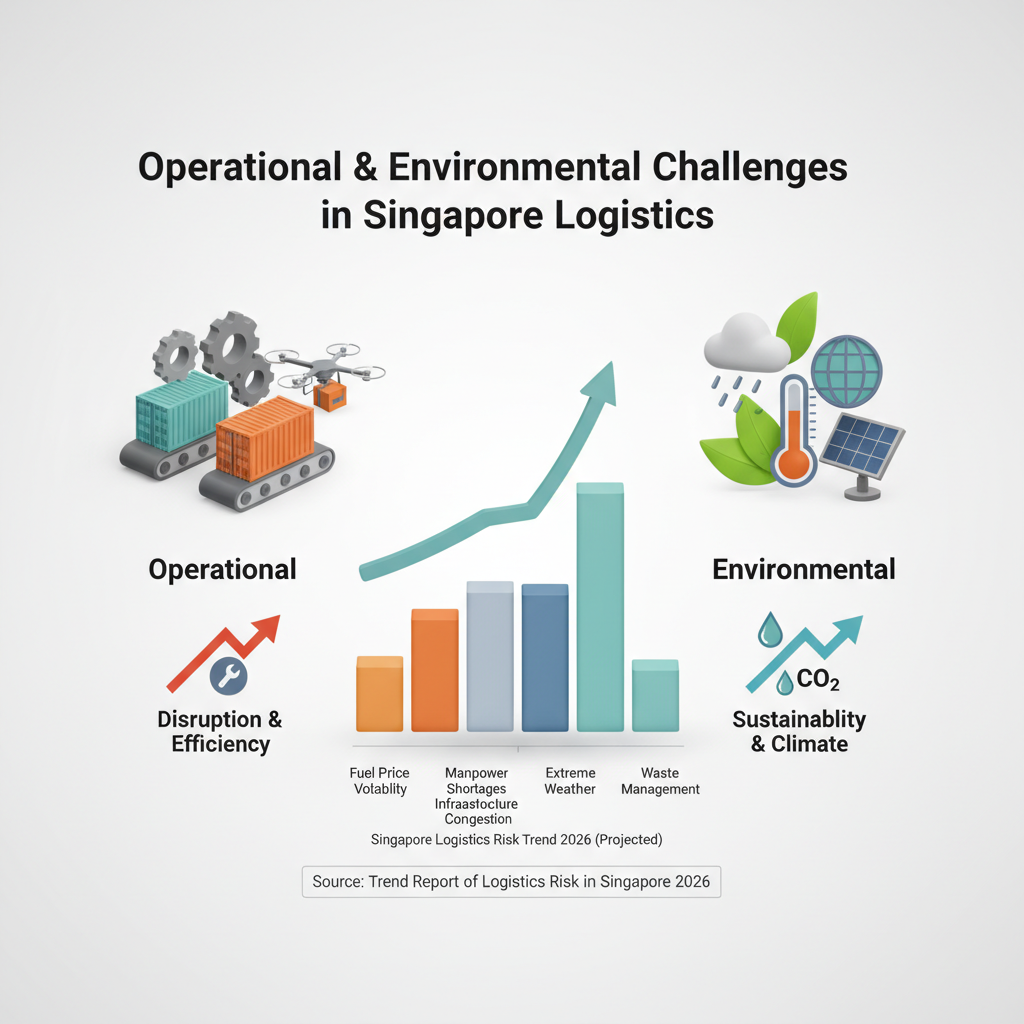
Singapore, a global logistics powerhouse, consistently faces a dynamic array of operational and environmental challenges that critically impact its supply chain efficiency and long-term sustainability. The nation’s strategic location, while a significant asset, also positions it at the forefront of global trade fluctuations and climate vulnerabilities. Understanding these hurdles is crucial for any trend report of the risk of logistics field in Singapore, highlighting the need for robust mitigation strategies and forward-thinking innovation. From manpower constraints to the increasing intensity of extreme weather events, these interwoven risks demand comprehensive solutions to maintain Singapore’s competitive edge.
-
Labor Shortages & Talent Acquisition Risks
One of the most pressing operational challenges facing Singapore’s logistics sector is the persistent issue of labor shortages and the increasing difficulty in attracting and retaining skilled talent. As the industry modernizes, there’s a growing demand for roles that require digital literacy, data analytics capabilities, and sophisticated supply chain management expertise. However, the existing workforce often struggles with an aging demographic, while younger generations may perceive logistics as a traditional, less appealing career path. This talent gap is exacerbated by Singapore’s tight labor market and high cost of living, which makes it challenging to compete for foreign talent.
The scarcity of skilled workers, from warehouse operators and truck drivers to supply chain planners and last-mile delivery personnel, directly impacts operational efficiency. Companies face higher labor costs, increased overtime, and potential delays in service delivery. Furthermore, the lack of a sufficient talent pipeline hinders innovation and the adoption of new technologies, as there aren’t enough skilled individuals to implement and manage automated systems or data-driven solutions. Addressing these risks requires concerted efforts in upskilling the existing workforce, promoting vocational training, enhancing the industry’s image, and exploring judicious automation to reduce reliance on manual labor.
-
Port Congestion & Infrastructure Resilience Concerns
As one of the world’s busiest transshipment hubs, Singapore’s port operations are a linchpin of global trade. However, this high volume naturally brings risks of port congestion, especially amidst global supply chain disruptions. Geopolitical events, unexpected surges in cargo volume, and even minor operational hiccups can quickly cascade into significant delays, affecting vessel turnaround times and overall logistics efficiency. The sheer scale of operations at Singapore’s port infrastructure, while impressive, also presents a constant need for upgrades and maintenance to ensure resilience.
The ongoing development of Tuas Port, designed to consolidate all container operations and significantly boost capacity, is a strategic move to address future growth and enhance resilience. This massive undertaking aims to employ advanced automation and smart technologies to optimize cargo flow and reduce human error, thereby mitigating congestion risks. Yet, the transition itself, alongside the continuous pressure from global shipping dynamics, means that infrastructure resilience remains a critical concern. Continuous investment in cutting-edge port technology and robust contingency planning is paramount to safeguarding Singapore’s status as a reliable maritime gateway. The Maritime and Port Authority of Singapore (MPA) consistently outlines its vision for leveraging technology and scale to enhance port efficiency and resilience.
-
Climate Change Impacts & Extreme Weather Events
Singapore, as a low-lying island nation, is particularly vulnerable to the escalating impacts of climate change, which pose significant environmental risks to its logistics infrastructure and operations. Rising sea levels present a long-term threat to coastal facilities, including warehouses and port areas, potentially requiring extensive protective measures and infrastructure relocation. More immediate are the increasing frequency and intensity of extreme weather events, such as torrential rainfall and prolonged heatwaves.
Heavy rains can lead to localized flooding, disrupting last-mile delivery routes, damaging goods in transit or storage, and causing delays in port and airport operations. Such events can strain transportation networks and pose safety risks to logistics personnel. Conversely, extreme heat can impact the efficiency of outdoor workers and the performance of certain equipment, particularly in cold chain logistics. These climate-related disruptions necessitate significant investment in climate-resilient infrastructure, improved drainage systems, and robust business continuity plans. Furthermore, the push for sustainable logistics practices, including the adoption of electric vehicles and green warehousing, is not just about compliance but a strategic imperative to mitigate environmental footprint and build a more resilient, future-proof supply chain in the face of evolving climate patterns.
In conclusion, Singapore’s logistics sector faces a complex interplay of operational and environmental challenges. Addressing labor shortages through talent development and automation, ensuring port resilience amidst global trade volatility, and adapting to the tangible impacts of climate change are not isolated tasks but interconnected pillars of a sustainable strategy. Proactive measures, technological adoption, and continuous policy adaptation are essential for Singapore to navigate these hurdles successfully and reinforce its position as a world-leading, resilient, and environmentally conscious logistics hub, as highlighted in any comprehensive trend report of the risk of logistics field in Singapore.
Technological Adoption & Cybersecurity Threats
The rapid evolution of technology has undeniably transformed the global logistics field, pushing the boundaries of efficiency, visibility, and operational speed. From intricate supply chain networks to last-mile delivery, technological advancements offer unprecedented opportunities for growth and optimization. However, this embrace of innovation presents a complex duality: while technological adoption acts as a powerful enabler, it simultaneously introduces a new array of sophisticated risks, particularly within the realm of cybersecurity threats and the intricate challenges associated with integrating advanced systems. For Singapore, a critical logistics hub, understanding this dual nature is paramount, especially when analyzing the impact on the sector. The drive towards digital transformation, powered by AI, automation, and the Internet of Things (IoT), necessitates a robust framework to mitigate these emerging threats and ensure the resilience of its vital logistics infrastructure.
1. Cybersecurity Threats & Data Privacy Concerns
The increasing digitalization of logistics operations, encompassing everything from inventory management systems to global freight tracking, has inevitably broadened the attack surface for malicious actors. Cybersecurity threats in Singapore’s logistics sector are escalating, with sophisticated ransomware attacks, phishing scams, and data breaches posing significant risks to operational continuity and sensitive information. Supply chain cyberattacks, in particular, can cripple an entire network, disrupting the flow of goods and causing substantial financial losses. Furthermore, the proliferation of data – from customer details and shipment manifests to proprietary operational algorithms – raises profound data privacy concerns. Companies must navigate stringent regulatory landscapes, such as GDPR (for international operations) and local data protection acts, ensuring compliance and safeguarding personal identifiable information (PII). A single data breach can not only incur hefty fines but also severely damage a company’s reputation and erode customer trust. Therefore, robust cybersecurity protocols, including multi-factor authentication, advanced threat detection systems, and employee training, are no longer optional but essential components of risk management in modern logistics. Protecting digital assets and maintaining data integrity are critical to sustaining competitive advantage in a highly interconnected environment.
2. Risks in Adopting AI, Automation, and IoT
The adoption of cutting-edge technologies like Artificial Intelligence (AI), automation, and the Internet of Things (IoT) promises transformative benefits for logistics, from optimizing routes and predictive maintenance to autonomous warehousing and real-time tracking. However, these innovations also introduce distinct risks. AI systems, while powerful, are susceptible to ‘data poisoning’ or algorithmic bias, which can lead to inefficient decisions, erroneous forecasting, or even discriminatory practices if the underlying data is flawed or manipulated. Autonomous vehicles and robotic systems, central to automation in warehouses and last-mile delivery, present their own set of challenges, including software vulnerabilities that could lead to remote hijacking or operational failures. Furthermore, the vast network of interconnected IoT devices – sensors monitoring cargo conditions, smart pallets, and GPS trackers – creates millions of new entry points for cybersecurity threats. Each device, if not properly secured, can become a gateway for hackers to infiltrate the wider network, steal data, or disrupt operations. Managing the security of this extensive and diverse ecosystem of devices is a complex undertaking, requiring continuous monitoring, vulnerability assessments, and secure patch management. The integration of these advanced systems must be approached with a comprehensive risk assessment strategy, prioritizing security by design to prevent catastrophic failures and ensure reliable, efficient operations within the logistics field.
3. Challenges in Digital Infrastructure Modernization
To fully leverage the potential of AI, automation, and IoT, logistics companies must embark on significant digital infrastructure modernization. This often involves migrating legacy systems to cloud-based platforms, upgrading network capabilities, and adopting advanced analytics tools. However, this transition is fraught with challenges. The financial investment required for comprehensive modernization can be substantial, particularly for small and medium-sized enterprises (SMEs) in Singapore’s logistics field. Beyond cost, the technical complexity of integrating disparate systems, ensuring interoperability between new and old technologies, and managing data migration without disruption can be daunting. Legacy systems, often foundational to existing operations, may not be compatible with newer, more agile solutions, creating potential bottlenecks and security gaps. Moreover, the shortage of skilled cybersecurity professionals and IT experts capable of designing, implementing, and maintaining these sophisticated infrastructures is a global concern, keenly felt in competitive markets like Singapore. Without adequate expertise, companies risk misconfigurations, system vulnerabilities, and delayed adoption. Successful modernization requires not just technological upgrades but also a strategic approach to change management, workforce training, and a continuous commitment to enhancing security posture. Addressing these challenges head-on is crucial for companies aiming to remain competitive and resilient against the evolving threat landscape outlined in the trend report of the risk of logistics field in Singapore.
Strategies for Mitigating Risks & Future-Proofing Logistics
Building upon insights from the trend report of the risk of logistics field in singapore, this section provides actionable insights and strategic recommendations for logistics companies, policymakers, and stakeholders. The goal is to address identified vulnerabilities and build a resilient, adaptive future for Singapore’s vital logistics field. As a global trade hub, Singapore’s logistics sector faces complex challenges, from geopolitical shifts and climate change to technological disruptions and talent shortages. Proactive strategies are essential to navigate these turbulent waters and ensure sustained competitiveness and growth, solidifying Singapore’s position as a premier logistics hub.
1. Building Resilient & Diversified Supply Chains
A cornerstone of future-proofing Singapore’s logistics sector lies in cultivating robust supply chain resilience. This involves moving beyond single-source dependencies and embracing geographical diversification. Companies should proactively map their supply networks to identify critical nodes and potential bottlenecks, then strategically establish alternative sourcing channels and manufacturing locations across different regions. This includes exploring near-shoring or friend-shoring strategies to reduce reliance on distant or politically volatile regions. Furthermore, investing in multi-modal transport options and developing diversified trade routes can mitigate risks associated with disruptions in specific corridors, enhancing port efficiency and overall connectivity. Effective inventory management strategies, including the strategic stockpiling of critical goods and components, are also crucial. Singapore can leverage its strategic location to serve as a regional distribution and consolidation hub, facilitating faster response times to disruptions. By building agility into their operations, businesses can better absorb shocks and maintain continuity, a key takeaway from the trend report of the risk of logistics field in singapore.
2. Leveraging Advanced Technology for Risk Management
The strategic adoption of cutting-edge technologies is paramount for enhancing operational visibility and proactive risk mitigation. Digital transformation efforts must be accelerated across the logistics value chain. This includes widespread implementation of automation in warehouses and distribution centres, improving efficiency and reducing reliance on manual labour. Advanced data analytics and Artificial Intelligence (AI) can be deployed to predict disruptions, optimize routing, and identify emerging risks based on vast datasets. Predictive analytics, for instance, can anticipate potential delays in last-mile delivery or identify vulnerabilities in cold chain logistics due to unforeseen events. Blockchain technology offers enhanced transparency and traceability, crucial for managing complex international shipments and ensuring regulatory compliance. Moreover, robust cybersecurity measures are non-negotiable to protect sensitive data and operational systems from increasingly sophisticated threats. Singapore’s commitment to building a resilient supply chain ecosystem through technology is highlighted by initiatives such as those detailed by the World Economic Forum. These technological advancements not only manage risks but also drive operational excellence and foster innovation, directly addressing issues raised in the trend report of the risk of logistics field in singapore.
3. Collaborative Policy Frameworks & Industry Partnerships
Effective risk mitigation and future-proofing require a concerted effort involving government, industry, and academia. Policymakers should focus on developing agile and supportive regulatory frameworks that facilitate innovation and cross-border trade, promoting trade facilitation while maintaining robust standards. Public-private partnerships are crucial for investing in critical infrastructure development, from advanced port facilities to digital platforms that streamline logistics processes. Initiatives to address talent development within the sector are vital, including upskilling programs for existing workers and attracting new talent to embrace digital and green logistics practices. Emphasizing sustainability in logistics operations, through green technologies and practices, not only addresses environmental concerns but also builds long-term resilience against climate-related disruptions and evolving consumer demands. Furthermore, fostering international cooperation and dialogue can lead to harmonized standards and better coordinated responses to global supply chain challenges. Such collaborations ensure that strategies are comprehensive, adaptable, and capable of addressing the multifaceted risks identified in the trend report of the risk of logistics field in singapore, positioning Singapore as a leader in adaptive logistics.
Partner with Shelby Global
You are looking for reliable HR Sevice Suppliers? Contact Shelby Global Now! To connect with verified talents and upgrade your orginization.
—————————————
References
– :
– World Bank Global Economic Prospects: https://www.worldbank.org/en/publication/global-economic-prospects
– Maritime and Port Authority of Singapore (MPA) – Tuas Port: https://www.mpa.gov.sg/web/portal/home/singapore-maritime-hub/tuas-port
– Cybersecurity threats in Singapore’s logistics sector: https://www.csa.gov.sg/singapores-cybersecurity-landscape/threat-landscape
– How Singapore is building a more resilient supply chain ecosystem: https://www.weforum.org/agenda/2022/02/how-singapore-is-building-a-more-resilient-supply-chain-ecosystem/