
Understanding Vietnam’s E-commerce Landscape & Growth
Vietnam’s e-commerce sector is undergoing a transformative acceleration, rapidly reshaping the nation’s retail landscape and consumer behavior. Positioned as one of Southeast Asia’s fastest-growing digital economies, Vietnam presents a dynamic and increasingly sophisticated online marketplace. This burgeoning environment, characterized by enthusiastic consumer adoption and significant technological advancements, sets the critical context for understanding both the immense opportunities and the inherent challenges within the field. As we delve into the intricacies of this digital revolution, it becomes clear why a comprehensive assessment, including the trend report of the risk of Ecommerce field in Vietnam, is essential for businesses navigating this vibrant yet complex market. The pervasive use of smartphones, coupled with a young, digitally-native population, has laid a robust foundation for an e-commerce boom that shows no signs of slowing down, fundamentally altering the Vietnamese online market.

1. Rapid Market Expansion and Consumer Adoption
The narrative of Vietnam’s e-commerce is one of extraordinary expansion and enthusiastic consumer adoption. Propelled by increasing internet penetration, a burgeoning middle class, and a demographic dividend of tech-savvy youth, the Vietnamese online market has witnessed exponential growth. Studies consistently highlight Vietnam as a frontrunner in digital economy growth within the ASEAN region. According to the e-Conomy SEA 2023 report by Google, Temasek, and Bain & Company, Vietnam’s digital economy is projected to reach US$45 billion by 2025, with e-commerce being a primary driver. This rapid market expansion is fueled by changing consumer behavior in Vietnam, increasingly favoring the convenience and variety offered by online shopping trends. From urban centers to rural areas, consumers are embracing digital platforms for everything from daily necessities to luxury goods. The convenience of mobile commerce in Vietnam, facilitated by widespread smartphone ownership, further accelerates tech adoption in Vietnam, creating significant logistics challenges Vietnam. This widespread shift signifies a fundamental change in how Vietnamese consumers interact with brands, creating both immense opportunities and complex operational considerations.
2. Key Players and Emerging Platforms
The Vietnamese e-commerce ecosystem is a vibrant arena, populated by established giants and innovative emerging platforms, all vying for market share. Dominating the landscape are regional powerhouses like Shopee and Lazada, which have successfully localized their strategies to resonate with Vietnamese consumers. These e-commerce platforms Vietnam offer extensive product categories, competitive pricing, and robust logistics networks, making them go-to destinations for online shoppers. Alongside these international players, domestic platforms such as Tiki and Sendo continue to hold significant sway, leveraging their deep understanding of local preferences, supply chains, and customer service expectations. The intense competition among these players drives innovation, leading to enhanced user experiences, diverse payment gateways Vietnam, and more efficient delivery services. Beyond the major marketplaces, the rise of social commerce—where buying and selling occur directly on platforms like Facebook and TikTok—is a notable trend, particularly potent given Vietnam’s high social media engagement. This proliferation of channels and key players signifies a maturing market, yet one that remains fluid, with new entrants constantly emerging to capture different segments.
3. Government Support & Digital Transformation Push
A significant catalyst for Vietnam’s e-commerce surge is the strong governmental commitment to digital transformation and the development of the digital economy. The Vietnamese government has rolled out various initiatives and policies aimed at fostering a conducive environment for digital businesses, encouraging tech adoption, and enhancing digital literacy. These government digital initiatives include investing in digital infrastructure, streamlining regulations for online businesses, and promoting the use of electronic payments. Efforts to improve internet connectivity and develop robust data centers underpin the entire digital ecosystem. Furthermore, the government actively supports small and medium-sized enterprises (SMEs) in their transition to online operations, recognizing their crucial role in economic growth. Such strategic backing provides a stable and encouraging framework for e-commerce growth Vietnam. Policies designed to facilitate cross-border e-commerce also indicate a forward-looking approach, aiming to integrate Vietnam more deeply into the global digital trade network. This proactive stance not only reduces barriers for businesses but also instills confidence among consumers regarding the security and reliability of online transactions, making the need for the trend report of the risk of Ecommerce field in Vietnam even more pressing.
Financial Risks & Fraudulent Activities
The rapid expansion of the e-commerce sector in Vietnam, while presenting immense opportunities, concurrently amplifies the financial risks businesses face. As transactions increasingly shift online, the avenues for payment fraud, sophisticated financial scams, and significant potential revenue loss become more numerous and complex. Understanding these monetary dangers is crucial for any enterprise aiming for sustainable growth within the dynamic Vietnamese market. Staying informed through resources like the trend report of the risk of Ecommerce field in vietnam is not just beneficial, but essential for proactive risk management.
1. Payment Gateway Vulnerabilities and Chargebacks
A cornerstone of any successful e-commerce operation is a secure and efficient payment gateway. However, these vital systems are not immune to vulnerabilities, presenting significant financial exposure for businesses in Vietnam. Exploits can range from phishing scams targeting customer credentials to more sophisticated data breaches compromising sensitive transaction information. Insecure connections or outdated security protocols can leave businesses susceptible to cyberattacks, leading to direct financial losses and severe reputational damage. The growing reliance on digital payments makes robust payment gateway security paramount to mitigate online transaction risks.
Beyond direct breaches, chargebacks represent another critical financial threat. A chargeback occurs when a customer disputes a transaction with their bank or card issuer, leading to the funds being returned to them. While designed to protect consumers, chargebacks are frequently initiated due to fraudulent transactions where stolen card details are used, or sometimes for ‘friendly fraud’ where a legitimate buyer disputes a valid purchase. For e-commerce businesses, chargebacks don’t just mean a loss of revenue from the original sale; they often incur additional processing fees from payment providers, administrative costs for dispute resolution, and can negatively impact their merchant account standing. Implementing advanced fraud detection systems, utilizing 3D Secure authentication, and maintaining clear communication with customers are vital strategies to minimize these financial drains and enhance consumer trust.
2. Counterfeit Products and Intellectual Property Infringement
The burgeoning online marketplace in Vietnam, much like other fast-growing economies, unfortunately provides fertile ground for the sale of counterfeit products and rampant intellectual property (IP) infringement. This issue poses a multi-faceted threat to legitimate businesses. Counterfeit goods, often sold at significantly lower prices, directly siphon sales from authentic brands, leading to substantial revenue loss. Moreover, the inferior quality of these fake items can severely damage a brand’s reputation and erode consumer trust, as buyers may mistakenly associate poor product performance with the genuine brand.
Intellectual property infringement extends beyond physical counterfeits to include unauthorized use of trademarks, copyrights, and patented designs on e-commerce platforms. From fake luxury items to pirated software and misrepresented services, these illicit activities undermine fair competition and deter innovation. For brands trying to establish a presence or grow in the Vietnamese market, the challenge of identifying and removing infringing listings can be a continuous and costly battle. While local regulations are evolving, effective brand protection strategies require constant vigilance, collaboration with platform providers, and legal action when necessary. According to the OECD, the trade in counterfeit and pirated goods poses significant economic challenges globally, with emerging markets like Vietnam often being transit or distribution points for these illicit items, highlighting the need for robust measures against counterfeit goods Vietnam.
3. Hidden Costs and Profit Margin Erosion
While the more apparent financial risks like payment fraud and IP infringement capture immediate attention, e-commerce businesses in Vietnam must also contend with a range of hidden costs that can subtly but significantly erode profit margins. These often overlooked expenses can accumulate rapidly, turning seemingly profitable ventures into financially strained operations if not meticulously managed. Key examples include high logistical costs, particularly for cross-border shipping, last-mile delivery challenges, and the expensive process of handling returns and refunds.
Beyond shipping, payment processing fees, currency conversion charges for international transactions, and the investment required for cybersecurity infrastructure to protect against evolving threats like online transaction risks, all add up. Marketing and customer acquisition costs, especially in a competitive digital landscape, can be substantial. Furthermore, the administrative overhead associated with managing customer service inquiries, dealing with chargeback disputes, and ensuring compliance with local regulations contribute to the unseen financial burden. Businesses must conduct thorough financial analysis and implement efficient operational strategies to identify and mitigate these hidden costs. Neglecting to account for these less obvious expenditures can lead to an inflated perception of profitability, ultimately hindering sustainable growth and making it harder for businesses to maintain healthy profit margins in the competitive e-commerce field in Vietnam.
Operational & Logistical Hurdles
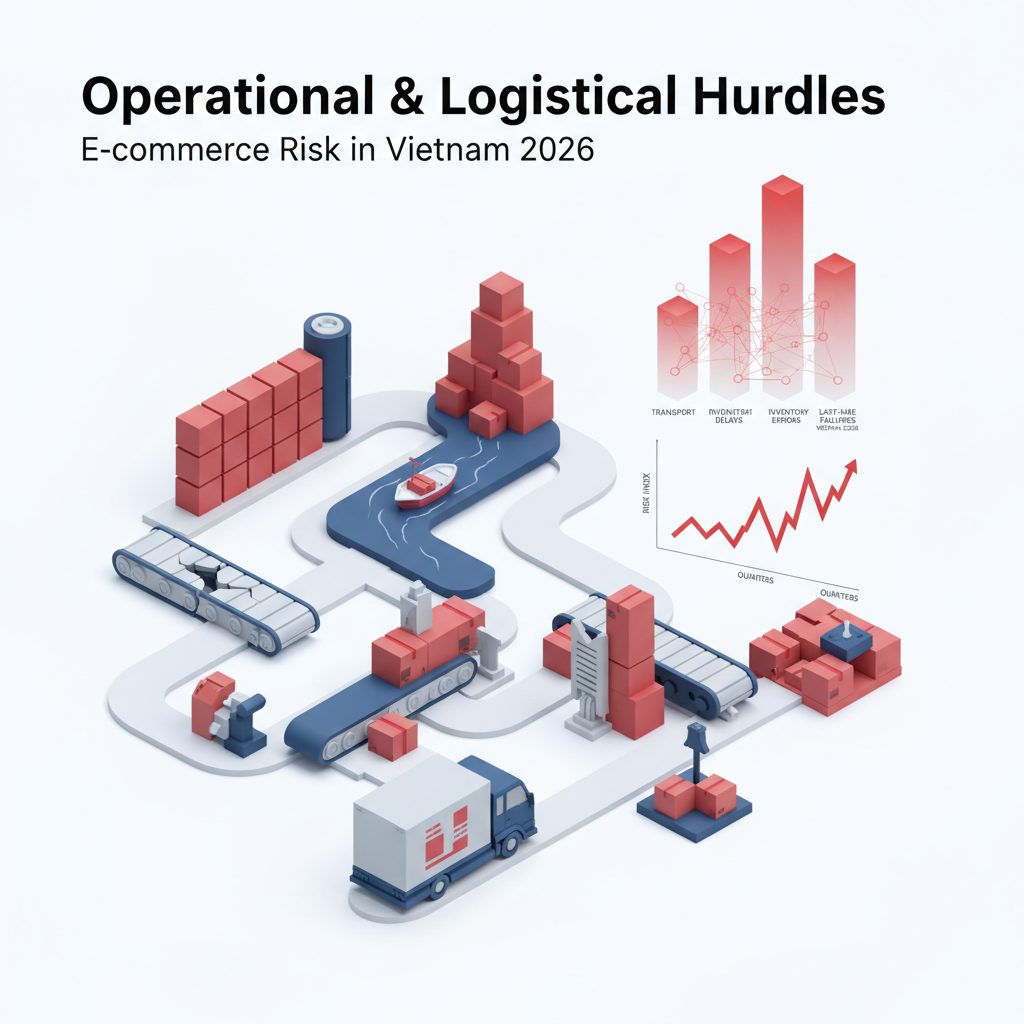
Vietnam’s burgeoning e-commerce sector, while offering immense growth potential, is not without its intricate web of operational and logistical challenges. These hurdles are critical considerations for businesses navigating the digital marketplace, directly impacting efficiency, cost, and ultimately, customer satisfaction. Understanding these complexities is essential for anyone analyzing the trend report of the risk of Ecommerce field in vietnam, as they represent significant operational risks to sustainable growth and profitability.
1. Last-Mile Delivery Complexities in Urban & Rural Areas
Last-mile delivery, the final leg of the e-commerce journey, presents formidable challenges across Vietnam’s diverse landscape. In bustling urban centers like Ho Chi Minh City and Hanoi, severe traffic congestion and a lack of standardized addressing systems can lead to significant delays and increased operational costs. Navigating narrow alleys and densely populated areas requires agile `delivery networks` and innovative solutions, often relying heavily on motorbike couriers.
Conversely, rural and remote areas face issues related to underdeveloped `logistics infrastructure`, including poor road conditions and limited access. Reaching customers in these regions often involves higher transportation costs, longer delivery times, and a greater risk of failed deliveries. This disparity creates a logistical nightmare, impacting `customer satisfaction` and increasing the overall `risk of Ecommerce` operations. E-commerce businesses must invest in diversified fleets, localized distribution hubs, and advanced route optimization technologies to enhance `supply chain resilience` and bridge the urban-rural divide. Partnerships with local logistics providers who possess intimate knowledge of the terrain and community can also be a game-changer, fostering more reliable and efficient delivery services.
2. Supply Chain Disruptions and Inventory Management
The globalized nature of e-commerce supply chains makes them inherently vulnerable to various `supply chain disruptions`. Global events, such as pandemics, geopolitical shifts, and even local natural disasters like floods, can cause port congestion, customs delays, and sudden increases in shipping costs. For Vietnamese e-commerce, this translates into potential stockouts, delayed product launches, and significant increases in carrying costs, directly affecting financial performance and `customer satisfaction`.
Effective `inventory management` is another critical area fraught with inefficiencies. Many businesses struggle with real-time visibility into their stock levels, relying on outdated manual processes or disparate systems. This often leads to either overstocking, tying up capital and increasing storage costs, or understocking, resulting in lost sales and frustrated customers. Accurate demand forecasting is challenging in Vietnam’s rapidly evolving market, exacerbating these issues. To mitigate these `operational hurdles`, companies must adopt robust `supply chain resilience` strategies, including diversified sourcing, strategic warehousing closer to consumer hubs, and advanced inventory management systems leveraging AI and machine learning for more accurate forecasting. Implementing stringent `quality control` measures throughout the supply chain is also paramount to prevent returns and ensure product integrity. `Digital transformation` in supply chain management is no longer an option but a necessity for survival.
3. Customer Service and Returns Management Inefficiencies
Poor `customer service` and inefficient `returns management` can severely erode customer trust and brand loyalty, posing a significant `risk of Ecommerce` in Vietnam. Inadequate support channels, slow response times, and a lack of personalized service can quickly lead to negative reviews and reduced repeat purchases. While the Vietnamese market is digitally savvy, many e-commerce platforms still struggle to provide seamless, omnichannel customer support that meets rising consumer expectations.
Returns management, or reverse logistics, adds another layer of complexity. High return rates, particularly for categories like fashion and electronics, burden businesses with considerable operational costs. The process involves multiple steps: receiving returned items, conducting `quality checks`, repackaging, restocking, and processing refunds. Inefficiencies in any of these stages can lead to delays, increased administrative burdens, and financial losses. According to a recent article by Nikkei Asia, Vietnamese e-commerce firms face high costs and fierce competition, with logistics and customer service being key areas of pressure. To overcome these `logistical challenges`, businesses should invest in well-trained customer service teams, implement clear and transparent return policies, and establish efficient `return logistics` networks. Leveraging technology for tracking returns and automating refund processes can significantly improve efficiency and enhance the overall `customer experience`, thereby contributing positively to the viability discussed in `the trend report of the risk of Ecommerce field in vietnam`.
Regulatory & Legal Compliance Risks
The burgeoning e-commerce sector in Vietnam, while presenting immense opportunities, also navigates a complex and rapidly evolving regulatory landscape. Businesses operating in this digital space face significant hurdles in ensuring adherence to a dynamic legal framework, including stringent data protection laws and intricate taxation policies. Staying abreast of these changes is paramount for sustainable growth, as non-compliance can lead to severe penalties, reputational damage, and operational disruptions. This section of our trend report of the risk of Ecommerce field in Vietnam delves into the critical compliance challenges that e-commerce businesses must address to mitigate legal and regulatory exposures.
1. Evolving Data Privacy Laws (e.g., PDPA in Vietnam context)
Data privacy has emerged as a global imperative, and Vietnam is no exception. With the increasing volume of personal data collected, processed, and stored by e-commerce platforms, the Vietnamese government has introduced robust legislation to safeguard individual information. A cornerstone of this effort is Vietnam’s Decree 13/2023/ND-CP on personal data protection, which came into effect in July 2023. This decree outlines comprehensive regulations comparable to international standards like GDPR or other regional Personal Data Protection Acts (PDPAs).
For e-commerce businesses, Decree 13 mandates strict requirements concerning data collection, usage, storage, and cross-border transfer. Businesses must obtain explicit consent from data subjects, provide clear information about data processing activities, implement robust data security measures, and appoint a Data Protection Officer or equivalent for certain entities. Furthermore, the decree imposes obligations on data breach notifications and establishes rights for data subjects, including the right to access, rectify, or erase their personal data. Non-compliance can result in substantial fines, suspension of business activities, and even criminal penalties for severe violations. E-commerce platforms must conduct thorough data mapping, update privacy policies, enhance cybersecurity protocols, and train staff to ensure full adherence to these evolving data privacy laws, thereby mitigating significant legal risks.
2. Cross-Border E-commerce Regulations and Tariffs
Cross-border e-commerce offers unparalleled market expansion opportunities but simultaneously introduces a labyrinth of regulatory complexities, tariffs, and customs procedures. Vietnamese regulations on cross-border transactions are designed to protect domestic industries, ensure product quality, and manage tax collection. Businesses engaging in the import or export of goods via online channels must navigate various requirements, including import/export licenses, product conformity assessments, origin certifications, and specific labeling rules.
Tariffs and taxation policies represent another critical area of compliance. Depending on the product category and origin, goods sold through cross-border e-commerce are subject to import duties, Value Added Tax (VAT), and sometimes special consumption tax. The calculation and timely remittance of these taxes can be intricate, often requiring specialized knowledge of customs valuation methods and trade agreements. Furthermore, platforms facilitating cross-border sales are increasingly being held accountable for the tax compliance of their sellers. Understanding and adhering to regulations on foreign exchange controls, payment gateways, and international shipping logistics are also vital. Mismanagement of these aspects can lead to goods being seized at customs, unexpected costs, delays, and legal disputes, significantly impacting profitability and customer satisfaction within the Vietnamese e-commerce market.
3. Consumer Protection Laws and Dispute Resolution
Safeguarding consumer rights is a cornerstone of Vietnam’s legal framework for e-commerce. The Law on Protection of Consumer Rights, alongside various decrees specific to e-commerce, aims to foster trust and fairness in online transactions. E-commerce businesses are obligated to provide clear, accurate, and complete information about products, services, prices, and terms of delivery and payment. This includes ensuring that product descriptions are truthful, images are representative, and pricing is transparent, avoiding misleading advertisements or deceptive practices.
Key consumer rights include the right to safe products, the right to accurate information, the right to choose, and the right to redress. Businesses must establish clear policies for returns, refunds, warranties, and after-sales service that comply with legal requirements. In the event of disputes, e-commerce platforms must facilitate resolution mechanisms, often beginning with internal complaint handling, followed by mediation or arbitration through consumer protection associations or relevant government agencies. Failure to uphold these consumer protection standards not only risks legal action, fines, and forced compensation but also severely damages brand reputation and customer loyalty. Proactive compliance, robust customer service protocols, and transparent communication are essential to minimize the risks associated with consumer complaints and legal challenges in the vibrant but regulated e-commerce field in Vietnam.
Cybersecurity Threats & Future Mitigation Strategies
Vietnam’s e-commerce sector is experiencing explosive growth, positioning it as a dynamic engine for the nation’s digital economy. However, this rapid expansion also makes it a prime target for sophisticated cyber adversaries. A comprehensive trend report of the risk of Ecommerce field in Vietnam reveals an escalating landscape of digital security challenges, ranging from pervasive data breaches to evolving attack vectors. Understanding these vulnerabilities is crucial for businesses aiming to safeguard their operations and consumer trust. This section delves into the predominant cybersecurity threats facing Vietnamese e-commerce by 2026 and outlines proactive, future-proof mitigation strategies designed to build resilience and ensure sustainable growth in this critical sector. We will explore how robust infrastructure, advanced protocols, and innovative technologies like AI/ML are set to reshape the battle against cybercrime.

1. Phishing, Malware, and Data Breach Vulnerabilities
The digital storefronts and supply chains of Vietnam’s e-commerce are under constant siege from a trifecta of pervasive threats, reflecting a global cybersecurity landscape where such attacks are increasingly common: phishing, malware, and data breaches. Phishing attacks, often disguised as legitimate communications from banks, shipping companies, or e-commerce platforms, continue to trick consumers and employees into revealing sensitive information, leading to account takeovers and financial fraud. These social engineering tactics are becoming increasingly sophisticated, leveraging localized language and cultural nuances to enhance their effectiveness. Concurrently, various forms of malware, including ransomware, spyware, and trojans, pose significant risks to both enterprise systems and consumer devices. Malicious software can disrupt operations, steal payment card details, and compromise personal identifiable information (PII) at scale. The ultimate consequence of these vulnerabilities often manifests as devastating data breaches, where sensitive customer data, including financial details and personal records, is exposed. Such incidents not only incur severe financial penalties and regulatory fines but also erode consumer trust, damage brand reputation, and can lead to long-term business disruption. The trend report of the risk of Ecommerce field in Vietnam consistently highlights these threats as primary concerns, necessitating urgent and ongoing attention to both technological defenses and user education to secure the digital shopping ecosystem. Addressing these fundamental security gaps is paramount for any e-commerce business operating in the Vietnamese market.
2. Building Robust Security Infrastructure and Protocols
To effectively counter the evolving threat landscape, Vietnamese e-commerce businesses must prioritize the development and implementation of robust security infrastructure and protocols. By 2026, this will involve a multi-layered approach that integrates advanced firewalls, intrusion detection and prevention systems (IDPS), and sophisticated endpoint protection across all operational touchpoints. Crucially, adherence to international security standards such as ISO 27001 and PCI DSS (Payment Card Industry Data Security Standard) will become non-negotiable for ensuring the integrity and confidentiality of transactional data. Furthermore, implementing strong authentication mechanisms, including multi-factor authentication (MFA), is vital for protecting user accounts from unauthorized access. Regular security audits, penetration testing, and vulnerability assessments must become standard practice to proactively identify and rectify weaknesses before they can be exploited. Businesses also need to establish comprehensive incident response plans, ensuring swift and effective action in the event of a breach, thereby minimizing damage and recovery time. Investing in secure coding practices for web and mobile applications, along with encrypted data storage and transmission protocols (SSL/TLS), forms the bedrock of a resilient cybersecurity posture. This strategic investment in infrastructure and rigorous protocol enforcement is essential for building consumer confidence and safeguarding the future of e-commerce in Vietnam.
3. Leveraging AI/ML for Proactive Risk Management by 2026
The future of cybersecurity in Vietnam’s e-commerce landscape, particularly by 2026, will be significantly shaped by the transformative power of Artificial Intelligence (AI) and Machine Learning (ML). These advanced technologies are poised to revolutionize proactive risk management, moving beyond traditional signature-based detection to predict and prevent novel threats. AI/ML algorithms can analyze vast datasets of network traffic, user behavior, and transaction patterns in real-time, identifying anomalies and potential threats that human analysts might miss. For instance, AI can detect sophisticated phishing campaigns by analyzing email headers, content, and sender behavior with unparalleled speed and accuracy. Similarly, ML models can learn legitimate user patterns to flag unusual login attempts or fraudulent transactions, providing an early warning system against account takeovers and payment fraud. Threat intelligence platforms powered by AI can aggregate and process global threat data, offering Vietnamese e-commerce platforms insights into emerging attack vectors specific to the region or industry. Furthermore, AI-driven automation can significantly reduce the response time to security incidents, allowing for immediate containment and remediation. Embracing AI/ML for automated vulnerability scanning, anomaly detection, and predictive analytics will enable e-commerce businesses to establish a truly dynamic and adaptive security posture, effectively enhancing their defense mechanisms against an increasingly complex and automated cyber threat landscape. This proactive approach is indispensable for staying ahead in the trend report of the risk of Ecommerce field in Vietnam.
Partner with Shelby Global
You are looking for reliable HR Sevice Suppliers? Contact Shelby Global Now! To connect with verified talents and upgrade your orginization.
—————————————
References
– :
– OECD Report on Tackling Trade in Counterfeit and Pirated Goods in Viet Nam: https://www.oecd.org/sti/ind/Tackling-Trade-in-Counterfeit-and-Pirated-Goods-Viet-Nam.pdf
– Vietnam’s e-commerce firms face high costs, fierce competition: https://asia.nikkei.com/Spotlight/The-Big-Story/Vietnam-s-e-commerce-firms-face-high-costs-fierce-competition
– VILAF’s analysis of Vietnam’s Decree 13/2023/ND-CP on personal data protection: https://www.vilaf.com/decree-13-the-new-personal-data-protection-regulation-in-vietnam-effective-1-july-2023/
– CrowdStrike 2024 Global Threat Report: https://www.crowdstrike.com/resources/reports/2024-global-threat-report/