The Evolving E-commerce Landscape in Singapore
Singapore, a global financial hub and one of Asia’s most digitally advanced nations, presents a dynamic and rapidly expanding e-commerce landscape. This section offers a comprehensive overview of the current state and robust growth trajectory of Singapore’s e-commerce market, delving into the critical drivers that fuel its expansion. We will explore the overall environment that not only fosters innovation and prosperity but also shapes potential risks inherent in this fast-paced digital economy. Understanding these facets is crucial for anyone keen on grasping the nuances of the trend report of the risk of Ecommerce field in Singapore, providing a foundational context for deeper risk analysis.

1. Rapid Digital Adoption and Market Size Growth
Singapore’s journey towards a digital-first economy is marked by exceptionally high rates of digital adoption. With near-universal internet penetration and widespread smartphone ownership, Singaporean consumers are inherently tech-savvy and comfortable with online interactions. This pervasive digital integration has been a primary catalyst for the exponential growth in the local e-commerce market size. Government initiatives, such as the Smart Nation drive and various grants supporting digital transformation for businesses, have further accelerated this trend, encouraging both established enterprises and SMEs to embrace online channels. The market has witnessed significant year-on-year growth, driven by increasing consumer confidence in online transactions and a greater variety of available products and services. As per Statista’s E-commerce Market Overview for Singapore, the market continues to expand robustly, signaling sustained opportunities but also an increased surface area for potential e-commerce risks. This rapid growth also means that businesses must continuously adapt their strategies to keep pace with technological advancements and evolving consumer expectations, reinforcing the need for ongoing risk assessment and mitigation.
2. Key Demographics and Consumer Behavior Shifts
The demographic profile of Singapore plays a pivotal role in shaping its e-commerce landscape. A relatively young, affluent, and educated population with high disposable income fuels demand for a diverse range of online products and services. Key consumer behavior shifts have profoundly impacted how businesses operate in the digital realm. Mobile commerce, for instance, has become dominant, with a significant portion of online purchases made via smartphones, highlighting the importance of optimized mobile user experiences. Social commerce, driven by platforms like Instagram and TikTok, is also gaining traction, blurring the lines between content consumption and purchasing. Consumers prioritize convenience, speed of delivery, and seamless payment gateways. The COVID-19 pandemic further accelerated these shifts, transforming online shopping from a convenience into a necessity for many, embedding new habits that persist post-pandemic. These evolving behaviors present opportunities for personalization and targeted marketing but also introduce unique e-commerce risks related to data privacy, secure payment processing, and the integrity of online reviews. Businesses must invest in robust cybersecurity measures and transparent data handling practices to maintain consumer trust in this dynamic environment.
3. Emerging Niche Markets and Cross-Border Opportunities
While mainstream e-commerce continues to thrive, Singapore’s market is also seeing the emergence of highly specialized niche markets. Consumers are increasingly seeking unique, sustainable, and personalized products, driving growth in segments such as eco-friendly goods, artisanal crafts, gourmet food, and bespoke fashion. This trend reflects a maturing market where consumers are willing to pay a premium for values-aligned and differentiated offerings. Furthermore, given Singapore’s small domestic market, cross-border e-commerce represents a significant growth avenue for both buyers and sellers. Singaporean consumers frequently purchase from international platforms, drawn by wider selections and competitive pricing, while local businesses leverage global marketplaces to reach a broader audience. This internationalization of trade, however, introduces complex challenges and specific e-commerce risks, including intricate logistics and supply chain management, varying international regulatory compliance requirements, currency fluctuations, and managing customer expectations across different time zones and cultures. Effective risk management in these areas requires a deep understanding of international trade laws, secure cross-border payment solutions, and resilient fulfillment networks. Navigating these complexities successfully is key to unlocking the full potential of these burgeoning markets and opportunities.
Navigating Regulatory & Legal Compliance Risks
The rapid expansion of e-commerce in Singapore presents immense opportunities, yet it also exposes businesses to a complex landscape of regulatory and legal compliance risks. For entities operating within or targeting the Singaporean market, understanding and adhering to both local and international regulations is paramount. Non-adherence can lead to severe penalties, reputational damage, and operational disruptions, significantly impacting business sustainability. This section delves into key compliance challenges, offering insights into mitigating these risks for a thriving online presence, reflecting concerns often highlighted in the trend report of the risk of Ecommerce field in singapore.
-
Data Protection (PDPA) Compliance and Updates
Data protection is a cornerstone of consumer trust and a critical area for e-commerce compliance in Singapore. The Personal Data Protection Act (PDPA) governs the collection, use, and disclosure of personal data, imposing stringent obligations. E-commerce platforms naturally collect vast customer data, from personal details to purchasing habits. Key obligations include obtaining clear consent, specifying data collection purpose, protecting data from unauthorized access or breaches, and establishing robust data breach notification protocols. Recent amendments strengthened these requirements, introducing higher penalties for breaches and mandatory data breach notification for incidents causing significant harm. Businesses must conduct regular data protection impact assessments, implement robust security, and ensure transparent, accessible privacy policies. Staying updated with Personal Data Protection Commission (PDPC) guidelines is crucial to avoid substantial fines and maintain consumer confidence in an era of heightened data privacy risks. Proactive compliance ensures legal adherence and reinforces commitment to customer trust.
-
Consumer Protection and Fair Trading Act (CPFTA) Implications
Beyond data privacy, e-commerce businesses must navigate the Consumer Protection (Fair Trading) Act (CPFTA), which protects consumers against unfair practices. For online retailers, this involves ensuring transparency, accuracy, and fairness in all transactions and representations. Unfair practices include misleading advertisements, deceptive pricing, false product claims, and failing to deliver goods or services as promised. The CPFTA empowers consumers to seek redress and allows bodies like Enterprise Singapore and the Consumers Association of Singapore (CASE) to act against errant businesses. E-commerce platforms must implement clear terms and conditions, provide accurate product descriptions, ensure transparent pricing (including all costs), and have effective dispute resolution mechanisms. Non-compliance can lead to costly legal battles, compensation claims, and severe damage to brand reputation, diminishing consumer trust and impacting sales. Adhering to CPFTA principles is not just a legal obligation; it’s a strategic imperative for building long-term customer relationships and fostering a credible online presence.
-
Cross-Border Trade Regulations and Tax Liabilities
For e-commerce businesses in Singapore engaging in international sales, cross-border trade regulations and tax liabilities introduce another layer of complexity. Selling globally necessitates understanding varied customs duties, import restrictions, product safety standards, and intellectual property laws of destination countries. Tax implications are particularly intricate. For instance, Singapore introduced Goods and Services Tax (GST) on imported low-value goods via online purchases from January 1, 2023, meaning overseas vendors and local marketplaces may need to register and charge GST. Similarly, selling into other jurisdictions often requires navigating their VAT/GST regimes, import tariffs, and specific product certifications. Businesses must accurately declare goods, understand Incoterms, and ensure shipping and payment processes account for these international trade compliance requirements. Failure to do so can result in goods being held at customs, unexpected costs for customers, and potential legal issues with international authorities. Diligent planning and expert advice are essential to manage these global complexities and ensure seamless international operations, directly addressing the multifaceted risk of Ecommerce field in singapore’s global market engagement.
In conclusion, the regulatory and legal landscape for e-commerce in Singapore is dynamic and demanding. Proactive compliance, from safeguarding personal data under PDPA to ensuring fair trading practices under CPFTA and meticulously managing cross-border tax liabilities, is non-negotiable. Businesses that prioritize robust compliance frameworks not only mitigate significant risks but also build a foundation of trust and reliability, essential for sustained growth in the competitive digital economy.
Cybersecurity Threats & Data Privacy Concerns
In today’s interconnected digital economy, the E-commerce landscape in Singapore, much like the rest of the world, faces an unrelenting barrage of cybersecurity threats. The rapid growth of online retail has unfortunately been paralleled by an escalation in sophisticated cyber-attacks and data breaches. For businesses operating in this dynamic environment, understanding and mitigating these risks is no longer optional; it’s a fundamental pillar for sustained growth and consumer trust. A robust cybersecurity posture is paramount, not just to protect the business’s assets and continuity, but crucially, to safeguard the sensitive personal and financial data of its customers. Failing to prioritize this can lead to severe financial penalties, irreparable reputational damage, and a significant erosion of consumer confidence. Therefore, staying informed about the trend report of the risk of Ecommerce field in singapore is essential for developing proactive defense strategies.
1. Prevalence of Phishing, Malware, and Ransomware Attacks
The digital front lines of E-commerce are constantly under siege from a variety of malicious actors, with phishing, malware, and ransomware attacks remaining particularly prevalent. Phishing attempts, often disguised as legitimate communications from well-known brands or service providers, aim to trick unsuspecting consumers and employees into divulging login credentials, payment details, or other sensitive information. Malware, once embedded in systems, can range from spyware that harvests data to viruses that disrupt operations. Ransomware, perhaps the most financially debilitating, encrypts critical data and systems, demanding payment for their release. In Singapore, the digital threat landscape is ever-evolving. According to the Singapore Cyber Landscape 2023 report by the Cyber Security Agency of Singapore (CSA), these types of attacks continue to pose significant challenges to businesses across all sectors, including the bustling E-commerce industry. For online retailers, a successful attack can mean not only operational downtime but also the compromise of vast amounts of customer data, leading to severe financial losses, regulatory fines, and a drastic loss of consumer trust. Implementing advanced email filtering, employee cybersecurity training, and robust endpoint protection are non-negotiable measures to defend against these persistent threats.
2. Securing Payment Gateways and Customer Financial Data
At the heart of any E-commerce operation lies the payment gateway, the conduit through which customer financial transactions flow. The security of these systems is paramount, as any vulnerability can expose sensitive credit card numbers, bank account details, and other Personally Identifiable Information (PII) to malicious actors. E-commerce businesses must adhere strictly to industry standards such as the Payment Card Industry Data Security Standard (PCI DSS), which outlines a comprehensive set of requirements for securing cardholder data. This includes implementing robust encryption for data in transit and at rest, tokenization to replace sensitive card data with unique identifiers, and multi-factor authentication for both customers and internal systems accessing payment information. Regular security audits, penetration testing, and continuous monitoring of payment infrastructure are crucial to identify and remediate potential weaknesses before they can be exploited. Safeguarding customer financial data isn’t just a regulatory requirement; it’s a fundamental promise to consumers, directly influencing their willingness to transact online and ensuring the long-term viability of an E-commerce business.

3. Building Trust Through Transparent Data Handling Practices
Beyond technical security measures, the bedrock of consumer confidence in E-commerce rests on transparent and ethical data handling practices. With increasing public awareness regarding data privacy, consumers are more discerning about where and how their personal information is collected, stored, and used. In Singapore, the Personal Data Protection Act (PDPA) sets clear guidelines for organizations handling personal data, emphasizing consent, purpose limitation, and reasonable protection. E-commerce businesses must articulate clear and easily accessible privacy policies that explain what data is collected, why it’s collected, how it’s used, and who it’s shared with. Obtaining explicit consent for data processing, implementing data minimization strategies (collecting only what is absolutely necessary), and providing customers with control over their data are critical steps. Transparency fosters trust, which is an invaluable asset in the competitive online retail space. Businesses that demonstrate a commitment to protecting customer privacy not only comply with regulations but also build stronger, more loyal customer relationships, thereby enhancing their brand reputation and securing a sustainable future in the dynamic E-commerce market, which is clearly highlighted in the trend report of the risk of Ecommerce field in singapore.
In conclusion, the confluence of sophisticated cyber threats and heightened data privacy expectations demands a proactive, multi-layered approach from Singapore’s E-commerce sector. From fortifying defenses against pervasive attacks like phishing and ransomware to meticulously securing payment gateways and adopting transparent data handling practices, every aspect of an online business must be meticulously reviewed and protected. Continuous vigilance, regular updates to security protocols, and fostering a culture of cybersecurity awareness among both employees and customers are not merely best practices—they are imperative for navigating the evolving digital risks and ensuring a trustworthy and prosperous E-commerce ecosystem.
Supply Chain & Operational Resilience Challenges
Singapore’s thriving e-commerce landscape, while experiencing rapid growth, is acutely vulnerable to disruptions across its intricate supply chain networks. From the moment an order is placed to its final delivery, numerous touchpoints present potential points of failure. The city-state’s reliance on international trade, coupled with its dense urban environment and discerning consumer base, amplifies the need for robust the trend report of the risk of Ecommerce field in singapore to effectively manage these inherent risks. These vulnerabilities span critical areas like logistics, meticulous inventory management, and the far-reaching impact of geopolitical disruptions, all of which directly threaten operational resilience and customer satisfaction in Singapore’s competitive market.
-
Last-Mile Delivery Efficiencies and Customer Expectations
The ‘last mile’ represents the most expensive and complex segment of the e-commerce supply chain, particularly in Singapore’s densely populated urban environment. Consumers here expect increasingly faster and more flexible delivery options, often demanding same-day or next-day services, with precise time windows. Meeting these heightened customer expectations while maintaining profitability is a significant challenge. Factors such as traffic congestion, scarcity of skilled delivery personnel, high operational costs, and the growing demand for sustainable delivery methods (e.g., electric vehicles) strain current logistics infrastructures. Failed deliveries or delays not only inflate costs but also directly impact customer satisfaction, leading to cart abandonment and brand disloyalty. Building resilience in this segment requires significant investment in advanced route optimization software, real-time tracking capabilities, automated parcel lockers, and potentially exploring innovative delivery models like drone or robot deliveries in specific zones.
-
Inventory Management and Stockout Risks
Effective inventory management is the bedrock of a successful e-commerce operation, yet it remains one of the most persistent operational resilience challenges. Singaporean e-commerce businesses face the delicate balancing act of holding sufficient stock to meet fluctuating demand without incurring excessive carrying costs or obsolescence. Demand volatility, exacerbated by flash sales, seasonal peaks, and sudden shifts in consumer trends, makes accurate forecasting incredibly difficult. Inaccurate inventory data can lead to stockouts, resulting in lost sales, customer frustration, and damage to brand reputation. Conversely, overstocking ties up capital, requires more warehousing space (a premium commodity in Singapore), and increases the risk of product expiry or depreciation. Leveraging advanced analytics, AI-driven forecasting tools, and real-time inventory visibility across multiple channels – including physical stores, online platforms, and marketplaces – is crucial for mitigating these stockout risks and optimizing working capital.
-
Impact of Global Supply Chain Disruptions on Local E-commerce
As a trading hub, Singapore’s e-commerce sector is inherently exposed to global supply chain disruptions. Events such as pandemics, geopolitical conflicts, natural disasters, port closures, and international shipping container shortages can severely impact the flow of goods into the country. Singaporean e-tailers, many of whom rely on imported goods from various global sources, experience increased shipping costs, extended lead times, and unpredictable inventory availability. This global interconnectedness means that a disruption thousands of miles away can quickly translate into product shortages and price inflation for local consumers. To enhance global supply chain resilience, businesses are exploring strategies such as diversifying their supplier base, near-shoring or regionalizing production where feasible, maintaining strategic safety stock for critical items, and investing in transparent, end-to-end supply chain visibility technologies. These measures are vital for mitigating the external shocks that routinely threaten the stability and profitability of Singapore’s e-commerce ecosystem.
Market Dynamics, Competition & Future Risk Mitigation
Singapore’s e-commerce sector, while dynamic and growing, presents an intricate web of challenges stemming from intense competition and rapidly evolving consumer expectations. Businesses operating in this landscape must adopt proactive and strategic approaches to mitigate future risks, ensuring long-term sustainability and growth. Understanding the trend report of the risk of Ecommerce field in singapore is crucial for navigating these complexities.
Singapore’s digital economy thrives on innovation but also faces significant pressure. From sophisticated supply chain disruptions to mounting data privacy concerns, the risks are manifold. This section delves into the hyper-competitive environment, the shifting sands of consumer preferences, and how cutting-edge technology can serve as a vital shield against future uncertainties, providing a comprehensive strategy for risk mitigation in this bustling market.
1. Hyper-Competition from Local and Regional Players
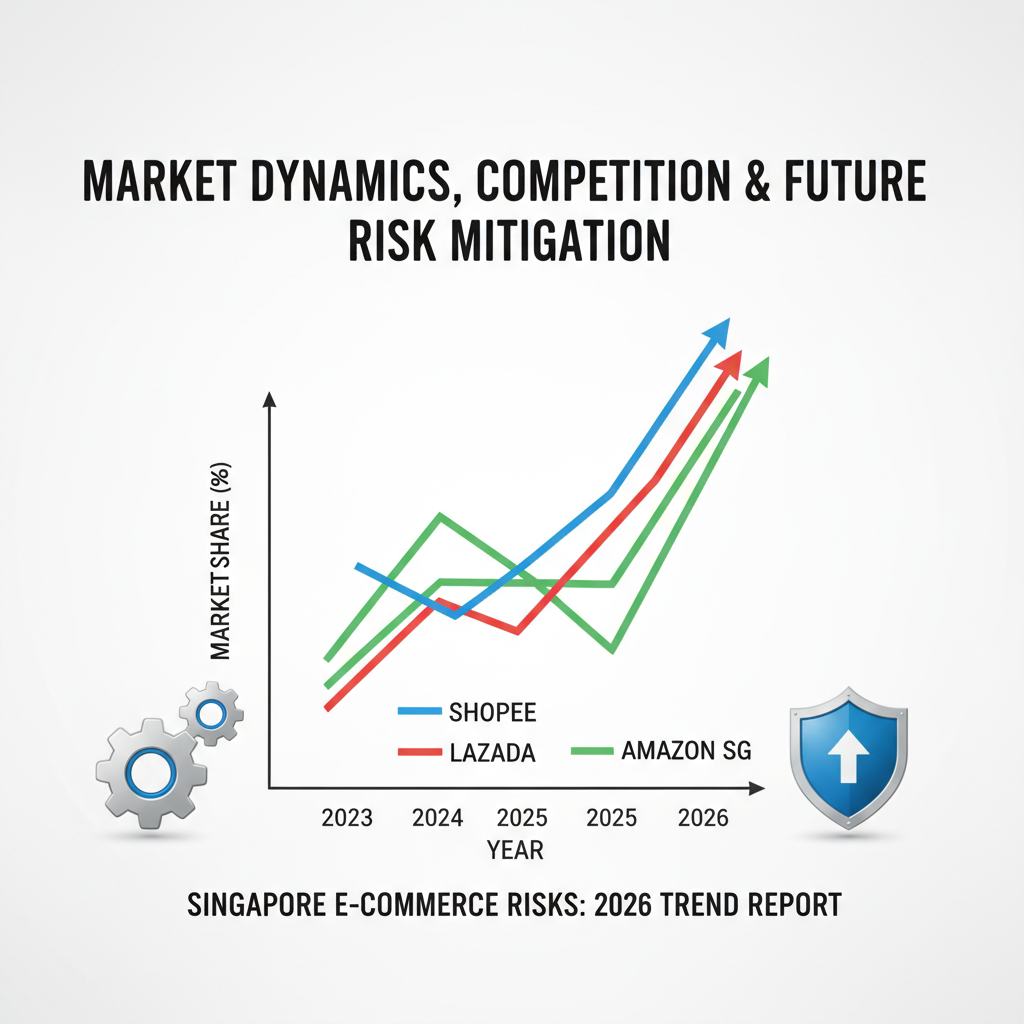
The e-commerce arena in Singapore is characterized by fierce competition, a phenomenon driven by the presence of both global giants and agile local and regional players. Major international platforms like Amazon, Shopee, and Lazada dominate significant market shares, leveraging their extensive logistics networks, vast product assortments, and aggressive marketing campaigns. These players often engage in price wars and flash sales, making it challenging for smaller businesses to compete solely on cost.
Beyond these behemoths, Singapore also sees a proliferation of niche e-commerce sites, direct-to-consumer (D2C) brands, and social commerce initiatives. These local and regional entities often differentiate themselves through specialized product offerings, personalized customer service, or strong community building. For instance, platforms focusing on sustainable products, local crafts, or specific culinary experiences carve out loyal customer bases. The low barrier to entry for setting up online stores further intensifies this competitive landscape, pushing all players to innovate constantly in areas like delivery speed, customer experience, and unique value propositions to avoid margin erosion and maintain relevance. For any business, staying competitive requires a deep understanding of market trends and competitor strategies, continually seeking avenues for differentiation in a saturated market.
2. Adapting to Evolving Consumer Preferences and Expectations
Singaporean consumers are among the most digitally savvy globally, and their expectations for online shopping experiences are continually rising. Businesses must adapt rapidly to these evolving preferences to remain competitive and mitigate the risk of customer churn. Key trends include a strong demand for seamless omnichannel experiences, where customers can transition effortlessly between online and offline channels, expecting consistent service and product availability. Personalization is no longer a luxury but a standard expectation; consumers anticipate tailored recommendations, customized offers, and relevant content based on their past behavior and preferences.
Furthermore, sustainability and ethical sourcing are gaining significant traction, particularly among younger demographics. Businesses that transparently communicate their environmental impact and social responsibility often gain a competitive edge. The need for instant gratification has also pushed expectations for faster delivery, sometimes within hours, compelling companies to invest heavily in last-mile logistics. The rise of social commerce, live shopping, and interactive shopping experiences also indicates a shift towards more engaging and community-driven online retail. Failing to meet these diverse and dynamic consumer expectations poses a significant risk, leading to lost sales and damaged brand reputation. According to Statista’s analysis of e-commerce market growth in Southeast Asia, these trends are pivotal for future success.
3. Leveraging Technology for Risk Mitigation (AI, Blockchain)
In the face of intense competition and evolving consumer demands, technology serves as a powerful arsenal for e-commerce businesses to mitigate various future risks. Artificial Intelligence (AI) and Blockchain stand out as transformative tools.
AI for Enhanced Operations and Customer Experience: AI can significantly bolster risk mitigation efforts. For instance, AI-powered predictive analytics can forecast demand with higher accuracy, reducing inventory holding costs and the risk of stockouts or overstock. In fraud detection, AI algorithms can analyze transaction patterns in real-time to identify and flag suspicious activities, protecting both the business and its customers from financial losses. AI-driven personalization engines can significantly improve customer satisfaction and loyalty by delivering highly relevant product recommendations and content, thus mitigating the risk of customer churn. Furthermore, AI-powered chatbots and virtual assistants can handle routine customer inquiries 24/7, improving service efficiency and freeing up human agents for more complex issues, thereby enhancing operational resilience.
Blockchain for Transparency and Security: Blockchain technology offers a decentralized and immutable ledger system that can revolutionize supply chain transparency and product authenticity. By recording every step of a product’s journey from origin to consumer, blockchain can help verify the legitimacy of goods, combat counterfeit products, and ensure ethical sourcing, thereby mitigating reputational and legal risks. For high-value goods or products with strict regulatory requirements, blockchain provides an irrefutable audit trail. In terms of data security, blockchain’s cryptographic principles can enhance the security of online transactions and customer data, reducing the risk of breaches and fraud. Implementing these technologies requires significant investment and expertise, but the long-term benefits in terms of efficiency, trust, and risk reduction are substantial, positioning businesses favorably in Singapore’s competitive e-commerce landscape.
Partner with Shelby Global
You are looking for reliable HR Sevice Suppliers? Contact Shelby Global Now! To connect with verified talents and upgrade your orginization.
—————————————
References
– Singapore E-commerce Market Overview | Statista: https://www.statista.com/outlook/dmo/ecommerce/singapore
– Personal Data Protection Commission (PDPC): https://www.pdpc.gov.sg/
– Singapore Cyber Landscape 2023 report: https://www.csa.gov.sg/singapore-cyber-landscape/
– Deloitte’s insights on the future of supply chain resilience: https://www2.deloitte.com/us/en/insights/topics/supply-chain/future-of-supply-chain.html
– e-commerce market growth in Southeast Asia: https://www.statista.com/outlook/dmo/ecommerce/southeast-asia