
Overview of Vietnam’s F&B HR Landscape
Vietnam’s Food & Beverage (F&B) sector is a vibrant and rapidly expanding pillar of the national economy, characterized by remarkable dynamism and significant growth potential. Setting the stage for a comprehensive HR report of the Food & Beverage field in Vietnam, it’s essential to understand the current market size, the powerful growth drivers at play, and the evolving state of human resources within this dynamic industry. From bustling street food stalls to sophisticated fine dining establishments and thriving café chains, the F&B industry is not only a significant contributor to GDP but also a major employer, constantly reshaping its workforce to meet escalating consumer demands and global standards. This section delves into the intricate details of Vietnam’s F&B HR landscape, offering insights crucial for businesses looking to thrive.
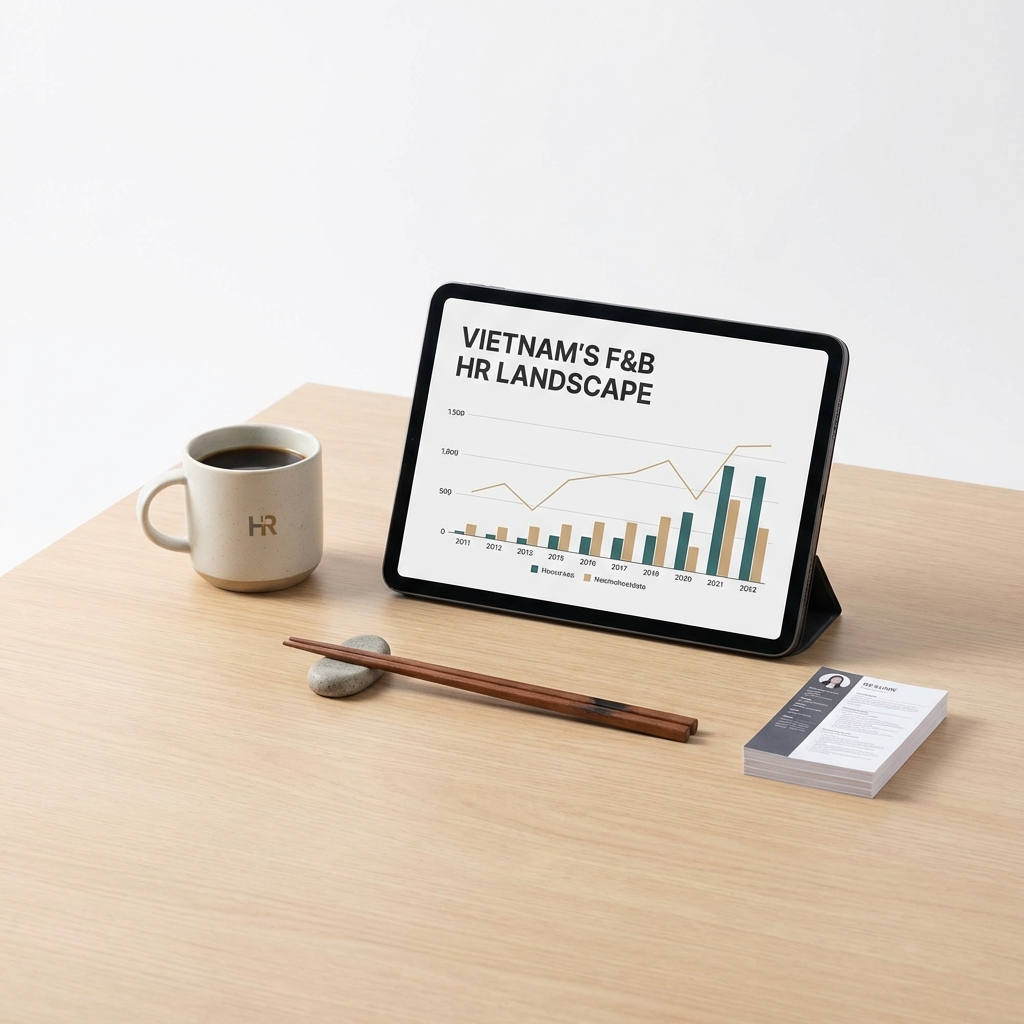
1. Market Size & Growth Projections in F&B
The Vietnamese F&B market has experienced robust growth, cementing its position as one of Southeast Asia’s most promising sectors. Valued in billions of US dollars, the market is projected to continue its upward trajectory, driven by several key factors. Rising disposable incomes among a burgeoning middle class, rapid urbanization, and a youthful population with a strong inclination towards dining out and experimenting with new cuisines are primary growth catalysts. Furthermore, the resurgence of domestic and international tourism significantly bolsters demand for diverse food service jobs and hospitality employment Vietnam. Digitalization has also played a pivotal role, with food delivery platforms expanding reach and convenience, creating new opportunities and challenges for the F&B labor market Vietnam. These trends underscore the continuous expansion, demanding an adaptable and skilled F&B workforce. For a detailed look into the sector’s performance and future outlook, reports highlight a consistent upward trend in F&B market growth, making human resources planning critical for sustainable development in this restaurant industry HR Vietnam segment.
2. Key Demographic & Workforce Trends
Vietnam’s F&B workforce is predominantly young, reflecting the nation’s demographic structure. This youthfulness brings energy and adaptability but also presents F&B HR challenges Vietnam, particularly in terms of training, retention, and career development. Urbanization continues to draw talent to major cities, intensifying competition for skilled employees in the F&B sector HR outlook. Changing consumer habits, driven by social media and global influences, require a workforce that is not only proficient in traditional culinary arts but also adept at customer service, digital engagement, and innovative menu development. The gig economy also impacts F&B workforce trends Vietnam, with a growing number of part-time and freelance workers, particularly in delivery services, necessitating flexible HR strategies F&B Vietnam. Addressing the skills gap, especially in specialized culinary techniques, management, and customer experience, is paramount. Effective F&B talent acquisition Vietnam strategies and continuous professional development programs are essential to build a resilient and high-performing team capable of navigating the complexities of the modern Vietnam food service jobs landscape. Understanding these demographic shifts F&B Vietnam is crucial for any comprehensive F&B industry labor report.
3. Impact of Economic Policies on F&B Employment
Economic policies enacted by the Vietnamese government have a profound impact on F&B employment. Pro-business policies, investment incentives, and efforts to streamline administrative procedures have encouraged both domestic and foreign investment in the F&B sector, leading to job creation. Labor laws, including regulations on minimum wage, working hours, and social insurance, directly influence operational costs and employee welfare. While these policies aim to protect workers, they also require businesses to carefully manage their HR budgets and compliance. Furthermore, free trade agreements and international integration open up the Vietnamese F&B market to global players, intensifying competition but also fostering innovation and the adoption of international best practices in HR. Government initiatives to promote tourism also indirectly boost F&B employment, creating a ripple effect across the industry. Navigating these F&B employment regulations and understanding their economic impact on F&B employment is vital for businesses seeking to operate efficiently and ethically. The continuous evolution of these policies necessitates that an HR report of the Food & Beverage field in Vietnam regularly assess their implications on hiring, compensation, and overall workforce management in the dynamic Vietnam F&B industry statistics.
Key HR Trends & Challenges in F&B Vietnam
The burgeoning Food & Beverage (F&B) industry in Vietnam, fueled by a young, dynamic population and increasing tourism, presents both immense opportunities and significant human resources challenges. As restaurants, cafes, and hospitality venues proliferate across major cities and tourist hubs, the demand for skilled and dedicated staff intensifies. This section delves into the most pressing HR issues and emerging trends, offering insights into talent acquisition, compensation, and skill development, crucial for any HR report of Food & Beverage field in vietnam.
The sector is characterized by high turnover rates, intense competition for talent, and evolving employee expectations. Navigating these complexities requires strategic HR planning that goes beyond traditional recruitment and payroll, focusing on long-term employee engagement and development.
1. Talent Acquisition & Retention Strategies
One of the most formidable challenges facing Vietnam’s F&B sector is the constant battle for talent. From experienced chefs and restaurant managers to front-of-house staff, the supply often struggles to meet the escalating demand. Major cities like Hanoi, Ho Chi Minh City, and Da Nang see a particularly fierce contest for skilled professionals. Restaurants and and hotels are not just competing with direct rivals but also with other service industries that offer potentially more stable hours or perceived better working conditions.
Effective talent acquisition strategies now involve robust employer branding. F&B businesses must showcase themselves as employers of choice, emphasizing positive work culture, clear career progression paths, and a supportive environment. Leveraging digital platforms for recruitment, including social media and specialized job portals, is becoming indispensable. Beyond initial hiring, retention is paramount. High turnover not only incurs significant recruitment and training costs but also impacts service quality and team morale. Strategies for retention include competitive salaries, comprehensive benefits (beyond the basic), regular performance feedback, opportunities for advancement, and fostering a sense of belonging and community within the workplace. Recognizing and rewarding good performance through structured incentive programs can also dramatically reduce attrition.
2. Compensation & Benefits Benchmarking
In a competitive labor market, offering an attractive compensation and benefits package is non-negotiable. However, determining what constitutes ‘attractive’ in the Vietnamese F&B landscape requires meticulous benchmarking. Wage expectations vary significantly by region, establishment type (e.g., local eatery vs. international hotel chain), and role seniority. The minimum wage in Vietnam, while increasing, often falls short of meeting the cost of living in urban centers, pushing employees to seek higher-paying opportunities.
F&B businesses must regularly conduct salary surveys and analyze market data to ensure their pay scales are competitive. This extends beyond base salaries to include service charges, tips, overtime pay, and performance-based bonuses. Furthermore, non-monetary benefits play a crucial role. These can include health insurance, staff meals, transportation allowances, flexible working hours (where possible), and opportunities for professional development. A comprehensive benefits package that addresses employees’ well-being and life-work balance concerns can significantly enhance job satisfaction and loyalty. For a deeper dive into Vietnam’s labor market trends and compensation insights, companies often refer to reports from leading HR consultancies, providing vital context for benchmarking against broader economic and employment landscapes.
3. Employee Training & Skill Development Gaps
Despite a large youth population, a significant skill gap persists within Vietnam’s F&B industry. Many new hires, particularly in entry-level positions, lack formal training in essential areas such as professional customer service, hygiene standards, food safety protocols, and basic culinary techniques. For more senior roles, there’s often a shortage of candidates with strong management, leadership, and English language skills, crucial for establishments catering to international tourists and expatriates.
Addressing these gaps requires a proactive and continuous approach to employee training and development. Businesses should invest in both internal training programs and external certifications. On-the-job training, mentorship programs, and cross-training initiatives can build a versatile and skilled workforce. Partnering with vocational schools and culinary academies can also help bridge the gap between academic learning and industry demands. Furthermore, with the increasing digitalization of the F&B sector, training in digital literacy, POS system operation, and online ordering management is becoming essential. Investing in skill development not only enhances operational efficiency and service quality but also serves as a powerful retention tool, demonstrating an employer’s commitment to their employees’ career growth and professional future.
Impact of Technology & Automation on F&B HR
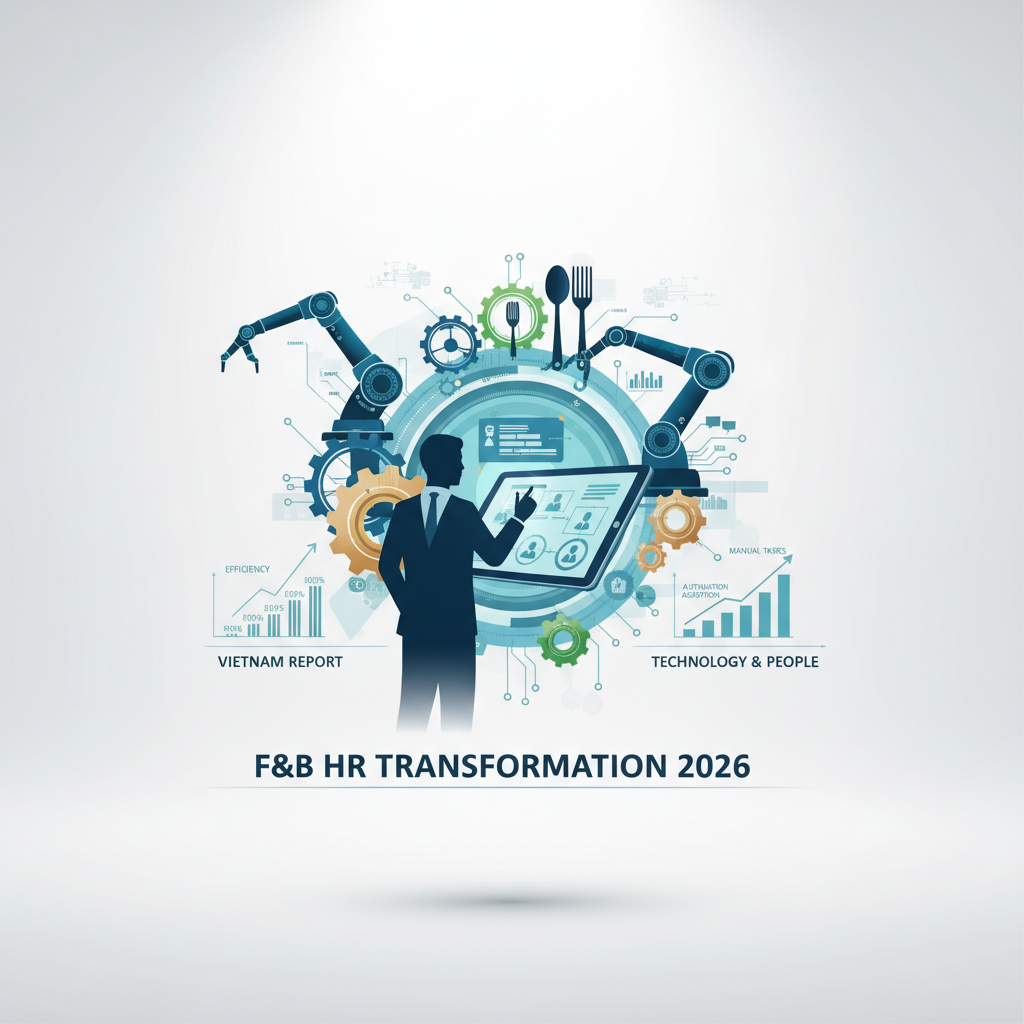
Examining how technological advancements are reshaping HR practices, job roles, and operational efficiency within the Food & Beverage sector in Vietnam.
-
Digitalization of HR Processes & Analytics
Modern HR within Vietnam’s F&B sector is rapidly evolving through digitalization. Traditional paper-based systems are giving way to sophisticated Human Resources Information Systems (HRIS), talent acquisition platforms, and robust performance management software. This shift streamlines tedious administrative tasks, from payroll processing and benefits management to onboarding and offboarding. For F&B businesses, especially those grappling with high staff turnover and fluctuating demands, the ability to rapidly recruit, train, and manage personnel efficiently is critical. Digitalization also empowers HR professionals with powerful analytics tools. By analyzing data on employee performance, engagement, retention rates, and training effectiveness, F&B organizations can make data-driven decisions. This proactive approach helps in workforce planning, identifying skill gaps, optimizing staffing levels during peak and off-peak seasons, and ultimately enhancing overall operational efficiency across multiple outlets. The insights derived from these digital platforms are invaluable for crafting targeted HR strategies that align with business goals in the dynamic Vietnamese F&B landscape.
-
Automation’s Influence on Job Roles
The rise of automation is fundamentally reshaping job roles within the Vietnamese F&B sector. While concerns about job displacement are valid, the more nuanced reality is often a transformation of existing roles and the creation of entirely new ones. In kitchens, automation can range from smart ovens and ingredient dispensing systems to collaborative robots assisting with repetitive tasks like chopping or frying, freeing up chefs for more creative and complex culinary work. Front-of-house operations are seeing the proliferation of self-ordering kiosks, digital menu boards, and sophisticated Point-of-Sale (POS) systems, reducing the need for manual order-taking and payment processing. This doesn’t necessarily eliminate human interaction but rather redefines it, allowing staff to focus more on elevated customer service, personalized guest experiences, and problem-solving. Back-office functions, such as inventory management and supply chain logistics, are also benefiting from automated systems, leading to greater efficiency and reduced errors. The shift demands that employees adapt, moving away from purely manual, repetitive tasks towards roles requiring oversight of technology, technical troubleshooting, and enhanced interpersonal skills.
-
Upskilling for Future Tech-Driven F&B Roles
As technology and automation continue to integrate deeply into the F&B sector, the need for a highly skilled workforce becomes paramount. To remain competitive and relevant, employees in Vietnam’s F&B industry must embrace continuous learning and upskilling initiatives. HR departments are at the forefront of this transformation, tasked with identifying critical future skills and developing comprehensive training programs. Key skills include digital literacy, data interpretation, proficiency in operating new F&B technologies (like automated kitchen equipment or advanced POS systems), and enhanced problem-solving abilities related to tech integration. Furthermore, as automation handles more routine tasks, the demand for “human” skills – such as empathy, creativity, critical thinking, and advanced customer service – will only increase. Investing in these areas ensures that employees can leverage technology to deliver superior service and operational excellence. This strategic approach to talent development is crucial for building a resilient workforce capable of thriving in a tech-driven future, as highlighted by various analyses, including recent reports on the future of jobs. For a deeper understanding of these evolving dynamics, consulting a comprehensive HR report of Food & Beverage field in Vietnam can provide invaluable insights into specific local challenges and opportunities.
Workforce Well-being & Engagement Initiatives
In Vietnam’s bustling Food & Beverage (F&B) sector, where demanding hours, high-pressure environments, and customer-facing roles are the norm, fostering a positive workplace culture is not merely a ‘nice-to-have’ but a strategic imperative. Effective workforce well-being and engagement initiatives are crucial for improving employee satisfaction, safeguarding mental health, and boosting overall engagement. As the industry faces ongoing challenges in talent retention and staff turnover, comprehensive HR strategies focused on employee morale and productivity become paramount. By prioritizing the human element, F&B businesses can create resilient teams, enhance service quality, and secure long-term success in a competitive landscape.
1. Mental Health & Wellness Programs
The F&B industry, characterized by its fast pace and often irregular schedules, poses significant mental health challenges for its workforce. Stress, anxiety, and burnout are prevalent, impacting both individual well-being and organizational productivity. Implementing robust mental health & wellness programs is a critical step towards mitigating these issues. These programs can include access to Employee Assistance Programs (EAPs) offering confidential counseling services, stress management workshops, and mindfulness sessions tailored to the F&B environment. Introducing flexible scheduling options, where feasible, and advocating for adequate rest periods can significantly improve work-life balance and reduce the risk of exhaustion. Furthermore, training managers to recognize signs of mental distress and respond empathetically creates a supportive atmosphere where employees feel comfortable seeking help. By investing in the mental well-being of their staff, F&B establishments can cultivate a healthier, more engaged workforce, leading to improved job satisfaction and reduced absenteeism.
2. Employee Engagement & Motivation Best Practices
Beyond basic compensation, true employee engagement in the F&B sector hinges on fostering a sense of value, purpose, and opportunity. Best practices for employee engagement and motivation encompass a multi-faceted approach. Regular and transparent communication from leadership helps employees understand their role in the bigger picture and feel heard. Implementing robust recognition programs, such as employee-of-the-month awards or performance bonuses, can significantly boost morale and acknowledge hard work. Critically, providing clear pathways for career progression through continuous training and development programs empowers staff to grow within the organization. This not only enhances individual skills but also serves as a powerful incentive for talent retention. Regular feedback mechanisms, including anonymous surveys and one-on-one check-ins, allow management to address concerns proactively and adapt strategies to meet evolving employee needs. For a deeper dive into the specific challenges and opportunities within the local context, refer to the latest HR report of Food & Beverage field in vietnam, which highlights key trends in compensation, training, and talent management strategies.
3. Diversity, Equity, and Inclusion (DEI) in F&B
Embracing Diversity, Equity, and Inclusion (DEI) is increasingly recognized as a cornerstone of a thriving workplace, bringing immense benefits to the F&B industry in Vietnam. A diverse workforce—encompassing individuals from varied backgrounds, cultures, genders, ages, and abilities—enriches the team with a wider range of perspectives, fostering innovation and creativity in menu development, service styles, and problem-solving. Equity ensures fair treatment and equal opportunities for all employees, regardless of their background, eliminating biases in hiring, promotions, and access to resources. This might involve implementing blind resume reviews or standardized interview processes. Inclusion focuses on creating an environment where every employee feels valued, respected, and psychologically safe to contribute their authentic self. Training programs on unconscious bias for managers and staff can help dismantle stereotypes and promote respectful interactions. Developing inclusive policies, such as flexible work arrangements to support diverse needs or celebrating cultural holidays, reinforces a sense of belonging. By prioritizing DEI, F&B businesses can attract a broader talent pool, enhance employee morale, and build a positive workplace culture that reflects the diverse clientele they serve, ultimately driving business success and strengthening their reputation as an employer of choice.
Future Outlook & Strategic Recommendations for 2026
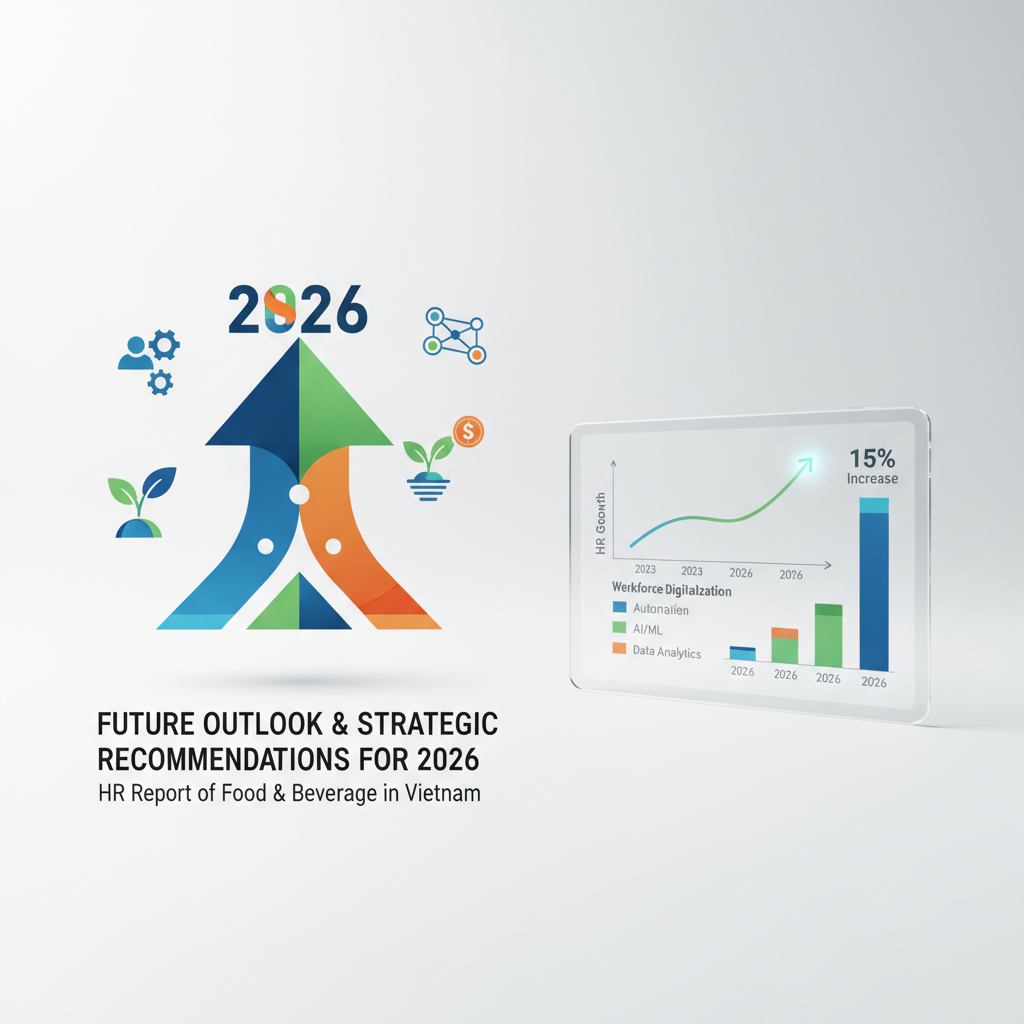
The dynamic landscape of Vietnam’s Food & Beverage (F&B) sector demands a forward-thinking approach to human resources. As we look towards 2026, F&B businesses must proactively navigate evolving market conditions, technological advancements, and shifting employee expectations. This section provides strategic recommendations designed to future-proof HR operations, ensuring sustainable growth, enhanced talent management, and robust employee engagement within the Vietnamese F&B field. Our insights draw from the latest trends and anticipate future challenges, offering actionable advice for business leaders and HR professionals.
1. Proactive Workforce Planning & Forecasting
The agility of F&B operations hinges significantly on strategic workforce planning. By 2026, businesses in Vietnam’s F&B sector must move beyond reactive hiring to embrace sophisticated forecasting models. This involves analyzing market trends, consumer demand shifts, and technological integrations (like automation in kitchens or delivery services) to predict future staffing needs and skill gaps. Effective workforce planning also encompasses succession planning for critical roles, identifying high-potential employees, and developing tailored training programs to upskill the existing team. Emphasizing skill development in areas such as digital literacy, customer experience, and operational efficiency will be crucial for retaining valuable talent and maintaining a competitive edge. Businesses should leverage HR analytics to gain deeper insights into employee turnover rates, recruitment challenges, and the effectiveness of current talent acquisition strategies. Investing in HR technology that supports data-driven decision-making will be paramount, enabling F&B companies to optimize staffing levels, manage labor costs more effectively, and adapt swiftly to market fluctuations. A comprehensive HR report of Food & Beverage field in Vietnam would underline the increasing importance of these predictive capabilities to ensure a resilient and adaptive workforce.
2. Adapting to Evolving Labor Laws & Regulations
Vietnam’s legislative environment is continually evolving, with new labor laws and regulations frequently introduced to protect worker rights and govern employer responsibilities. For F&B businesses, staying abreast of these changes is not merely a matter of compliance but a strategic imperative to avoid costly penalties, maintain a positive employer brand, and ensure ethical operations. By 2026, HR departments must meticulously monitor updates concerning minimum wage adjustments, social insurance contributions, working hours, overtime regulations, and various types of employment contracts. Understanding the nuances of new decrees, particularly those affecting seasonal workers, part-time staff, and foreign employees, will be vital. Businesses should consider engaging legal experts or specialized HR consultants to conduct regular audits and ensure their policies and practices align with the latest legal frameworks. Proactive adaptation also involves transparent communication with employees regarding their rights and responsibilities, fostering a culture of trust and fairness. For a comprehensive overview of the legal framework, insights into Vietnam’s Labour Code are invaluable for F&B operators navigating this complex landscape. Implementing robust performance management systems that comply with legal termination processes and fair disciplinary actions will also be key to mitigating risks.
3. Benchmarking Against Regional HR Practices
To truly excel, F&B businesses in Vietnam should look beyond local standards and benchmark their HR practices against leading regional and international players. This comparative analysis can reveal innovative approaches in areas such as employee retention, compensation & benefits, diversity & inclusion, and digital transformation within HR. Exploring how successful F&B chains in Singapore, Thailand, or even broader Asian markets manage talent acquisition, employee engagement, and professional development can provide invaluable insights. For instance, understanding best practices in creating flexible work environments, implementing advanced HR technology, or fostering robust corporate cultures can inspire new strategies for Vietnamese businesses. This external perspective is particularly useful for identifying global trends in the future of work, such as the increasing demand for personalized employee experiences or the integration of AI in recruitment. By analyzing what works elsewhere, Vietnamese F&B companies can refine their own strategies, attract top talent, and build a more resilient and attractive workplace. For a deeper dive into the specific challenges and opportunities within the local context, exploring our comprehensive HR report of Food & Beverage field in Vietnam offers a tailored perspective that complements regional benchmarking efforts, guiding businesses towards sustainable growth and market leadership.
Conclusion
The path to 2026 for Vietnam’s F&B sector is paved with both opportunities and challenges in human resource management. By embracing proactive workforce planning, diligently adapting to evolving labor laws, and strategically benchmarking against regional best practices, businesses can cultivate an HR environment that not only supports operational excellence but also drives sustainable growth. Investing in talent acquisition, employee development, and fostering a culture of adaptability will be paramount for securing a competitive advantage in this vibrant and ever-changing market. These strategic recommendations serve as a compass for F&B leaders, guiding them towards a future of resilience, innovation, and people-centric success.
Partner with Shelby Global
You are looking for reliable HR Sevice Suppliers? Contact Shelby Global Now! To connect with verified talents and upgrade your orginization.
—————————————
References
– Vietnam’s F&B Industry 2024: Trends and Outlook: https://www.vietnam-briefing.com/news/vietnams-f-b-industry-2024-trends.html
– benchmarking against broader economic and employment landscapes: https://www.manpowergroup.com.vn/en/insights/labour-market-trends
– World Economic Forum Future of Jobs Report 2023: https://www.weforum.org/reports/the-future-of-jobs-report-2023/
– :
– Vietnam’s Labour Code: https://www.tilleke.com/insights/an-overview-of-vietnams-labour-code/