
Understanding the Vietnamese Fashion SME Landscape
Vietnam’s fashion industry is a vibrant and rapidly expanding sector, fueled by a young, increasingly affluent population and a growing global appreciation for Vietnamese design and craftsmanship. For Small and Medium-sized Enterprises (SMEs) in this dynamic landscape, the opportunities are immense, ranging from capitalizing on local market demand for trendy and affordable apparel to tapping into lucrative international export markets. However, amidst this growth, Vietnamese fashion SMEs face unique challenges, particularly in talent acquisition and retention. Securing skilled designers, pattern makers, marketing specialists, and experienced production managers is crucial for growth, yet often proves to be a significant hurdle. This section delves into the intricate environment fashion SMEs navigate, highlighting the critical need for well-thought-out talent strategies, including Optimized Salary Budget Structures for SMEs in Fashion field in vietnam, to ensure their long-term success and competitive edge.

1. Current trends in Vietnam’s fashion industry labor market
The Vietnamese fashion industry labor market is characterized by several key trends. Firstly, there’s a burgeoning demand for skilled labor across the entire value chain, from design and product development to digital marketing and e-commerce management. As consumer preferences shift towards sustainable fashion and online shopping, companies require new skill sets that merge traditional textile expertise with technological prowess. Secondly, the industry is witnessing increased competition for top talent, not only from larger domestic conglomerates and international brands setting up operations in Vietnam but also from other fast-growing sectors. Graduates and experienced professionals are drawn to companies offering attractive compensation packages, career development opportunities, and modern work environments. This competitive pressure means that SMEs, often with limited resources, must be strategic in how they attract and retain their workforce, emphasizing the importance of creative compensation models and workplace culture.
2. Common talent acquisition challenges for SMEs
Fashion SMEs in Vietnam frequently encounter several formidable challenges when it comes to attracting and securing talent. A primary issue is the perception gap: larger, well-established brands often have a stronger employer brand, allowing them to attract a wider pool of candidates. SMEs, conversely, might struggle to convey their unique value proposition and growth potential. Another significant challenge is the skill gap itself; while Vietnam has a strong manufacturing base, specialized skills in areas like high-fashion design, sustainable material sourcing, data-driven marketing, and advanced supply chain optimization are often in short supply. Furthermore, many SMEs lack sophisticated Human Resources departments or robust recruitment processes, relying instead on informal networks. This can lead to prolonged hiring cycles and a suboptimal talent match. The inability to compete purely on salary with larger players further compounds these difficulties, necessitating a focus on creating a holistic employee value proposition that extends beyond just the base pay.
3. Impact of economic factors on compensation strategies
Economic factors play a pivotal role in shaping compensation strategies for fashion SMEs in Vietnam. Rising inflation and the general increase in the cost of living directly impact employees’ expectations regarding salary. While Vietnam has experienced robust economic growth, global economic headwinds can also affect consumer spending and, consequently, the profitability of fashion businesses. This creates a delicate balance for SMEs: they must offer competitive wages to attract and retain talent, yet they operate with tighter margins than larger corporations. This is precisely where Optimized Salary Budget Structures for SMEs in Fashion field in vietnam becomes indispensable. Rather than simply matching competitors’ salaries, SMEs must explore innovative compensation models. These can include performance-based bonuses, skill-based pay, profit-sharing schemes, and comprehensive non-monetary benefits such as professional development courses, flexible working arrangements, and a supportive company culture. Understanding the local economic climate and adapting compensation strategies accordingly is not just about cost control; it’s about strategic investment in human capital that yields long-term returns. For more insights into the broader labor market, a recent article by Vietnam Briefing provides an outlook on Vietnam’s labor market, which can further inform SME strategies.
Ultimately, for Vietnamese fashion SMEs to flourish, they must move beyond traditional recruitment methods and embrace a strategic, data-driven approach to talent management. This involves not only understanding the current market dynamics but also proactively designing Optimized Salary Budget Structures for SMEs in Fashion field in vietnam that align with both business goals and employee expectations, ensuring they can secure and retain the creative and skilled workforce essential for innovation and growth.
Core Components of an Optimized Salary Budget Structure
Delves into the essential elements that comprise an effective salary budget, moving beyond just base pay to include other valuable components.
In the dynamic and competitive landscape of Vietnam’s fashion industry, attracting and retaining top talent is paramount for the success of Small and Medium-sized Enterprises (SMEs). An optimized salary budget structure for SMEs in the fashion field in Vietnam is not merely about allocating funds; it’s a strategic tool that reflects a company’s values, motivates employees, and drives sustainable growth. Moving beyond a simplistic focus on base pay, a truly effective salary budget incorporates a holistic approach, considering various monetary and non-monetary components. This section explores the core elements that fashion SMEs in Vietnam must consider to build a competitive and motivating compensation package.
1.
Base salary benchmarking for fashion roles
The foundational element of any compensation package is the base salary. For fashion SMEs in Vietnam, ensuring these salaries are competitive is crucial for attracting skilled designers, pattern makers, merchandisers, marketing specialists, and production staff. Base salary benchmarking for fashion roles involves systematically comparing your company’s pay rates against those of competitors and the broader market. This process isn’t just about matching the highest offer; it’s about understanding the market value for specific roles within the Vietnamese fashion context, considering factors such as experience, specialized skills (e.g., sustainable fashion design, digital marketing for fashion), educational qualifications, and location (e.g., urban centers like Ho Chi Minh City or Hanoi vs. provincial areas). Reliable market data, often available through industry surveys or HR consultancies, allows SMEs to set salaries that are neither excessively high, straining budgets, nor too low, leading to high turnover. A well-benchmarked base salary forms the cornerstone of an attractive remuneration strategy, signaling to potential and current employees that their skills are valued fairly within the industry.
2.
Performance-based incentives and bonuses
While a competitive base salary attracts talent, performance-based incentives and bonuses are key drivers for motivation, productivity, and retention within fashion SMEs. These variable pay components directly link employee compensation to individual, team, or company performance, aligning personal goals with organizational objectives. For instance, sales teams might receive commissions for exceeding sales targets, while design teams could earn bonuses for successful collection launches or awards. Production staff might be incentivized for efficiency improvements or meeting stringent quality standards. Implementing effective performance incentives requires clear, measurable key performance indicators (KPIs) that are transparently communicated to employees. This creates a culture of accountability and empowers staff to directly impact their earning potential. Beyond individual bonuses, profit-sharing schemes or team-based rewards can foster collaboration and a sense of shared success. Such incentives not only reward high achievement but also serve as a powerful tool for employee engagement, encouraging a proactive and results-oriented mindset crucial for navigating the fast-paced fashion industry. According to a leading HR consultancy, performance-based pay structures are increasingly vital for fostering a high-performance culture and ensuring business resilience. Global talent trends often highlight the importance of adaptable compensation strategies that include performance incentives to drive employee engagement and productivity.
3.
Non-monetary benefits and employee perks
An truly optimized salary budget structure extends beyond direct financial compensation to encompass a range of non-monetary benefits and employee perks. These elements play a significant role in enhancing job satisfaction, fostering loyalty, and differentiating an SME as an employer of choice in Vietnam’s fashion sector. Examples include comprehensive health insurance, professional development opportunities (e.g., workshops on sustainable materials, fashion technology, or digital marketing), flexible working arrangements, and generous paid time off. For fashion roles, specific perks might include employee discounts on company products, opportunities to attend industry events or fashion shows, or even creative sabbaticals for designers. Investing in employee well-being through wellness programs, healthy snacks, or ergonomic workspaces also contributes significantly to a positive work environment. While not directly reflected in a paycheck, these perks demonstrate an employer’s commitment to their employees’ overall well-being and career growth. In a market where salary expectations can be competitive, a robust package of non-monetary benefits can be the decisive factor for candidates when choosing between job offers, ultimately contributing to higher retention rates and a stronger employer brand for fashion SMEs in Vietnam.
Strategic Approaches to Salary Budget Allocation
Provides actionable strategies for SMEs to allocate their budget effectively, ensuring fairness, motivation, and sustainability.
In Vietnam’s dynamic fashion industry, small and medium-sized enterprises (SMEs) constantly strive to attract, retain, and motivate top talent. An Optimized Salary Budget Structures for SMEs in Fashion field in vietnam is a strategic investment directly impacting productivity, innovation, and long-term viability. Effective budget allocation moves beyond arbitrary decisions, embracing structured methodologies that promote equity, enhance performance, and secure sustainable growth. Here, we explore key strategies for fashion SMEs in Vietnam to optimize their salary budget allocation.

1. Developing a Clear Compensation Philosophy
A well-defined compensation philosophy is the cornerstone of effective salary budget allocation. It articulates the company’s beliefs and principles regarding employee pay, setting clear guidelines for all compensation decisions. For fashion SMEs, this means determining the talent they wish to attract, how they reward performance, and their desired market position. A clear philosophy ensures consistency, transparency, and fairness—crucial for employee morale and trust. It should consider market rates, the company’s financial health, specific fashion industry skill sets (e.g., designers, merchandisers, production managers), and the desired company culture. Without this guiding philosophy, salary decisions can appear arbitrary, leading to dissatisfaction and high turnover. By establishing clear principles, SMEs make informed decisions aligned with both strategic objectives and employee expectations, fostering an Optimized Salary Budget Structures for SMEs in Fashion field in vietnam that is both fair and competitive.
2. Segmenting Roles for Differentiated Pay Structures
Not all roles within a fashion SME hold equal value or require the same compensation. Strategic salary allocation involves segmenting roles based on their impact, required skills, market demand, and contribution to success. For instance, a lead designer with a unique creative vision will command a different pay scale than an administrative assistant, while a skilled production manager ensuring quality and efficiency also falls into a distinct category. Differentiated pay structures allow SMEs to allocate resources where they yield the most strategic return. This segmentation helps avoid overpaying for easily replaceable positions while ensuring competitive compensation for mission-critical roles. Conducting market research specific to the Vietnamese fashion industry is essential to understand prevailing rates for various positions. Job evaluations can objectively assess the relative worth of different roles. This approach optimizes the budget to reward key talent effectively, fostering a high-performance culture.
3. Balancing Fixed vs. Variable Compensation
Achieving an optimal balance between fixed (base salary) and variable (bonuses, commissions, incentives) compensation is vital for driving performance and managing budget sustainability. Fixed compensation provides employees with stability and security. Variable compensation ties a portion of pay directly to individual, team, or company performance. For fashion SMEs in Vietnam, this balance is highly effective. Sales teams, for instance, often thrive on commission structures, while production workers might benefit from quality or efficiency bonuses. Senior management or creative directors could receive performance-based bonuses linked to successful collection launches or overall company growth. This approach not only motivates employees to achieve specific targets but also provides financial flexibility for the business. During leaner periods, variable costs naturally reduce, protecting financial health. Conversely, during successful periods, employees share in the success, reinforcing motivation. As highlighted by the Society for Human Resource Management (SHRM), linking variable pay to clear performance metrics is crucial for its effectiveness. Carefully designing these variable components ensures they are achievable, transparent, and genuinely incentivize desired behaviors, significantly contributing to an Optimized Salary Budget Structures for SMEs in Fashion field in vietnam.
Implementing these strategic approaches to salary budget allocation empowers fashion SMEs in Vietnam to build a robust, fair, and motivating compensation system. By developing a clear philosophy, segmenting roles, and balancing fixed and variable pay, businesses can ensure their salary investments yield maximum returns, attracting top talent and fostering sustainable growth in a competitive market.
Implementing and Monitoring Your Budget Structure
Creating an effective budget is merely the first step; its true value is unlocked through meticulous implementation and continuous monitoring. For Small and Medium-sized Enterprises (SMEs) in Vietnam’s dynamic fashion sector, an Optimized Salary Budget Structures for SMEs in Fashion field in Vietnam is a living document, requiring adaptability and strategic oversight. This section explores practical strategies for rolling out your new framework, ensuring transparency, establishing robust review mechanisms, and measuring the Return on Investment (ROI) of compensation expenditures.
1. Communication strategies for transparency
Transparency in compensation is a cornerstone of a healthy and high-performing workplace, especially when introducing new budget structures. While full disclosure of individual salaries is often impractical, clearly communicating the principles, structure, and rationale behind your compensation system builds trust, reduces ambiguity, and enhances employee engagement.
Key Communication Elements:
- Why the Change? Explain the strategic objectives driving the new structure – e.g., attracting talent, improving retention, aligning with market rates, or rewarding performance. Employees need to understand the “why.”
- How it Works: Clearly outline compensation package components: base salary, bonuses, and benefits. Describe criteria for salary adjustments, promotions, and performance evaluations using accessible language.
- Impact on Employees: Address potential concerns directly. Explain how general roles or performance levels might be affected, providing examples where appropriate.
- Open Channels for Feedback: Establish avenues for questions and concerns, such as town hall meetings or one-on-one sessions. Active listening and thoughtful responses are crucial.
- Consistent Messaging: Ensure all managers and HR are aligned. Inconsistent information undermines trust; training managers to discuss compensation fairly is paramount.
By fostering transparent communication, Vietnamese fashion SMEs ensure their workforce understands and values the new structure, leading to greater acceptance, motivation, and a cohesive team.
2. Regular review and adjustment mechanisms
An Optimized Salary Budget Structures for SMEs in Fashion field in Vietnam cannot remain static. Vietnam’s fashion industry is dynamic, influenced by economic shifts and intense talent competition. Establishing regular review and adjustment mechanisms is vital to ensure the budget remains relevant, competitive, and fiscally responsible.
Key Aspects of Review:
- Cadence and Participants: Define a regular review cycle (quarterly, semi-annually, or annually). Involve key stakeholders including HR, finance, and senior management for a holistic perspective.
- Market Competitiveness Analysis: Periodically benchmark compensation against industry peers and the broader Vietnamese labor market using salary surveys. This assesses if pay scales attract and retain top talent. Insights from global talent trends, such as Mercer’s Global Talent Trends, provide valuable context; they highlight a focus on pay equity and skills-based pay, critical for optimal attraction.
- Budget vs. Actuals: Compare actual payroll expenses against budgeted figures. Identify and investigate significant variances, revealing potential overspending or reallocation opportunities.
- Performance and Productivity Impact: Evaluate how compensation influences employee performance and business goal achievement.
- Employee Feedback and Retention: Analyze turnover rates, exit interviews, and engagement survey results to gauge satisfaction. High attrition in specific roles signals a need for review.
- Economic Indicators: Consider broader economic factors like inflation rates and cost of living changes, which impact salary purchasing power.
Based on these reviews, implement necessary adjustments, ensuring your compensation strategy remains a strategic asset.
3. Measuring ROI of compensation investments
Compensation is a significant strategic investment in human capital for fashion SMEs in Vietnam. Measuring the Return on Investment (ROI) is crucial to justify expenditures, optimize resource allocation, and demonstrate the tangible value of your Optimized Salary Budget Structures for SMEs in Fashion field in Vietnam.
Key Metrics for Measuring Compensation ROI:
- Employee Retention Rate: High retention of skilled employees reduces recruitment and training costs. Positive ROI suggests competitive compensation helps retain valuable talent. Calculate: (Number retained / Total at start) * 100.
- Employee Engagement/Satisfaction: Engaged employees are more productive and loyal. Link these scores to compensation satisfaction for impact.
- Productivity Metrics: Track output per employee, sales figures, or production units. Compare before and after compensation adjustments for proportional gains.
- Quality of Hires and Time-to-Fill: Effective compensation attracts higher-caliber candidates and reduces time to fill critical roles, minimizing disruption.
- Revenue and Profit per Employee: This high-level metric connects compensation costs to financial performance. Increasing trends in revenue/profit per employee relative to compensation growth indicates positive ROI.
- Reduced Absenteeism: Fair compensation can contribute to lower stress and higher morale, potentially reducing unscheduled absences.
By systematically tracking these metrics, fashion SMEs can demonstrate how strategic compensation contributes to business growth, innovation, and long-term success in the competitive Vietnamese market, enabling informed decision-making.
Future-Proofing Salary Budgets for Growth in Vietnam Fashion
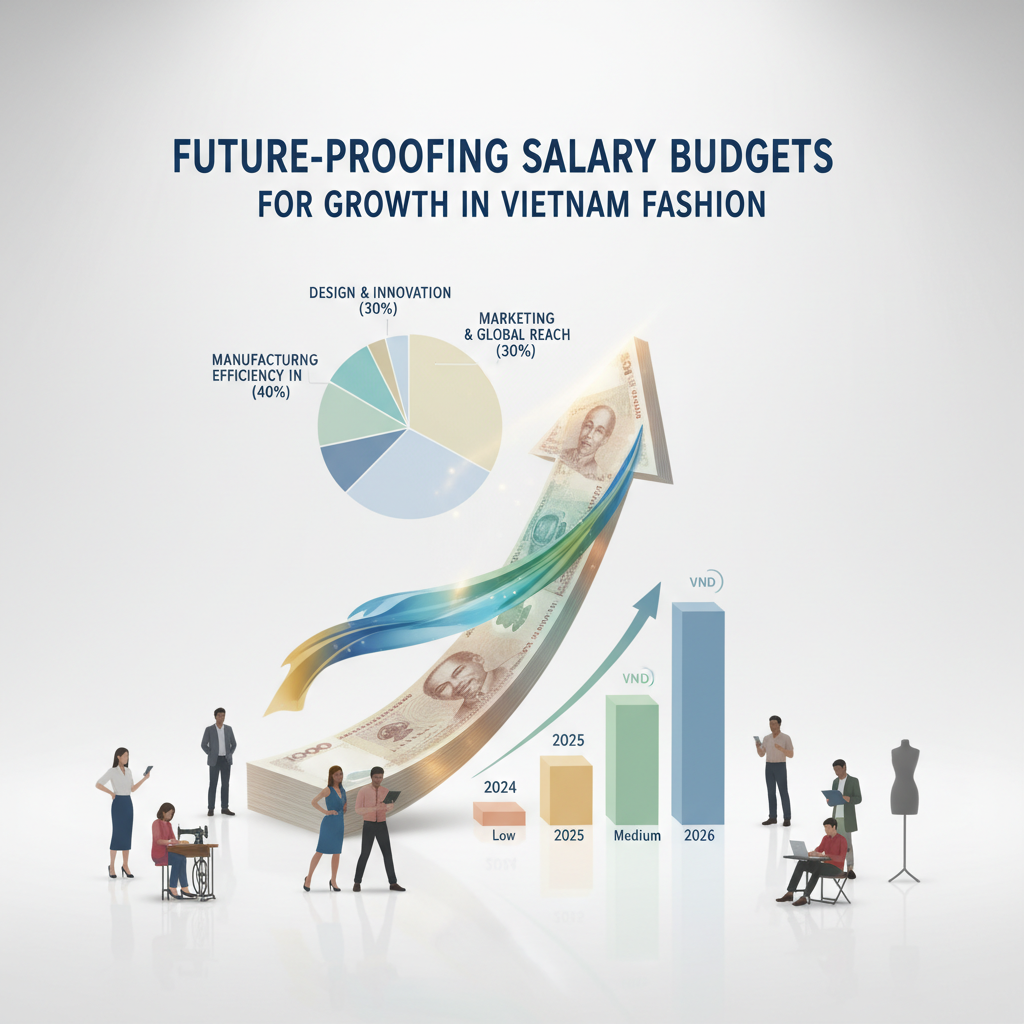
As Vietnam’s fashion industry continues its dynamic ascent, Small and Medium-sized Enterprises (SMEs) face a dual challenge: attracting top talent in a competitive market while maintaining sustainable growth. Building flexible and scalable salary structures is paramount for adapting to future market changes and supporting business expansion. This section explores how Optimized Salary Budget Structures for SMEs in Fashion field in vietnam can not only navigate current economic tides but also lay a robust foundation for long-term success, ensuring that compensation strategies are a driver, not a deterrent, for growth.
1. Anticipating Industry Shifts and Talent Demands
The Vietnamese fashion landscape is in constant flux, influenced by rapid digitalization, evolving consumer preferences, and a growing emphasis on sustainability. For SMEs, this means the demand for specific skill sets—from e-commerce specialists and digital marketers to sustainable design experts and supply chain innovators—is continuously shifting. To future-proof salary budgets, businesses must adopt a proactive approach to market intelligence. This involves regularly analyzing salary benchmarks, staying abreast of industry trends, and forecasting future talent needs. By subscribing to industry reports and engaging with professional networks, SMEs can gain insights into emerging roles and the compensation expectations associated with them. Understanding these dynamics allows for strategic allocation of resources, preventing reactive overspending when critical skills become scarce. For instance, as Vietnam’s digital economy expands, the demand for tech-savvy fashion professionals is rising, influencing salary expectations across the sector. According to a report highlighting Vietnam’s robust economic growth, particularly in sectors like manufacturing and retail, businesses must be prepared for corresponding increases in labor costs and a competitive talent landscape. Such insights are crucial for an optimized talent strategy within Vietnam’s evolving economic landscape.
2. Building Agility into Compensation Models
Rigid salary structures can quickly become obsolete in a fast-paced environment. SMEs in Vietnam’s fashion sector need compensation models that offer inherent flexibility and scalability. This can be achieved through a multi-faceted approach. Firstly, implementing variable pay components, such as performance-based bonuses, sales commissions, or profit-sharing schemes, directly links compensation to business success and individual contribution. This not only motivates employees but also allows the budget to flex with revenue fluctuations. Secondly, consider tiered salary bands with clear progression paths, allowing for adjustments based on market rates, skill acquisition, and role complexity without overhauling the entire structure. Thirdly, a comprehensive benefits package—including health insurance, professional development opportunities, and flexible working arrangements—can complement base salaries, offering perceived value that is not always directly monetary but significantly impacts retention and attraction. Regularly reviewing and adjusting these models, perhaps annually or bi-annually, based on internal performance and external market data, ensures that the budget remains competitive and sustainable. This iterative process is key to developing truly Optimized Salary Budget Structures for SMEs in Fashion field in vietnam.
3. Succession Planning and Leadership Incentives
Sustainable growth is intrinsically linked to strong leadership and a clear succession pipeline. For SMEs, investing in talent development and retention through strategic compensation is vital. This goes beyond just competitive salaries for senior roles; it involves creating incentive structures that encourage long-term commitment and foster leadership potential from within. Consider offering long-term incentives like phantom stock options or performance units linked to company milestones for key management. These non-dilutive options can align employee interests with shareholder value, motivating leaders to drive the business forward. Moreover, clearly defined career ladders with corresponding salary increments and opportunities for skill enhancement ensure that high-potential employees see a future within the organization. By budgeting for leadership development programs, mentorship schemes, and performance-based rewards tied to succession readiness, SMEs can cultivate a robust internal talent pool. This not only reduces recruitment costs and risks associated with external hiring but also builds institutional knowledge and a strong company culture, making the organization more resilient and attractive to future leaders. Strategically allocating budget towards these areas is a cornerstone of future-proof growth.
Partner with Shelby Global
You are looking for reliable HR Sevice Suppliers? Contact Shelby Global Now! To connect with verified talents and upgrade your orginization.
—————————————
References
– Vietnam Briefing provides an outlook on Vietnam’s labor market: https://www.vietnam-briefing.com/news/vietnams-labor-market-key-trends-outlook.html
– Global talent trends: https://www.mercer.com/our-thinking/career/global-talent-trends.html
– The Link Between Variable Pay and Performance Management: https://www.shrm.org/resourcesandtools/hr-topics/compensation/pages/variable-pay-performance-management.aspx
– Mercer’s Global Talent Trends: https://www.mercer.com/our-thinking/career/talent-trends.html
– Vietnam’s Economic Growth Outlook: https://www.vietnam-briefing.com/news/vietnam-economic-growth-outlook.html