
Defining the Roles: Scope and Core Responsibilities
In Vietnam’s dynamic and rapidly expanding finance sector, the landscape of Human Resources is as diverse as the institutions themselves. From agile Small and Medium-sized Enterprises (SMEs) to sprawling multinational corporations, the strategic importance of HR is universally acknowledged, yet its practical application varies significantly. This section aims to elucidate the fundamental Differences between the SMEs’ HR Manager and the Corporates’ HR Director in Vietnam’s finance field, exploring the distinct scope and core responsibilities that define each role. Understanding these nuances is crucial for both aspiring HR professionals navigating career paths and businesses seeking to optimize their human capital strategies in Vietnam.

While both roles are dedicated to managing an organization’s most valuable asset – its people – the scale, complexity, and strategic impact of their work diverge considerably. The HR Manager in an SME often wears multiple hats, tackling a broad spectrum of daily tasks, whereas the HR Director in a large corporate entity typically operates at a higher, more strategic level, influencing global policies and long-term organizational goals.
1.
Operational vs. Strategic Focus: Day-to-Day vs. Long-term Vision
The most prominent distinction lies in the balance between operational execution and strategic foresight. An HR Manager in a Vietnamese financial SME is frequently immersed in the day-to-day operational grind. Their responsibilities typically encompass the full employee lifecycle: recruitment and onboarding for a smaller team, payroll processing, benefits administration, employee relations, and basic training coordination. They are often the sole HR point of contact, requiring a hands-on approach to problem-solving and immediate response to staff needs. Their focus is on ensuring smooth daily HR operations and maintaining a compliant and productive workforce within limited resources.
Conversely, a Corporates’ HR Director in Vietnam’s finance sector operates with a predominantly strategic outlook. Overseeing a larger HR department, they delegate operational tasks to their team, allowing them to concentrate on macro-level objectives. This includes developing long-term talent acquisition strategies, succession planning for key leadership roles, fostering organizational culture across multiple departments or even regional offices, and driving initiatives that align human capital with the company’s overall business strategy. Their decisions have a far-reaching impact, shaping the company’s competitive advantage in a complex global financial market.
2.
Compliance and Policy: Local Regulations vs. Global Frameworks
Both roles are beholden to regulatory compliance, but the scope and complexity differ dramatically. An SME HR Manager primarily navigates Vietnam’s local labor laws and regulations, ensuring the company adheres to national standards regarding contracts, wages, social insurance, and working conditions. While crucial, the interpretative challenges are generally confined to the domestic context, and policy development is often reactive or based on readily available templates.
For a Corporates’ HR Director, compliance extends far beyond local Vietnamese regulations. They must ensure adherence to international labor standards, global corporate policies, and regulations across various jurisdictions if the corporation has a regional or global footprint. This involves harmonizing global policies with local laws, managing complex compensation structures that account for expatriate packages, and mitigating risks associated with cross-border employment. Staying abreast of Vietnam’s evolving labor market and international legal frameworks requires a sophisticated understanding of both macroeconomics and intricate legal details, often supported by legal teams and external consultants.
3.
Influence and Advisory: From Administrative Support to Executive Counsel
The level of influence and advisory capacity also marks a significant divergence. An HR Manager in an SME often provides administrative support to senior management, offering practical advice on employee-related issues, and implementing directives from business owners or general managers. Their role is largely responsive, ensuring HR functions support the immediate operational needs of the business. While they are a key support system, their input on core business strategy might be limited due to the inherent structure of smaller organizations.
In contrast, a Corporates’ HR Director is typically an integral part of the executive leadership team, serving as a strategic advisor to the CEO and other C-suite executives. They contribute directly to strategic planning, mergers and acquisitions due diligence from an HR perspective, organizational restructuring, and the cultivation of a high-performance culture. Their insights on talent trends, workforce analytics, and change management are critical to the company’s long-term success, positioning them not just as HR practitioners but as business partners with significant executive counsel influence.
In conclusion, while both the HR Manager in an SME and the HR Director in a corporate entity in Vietnam’s finance sector are vital to organizational success, their roles are shaped by the scale, resources, and strategic imperatives of their respective environments. The SME HR Manager focuses on robust operational delivery and local compliance, while the Corporate HR Director champions strategic talent initiatives, global governance, and executive leadership, making a profound impact on the company’s overarching business strategy and competitive standing.
Strategic Impact and Organizational Influence
The role of Human Resources has evolved dramatically from purely administrative functions to a strategic imperative, particularly within the dynamic financial sector in Vietnam. However, the Differences between the SMEs’ HR Manager and the Corporates’ HR Director in finance field in vietnam are stark, primarily in their strategic impact and organizational influence. While both are critical to their respective organizations, their scope, resources, and involvement in high-level decision-making diverge significantly, reflecting the scale and complexity of their operational environments. Understanding these distinctions is key to appreciating the evolving landscape of HR strategy Vietnam finance.
-
Business Partnership and Decision-Making Involvement
In a Small and Medium-sized Enterprise (SME) within Vietnam’s finance industry, the HR Manager often operates as a generalist. Their primary focus is typically operational: managing payroll, benefits administration, basic recruitment, and ensuring compliance with local labor laws. The SME HR challenges finance sector faces often revolve around limited budgets and the need for multi-disciplinary expertise. While they contribute to the business by maintaining a stable workforce and ensuring operational efficiency, their direct involvement in strategic business decisions is often limited. Influence is usually reactive, responding to immediate staffing needs or employee relations issues. They may advise the owner or CEO on personnel matters, but rarely sit at the core strategic planning table for market expansion, product development, or significant investment decisions.
Conversely, the HR Director in a large corporate finance institution in Vietnam embodies a truly strategic partner role. This individual is typically a member of the executive leadership team, actively contributing to the overall Corporate HR strategy finance Vietnam. Their department is often specialized, with dedicated teams for talent acquisition, compensation & benefits, learning & development, and HR technology. They proactively influence decisions related to organizational restructuring, mergers and acquisitions, digital transformation, and global talent allocation. Their organizational influence HR finance is significant, as they shape the human capital strategy that underpins the entire business model. They are crucial in developing strategic HR partnerships, ensuring that HR initiatives are directly aligned with core business objectives and financial performance targets, acting as a critical advisor in high-stakes HR decision-making finance sector.
-
Talent Development and Succession Planning Initiatives
For an SME HR Manager, talent development initiatives are usually constrained by resources. Training often focuses on immediate skill gaps, compliance requirements, or basic professional development, rather than extensive long-term career planning. Budgets for external training are typically modest. Succession planning finance Vietnam SMEs often implement is informal, relying on the founder’s intuition or direct mentorship, rather than structured programs. Identifying and nurturing high-potential employees for future leadership roles can be challenging due to limited internal mobility and development pathways, which are common SME HR challenges finance.
In contrast, the Corporate HR Director oversees sophisticated and well-funded talent development programs. These include leadership academies, specialized technical training for various finance roles, mentorship programs, and structured career pathing. Significant investments are made in both internal and external learning opportunities, often leveraging advanced HR technology for personalized development plans. Formal, robust succession planning finance Vietnam corporate entities engage in identifies critical roles and prepares a pipeline of ready talent, mitigating risks associated with key personnel departures. This proactive approach to talent management finance industry ensures a continuous supply of skilled professionals, from entry-level analysts to senior executives, driving sustainable growth and competitive advantage. The focus here is on long-term capability building, ensuring the organization is future-ready.
-
Driving Cultural Change and Organizational Design
The SME HR Manager in the finance sector often has a more direct, hands-on impact on company culture, which is typically smaller and more close-knit, often reflecting the founder’s personality and values. Cultural change, when it occurs, might be driven through direct communication, team events, or policy adjustments that are felt immediately across the smaller workforce. Organizational design in SMEs is often organic, evolving in response to immediate operational needs rather than through formalized, data-driven strategies. Their role in cultural transformation finance SMEs undertake is more about reinforcing existing values or making minor adjustments.
For the Corporate HR Director, driving cultural change is a complex and strategic undertaking, especially across diverse departments, business units, or even international offices. They lead large-scale cultural transformation initiatives, such as integrating post-merger entities, fostering innovation, or embedding ethical practices across thousands of employees. This involves data-driven cultural assessments, comprehensive communication strategies, and leadership buy-in at the highest levels. In organizational design HR finance directors meticulously analyze structures to optimize efficiency, enhance collaboration, and align with strategic goals. They leverage advanced analytics and change management methodologies to implement significant structural shifts, ensuring the organization is agile and responsive to market demands. This level of HR leadership roles Vietnam finance corporations demand is instrumental in shaping not just the workforce, but the very identity and operational effectiveness of the entire enterprise, making the HR Director a pivotal force in the company’s strategic trajectory and overall success. They play a critical role in fostering a high-performance culture that supports the company’s long-term vision, addressing complex issues like employee engagement and employer branding effectively.
Financial Acumen and Budget Management
In the dynamic Vietnamese economic landscape, the financial capabilities expected of Human Resources (HR) professionals vary significantly between Small and Medium-sized Enterprises (SMEs) and large corporate financial institutions. While an HR Manager in an SME might oversee a relatively contained HR budget, their counterpart, the HR Director in a major financial corporation, often navigates complex financial landscapes with a direct impact on the organization’s overall profitability. This fundamental difference shapes the Differences between the SMEs’ HR Manager and the Corporates’ HR Director in finance field in Vietnam, demanding distinct levels of financial understanding, strategic foresight, and budget responsibility.
1. Managing HR Budgets vs. Impact on Overall P&L
For an SME’s HR Manager in Vietnam, budget management typically revolves around allocating funds for salaries, basic benefits, recruitment, and minimal training. Their budget responsibility is often direct and tactical, focusing on cost-efficiency within predefined limits. The HR budget, while crucial, might not be viewed as a significant driver of the company’s profit and loss (P&L) statement in the same way as core operational expenses. Their financial understanding needs to be practical, ensuring the HR department operates within its allocated resources without overspending.
Conversely, a Corporate HR Director in a large Vietnamese financial institution operates at a much broader, strategic level. Their purview extends beyond mere departmental budgeting to understanding how human capital investments directly influence the organization’s P&L. This includes analyzing the financial implications of large-scale talent acquisition strategies, workforce restructuring, and the overall cost of human resources across various business units. They are not just managing an HR budget; they are actively contributing to the company’s financial health, requiring sophisticated strategic impact analysis and an intricate grasp of corporate finance principles. For these directors, HR expenses are seen as investments with expected returns, making their role integral to the firm’s bottom line.
2. Compensation & Benefits Structuring and Cost Control
In SMEs, compensation and benefits (C&B) structuring is often more straightforward, dictated by local market rates, business profitability, and the owner’s discretion. The HR Manager’s role involves ensuring competitive basic packages to attract and retain talent, while maintaining strict cost efficiency. Their primary challenge is often to stretch limited resources to offer appealing remuneration without jeopardizing the company’s financial stability. Decisions are frequently made with immediate cash flow in mind.
For HR Directors in large corporate financial institutions, C&B is a complex strategic tool. They design intricate pay structures, incentive programs, and executive compensation packages that must align with global standards, industry benchmarks, and stringent regulatory compliance in Vietnam’s financial sector. Their decisions have massive financial implications, affecting thousands of employees and potentially millions of dollars. They must balance attraction and retention of top-tier talent with long-term financial sustainability and shareholder value, often engaging in sophisticated modeling and risk management strategies for equity-based compensation and performance bonuses. Their expertise is crucial in optimizing human capital investment for maximum organizational return, often working closely with finance departments to predict future costs and liabilities. According to a recent report, understanding the nuances of employee compensation in emerging markets like Vietnam is pivotal for sustainable growth strategies. The World Bank’s economic overview of Vietnam highlights the importance of effective resource allocation for productivity.
3. ROI of HR Initiatives and Data-Driven Analytics
The HR Manager in an SME might assess the success of HR initiatives primarily through anecdotal feedback or basic metrics like turnover rates. While they understand the value of a motivated workforce, quantifying the Return on Investment (ROI) of a training program or a wellness initiative in precise financial terms can be challenging due to limited resources for advanced analytics. Their focus is often on tangible outcomes, such as reduced employee grievances or improved team morale, rather than complex financial ROI calculations.
In stark contrast, Corporate HR Directors are increasingly expected to be data scientists with a strong financial backbone. They employ sophisticated analytics tools to measure the ROI of every HR initiative, from talent acquisition costs and training programs to employee engagement strategies and workforce planning. They present compelling business cases to executive leadership, demonstrating how HR contributes directly to revenue generation or cost savings. This requires a deep understanding of financial modeling, predictive analytics, and the ability to translate HR metrics into financial performance indicators. Their role involves meticulous tracking of Key Performance Indicators (KPIs) and leveraging data to drive strategic decisions, influencing everything from budgeting for new technologies to assessing the financial impact of diversity and inclusion programs. Effective stakeholder communication regarding these financial insights is also paramount.
Team, Resources, and Technology Adoption
The operational landscape for Human Resources professionals in Vietnam’s finance sector presents a stark contrast between Small and Medium-sized Enterprises (SMEs) and large corporations, particularly concerning team size, available resources, and the embrace of HR technology. This section delves into these fundamental differences between the SMEs’ HR Manager and the Corporates’ HR Director in finance field in vietnam, highlighting how varying contexts shape their approaches to talent management, digital transformation, and strategic partnerships.
-
Lean Teams vs. Specialized HR Departments
In SMEs within Vietnam’s finance industry, the HR function is typically managed by a lean team, often a single HR Manager or a small generalist team. This individual is frequently a jack-of-all-trades, responsible for the entire spectrum of HR activities, from recruitment and payroll processing to employee relations, training, and compliance. Their primary focus is often on operational efficiency and managing day-to-day HR tasks with limited resources. Consequently, the scope for in-depth strategic planning is often constrained, with immediate needs taking precedence. The `SME HR challenges Vietnam` often revolve around juggling multiple responsibilities and navigating a dynamic regulatory environment without specialized support. Resource constraints mean `HR budget allocation Vietnam` is usually modest, impacting the ability to invest heavily in advanced tools or extensive training programs.
Conversely, large corporations boast highly specialized HR departments. A Corporate HR Director in a finance company typically oversees various dedicated teams: Talent Acquisition, Compensation & Benefits, HR Business Partners, Learning & Development, and HR Information Systems (HRIS). Each team comprises specialists, allowing for a deeper, more strategic approach to human capital management. This `corporate HR structure finance Vietnam` enables comprehensive `strategic HR planning Vietnam`, focusing on long-term talent pipelines, succession planning, and robust employee engagement initiatives. The greater number of resources and specialized roles means these departments can tackle complex HR challenges with dedicated expertise, contributing significantly to the organization’s overall strategic objectives.
-
HRIS and Digital Transformation Strategies in Vietnam
The adoption of HR technology platforms and digital transformation strategies varies significantly between these two environments. For SMEs, `HR technology adoption Vietnam` is often in its nascent stages. Many still rely on manual processes, spreadsheets, or basic, standalone HR software primarily for payroll and attendance tracking. The initiation of `HRIS implementation Vietnam` is often driven by the need for basic automation and compliance rather than sophisticated data analytics or employee self-service capabilities. Financial constraints, a lack of technical expertise, and skepticism about the immediate ROI are common barriers to more advanced digital transformation. When a digital shift does occur, it usually targets immediate pain points, such as automating leave requests or streamlining onboarding paperwork.
In contrast, corporate finance institutions are often at the forefront of `digital HR transformation finance Vietnam`. They typically leverage integrated, cloud-based HR Information Systems (HRIS) from global vendors like SAP SuccessFactors, Workday, or Oracle HCM. These systems facilitate end-to-end HR processes, from recruitment and onboarding to performance management, compensation, and learning. Emphasis is placed on leveraging `talent management technology Vietnam` for predictive analytics, workforce planning, and enhancing the employee experience through self-service portals and mobile applications. `HR analytics Vietnam finance` plays a crucial role, allowing HR Directors to make data-driven decisions on talent strategies, retention, and productivity. These organizations often have dedicated HRIS teams to manage system implementation, integration, and continuous improvement, viewing HR technology as a strategic enabler for business growth and competitive advantage. The accelerating pace of digital adoption across Southeast Asia, as highlighted by various industry reports, underscores the increasing investment in advanced HR solutions by larger entities. For instance, insights on how businesses are accelerating their digital transformation in HR across the region provide valuable context for these trends. (Human Resources Online – Singapore accelerating digital transformation in HR with a focus on future-ready skills and employee engagement)
-
External Vendor Management and Partnerships
The approach to external vendor management and strategic partnerships also reflects the underlying structural and resource `differences between the SMEs’ HR Manager and the Corporates’ HR Director in finance field in vietnam`. SMEs, due to their limited internal teams, frequently outsource specific HR functions. They often rely on `external HR support Vietnam` for specialized services like recruitment agencies to fill critical roles, payroll outsourcing providers, or HR consultants for legal compliance and policy development. These partnerships are typically transactional, driven by immediate needs and cost-effectiveness. The HR Manager’s role often includes managing these vendor relationships directly, acting as the primary point of contact and ensuring service delivery aligns with the company’s compact budget and swift operational requirements.
For large corporations, vendor management is a more strategic and integrated process. HR Directors collaborate with procurement departments to establish long-term relationships with global HR technology providers, executive search firms, leadership development consultants, and specialized legal counsel. These partnerships are not just about outsourcing tasks but about leveraging external expertise to enhance internal capabilities, drive innovation, and ensure best practices. The scale of operations allows for more sophisticated contract negotiations, service level agreements, and regular performance reviews. External partners are often seen as extensions of the HR department, contributing to `strategic HR planning Vietnam` and bringing specialized knowledge that complements the internal team’s strengths, particularly in areas like advanced `talent management technology Vietnam` and complex `HR analytics Vietnam finance` projects.
Career Trajectories and Future Outlook in Vietnam
Vietnam’s finance industry is a crucible of rapid growth and innovation, making it a particularly exciting, yet challenging, landscape for Human Resources professionals. As the nation continues its economic ascent, the demands placed on HR leaders within both Small and Medium-sized Enterprises (SMEs) and large corporations are evolving dramatically. Understanding the differences between the SMEs’ HR Manager and the Corporates’ HR Director in finance field in vietnam is crucial for anyone charting a career path in this dynamic sector, particularly as we look towards 2026. These distinctions shape not only daily responsibilities but also long-term career trajectories and strategic priorities.
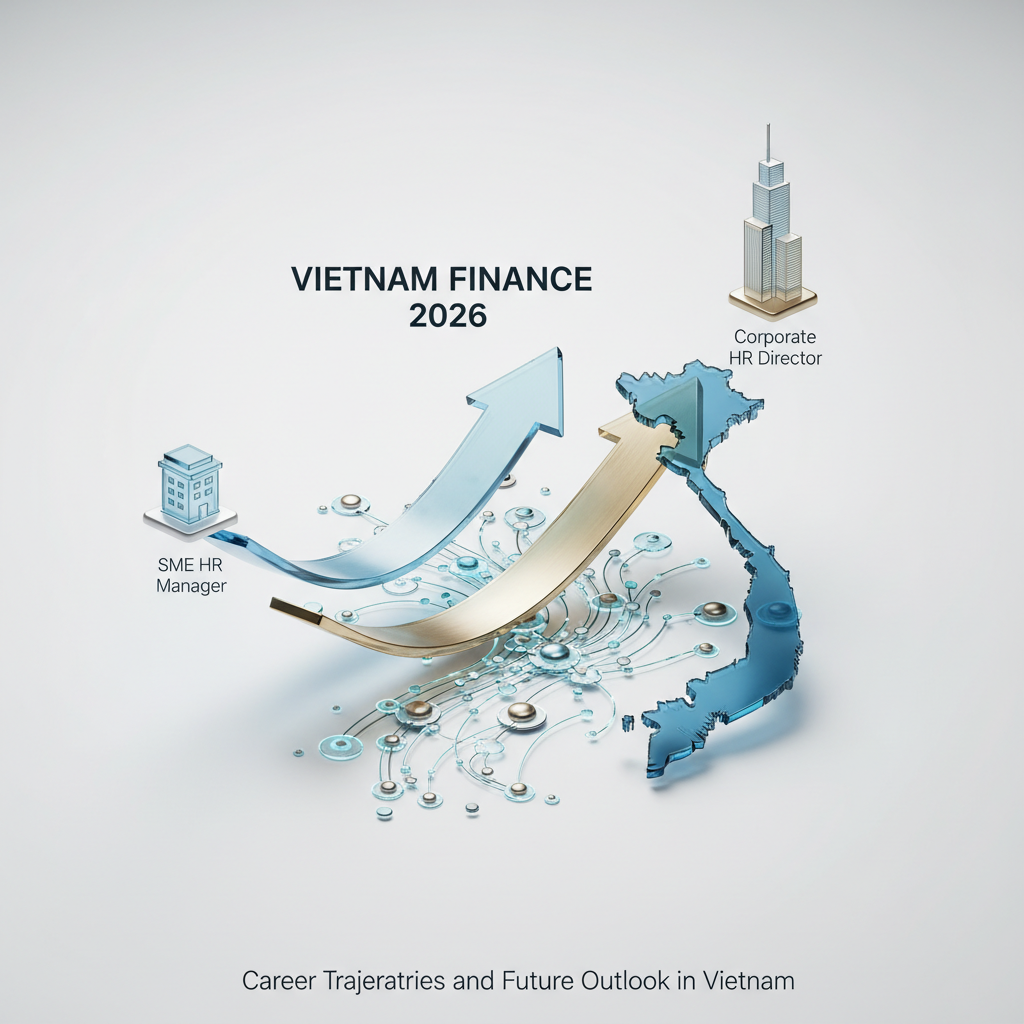
The journey of an HR professional in a nimble SME financial firm vastly contrasts with that in a sprawling corporate banking or investment group. While both roles are foundational to organizational success, the scope, resources, and strategic depth often diverge significantly. For SMEs, HR managers are often generalists, deeply involved in every aspect from grassroots talent acquisition to day-to-day employee relations. Corporate HR Directors, on the other hand, operate at a more strategic level, overseeing specialized teams and driving large-scale initiatives like organizational development and succession planning. Both roles demand exceptional adaptability and a keen understanding of Vietnam’s unique labor market.
1. Path to C-Suite vs. Specialization and Deep Expertise
For an SME HR Manager in Vietnam’s finance sector, the career path is characterized by breadth and hands-on involvement. These professionals are typically generalists, responsible for the entire HR lifecycle, from talent acquisition and onboarding to payroll and compliance. Their direct impact on the company’s growth is visible. Progression might lead to broader operational management or a move to a larger SME. The drive here is towards becoming a trusted business partner, solving immediate challenges with agility, and developing deep expertise in practical HR solutions. Resource constraints mean creative problem-solving is paramount, often requiring mastery of HR technology to optimize processes and enhance the employee experience.
Conversely, the Corporate HR Director navigates a path focused on strategic HR. Their role involves influencing C-suite decisions, leading specialized HR teams (e.g., in compensation & benefits, leadership development, or organizational development), and aligning HR initiatives with complex business objectives. Career progression often involves movement into regional HR leadership roles or ultimately becoming a Chief Human Resources Officer (CHRO). The emphasis is on developing deep expertise in specific HR domains, leveraging HR analytics, and driving large-scale initiatives like succession planning. The key differences between the SMEs’ HR Manager and the Corporates’ HR Director in finance field in vietnam lie in this strategic depth versus operational breadth.
2. Continuous Skill Development and Adaptability
In Vietnam’s fast-evolving finance landscape, continuous skill development and adaptability are non-negotiable for both HR roles. Both require strong business acumen, communication, and the ability to navigate change. Proficiency in HR technology is crucial for all.
For SME HR Managers, skill development focuses on practical, multi-faceted expertise. This includes mastering cloud-based HR platforms, staying abreast of local labor law compliance, and developing robust talent acquisition strategies with limited budgets. Their adaptability stems from needing to wear many hats and constantly innovate with fewer resources, focusing on creating a compelling employee experience to retain staff. Online courses and industry workshops typically support their learning.
Corporate HR Directors, conversely, focus on advanced strategic capabilities. This includes deep dives into HR analytics to predict workforce trends, developing sophisticated leadership development programs, and managing complex global talent acquisition strategies. They must be adept at organizational development and change management, integrating HR strategy with overall business goals. Executive education and professional certifications are common avenues.
3. Adapting to Vietnam’s Evolving Labor Market and Economic Trends
Vietnam’s labor market for 2026 is projected to be even more competitive and skill-intensive, influenced by robust economic growth and increasing foreign investment. For HR professionals, this presents both opportunities and challenges, further highlighting the differences between the SMEs’ HR Manager and the Corporates%27 HR Director in finance field in vietnam in how they adapt.
SME HR Managers face the critical challenge of attracting and retaining top talent against larger corporations. Their adaptation strategies involve creating unique company cultures, fostering strong employee experience initiatives, and offering competitive, non-monetary benefits. Navigating the evolving local compliance landscape, especially concerning labor laws for smaller entities, requires diligent attention. They must be agile in their talent acquisition efforts, often leveraging cost-effective digital channels.
Corporate HR Directors, conversely, are tasked with developing robust succession planning strategies for critical roles within complex organizational structures, managing diverse workforces, and integrating global HR best practices with local nuances. The increasing demand for specialized finance skills means they must invest heavily in leadership development and reskilling initiatives. Leveraging advanced HR analytics becomes paramount for strategic workforce planning and predicting future talent needs. Both roles must remain keenly aware of broader economic trends and technological shifts.
Partner with Shelby Global
You are looking for reliable HR Sevice Suppliers? Contact Shelby Global Now! To connect with verified talents and upgrade your orginization.
—————————————
References
– Vietnam: Human Capital Project: https://www.worldbank.org/en/country/vietnam/human-capital-project
– Deloitte Insights: Strategic HR Business Partner Model: https://www2.deloitte.com/us/en/insights/topics/human-capital-trends/2021/strategic-hr-business-partner-model.html
– The World Bank’s economic overview of Vietnam: https://www.worldbank.org/en/country/vietnam/overview
– Human Resources Online – Singapore accelerating digital transformation in HR with a focus on future-ready skills and employee engagement: https://www.humanresourcesonline.net/singapore-accelerating-digital-transformation-in-hr-with-a-focus-on-future-ready-skills-and-employee-engagement
– World Bank in Vietnam: https://www.worldbank.org/en/country/vietnam/overview