
Understanding the Unique HR Landscape for Vietnamese E-commerce SMEs
Vietnam’s e-commerce sector is experiencing explosive growth, propelled by a young, tech-savvy population and increasing internet penetration. For Small and Medium-sized Enterprises (SMEs) operating in this dynamic digital space, Human Resources (HR) management presents a unique blend of challenges and opportunities. Effectively managing HR structures for SMEs the CEO in Ecommerce field in vietnam is crucial for sustainable growth, requiring a deep understanding of local nuances, market competitiveness, and talent development needs. This section explores the specific challenges and opportunities that shape HR strategies for small to medium-sized e-commerce enterprises in Vietnam, focusing on areas critical for success.

1. Navigating local labor laws and regulations
For Vietnamese e-commerce SMEs, compliance with the country’s evolving labor laws is paramount yet often complex. The legal framework encompasses various aspects, including employment contracts, working hours, social insurance contributions, minimum wages, and termination procedures. SMEs, often with limited legal expertise or dedicated HR departments, can find it challenging to stay updated and fully compliant. Errors in this area can lead to significant fines, legal disputes, and reputational damage, particularly for businesses keen on attracting and retaining top talent. Understanding the nuances of probationary periods, different contract types (e.g., definite vs. indefinite term), and the calculation of statutory benefits is essential. Furthermore, recent amendments and interpretations of the Labor Code mean that HR strategies must be agile and regularly reviewed. Proactive HR structures involve not only adherence but also leveraging legal provisions to create flexible and appealing employment conditions that resonate with local employees while remaining within legal boundaries. For a deeper dive into recent changes, refer to Vietnam’s Labor Law Updates and Their Impact on Businesses.
2. Talent acquisition in a competitive digital market
The burgeoning e-commerce sector has created a high demand for skilled professionals, transforming talent acquisition into a fiercely competitive battleground for Vietnamese SMEs. While Vietnam boasts a large pool of young graduates, specialized e-commerce skills—ranging from digital marketing and content creation to data analytics and supply chain management—are in short supply. SMEs often compete directly with larger, well-established domestic and international e-commerce giants who can offer more attractive compensation packages and benefits. This necessitates innovative recruitment strategies beyond traditional job postings. Building a strong employer brand, highlighting unique company culture, professional development opportunities, and the impact an individual can make within an agile SME environment become critical differentiators. Effective talent management in Vietnam’s e-commerce scene also involves exploring diverse recruitment channels, such as social media, professional networking events, and partnerships with universities or vocational training centers. CEOs of e-commerce SMEs must prioritize strategic talent acquisition as a core business function, recognizing that their ability to attract the right people directly impacts their competitive edge and growth trajectory.
3. Bridging the skill gap for specialized e-commerce roles
Beyond the immediate challenge of acquiring talent, Vietnamese e-commerce SMEs face the ongoing task of bridging a significant skill gap. Many local graduates, while possessing strong foundational knowledge, may lack the practical, industry-specific skills required for specialized e-commerce roles. This gap is particularly evident in areas like advanced analytics for customer behavior, SEO/SEM strategies, e-commerce platform management, cybersecurity for online transactions, and sophisticated logistics coordination. To overcome this, SMEs must invest in continuous learning and development programs. This could involve internal training initiatives, mentorship programs, external certifications, or partnerships with educational institutions to tailor curricula. Upskilling existing employees not only addresses immediate skill deficiencies but also fosters loyalty and reduces turnover, which is particularly valuable in a tight labor market. Crafting effective HR structures for SMEs requires a forward-looking approach to talent development, anticipating future skill needs as the e-commerce landscape evolves. CEOs must view training and development not as an expense, but as a strategic investment in their human capital, empowering their teams to drive innovation and maintain competitiveness.
In conclusion, successful HR for Vietnamese e-commerce SMEs goes beyond mere administrative tasks. It demands a strategic, adaptive approach to navigate legal complexities, win the war for digital talent, and proactively develop the skills necessary for future growth. By focusing on these core areas, SMEs can build resilient teams and secure their position in Vietnam’s rapidly expanding digital economy.
The CEO’s Pivotal Role in Shaping E-commerce HR Strategy
In Vietnam’s booming e-commerce landscape, small and medium-sized enterprises (SMEs) face a unique set of opportunities and challenges. While digital innovation drives rapid growth, the foundation for sustainable success often lies in human capital. For an e-commerce SME in Vietnam, the CEO’s active engagement in defining and implementing the company’s HR vision is not merely beneficial; it is absolutely critical for long-term viability. Effective HR structures for SMEs the CEO in Ecommerce field in Vietnam must transcend administrative tasks, becoming a strategic imperative that directly influences market expansion, technological adoption, and customer satisfaction. This section delves into how the CEO’s commitment transforms HR from a support function into a core driver of business growth amidst intense competition for talent in the Vietnamese market.
1. From founder to HR visionary: Shifting CEO mindset
The journey of an e-commerce SME often begins with a founder deeply immersed in product, sales, and operational minutiae. However, as the business scales, particularly in a dynamic market like Vietnam, the CEO’s role must evolve dramatically from a hands-on operator to a strategic HR visionary. Initially, HR might be an afterthought, handled by an administrative assistant or even the CEO themselves in an ad-hoc manner. This approach is unsustainable. A truly effective CEO in the e-commerce sector understands that human resources are not merely a cost center but the most valuable asset, especially when navigating the intricate Vietnam e-commerce HR challenges. Shifting this mindset involves recognizing that strategic HR planning directly impacts everything from platform development and logistics efficiency to customer service excellence. It means dedicating time and resources to understand talent needs, foster a positive work environment, and ensure that every hiring decision aligns with the company’s future trajectory. This transformation empowers the HR function, giving it the necessary executive backing to develop sophisticated talent management strategies.
2. Aligning HR goals with overall business growth objectives
For an e-commerce SME to thrive in Vietnam, its HR strategy cannot exist in a silo. The CEO’s primary responsibility is to ensure that HR goals are inextricably linked to the overarching business growth objectives. If the company aims to expand into new product categories or penetrate provincial markets, HR must anticipate the need for specialized talent – be it digital marketing experts, supply chain managers, or local customer support teams. This requires a robust framework for strategic HR planning for SMEs, where recruitment, training, performance management, and retention initiatives are designed to directly support key business indicators such as revenue growth, market share, and customer acquisition. For instance, if the business objective is to enhance customer experience, HR goals might include training programs for frontline staff on new CRM tools, implementing incentive schemes for high customer satisfaction ratings, and recruiting individuals with strong communication skills. Regular communication between the CEO and HR leadership is essential to review these alignments, ensuring that HR metrics like employee retention rates, time-to-hire for critical roles, and training effectiveness are directly correlated with business outcomes. Without this strategic alignment, HR efforts risk becoming disjointed and ineffective.
3. Building a company culture that attracts and retains top talent
In Vietnam’s competitive e-commerce talent market, attracting and retaining skilled professionals is a continuous battle. The CEO plays an instrumental role in cultivating a company culture that acts as a powerful magnet. Beyond competitive salaries, a strong culture offers purpose, growth opportunities, and a sense of belonging. This involves fostering an environment that values innovation, agility, customer-centricity, and continuous learning – qualities crucial for success in e-commerce. The CEO must visibly champion these values, leading by example and promoting transparency and open communication. Initiatives such as professional development programs, mentorship opportunities, and clear career progression paths are vital components of effective employee retention strategies SME Vietnam. Furthermore, recognizing achievements, promoting work-life balance, and creating an inclusive environment where diverse perspectives are valued contribute significantly to employee satisfaction and loyalty. By actively investing in and shaping a vibrant workplace culture, the CEO not only improves employee morale but also enhances the company’s employer brand, making it a preferred destination for promising talent in e-commerce. A strong culture, spearheaded by the CEO, becomes a sustainable competitive advantage.
Essential HR Structures for Early-Stage E-commerce SMEs (0-50 Employees)
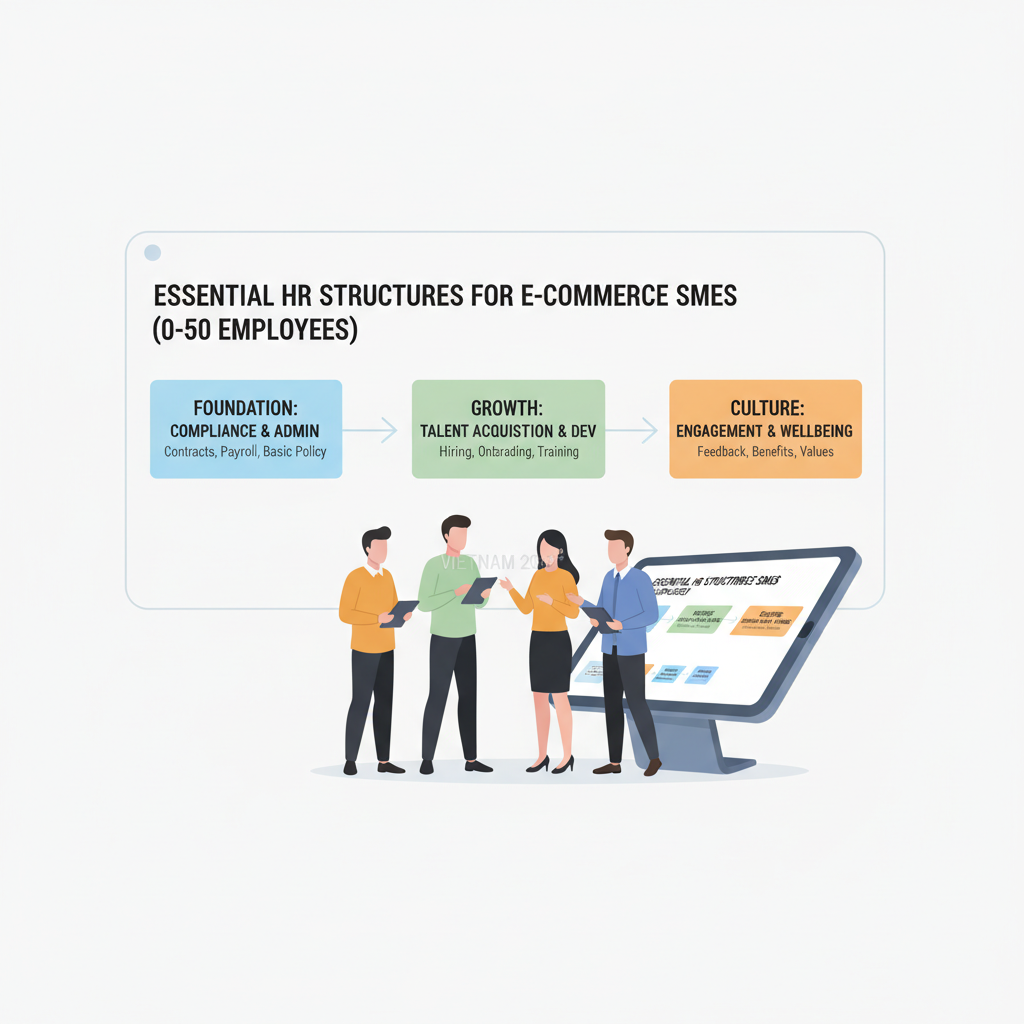
E-commerce SMEs in Vietnam are dynamic, innovative, and fast-paced. As these businesses scale from nascent startups to thriving enterprises with up to 50 employees, the role of human resources (HR) transitions from an informal CEO task to a critical, structured function. Establishing the right HR structures for SMEs the CEO in Ecommerce field in Vietnam isn’t just about compliance; it’s about building a robust foundation for growth, talent retention, and operational efficiency. For early-stage e-commerce companies, lean and practical HR frameworks are essential to manage rapid expansion without stifling agility or incurring unnecessary costs. This section outlines foundational HR elements designed to empower small, rapidly growing e-commerce businesses in Vietnam.
-
Defining core HR responsibilities and initial roles
In early-stage e-commerce SMEs, HR responsibilities typically fall on the CEO or a dedicated senior manager. Initially, core responsibilities involve attracting and retaining talent vital for product development, digital marketing, customer service, and logistics. Key tasks include: drafting job descriptions, conducting interviews, managing initial onboarding, and ensuring accurate payroll. As the team expands, systematic approaches become crucial. Managing growing teams requires consistent performance feedback, clear communication, and equitable compensation. A pragmatic first step is to document these processes, even informally, for consistency. Consider designating a “people champion” within the existing management team to oversee basic HR functions. This individual can manage employee records, coordinate training, and act as a first point of contact, freeing the CEO for strategic business development.
-
Leveraging outsourced HR or PEO services for efficiency
For many early-stage e-commerce SMEs in Vietnam, a full-time, in-house HR department is often financially prohibitive or impractical. Leveraging outsourced HR or Professional Employer Organization (PEO) services offers a strategic advantage. These services provide access to specialized HR expertise without the internal team overhead. An outsourced HR partner can handle complex areas like Vietnamese labor law compliance, social insurance contributions, personal income tax (PIT) declarations, and comprehensive payroll, which are intricate and frequently change. By delegating these administrative burdens, e-commerce CEOs ensure compliance and reduce operational risks, channeling resources into core business activities like market expansion and customer engagement. Services range from basic payroll and benefits to full-scope HR advisory, including policy development and employee relations. A reputable PEO navigates local employment regulations, ensuring all contracts and practices adhere to Vietnamese legal requirements, preventing costly penalties. According to Forbes, outsourcing HR functions can significantly enhance operational efficiency for SMEs.
-
Establishing foundational policies, contracts, and compliance
Even with rapid growth, neglecting foundational HR documents and compliance can lead to significant legal and financial repercussions for e-commerce SMEs in Vietnam. Establishing clear policies and robust employment contracts from the outset is paramount. Every employee should have a legally compliant employment contract outlining terms, responsibilities, compensation, benefits, and termination clauses in accordance with Vietnamese Labor Law. Beyond contracts, a basic employee handbook is essential. This document should cover key policies such as code of conduct, working hours, leave entitlements (annual leave, sick leave, maternity leave), disciplinary procedures, and grievance handling. Such a handbook ensures fairness, transparency, and consistency, mitigating disputes and fostering a positive work environment. Furthermore, strict adherence to Vietnamese regulations regarding social insurance, health insurance, unemployment insurance, and personal income tax is non-negotiable. Non-compliance can result in heavy fines and legal challenges. CEOs must prioritize understanding these regulations or rely on expert advice to ensure their HR framework is fully compliant. Building these strong, compliant foundations is a critical aspect of effective HR structures for SMEs the CEO in Ecommerce field in Vietnam.
For e-commerce SMEs in the Vietnamese market, establishing lean yet effective HR structures is a strategic imperative. By clearly defining initial HR roles, judiciously leveraging outsourced expertise, and meticulously establishing foundational policies and compliance, CEOs build a resilient framework. This framework supports sustainable growth, attracts and retains top talent, and ensures the business operates smoothly and legally. Prioritizing these elements allows early-stage e-commerce ventures to scale with confidence, focusing energy on innovation and market leadership, knowing their people operations are in capable hands.
Scaling HR for Growth: Structures for Mid-Sized E-commerce (50-200 Employees)
As an e-commerce business in Vietnam transitions from a startup to a mid-sized enterprise with 50-200 employees, the informal HR practices that once sufficed become significant bottlenecks. At this critical juncture, HR structures for SMEs the CEO in Ecommerce field in vietnam must evolve from reactive administrative functions to strategic pillars driving sustainable growth. This expansion necessitates a profound shift towards formalization, specialization, and the implementation of robust HR systems designed to attract, develop, and retain top talent in a competitive digital landscape. Ignoring this evolution can lead to high turnover, decreased productivity, and stalled growth, making a proactive HR strategy indispensable for any ambitious e-commerce venture.
1. Building an in-house HR team: Key roles and expertise
For a mid-sized e-commerce company, relying solely on an administrative assistant for HR tasks is no longer viable. The establishment of a dedicated e-commerce HR team Vietnam is crucial. Initially, this team might comprise an HR Manager or Generalist who can oversee core functions. As the company scales, specialized roles like a Talent Acquisition Specialist, HR Business Partner, or Compensation & Benefits Analyst may become necessary. The HR Manager should possess strong foundational knowledge across all HR domains, with a particular emphasis on local labor laws, recruitment strategies tailored for tech and digital roles, and employee relations. A Talent Acquisition Specialist, for instance, would focus on streamlining hiring processes, optimizing job descriptions for e-commerce roles, and leveraging platforms to attract candidates proficient in digital marketing, logistics, and customer service. This structured approach ensures that the diverse and dynamic needs of a growing e-commerce workforce are met professionally and strategically.
2. Implementing effective performance management systems
Informal feedback mechanisms quickly become inadequate as an organization grows. Implementing a structured performance management e-commerce system is vital for maintaining productivity, fostering development, and aligning individual goals with broader business objectives. This system should move beyond annual reviews to include continuous feedback loops, regular one-on-one meetings, goal-setting frameworks (like OKRs or KPIs), and robust performance appraisal processes. For e-commerce, key performance indicators might include sales conversion rates, customer satisfaction scores, order fulfillment accuracy, or website uptime. The system should be transparent, fair, and designed to provide actionable insights for employee growth. Training managers on how to conduct effective performance discussions, provide constructive feedback, and identify development opportunities is paramount. An effective system not only holds employees accountable but also serves as a powerful tool for recognizing high performers and addressing underperformance proactively. Research from organizations like SHRM consistently highlights the link between structured performance management and improved organizational outcomes.
3. Developing comprehensive employee engagement and retention programs
High employee turnover can significantly impact a growing e-commerce business, leading to recruitment costs, loss of institutional knowledge, and disruption to operations. Therefore, developing robust employee engagement strategies Vietnam is non-negotiable. These programs should encompass more than just competitive salaries and benefits. They need to address aspects like career development paths, a positive work culture, recognition programs, work-life balance initiatives, and opportunities for skill enhancement relevant to the fast-paced e-commerce sector. Regular employee surveys can help gauge satisfaction and identify areas for improvement. For instance, offering specialized training in e-commerce analytics, digital marketing trends, or logistics software can not only upskill employees but also demonstrate investment in their professional growth. Creating a vibrant and inclusive workplace culture where employees feel valued and heard is critical. A strong retention strategy also involves understanding the unique motivations of the e-commerce workforce and tailoring programs that resonate with their aspirations. By focusing on these elements, companies can significantly reduce turnover and build a loyal, high-performing workforce, contributing to long-term success and strong HR formalization e-commerce growth.
Future-Proofing HR: Technology & Trends for E-commerce in Vietnam by 2026
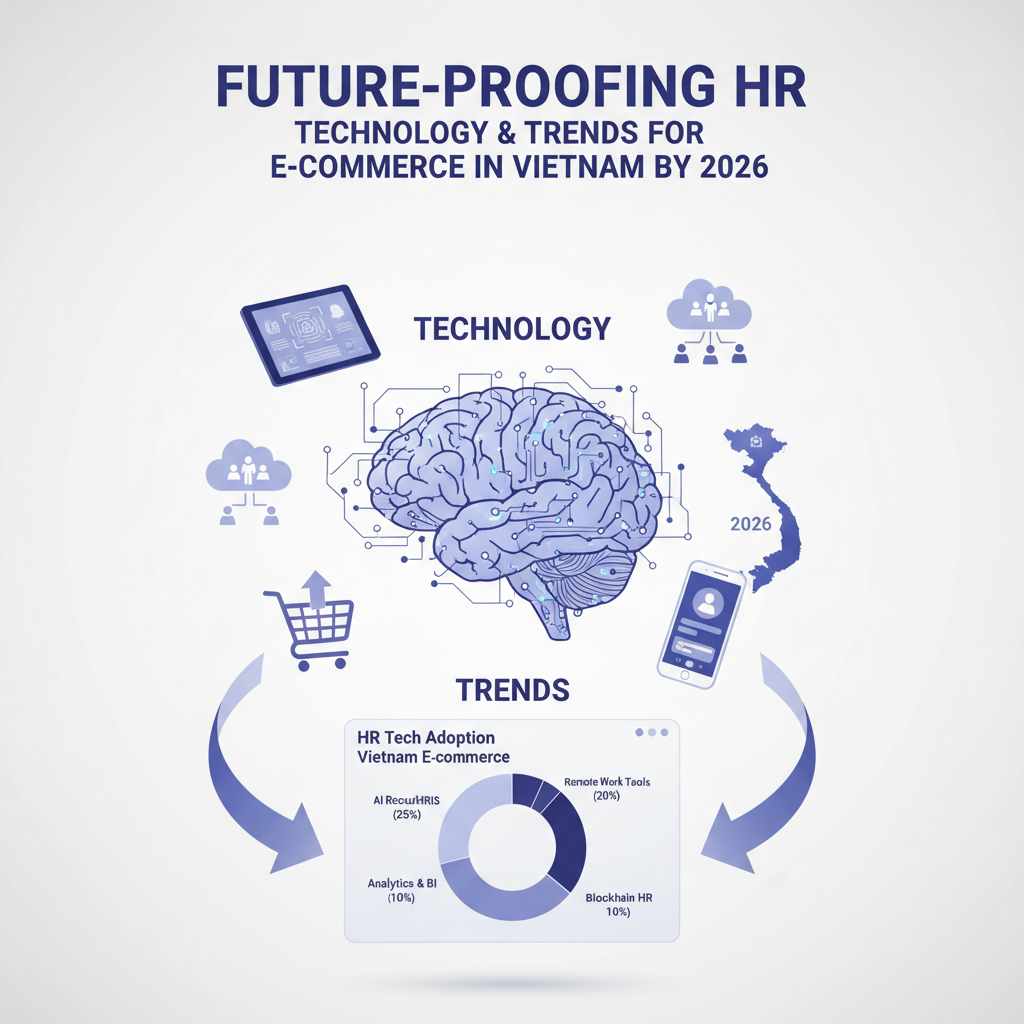
The rapid evolution of e-commerce in Vietnam presents unique challenges and opportunities for Small and Medium-sized Enterprises (SMEs). As digital marketplaces expand and consumer expectations shift, the critical role of human resources management becomes increasingly pronounced. For the CEO in Ecommerce field in Vietnam, understanding and adapting their HR structures for SMEs is paramount to sustained growth and competitive advantage. By 2026, HR departments in Vietnamese e-commerce SMEs will need to be agile, technologically advanced, and strategically aligned with business objectives to attract, develop, and retain top talent. This section explores how technological advancements and emerging trends will reshape HR structures, preparing these businesses for the future of work Vietnam. Key areas include leveraging HR tech Vietnam, navigating e-commerce HR challenges, optimizing talent management Vietnam, and embracing the broader future of work Vietnam.
1. Adopting HRIS and Automation Tools for Efficiency
The foundational step for future-proofing HR in Vietnamese e-commerce SMEs is the widespread adoption of Human Resources Information Systems (HRIS) and automation tools. Traditional manual processes for recruitment, onboarding, payroll, performance management, and employee record-keeping are inefficient and prone to errors, hindering the agility required in a fast-paced e-commerce environment. An integrated HRIS can centralize employee data, automate routine tasks, and provide a single source of truth for all HR-related information. This not only significantly boosts operational efficiency but also frees up HR personnel to focus on more strategic initiatives, such as talent development and employee engagement. For HR structures for SMEs the CEO in Ecommerce field in Vietnam, implementing such systems means streamlined operations, reduced administrative burden, and enhanced compliance. For instance, automated payroll ensures timely and accurate compensation, crucial for employee satisfaction. Recruitment automation, from applicant tracking systems (ATS) to AI-powered candidate screening, can drastically cut time-to-hire and improve the quality of new recruits. The shift towards digital HR solutions is not just a luxury but a necessity for SMEs looking to scale effectively. According to a report by SHRM, HR technology adoption in Southeast Asia is accelerating, driven by the need for greater efficiency and data insights.
2. The Rise of Remote Work and Flexible HR Policies
The global pandemic undeniably accelerated the adoption of remote and hybrid work models, a trend that is set to continue influencing the future of work Vietnam, particularly within the e-commerce sector. For Vietnamese e-commerce SMEs, embracing flexible work arrangements can unlock access to a wider talent pool beyond geographical limitations, addressing critical e-commerce HR challenges related to specialized skills. However, this shift necessitates a comprehensive overhaul of traditional HR policies and practices. HR departments must develop robust frameworks for remote onboarding, performance monitoring, communication, and maintaining company culture in a distributed environment. This includes investing in collaboration tools, clear communication guidelines, and fostering a culture of trust and autonomy. Flexible work extends beyond location to include flexible hours, compressed workweeks, and adaptable leave policies, all of which contribute significantly to employee well-being and retention, crucial aspects of talent management Vietnam. Adapting HR structures for SMEs the CEO in Ecommerce field in Vietnam to support these flexible models is not merely about policy changes; it’s about fostering a new mindset that prioritizes outcomes over presence, ensuring productivity and engagement regardless of where work is performed. To learn more about optimizing your HR framework for modern work models, explore strategies on adapting your HR structures for SMEs the CEO in Ecommerce field in Vietnam.
3. Data-Driven HR for Strategic Decision-Making and Talent Analytics
In an increasingly competitive landscape, HR can no longer be seen as a purely administrative function. The future of HR structures for SMEs the CEO in Ecommerce field in Vietnam lies in becoming a strategic business partner, driven by data and analytics. Leveraging the data generated by HRIS and other systems, SMEs can gain invaluable insights into their workforce. This includes talent analytics such as employee turnover rates, recruitment source effectiveness, performance trends, training ROI, and employee engagement metrics. By analyzing this data, HR leaders can make informed, evidence-based decisions that directly impact business outcomes. For example, identifying patterns in high employee turnover can lead to targeted retention strategies, while analyzing recruitment data can optimize future hiring efforts. Data-driven HR allows for proactive workforce planning, identifying skill gaps before they become critical, and tailoring talent management Vietnam strategies to meet future business needs. It empowers CEOs to understand the true cost and value of their human capital, making investments in people as strategic as investments in technology or marketing. This analytical approach moves HR beyond reactive problem-solving to proactive strategic contribution, essential for sustained success in the dynamic Vietnamese e-commerce market.
By 2026, the success of Vietnamese e-commerce SMEs will heavily depend on their ability to transform their HR structures. Embracing HRIS and automation, adapting to flexible work models, and adopting a data-driven approach are not just trends but imperative strategies for building resilient, efficient, and attractive workplaces. For the CEO in Ecommerce field in Vietnam, these advancements represent an opportunity to not only overcome e-commerce HR challenges but to also cultivate a dynamic workforce that drives innovation and sustains growth in an ever-evolving digital economy. Investing in these HR transformations now will ensure these SMEs are well-equipped to thrive in the competitive future of work Vietnam.
Partner with Shelby Global
You are looking for reliable HR Sevice Suppliers? Contact Shelby Global Now! To connect with verified talents and upgrade your orginization.
—————————————
References
– Vietnam’s Labor Law Updates and Their Impact on Businesses: https://www.vietnam-briefing.com/news/vietnams-labor-law-updates-and-their-impact-on-businesses.html
– The Strategic Importance Of HR In A Growing Business: https://www.forbes.com/sites/forbeshumanresourcescouncil/2021/08/17/the-strategic-importance-of-hr-in-a-growing-business/
– :
– SHRM Performance Management Toolkit: https://www.shrm.org/resources-and-tools/tools-and-samples/toolkits/performance-management
– HR Technology Trends and Challenges in Asia Pacific: https://www.shrm.org/resources-and-tools/hr-topics/technology/pages/hr-technology-trends-challenges-asia-pacific.aspx