
Understanding Unique F&B SME Challenges in Singapore
Singapore’s vibrant food and beverage (F&B) sector, a cornerstone of its dynamic economy, presents a unique battleground for Small to Medium Enterprises (SMEs). While offering immense opportunities, these businesses face a distinct set of economic, operational, and market hurdles that significantly complicate effective salary budgeting. Navigating these complexities is crucial for survival and growth, especially when aiming for Optimized Salary Budget Structures for SMEs in Food & Beverage field in singapore.

1. Navigating high operational costs and thin margins
One of the most pressing challenges for F&B industry Singapore SMEs is the relentless pressure of high operational costs. Prime real estate for F&B establishments, coupled with rising utility prices and the global volatility of ingredient costs, drastically squeezes profit margins. This economic reality directly impacts the ability of businesses to allocate sufficient funds for salaries. SME challenges in this area demand rigorous cost management and a keen eye on operational efficiency to ensure that payroll, a significant portion of expenditure, remains sustainable. Without strategic resource allocation and a clear understanding of profitability in F&B, even well-intentioned salary budgeting strategies can falter, affecting long-term viability and employee morale. Businesses must constantly seek ways to streamline processes and optimize their supply chains to safeguard against these pressures, making smart payroll optimization essential.
2. Addressing talent acquisition and retention in a competitive market
The F&B sector in Singapore is characterized by a highly competitive labor market, making talent management F&B a significant hurdle. SMEs often struggle to attract and retain skilled employees in the face of larger, more established chains offering better remuneration and career progression opportunities. High employee turnover rates are common, leading to increased recruitment and training costs, further straining already tight salary budgets. To combat this, businesses must develop robust employee retention solutions that go beyond just competitive salaries, encompassing career development, positive work culture, and skill development opportunities. Effective workforce planning is critical to anticipating staffing needs and minimizing disruptions. Understanding the evolving expectations of the workforce, especially among younger generations, is paramount for sustainable growth in Singapore’s F&B landscape. The Ministry of Manpower (MOM) frequently highlights the importance of fair employment practices and continuous upskilling to address these market dynamics. Fair employment practices are crucial for creating a sustainable and attractive work environment in Singapore’s competitive F&B sector.
3. Complying with Singapore’s labor laws and regulations
Singapore boasts a comprehensive, albeit complex, framework of labor laws and regulations. For F&B SMEs, navigating these requirements presents another layer of challenge. Compliance with the Employment Act, Central Provident Fund (CPF) contributions, foreign worker quotas, and various industry-specific guidelines demands meticulous HR compliance and payroll management. Any misstep can lead to hefty penalties, damaging the business’s reputation and financial health. Labor costs Singapore are not just about base salaries; they include a range of statutory contributions and benefits that must be factored into the overall salary budgeting strategies. Businesses need to stay updated with changes in legislation, ensuring their employment contracts, working hours, and leave policies align with national standards. This constant need for vigilance adds an administrative burden, diverting resources that could otherwise be used for business development. Proper adherence to legal obligations is non-negotiable and requires careful planning to avoid unforeseen expenses.
In conclusion, the unique blend of high operating costs, an intensely competitive talent market, and stringent regulatory frameworks makes salary budgeting a critical, yet intricate, task for F&B SMEs in Singapore. Addressing these challenges effectively requires a strategic approach to financial planning and a deep understanding of market dynamics, ultimately leading to more sustainable and Optimized Salary Budget Structures for SMEs in Food & Beverage field in singapore.
Key Components of an Optimized Salary Budget Structure
In the competitive and dynamic landscape of Singapore’s Food & Beverage (F&B) sector, establishing an optimized salary budget structure is paramount for Small and Medium-sized Enterprises (SMEs). A well-crafted salary budget not only ensures fair and attractive compensation for staff but also safeguards the financial health and sustainability of the business. It’s a strategic tool that balances operational costs with employee motivation and retention, crucial for thriving in a talent-driven industry. This section delves into the essential elements that constitute a robust and efficient salary budget, tailored for F&B SMEs in Singapore.
1. Base Salary vs. Variable Pay and Incentive Structures
A fundamental decision in structuring an F&B salary budget involves the balance between base salaries and variable pay. Base salary provides employees with a stable and predictable income, forming the core of their compensation. However, the F&B industry, characterized by fluctuating demand and performance-driven roles, greatly benefits from incorporating variable pay and incentive structures. These can include performance bonuses tied to sales targets, customer satisfaction ratings, or specific operational efficiencies. For front-of-house staff, tips and service charges often supplement base pay, and a clear policy on their distribution is vital. Kitchen staff might receive bonuses based on food cost control or menu innovation successes.
Integrating variable pay into optimized salary budget structures for SMEs in Food & Beverage field in Singapore offers several advantages. It incentivizes employees to exceed expectations, directly linking their efforts to the company’s success. This approach can also provide flexibility in managing labor costs during leaner periods, as a portion of remuneration is contingent on performance. By carefully designing these structures, F&B SMEs can foster a high-performance culture, reward top talent, and maintain a competitive edge in attracting and retaining skilled professionals, all while ensuring financial prudence.
2. Benefits and Mandatory Contributions (e.g., CPF, Healthcare)
Beyond the direct cash compensation, an effective salary budget must comprehensively account for employee benefits and mandatory contributions. In Singapore, employers are legally obligated to contribute to the Central Provident Fund (CPF) for all eligible employees. These mandatory CPF contributions are a significant part of the overall compensation package and must be accurately budgeted to ensure compliance and avoid penalties. Furthermore, F&B SMEs must consider other mandatory benefits such as annual leave, sick leave, and maternity/paternity leave, as stipulated by Singapore’s Employment Act.
Beyond the legal minimums, offering competitive healthcare benefits, insurance coverage, or even subsidized meals can significantly enhance an F&B SME’s appeal as an employer. While these add to the overall salary budget, they contribute to employee well-being, reduce absenteeism, and boost morale. A well-rounded benefits package is a powerful tool for talent retention, especially in a sector known for high turnover. By proactively budgeting for these comprehensive benefits and adhering to Singapore’s regulatory requirements, businesses can create a supportive work environment and ensure the long-term sustainability of their workforce within an optimized salary budget structure.
3. Allocations for Staff Training, Development, and Career Growth
An often-overlooked yet critical component of an optimized salary budget structure for F&B SMEs is the allocation for staff training, development, and career growth. Investing in employees’ professional development is not merely an expense; it’s a strategic investment that yields substantial returns. For F&B businesses, this could include culinary training for chefs, service excellence workshops for front-of-house staff, hygiene and food safety certifications, or management training for aspiring leaders. These investments directly enhance skill sets, improve service quality, and increase operational efficiency.
Budgeting for continuous learning demonstrates a commitment to employees’ long-term career aspirations, fostering loyalty and reducing costly staff turnover. In Singapore’s competitive F&B market, skilled labor is a premium. Providing pathways for career advancement through internal promotions or upskilling initiatives can transform an entry-level position into a viable career, making an SME an employer of choice. By strategically integrating these development costs into the salary budget, F&B SMEs can cultivate a highly skilled, motivated, and engaged workforce, ultimately enhancing productivity, customer satisfaction, and the overall financial health of the business.
Data-Driven Strategies for F&B Salary Benchmarking in SG
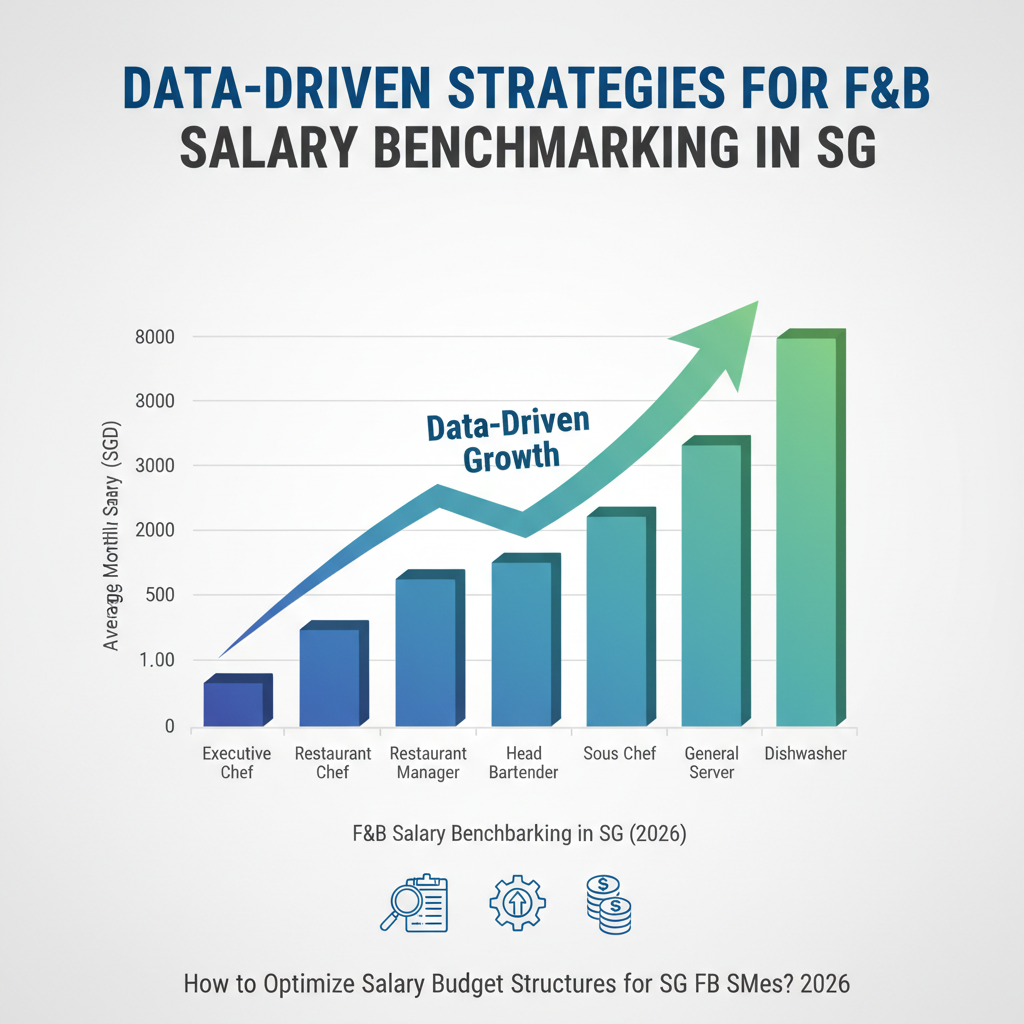
In Singapore’s dynamic and competitive Food & Beverage (F&B) sector, Small and Medium-sized Enterprises (SMEs) face the perennial challenge of attracting and retaining top talent while maintaining financial sustainability. Establishing competitive and sustainable salary levels is paramount, yet often complex without robust data. This section delves into how Singaporean F&B SMEs can effectively leverage market data and industry benchmarks to develop Optimized Salary Budget Structures for SMEs in Food & Beverage field in singapore across various roles, ensuring both competitiveness and profitability.
-
Utilizing local market surveys and industry reports for insights
The foundation of any effective salary benchmarking strategy lies in comprehensive market data. Singaporean F&B SMEs should proactively seek out and analyze local market surveys and industry reports. Key sources include reports from the Ministry of Manpower (MOM), industry associations like the Restaurant Association of Singapore (RAS), and reputable HR consultancies. These resources provide invaluable insights into average wage trends, salary ranges for various positions, and overall compensation packages prevalent in the local F&B landscape. For instance, the MOM’s Labour Market Reports offer a macro-level view of wage growth and employment trends, which can be adapted to specific F&B contexts. Interpreting this data goes beyond simply noting a number; it involves understanding the methodologies, sample sizes, and specific job definitions used to ensure the data is truly relevant to your establishment. By regularly consulting these authoritative sources, SMEs can gain a realistic understanding of prevailing market rates, helping them set a baseline for their internal salary scales and stay ahead of competitive pressures in Singapore’s vibrant culinary scene.
-
Benchmarking against direct competitors and similar F&B establishments
While broad market data provides a necessary overview, a more granular approach involves benchmarking against direct competitors and F&B establishments with similar operational models, cuisine types, and service levels. For an SME running a casual café, the salary structures of a fine-dining restaurant would be irrelevant, just as a hawker stall’s benchmarks wouldn’t apply to a gastropub. This targeted comparison helps define what constitutes a competitive offer within your specific niche. Gathering this competitor intelligence requires careful and ethical approaches, such as reviewing publicly available job postings, discreet networking within the industry, and analyzing common industry practices. The goal is not to mirror salaries exactly but to understand the range and structure of what similar businesses are offering for comparable roles. This direct benchmarking allows SMEs to identify potential gaps in their own compensation packages, address areas where they might be overpaying or underpaying, and ultimately refine their salary budgets to attract talent that might otherwise gravitate towards rivals. Effective competitive benchmarking directly influences an SME’s ability to not only attract but also retain skilled F&B professionals in Singapore.
-
Factoring in roles, experience levels, and specialized skill sets
An Optimized Salary Budget Structures for SMEs in Food & Beverage field in singapore must account for the diverse nature of roles, varying experience levels, and specialized skill sets within the sector. A ‘one-size-fits-all’ approach is rarely effective. Instead, SMEs should conduct a detailed job analysis for each position, from front-of-house staff (waiters, baristas, hosts) to back-of-house personnel (commis chefs, sous chefs, pastry chefs) and management roles. Each role demands different qualifications, responsibilities, and market value. Furthermore, experience levels significantly impact salary expectations; a junior chef will command a different rate than a seasoned head chef. Beyond general experience, specialized skills — such as expertise in specific cuisines (e.g., molecular gastronomy, authentic Peranakan), advanced barista techniques, sommelier certifications, or proficiency in digital F&B marketing platforms — can warrant higher compensation. Recognizing and rewarding these specific skills not only makes your compensation package more attractive to highly skilled individuals but also incentivizes existing employees to upskill. This granular approach ensures internal equity, where employees feel fairly compensated relative to their peers based on their contributions and expertise, while also ensuring external competitiveness against the broader F&B talent pool in Singapore.
By diligently applying these data-driven strategies—from leveraging macro-economic reports to conducting micro-level competitor analysis and refining compensation based on granular role specifics—Singaporean F&B SMEs can forge truly Optimized Salary Budget Structures for SMEs in Food & Beverage field in singapore. This strategic approach ensures that salary offerings are not just competitive enough to attract and retain the best talent, but also sustainable within the business’s financial framework, paving the way for long-term growth and success in Singapore’s dynamic F&B industry.
Implementing Flexible & Performance-Based Compensation Models
For Small and Medium-sized Enterprises (SMEs) in Singapore’s dynamic Food & Beverage (F&B) sector, traditional fixed salary models often fall short in motivating staff, optimizing operational costs, and fostering long-term talent retention. Implementing innovative compensation approaches, however, can significantly boost employee engagement, enhance productivity, and crucially, align salary costs directly with business performance and profitability. The key lies in developing Optimized Salary Budget Structures for SMEs in Food & Beverage field in Singapore that are both flexible and results-driven, ensuring every dollar spent on payroll contributes directly to the bottom line.
-
Designing performance-linked bonuses and tiered incentive programs
One of the most effective ways to motivate F&B employees and tie compensation to outcomes is through performance-linked bonuses and tiered incentive programs. For a Singaporean F&B SME, this could mean rewarding kitchen staff for achieving food cost targets, front-of-house teams for outstanding customer satisfaction scores (e.g., high online reviews or direct feedback), or sales teams for exceeding revenue goals. These programs are not merely about increasing pay; they create a clear line of sight between an individual’s efforts and the company’s success. Tiered incentives can further refine this by offering incrementally higher rewards for surpassing specific thresholds, encouraging continuous improvement. For instance, a tiered bonus structure might reward 5% for meeting a sales target, 8% for exceeding it by 10%, and 12% for exceeding it by 20%. Such models, supported by robust performance management, have been shown to significantly impact employee motivation and output, a principle widely discussed in studies on pay-for-performance strategies. Implementing these requires careful planning to ensure fairness, transparency, and clear Key Performance Indicators (KPIs) that are relevant to the F&B environment, whether it’s table turnover rates, average check size, or waste reduction.
-
Developing skill-based pay and clear career progression pathways
In the competitive Singapore F&B landscape, attracting and retaining skilled talent is paramount. Skill-based pay structures compensate employees not just for the job they perform, but for the breadth and depth of skills they possess and apply. For an F&B SME, this could mean higher pay for a chef who masters advanced culinary techniques, a barista who excels in latte art and coffee knowledge, or a service staff member proficient in multiple languages and advanced customer service protocols. This approach encourages continuous learning and professional development, building a highly capable workforce. Complementing skill-based pay with clear career progression pathways is equally vital. Employees need to see a future within the organization. This involves outlining potential growth trajectories, from junior cook to sous chef, or from service crew to restaurant manager, complete with the skills and experiences required at each level. Documenting these pathways helps employees understand what they need to do to advance, fostering loyalty and reducing turnover, which is a significant cost for many F&B businesses. These strategies contribute directly to more effective and Optimized Salary Budget Structures for SMEs in Food & Beverage field in Singapore by ensuring compensation is directly tied to value brought to the business and talent retention.
-
Integrating flexible work arrangements and their financial implications
Flexible work arrangements (FWAs) are becoming increasingly important for employee satisfaction and retention, particularly in the F&B industry known for its demanding hours. While often viewed as a non-financial perk, FWAs have significant financial implications for an SME’s salary budget. Options such as staggered shifts, compressed workweeks, part-time roles, or even job sharing can lead to improved employee morale, reduced absenteeism, and lower turnover rates, all of which translate into cost savings from recruitment and training. Financially, implementing FWAs can optimize staffing levels during peak and off-peak hours, potentially reducing reliance on costly overtime while ensuring adequate coverage. For instance, offering attractive part-time contracts can tap into a wider talent pool, including students or parents seeking flexible hours, allowing businesses to scale labor costs more precisely to demand. However, the financial implications must be carefully managed. This includes reviewing benefits eligibility for part-time staff, ensuring fair compensation structures for varied work schedules, and investing in scheduling software to maximize efficiency. When properly integrated, FWAs contribute to a more contented workforce and a more agile, cost-effective staffing model, directly supporting the goal of an Optimized Salary Budget Structures for SMEs in Food & Beverage field in Singapore.
Tools & Best Practices for Salary Budget Management & Review
Managing salary budgets effectively is paramount for the sustainability and growth of Optimized Salary Budget Structures for SMEs in Food & Beverage field in singapore. In a dynamic sector like F&B, where labor costs often represent a significant portion of operational expenses, meticulous monitoring, analysis, and adjustment of salary budgets are critical. This section provides practical advice on selecting and utilizing the right tools and implementing robust practices to ensure ongoing optimization, compliance, and transparency in your F&B establishment.
1. Leveraging Budgeting Software and HR Information Systems (HRIS)
Modern F&B operations, particularly SMEs in Singapore’s Food & Beverage field, can significantly enhance their salary budget management through specialized software. Budgeting software offers powerful capabilities for forecasting labor costs, tracking actual versus budgeted expenses, and identifying variances in real-time. These tools allow for detailed cost analysis, breaking down expenses by department, role, or even specific shifts, which is crucial for identifying areas of potential overspending or underutilization of staff. Integration with existing payroll systems can automate data entry, reducing manual errors and saving valuable time.
Alongside budgeting software, a robust Human Resources Information System (HRIS) is indispensable. An HRIS centralizes all employee data, including salaries, benefits, attendance, and performance reviews. This integration provides a holistic view of human capital costs and productivity. For example, by linking payroll data from the HRIS with sales figures from your POS system, you can calculate crucial metrics like labor cost percentage relative to revenue, helping to gauge operational efficiency and ensure that staffing levels align with business volume. An effective HRIS also streamlines compliance by maintaining accurate records and automating reporting, a key aspect of managing salary structures in Singapore.
2. Establishing Regular Budget Reviews and Robust Forecasting Processes
Effective salary budget management is not a one-time task but an ongoing process requiring regular review and adaptation. Establish a schedule for weekly, monthly, and quarterly budget reviews. These reviews should involve key stakeholders, including F&B managers, HR, and finance, to discuss actual expenditures against forecasts, identify significant deviations, and understand their root causes. For instance, a sudden spike in overtime might indicate staffing shortages or inefficient scheduling practices, warranting immediate attention.
Robust forecasting processes are equally critical. Utilize historical data, seasonal trends, upcoming promotions, and projected sales figures to create accurate salary budget forecasts. Advanced analytics tools within budgeting software can help develop predictive models, allowing F&B businesses to anticipate future labor cost needs. Consider scenario planning – what if sales increase by 10% or decrease by 5%? How will staffing and salary budgets need to adjust? This proactive approach enables flexible resource allocation and minimizes reactive, costly decisions, contributing to truly Optimized Salary Budget Structures for SMEs in Food & Beverage field in singapore.
3. Ensuring Continuous Compliance with MOM Guidelines and Labor Standards
Compliance with local labor laws and regulations is non-negotiable for F&B establishments in Singapore. The Ministry of Manpower (MOM) sets out comprehensive guidelines on wages, working hours, public holidays, leave entitlements, and foreign worker quotas. Failure to comply can result in substantial penalties, damage to reputation, and even operational suspension. Therefore, salary budget management must always factor in these legal requirements.
Regularly review your salary structures, employment contracts, and payroll practices to ensure they align with the latest MOM guidelines on salary and wages. This includes understanding the requirements for basic wages, overtime pay, public holiday rates, and the calculation of various allowances. An HRIS can be invaluable here, offering features that automatically flag potential compliance issues based on updated regulatory data. Furthermore, maintaining clear and transparent communication with employees regarding their pay, benefits, and statutory deductions builds trust and reduces disputes. Conducting internal audits or engaging external consultants periodically can help identify and rectify any compliance gaps, ensuring your F&B business remains on solid legal ground while achieving Optimized Salary Budget Structures for SMEs in Food & Beverage field in singapore.
Partner with Shelby Global
You are looking for reliable HR Sevice Suppliers? Contact Shelby Global Now! To connect with verified talents and upgrade your orginization.
—————————————
References
– Fair Employment Practices – Ministry of Manpower Singapore: https://www.mom.gov.sg/employment-practices/fair-employment-practices
– What you need to know about CPF contributions: https://www.cpf.gov.sg/employer/employer-obligations/what-you-need-to-know-about-cpf-contributions
– MOM’s Labour Market Reports: https://stats.mom.gov.sg/Pages/Labour-Market-Report-Current.aspx
– Pay for Performance: https://www.shrm.org/resources-and-tools/hr-topics/compensation/pay-performance
– MOM guidelines on salary and wages: https://www.mom.gov.sg/employment-practices/salary-and-wages