
Understanding Vietnam’s E-commerce Landscape & Talent Market
Vietnam’s e-commerce landscape is undergoing an unprecedented boom, transforming the retail sector and creating a dynamic, competitive talent market. With a young, tech-savvy population and increasing internet penetration, the nation is quickly emerging as a key player in Southeast Asia’s digital economy. For businesses looking to thrive, understanding not only the market’s growth drivers and challenges but also the intricate dynamics of its talent pool is paramount. This insight is crucial for developing an effective Salary Defining Strategy for all job titles in Ecommerce field in vietnam that attracts and retains top-tier professionals.

1. Key Growth Sectors and Market Trends
Vietnam’s e-commerce ascent is fueled by powerful catalysts: high mobile penetration, a youthful demographic, and robust government support. Consumers are increasingly comfortable with online shopping, driven by convenience, competitive pricing, and wider product selection. Key growth sectors include fashion, beauty, consumer electronics, online groceries, and food delivery. Improved digital payments and logistics, especially last-mile delivery, bolster confidence. Emerging trends feature social commerce, influenced by content creators and community engagement, and burgeoning cross-border e-commerce, offering access to international brands. The e-Conomy SEA 2023 report by Google, Temasek, and Bain & Company highlights Vietnam’s impressive digital economy growth, with e-commerce a significant contributor, projected for substantial gross merchandise value (GMV). Navigating these trends demands agile businesses and a skilled workforce capable of adapting to rapid changes and leveraging new technologies.
2. Competition for E-commerce Talent in Vietnam
The rapid expansion of Vietnam’s e-commerce sector has created intense demand for specialized talent, leading to a highly competitive market. Roles in digital marketing, data analytics, supply chain management, UX/UI design, product management, and e-commerce operations are particularly sought after. However, the supply of experienced candidates struggles to meet escalating demand, creating a talent gap. Local e-commerce giants and international players alike are fiercely competing for the best minds, inevitably driving up salary expectations and benefits. Professionals with niche skills, a proven track record in scalable e-commerce, and strong language capabilities (especially English) command premium remuneration. Companies must offer attractive compensation, clear career paths, continuous learning, and a vibrant culture to differentiate themselves. Understanding these competitive pressures is central to formulating an effective Salary Defining Strategy for all job titles in Ecommerce field in vietnam that ensures both competitiveness and sustainability.
3. Impact of Economic Factors on Salaries
Economic conditions significantly shape salary expectations and compensation structures within Vietnam’s e-commerce sector. Factors like GDP growth, inflation rates, and foreign direct investment (FDI) inflows directly influence companies’ capacity to offer competitive wages. A robust economy enables investment in talent, while inflation prompts employees to seek higher salaries. The cost of living, particularly in major e-commerce hubs like Ho Chi Minh City and Hanoi, impacts salary benchmarks, with professionals in these cities expecting higher remuneration. Global economic shifts, such as tech industry layoffs, also have ripple effects on the local market, influencing talent availability and salary negotiations. Beyond base salaries, comprehensive benefits — including health insurance, performance bonuses, stock options, and professional development — are critical components of the overall compensation strategy. A well-rounded approach, considering both monetary and non-monetary benefits, is essential for attracting and retaining valuable e-commerce talent in this dynamic economic climate.
Conclusion
Vietnam’s e-commerce landscape offers immense opportunity but poses complex challenges in talent acquisition. Rapid sector growth, fierce skill competition, and broader economic influences necessitate a sophisticated compensation strategy. Businesses that proactively analyze market trends, understand demand-supply dynamics, and develop a strategic, flexible Salary Defining Strategy for all job titles in Ecommerce field in vietnam will be best positioned to attract and retain the high-caliber professionals required for sustained success in this exhilarating market.
Core Principles of Effective Salary Defining
Dive into the fundamental methodologies and considerations for establishing fair, competitive, and sustainable salary structures across various e-commerce roles.
Effective salary defining is a cornerstone for success in the rapidly evolving e-commerce landscape of Vietnam. With intense competition for talent across various roles—from digital marketing specialists and data analysts to logistics managers and customer service representatives—companies must adopt a robust Salary Defining Strategy for all job titles in Ecommerce field in Vietnam. This strategy goes beyond merely offering competitive base pay; it encompasses a holistic approach that ensures fairness, attracts top-tier talent, fosters retention, and supports the organization’s financial sustainability. Establishing clear, transparent, and defensible compensation structures is vital for driving employee motivation and achieving strategic business objectives.
1. Market Benchmarking and Data Analysis
To craft a truly competitive salary structure, an e-commerce business in Vietnam must first anchor its decisions in comprehensive market data. 1. Market Benchmarking and Data Analysis involves meticulously collecting and analyzing salary information for comparable roles within the same industry and geographic region. For the Vietnamese e-commerce sector, this means understanding pay scales for roles such as e-commerce managers, SEO specialists, social media strategists, fulfillment coordinators, and UX/UI designers. Sources include reputable salary surveys, industry-specific reports, and anonymized data from recruitment agencies. The goal is to identify median, 25th percentile, and 75th percentile pay for each position, providing a clear range to guide compensation decisions. This process helps companies gauge where they stand against competitors, ensuring offerings are attractive enough to recruit desired talent while remaining fiscally responsible. Regular reviews, ideally annually, are crucial to adapt to the fast-paced changes in the e-commerce job market and economic conditions in Vietnam. Understanding how to conduct a market pay review is fundamental to this strategic approach. Without robust data analysis, companies risk either overpaying or struggling to attract and retain high-caliber employees.
2. Internal Equity vs. External Competitiveness
Achieving the right balance between 2. Internal Equity and External Competitiveness is paramount for effective salary defining. Internal equity refers to the perceived fairness of pay rates among employees within the same organization, relative to their skills, responsibilities, experience, and performance. Employees must feel their compensation is fair compared to colleagues performing similar or equivalent work. Conversely, external competitiveness gauges how an organization’s compensation packages stack up against those offered by other companies in the market. While external competitiveness attracts and retains talent, neglecting internal equity risks demotivation, reduced morale, and increased turnover. For e-commerce roles in Vietnam, where talent demand often drives up market rates for specific, in-demand skills (e.g., data science, performance marketing), balancing these principles is critical. An overemphasis on external competitiveness without internal fairness can lead to pay disparities for new hires versus long-serving employees. Conversely, an exclusive focus on internal equity ignoring market realities can hinder recruitment. A balanced approach establishes clear job grading, transparent pay bands, and consistent compensation reviews that consider both internal role value and market worth, ensuring the company’s Salary Defining Strategy for all job titles in Ecommerce field in Vietnam is both fair and appealing.
3. Total Compensation Philosophy (Base, Bonus, Benefits)
A truly effective salary defining strategy extends beyond just the base salary to encompass a comprehensive 3. Total Compensation Philosophy, which includes base pay, performance-based bonuses, and a robust package of benefits. This holistic approach recognizes that employees evaluate their overall remuneration, not just their monthly paycheck.
- Base Salary: This forms the foundation, reflecting the core value of the job, its responsibilities, and required skills. It must be competitive enough to meet basic financial needs and serve as a stable anchor.
- Bonus and Incentives: In the performance-driven e-commerce world, variable pay components like bonuses, sales commissions, or profit-sharing schemes are crucial. These directly link employee performance to organizational success, incentivizing higher productivity and achieving business growth. For roles like sales, marketing, or operations, performance bonuses are significant motivators.
- Benefits: Non-cash benefits are increasingly vital. These can include health insurance, retirement plans, paid time off, flexible working arrangements (relevant in tech-driven e-commerce), professional development opportunities, and wellness programs. In Vietnam, culturally relevant benefits further enhance employer appeal. A well-designed benefits package differentiates an e-commerce company, improves employee well-being, and fosters long-term loyalty, contributing to an attractive employee value proposition.
By integrating these three pillars, companies create a compelling total rewards package that attracts, motivates, and retains the diverse talent needed to thrive in the competitive Vietnamese e-commerce market.
Job Role Segmentation and Salary Banding for E-commerce
In the dynamic and rapidly expanding e-commerce landscape of Vietnam, attracting and retaining top talent requires a sophisticated approach to compensation. Businesses must move beyond generic pay scales and embrace a detailed Salary Defining Strategy for all job titles in Ecommerce field in vietnam. This involves meticulously segmenting diverse e-commerce job roles and developing tailored salary bands that accurately reflect skill sets, responsibilities, and prevailing market value. A well-structured compensation framework not only ensures internal equity but also enhances competitiveness in the talent market, fostering employee satisfaction and long-term loyalty.
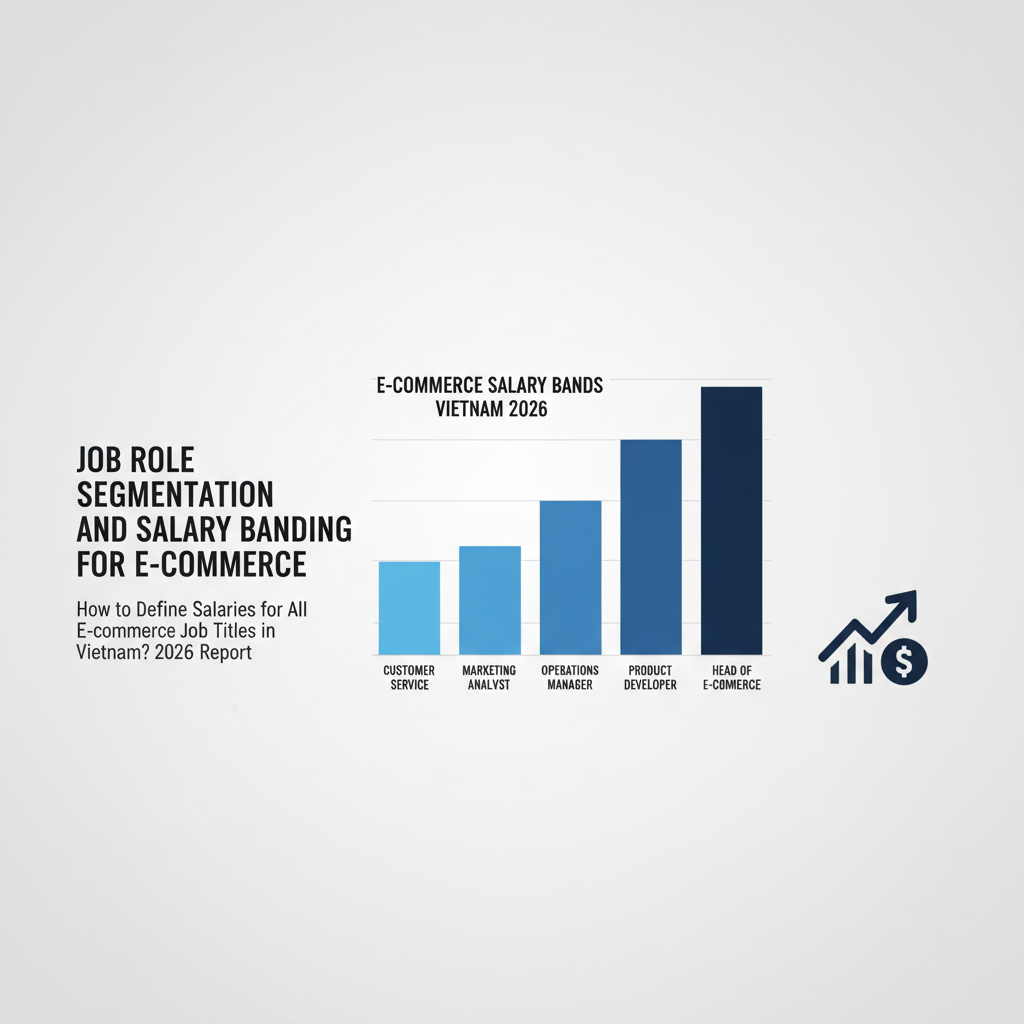
1. Categorizing E-commerce Roles (Marketing, Operations, Tech, etc.)
The first critical step in developing an effective compensation strategy is to comprehensively categorize the wide array of roles found within an e-commerce enterprise. These roles typically fall into several key departments, each with distinct skill requirements and market demands. For instance, the marketing division encompasses roles like SEO Specialists, Performance Marketing Managers, Content Creators, and Social Media Strategists. Operations might include E-commerce Operations Executives, Supply Chain Managers, Customer Service Representatives, and Logistics Coordinators. The technology department is crucial, housing Frontend and Backend Developers, UI/UX Designers, Data Analysts, and Cybersecurity Specialists. Other vital areas include Product Management, Finance, Human Resources, and even roles specific to marketplace management or cross-border e-commerce.
Each of these categories, and indeed each individual role within them, possesses unique value propositions and requires specific expertise. An SEO Specialist, for example, needs strong analytical skills and an understanding of search algorithms, while a Logistics Coordinator demands excellent organizational abilities and supply chain knowledge. Without a clear categorization, it’s impossible to establish a fair and consistent Salary Defining Strategy for all job titles in Ecommerce field in vietnam. This initial segmentation lays the groundwork for defining specific responsibilities and identifying the core competencies associated with each position, which is essential for the subsequent development of skill matrices and compensation bands.
2. Developing Role-Specific Skill Matrices and Levels
Once roles are categorized, the next phase involves creating detailed skill matrices and defining hierarchical levels for each position. A skill matrix outlines the essential technical (hard skills) and behavioral (soft skills) competencies required for a role, along with proficiency levels (e.g., basic, intermediate, advanced, expert). For a Performance Marketing Manager, hard skills might include expertise in Google Ads, Facebook Business Manager, and analytics platforms, while soft skills would encompass strategic thinking, budget management, and team leadership. This meticulous breakdown helps in objectively assessing candidates and employees, ensuring that compensation is tied directly to capability and contribution.
Alongside skill matrices, establishing clear career levels (e.g., Junior, Mid-level, Senior, Lead, Manager, Director) within each role is paramount. These levels are differentiated by factors such as years of experience, scope of responsibility, autonomy in decision-making, impact on business outcomes, and leadership duties. A Junior E-commerce Operations Executive might handle daily tasks under supervision, whereas a Senior Executive would manage complex projects and mentor junior staff. Defining these levels provides a transparent career progression path, motivating employees and justifying salary differentials. This structured approach is fundamental to a robust Salary Defining Strategy for all job titles in Ecommerce field in vietnam, ensuring that compensation reflects an individual’s growth and value to the organization.
3. Creating Flexible Salary Bands and Progression Models
The final stage involves developing flexible salary bands for each role and level, coupled with clear progression models. A salary band typically consists of a minimum, midpoint, and maximum salary range, allowing for flexibility based on an individual’s specific skills, experience, performance, and negotiation. These bands must be competitive within the Vietnamese market, considering factors such as cost of living, industry demand, and competitor offerings. Regular market research and salary surveys are crucial to keep these bands current and attractive. For instance, according to the Adecco Vietnam Salary Guide, compensation benchmarks for tech roles in e-commerce can see significant variations year-on-year, underscoring the need for adaptability.
Flexibility is key, as the e-commerce sector evolves rapidly. Companies should be prepared to adjust salary bands to respond to emerging roles, talent shortages, or economic shifts. Furthermore, establishing clear progression models is vital for employee retention. These models define how employees can advance through salary bands and career levels, whether through performance reviews, skill acquisition, or promotion. Transparent progression paths, combined with competitive and flexible salary bands, reinforce a fair compensation system. This comprehensive approach to Salary Defining Strategy for all job titles in Ecommerce field in vietnam empowers e-commerce businesses to build and sustain high-performing teams, ensuring long-term success in Vietnam’s competitive digital marketplace.
Implementing Performance-Based Compensation & Incentives
Discover strategies for linking salary and incentives to individual and team performance, driving productivity and retention in Vietnam’s dynamic e-commerce environment.
In Vietnam’s rapidly evolving e-commerce landscape, attracting and retaining top talent is paramount for sustained growth. A critical component of this strategy is implementing performance-based compensation and incentives. Beyond fixed salaries, linking remuneration directly to measurable outcomes motivates employees, fosters a results-driven culture, and aligns individual efforts with organizational goals. This approach is particularly vital in e-commerce, where market dynamics, customer behavior, and technological advancements demand agility and continuous high performance from every team member. By strategically defining a Salary Defining Strategy for all job titles in Ecommerce field in Vietnam, companies can ensure their compensation models are competitive, fair, and incredibly effective in driving both productivity and long-term retention.
1. KPIs and Performance Metrics for E-commerce Roles
Effective performance-based compensation begins with clearly defined Key Performance Indicators (KPIs) and metrics tailored to each e-commerce role. These metrics provide objective benchmarks for evaluating individual and team contributions, ensuring transparency and fairness in the compensation process. For instance, a Digital Marketing Specialist’s KPIs might include website traffic, conversion rates, cost per acquisition (CPA), and return on ad spend (ROAS). A Sales Manager in e-commerce would be measured by sales volume, average order value, customer lifetime value, and upsell/cross-sell rates. Customer Service Representatives could have KPIs centered around response times, resolution rates, and customer satisfaction (CSAT) scores. For Logistics and Operations, metrics like order fulfillment accuracy, delivery times, and inventory turnover are crucial. Product Managers might be evaluated on feature adoption rates, user engagement, and product profitability. The key is to ensure these KPIs are SMART (Specific, Measurable, Achievable, Relevant, Time-bound) and directly contribute to the company’s overarching business objectives. Regularly reviewing and updating these metrics is essential to adapt to market changes and evolving business priorities.
2. Designing Bonus Structures and Sales Incentives
Once KPIs are established, the next step is to design compelling bonus structures and sales incentives that directly reward high performance. These structures should be multi-faceted, catering to individual achievements, team collaboration, and overall company success. For individual contributors, especially those in sales or marketing roles, commission-based incentives or tiered bonuses tied to specific targets (e.g., exceeding sales quotas or achieving high conversion rates) are highly effective. For teams, shared bonuses can encourage collaboration and collective responsibility towards departmental goals. Company-wide profit-sharing or performance bonuses can align all employees with the broader organizational vision. Transparency is paramount; employees must clearly understand how their performance translates into financial rewards. Moreover, incentives should be competitive within the Vietnamese e-commerce market to attract and retain top talent. Beyond monetary bonuses, non-cash incentives like recognition programs, additional paid time off, or professional development opportunities can also significantly boost morale and motivation.
3. Long-Term Retention Strategies (ESOP, Career Development)
While immediate bonuses drive short-term performance, long-term retention strategies are crucial for building a sustainable, high-performing e-commerce workforce. Employee Stock Ownership Plans (ESOPs) can be a powerful tool, particularly for fast-growing e-commerce startups and scale-ups in Vietnam. By giving employees a stake in the company’s future success, ESOPs foster a sense of ownership, commitment, and alignment with long-term strategic goals. Beyond financial incentives, robust career development programs are vital. This includes offering opportunities for continuous learning, skill development, mentorship, and clear pathways for career progression. Investing in training programs, certifications relevant to e-commerce, and leadership development not only enhances employee capabilities but also signals a commitment to their growth. A positive company culture that prioritizes work-life balance, employee well-being, and recognition also contributes significantly to loyalty. As noted by Harvard Business Review on Employee Retention, investing in employee growth and well-being is often more effective than simply increasing salaries for long-term commitment. Regular performance reviews coupled with constructive feedback and goal-setting further reinforce a culture of continuous improvement and provide employees with a clear vision for their future within the organization.
Implementing a comprehensive performance-based compensation and incentive strategy in Vietnam’s e-commerce sector is a dynamic process that requires continuous evaluation and adaptation. By meticulously defining KPIs, designing attractive bonus structures, and investing in long-term retention initiatives, companies can cultivate a motivated, productive, and loyal workforce ready to tackle the challenges and seize the opportunities of this exciting market.
Legal Compliance, Future Trends, and Continuous Review
In Vietnam’s rapidly evolving e-commerce landscape, establishing a robust Salary Defining Strategy for all job titles in Ecommerce field in Vietnam is paramount not only for attracting and retaining top talent but also for ensuring long-term sustainability and growth. This strategy must intricately weave together adherence to local labor laws, foresight into technological shifts, and a commitment to ongoing review and adaptation. Navigating the complexities of Vietnamese regulations while simultaneously anticipating future market dynamics is critical for any e-commerce enterprise aiming for competitive advantage and operational excellence.

1. Vietnamese Labor Laws and Regulations (Minimum Wage, Overtime)
Strict compliance with Vietnamese labor laws and regulations is the foundational pillar of any ethical and sustainable salary strategy. Employers in the e-commerce sector must meticulously understand and apply provisions related to minimum wage, overtime, social insurance, health insurance, and unemployment insurance contributions. Vietnam’s minimum wage rates vary by region, with different thresholds for urban (Region I, II) and rural areas (Region III, IV). Ensuring that all entry-level positions, such as customer service representatives, data entry clerks, and junior marketing assistants, meet or exceed these legal minimums is non-negotiable. Failure to comply can result in significant fines and reputational damage. Furthermore, the calculation and payment of overtime are strictly regulated. With e-commerce often experiencing peak seasons and extended operational hours, particularly for logistics, warehousing, and customer support roles, accurate overtime compensation is vital. Employees working beyond standard hours are entitled to higher rates, and miscalculations can lead to labor disputes. Beyond direct wages, mandatory contributions to social insurance (covering sickness, maternity, occupational diseases, retirement, and death), health insurance, and unemployment insurance are statutory requirements for both employers and employees. These contributions significantly impact the total cost of employment and must be factored into the overall compensation package. Seeking professional legal counsel to ensure full compliance with the continually updated Labor Code and its guiding decrees is not merely a best practice but a crucial element of risk management for any e-commerce business operating in Vietnam.
2. Emerging Technologies and Their Impact on Roles/Salaries
The relentless march of technology is fundamentally reshaping the e-commerce landscape, and consequently, the roles and salary structures within it. Emerging technologies such as Artificial Intelligence (AI), Machine Learning (ML), advanced data analytics, blockchain, and automation are driving unprecedented efficiency and personalization. These innovations are not just tools; they are creating entirely new job categories while simultaneously transforming existing ones. For instance, the demand for data scientists, AI specialists, UX/UI designers for AI-powered interfaces, and automation engineers is skyrocketing. These specialized skills command premium salaries, reflecting their scarcity and the significant value they add in optimizing customer journeys, supply chains, and marketing effectiveness. Conversely, roles involving repetitive, manual tasks may see a shift in demand or even automation, necessitating a strategic approach to reskilling and upskilling the existing workforce. Companies must invest in training programs that equip employees with the digital literacy and analytical capabilities required to work alongside or manage these advanced technologies. The ability to interpret data insights, manage AI-driven campaigns, or troubleshoot automated systems will become standard requirements for many e-commerce professionals. Keeping abreast of these technological advancements and their implications for skill requirements is paramount for designing a forward-looking labor market in Vietnam. This proactive approach ensures that the Salary Defining Strategy remains agile, attracting talent with future-proof skills while also fostering continuous growth within the current workforce.
3. Establishing a Regular Salary Review Cycle
In a dynamic market like Vietnam’s e-commerce sector, a static salary strategy is a recipe for talent drain and competitive disadvantage. Establishing a regular, structured salary review cycle is therefore indispensable. This framework should ideally be conducted annually, or even semi-annually for highly volatile roles or during periods of significant market shifts. The review process must be data-driven, incorporating comprehensive market benchmarks from reputable salary surveys specific to the Vietnamese e-commerce industry, internal performance evaluations, and macroeconomic indicators such as inflation rates. Regular analysis ensures that compensation packages remain externally competitive and internally equitable. Key components of this cycle include gathering market data for comparable roles, assessing individual and team performance against predefined KPIs, and evaluating the overall financial health of the company. Transparency in the review process, where feasible, coupled with clear communication regarding salary adjustments and the rationale behind them, builds trust and enhances employee morale. This continuous feedback loop allows the Salary Defining Strategy for all job titles in Ecommerce field in Vietnam to evolve, ensuring it aligns with both the company’s strategic objectives and the prevailing market realities. A well-executed salary review cycle is not just about adjusting numbers; it’s a critical tool for employee retention, motivation, and ultimately, securing the talent necessary to thrive in Vietnam’s competitive digital economy.
Partner with Shelby Global
You are looking for reliable HR Sevice Suppliers? Contact Shelby Global Now! To connect with verified talents and upgrade your orginization.
—————————————
References
– e-Conomy SEA 2023 report: https://www.bain.com/insights/e-conomy-sea-2023/
– How to Conduct a Market Pay Review: https://www.shrm.org/resources-and-tools/tools-and-samples/how-to-guides/pages/how-to-conduct-a-market-pay-review.aspx
– :
– Harvard Business Review on Employee Retention: https://hbr.org/topic/employee-retention
– ILO Report on Labour Market in Vietnam: https://www.ilo.org/hanoi/information-resources/publications/WCMS_872704/lang–en/index.htm