
Overview of Vietnam’s Labor Law for Sales Staff
Understanding Vietnam’s dynamic labor landscape is crucial for businesses employing sales personnel. The country’s robust legal framework governs the employment relationship, ensuring both employee rights and employer obligations are met. For the sales sector, in particular, navigating the Legal HR terms & conditions for sale field in vietnam requires a keen awareness of specific regulations that often differ from standard employment provisions. This introduction delves into the fundamental labor laws governing employees in the sales sector in Vietnam, highlighting key regulations and their application, ensuring compliance and fostering a productive work environment for your team involved in Vietnamese labor regulations for sales.

1. Key Articles & Decrees Affecting Sales Personnel
The foundation of Vietnam’s labor law rests primarily on the Labor Code 2019, which came into effect on January 1, 2021. This comprehensive code, along with its guiding decrees and circulars, establishes the core principles for all employment relationships, including those in sales. For sales staff, crucial provisions include those related to employment contracts, working hours, wages, social insurance, and occupational safety. For instance, Article 13 of the Labor Code dictates that employment contracts must be in writing and clearly specify terms such as job description, working location, wages, and social insurance contributions. Given the often target-driven nature of sales roles, it’s vital for companies to clearly define commission structures and performance bonuses within these contracts. Furthermore, adherence to regulations regarding statutory holidays, annual leave, and sick leave is non-negotiable. Employers must ensure compliance with these fundamental provisions to avoid legal disputes and maintain fair Vietnamese labor regulations for sales. Properly drafted sales employment contracts Vietnam are essential for both parties, detailing expectations and compensation.
2. Distinction Between Standard & Sales-Specific Labor Provisions
While the general provisions of the Labor Code apply to sales personnel, specific nuances often arise due to the nature of sales work. Unlike traditional roles with fixed salaries, sales positions frequently incorporate variable compensation elements, such as commissions, bonuses, and incentives tied to performance. Vietnam’s labor law permits these variable components, but it mandates clarity and transparency in their calculation and payment. Employers must ensure that commission-based pay laws Vietnam are adhered to, meaning these structures are clearly outlined in the employment contract or an addendum, detailing how commissions are earned, calculated, and when they will be paid. Moreover, sales staff often work flexible hours, travel extensively, or operate outside traditional office settings. While working hours are generally capped, regulations concerning overtime and travel allowances must be carefully applied. Distinctions also extend to termination clauses, where performance-based targets might trigger specific provisions, provided they align with legal requirements regarding disciplinary actions and fair dismissal. Understanding these sales employment contracts Vietnam specificities is key to effective HR compliance Vietnam sales.
3. Impact of Recent Legal Amendments (2026 Outlook)
Vietnam’s labor laws are subject to ongoing review and amendment to adapt to economic development and international labor standards. While no radical overhaul is anticipated specifically for sales staff by 2026, continuous updates to decrees and circulars will likely impact HR compliance Vietnam sales. Key areas to watch include evolving regulations on remote work, data privacy, and the management of performance-based contracts. As remote and hybrid work models become more prevalent, amendments might further clarify provisions on working conditions, equipment provision, and supervision for sales personnel operating outside the traditional office. Additionally, increasing scrutiny on personal data protection could influence how companies collect and utilize sales performance data. Employers should proactively monitor legislative developments and adapt their policies, particularly concerning commission-based pay laws Vietnam and other variable remuneration schemes, to remain compliant. Staying abreast of these changes is paramount for businesses to effectively manage their sales teams and ensure their Legal HR terms & conditions for sale field in vietnam remain robust and up-to-date.
Essential Employment Contracts & Terms for Sales Roles
Navigating the intricacies of employment contracts is paramount for businesses operating in Vietnam, especially when it comes to the dynamic and performance-driven sales sector. A clear understanding of Vietnamese labor law and specific Legal HR terms & conditions for sale field in Vietnam is not just about compliance; it’s about fostering a stable, motivated, and legally secure sales team. This detailed examination delves into the various contract types, mandatory clauses, and specific terms relevant to sales staff, including probationary periods and fixed-term contracts, ensuring both employers and employees are well-informed.
1. Types of Sales Employment Contracts in Vietnam
Under Vietnam’s Labor Code, there are primarily three types of employment contracts, each with distinct implications for sales roles. Understanding these is crucial for effective sales employment regulations.
- Indefinite-Term Contracts: These are the most common for established sales professionals, offering long-term stability. They signify a continuous working relationship with no fixed end date, contingent upon performance and compliance.
- Fixed-Term Contracts (12 to 36 months): Often utilized for new sales hires, project-based sales initiatives, or when an employer wants to assess a salesperson’s long-term fit after a probationary period. These contracts specify an end date, after which they can be renewed or converted to an indefinite-term contract. Vietnamese law generally allows for only one renewal of a fixed-term contract before it must convert to an indefinite-term one, unless specific exceptions apply (e.g., for foreign employees or specific seasonal work).
- Seasonal or Specific Job Contracts (under 12 months): Less common for core sales roles but may be used for short-term sales campaigns, product launches, or temporary sales support. These contracts are for specific tasks that will be completed within the defined period.
The choice of contract type significantly impacts job security, benefits, and the ease of termination procedures, making careful selection vital for both parties in the Vietnamese sales landscape.
2. Mandatory Clauses: Salary, Benefits, & Working Hours
Every employment contract for sales professionals in Vietnam must clearly stipulate several mandatory clauses to comply with Vietnam labor law and ensure transparency.
- Salary and Sales Compensation: Beyond a base salary, sales contracts must detail the commission structure, bonuses, and other performance-based incentives. This includes clarifying how sales targets are set, measured, and how commissions are calculated and paid. Transparency here prevents disputes and motivates sales teams. Minimum wage requirements, as set by the government for different regions, must always be met.
- Benefits: Mandatory benefits include contributions to Social Insurance (health insurance, social insurance, unemployment insurance), which is a significant part of the total compensation package. Other common benefits include annual leave (minimum 12 working days per year), public holidays, sick leave, and potentially company-specific perks like travel allowances, phone allowances, or health check-ups.
- Working Hours: Standard working hours (e.g., 40-48 hours per week) must be specified. For sales roles, which often require flexibility and work outside standard office hours, the contract should address overtime policies, compensation for weekend work, and any provisions for flexible work arrangements, always adhering to legal limits on overtime.
Clarity in these clauses is not just a legal necessity but a cornerstone for attracting and retaining top sales talent in a competitive market.
3. Probationary Periods & Termination Provisions
Effective management of probationary periods and clear termination provisions are critical elements of any sales employment contract in Vietnam.
- Probationary Periods: The Labor Code sets maximum probationary periods: up to 60 days for positions requiring professional or technical qualifications (common for sales managers or complex B2B sales), up to 30 days for positions requiring college degrees, and up to 6 days for other jobs. During this period, both employer and employee can assess the fit without significant legal hurdles. For sales roles, clear probationary targets (e.g., lead generation, initial sales figures, product knowledge acquisition) should be established. If a sales employee fails probation, their employment can be terminated without notice, provided the reasons are legitimate and documented.
- Termination Provisions: Vietnam’s new Labor Code outlines specific grounds for termination by both employer and employee, along with mandatory notice periods. Employers can terminate for reasons such as repeated poor performance (after written warnings), breach of contract, economic redundancy, or restructuring. Employees can terminate for various reasons, often requiring a notice period (e.g., 30 days for indefinite-term contracts, 3 days for fixed-term contracts in certain situations). It is crucial for contracts to clearly state these notice periods and the procedures for lawful termination, including severance pay obligations if applicable. Improper termination can lead to significant penalties and legal disputes for employers.
Adherence to these legal frameworks ensures fair treatment and mitigates risks for both sales professionals and the employing entity, fostering a transparent and compliant work environment in Vietnam’s dynamic sales sector.
Commission, Bonuses, & Incentive Structures Compliance
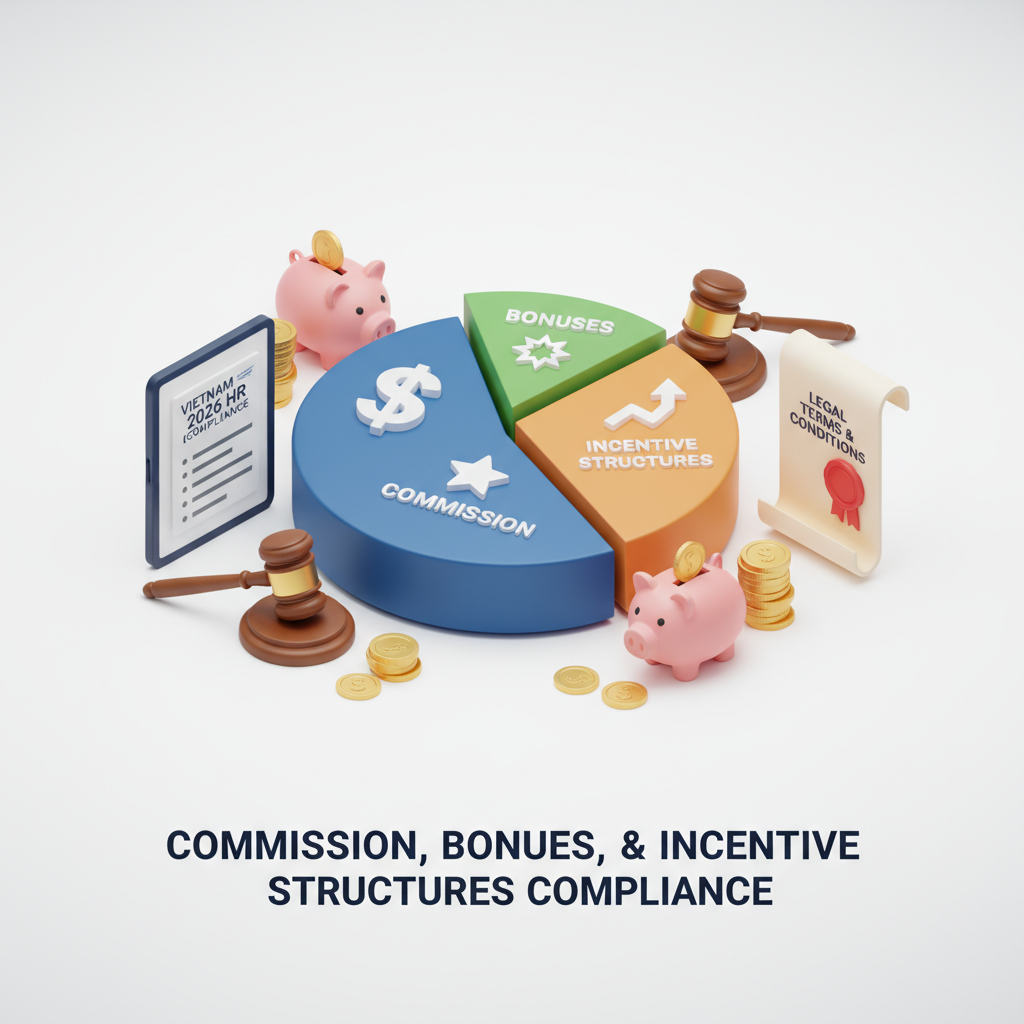
For businesses operating in Vietnam with dynamic sales teams, navigating the landscape of variable compensation demands meticulous attention to legal compliance. Crafting transparent and compliant commission, bonus, and incentive structures is paramount to motivate performance and mitigate significant legal and financial risks. This section delves into the critical legal HR terms & conditions for sales fields in Vietnam, focusing on ensuring adherence to Vietnamese regulations concerning income, deductions, and overall payroll compliance Vietnam. A clear understanding of these frameworks is essential for fostering trust, boosting productivity, and safeguarding the company’s reputation.
1. Legal Requirements for Sales Commission Agreements
The foundation of any compliant variable compensation scheme in Vietnam lies in well-drafted and legally sound sales commission agreements. These agreements, typically part of the employment contract or an annex, are governed by the Labor Code 2019 and its guiding decrees. Employers must ensure these documents clearly articulate the calculation methodology for commissions and bonuses, detailing factors like sales targets, payment frequencies, and any conditions for earning or forfeiture. Ambiguity can lead to significant labor disputes Vietnam and financial liabilities.
Key requirements include specifying the base salary component and explicitly defining how commissions contribute to an employee’s total remuneration. The agreement should also address scenarios like early termination, leave, or changes in sales territories, outlining how commissions are handled. Transparency is vital, ensuring employees fully understand their sales incentive plans. It is advisable to reference relevant articles of the Labor Code concerning wages and remuneration, emphasizing that all compensation must be documented and agreed upon. According to the Vietnamese Labor Code, remuneration policies must be public and equitable. Adhering to these legal stipulations protects both employer and employee, providing clarity and motivation for the sales team.
2. Tax Implications of Performance-Based Pay
Understanding the tax treatment of performance-based pay, including commissions and bonuses, is crucial for effective variable compensation Vietnam management. In Vietnam, commissions and bonuses are generally considered part of an individual’s taxable income for Personal Income Tax (PIT) purposes. They are aggregated with an employee’s monthly salary and other benefits, then subjected to progressive tax rates from 5% to 35%, depending on the total taxable income.
Employers are responsible for accurately calculating, withholding, and remitting PIT to the tax authorities. Furthermore, while commissions contribute to taxable income for PIT, their inclusion in social insurance (SI), health insurance (HI), and unemployment insurance (UI) contributions is more nuanced. Generally, only fixed allowances and certain regular wage components are used as the basis for these mandatory contributions, not highly variable components like sales commissions, unless explicitly stated as a fixed payment in the employment contract. Companies must consult with tax and HR experts to ensure precise classification and reporting, avoiding non-compliance penalties and ensuring proper payroll compliance Vietnam. Misinterpretations can lead to significant back-tax liabilities.
3. Dispute Resolution for Compensation Issues
Even with meticulously crafted agreements, disputes over compensation, particularly concerning sales incentive plans, can arise. Establishing clear, accessible, and legally compliant dispute resolution mechanisms is a critical aspect of HR compliance. The Vietnamese Labor Code 2019 provides a structured framework for resolving labor disputes Vietnam, starting with internal resolution processes.
Employers should first implement an internal grievance procedure, allowing employees to formally raise concerns about commission calculations or payment delays. This internal process should be transparent, timely, and involve designated HR personnel. If internal resolution fails, the dispute may escalate to external bodies: conciliation by a labor conciliator, labor arbitration councils, or directly to a People’s Court. Documenting all compensation calculations, communications, and policies is indispensable for presenting a strong case. Proactive communication, fair policy application, and a robust internal dispute resolution process are the best defenses against prolonged and costly external litigation, ultimately contributing to a positive work environment and reducing legal exposure related to variable compensation Vietnam.
Data Protection, Confidentiality & Non-Compete Clauses
In the dynamic and competitive sales landscape of Vietnam, protecting a company’s sensitive information, customer data, and market position is paramount. Employers often rely on specific contractual clauses to safeguard their interests against potential misuse of information or unfair competition by former employees. Navigating the legal boundaries and enforceability of these clauses, particularly for the Legal HR terms & conditions for sale field in Vietnam, requires a thorough understanding of Vietnamese labor law and data privacy regulations. This section delves into the enforceability and limitations of data protection, confidentiality, and non-compete agreements within the Vietnamese legal framework.
1. Vietnam’s Regulations on Employee Data Privacy
Ensuring the privacy of employee data is a critical concern for businesses operating in Vietnam. The primary legislation governing personal data protection is Decree 13/2023/ND-CP on Personal Data Protection, which came into effect on July 1, 2023. This comprehensive decree places significant obligations on organizations acting as data controllers and processors. Employers must adhere to strict requirements when collecting, storing, processing, and transferring personal data, including employee information such as names, contact details, bank accounts, health records, and performance evaluations.
Key provisions mandate obtaining explicit consent from data subjects (employees) for the processing of their personal data, except in specific legally defined circumstances. Employers must also implement robust security measures to prevent data breaches and provide employees with the right to access, rectify, or erase their data. Furthermore, cross-border transfers of personal data are subject to specific conditions, requiring a data transfer impact assessment and consent. Companies in the sales sector, often handling vast amounts of customer and employee data, must pay close attention to these regulations to avoid penalties and build trust. For a detailed understanding of the decree’s implications, refer to expert analyses such as Vietnam’s Personal Data Protection Decree Takes Effect.
2. Enforceability of Confidentiality Agreements
Confidentiality agreements, often embedded within employment contracts or as standalone documents, are crucial tools for protecting trade secrets, customer lists, pricing strategies, sales methodologies, and other proprietary business information from being disclosed or used by employees to the detriment of the company. In Vietnam, the enforceability of these agreements hinges on several factors.
For a confidentiality clause to be legally sound and enforceable under Vietnamese labor law, it must clearly define what constitutes “confidential information.” Vague or overly broad definitions can render the clause unenforceable. The agreement should also specify the duration of the confidentiality obligation (often extending beyond the termination of employment) and the consequences of a breach. While there isn’t a specific standalone law governing trade secrets in Vietnam akin to some Western jurisdictions, protection is generally afforded under civil law, labor law, and intellectual property law. Courts will typically uphold confidentiality agreements if they are reasonable in scope, clearly communicated, and do not unduly restrict an individual’s right to work. Companies should ensure that employees, especially those in sales who gain deep insights into customer relationships and market strategies, understand their obligations from the outset of their employment.
3. Legality and Limitations of Non-Compete Clauses
Non-compete clauses aim to prevent former employees from working for a competitor or starting a competing business within a specified geographical area and for a defined period after leaving the company. While highly desirable for companies seeking to protect their market share and competitive advantage, the enforceability of non-compete clauses in Vietnam is subject to significant limitations and strict conditions under Vietnamese labor law.
Unlike some jurisdictions, Vietnamese law does not explicitly or broadly endorse post-employment non-compete clauses for all employees. The prevailing legal interpretation and court practice suggest that such clauses are generally challenging to enforce unless specific conditions are met. Key considerations include:
- Reasonableness: The clause must be reasonable in terms of its geographical scope, duration, and the type of restricted activities. Overly broad restrictions are likely to be deemed unenforceable.
- Compensation: Crucially, for a non-compete clause to stand a chance of enforcement, the employer typically needs to provide adequate and demonstrable compensation to the employee for the period they are restricted from working. This compensation must be clearly stipulated in the agreement and should genuinely reflect the lost earning potential of the employee during the non-compete period.
- Legitimate Business Interest: The employer must be able to demonstrate a legitimate business interest that the clause seeks to protect, such as trade secrets, highly specialized knowledge, or significant customer relationships developed by key personnel.
In practice, non-compete clauses are usually considered more enforceable for senior management or employees with access to critical proprietary information or unique skills that directly impact the company’s competitive edge. For general sales roles, without substantial compensation and a clear justification of protecting highly sensitive information, enforcing a non-compete clause can be extremely difficult. Companies should seek expert legal advice when drafting such clauses to ensure they align with Vietnamese legal standards and practical enforceability challenges.
HR Compliance & Risk Management for Sales Operations
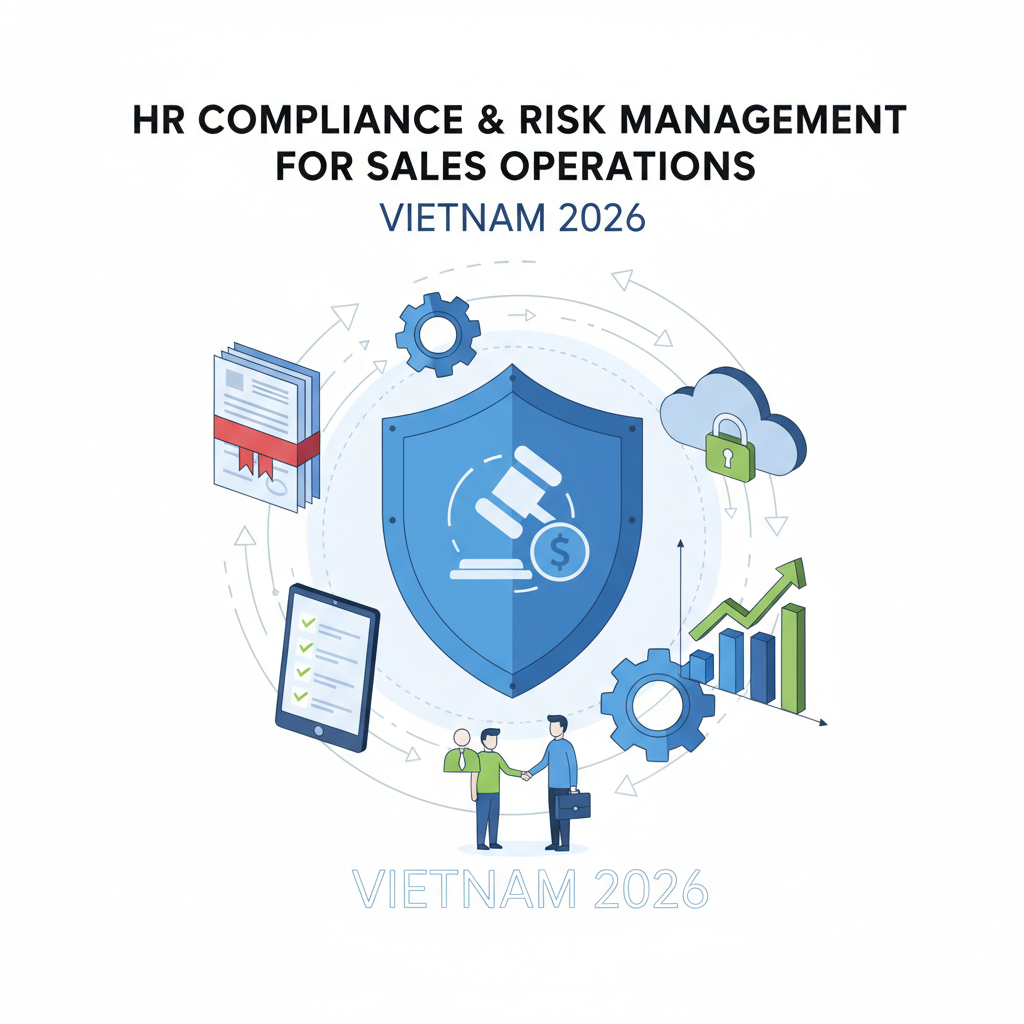
In the dynamic and often high-stakes world of sales, businesses must navigate a complex web of HR laws and regulations to ensure operational stability and mitigate potential legal risks. For companies operating in Vietnam, understanding the nuances of local labor legislation, especially concerning the sales field, is paramount. This section outlines strategic approaches for achieving full compliance with Legal HR terms & conditions for sale field in vietnam, effectively handling disputes, and safeguarding your organization against costly legal challenges. Proactive HR compliance fosters a fair work environment, protects reputation, and ensures sustainable growth.
1. Regular Audits & Compliance Checks for Sales Teams
Maintaining a proactive stance on HR compliance is crucial for sales operations in Vietnam. Regular audits and compliance checks are essential tools for identifying and rectifying potential legal vulnerabilities. These checks should encompass a thorough review of sales contracts, commission structures, performance management systems, and company policies to ensure alignment with the latest Vietnam labor law for sales, particularly the Labor Code 2019 and its guiding decrees. Key areas for scrutiny include transparent communication of sales targets, fair calculation of bonuses, and adherence to working hours regulations, given the flexible nature of sales roles. A primary focus should be on sales commission compliance Vietnam, ensuring all terms are clearly defined, legally sound, and consistently applied to avoid disputes. Implementing a robust internal audit schedule, complemented by periodic external legal reviews, provides an invaluable safeguard. Regular training for sales managers and HR personnel on evolving legal requirements helps embed a culture of compliance, reducing inadvertent breaches and bolstering risk management.
2. Handling Labor Disputes & Grievances Effectively
Despite best efforts, labor disputes and grievances can occasionally arise within sales teams. How a company handles these situations significantly impacts its legal standing, employee morale, and public image. Establishing clear, accessible, and legally compliant procedures for employee dispute resolution Vietnam is therefore critical. This involves creating internal grievance mechanisms that allow sales staff to voice concerns confidentially and without fear of reprisal. These mechanisms should outline specific steps for investigation, mediation, and resolution, adhering strictly to timelines and requirements set forth by Vietnamese labor laws. Documenting every stage of the dispute resolution process—from initial complaint to final resolution—is paramount, as robust records serve as vital evidence in the event of an external legal challenge. Training managers on effective communication, conflict resolution, and internal grievance procedures empowers them to address issues early, often preventing escalation. For complex disputes, engaging professional mediators or legal counsel early can facilitate a smoother, more amicable resolution, minimizing lengthy and costly litigation. A proactive and empathetic approach resolves immediate issues and reinforces a company’s commitment to fairness and employee welfare.
3. Best Practices for Onboarding & Offboarding Sales Staff
The beginning and end of an employee’s journey are critical junctures for HR compliance, especially within the sales department. Effective onboarding ensures new sales hires are integrated smoothly and legally, while meticulous offboarding safeguards company assets and proprietary information. For onboarding, it’s essential to provide new sales staff with legally compliant employment contracts that clearly define roles, responsibilities, compensation structures (including detailed sales commission compliance Vietnam terms), and adherence to company policies. This initial phase is also ideal for educating new hires on non-disclosure agreements (NDAs), non-compete clauses (where legally permissible in Vietnam), and data privacy regulations relevant to their sales activities. Comprehensive training on ethical sales practices and the company’s code of conduct sets a strong foundation for compliant behavior. When offboarding sales personnel, careful adherence to Vietnamese labor laws regarding severance pay, final salary settlements, and the return of company property is crucial. A thorough sales contract legal review Vietnam should be part of the offboarding process to ensure all contractual obligations are met. It is equally important to formally remind departing employees of their post-employment obligations concerning confidential information, trade secrets, and client relationships. Implementing standardized, legally vetted procedures for both onboarding and offboarding helps mitigate risks associated with unfair dismissal claims, intellectual property theft, or breaches of confidentiality, protecting company interests and ensuring a smooth transition.
In conclusion, robust HR compliance and proactive risk management are indispensable for sales operations in Vietnam. By prioritizing regular audits, establishing clear dispute resolution mechanisms, and implementing best practices for onboarding and offboarding, businesses can navigate the complex legal landscape with confidence, safeguard assets, and foster a compliant, productive, and thriving sales environment.
Partner with Shelby Global
You are looking for reliable HR Sevice Suppliers? Contact Shelby Global Now! To connect with verified talents and upgrade your orginization.
—————————————
References
– Vietnamese labor regulations for sales: https://english.luatvietnam.vn/labour-code-2019-204618-doc1.html
– Vietnam’s New Labor Code: A Major Change for Employers: https://www.dfdl.com/resources/legal-and-tax-updates/vietnams-new-labor-code-a-major-change-for-employers/
– Vietnamese Labor Code: https://vietnamlawmagazine.vn/salaries-of-employees-as-prescribed-by-the-labor-code-42823.html
– Vietnam’s Personal Data Protection Decree Takes Effect: https://www.bakermckenzie.com/en/insight/publications/2023/05/vietnams-personal-data-protection-decree-takes-effect
– VILAF Labour Code 2019 Guide: https://www.vilaf.com/wp-content/uploads/2020/08/Labour-Code-2019-Guide-ENG.pdf