
Understanding the Current Landscape of Medical Salaries in Vietnam
The Vietnamese medical sector is undergoing significant transformation, driven by a growing economy and increasing demand for quality healthcare services. Understanding the present compensation structure and the influencing factors behind Salary Defining Strategy for all job titles in medicine field in vietnam is crucial for both healthcare professionals and institutions. This section provides an overview of Vietnam medical salaries today, exploring the nuances that shape remuneration across various roles and sectors. The compensation landscape is dynamic, influenced by specialized skills, experience, education, and facility type. As Vietnam continues its economic ascent, demand for highly skilled medical professionals intensifies, leading to evolving salary expectations.

-
Average salaries by job title (doctors, nurses, specialists)
The average salaries for medical professionals in Vietnam exhibit considerable variation based on their specific roles and levels of specialization. General practitioners typically earn moderate salaries, increasing with experience and additional certifications. For instance, the average monthly salary for a Doctor (Medical) in Vietnam can range widely. Nurses’ salaries are influenced by qualifications, years of service, and specific department (e.g., ICU nurses often earn more). Starting salaries for nurses are generally lower but improve steadily with professional development. Specialists – such as surgeons, cardiologists, and oncologists – command the highest salaries. Their extensive training, advanced expertise, and critical roles justify significantly higher compensation. An experienced specialist in a demanding field within a major urban center can expect to earn several times more than a general practitioner or an entry-level nurse, reflecting investment in education and high demand for their services. These figures are also subject to regional differences and employer type.
-
Regional salary variations (urban vs. rural)
A significant disparity in medical salaries exists between urban and rural areas across Vietnam. Major metropolitan centers like Hanoi and Ho Chi Minh City, with higher costs of living and greater concentrations of advanced medical facilities, generally offer more attractive remuneration packages. Professionals in these urban hubs benefit from higher base salaries, better access to professional development, and robust benefit packages. The presence of international clinics further drives competition, influencing salaries even in public urban hospitals. Conversely, medical professionals practicing in rural or remote areas typically face lower salary scales, due to lower patient volume and limited resources. While the government incentivizes doctors and nurses to work in underserved regions through allowances, the salary gap remains a challenge. This regional discrepancy contributes to internal migration of medical talent, with many opting for urban centers for better career prospects and financial rewards, exacerbating healthcare disparities in rural regions.
-
Impact of public vs. private healthcare sectors
The dual nature of Vietnam’s healthcare system – comprising both public and private facilities – plays a critical role in shaping medical salaries. Public hospitals, historically primary employers, offer stability and structured career paths, though often with lower base salaries compared to the private sector. Public sector remuneration is typically governed by rigid government pay scales, less responsive to market demands. However, doctors in public hospitals often supplement income through after-hours private practice. The burgeoning private healthcare sector, including private hospitals and international medical centers, offers a stark contrast. These institutions operate on a market-driven model, allowing greater flexibility in salary negotiation and often providing significantly higher compensation packages, performance-based bonuses, and modern working conditions. They attract top talent by offering competitive salaries that reflect international standards, especially for specialists. Private facilities also invest more in cutting-edge technology and continuous professional training. This growing divide between public and private sector compensation is a key factor influencing career choices and the overall Salary Defining Strategy for all job titles in medicine field in vietnam, driving a trend where skilled professionals may transition for better financial incentives. Understanding this landscape is vital for institutions aiming to attract and retain the best medical talent in Vietnam.
The current landscape of medical salaries in Vietnam is a complex interplay of specialization, geography, and sectorial dynamics. As the nation’s healthcare needs evolve, so too will compensation strategies, demanding a nuanced approach to ensure equitable and competitive remuneration. This ongoing evolution underscores the importance of a well-defined Salary Defining Strategy for all job titles in medicine field in vietnam to support both healthcare providers and high-quality patient care.
Key Factors Influencing Salary Definition for Medical Roles
Delve into the core elements that shape salary decisions, from qualifications and experience to market demand, including insights on medical specialist pay Vietnam.
Defining competitive and equitable salaries for medical professionals in Vietnam is a multi-faceted challenge, requiring a strategic approach that considers numerous dynamic factors. A robust Salary Defining Strategy for all job titles in medicine field in vietnam is crucial for attracting, retaining, and motivating top talent within the nation’s rapidly evolving healthcare landscape. From fundamental qualifications to the nuanced interplay of market demand and performance metrics, understanding these core elements is paramount for healthcare institutions, policymakers, and medical professionals alike. This section delves into the key influencers shaping medical specialist pay Vietnam and other crucial compensation considerations across the sector.
1. Education, experience, and specialization requirements
The foundation of any medical professional’s remuneration is inextricably linked to their educational background, years of experience, and level of specialization. In Vietnam, a standard medical degree is merely the starting point. Postgraduate qualifications, including residencies and fellowships in specific medical disciplines, significantly elevate a physician’s earning potential. Graduates from prestigious national or international universities may also command higher entry-level salaries, reflecting perceived quality of training.
Experience plays a critical role, creating a clear distinction between junior doctors, residents, general practitioners, and seasoned consultants or department heads. A physician with extensive experience, handling complex cases and demonstrating a consistent track record of positive patient outcomes, will naturally command a higher salary. Continuous professional development (CPD) and certifications in new techniques (e.g., robotic surgery, advanced imaging interpretation) further boost a doctor’s market value, contributing to progressive doctor salary structure Vietnam. Specialization remains perhaps the most impactful differentiator. Fields like neurosurgery, cardiology, oncology, and critical care involve extensive training, high-stakes procedures, and critical decision-making, leading to significantly higher medical specialist pay Vietnam compared to general practice. The deep knowledge and unique skill sets in these domains make specialists indispensable, increasing their compensation leverage within the overall healthcare sector salaries.
2. Demand for specific medical fields and skills
Beyond individual qualifications, the broader market dynamics of supply and demand exert a powerful influence on medical compensation. Vietnam’s healthcare sector is experiencing significant growth and reform, fueled by an expanding middle class and increasing health awareness. This growth creates varied demand across different medical fields and for specific skills. For instance, a national shortage of pathologists, radiologists, or anesthesiologists, particularly in provincial or rural areas, drives up competitive compensation for these roles. Conversely, areas with an oversupply of general practitioners might see more modest salary growth.
Emerging medical fields and technological advancements also shape demand. Expertise in telemedicine, digital health solutions, AI-powered diagnostics, or highly specialized surgical techniques can place a premium on a physician’s skills. Geographically, urban centers like Hanoi and Ho Chi Minh City, with their concentration of private hospitals and international clinics, often offer more attractive healthcare compensation Vietnam packages compared to public facilities in remote regions. The ongoing expansion of private healthcare infrastructure and the push for universal health coverage continue to reshape the demand for various medical professionals, directly impacting salary benchmarking and overall healthcare sector salaries. Institutions engaged in medical recruitment Vietnam must closely monitor these trends to develop an effective compensation strategy healthcare that aligns with market realities and secures essential talent.
3. Performance-based incentives and bonuses
While base salaries rooted in education and experience form the core, a modern Salary Defining Strategy for all job titles in medicine field in vietnam increasingly incorporates performance-based incentives and bonuses. This shift from purely fixed remuneration aims to motivate high performance, align individual goals with institutional objectives, and reward excellence. These variable pay components can include a wide range of metrics and structures.
Common performance indicators for physicians might include patient satisfaction scores, clinical outcomes (e.g., low readmission rates, successful treatment percentages), productivity measures (e.g., patient volume, surgical throughput), adherence to best practices, and contributions to research or administrative roles. Beyond clinical performance, bonuses can also be tied to the financial performance of the department or hospital. Types of incentives vary, encompassing sign-on bonuses, retention bonuses, annual performance bonuses, profit-sharing schemes, and additional remuneration for on-call duties or working unsocial hours. Implementing a clear and transparent system for performance-based pay is vital. It encourages continuous improvement, fosters a culture of accountability, and ensures that highly productive and effective medical professionals are appropriately rewarded, directly contributing to competitive physician remuneration Vietnam. Such an approach not only enhances individual earnings but also supports the overall quality and efficiency of healthcare delivery, making it a crucial component of any robust salary benchmarking medical strategy.
In conclusion, the definition of medical salaries in Vietnam is a dynamic interplay of individual qualifications, prevailing market demand, and strategic performance incentives. Healthcare providers and policymakers must continually assess these factors to establish compensation frameworks that are fair, competitive, and sustainable, ensuring the continued growth and quality of the nation’s healthcare system.
Developing a Robust Salary Benchmarking Strategy
In Vietnam’s rapidly evolving medical landscape, attracting and retaining top-tier talent is paramount for the success of any healthcare organization. A well-executed salary benchmarking strategy is not merely a reactive measure but a proactive and critical component of a comprehensive Salary Defining Strategy for all job titles in medicine field in vietnam. It ensures that remuneration packages are competitive, equitable, and aligned with market realities, preventing talent drain and fostering a motivated workforce. This section delves into the strategic framework for researching and comparing salaries effectively, ensuring your organization remains an employer of choice amidst fierce competition for skilled healthcare professionals, from entry-level roles to seasoned specialists.
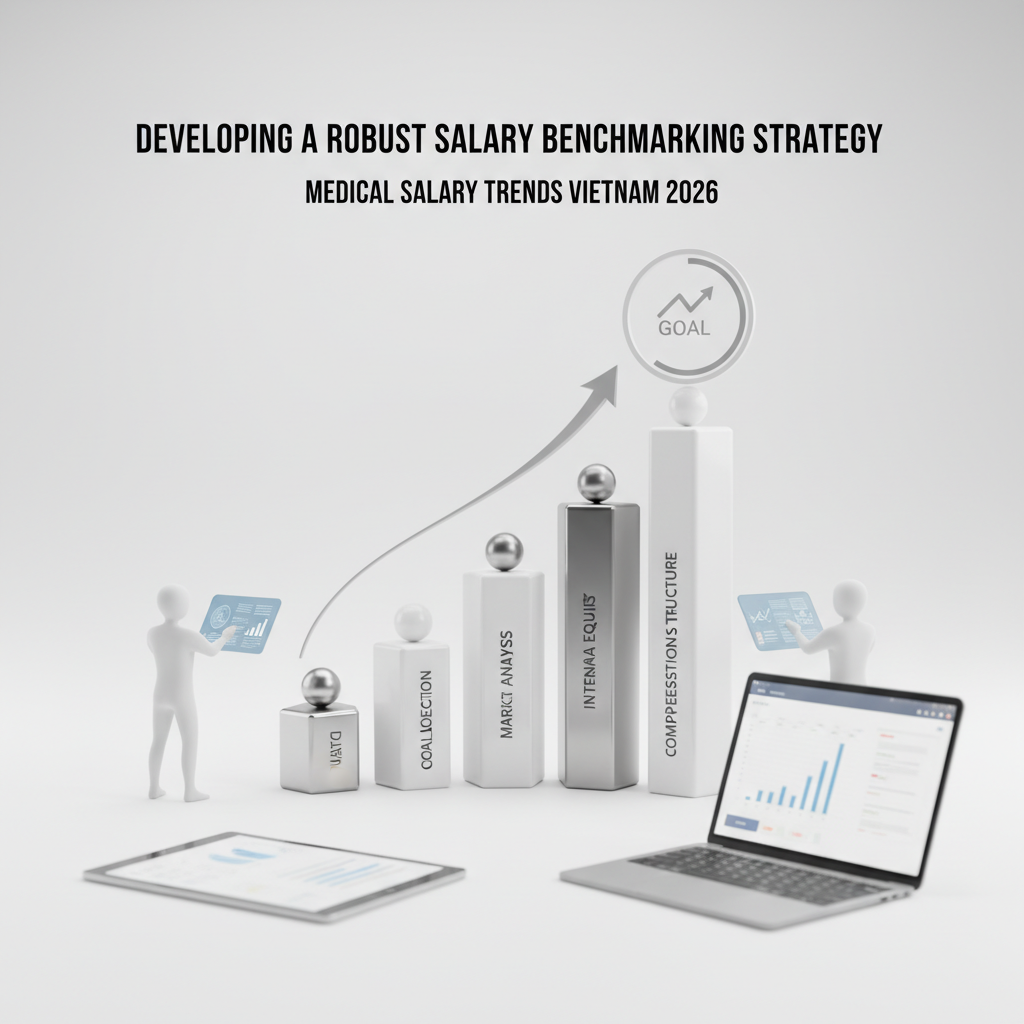
1. Sources for salary data (surveys, industry reports)
The foundation of any robust salary benchmarking strategy lies in the quality and reliability of its data sources. For the Vietnamese medical sector, organizations should leverage a combination of global and localized data. Specialized medical salary surveys, often conducted by reputable HR consulting firms, provide granular insights into compensation trends for various medical specializations, administrative roles, and support staff. These surveys are invaluable as they often categorize data by region, organizational size, and specific job functions, offering a detailed view of the competitive landscape. Beyond surveys, industry reports from healthcare associations, economic research institutions, and even government labor statistics can offer broader economic context and highlight shifts in demand for certain medical professions. Engaging with professional bodies and networks within Vietnam’s healthcare sector can also provide anecdotal yet valuable information on prevailing compensation practices. Leveraging authoritative global compensation data providers like Mercer’s Global Talent Trends report can offer a macro perspective that can then be localized, helping to understand broader trends impacting the healthcare workforce and informing your overall Salary Defining Strategy for all job titles in medicine field in vietnam.
2. Competitive analysis within the Vietnamese medical market
Understanding the nuances of the Vietnamese medical market is crucial for effective benchmarking. While global data provides context, local market dynamics dictate the specific competitive landscape. This involves analyzing competitor compensation structures for similar medical job titles, considering both direct competitors (other hospitals, clinics, pharmaceutical companies) and indirect competitors (international healthcare providers operating in Vietnam). Factors unique to Vietnam include varying labor costs across regions (e.g., Hanoi vs. Ho Chi Minh City vs. rural areas), the influence of foreign-invested hospitals offering potentially higher pay scales, and the impact of the national healthcare system on public sector remuneration. A thorough competitive analysis also extends beyond base salary to encompass benefits packages, bonuses, allowances (e.g., housing, transportation), and professional development opportunities, which are increasingly important for attracting and retaining talent. Analyzing talent migration patterns and the supply-demand balance for specific medical specializations will further refine your understanding, ensuring your Salary Defining Strategy for all job titles in medicine field in vietnam remains agile and responsive to market shifts. Organizations must consider not just what competitors pay, but what they offer as a total rewards package to truly gauge market competitiveness.
3. Adjusting benchmarks for organizational size and type
Salary benchmarks are rarely one-size-fits-all. Organizations must adjust raw data to reflect their unique characteristics. The size of an organization, for instance, significantly influences compensation structures; larger multi-specialty hospitals with extensive resources typically offer different salary scales compared to smaller specialized clinics or polyclinics. Similarly, the type of organization plays a pivotal role. Public hospitals, private hospitals, international clinics, teaching institutions, and medical research centers each operate under different financial models and strategic objectives, which directly impact their capacity and willingness to pay. A private international hospital, for example, might benchmark against regional expatriate pay scales, while a local public hospital would focus on national averages and government guidelines. Moreover, geographical location within Vietnam (urban vs. rural settings) and the organization’s patient demographic can influence salary expectations and the cost of living adjustments required. When formulating a Salary Defining Strategy for all job titles in medicine field in vietnam, it’s essential to segment and tailor the benchmarking data to these specific organizational attributes, creating a realistic and sustainable compensation framework. This detailed customization ensures that the salary structure is not only externally competitive but also internally equitable and financially viable for up to 10 years of sustainable growth.
By meticulously researching data sources, conducting a granular competitive analysis specific to the Vietnamese medical market, and thoughtfully adjusting benchmarks for organizational nuances, healthcare providers can develop a robust and dynamic Salary Defining Strategy for all job titles in medicine field in vietnam. This strategic approach to remuneration is critical for fostering a stable, high-performing medical workforce, ensuring the provision of quality healthcare services, and securing the organization’s long-term success in Vietnam.
Beyond Base Salary: Comprehensive Compensation & Benefits Packages
In the dynamic and highly competitive landscape of healthcare in Vietnam, attracting and retaining top medical talent extends far beyond offering an attractive base salary. A truly effective Salary Defining Strategy for all job titles in medicine field in vietnam must encompass a holistic view of compensation and benefits, focusing on non-monetary and supplementary perks that address the unique needs and aspirations of medical professionals. These comprehensive packages are crucial for ensuring robust healthcare benefits Vietnam and significantly impacting talent retention strategies. By looking beyond the immediate paycheck, healthcare institutions can build a value proposition that fosters long-term commitment, enhances employee well-being, and positions them as employers of choice in the fiercely contested market for medical talent acquisition.
1. Health insurance and retirement plans
For medical professionals, robust health insurance is not merely a perk but a fundamental expectation, especially given their deep understanding of healthcare costs and risks. Comprehensive health benefits are a cornerstone of any competitive compensation package, offering peace of mind not only to the employees themselves but also to their families. In Vietnam, this often includes options for both local and international medical coverage, covering a wide range of services from preventative care to specialized treatments and emergency services. Beyond immediate health needs, long-term financial security is a significant driver for talent retention. Thoughtful retirement planning Vietnam initiatives, such as provident funds, pension schemes, or supplementary retirement savings plans, demonstrate an employer’s commitment to their employees’ future. These benefits signal stability and care, making a substantial difference when medical professionals evaluate potential employers. Understanding and adapting to current benefits trends is crucial for employers aiming to attract and keep the best people. A recent report on reimagining employee benefits in Asia Pacific highlights the evolving expectations of employees regarding their benefits, underscoring the necessity for organizations to continuously review and update their offerings to remain competitive.
2. Professional development and training opportunities
The medical field is characterized by continuous advancements and evolving best practices. Therefore, professional growth opportunities are incredibly valuable—often on par with monetary rewards—for ambitious medical talent. Offering extensive professional development and training opportunities is a powerful differentiator for healthcare organizations in Vietnam. This includes funding for specialized certifications, participation in local and international conferences, workshops on cutting-edge medical technologies, and opportunities for advanced degrees or fellowship programs. Such investments not only enhance the skills and knowledge of medical staff but also demonstrate a commitment to their career progression and professional excellence. By providing pathways for continuous learning and skill enhancement, institutions can cultivate a highly skilled workforce, improve patient outcomes, and significantly boost employee satisfaction. These opportunities directly contribute to a positive work environment, making professionals feel valued and invested in their long-term career trajectory within the organization. This focus on continuous learning is a vital component of a comprehensive Salary Defining Strategy.
3. Work-life balance initiatives and employee well-being
The demanding nature of medical professions often leads to high levels of stress and burnout. Recognizing this, healthcare organizations are increasingly prioritizing work-life balance healthcare initiatives and comprehensive employee well-being programs. These initiatives are vital for talent retention and creating a sustainable work environment. Flexible working arrangements, such as condensed workweeks or options for part-time roles where feasible, can significantly improve job satisfaction. Mental health support, including access to counseling services, stress management workshops, and employee assistance programs (EAPs), is becoming indispensable. Beyond flexibility and mental health, physical wellness programs, adequate rest periods, fair scheduling practices, and generous leave policies (including parental leave and sabbatical options) all contribute to a healthier and more engaged workforce. Investing in the overall employee well-being demonstrates a genuine concern for staff, fostering a supportive culture that mitigates burnout and enhances long-term commitment. Prioritizing these non-monetary benefits helps to create a workplace where medical professionals feel supported, respected, and capable of maintaining a healthy equilibrium between their demanding careers and personal lives, ultimately driving higher performance and loyalty within the organization.
Future Outlook: Adapting Salary Strategies for 2026 and Beyond
The Vietnamese medical field is poised for significant transformation, driven by a confluence of global and local trends. As we look towards 2026 and beyond, healthcare institutions must adopt forward-thinking approaches to Salary Defining Strategy for all job titles in medicine field in vietnam. This requires proactive planning that anticipates shifts in technology, patient demographics, and regulatory environments. For the vibrant medical sector Vietnam, understanding these future dynamics is crucial for ensuring sustainable growth, attracting top talent, and providing high-quality care. Effective long-term salary planning will be a cornerstone of successful healthcare talent retention and operational excellence in this dynamic landscape.

-
Technological advancements and their impact on roles
The acceleration of technology is arguably the most disruptive force shaping the future of healthcare and, consequently, salary structures. Innovations in artificial intelligence (AI), telehealth, robotic surgery, and advanced data analytics are redefining roles and creating entirely new specializations within the medical field. For instance, AI-driven diagnostics and predictive analytics in healthcare will augment clinicians’ capabilities, requiring doctors and nurses to be proficient in interpreting AI outputs and managing technology interfaces. Telemedicine, which gained significant traction during the pandemic, will continue to expand access to care, potentially altering the geographical demand for certain specialists and influencing regional pay scales. Hospitals and clinics investing in digital health transformation will demand professionals skilled in health informatics, cybersecurity, and digital patient management. This necessitates a comprehensive medical education reform to equip professionals with these advanced skills. Organizations must therefore adjust their compensation models to reflect the specialized expertise required for these technology-enhanced roles, ensuring their Salary Defining Strategy for all job titles in medicine field in vietnam remains competitive for emerging positions.
-
Changing patient demographics and healthcare needs
Vietnam’s demographic profile is undergoing significant shifts, with an aging population and changing disease patterns demanding a recalibration of healthcare services. The rising prevalence of non-communicable diseases (NCDs) like diabetes, cardiovascular conditions, and cancer, coupled with a rapidly aging society, will amplify the geriatric care demand. This creates a surging need for specialists in gerontology, palliative care, and chronic disease management. Concurrently, there is a growing emphasis on preventive medicine growth and primary care to manage population health effectively. The demand for mental health professionals is also projected to increase as awareness grows and stigma reduces. These demographic shifts will directly influence the market value of different medical specializations. A strategic salary approach must reflect these evolving needs, offering competitive packages for areas experiencing high demand, such as those focused on elderly care or chronic disease prevention. Implementing value-based care models, rewarding quality outcomes, could necessitate reevaluating traditional fee-for-service compensation, pushing for holistic and integrated care professionals.
-
Policy changes and regulatory frameworks
Government policies and regulatory frameworks play a pivotal role in shaping the healthcare landscape and, by extension, compensation strategies. Vietnam’s Ministry of Health continuously reviews and updates regulations related to healthcare service delivery, pricing, insurance coverage, and public-private partnerships. Future policy changes could impact funding mechanisms, influence the balance between public and private sector healthcare providers, and introduce new quality standards. For instance, reforms aimed at strengthening universal health coverage or encouraging investment in specific medical fields (e.g., high-tech diagnostics or rural healthcare) will invariably affect where demand for medical professionals lies and how they are remunerated. Understanding the nuances of healthcare policy Vietnam is therefore critical for any institution developing its long-term salary plan. Transparency in salary structures, adherence to national wage guidelines, and international best practices will become increasingly important. Institutions need to monitor these legislative developments closely to ensure their competitive compensation packages remain compliant, attractive, and aligned with national healthcare priorities. Proactive engagement with policy changes will allow organizations to adapt their Salary Defining Strategy for all job titles in medicine field in vietnam effectively, ensuring resilience and adaptability.
In conclusion, the future of salary strategies in Vietnam’s medical field is intrinsically linked to its ability to adapt to technological advancements, demographic shifts, and evolving policy landscapes. Healthcare leaders must cultivate a culture of continuous learning and agility, preparing for a future where roles are dynamic, skills are paramount, and patient needs are diverse. By strategically planning and regularly reviewing the Salary Defining Strategy for all job titles in medicine field in vietnam, organizations can secure their talent pipeline, enhance service quality, and contribute to a robust and responsive healthcare system for years to come.
Partner with Shelby Global
You are looking for reliable HR Sevice Suppliers? Contact Shelby Global Now! To connect with verified talents and upgrade your orginization.
—————————————
References
– average monthly salary for a Doctor (Medical) in Vietnam: https://www.salaryexplorer.com/salary-survey.php?loc=229&loctype=1&jobtype=3&job=15&id=3227
– Vietnam: Health Sector Reform to Support Universal Health Coverage: https://www.worldbank.org/en/results/2021/04/16/vietnam-health-sector-reform-to-support-universal-health-coverage
– Mercer’s Global Talent Trends report: https://www.mercer.com/our-thinking/career/talent-trends.html
– Reimagining employee benefits in Asia Pacific: https://www.willistowerswatson.com/en/insights/2023/11/reimagining-employee-benefits-in-asia-pacific
– medical sector Vietnam: https://www.who.int/vietnam/health-topics