
Understanding the Vietnamese IT Salary Landscape
Vietnam’s technology sector is burgeoning, establishing itself as a dynamic hub for innovation and digital transformation in Southeast Asia. This growth has created a competitive talent market, making a clear Salary Defining Strategy for all job titles in IT field in vietnam indispensable for both employers and professionals. Dive into the current state and emerging IT salary trends across various roles in Vietnam, highlighting key influencing factors and regional differences.

1. Current IT Salary Benchmarks by Role
The Vietnamese IT job market offers a wide spectrum of roles, each with its unique salary profile influenced by demand, skill set, and experience. Understanding these benchmarks is crucial for devising an effective Salary Defining Strategy for all job titles in IT field in vietnam. Here’s a snapshot across common roles:
- Software Developers (Frontend, Backend, Full-stack): Salaries vary significantly by experience. A junior developer might earn VND 10-20 million per month, while mid-level professionals typically command VND 20-40 million. Senior developers and tech leads, especially those proficient in in-demand languages like Python, Java, or Node.js, often exceed VND 40-70 million, with top talents earning even more. Specialized areas like AI/ML, Data Science, and Blockchain tend to push these figures higher.
- Quality Assurance (QA) Engineers: Junior QAs can expect VND 8-15 million, progressing to VND 15-30 million for experienced manual and automation testers. Senior QA engineers or QA leads often reach VND 30-50 million, particularly those with expertise in test automation frameworks and performance testing.
- Project Managers (PMs) / Scrum Masters: These leadership roles are critical and well-compensated. Entry-level PMs might start around VND 25-40 million, while experienced PMs managing complex projects or multiple teams frequently earn VND 40-70 million. Senior PMs or program managers with a track record of successful deliveries can earn upwards of VND 70-100+ million.
- DevOps Engineers: With the rising adoption of cloud technologies and CI/CD practices, DevOps engineers are highly sought after. Junior roles start from VND 18-30 million, with mid-level professionals earning VND 30-55 million. Senior DevOps engineers, especially those with cloud certifications (AWS, Azure, GCP) and strong automation skills, can command VND 55-90+ million.
- Other Roles: UI/UX Designers, Business Analysts, and System Administrators also see competitive salaries, generally aligning with their technical complexity and strategic value to the business.
2. Key Factors Influencing IT Compensation in Vietnam
Beyond the specific role, several macroeconomic and localized factors profoundly impact IT compensation in Vietnam, necessitating a nuanced approach to any Salary Defining Strategy for all job titles in IT field in vietnam. Key elements include:
- City of Employment: As discussed below, the primary tech hubs offer higher salaries due to increased cost of living and concentration of high-paying companies.
- Company Size and Type: Multinational corporations (MNCs) and well-funded product companies generally offer more attractive compensation packages, including robust benefits, compared to local startups or small and medium-sized enterprises (SMEs). Outsourcing companies often have competitive rates, but product companies frequently lead in long-term benefits and equity options.
- Industry Sector: Certain industries within IT, such as FinTech, E-commerce, Artificial Intelligence, and Gaming, tend to offer higher salaries due to their rapid growth, innovative nature, and demand for specialized skills.
- Experience and Specialized Skills: This is a universal factor, but particularly pronounced in Vietnam. Professionals with 5+ years of experience, niche technical skills (e.g., specific cloud platforms, advanced cybersecurity, data science), and leadership capabilities consistently command premium salaries.
- Education and Certifications: A degree from a reputable university and relevant professional certifications (e.g., PMP, AWS Certified Solutions Architect, CISSP) can significantly boost earning potential and demonstrate expertise.
- English Proficiency: Strong English communication skills are often a major differentiator, opening doors to higher-paying roles, especially within MNCs or companies working with international clients.
3. Regional Disparities: Hanoi vs. Ho Chi Minh City vs. Da Nang
The geographic location within Vietnam plays a pivotal role in IT salary expectations and compensation packages. While there’s an overarching trend, understanding the regional nuances is vital for a comprehensive Salary Defining Strategy for all job titles in IT field in vietnam.
- Ho Chi Minh City (HCMC): Widely considered the economic engine of Vietnam, HCMC typically offers the highest IT salaries. It boasts the largest concentration of IT companies, including a significant number of foreign direct investments and tech startups. The demand for skilled IT professionals is intense, driving salaries up across all roles. The cost of living is also generally higher, particularly for housing. Many IT salary reports frequently highlight HCMC as the top-paying region.
- Hanoi: As the capital city, Hanoi is a strong contender for IT talent, offering competitive salaries that often closely trail HCMC. The city has a robust tech ecosystem supported by government initiatives, a strong academic base, and a growing number of R&D centers. While the cost of living can be high, it’s often slightly less than HCMC, making the effective purchasing power comparable for many IT professionals.
- Da Nang: Positioned as a rising star in Vietnam’s IT landscape, Da Nang offers a compelling alternative. While average salaries are generally lower than in HCMC and Hanoi, the significantly lower cost of living often translates to a higher quality of life. Da Nang is attracting investment in software development, outsourcing, and tourism-tech, creating a vibrant, albeit smaller, job market. It’s particularly appealing for those seeking a better work-life balance and a beautiful coastal environment, with growing opportunities for remote work.
In conclusion, navigating Vietnam’s dynamic IT salary landscape requires an understanding of role-specific benchmarks, influencing factors like company type and specialized skills, and distinct regional disparities. A well-informed approach to a Salary Defining Strategy for all job titles in IT field in vietnam will empower both talent and organizations to thrive in this rapidly evolving market.
Crafting a Data-Driven Salary Defining Strategy
In Vietnam’s vibrant and rapidly expanding technology sector, establishing a fair, competitive, and sustainable salary structure for IT roles is paramount for both attracting top talent and ensuring employee satisfaction. A robust Salary Defining Strategy for all job titles in IT field in Vietnam is no longer a luxury but a strategic imperative. For employers, it ensures efficient resource allocation and reduces turnover. For employees, it fosters transparency and provides a clear understanding of their market value. This section explores how to gather and leverage robust data to build a compelling compensation framework, addressing the complexities of the IT talent market in Vietnam and the dynamic nature of tech compensation.
1. Leveraging Salary Survey Data and Industry Reports
The foundation of any effective comprehensive Salary Defining Strategy lies in credible, up-to-date market intelligence. Salary surveys and industry reports provide invaluable insights into prevailing compensation levels across various IT roles, seniority levels, and specific skill sets. Employers should actively seek out data from reputable sources, including international HR consulting firms with a strong presence in Asia (like Mercer, Willis Towers Watson), local recruitment agencies specializing in IT, and industry associations. These reports often break down data by company size, industry sector, and geographical location within Vietnam, offering critical benchmarks for your organization’s specific context.
For employees, understanding these global compensation trends and local IT salary benchmarks in Vietnam empowers them to negotiate effectively. By referencing widely accepted reports, individuals can articulate their market value based on data rather than assumptions. When reviewing data, it’s crucial to look beyond base salary and consider total compensation packages, including bonuses, benefits (health insurance, leave, provident funds), stock options, and other perks relevant to the Vietnamese market. Analyzing these reports helps employers ensure their tech compensation in Vietnam remains competitive against both local competitors and the growing presence of international tech giants operating in the country.
2. Analyzing Supply & Demand for Specific IT Skill Sets
While broad salary data provides a good starting point, a truly effective salary strategy must drill down into the specifics of supply and demand for individual IT skill sets. The tech landscape is in constant flux, with certain skills becoming highly sought-after overnight, driving up their market value. Consider the demand for expertise in areas like Artificial Intelligence, Machine Learning, DevOps, Cybersecurity, Cloud Engineering (AWS, Azure, GCP), and advanced Data Science – these roles often command premiums due to limited supply of qualified professionals in the IT talent market in Vietnam.
Employers can analyze supply and demand by monitoring job posting trends on major platforms, engaging with specialized IT recruitment firms, and tracking the availability of talent on professional networks like LinkedIn. Understanding which skills are scarce versus abundant allows for more nuanced salary adjustments, ensuring critical roles are compensated competitively without overpaying for readily available talent. For employees, this analysis translates into identifying lucrative career paths and investing in continuous learning to acquire in-demand skills, thereby enhancing their earning potential and securing a fair salary structure IT roles.
3. The Role of AI and Big Data in Salary Forecasting
The advent of Artificial Intelligence and Big Data analytics is revolutionizing how organizations approach salary forecasting and compensation management. These advanced technologies can process vast amounts of unstructured data – from millions of job postings and resumes to employee performance metrics, economic indicators, and even social sentiment – to identify intricate patterns and predict future salary trends with remarkable accuracy. AI-powered platforms can model the impact of various factors on compensation, allowing employers to simulate different salary scenarios and understand their implications for budget, talent attraction, and retention.
For employers, leveraging AI and Big Data can lead to a more agile and responsive Salary Defining Strategy for all job titles in IT field in Vietnam. It enables real-time adjustments to compensation bands, helps identify potential pay gaps (reducing bias), and provides predictive insights into future talent costs. This proactive approach ensures that the organization can react swiftly to market shifts, maintain competitive tech compensation, and optimize its investment in human capital. While the full implementation of such sophisticated systems might be resource-intensive, even smaller steps like using data analytics tools to visualize internal salary structures against external benchmarks can yield significant benefits in creating a data-driven and fair salary structure IT environment.
Key Components of a Comprehensive IT Compensation Package
In the fiercely competitive landscape for technology professionals in Vietnam, a mere base salary is no longer sufficient to attract, motivate, and retain top-tier IT talent. Forward-thinking organizations must adopt a holistic total compensation approach, encompassing a sophisticated Salary Defining Strategy for all job titles in IT field in vietnam. This strategy extends beyond the monthly paycheck to include a robust suite of benefits, performance-based bonuses, and long-term incentives, all crucial for effective IT talent acquisition in Vietnam and fostering employee retention IT Vietnam. Understanding the intricate interplay of these components is vital for companies aiming to establish a compelling total rewards approach tech that truly differentiates them in the market.
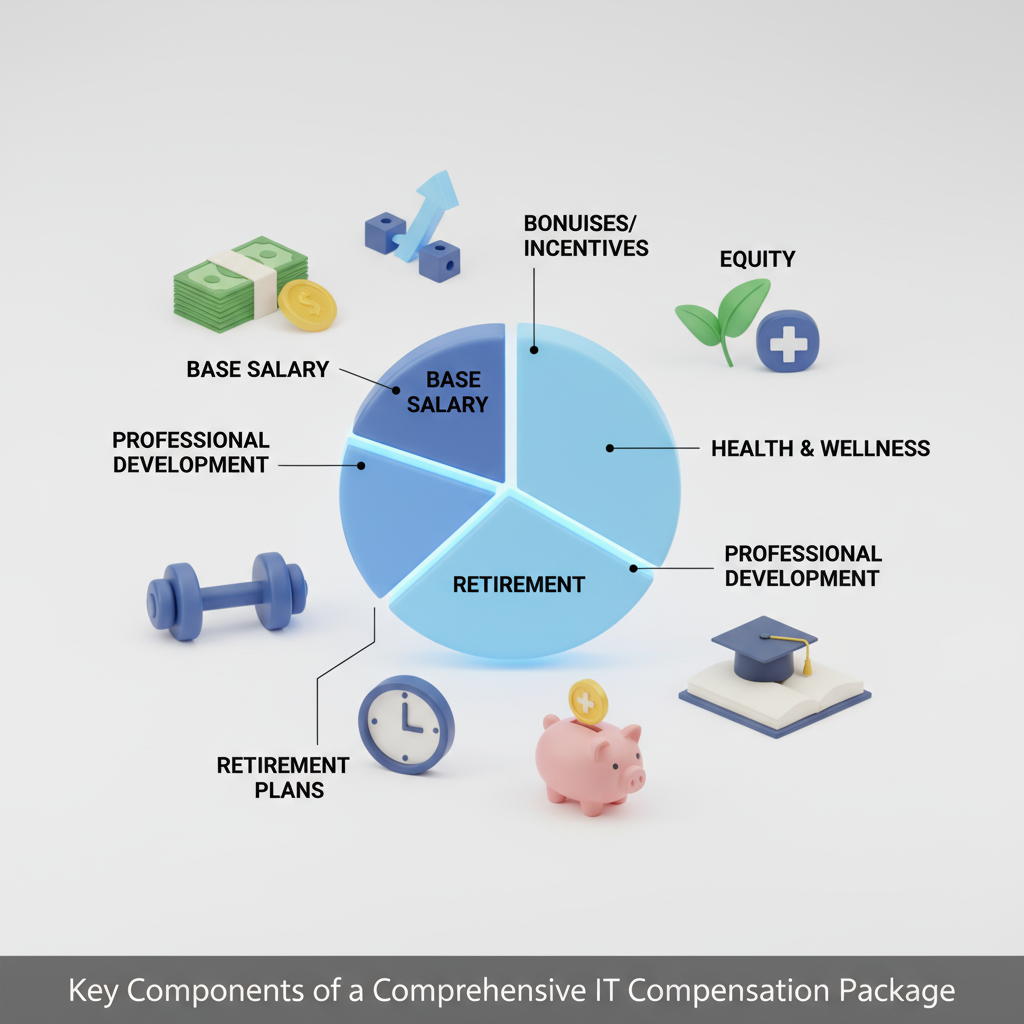
1. Base Salary: Setting the Foundation
The base salary remains the cornerstone of any compensation package, representing the fixed pay an employee receives for their work. For IT roles in Vietnam, setting a competitive base salary is paramount. It signals an employer’s valuation of a candidate’s skills and experience and often serves as the primary benchmark for initial attraction. A well-defined Salary Defining Strategy for all job titles in IT field in vietnam necessitates thorough market research, benchmarking against industry averages, and consideration of local economic factors. Factors such as the specific IT skill set (e.g., AI/ML engineers, cybersecurity specialists, cloud architects), years of experience, educational background, and the scarcity of certain expertise play a significant role. Companies must continually review and adjust base salaries to remain competitive, especially given the rapid evolution of technology and the escalating demand for skilled professionals in Vietnam’s burgeoning tech sector. This foundational element, when strategically set, ensures that the initial offer is attractive enough to capture the attention of high-caliber candidates, laying the groundwork for a successful recruitment process.
2. Performance-Based Bonuses and Incentives
Beyond the fixed income, performance-based bonuses and incentives are powerful motivators that directly link an employee’s contributions to their financial rewards. These variable components are particularly effective in the dynamic IT environment, encouraging individuals and teams to exceed expectations and achieve strategic objectives. Common types include individual performance bonuses, team-based incentives for project completion or successful product launches, and company-wide profit-sharing schemes. For IT professionals, incentives might also be tied to specific certifications, continuous skill development, or innovative problem-solving. Implementing a transparent and fair system for these incentives is critical; employees need to understand how their efforts contribute to their potential bonus. Long-term incentives, such as stock options or restricted stock units, are increasingly vital for senior IT leadership and highly specialized roles, aligning their interests with the company’s sustained growth and fostering long-term commitment. According to industry analysis, such tech compensation trends Vietnam show a clear shift towards these performance-linked rewards. These incentives not only reward past achievements but also drive future performance, becoming a crucial tool for employee retention IT Vietnam and cultivating a high-performance culture.
3. Health, Insurance, and Wellness Benefits
While often overlooked in favor of direct financial compensation, comprehensive health, insurance, and wellness benefits constitute a significant portion of a total rewards package and are increasingly influential in attracting and retaining top IT talent. In Vietnam, where the public healthcare system may have limitations, private health insurance, dental, and vision coverage are highly valued. Beyond basic medical, companies are now offering a wider array of wellness programs, including gym memberships, mental health support, stress management resources, and flexible work arrangements. These benefits demonstrate an employer’s commitment to the overall well-being of their employees, fostering a supportive and healthy work environment. For many IT professionals, particularly those with families, the security and peace of mind offered by robust insurance plans can be as important as, if not more than, a marginal increase in base salary. These non-monetary perks contribute significantly to the perceived value of a job offer and play a critical role in differentiating an employer in the competitive IT talent acquisition Vietnam market, reinforcing a positive employer brand and reducing turnover.
Tailoring Strategies for Different IT Job Tiers and Seniority
In the dynamic and rapidly evolving IT landscape of Vietnam, a one-size-fits-all approach to salary negotiation is simply ineffective. The Salary Defining Strategy for all job titles in IT field in vietnam must be meticulously tailored to reflect the unique value proposition, skill set, experience level, and market demand associated with various career tiers. From aspiring entry-level professionals to seasoned leaders, understanding these nuances is crucial for both employers seeking top talent and individuals aiming to maximize their earning potential. This section explores how compensation strategies vary significantly across different seniority levels, considering their distinct contributions and market worth in the Vietnamese tech industry.
1. Entry-Level Roles: Focusing on Potential and Learning
For individuals embarking on their IT careers in Vietnam, the primary focus of salary negotiation shifts from extensive experience to demonstrated potential and a strong eagerness to learn. Entry-level professionals, often recent graduates or those transitioning into tech, typically possess foundational knowledge in areas like programming languages, data structures, or basic networking. Their value proposition lies in their aptitude, adaptability, and the long-term return on investment they represent for an organization willing to nurture their growth.
When defining salary expectations for entry-level IT salary roles, research into typical starting salaries for junior developers, QA testers, or IT support specialists in cities like Ho Chi Minh City or Hanoi is paramount. Aspiring professionals should highlight relevant academic projects, internships, certifications, and any demonstrable problem-solving skills. Emphasizing a willingness to embrace new technologies and contribute actively to team goals can significantly strengthen their position. While base salary might be lower compared to more experienced peers, candidates should also consider the value of comprehensive training programs, mentorship opportunities, and clear career progression IT Vietnam paths that enhance their future earning potential. Understanding current Vietnam IT salary trends for new graduates is vital for setting realistic yet competitive expectations.
2. Mid-Career Professionals: Valuing Experience and Specialization
Mid-career IT professionals in Vietnam represent a critical segment of the workforce, bringing several years of hands-on experience, specialized skills, and a proven track record of delivering results. This tier includes roles like experienced software engineers, system administrators, data analysts, and project managers. Their value proposition is centered on their ability to independently solve complex problems, contribute to specific projects, and often mentor junior team members. They possess a deeper understanding of industry best practices and can significantly impact project success.
For these professionals, effective IT compensation negotiation strategies involve quantifying past achievements. Instead of merely listing responsibilities, mid-career individuals should articulate how their contributions led to tangible business outcomes—e.g., reducing operational costs by X%, improving system efficiency by Y%, or successfully delivering Z project ahead of schedule. Specialization in high-demand technologies, such as AI, blockchain, cybersecurity, or cloud computing, significantly increases market worth. Leveraging industry benchmarks and current market data, perhaps from sources detailing mid-career IT salary Vietnam, is crucial. Organizations vying for these skilled individuals often offer competitive base salaries, performance bonuses, and attractive benefits packages to secure and retain talent in a competitive tech talent market Vietnam.
3. Senior & Leadership Roles: Compensation for Impact and Strategic Vision
At the pinnacle of the IT career ladder are senior professionals and leaders, encompassing roles such as Chief Technology Officers (CTOs), IT Directors, Principal Architects, and Senior Engineering Managers. These individuals are not just problem-solvers; they are strategic thinkers, innovators, and decision-makers who drive technological vision, lead large teams, and directly influence the company’s bottom line. Their value is measured by their ability to set strategic direction, foster innovation, mitigate technological risks, and attract/retain top talent.
Compensation for senior and leadership roles extends far beyond a base salary. It typically comprises a comprehensive package that includes significant performance-based bonuses, stock options or equity, long-term incentives, and executive benefits. The Salary Defining Strategy for all job titles in IT field in vietnam at this level is heavily tied to the direct impact on the organization’s strategic goals and financial performance. Negotiating professionals should clearly articulate their vision, demonstrate their leadership capabilities, and provide concrete examples of how their past strategic decisions have led to substantial growth, market advantage, or significant cost savings. Staying abreast of global and regional IT salary and hiring trends for senior roles across Asia is paramount for these discussions. These roles are about influencing the future of the company, and their compensation reflects this profound level of responsibility and strategic influence, ensuring that enterprises in Vietnam can attract world-class leadership.
In conclusion, whether an individual is just starting out, building specialized expertise, or steering an entire technology division, a nuanced and well-researched Salary Defining Strategy for all job titles in IT field in vietnam is indispensable. Each tier demands a distinct approach that aligns with its unique contributions and the prevailing market dynamics, ultimately fostering a fair and competitive compensation environment in Vietnam’s burgeoning tech sector.
Negotiating Your IT Salary in Vietnam for 2026
Description: Provide practical advice and strategies for IT professionals to effectively negotiate their compensation, ensuring they secure fair and competitive pay in the evolving Vietnamese market.
The dynamic Vietnamese IT sector continues its rapid expansion, making 2026 a pivotal year for IT professionals to optimize their earnings. As the demand for skilled tech talent escalates, understanding how to effectively negotiate your compensation is paramount. This guide provides a comprehensive Salary Defining Strategy for all job titles in IT field in vietnam, empowering you to secure fair and competitive pay. From frontend developers to data scientists, mastering effective negotiation strategies is key to career growth. We delve into current IT compensation trends Vietnam and offer actionable advice to help you articulate your true market value assessment IT, positioning you for optimal career advancement within Vietnam’s tech landscape.

1. Preparing for Salary Negotiations: Research and Self-Assessment
Successful salary negotiation begins long before you sit down with an offer. Thorough preparation is the cornerstone of securing your desired package. Firstly, immerse yourself in research regarding current Michael Page Vietnam Tech Salary Guide to understand the prevailing IT compensation trends Vietnam for roles similar to yours. Look beyond base salary; consider total compensation packages, including bonuses, health insurance, provident funds, and other benefits that contribute to your overall market value. Websites, reputable recruitment agency reports, and professional networks are invaluable resources for gathering this data. Understanding regional benchmarks and specific role-based salaries provides a solid foundation for your market value assessment IT.
Beyond external market analysis, a rigorous self-assessment is crucial. Document your accomplishments, quantifying your contributions whenever possible. Did you lead a project that saved the company X amount? Did you develop a feature that increased user engagement by Y%? These concrete examples are powerful tools in demonstrating your worth. Reflect on your unique skill set, certifications, and any specialized knowledge that differentiates you. Understand the specific requirements of the role you’re applying for, and identify how your experience directly addresses those needs. This comprehensive preparation lays the groundwork for articulating your value proposition confidently and strategically, making your case for a higher salary more compelling. This initial step is vital for developing a robust market value assessment IT and planning your effective negotiation strategies.
2. Articulating Your Value Proposition and Market Worth
Once prepared, the next step in your Salary Defining Strategy for all job titles in IT field in vietnam is to effectively communicate your value. This involves more than just listing your job duties; it’s about showcasing the impact you’ve had and the potential impact you can bring to a new organization. Frame your experience and skills in terms of solutions you offer, problems you solve, and value you create. For instance, instead of saying, “I manage databases,” articulate, “I optimized database performance, reducing query times by 30% and improving system reliability, which directly supported seamless user experience and business operations.”
Highlight any unique expertise, leadership qualities, or problem-solving capabilities that align with the company’s goals and culture. Employers in Vietnam are increasingly seeking candidates who can drive innovation and contribute to strategic objectives, not just execute tasks. Be ready to discuss how your specific contributions will translate into tangible benefits for the company – whether it’s increased revenue, reduced costs, enhanced efficiency, or improved product quality. Understanding your true market value assessment IT and confidently presenting it is essential for securing competitive pay. This approach demonstrates a proactive mindset and a clear understanding of your professional worth, shifting the conversation from a basic salary request to an investment in a high-performing asset, and showcasing your readiness for career advancement within Vietnam’s dynamic tech sector.
3. Effective Communication Techniques During Negotiation
The negotiation phase itself requires finesse and strategic communication. Approach the discussion with confidence and a collaborative spirit, rather than an adversarial one. Listen actively to the employer’s offer and their reasoning. Ask clarifying questions to ensure you understand the entire compensation package, including non-monetary benefits like professional development opportunities, flexible working arrangements, and clear career advancement Vietnam tech pathways. Maintaining composure and a positive attitude are crucial effective negotiation strategies.
When presenting your counter-offer, be clear, concise, and backed by your research and self-assessment. Avoid making demands; instead, present your desired salary range with justification, reiterating your value proposition and how it aligns with the company’s needs. For example, “Based on my extensive experience in [specific area], my demonstrated ability to [achieve specific results], and current IT compensation trends Vietnam for similar roles, I believe a base salary in the range of [X] to [Y] VND would be fair and reflect the value I bring to this position.” Be prepared for a back-and-forth discussion. It’s okay to take time to consider a revised offer. Remember that negotiation isn’t just about the initial offer but also about future opportunities and overall job satisfaction. Maintain a positive and professional demeanor throughout the process. Effective negotiation strategies involve knowing when to push and when to compromise, ultimately aiming for a mutually beneficial agreement that recognizes your worth and sets you up for successful career advancement within Vietnam’s bustling tech landscape.
Partner with Shelby Global
You are looking for reliable HR Sevice Suppliers? Contact Shelby Global Now! To connect with verified talents and upgrade your orginization.
—————————————
References
– :
– WTW Compensation and Benefits Insights: https://www.wtwco.com/en-US/Insights/compensation-and-benefits
– :
– IT salary and hiring trends for senior roles across Asia: https://www.robertwalters.com.sg/content/dam/robert-walters/global/files/salary-survey/asia/Asia_Salary_Guide_2024.pdf
– Michael Page Vietnam Tech Salary Guide: https://www.michaelpage.com.vn/salary-guide/tech