
Understanding the Unique HR Landscape for Entertainment SMEs in Vietnam
In the vibrant and rapidly evolving Vietnamese economy, the entertainment sector for Small and Medium-sized Enterprises (SMEs) presents a distinctive set of human resources challenges and opportunities. For CEOs leading these dynamic companies, navigating this HR landscape requires specialized strategies that acknowledge both global industry trends and unique local characteristics. Unlike traditional sectors, the creative industries in Vietnam—spanning film, music, digital content, gaming, and live events—demand a workforce rich in specialized talent, adaptable to rapid technological shifts, and deeply connected to cultural nuances. This section delves into the intricate HR structures for SMEs in the entertainment field in Vietnam, setting the stage for tailored solutions that empower CEOs to build resilient, innovative, and culturally resonant teams.
The success of entertainment SMEs hinges critically on their ability to attract, develop, and retain the right talent. However, this is easier said than done. From a booming digital economy driving new forms of entertainment to a youthful demographic eager for innovative content, Vietnam offers a fertile ground for creative ventures. Yet, the very dynamism that fuels growth also creates complexity for HR. Understanding these underlying factors—from talent pools and cultural dynamics to regulatory frameworks—is paramount for any CEO aiming to optimize their entertainment HR Vietnam strategies and foster sustainable growth within their creative industry HR solutions. The following points illuminate key areas that demand the attention of leadership.

1. Talent Scarcity vs. Abundance in Niche Roles
The Vietnamese entertainment market exhibits a paradoxical talent dynamic. On one hand, there’s an abundance of general creative talent—young, enthusiastic individuals with artistic flair. On the other hand, there’s a significant scarcity of highly specialized skills crucial for modern entertainment production. Roles like VFX artists, game developers with specific engine expertise (e.g., Unity, Unreal Engine), experienced scriptwriters for international markets, sound engineers for Dolby Atmos, or digital marketing strategists with a deep understanding of global content distribution platforms are hard to come by. This creates substantial SME HR challenges Vietnam. CEOs must develop proactive talent management entertainment Vietnam strategies, moving beyond traditional recruitment. This might involve investing heavily in upskilling and reskilling existing employees, forging partnerships with vocational schools and universities, or even exploring international recruitment for highly niche positions. Bridging this skill gap is crucial for HR structures for SMEs the CEO in Entertainment field in Vietnam to remain competitive and innovative, directly impacting content quality and market reach.
2. Cultural Nuances in Vietnamese Entertainment Workforce
Understanding and integrating Vietnamese cultural nuances into HR practices is not just a soft skill; it’s a strategic imperative for entertainment SMEs. The Vietnamese entertainment workforce often prioritizes harmony, respect for hierarchy, and strong interpersonal relationships. Team collaboration is highly valued, but direct feedback might be perceived differently than in Western cultures. Furthermore, generational differences—between older, more traditional artists and younger, digitally native creators—can influence communication styles and work expectations. CEO HR strategy entertainment must account for these dynamics, fostering an inclusive environment that respects tradition while embracing innovation. This includes developing clear communication channels, providing constructive feedback sensitively, and recognizing the importance of collective success. For instance, team-building activities that align with local cultural values can significantly boost morale and cohesion. A deep appreciation for these cultural intricacies allows entertainment SMEs to build a more engaged, loyal, and productive workforce, reducing turnover and fostering a vibrant creative atmosphere.
3. Regulatory & Compliance Frameworks for Creative Industries
Navigating Vietnam’s regulatory and compliance landscape can be complex, particularly for the nascent and rapidly evolving creative industries. Entertainment SMEs must contend with specific laws related to intellectual property rights, content censorship, labor laws, and digital platform regulations. While the government generally supports the growth of the digital economy and creative sectors, the legal framework is continually catching up with technological advancements and new business models. Ensuring HR compliance Vietnam creative means staying abreast of evolving data privacy laws (such as Decree 13), copyright protection, and even rules around foreign talent employment. Non-compliance can lead to hefty fines, reputational damage, and operational disruptions. CEOs need to dedicate resources to understanding these frameworks, perhaps by partnering with legal experts specializing in media and entertainment law. Proactive adherence to these regulations safeguards the company’s future and establishes it as a responsible and trustworthy entity within the industry, which is particularly vital given the internationalization of content creation. For the broader context of digital economy growth and its impact on regulations, refer to reports like those from the e-Conomy SEA series, which often highlight Vietnam’s rapid digital transformation.
In conclusion, the HR landscape for entertainment SMEs in Vietnam is a mosaic of unique challenges and unparalleled opportunities. By strategically addressing talent gaps, embracing cultural intricacies, and meticulously navigating regulatory frameworks, CEOs can build robust HR structures for SMEs the CEO in Entertainment field in Vietnam that drive innovation and foster sustainable growth in this exciting sector. Overcoming these hurdles is not merely about operational efficiency; it’s about unlocking the full creative potential of Vietnam’s dynamic entertainment industry.
Common HR Structure Models for Small to Medium Enterprises
The dynamic landscape of Small to Medium Enterprises (SMEs) in Vietnam, particularly within the fast-paced entertainment sector, demands an HR structure that is both agile and robust. For a CEO navigating this vibrant industry, establishing effective HR structures for SMEs the CEO in Entertainment field in vietnam is a strategic imperative for attracting, retaining, and developing talent. This section explores common HR models suitable for SMEs, evaluating their pros and cons to help CEOs make informed decisions, especially concerning *entertainment HR challenges Vietnam* and building a resilient *HR strategy for entertainment companies Vietnam*.
1. Centralized vs. Decentralized HR Approaches
A foundational decision for any SME is choosing between a centralized or decentralized HR model. A centralized HR approach consolidates all HR functions within a single department or individual. For smaller entertainment SMEs in Vietnam, this initial setup offers consistency in policies, streamlined communication, and cost efficiency, especially with limited resources. It ensures uniform application of company culture and adherence to *HR compliance entertainment industry* standards. However, as the company grows or expands, a centralized model can create bottlenecks, lacking agility to address localized issues or the nuanced needs of diverse teams (e.g., film crews versus marketing staff).
In contrast, a decentralized HR model distributes HR functions among different business units. While less common for typical SMEs due to higher overhead, it can offer greater responsiveness and deeper understanding of specific team needs. For entertainment SMEs with distinct, autonomous production units, this could empower local managers to handle immediate HR concerns. Yet, this model risks inconsistency in policies, potential duplication of efforts, and can complicate overall HR reporting and strategic alignment, presenting *SME HR challenges Vietnam*. For most growing Vietnamese entertainment SMEs, a purely decentralized model is often impractical, but its principles can inform a more agile, departmental-aware approach within a predominantly centralized framework.
2. Outsourced HR (HR BPO) & PEO Solutions
For many SMEs, navigating the complexities of HR, especially amid rapid growth and stringent local regulations, can be overwhelming. This is where Outsourced HR (HR BPO) and Professional Employer Organization (PEO) solutions become invaluable for HR structures for SMEs the CEO in Entertainment field in vietnam. HR Business Process Outsourcing (BPO) involves contracting specific HR functions like payroll processing, benefits administration, or *talent acquisition entertainment Vietnam* to external providers. Benefits include significant cost savings through economies of scale, access to specialized expertise (e.g., Vietnamese labor law), and allowing internal resources to focus on core business activities. It’s an effective way for *HR outsourcing Vietnam SMEs* to gain professional support without the overhead of a full in-house department, aiding *HR compliance entertainment industry*.
PEO solutions offer a more comprehensive co-employment model, where the PEO becomes the employer of record for tax purposes, managing all administrative HR tasks including payroll, benefits, and compliance. This enables entertainment SMEs to provide competitive employee benefits, often at lower rates, and significantly reduces HR-related legal liabilities. A PEO can provide robust support for *building HR strategy SME Vietnam* and managing complex regulations. While a PEO provides extensive administrative relief, it involves a greater degree of external control over HR processes. Choosing between BPO and PEO depends on desired control versus the extent of administrative relief and risk mitigation. For more insights into the benefits of HR outsourcing, refer to resources like the Society for Human Resource Management (SHRM) on HR Outsourcing. These *PEO services entertainment sector* can be transformative for scalability.
3. Hybrid Models: Balancing In-house & External Support
Recognizing that a singular HR approach rarely fits all, many successful entertainment SMEs in Vietnam are adopting hybrid HR models. This approach strategically combines internal HR capabilities with external support, offering a flexible and scalable solution for HR structures for SMEs the CEO in Entertainment field in vietnam. Typically, an internal HR professional or small team manages core strategic functions such as organizational culture development, employee engagement, and direct employee relations, crucial for maintaining the company’s unique identity and values. This allows for dedicated focus on *talent management entertainment Vietnam*.
Simultaneously, transactional or specialized HR tasks that benefit from external expertise are outsourced. This might include using an HR BPO for payroll, a recruitment agency for specific *talent acquisition entertainment Vietnam* needs, or an HR consultant for complex legal compliance. The benefits are substantial: SMEs retain control over strategic HR aspects impacting culture and competitive advantage, while leveraging external partners for efficiency, cost-effectiveness, and specialized knowledge in *HR compliance entertainment industry* or developing *scalable HR solutions for growth*. This model is particularly effective for growing SMEs, allowing them to scale HR functions incrementally, adapt to evolving business needs without excessive fixed costs, and effectively address *SME HR challenges Vietnam* by prioritizing internal efforts where they yield the most strategic value. It represents a pragmatic path towards sophisticated HR management for dynamic businesses in Vietnam’s entertainment sector.
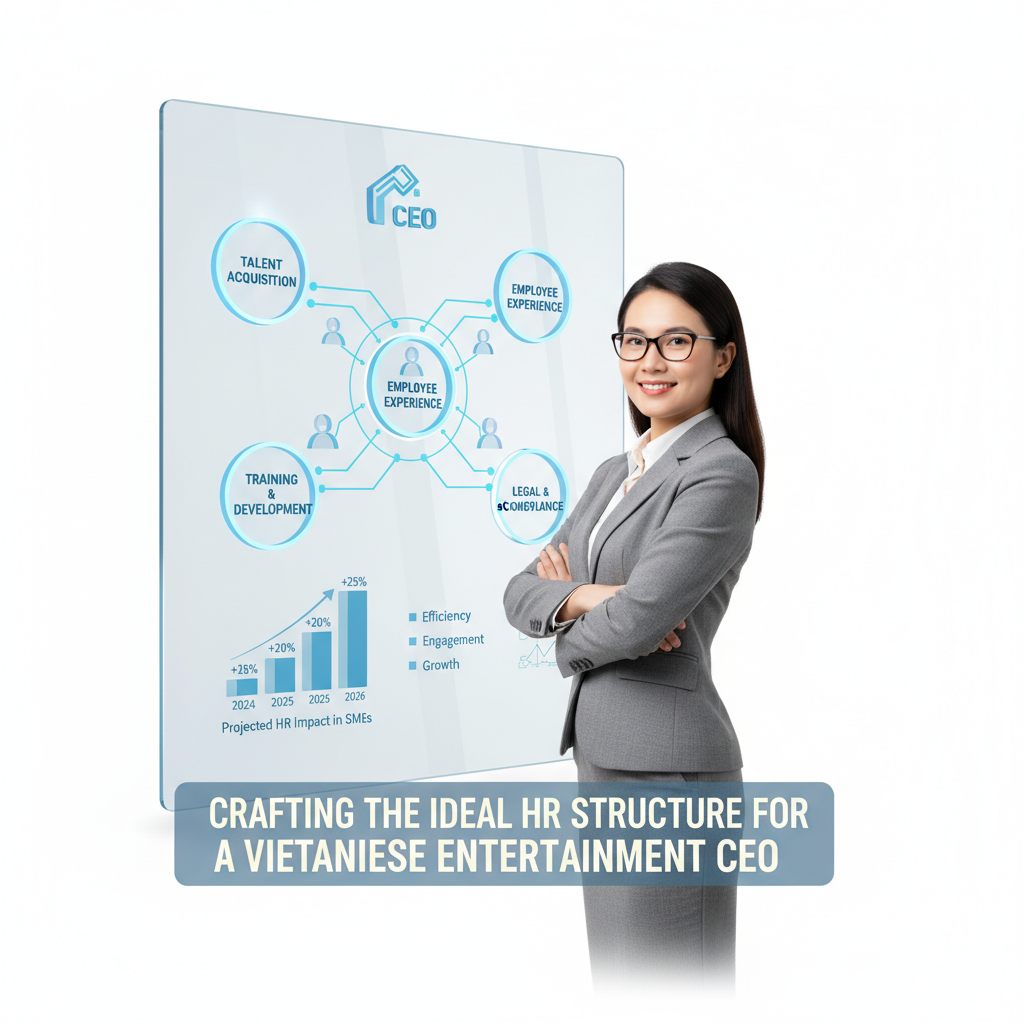
Crafting the Ideal HR Structure for a Vietnamese Entertainment CEO
The burgeoning entertainment industry in Vietnam presents a unique landscape for visionary CEOs. Rapid growth, coupled with a highly dynamic and creative workforce, demands an HR structure that is not merely administrative but strategically integral to business success. For a Vietnamese entertainment SME, designing the ideal HR framework means balancing agility, compliance, and talent cultivation to support artistic innovation and commercial viability.
In this competitive environment, the CEO’s role extends beyond creative direction and business development; it encompasses orchestrating a human resources function that can attract, nurture, and retain the diverse talent – from artists and producers to marketing and technical staff – essential for a company’s unique trajectory.
-
Aligning HR Strategy with Business Goals & Growth Stage
For a Vietnamese entertainment CEO, the HR strategy must be a direct reflection of the company’s overarching business objectives and its current growth stage. A startup, for instance, might prioritize aggressive talent acquisition and foundational compliance, with HR often falling under a multi-hatted operations manager. As the company scales, however, the HR function needs to evolve into a more specialized and strategic department. This evolution involves moving from reactive hiring to proactive talent mapping, developing robust performance management systems tailored to creative output, and fostering a unique company culture that resonates with the artistic community.
Effective HR structures for SMEs the CEO in Entertainment field in Vietnam must anticipate future needs, ensuring that the organization can adapt quickly to market shifts and emerging trends. This includes defining clear career paths for artists and technical staff, implementing competitive compensation and benefits packages that attract top-tier talent without stifling growth, and establishing strong employee engagement initiatives. The goal is to build a resilient workforce that drives innovation and maintains high morale amidst the industry’s often demanding schedules and high-pressure projects. Strategic HR planning here ensures that talent management is not an afterthought but a core pillar supporting the company’s vision and long-term success.
-
Defining Key HR Roles & Responsibilities
As the entertainment company grows, the HR department’s composition becomes critical. Initially, a single HR Generalist might handle everything from payroll to recruitment. However, to effectively support a diverse entertainment workforce, specialized roles become necessary. Key positions can include a Talent Acquisition Specialist focused on scouting and onboarding artists, producers, and technical crews; an HR Business Partner (HRBP) who works directly with creative teams to understand their unique needs and challenges; and potentially a Compensation & Benefits specialist to design attractive packages relevant to industry standards in Vietnam. Furthermore, a Learning & Development professional might be crucial for upskilling staff in new technologies or creative techniques.
Defining these roles with clear responsibilities ensures that all aspects of human capital are managed efficiently. For instance, the HRBP’s understanding of the creative process can facilitate better performance reviews and conflict resolution, while ensuring compliance with Vietnamese labor laws and industry-specific regulations regarding artist contracts and intellectual property. Keeping abreast of the latest HR trends in Vietnam, such as the increased focus on employee well-being and flexible work arrangements, will also be vital in designing these roles to meet modern workforce expectations.
-
Leveraging Technology for HR Efficiency & Analytics
In the fast-paced entertainment world, manual HR processes are a significant bottleneck. Leveraging technology is no longer an option but a necessity for efficiency and strategic decision-making. Implementing a robust Human Resources Information System (HRIS) can centralize employee data, streamline payroll, leave management, and benefits administration. For recruitment, an Applicant Tracking System (ATS) can help manage the high volume of applications common in entertainment, from casting calls to production roles, ensuring a fair and efficient selection process.
Beyond basic administration, HR technology offers powerful analytics capabilities. Data on recruitment sources, turnover rates, performance metrics, and employee satisfaction can provide a CEO with invaluable insights. These insights can inform decisions on talent investment, identify areas for improvement in employee engagement, and predict future staffing needs. For example, analyzing performance data of creative teams can help identify training gaps or inform resource allocation for upcoming projects. Mobile-friendly HR platforms are particularly beneficial for a workforce that might often be on location or working remotely, enabling seamless communication and access to HR services. By embracing HR technology, Vietnamese entertainment SMEs can transform their HR function from a cost center into a strategic partner that drives operational excellence and fosters a data-driven culture.
Key HR Functions Crucial for Entertainment SMEs’ Success
In the vibrant and rapidly evolving landscape of Vietnam’s entertainment sector, small and medium-sized enterprises (SMEs) face a unique set of challenges and opportunities. For CEOs navigating this dynamic environment, establishing robust HR structures for SMEs the CEO in Entertainment field in vietnam is not just about compliance, but a strategic imperative. To attract, retain, and develop the specialized talent essential for creative endeavors, while ensuring legal adherence and fostering a positive work environment, entertainment SMEs must prioritize core HR functions. These functions are critical for transforming artistic vision into commercial success, managing the unique demands of creative professionals, and building sustainable growth within the creative sector.
1. Effective Recruitment & Onboarding Strategies for Creative Talent
The entertainment industry thrives on innovation and artistic flair, making talent acquisition a highly specialized process. Unlike traditional sectors, recruiting for entertainment SMEs requires looking beyond conventional resumes to assess portfolios, project experience, and cultural fit within a creative team. CEOs must invest in strategies that target niche talent pools, utilizing platforms specific to artists, musicians, filmmakers, and digital content creators. Developing strong employer branding that highlights the company’s creative projects and collaborative environment is paramount. Once recruited, onboarding for creative talent should go beyond administrative tasks; it needs to immerse new hires in the company’s artistic vision, project workflows, and collaborative culture. This tailored approach helps new employees quickly integrate, understand the unique project-based nature of the work, and feel valued, significantly impacting their long-term retention and productivity. Focusing on early engagement and mentorship can prevent the high turnover often seen in fast-paced creative industries, ensuring a steady stream of skilled professionals for ongoing and future projects.
2. Performance Management & Talent Development Pathways
Traditional performance management systems often fall short in evaluating creative roles. For entertainment SMEs, effective performance management must embrace flexibility, focusing on project milestones, artistic contribution, and collaborative impact rather than rigid KPIs. Regular, constructive feedback sessions that foster growth and innovation are more valuable than annual reviews. Establishing clear talent development pathways is equally vital. This includes offering opportunities for skill enhancement, cross-functional project exposure, and mentorship programs that cater to the evolving demands of the entertainment industry. Investing in continuous learning, such as workshops on new technologies (e.g., AI in content creation, advanced editing software), storytelling techniques, or business acumen for artists, empowers employees and reinforces their commitment. Such initiatives are crucial for retaining high-performing individuals who are constantly seeking to evolve their craft and contribute meaningfully. By nurturing their professional journey, SMEs can build a resilient and highly skilled workforce capable of adapting to industry shifts and driving creative excellence.
3. Compensation, Benefits & Employee Relations in Entertainment
Compensation and benefits in the entertainment sector often involve a mix of fixed salaries, project-based bonuses, and profit-sharing models, reflecting the project-driven nature of the work. SMEs must craft competitive compensation packages that not only attract top talent but also recognize the intellectual property contributions and unique value creative professionals bring. Beyond monetary compensation, a comprehensive benefits package tailored to the creative lifestyle can include flexible working hours, health and wellness programs (addressing potential burnout), and opportunities for creative expression outside of assigned projects. Employee relations in this sector demand a high degree of empathy and understanding, given the subjective and often intense nature of creative work. Fostering a positive, inclusive, and psychologically safe work environment is key to minimizing conflicts and maximizing collaboration. Transparent communication, fair grievance procedures, and proactive conflict resolution are essential. Furthermore, ensuring legal compliance with labor laws in Vietnam, especially concerning intellectual property rights, contractor agreements, and working hours, is paramount for the CEO to mitigate risks and maintain a stellar reputation. Understanding the nuances of managing creative talent is vital for establishing HR practices that not only meet legal requirements but also genuinely support and motivate the workforce, driving the SME’s long-term success in the competitive entertainment market.
Future-Proofing Your HR Structure: Adaptability and Growth
In Vietnam’s dynamic and rapidly evolving entertainment landscape, the success of Small and Medium-sized Enterprises (SMEs) often hinges on their ability to adapt swiftly. For the CEO in the Entertainment field in Vietnam, building robust HR structures for SMEs the CEO in Entertainment field in Vietnam is not just about compliance; it’s about creating a resilient foundation that can pivot with industry trends, embrace technological advancements, and support sustainable growth. This demands a proactive approach to HR, moving beyond administrative tasks to strategic foresight, ensuring your human capital is not just managed but empowered to drive future success.

1. Building a Culture of Continuous Learning & Development
The entertainment industry is a perpetual motion machine, constantly reinventing itself through new technologies, platforms, and consumer preferences. For Vietnamese entertainment HR, maintaining a competitive edge means fostering a workforce that is eager to learn and adapt. CEOs must champion a culture where continuous learning is not just encouraged but ingrained. This involves investing in structured training programs that cover everything from cutting-edge digital production tools and social media marketing strategies to soft skills like creative problem-solving and cross-cultural communication – essential for both local and global collaborations. Implementing mentorship programs, facilitating access to online courses, and encouraging internal knowledge sharing platforms can transform your team into agile learners. The goal is to develop a highly skilled and adaptable talent pool, ready to meet tomorrow’s demands today. A recent report from Deloitte highlights the increasing importance of lifelong learning for organizational resilience, stating that companies with strong learning cultures are better equipped to navigate disruption. This proactive approach to skill development is crucial for SME HR strategy Vietnam, ensuring your team remains at the forefront of industry innovation.
2. Measuring HR Effectiveness & ROI
In an environment where every investment is scrutinized, demonstrating the return on investment (ROI) of HR initiatives is paramount for any CEO. Moving beyond anecdotal evidence, effective HR structures for SMEs the CEO in Entertainment field in Vietnam necessitate a data-driven approach to measure HR effectiveness. Key Performance Indicators (KPIs) should track more than just headcount; consider metrics like employee retention rates, talent acquisition costs, time-to-hire for critical roles, employee engagement scores, and the impact of training programs on productivity or project success. Analyzing these data points provides actionable insights into the health of your workforce and the efficiency of your HR operations. For instance, a high retention rate for creative talent directly impacts project continuity and cost savings, while robust engagement scores predict higher productivity and innovation. Regularly reviewing these metrics allows for continuous improvement, ensuring that HR strategies are directly aligned with business objectives and contribute tangibly to the bottom line, thereby addressing key entertainment industry HR challenges. Understanding these dynamics can guide smarter decisions for CEO HR solutions Vietnam. For more insights into optimizing your human resource strategies, visit our resource on HR structures for SMEs the CEO in Entertainment field in vietnam.
3. Preparing for Scalability & Potential International Expansion
The aspiration for many Vietnamese entertainment SMEs is growth, which often includes expanding into new markets, potentially even internationally. Your HR structure must be built with scalability in mind from day one. This means developing flexible talent acquisition strategies that can quickly onboard new team members, whether for project-based work or permanent roles. Standardizing HR processes, from onboarding to performance management, ensures consistency and efficiency as your team grows. For potential international expansion, HR plays a critical role in navigating complex legal and cultural landscapes. This involves understanding international labor laws, developing compensation and benefits packages that are competitive globally, and fostering cultural intelligence within the team. Establishing a robust talent pipeline, potentially leveraging remote workforces or strategic partnerships, can facilitate rapid scaling. By anticipating these growth trajectories, scalable HR entertainment frameworks can proactively address the complexities of expanding operations, laying the groundwork for seamless transition into new ventures and ensuring robust future HR structures Vietnam. This forward-thinking approach is vital for long-term success, promoting overall HR adaptability Vietnam.
Partner with Shelby Global
You are looking for reliable HR Sevice Suppliers? Contact Shelby Global Now! To connect with verified talents and upgrade your orginization.
—————————————
References
– e-Conomy SEA Report on Digital Economy in Vietnam and SEA: https://www.e-conomysea.com/
– Society for Human Resource Management (SHRM) on HR Outsourcing: https://www.shrm.org/resources-and-tools/tools-and-samples/hr-qa/pages/outsourcing-hr.aspx
– Vietnam’s HR Trends 2024: Redefining HR’s Role and Priorities: https://www.talentnet.vn/en/news-and-insights/vietnam-s-hr-trends-2024-redefining-hr-s-role-and-priorities-in-a-transformative-era-post-covid-19
– SHRM: Managing Creative Talent: https://www.shrm.org/resources-and-tools/hr-topics/talent-acquisition/pages/managing-creative-talent.aspx
– Deloitte Global Human Capital Trends: https://www2.deloitte.com/us/en/pages/human-capital/articles/human-capital-trends.html