
Fundamental Differences in HR Scope and Scale
The vibrant and rapidly evolving fashion landscape in Vietnam presents a fascinating dichotomy in Human Resources (HR) management. From agile, niche startups to expansive, multinational corporations, the breadth and depth of HR activities vary significantly. Understanding these Differences between the SMEs’ HR Structure and the Corporates’ HR Structure in Fashion field in vietnam is crucial for navigating talent challenges and fostering sustainable growth. While both seek to attract and retain talent, their approaches to critical functions like talent acquisition, employee retention, and overall organizational culture diverge dramatically, shaped by resources, strategic priorities, and operational demands.
-
Breadth of HR Functions (Recruitment, Payroll, Training, etc.)
In small and medium-sized enterprises (SMEs) within the Vietnamese fashion sector, HR functions are typically broad but shallow, often managed by a single HR generalist or even a non-HR professional like an office manager or the business owner. This individual juggles a multitude of tasks, from basic payroll processing and statutory compliance with local labor law to reactive recruitment for immediate staffing needs. Training & development initiatives are usually informal, ad-hoc, and focused on essential skills, with limited scope for elaborate programs or dedicated career pathing. HR outsourcing for complex functions like legal advice or specific compensation & benefits administration is common, reflecting resource constraints.
Conversely, large fashion corporations in Vietnam boast highly specialized HR departments. Here, the breadth of functions is managed by dedicated teams focusing on specific areas: a talent acquisition team handles comprehensive employer branding and robust recruitment strategies; a compensation and benefits specialist ensures competitive packages and robust HR compliance; and a learning and development unit designs bespoke training programs, leadership development, and succession planning. HR technology plays a significant role in streamlining these processes, moving beyond manual record-keeping to sophisticated HR information systems (HRIS).
-
Headcount per HR Staff vs. Total Employee Count
The ratio of HR staff to total employees offers a stark illustration of structural differences. In SMEs, a single HR professional might be responsible for 50 to 100+ employees. This high headcount per HR staff often means that HR is predominantly operational, focusing on day-to-day administrative tasks rather than proactive strategic interventions. This lean structure requires efficiency and adaptability, often pushing generalists to become experts in a wide array of immediate HR needs, from handling employee relations to managing leave requests.
In large corporations, the ratio is considerably lower, reflecting a more specialized and resource-intensive HR model. An HR Business Partner (HRBP) might support 100-200 employees within a specific business unit, while a dedicated recruiter might manage a portfolio of 20-30 vacancies per quarter. This allows for deeper engagement, more tailored support, and a greater capacity for strategic initiatives like workforce planning and talent pipeline development. Shared service centers often handle transactional HR tasks (like payroll and benefits administration), freeing up HRBPs and specialists to focus on strategic partnerships and value creation.
-
Strategic HR Focus vs. Operational HR Tasks
The primary focus of HR activities fundamentally shifts between small and large entities. For SMEs, HR is often perceived as an administrative necessity and a cost center, primarily tasked with ensuring operational HR tasks are completed: accurate payroll, timely social insurance contributions, and adherence to Vietnam’s labor laws. The focus is reactive problem-solving and maintaining basic compliance, with limited capacity or budget for long-term strategic HR planning, organizational development, or cultivating a distinct organizational culture beyond the founder’s vision.
In contrast, large fashion corporations treat HR as a strategic partner, integral to achieving overarching business objectives. HR departments actively engage in developing strategies for the future of HR, aligning talent management with market expansion, product innovation, and global competitiveness. They contribute to change management, employee engagement, and cultivate robust performance management systems that drive high-performance cultures. HR Business Partners sit at the leadership table, advising on talent strategies, leadership development, and fostering an employer brand that attracts top talent in a competitive market. This proactive approach transforms HR from a support function into a key driver of enterprise value and sustained growth in the dynamic Vietnamese fashion industry.
Organizational Structure and Roles within HR Departments
The human resources landscape within Vietnam’s dynamic fashion industry presents a stark contrast between small and medium-sized enterprises (SMEs) and large corporations. These Differences between the SMEs’ HR Structure and the Corporates’ HR Structure in Fashion field in vietnam are not merely a matter of scale but fundamentally shape team compositions, job titles, and reporting lines, directly impacting strategic HR capabilities and operational efficiency. Understanding these distinctions is crucial for anyone navigating the Vietnamese fashion industry HR landscape, from global HR trends to local implementation of HR policies Vietnam.
1. Centralized vs. Decentralized HR Models
In fashion SMEs in Vietnam, the HR department structure typically leans towards a highly centralized model. Here, a small team, often comprising just an HR Manager and a few HR Officers, oversees all HR functions for the entire organization. This centralized approach fosters close communication and a holistic understanding of the company’s human capital. The advantages include quicker decision-making for payroll management fashion and employee relations fashion, direct access to leadership, and a strong, unified company culture. However, it can also lead to limited specialized expertise and increased workload on individual HR personnel, especially as the SME grows and requires more nuanced support in areas like talent acquisition fashion.
Conversely, large fashion corporations in Vietnam often adopt decentralized or hybrid HR models. With multiple brands, diverse product lines, and perhaps regional offices or factories, a decentralized structure allows for HR support to be closer to the business units. This often involves the deployment of HR Business Partners (HRBPs) who are embedded within specific departments or brands. These HRBPs act as strategic advisors, aligning HR initiatives with business goals and providing tailored support for issues ranging from organizational development fashion to daily operational challenges. Alongside HRBPs, many large corporations establish shared service centers for transactional HR tasks like compensation and benefits fashion administration or HRIS support, allowing HRBPs to focus on strategic contributions. This creates a complex but often more efficient and responsive HR organizational structure tailored to the needs of a large enterprise.
2. Specialist Roles vs. Generalist Roles
The distinction between specialist and generalist roles is perhaps the most pronounced difference in HR roles Vietnam across varying organizational scales. In fashion SMEs, the HR professional is predominantly a generalist. An HR Manager in an SME might be responsible for everything from crafting job descriptions and conducting interviews (talent acquisition fashion) to onboarding new hires, managing employee records, processing payroll, handling disciplinary actions, and ensuring compliance with local labor laws. This breadth of responsibility requires a versatile individual with strong foundational knowledge across all HR domains. While this offers a broad skill set, it can mean less deep expertise in highly specialized areas, posing SME HR challenges when complex issues arise.
Large fashion corporations, on the other hand, boast a highly specialized HR workforce. Their corporate HR strategy supports dedicated teams for various functions. You will find specialists in areas such as Talent Acquisition (recruiters focusing solely on attracting top talent), Compensation & Benefits (designing reward structures and managing payroll), Learning & Development (designing training programs and career paths), Employee Relations (handling grievances and fostering positive workplace culture), and HR Information Systems (managing HR tech platforms). This specialization allows for deeper expertise, more sophisticated program design, and greater efficiency in large-scale operations. The shift from an HR Generalist vs. Specialist model reflects the increased complexity and volume of HR tasks in larger organizations, enabling them to implement more sophisticated HR policies Vietnam and develop tailored strategies for different business units.
3. Reporting Structures and Decision-Making Authority
The reporting structures and associated decision-making authority also vary significantly. In a fashion SME, the HR leader (often the HR Manager or Head of HR) typically reports directly to the CEO or owner. This flat hierarchy means HR has a direct line to strategic discussions and decision-making, enabling rapid implementation of initiatives and swift resolution of critical HR issues. The decision-making process is generally less bureaucratic, allowing for agility in responding to market changes or urgent employee needs. However, this also means the HR function might be heavily influenced by the founder’s vision, potentially lacking independent strategic voice if not adequately empowered.
For large fashion corporations, the HR reporting lines are much more intricate. A Chief Human Resources Officer (CHRO) or VP of HR usually heads the entire HR function, reporting to the CEO or COO. Beneath the CHRO, there are often layers of management for various HR centers of excellence (e.g., Head of Talent, Head of C&B, Head of L&D) and regional HR leaders or HRBPs. Decision-making authority is often distributed, with HRBPs having autonomy over operational HR within their business units, while strategic decisions like major policy changes or large-scale organizational restructuring are typically made at the corporate HR leadership level, often involving cross-functional committees. This layered approach ensures robust governance, consistent application of fashion industry HR policies, and a more integrated approach to corporate HR strategy across diverse business units, albeit potentially with longer approval cycles. These Differences between the SMEs’ HR Structure and the Corporates’ HR Structure in Fashion field in vietnam fundamentally dictate the speed, scope, and impact of HR initiatives.
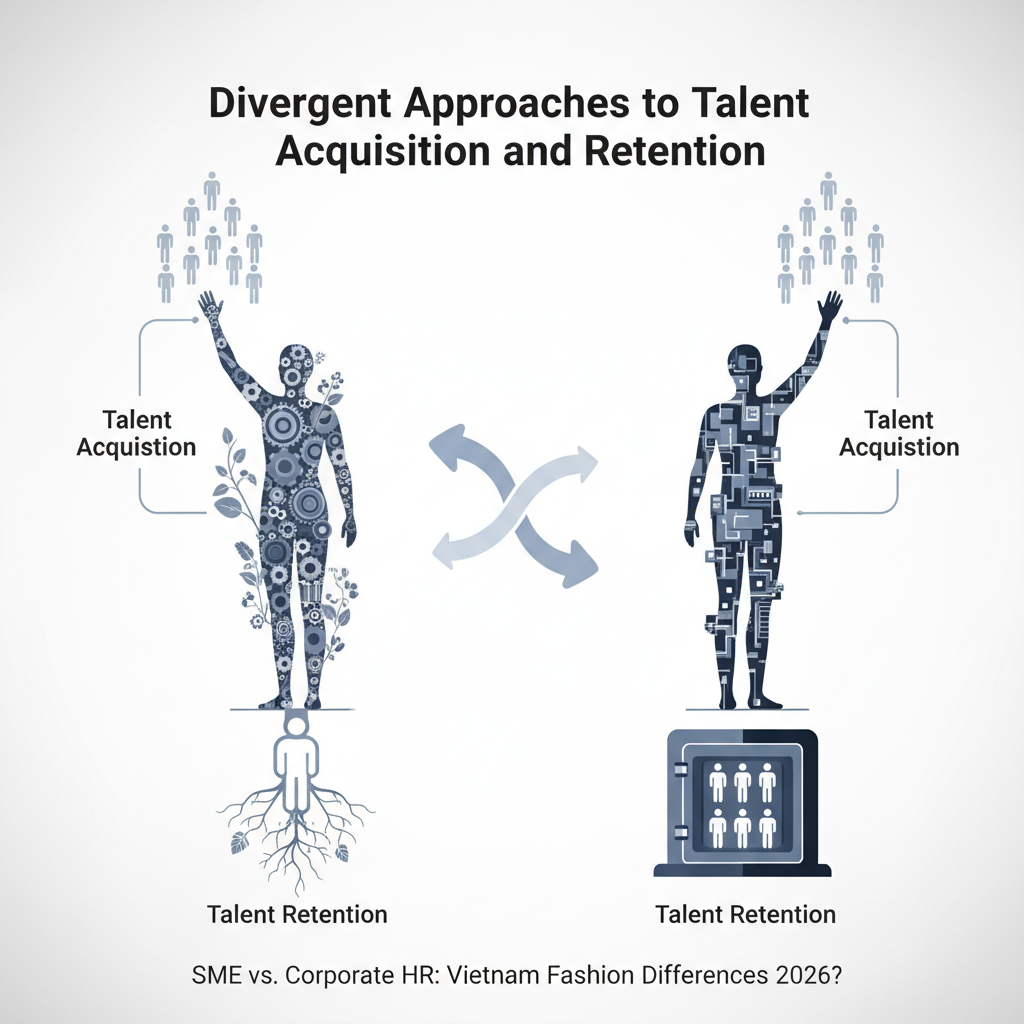
Divergent Approaches to Talent Acquisition and Retention
Vietnam’s fashion landscape, a vibrant mix of traditional craftsmanship and modern design, presents a uniquely competitive environment for talent. Both established corporations and agile Small to Medium-sized Enterprises (SMEs) constantly vie for skilled designers, marketers, production specialists, and management professionals. However, their strategies for attracting, hiring, and keeping this crucial talent diverge significantly, largely due to fundamental Differences between the SMEs’ HR Structure and the Corporates’ HR Structure in Fashion field in vietnam. Understanding these distinctions is paramount for any entity navigating the complexities of human resources within this dynamic industry.
1. Sourcing Channels and Employer Branding
For SMEs, talent sourcing often relies heavily on informal networks, word-of-mouth referrals, and local job boards or community groups on social media platforms. Their employer branding is typically organic, built on the founder’s reputation or product niche. While fostering community, SMEs frequently struggle with limited recruitment budgets and a less recognized brand, hindering attraction of top-tier talent. In contrast, large corporates deploy dedicated HR teams, partner with professional agencies, utilize global platforms like LinkedIn, and maintain extensive career portals. Their employer branding is a deliberate, substantial investment, highlighting global reach, structured career paths, and comprehensive benefits. This attracts a wider array of candidates, though they navigate bureaucratic hurdles to ensure personalized recruitment amidst high volume.
2. Onboarding Processes and Employee Development
Integrating new hires effectively and nurturing growth is critical. SMEs typically adopt a hands-on, often informal onboarding process. New hires are quickly integrated, frequently receiving direct mentorship from founders or senior team members. Employee development is experiential, rooted in ‘learning-by-doing’ and immediate problem-solving, with structured training programs being rare due to resource constraints. This fosters rapid skill acquisition for specific tasks but can lack consistency and a clear framework for long-term growth. Corporates invest in robust, structured onboarding programs, often incorporating comprehensive inductions, buddy systems, and departmental rotations. Their approach to employee development is more formalized, featuring dedicated training budgets, internal academies, external workshops, and clear pathways for upskilling. These programs ensure a standardized integration experience and provide extensive resources for continuous learning, though some employees might find the process less personal.
3. Retention Strategies and Career Pathing
Keeping skilled talent engaged is an ongoing battle. For SMEs, retention strategies often hinge on fostering a close-knit culture, offering greater flexibility, and providing employees with a direct sense of impact and ownership. Loyalty to the founder and company mission plays a significant role. Career pathing might be less formalized, with opportunities emerging organically. However, SMEs often struggle to compete with comprehensive benefits and higher salary scales from larger entities. Corporates, conversely, attract and retain talent through a holistic suite of offerings: competitive salaries, extensive benefits (health insurance, performance bonuses, stock options), and work-life balance initiatives. They provide clear, structured performance reviews, defined promotion criteria, and internal mobility programs. According to insights on Hiring Trends in Vietnam for 2024, professional development and a clear growth trajectory are increasingly pivotal for talent in the country. While structured, this environment can feel less agile or personal than an SME.
In conclusion, the Differences between the SMEs’ HR Structure and the Corporates’ HR Structure in Fashion field in vietnam are profound, shaping every aspect of talent management. While corporates leverage scale, resources, and established frameworks, SMEs rely on agility, close relationships, and unique culture. Both face distinct challenges and opportunities, underscoring the need for tailored, strategic HR approaches to thrive in this dynamic and talent-hungry industry.
Compensation, Benefits, and Regulatory Compliance
In the vibrant and rapidly evolving fashion landscape of Vietnam, the approach to compensation, employee benefits, and adherence to labor laws presents a stark contrast between Small and Medium-sized Enterprises (SMEs) and their larger corporate counterparts. These Differences between the SMEs’ HR Structure and the Corporates’ HR Structure in the Fashion field in Vietnam significantly impact HR practices, talent attraction, and overall operational sustainability. Understanding these nuances is critical for businesses aiming for organizational growth and effective workforce management within this dynamic sector.
1. Salary Structures and Performance Incentives
For fashion SMEs in Vietnam, salary structures often lean towards flexibility and directness, typically influenced by personal relationships and immediate business performance. Base salaries might be set with a focus on cost-efficiency, and performance incentives, if formal, are usually simpler, perhaps project-based bonuses or informal profit-sharing arrangements. This approach allows for greater operational agility, but can sometimes lack the perceived fairness and transparency of larger organizations. Compensation strategies in SMEs are often reactive, adapting to immediate market demands and individual negotiations rather than predefined scales.
Conversely, large fashion corporations typically implement highly structured salary grades, often benchmarked against global standards and local market competitiveness. Their performance incentive schemes are sophisticated, tied to measurable Key Performance Indicators (KPIs) or Objectives and Key Results (OKRs), encompassing annual bonuses, long-term incentives, and sometimes even stock options. These systems are designed not only to reward performance but also to drive employee engagement, foster accountability, and support robust retention strategies. The differences between the SMEs’ HR structure and the Corporates’ HR structure in the fashion field in Vietnam are clear here: SMEs prioritize responsiveness, while corporates emphasize standardization and strategic alignment.
2. Employee Benefits (Healthcare, Perks, Leave)
Regarding employee benefits, fashion SMEs in Vietnam generally adhere to mandatory statutory requirements, primarily focusing on social insurance (which includes health insurance) and basic leave entitlements as stipulated by law. Voluntary perks might be informal, such as team lunches or company outings, limited by the available HR budget. While these fundamental benefits are crucial, the scope for additional, more comprehensive benefits often remains constrained, making it challenging for SMEs to compete for top human capital against larger players.
Large fashion corporations, on the other hand, frequently offer extensive and attractive benefits packages that go far beyond statutory minimums. These can include supplementary private health insurance, life insurance, robust wellness programs, gym memberships, professional development opportunities for skill development, and more generous leave policies. They often invest heavily in creating a holistic employee experience to enhance employee welfare and retention. These enhanced benefits are a critical component of their overall retention strategies, designed to attract high-caliber talent and foster long-term loyalty in a competitive market. The provision of such comprehensive benefits is a significant aspect of the differences between the SMEs’ HR structure and the Corporates’ HR structure in the fashion field in Vietnam.
3. Navigating Vietnamese Labor Laws and Regulations
Adherence to Vietnamese labor laws and regulations poses varying challenges. Fashion SMEs often operate with limited or no dedicated HR or legal teams, relying instead on administrative staff or external consultants for advice. This can sometimes lead to a reactive approach to legal compliance, with potential risks of non-compliance if not properly managed. Staying abreast of the frequent updates to local regulations, particularly concerning employment contracts, termination procedures, and social insurance contributions, can be a considerable burden for smaller entities.
In contrast, large corporations possess dedicated HR and legal departments, often with specialized teams focused solely on labor law compliance. They adopt proactive strategies, implementing robust internal policies that align with national laws and international best practices. Regular training sessions for managers, meticulous record-keeping, and strategic engagement with legal advisors ensure high levels of compliance and mitigate potential legal risks. These organizations view strategic HR and legal compliance as integral to their brand reputation and long-term stability. The profound differences between the SMEs’ HR structure and the Corporates’ HR structure in the fashion field in Vietnam in this regard highlight the disparity in resources and emphasis on formalized compliance frameworks.
Technology and HR Data Utilization
The Vietnamese fashion sector is dynamic and rapidly evolving, with human resources playing a critical role in driving innovation and growth. However, the adoption of HR technology and the strategic utilization of data analytics present a stark contrast between Small and Medium-sized Enterprises (SMEs) and large corporations. While both strive for efficiency and talent optimization, their approaches, capabilities, and challenges in leveraging HR technology for strategic decision-making diverge significantly, reflecting the unique Differences between the SMEs’ HR Structure and the Corporates’ HR Structure in Fashion field in vietnam.

1. HRIS/HRM System Adoption and Integration
For Vietnamese fashion SMEs, the journey towards adopting sophisticated HR Information Systems (HRIS) or HR Management (HRM) systems is often cautious and resource-constrained. Many still rely on manual processes, basic spreadsheets, or fragmented, low-cost solutions to manage core HR functions like payroll, attendance, and leave tracking. The perceived complexity, high initial investment, and lack of in-house IT expertise often deter comprehensive system adoption. When systems are adopted, they are typically standalone solutions, leading to challenges in data integration across different HR modules or other business units. The focus is primarily on operational efficiency rather than strategic insight.
In contrast, large corporations in the Vietnamese fashion sector have largely embraced integrated HRIS/HRM platforms. These enterprises often invest in robust, comprehensive systems such as SAP SuccessFactors, Workday, or established local solutions that cover the entire employee lifecycle – from recruitment and onboarding to performance management, learning & development, and succession planning. For them, seamless integration across various HR functions and with other enterprise resource planning (ERP) systems is a priority. This integration facilitates a unified view of employee data, streamlines HR processes, and enhances decision-making capabilities. The investment is seen as strategic, aiming to build a scalable and sustainable HR infrastructure that supports global or regional expansion and complex workforce management.
2. Data Analytics for Workforce Planning and Insights
The utilization of data analytics for strategic workforce planning and generating actionable insights also highlights the significant gap. SMEs in the Vietnamese fashion industry typically engage in reactive reporting, focusing on basic metrics like headcount, turnover rates, and payroll costs. Data analysis, if performed, is often rudimentary, relying on simple aggregations from spreadsheets. This limited analytical capability means strategic workforce planning is often based on intuition, immediate needs, or historical patterns without deep, data-driven foresight. Identifying underlying trends, predicting future talent needs, or assessing the impact of HR initiatives remains a significant challenge, limiting their ability to proactively address talent gaps or optimize human capital.
Large fashion corporations, however, are increasingly sophisticated in their approach to HR data analytics. They employ dedicated HR analytics teams or leverage specialized tools and platforms (e.g., business intelligence dashboards) to extract meaningful insights from their extensive HR datasets. Their focus extends beyond descriptive reporting to predictive and prescriptive analytics, enabling strategic workforce planning, optimizing talent acquisition channels, identifying key drivers of employee engagement and retention, and analyzing diversity and inclusion metrics. By linking HR data to business performance, these corporations can demonstrate the tangible value of HR initiatives and make data-backed decisions that directly impact profitability and competitive advantage. The ability to harness these insights through people analytics is becoming a cornerstone of their HR strategy, moving beyond simply tracking data to actively shaping future organizational success. This strategic leverage of up to 16 key performance indicators (KPIs) allows for a holistic view of human capital effectiveness.
3. Digital Transformation Challenges and Opportunities
The path to digital transformation in HR presents both unique challenges and opportunities for SMEs and large corporations in Vietnam’s fashion sector. For SMEs, challenges primarily revolve around budget constraints, a lack of specialized HR technology and IT skills within the organization, and potential resistance to change from a workforce accustomed to traditional methods. Data security and privacy concerns, particularly with cloud-based solutions, also represent hurdles. However, opportunities abound through accessible, scalable, and often more affordable cloud-based HR solutions that can significantly enhance efficiency and improve the employee experience with minimal upfront investment. Adopting even basic digital tools can offer a competitive edge by freeing up HR personnel from administrative tasks to focus on talent development.
Large corporations, while having greater financial resources and internal expertise, face challenges related to integrating complex legacy systems, managing vast datasets, ensuring data quality across disparate sources, and implementing large-scale change management initiatives across diverse employee populations. Continuous upskilling of HR teams to utilize advanced analytics and digital platforms is also a constant endeavor. Yet, their opportunities are immense. Digital transformation enables them to create highly personalized employee experiences, leverage AI and machine learning for recruitment and talent management, and establish a truly global HR operating model. This facilitates access to a broader talent pool and fosters innovation in HR practices, ultimately reinforcing their market leadership. Understanding the intricate Differences between the SMEs’ HR Structure and the Corporates’ HR Structure in Fashion field in vietnam is crucial for navigating these transformations successfully.
Partner with Shelby Global
You are looking for reliable HR Sevice Suppliers? Contact Shelby Global Now! To connect with verified talents and upgrade your orginization.
—————————————
References
– The future of HR in Southeast Asia | Deloitte Singapore | Human Capital: https://www2.deloitte.com/sg/en/pages/human-capital/articles/future-of-hr-southeast-asia.html
– global HR trends: https://www.shrm.org/resources-and-tools/hr-topics/organizational-and-employee-development/pages/org-structure-overview.aspx
– Hiring Trends in Vietnam for 2024 | Adecco Vietnam: https://www.adecco.com.vn/en-vn/job-seekers/job-market-insights/hiring-trends-in-vietnam-for-2024
– :
– insights through people analytics: https://hbr.org/2018/10/the-rise-of-people-analytics