
Understanding the IT Talent Landscape in Vietnam SMEs
Vietnam’s digital economy is experiencing explosive growth, positioning the country as a burgeoning hub for technological innovation and development in Southeast Asia. This rapid expansion, however, presents a complex set of challenges and opportunities for Small and Medium-sized Enterprises (SMEs) in the IT sector, particularly concerning talent acquisition and retention. While the pool of young, dynamic IT professionals is expanding, securing top-tier talent remains a fiercely competitive endeavor. Understanding and adapting to these market dynamics, especially in terms of Optimized Salary Budget Structures for SMEs in IT field in Vietnam, is paramount for sustainable growth.
1. Current Demand for IT Professionals and Skills Gap
The demand for IT professionals in Vietnam consistently outstrips supply across various specializations. Areas such as Artificial Intelligence (AI), Machine Learning, Data Science, Cloud Computing, Cybersecurity, and Blockchain technology are experiencing particularly high demand. SMEs, often needing to innovate quickly to stay competitive, find themselves in urgent need of talent proficient in these cutting-edge fields. However, a significant skills gap persists, with many graduates lacking the practical experience or specialized knowledge required by industry. This gap forces SMEs to invest more in training or compete aggressively for a smaller pool of experienced professionals, driving up recruitment costs and time-to-hire. The pressure is compounded by the ambitious digital transformation agendas across all sectors in Vietnam, which further intensifies the scramble for skilled IT workers.

2. Competitive Salary Benchmarks and Expectations
One of the most significant hurdles for IT SMEs in Vietnam is navigating the highly competitive salary landscape. Larger corporations and multinational companies (MNCs) typically offer more attractive compensation packages, including higher base salaries, comprehensive benefits, and stock options. This creates an upward pressure on salary expectations, making it challenging for SMEs with often more constrained budgets to compete effectively. Vietnamese IT professionals, especially those with in-demand skills, are increasingly aware of their market value and expect compensation that reflects global benchmarks. Therefore, it’s crucial for SMEs to develop Optimized Salary Budget Structures for SMEs in IT field in Vietnam that are not only competitive but also sustainable. This might involve a strategic mix of base salary, performance-based bonuses, professional development opportunities, and a strong, engaging company culture to create a compelling employee value proposition that goes beyond just monetary figures.
3. Impact of Remote Work Trends and Global Competition
The global shift towards remote and hybrid work models has dramatically reshaped the IT talent landscape in Vietnam. While it offers opportunities for SMEs to tap into a wider talent pool, it also intensifies global competition. Vietnamese IT professionals can now seamlessly work for companies based in the US, Europe, or other high-paying markets without leaving their home country. This access to international employment opportunities further inflates salary expectations and necessitates that local SMEs reconsider their compensation strategies. Companies like Axon Active and FPT Software, while larger, exemplify strategies for attracting and retaining talent amidst this global competition, often by offering a combination of competitive pay, challenging projects, and a supportive work environment. The e-Conomy SEA 2023 report highlights the accelerated digital adoption and growth in the region, which underpins the global demand for tech talent. For SMEs, this means not only competing with local giants but also with international players, requiring innovative approaches to attract and retain talent.
To thrive in this dynamic environment, IT SMEs in Vietnam must adopt a holistic and strategic approach to talent management. This includes not only revisiting salary structures but also focusing on creating an appealing work environment, offering continuous learning and development pathways, promoting work-life balance, and fostering a strong sense of community and purpose. By understanding these challenges and proactively implementing well-thought-out strategies, especially those focusing on Optimized Salary Budget Structures for SMEs in IT field in Vietnam, SMEs can successfully navigate the competitive IT talent landscape and secure the skilled professionals crucial for their long-term success and innovation.
Core Components of an Optimized Salary Budget Structure
Delving into the foundational elements required to build an effective and sustainable salary budget for IT SMEs in the Vietnamese market, this section explores how strategic compensation planning can drive growth and foster a highly engaged workforce.
In Vietnam’s rapidly expanding technology landscape, optimized salary budget structures are critical HR strategies for IT SMEs aiming for sustained growth. Attracting and retaining top IT talent retention Vietnam hinges on a holistic compensation strategy, extending beyond base pay to include fixed allowances, performance incentives, and comprehensive benefits. A meticulously planned budget ensures competitive compensation Vietnam IT, fostering employee motivation IT sector, and contributing to long-term success.
1. Base Salary and Fixed Allowances Best Practices
The cornerstone for Vietnamese IT professionals is a competitive base salary. For IT SMEs, understanding local market rates is paramount, involving benchmarking against industry standards, considering regional variations (e.g., Hanoi vs. HCMC), and acknowledging in-demand skill sets like cybersecurity or cloud architecture. A transparent salary structure, reflecting experience, role complexity, and individual contributions, builds trust and ensures fairness.
Beyond base pay, fixed allowances significantly enhance the overall package. Common in Vietnam are transportation subsidies, meal allowances, and communication stipends. For specific roles or expatriates, housing and professional development allowances can be integral. Best practice dictates regularly reviewing and adjusting these allowances to reflect changes in living costs and market expectations, ensuring competitive compensation Vietnam IT and supporting IT talent retention Vietnam.
2. Performance-Based Incentives and Bonus Structures
To foster high achievement and drive employee motivation IT sector, incorporating performance-based incentives and robust bonus structures is essential for IT SMEs. These directly link remuneration to individual output, team success, and company performance, creating a strong impetus for excellence. Incentives can include individual bonuses tied to specific Key Performance Indicators (KPIs), project completion bonuses, team-based incentives, and company-wide profit-sharing schemes.
For IT roles, KPIs might encompass successful project delivery rates, code quality, bug resolution times, or client satisfaction. Metrics must be clear, measurable, and relevant. Transparent communication about bonus calculation and disbursement is crucial for maintaining trust and motivation. Programs should also be flexible. Developing a sound compensation strategy, including performance incentives, requires thoughtful planning. For comprehensive insights into building effective compensation frameworks, refer to resources like SHRM’s guide on compensation strategy, providing foundational best practices applicable across industries.
3. Benefits, Perks, and Non-Monetary Compensation
An optimized salary budget structure extends beyond monetary elements to a thoughtful array of benefits, perks, and non-monetary compensation. These are increasingly vital for attracting and retaining IT talent retention Vietnam, especially among younger generations valuing work-life balance and personal development. In Vietnam, statutory benefits like social and health insurance are mandatory, but IT SMEs should offer more to stand out.
Voluntary benefits include supplementary private health insurance, generous paid time off, flexible working arrangements (e.g., remote/hybrid), and budgets for continuous learning. Perks like gym memberships, healthy snacks, team-building activities, and company retreats contribute significantly to a positive work environment and employee motivation IT sector. Non-monetary compensation, though not directly impacting the budget, is equally powerful. This encompasses career progression, challenging projects, a supportive company culture, and recognition programs. These elements foster job satisfaction and loyalty, making the overall employment package exceptionally attractive. By embracing a holistic approach, IT SMEs build robust HR strategies for IT SMEs that secure top talent and ensure long-term success in Vietnam’s dynamic IT market.
Strategic Approaches to Budget Allocation and Forecasting
Efficient budget allocation and accurate forecasting of future salary needs are critical for ensuring the long-term sustainability and growth of Small and Medium-sized Enterprises (SMEs) in Vietnam’s dynamic IT sector. As the demand for skilled tech professionals continues to surge, mastering these financial strategies becomes paramount for attracting, retaining, and motivating top talent. This section delves into methods for optimizing salary expenditures and predicting future requirements, leading to Optimized Salary Budget Structures for SMEs in IT field in Vietnam and fostering robust financial health.

1. Market Rate Analysis for Specific IT Roles in Vietnam
Understanding the competitive landscape for IT compensation is the cornerstone of effective budget planning. SMEs must conduct thorough market rate analyses to ensure their salary structures are attractive yet sustainable. This involves benchmarking salaries and benefits against industry standards for specific IT roles within Vietnam, such as software developers, data scientists, cybersecurity specialists, and UI/UX designers. Factors influencing these rates include the candidate’s experience level, specialized skills, proficiency in English, and even the city or region within Vietnam. Regular analysis, often conducted annually or bi-annually, utilizes salary surveys from reputable HR consultancies, data from recruitment agencies, and competitor analysis. By aligning compensation with current IT salary trends in Vietnam, SMEs can prevent both overpaying and underpaying, which helps in efficient resource allocation and contributes significantly to IT talent retention Vietnam. Accurate market insights are vital for compensation planning SMEs, ensuring that recruitment efforts are effective and existing employees feel valued.
2. Budgeting for Growth, Scalability, and New Hires
Strategic budget allocation must transcend current needs and proactively account for future growth and scalability. For IT SMEs, this means anticipating headcount increases based on projected project pipelines, market expansion, and technological advancements. Forecasting should incorporate expected salary increments for existing employees due to performance reviews, promotions, or cost-of-living adjustments. When planning for new hires, consider the diverse salary requirements for entry-level positions versus experienced specialists, and factor in recruitment costs, onboarding expenses, and benefits packages. A forward-looking approach to salary structure optimization also involves scenario planning: what if the company experiences rapid growth? What if a major project requires a significant team expansion? By modeling various growth scenarios, businesses can allocate flexible budgets that accommodate expansion without straining financial resources, ensuring that the company can scale its operations and workforce effectively while maintaining financial sustainability IT Vietnam.
3. Contingency Planning for Economic Fluctuations and Inflation
The Vietnamese economy, while robust, is susceptible to global and regional economic fluctuations, and inflation can significantly erode purchasing power. Therefore, incorporating robust contingency planning into salary budget structures is crucial for IT SMEs. This involves setting aside a dedicated reserve fund to mitigate the impact of unforeseen economic downturns or unexpected inflationary pressures. Strategies may include allocating a percentage of the overall budget for potential salary adjustments to maintain competitive compensation during inflationary periods. Furthermore, exploring flexible compensation models such as performance-based bonuses or profit-sharing schemes can provide agility, allowing companies to adjust overall compensation costs more easily than fixed base salaries during turbulent times. Regular review of economic indicators and proactive adjustments to budget forecasts ensure that the company remains resilient, protecting its workforce’s welfare and its own financial stability amidst unpredictable market conditions. This foresight is critical for long-term financial sustainability IT Vietnam and for safeguarding employee morale.
Leveraging Compensation Strategies for Talent Retention & Motivation
In Vietnam’s vibrant and rapidly expanding IT sector, Small and Medium-sized Enterprises (SMEs) face a unique set of challenges in attracting and retaining top-tier talent. While larger corporations often have the muscle of brand recognition and vast budgets, IT SMEs must innovate to compete effectively. A strategically designed compensation framework isn’t just about paying salaries; it’s a powerful tool for motivating employees, fostering loyalty, and significantly reducing turnover. This section delves into advanced compensation techniques specifically tailored for IT SMEs in Vietnam, focusing on how to build Optimized Salary Budget Structures for SMEs in IT field in vietnam that drive both individual and organizational success.
1. Skill-Based and Competency-Based Pay Models
Traditional fixed salary structures often fall short in dynamic environments like IT, where skills evolve rapidly. Skill-based and competency-based pay models offer a flexible alternative, rewarding employees not just for the job they hold, but for the breadth, depth, and relevance of their skills and capabilities. For IT SMEs in Vietnam, this approach is particularly potent. It encourages continuous learning and development, as employees see a direct correlation between acquiring new, in-demand skills (e.g., AI/ML, cybersecurity, cloud architecture) and their earning potential. This model ensures that the company’s investment in salaries directly aligns with its strategic needs and future growth areas.
Implementing such models requires clear skill matrices and regular assessments, but the benefits are substantial. It fosters a culture of continuous improvement, helps allocate talent effectively based on project needs, and ensures that compensation remains competitive by valuing the most crucial capabilities. Furthermore, it empowers employees by giving them a clear roadmap for career progression and salary increases, fostering greater engagement and reducing the likelihood of them seeking opportunities elsewhere due to a perceived lack of growth.
2. Equity, Stock Options, and Long-Term Incentives
While often associated with large tech giants or startups gearing for IPOs, equity and long-term incentives (LTIs) are increasingly becoming viable and valuable components of compensation for IT SMEs. Offering employees a stake in the company – whether through direct equity, stock options, or phantom stock plans – transforms employees into owners, aligning their long-term interests with the company’s success. This sense of ownership is a powerful motivator, encouraging employees to think like entrepreneurs and contribute more proactively to the company’s growth and profitability.
For IT SMEs in Vietnam, where capital might be tighter, LTIs can be particularly attractive for key hires and senior management. They provide a compelling reason for highly skilled professionals to join and stay, even if immediate cash compensation isn’t at the very top of the market. These incentives typically vest over several years, acting as a strong golden handcuff and significantly reducing turnover among critical talent. When designing these programs, SMEs should consider legal implications, valuation methods, and communication strategies to ensure transparency and maximize their motivational impact, contributing to a holistic compensation approach that benefits both employer and employee.
3. Employee Recognition Programs and Career Development Pathways
Beyond monetary compensation, non-financial rewards and robust career development pathways play an indispensable role in talent retention and motivation. Acknowledging and celebrating employee achievements, whether through formal recognition programs, peer-to-peer shout-outs, or performance bonuses, creates a positive work environment and reinforces desired behaviors. Simple acts of appreciation can significantly boost morale and loyalty, often at a fraction of the cost of salary increases.
Equally critical are clear and transparent career development pathways. IT professionals are highly driven by growth and learning. SMEs that invest in continuous training, mentorship programs, leadership development, and opportunities for skill diversification demonstrate a commitment to their employees’ long-term success. Providing opportunities for internal promotions, cross-functional projects, and access to industry certifications not only enhances an employee’s professional value but also creates a compelling reason for them to build their career within the company. These non-monetary elements are integral to an overall employee value proposition, complementing financial incentives to create truly Optimized Salary Budget Structures for SMEs in IT field in vietnam that foster an engaged and productive workforce.
By integrating these sophisticated compensation strategies—skill-based pay, long-term incentives, and comprehensive recognition/development programs—IT SMEs in Vietnam can build a robust framework that not only attracts top talent but also cultivates a deeply motivated and loyal workforce, ensuring sustainable growth and a competitive edge in the dynamic global IT landscape.
Implementation, Monitoring, and Adjustment for 2026
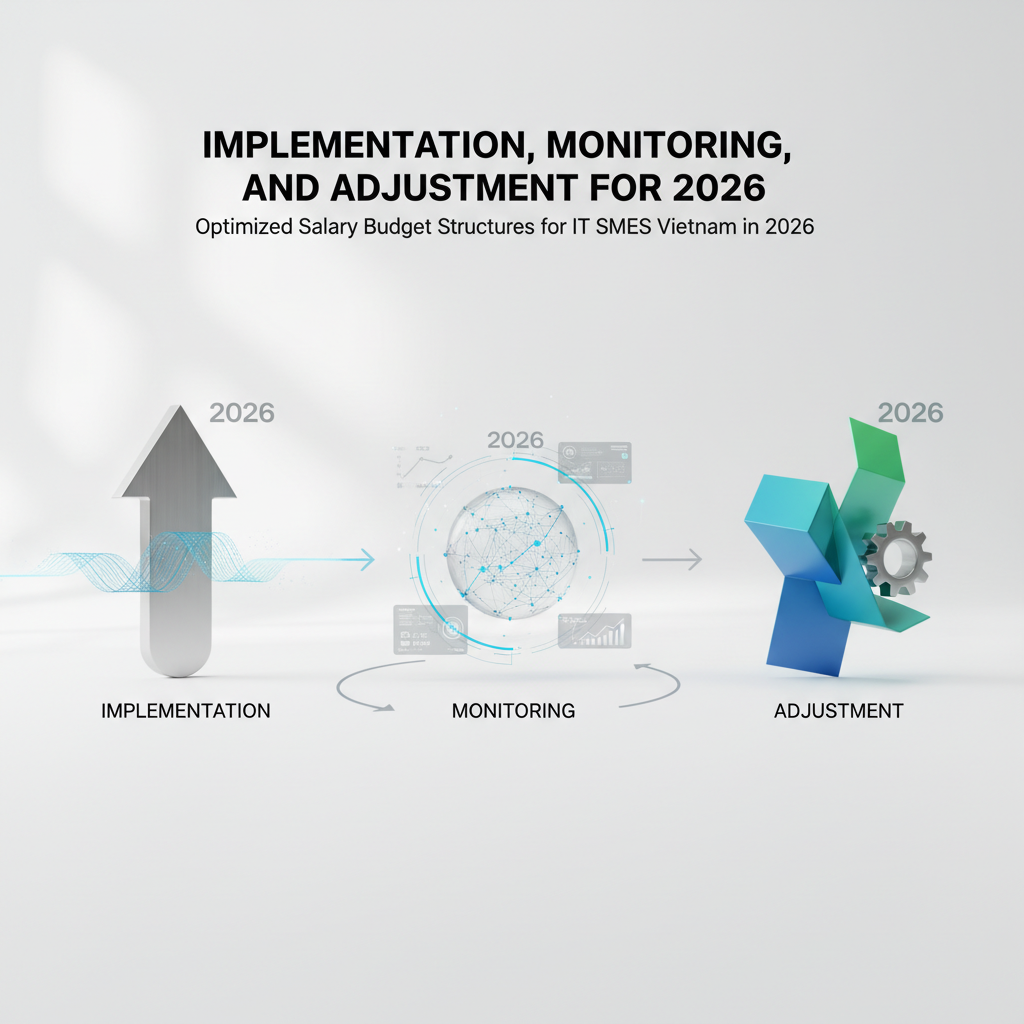
Implementing an optimized salary budget structure is not a one-time event but a continuous cycle of action, observation, and refinement. For SMEs in the vibrant IT field in Vietnam, staying agile is paramount to attracting and retaining top talent while maintaining financial health. This section outlines the practical steps for putting your optimized salary budget structure into action, tracking its effectiveness, and making necessary adjustments for sustained success in 2026 and beyond.
1. Setting Clear KPIs for Salary Budget Performance
Effective implementation begins with defining what success looks like. For your optimized salary budget structures, establishing clear Key Performance Indicators (KPIs) is crucial. These metrics will allow your SME in Vietnam’s IT sector to quantitatively measure the impact of your compensation strategy. Key KPIs might include:
- Talent Retention Rate: Tracking the percentage of IT employees retained over specific periods, especially critical roles. A higher retention rate indicates that your compensation package, including salaries and benefits, is competitive and satisfying, directly impacting IT talent retention Vietnam.
- Salary-to-Revenue Ratio: Monitoring the proportion of revenue spent on salaries. This helps ensure that salary costs are aligned with business growth and profitability targets, a cornerstone of effective SME compensation strategy Vietnam.
- Budget Variance: Comparing actual salary expenditures against the planned budget. Consistent deviations indicate a need for better forecasting or immediate adjustments to the budget model.
- Cost-per-Hire: While not a direct salary budget KPI, a lower cost-per-hire in the IT sector suggests efficiency in recruitment, which can be indirectly influenced by attractive compensation packages that reduce the need for extensive search efforts.
- Employee Satisfaction Scores (Compensation-related): Qualitative feedback, though subjective, provides invaluable insight into how employees perceive their remuneration relative to their contributions and market value.
By regularly reviewing these KPIs, SMEs can quickly identify areas where the salary budget is underperforming or exceeding expectations, enabling data-driven decisions to fine-tune compensation plans.
2. Regular Market Research and Benchmarking Updates
The IT landscape in Vietnam is dynamic, with demand for skilled professionals constantly evolving. What was competitive last year might be insufficient today. Therefore, continuous market research and salary benchmarking Vietnam IT practices are indispensable for maintaining an optimized salary budget. Your SME compensation strategy Vietnam must be flexible and responsive.
- Annual Salary Surveys: Participate in or procure comprehensive salary surveys specific to the IT industry in Vietnam. These provide data on average salaries, benefits, and compensation trends across different roles and seniority levels.
- Competitor Analysis: Keep an eye on the compensation packages offered by direct and indirect competitors for similar IT roles. Understanding their strategies helps position your SME competitively.
- Emerging Skill Premiums: New technologies constantly emerge, creating demand for niche skills. Identify these emerging skill sets and understand the premium they command in the Vietnamese IT market to adjust your budget accordingly.
- Economic Indicators: Monitor broader economic trends in Vietnam, such as inflation rates, GDP growth, and changes in the cost of living. These factors directly influence employees’ expectations and the purchasing power of their salaries.
Regular updates, ideally quarterly or bi-annually for critical roles, ensure your salary budget remains competitive, helping you attract and retain top talent against stiff competition in the local and regional market.
3. Adapting to Legislative Changes and Economic Shifts in Vietnam
The regulatory and economic environment in Vietnam plays a significant role in shaping salary budget decisions. SMEs must remain vigilant and adaptable to ensure compliance and strategic financial planning.
- Legislative Compliance: Stay informed about changes in labor laws, minimum wage regulations, social insurance contributions, and personal income tax policies in Vietnam. Non-compliance can lead to hefty fines and reputational damage. Integrate these changes into your HR best practices Vietnam IT to ensure all compensation components are legally sound.
- Economic Volatility: Vietnam’s economy, like any other, can experience fluctuations. Periods of high inflation may necessitate cost-of-living adjustments to maintain employee purchasing power and morale. Conversely, economic downturns might require more conservative budget approaches, focusing on efficiency and critical talent retention. Reliable sources such as the World Bank’s overview of Vietnam’s economy can provide valuable insights into these broader trends.
- Sector-Specific Policies: Be aware of any government incentives or regulations specifically targeting the IT sector that might impact compensation, such as tax breaks for certain tech roles or investment in skill development programs.
Proactive adaptation to these external factors is key to sustaining an optimized salary budget structure. It allows SMEs to make informed decisions that safeguard both financial stability and employee well-being, fostering long-term success in Vietnam’s dynamic IT industry.
Partner with Shelby Global
You are looking for reliable HR Sevice Suppliers? Contact Shelby Global Now! To connect with verified talents and upgrade your orginization.
—————————————
References
– e-Conomy SEA 2023 report: https://www.bain.com/insights/e-conomy-sea-2023/
– SHRM’s guide on compensation strategy: https://www.shrm.org/resourcesandtools/tools-and-samples/how-to-guides/pages/howtobuildacompensationstrategy.aspx
– Michael Page Vietnam Salary Guide: https://www.michaelpage.com.vn/salary-guide
– Deloitte: The Future of Rewards 2022: https://www2.deloitte.com/us/en/pages/human-capital/articles/future-of-rewards-2022.html
– World Bank’s overview of Vietnam’s economy: https://www.worldbank.org/en/country/vietnam/overview