
Scope of Responsibilities and Daily Operations
Delves into the day-to-day tasks and overall areas of accountability, highlighting the breadth and depth of involvement for each role in Vietnam’s dynamic travel sector. The operational landscape for Human Resources professionals in Vietnam’s travel industry presents a fascinating dichotomy, particularly when examining the Differences between the SMEs’ HR Manager and the Corporates’ HR Director in Travels field in vietnam. While both roles are pivotal to organizational success, their scope of responsibilities, daily operations, and strategic impact vary significantly, shaped by company size, resources, and overarching business objectives.

1. Recruitment & Onboarding Strategies: SME vs. Corporate
For an SME HR Manager in the Vietnamese travel sector, talent acquisition is often a highly hands-on, direct process. They are typically involved in every step, from crafting job descriptions to conducting interviews and managing candidate communication. The focus is usually on quickly filling immediate vacancies with individuals who are a strong cultural fit for a smaller, often more intimate team. Budget constraints mean limited investment in sophisticated HR tech, relying more on personal networks and cost-effective job boards. Onboarding is frequently less formalized, relying on direct manager mentorship and peer integration, highlighting the lean and agile nature of operational HR within SMEs.
Conversely, a Corporate HR Director approaches recruitment with a much broader, more strategic lens. Their role is less about individual hires and more about orchestrating a robust workforce planning strategy to meet long-term business goals. They oversee teams dedicated to specialized functions like employer branding, candidate sourcing, and intricate selection processes. Corporations leverage advanced HR technologies, data-driven HR analytics, and structured employee development programs from day one. Onboarding is a comprehensive, multi-stage process designed to integrate new hires into a complex organizational structure, often incorporating elements of global HR policies with careful local adaptation, reflecting a more strategic and systemic approach to human capital.
2. Policy Development, Implementation & Compliance Standards
An SME HR Manager often finds themselves in a reactive position regarding policy development. Policies are typically created out of necessity, addressing immediate issues as they arise, and are generally simpler, less formalized documents. However, the SME HR Manager bears direct and comprehensive responsibility for ensuring meticulous labor law compliance, navigating the intricacies of Vietnamese employment regulations for a smaller, highly visible workforce. This direct oversight means they are on the front lines of maintaining compliance standards, often without the luxury of dedicated legal teams, making their understanding of local laws paramount.
The Corporate HR Director, in contrast, operates within a framework of proactive policy development. Their role involves establishing comprehensive HR strategies that align with both global corporate directives and local legal requirements. They manage the implementation of complex HR frameworks, focusing on risk mitigation and ensuring adherence to stringent Vietnam labor law compliance across multiple departments or even countries. This often involves navigating significant change management processes when introducing new policies or adapting existing global HR policies to the Vietnamese context. Internal audits, legal counsel engagement, and maintaining robust documentation are central to their responsibility for maintaining high compliance standards.
3. Employee Relations, Welfare & Engagement Initiatives
In SMEs, employee relations are often characterized by personal, direct interactions. The HR Manager acts as a central point of contact for staff concerns, fostering a close-knit organizational culture. Welfare programs and engagement initiatives are typically ad-hoc, budget-dependent, and tailored to individual or small group needs, relying heavily on informal communication and team activities. Their primary focus is often on immediate problem-solving and maintaining morale within a confined environment, ensuring everyone feels heard and valued with direct, empathetic responses.
For Corporate HR Directors, employee relations are managed through structured programs and channels. They are responsible for designing and implementing comprehensive compensation & benefits packages, robust performance management systems, and wide-ranging diversity & inclusion initiatives across a larger workforce. Employee engagement is measured through surveys, feedback systems, and sophisticated HR analytics, informing strategic interventions. Their role is to cultivate a positive work environment, manage industrial relations, and implement large-scale communication strategies that reinforce the corporate HR strategy and organizational culture, balancing individual needs with broader corporate objectives.
Strategic Impact vs. Tactical Execution
The travel industry in Vietnam, a dynamic and rapidly evolving sector, presents a unique backdrop for examining the stark differences between the SMEs’ HR Manager and the Corporates’ HR Director in Travels field in Vietnam. While both roles are vital for organizational success, their scope, responsibilities, and strategic focus diverge significantly. HR managers in Small and Medium-sized Enterprises (SMEs) are typically engrossed in immediate operational needs, ensuring daily compliance and addressing urgent employee matters. Their work is characterized by a hands-on approach to tactical HR operations, often juggling multiple administrative tasks like payroll processing, basic recruitment, and employee relations. In contrast, HR directors in larger corporations within the Vietnamese travel sector are charged with driving long-term strategic HR initiatives, aligning human capital strategies with overarching business objectives, and fostering sustainable growth.
This fundamental difference shapes everything from resource allocation to talent management and organizational development. SMEs often lack the dedicated resources and specialized teams found in corporates, pushing HR managers into a reactive stance. They navigate HR challenges Vietnam travel with limited budgets and staff, prioritizing quick fixes and immediate problem resolution. Corporate HR directors, on the other hand, operate within a structured framework, enabling them to focus on proactive HR strategic planning, leveraging HR tech travel solutions, and shaping the future workforce. Understanding these contrasting approaches is crucial for stakeholders across the industry, highlighting the distinct contributions each role makes to their respective organizations.
1. Workforce Planning & Talent Strategy Development
For SME HR managers in the Vietnamese travel sector, workforce planning often translates into reactive hiring to fill immediate vacancies or seasonal demands. The focus is on finding candidates quickly, often through informal networks, to meet operational requirements for roles like tour guides, hotel staff, or travel agents. Talent acquisition travel industry for SMEs is frequently driven by necessity, with less emphasis on long-term career paths or comprehensive skill development. SME HR management is about ensuring adequate staffing to deliver current services, with little capacity for sophisticated forecasting or strategic talent pipelines. Employee retention strategies might be rudimentary, relying on personal relationships or basic incentives rather than structured programs.
Conversely, corporate HR directors approach workforce planning as a cornerstone of their strategic mandate. They engage in sophisticated demand forecasting, analyzing market trends, technological advancements, and business expansion plans to anticipate future talent needs. Their talent strategy development encompasses comprehensive programs for talent acquisition travel industry, employer branding, and pipeline development for leadership roles. Succession planning travel becomes a critical exercise, identifying and nurturing high-potential employees. They implement robust employee retention strategies, investing in professional development, mentorship programs, and competitive compensation packages to ensure a skilled and motivated workforce. This proactive stance ensures the company has the right people, with the right skills, at the right time, aligning with strategic growth objectives, a key element in how HR can support business strategy.
2. Budget Management, Resource Allocation & Cost Control
In SMEs, HR budget travel companies are typically tight, with HR managers often operating as cost centers rather than strategic partners. Their role in resource allocation is primarily focused on minimizing expenditures related to recruitment, training, and employee benefits. Cost control is paramount, leading to minimal investment in advanced HR systems or extensive employee development programs. Every expense is scrutinized for immediate return, and the emphasis is on efficiency in administrative processes to save time and money. This often means manual processes, basic compliance checks, and a lean approach to all HR functions.
Corporate HR directors, however, manage substantial budgets that are strategically allocated to support long-term objectives. Their role involves a strategic approach to budget management and resource allocation, investing in areas that yield strategic value, such as leadership development, cutting-edge HR tech travel, and comprehensive wellness programs. Corporate HR best practices dictate that budget decisions are made with an eye on return on investment for human capital, focusing on areas like reducing turnover, enhancing productivity, and fostering innovation. While cost control is still important, it’s balanced against the strategic imperative of investing in people as a competitive advantage, often utilizing HR analytics to justify expenditures and demonstrate value.
3. Organizational Development, Culture & Change Management
For HR managers in SMEs, organizational development is often an informal, reactive process. Company culture tends to evolve organically based on the founder’s vision or existing employee personalities, rather than through deliberate design. Change management HR initiatives are rare and typically involve simple communication about necessary operational adjustments. There’s limited bandwidth for structured interventions aimed at improving organizational effectiveness or fostering a specific culture. Employee engagement travel sector efforts might be ad-hoc, stemming from individual manager initiatives rather than a cohesive company-wide strategy.
In contrast, corporate HR directors are pivotal in driving deliberate organizational development. They lead initiatives to shape and reinforce desired organizational culture development, ensuring it aligns with the company’s values and strategic goals. This includes designing performance management systems, talent matrices, and internal communication strategies. They are architects of change management HR, guiding the organization through mergers, acquisitions, digital transformations, or market shifts with structured plans and transparent communication. Employee engagement travel sector is a strategic priority, with robust programs designed to measure and enhance morale, productivity, and retention. Their work ensures that the organization remains agile, resilient, and equipped to adapt to the future landscape of the Vietnamese travel industry, leveraging frameworks for performance management systems and continuous improvement.
Team Structure and Resource Availability
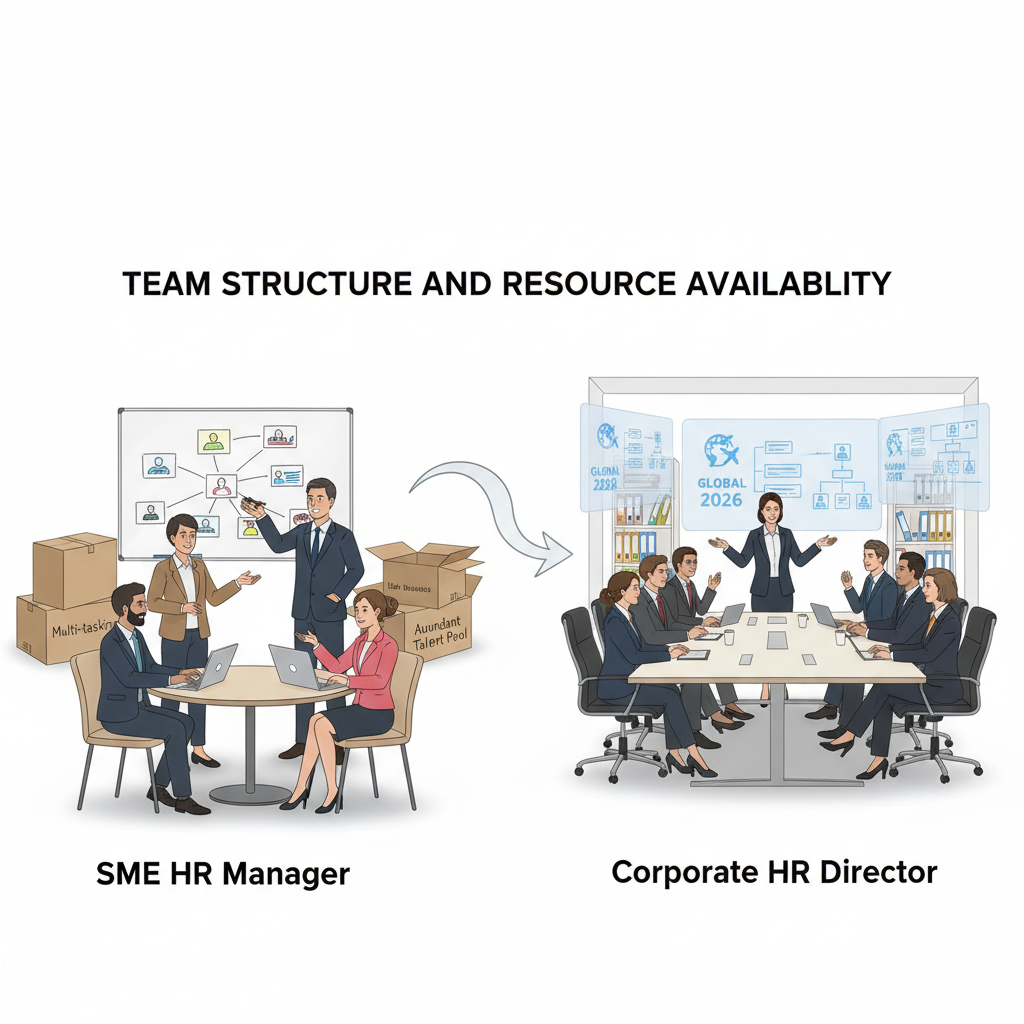
The landscape for Human Resources professionals within Vietnam’s dynamic travel sector presents a stark contrast between Small and Medium-sized Enterprises (SMEs) and larger corporate travel entities. The fundamental Differences between the SMEs’ HR Manager and the Corporates’ HR Director in Travels field in vietnam largely revolve around the team structure, access to specialized tools, and financial resources. While an HR Manager in an SME often juggles multiple hats with limited support, an HR Director in a larger corporation typically commands a dedicated team and substantial strategic influence. This disparity significantly impacts their capacity for strategic HR initiatives, operational efficiency, and overall impact on business growth within their respective organizations.
1. HR Department Size, Reporting Lines & Team Composition
For an HR Manager in a Vietnamese SME operating within the travel sector, the HR department size is typically lean, often consisting of a single individual or a small team of two to three. This individual acts as a generalist, responsible for the entire spectrum of HR functions, from recruitment and onboarding to payroll administration, employee relations, and basic compliance. Reporting lines for the SME HR Manager are often direct to the CEO or General Manager, which, while offering direct influence, also means a lack of specialized HR expertise within the immediate team. The team composition is thus broad rather than deep, requiring the HR Manager to be exceptionally adaptable and proficient across all HR domains. This generalist approach means that tasks such as talent acquisition, compensation & benefits, and learning & development are handled by the same individual, often reactively rather than strategically.
Conversely, an HR Director in a larger corporate travel entity in Vietnam leads a significantly more robust and specialized corporate travel HR team. This team can range from 10 to 50+ members, structured into specialized HR roles such as Talent Acquisition Specialists, Compensation & Benefits Analysts, HR Business Partners, and Learning & Development Managers. The HR Director typically reports to a Chief Human Resources Officer (CHRO) or directly to the C-suite, operating at a strategic level. The team composition allows for greater expertise and efficiency in each HR domain, enabling proactive strategy development for talent pipeline management, employee engagement, and organizational development. This clear division of labor and access to specialized expertise ensures that strategic initiatives are not only conceptualized but also effectively executed across the organization.
2. Leveraging Technology, HRIS & Digital Tools for Efficiency
The extent to which HR professionals can leverage technology is another critical differentiator. An HR Manager in an SME often faces tight budgets, limiting their access to sophisticated HRIS (Human Resources Information Systems) or advanced digital tools. Their approach to HR technology solutions is often pragmatic, relying on basic software for payroll and timekeeping, simple applicant tracking systems (if any), and extensive use of spreadsheets for data management. HR digital transformation efforts are often nascent or ad-hoc, driven by immediate needs rather than a comprehensive strategy. Manual processes are still prevalent, which can hinder efficiency, increase administrative burden, and limit data-driven decision-making. The challenge is often to find cost-effective tools that provide essential functionalities without overstretching limited financial resources.
In contrast, an HR Director in a larger corporate travel entity benefits from substantial investments in an integrated HRIS systems and a sophisticated HR tech stack. These corporations often implement enterprise-level platforms like Workday, SAP SuccessFactors, or Oracle HCM, which offer comprehensive modules for recruitment software, performance management platforms, and employee self-service. The use of advanced digital tools enables robust data analytics, providing insights into workforce trends, talent gaps, and the effectiveness of HR programs. Such an environment fosters a proactive HR digital strategy, driving HR automation in areas like onboarding, leave management, and reporting. This not only significantly boosts efficiency but also empowers the HR Director to make data-informed strategic decisions, enhancing the overall employee experience and organizational agility. According to a report by Deloitte, investment in HR technology is crucial for enhancing employee experience and operational efficiency, particularly in emerging markets like Vietnam, where digital adoption is accelerating. (Deloitte 2024 Global Human Capital Trends)
3. Training & Development Budgets vs. ROI Expectations
When it comes to training and development, the disparity in resources is particularly pronounced. For an HR Manager in an SME, training and development budgets are typically very constrained. Employee training programs often focus on essential compliance requirements or immediate skill gaps necessary for operational continuity. The return on investment (ROI expectations) is usually short-term and directly measurable, emphasizing immediate productivity gains. Talent development SME initiatives might involve internal workshops, peer-to-peer learning, or low-cost online courses. Strategic long-term leadership development programs or extensive career pathing are rare, as resources are prioritized for day-to-day operations and survival within a competitive market.
Conversely, an HR Director in a larger corporate travel entity manages significantly larger L&D budgets. These budgets are often viewed as strategic investments in employee growth, talent pipeline development, and succession planning. ROI expectations extend beyond immediate productivity to include broader impacts on employee retention, engagement, organizational culture, and future leadership capabilities. Corporate training strategies involve a mix of internal academies, external training providers, comprehensive e-learning platforms, and specialized leadership development programs. The focus is on building a robust, future-ready workforce, nurturing high-potential employees, and ensuring a continuous stream of skilled talent to meet evolving business demands in the global travel market. This allows for more sophisticated and impactful employee training programs that align directly with the company’s long-term strategic objectives.
Influence on Business Strategy and Decision Making
Description: Explores the varying levels of authority and influence each role holds within their respective organizations, particularly in shaping overall business goals and culture in the travel sector.
In Vietnam’s dynamic travel sector, HR professionals are indispensable. However, their influence on business strategy and decision-making differs significantly between HR Managers in Small and Medium-sized Enterprises (SMEs) and HR Directors in large corporations. Understanding these crucial differences between the SMEs’ HR Manager and the Corporates’ HR Director in Travels field in Vietnam illuminates HR’s diverse impact on the sector’s growth.
-
Engagement with C-Suite & Board-Level Decision-Making
SME HR Managers in Vietnamese travel operate tactically. Their C-suite engagement HR is direct, focused on immediate operational needs. While contributing to business strategy HR by highlighting workforce capabilities, their role in high-level decision-making HR is often reactive. They advise on compliance but rarely drive strategic shifts. Influence prioritizes internal process optimization over strategic direction.
Conversely, a Corporate HR Director in a large Vietnamese travel conglomerate holds an elevated, strategic position. Integral to executive leadership, they participate in C-suite meetings, reporting directly to the CEO. Their role transcends operational HR, focusing on long-term corporate HR strategy aligned with vision. Directors provide insights on talent analytics, organizational design, and human capital for market expansion. Their influence shapes fundamental business choices. According to SHRM, HR leaders in larger organizations are increasingly vital in shaping enterprise strategy. This distinction is key to understanding HR leadership Vietnam and its travel industry HR influence.
-
Culture Shaping, Employer Branding & Talent Attraction
For an SME HR Manager in Vietnamese travel, culture shaping is often organic, driven by founder values and reinforced daily. Employer branding Vietnam travel efforts are budget-constrained, emphasizing internal positivity for retention. Talent attraction travel sector relies on local networks, seeking immediate skills. SME HR challenges include competing for talent and branding without extensive marketing. Their HR talent attraction Vietnam strategies highlight a unique, close-knit atmosphere.
In contrast, the Corporate HR Director is a primary architect of organizational culture, driving deliberate initiatives across departments and brands. They oversee significant investments in sophisticated employer branding Vietnam travel campaigns, leveraging digital platforms and global recruitment. Their talent management travel sector strategies are comprehensive, encompassing global recruitment, robust onboarding, and leadership development. They define organizational culture travel at a macro level. Their influence positions the company as an employer of choice, attracting top-tier talent. For more insights on this specific comparison, explore Differences between the SMEs’ HR Manager and the Corporates’ HR Director in Travels field in Vietnam. This strategic approach defines strategic HR partnerships within large travel corporations.
-
Risk Management, Legal Compliance & Ethical Governance
The SME HR Manager ensures basic adherence to Vietnamese labor laws. Their HR compliance Vietnam efforts are largely reactive, addressing issues as they arise. Risk management minimizes legal exposure from individual disputes. While striving for ethical HR practices, formal governance frameworks are often less developed, relying on individual integrity. Their scope for proactive risk management, legal compliance & ethical governance is limited by resources and a simpler legal landscape.
For the Corporate HR Director, this domain is far more complex. They navigate intricate HR compliance Vietnam across various legal jurisdictions, crucial for international operations (e.g., data privacy). Their role involves proactive risk mitigation, developing comprehensive policies, and staying ahead of legislative changes. They establish robust ethical governance frameworks, including codes of conduct and whistleblower policies, vital for reputation. The HR roles comparison highlights that the corporate HR Director acts as a guardian of the organization’s legal and ethical standing, influencing profound business strategy HR decisions. This proactive approach defines Vietnamese travel HR at a corporate level.
Required Skill Sets and Career Trajectories
Vietnam’s travel industry, characterized by its rapid growth and diverse landscape, offers distinct career trajectories for Human Resources professionals. The Differences between the SMEs’ HR Manager and the Corporates’ HR Director in Travels field in Vietnam are stark, reflecting the scale, strategic depth, and operational complexities inherent in their respective organizational structures. Understanding these distinctions is crucial for aspiring HR professionals and organizations alike, guiding talent development and recruitment strategies.
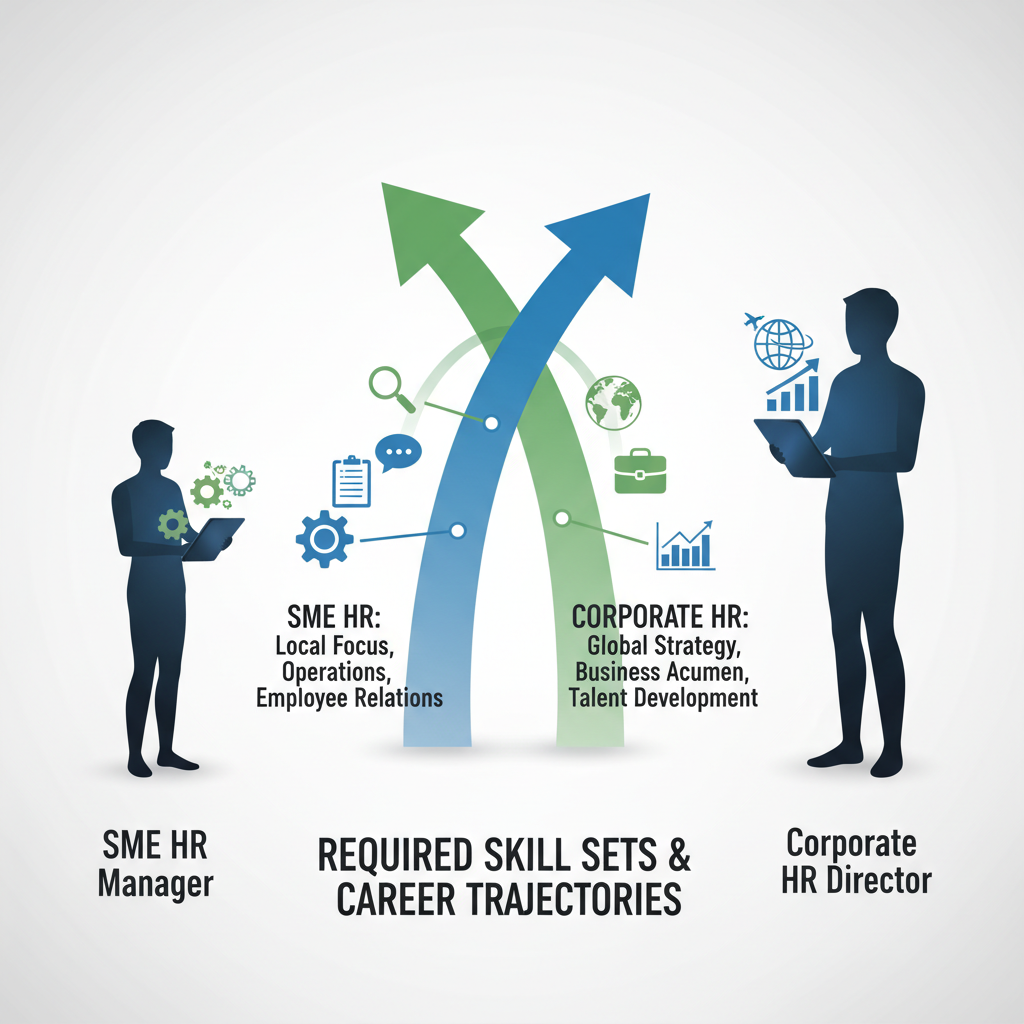
The journey from an HR generalist in a burgeoning small-to-medium enterprise (SME) to a strategic HR Director within a large corporate entity in Vietnam’s dynamic travel sector demands an evolving skill set. This section delineates the core competencies, experiences, and growth opportunities essential for success in these pivotal roles.
1. Essential Soft Skills, Hard Skills & Industry-Specific Knowledge
For an SME HR Manager in the Vietnamese travel sector, the role is typically broad and hands-on, encompassing a wide array of responsibilities from recruitment to employee relations. Essential soft skills include exceptional adaptability, strong interpersonal communication, and problem-solving abilities, enabling them to navigate diverse daily challenges with limited resources. Hard skills are often generalist, covering basic payroll, local labor law compliance, recruitment processes, and performance management. A deep understanding of the local travel market—from tour operations and hotel management to customer service expectations—is paramount, as they often wear multiple hats and directly support operational teams. Their success hinges on being a versatile resource, capable of directly impacting day-to-day team morale and efficiency.
In contrast, a Corporate HR Director demands a more specialized and strategic skill set. Soft skills revolve around sophisticated leadership, influencing, and negotiation capabilities, essential for managing larger teams and interacting with C-suite executives and international stakeholders. Hard skills lean towards strategic HR planning, talent management frameworks, organizational development, complex compensation & benefits design, HR analytics, and advanced compliance with both local and international labor regulations. Industry-specific knowledge for a corporate director involves a comprehensive understanding of macro-economic trends affecting tourism, global travel market dynamics, and the impact of technological advancements on human capital within large-scale operations. Their focus is on building scalable HR systems and strategies that support long-term business objectives.
2. Leadership, Mentorship & Stakeholder Management Capabilities
The SME HR Manager typically provides direct, informal mentorship, fostering a close-knit team environment. Their leadership style is often participative, involving direct engagement with employees on operational matters and conflict resolution. Stakeholder management primarily involves close collaboration with the business owner or managing director, and department heads, focusing on immediate HR needs and ensuring operational smoothness. They are often seen as the go-to person for all employee-related issues, requiring strong empathy and mediation skills.
For a Corporate HR Director, leadership is inherently strategic, focused on developing future HR leaders and fostering a high-performance culture across multiple departments or business units. Mentorship is more formalized, involving structured development programs and succession planning. Their stakeholder management extends beyond internal executives to investors, government bodies, international partners, and even labor unions, demanding sophisticated communication and influencing skills. They are instrumental in shaping organizational culture, driving strategic HR initiatives, and ensuring the company’s human capital strategy aligns with its overarching business goals. The ability to articulate the value of strategic human resource management is critical in this role.
3. Future Career Paths, Specializations & Professional Development
An SME HR Manager in Vietnam’s travel industry has several avenues for growth. They might transition to larger SMEs, specialize in a niche area like hospitality recruitment or corporate training, or even move into operational management due to their broad exposure to business functions. Professional development often involves obtaining local certifications in specific HR functions, mastering new HR software, or deepening their understanding of Vietnamese labor law through workshops and seminars. Their career trajectory emphasizes vertical growth within the HR generalist field or a lateral move into related operational leadership roles.
Conversely, a Corporate HR Director possesses a pathway to highly specialized and executive roles. Potential career paths include becoming a Regional HR Head, Chief People Officer (CPO) for a multinational corporation, or specializing in areas like mergers & acquisitions (M&A) HR integration, global mobility, or advanced HR analytics. Continuous professional development is non-negotiable, often involving executive education programs, international HR certifications (e.g., from SHRM or CIPD), and participation in global HR forums. Their trajectory is typically towards higher levels of strategic leadership and executive decision-making, influencing global talent strategies and organizational resilience. The distinct differences between the SMEs’ HR Manager and the Corporates’ HR Director in the Travels field in Vietnam highlight not just differing responsibilities but also vastly different long-term career horizons within the country’s vibrant tourism sector.
Partner with Shelby Global
You are looking for reliable HR Sevice Suppliers? Contact Shelby Global Now! To connect with verified talents and upgrade your orginization.
—————————————
References
– Vietnam’s Labor Law: An Overview: https://www.dezshira.com/article/vietnam-labor-law-an-overview.html
– How HR Can Support Business Strategy – SHRM: https://www.shrm.org/resources-and-tools/hr-topics/organizational-and-employee-development/how-hr-can-support-business-strategy/
– Deloitte 2024 Global Human Capital Trends: https://www2.deloitte.com/us/en/insights/focus/human-capital-trends/2024/hr-technology-trends.html
– SHRM on HR’s Strategic Role: https://www.shrm.org/resources-and-tools/hr-topics/strategic-hr/pages/default.aspx
– Strategic HR Planning: Tips for Success: https://www.shrm.org/resources-and-tools/hr-topics/talent-acquisition/pages/strategic-hr-planning-tips.aspx