
Recruitment & Onboarding Strategies in Sales
In the dynamic and rapidly evolving Vietnamese market, effectively finding, attracting, and integrating top-tier sales talent is paramount for business success. This section explores the nuanced approaches employed by Small and Medium-sized Enterprises (SMEs) and Corporate entities in Vietnam when building their sales teams. Understanding the Differences between the SMEs’ HR Structure and the Corporates’ HR Structure in sale field in vietnam is crucial, as these distinctions fundamentally shape their recruitment and onboarding strategies.

1. Talent Acquisition Channels & Methods
SMEs in Vietnam often operate with leaner HR teams, with recruitment responsibilities falling on hiring managers or founders. Their talent acquisition channels tend to be cost-effective and relationship-driven, leveraging personal networks, employee referrals, and local job boards or social media groups. The focus is on finding adaptable, multi-skilled individuals who can thrive in less structured environments, prioritizing strong local connections and an entrepreneurial spirit.
Conversely, Corporate entities, with well-established HR departments and larger budgets, utilize a broader spectrum of sophisticated talent acquisition channels. This includes partnerships with universities for graduate programs, engaging professional headhunting firms, extensive use of premium job portals, and robust employer branding initiatives. Corporates seek candidates with proven track records in structured sales environments, strong analytical skills, and the ability to navigate complex organizational structures.
2. Interview Processes & Selection Criteria
The interview process in SMEs is typically less formal and more agile, often involving one to three rounds. Selection criteria heavily weigh cultural fit, passion for the product/service, and a demonstrable willingness to learn and adapt quickly. Potential, rather than extensive prior experience, often plays a significant role. SMEs value candidates who can quickly integrate and contribute immediately, often with less formal training infrastructure.
In contrast, Corporate entities typically employ multi-stage, structured interview processes designed to rigorously assess candidates across various competencies. This can include HR screenings, multiple rounds with different management levels, psychometric assessments, and case studies. Their selection criteria are highly defined, focusing on specific sales methodologies, industry experience, leadership potential, and alignment with corporate values. As highlighted by SHRM’s insights, structured interviews significantly improve predictive validity, a practice more commonly adopted by larger corporations for sales recruitment.
3. Onboarding Programs & Speed of Integration
For SMEs, onboarding is often an organic, hands-on process. New sales hires might receive direct mentorship from a senior salesperson or the business owner, learning on the job through shadowing and immediate client interaction. The speed of integration is typically very fast, driven by the immediate need for productivity. Training is often product-centric, relying on practical application and swift immersion into the sales cycle. While informal, this approach fosters immediate ownership and direct contribution.
Corporate entities, recognizing the complexity of their sales processes and product portfolios, invest in comprehensive, structured onboarding programs. These often span weeks or months, covering extensive product knowledge, company culture, CRM systems, sales methodologies, compliance, and brand messaging. New hires might go through dedicated sales academies, receive formal mentorship, and participate in role-playing exercises. The goal is a thorough, standardized integration, ensuring the new salesperson is fully equipped to represent the brand and navigate internal systems effectively. While this means a longer ramp-up, it aims for sustained, high-performance contributions.
In conclusion, both SMEs and Corporates in Vietnam adapt their recruitment and onboarding strategies to their unique structures, resources, and strategic imperatives. While SMEs prioritize agility, cultural fit, and immediate impact, Corporates focus on structured processes, comprehensive training, and long-term talent development, reflecting the fundamental Differences between the SMEs’ HR Structure and the Corporates’ HR Structure in sale field in vietnam.
Compensation & Benefits for Sales Professionals
In the dynamic landscape of Vietnam’s job market, understanding the nuances of compensation and benefits for sales professionals is crucial, especially when comparing opportunities within Small and Medium-sized Enterprises (SMEs) versus larger Corporations. The strategic approach to attracting and retaining top sales talent significantly differs between these two organizational types, impacting everything from base pay to long-term incentives. This detailed examination highlights the Differences between the SMEs’ HR Structure and the Corporates’ HR Structure in sale field in vietnam, focusing specifically on their remuneration packages for their frontline revenue generators.
1. Base Salary vs. Commission Structures & OTE
The foundation of any sales compensation package lies in its base salary and commission model, which collectively determine the On-Target Earnings (OTE). In SMEs, the base salary for sales professionals in Vietnam is often relatively lower. This structure is a deliberate choice, designed to minimize fixed costs and heavily incentivize individual performance. Sales professionals in SMEs frequently see a higher percentage of their potential earnings tied to commission, meaning their take-home pay can fluctuate significantly based on their sales volume. The commission rates themselves might be more aggressive, offering a larger slice of revenue per sale as a direct motivator.
Conversely, Corporates typically offer a more stable and substantially higher base salary. This provides a greater sense of security and reflects the often broader scope of responsibilities, longer sales cycles, and more complex product offerings. While commissions are still a significant component, they might be structured with more tiers, caps, or team-based incentives, reflecting a more collaborative sales environment. OTE in corporations tends to be more predictable and robust, although achieving it often requires navigating more established processes and meeting rigorous targets. For a deeper understanding of global compensation trends, including sales, resources like the WorldatWork organization offer valuable insights into best practices that often influence corporate structures.
2. Performance Incentives & Bonus Schemes
Beyond standard commissions, both SMEs and Corporations utilize various performance incentives and bonus schemes to drive sales success, though their complexity and value vary widely. SMEs often employ straightforward, direct cash bonuses for achieving specific short-term targets or for outstanding individual contributions. These might be less formalized, sometimes even discretionary, and directly tied to immediate revenue generation. Non-monetary recognition, such as public acknowledgment or small achievement awards, also plays a significant role in motivating sales teams in smaller settings where a sense of community is strong.
In the corporate world, bonus schemes are far more sophisticated and multi-layered. Annual or quarterly bonuses are common, often tied to a combination of individual performance, team results, and overall company profitability. Long-term incentive plans, such as stock options, restricted stock units (RSUs), or phantom stock, are frequently offered to senior sales executives, aligning their success with the long-term growth of the company. Corporates also invest heavily in motivational programs like “President’s Club” trips to exotic locations, sales contests with high-value prizes, and extensive professional development opportunities, all designed to foster loyalty, drive continuous improvement, and reward exceptional performance on a grander scale.
3. Health & Welfare Benefits and Perks
The provision of health and welfare benefits, along with various perks, further illustrates the differences between the SMEs’ HR structure and the Corporates’ HR structure in the sales field in Vietnam. SMEs typically adhere to the statutory minimum requirements for social insurance, health insurance, and unemployment insurance as mandated by Vietnamese law. Additional benefits might be limited to basic allowances for meals, transport, or communication. However, SMEs often offer greater flexibility in work arrangements, a more intimate company culture, and direct access to leadership, which can be perceived as valuable non-monetary perks for some professionals.
Corporates, on the other hand, boast comprehensive and often premium benefits packages designed to attract and retain top talent. These frequently include generous private health insurance coverage for employees and their families, life insurance, annual comprehensive health checks, and wellness programs (e.g., gym memberships, mental health support). Beyond core benefits, corporate sales professionals might receive substantial allowances for cars, mobile phones, and housing, especially for roles requiring extensive travel or relocation. Professional development budgets for training, certifications, and conferences are also considerably larger, reflecting a commitment to long-term career growth. These extensive benefits not only enhance the overall compensation package but also contribute significantly to employee well-being and loyalty.
In conclusion, while both SMEs and Corporates aim to compensate their sales professionals competitively in Vietnam, their approaches are distinct. SMEs offer agility and direct reward for individual output, often with a lean benefits structure. Corporates provide stability, comprehensive packages, and sophisticated incentive programs designed for long-term career progression and holistic well-being. Understanding these differences between the SMEs’ HR Structure and the Corporates’ HR Structure in sale field in Vietnam is vital for sales professionals to make informed career decisions and for businesses to craft effective talent strategies.
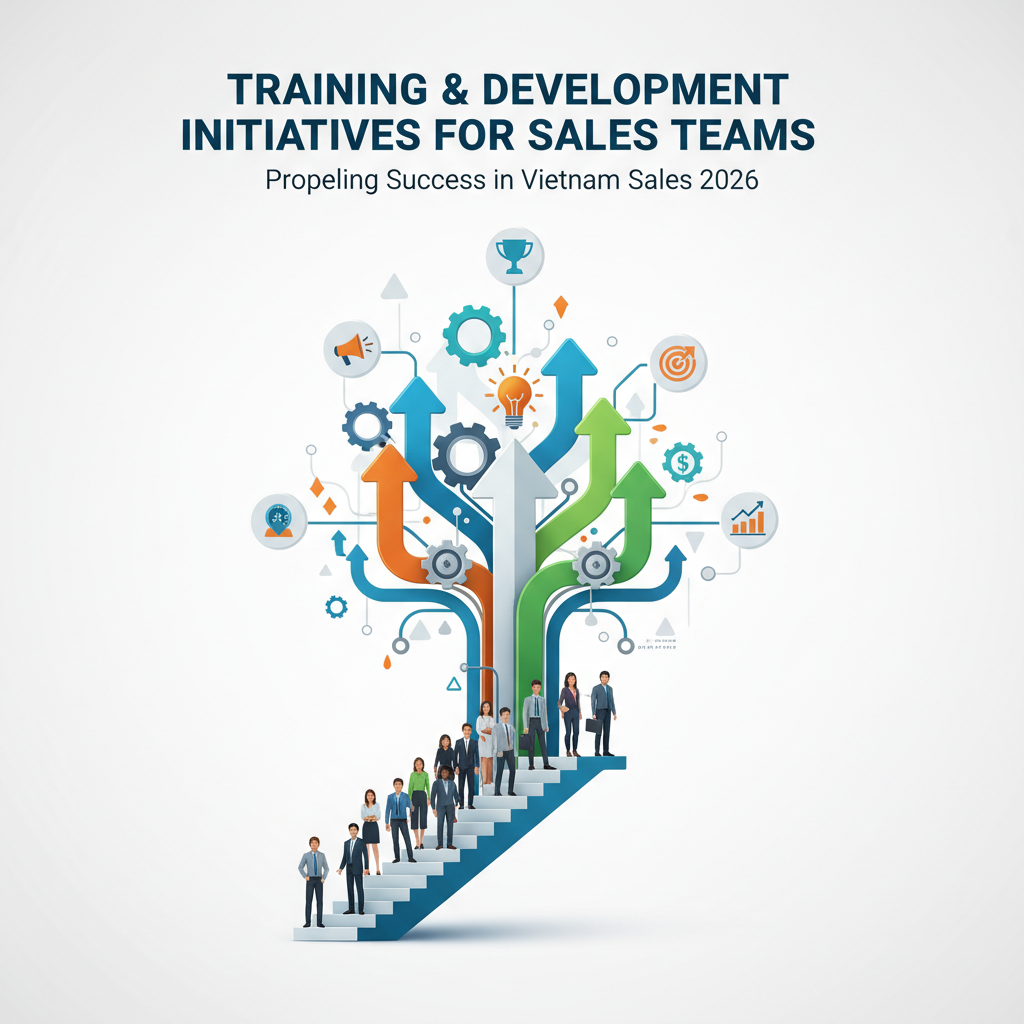
Training & Development Initiatives for Sales Teams
This section examines the divergent paths Small and Medium-sized Enterprises (SMEs) and Corporates take in enhancing sales team skills, fostering career growth, and budgeting for development within the dynamic Vietnamese market. The unique operational frameworks of these two organizational types lead to distinct approaches in nurturing their sales talent, directly influencing their market competitiveness and employee retention. Understanding the fundamental differences between the SMEs’ HR Structure and the Corporates’ HR Structure in the sale field in Vietnam is crucial to appreciating their varied training methodologies and outcomes.
1. Sales Skill Development Programs & Frequency
For SMEs in Vietnam, sales skill development often takes a more organic, reactive, and informal route. Training typically occurs on-the-job, through direct mentorship from founders or senior sales personnel, or through peer learning. Programs tend to be less structured, focusing on immediate, practical selling techniques vital for quick wins and survival. Due to limited resources and a smaller workforce, the frequency of formal training sessions is generally low, often relying on occasional workshops, free online resources, or product-specific briefings. The emphasis is on adaptability and resilience, equipping sales teams with foundational skills to navigate a competitive landscape with agility.
In stark contrast, Vietnamese Corporates boast a sophisticated and proactive approach to sales skill development. These organizations often have dedicated Learning & Development (L&D) departments or significant HR resources that meticulously plan and execute comprehensive training calendars. Programs are highly structured, covering a wide array of skills from advanced negotiation tactics, customer relationship management (CRM) software proficiency, and product knowledge to intricate soft skills like emotional intelligence, strategic account planning, and cross-cultural communication. Training frequency is high, with continuous learning being a core philosophy, often integrating e-learning modules, external expert-led workshops, and regular internal coaching sessions. This structured and continuous approach is critical for maintaining a competitive edge in complex markets.
2. Leadership & Career Pathing Opportunities
Career pathing and leadership development within Vietnamese SMEs are typically less formalized but can be exceptionally dynamic. Growth opportunities often emerge organically as the company expands, with high-performing sales professionals naturally stepping into supervisory or team lead roles. Leadership training, if it exists, is usually delivered informally through hands-on experience, direct guidance from senior management, or external networking events. While this can offer rapid advancement for highly motivated individuals, the lack of a clear, structured career ladder can sometimes lead to uncertainty about long-term prospects, potentially impacting retention rates for those seeking structured growth.
Corporates, on the other hand, prioritize clear, well-defined career ladders for their sales professionals. From junior sales executives to senior account managers, team leads, sales managers, and eventually directorial positions, the progression path is meticulously outlined. This includes formal leadership development programs designed to cultivate future leaders through structured training modules on strategic management, team motivation, performance coaching, and change leadership. Many corporates also implement succession planning frameworks and robust mentoring programs, providing employees with a clear vision for their professional journey and ample opportunities for both vertical and horizontal career movement. This structured approach not only enhances leadership capabilities but also serves as a powerful retention tool.
3. Budget Allocation & Access to Resources
Budget allocation for training and development is perhaps the most pronounced differentiator. Vietnamese SMEs operate with tighter financial constraints, viewing training expenditures often as a direct cost rather than a long-term investment. Consequently, their access to premium resources is limited. They frequently rely on free or low-cost online courses, public workshops, or internal knowledge sharing. Investments in advanced sales enablement platforms, sophisticated CRM systems, or comprehensive Learning Management Systems (LMS) are typically out of reach. This necessitates creative, cost-effective solutions and a strong emphasis on practical, immediately applicable skills that yield tangible returns.
Conversely, Corporates allocate substantial budgets to talent development, perceiving it as a strategic investment crucial for market leadership and innovation. They have the financial muscle to invest in state-of-the-art sales enablement tools, robust CRM platforms, sophisticated LMS, and partnerships with leading external training providers and consultants. Access to a wide array of premium resources, including specialized industry insights, advanced analytics tools, and global best practices, empowers their sales teams with superior capabilities. This significant investment ensures that corporate sales teams are not only well-trained but also equipped with the technology and support systems necessary to optimize their performance and adapt to evolving market demands effectively.
Performance Management & Evaluation in Sales
In the dynamic Vietnamese sales landscape, the effectiveness of performance management and evaluation systems critically impacts a company’s ability to achieve its targets. The approaches to monitoring, assessing, and providing feedback on sales performance, including goal setting and recognition, vary significantly based on an organization’s size and structure. Understanding these differences between the SMEs’ HR Structure and the Corporates’ HR Structure in sale field in Vietnam is crucial for optimizing sales force effectiveness. While corporates often leverage sophisticated, multi-layered HR frameworks, SMEs typically rely on more agile and direct methods, each with its own advantages and challenges.
1. KPIs & Metrics Tracking and Reporting
The foundation of any robust sales performance management system lies in its Key Performance Indicators (KPIs) and metrics. In Vietnamese SMEs, tracking and reporting are often streamlined and direct. Sales managers or even business owners typically focus on core metrics like monthly revenue, number of new client acquisitions, and direct sales volume. Tracking might involve basic CRM systems or even manual spreadsheets, allowing for quick adjustments and close oversight. The HR involvement in defining these metrics is usually minimal, often limited to payroll administration or basic compliance, with sales leadership driving the performance agenda.
Conversely, corporates in Vietnam employ highly sophisticated and extensive KPI frameworks. Their sales performance management systems are integrated into advanced CRM platforms, business intelligence tools, and sales forecasting software. KPIs extend beyond immediate revenue to include metrics like market share growth, customer lifetime value (CLV), sales pipeline health, conversion rates at various stages, and territory performance. Dedicated Sales Operations teams, often working closely with HR Business Partners (HRBPs), are responsible for defining, tracking, and reporting on these metrics. This collaborative structure ensures that sales goals are aligned with broader organizational strategies and that data-driven insights inform strategic decisions and individual performance evaluations.
2. Feedback Mechanisms & Performance Reviews
Effective feedback and regular performance reviews are pivotal for sales development and motivation. For SMEs in Vietnam, feedback mechanisms tend to be more informal and frequent. Sales representatives often receive immediate, direct feedback from their managers or owners, fostering a culture of continuous, on-the-spot coaching. Formal performance reviews might be less structured, occurring annually or bi-annually, and often revolve around general target achievement rather than specific behavioral competencies. Due to lean HR structures, sales managers bear the primary responsibility for the entire feedback loop, including informal coaching and formal reviews, often without extensive HR-provided training.
In contrast, corporates adopt highly structured and formalized feedback and review processes. These typically include quarterly or bi-annual formal performance reviews, complemented by 360-degree feedback, peer evaluations, and self-assessments. Performance Improvement Plans (PIPs) are common for underperforming employees, with clear milestones and support structures. HR departments play a significant role here, designing the review frameworks, providing training to managers on effective feedback delivery, and ensuring fairness, consistency, and legal compliance. This comprehensive approach aims to ensure that sales professionals receive structured guidance for their professional growth and alignment with company objectives. For deeper insights into optimizing performance strategies, consider resources like Harvard Business Review’s advice on rethinking sales performance strategies.
3. Recognition Programs & Disciplinary Actions
Both recognition and disciplinary actions are critical components of a balanced performance management system, shaping employee motivation and adherence to standards. In Vietnamese SMEs, recognition often takes the form of spontaneous praise, direct monetary bonuses for exceptional deals, or small, personalized gifts. The emphasis is on immediate, intrinsic rewards and direct acknowledgment from leadership, which can be highly effective in fostering a close-knit team environment. Disciplinary actions tend to be more direct and less bureaucratic, often handled quickly by sales management with limited formal documentation, though always adhering to basic labor laws. HR’s role here is often limited to basic record-keeping and ensuring compliance with essential legal requirements.
Corporates, however, implement sophisticated and multi-tiered recognition programs. These can range from sales contests, annual awards, and ‘President’s Club’ trips for top performers to structured bonus schemes, stock options, and career advancement opportunities. These programs are meticulously designed by HR in collaboration with sales leadership to align with strategic goals and drive specific behaviors. Similarly, disciplinary actions follow clear, documented policies, often involving progressive disciplinary steps, from verbal warnings to formal written warnings and, if necessary, termination. HR departments are instrumental in developing these policies, ensuring their consistent application, and safeguarding the organization against legal risks, reflecting the significant differences in the HR structures and their impact on sales management practices in Vietnam.
HR Technology & Administrative Processes in Sales Support
This final section delves into the pivotal role of technology and the pursuit of efficiency in administrative tasks, specifically within the context of sales HR functions. From the intricate process of payroll management to robust data handling, understanding the technological landscape is crucial for effective sales support. The differences between the SMEs’ HR Structure and the Corporates’ HR Structure in sales field in Vietnam are particularly pronounced in their approach to HR technology and administrative processes, shaping their operational capabilities and competitive edge.

1. HRIS & Sales CRM Integration Level
The level of integration between Human Resources Information Systems (HRIS) and Sales Customer Relationship Management (CRM) platforms stands as a significant differentiator. Large corporations in Vietnam often boast sophisticated, interconnected systems, where HRIS (like Workday or SAP SuccessFactors) seamlessly exchanges data with CRMs (such as Salesforce). This integration provides a unified view of sales talent, linking performance data, compensation structures, and training records directly to sales outcomes. For sales HR, this means more accurate performance tracking, streamlined commission calculations, and better insights for talent development. In contrast, many SMEs operate with disparate systems, or even manual spreadsheets, leading to data silos, redundant data entry, and a lack of real-time insights. This fundamental gap in integration impacts everything from sales force analytics to strategic workforce planning, making it challenging for SMEs to achieve the same level of data-driven decision-making seen in their corporate counterparts.
2. Payroll & Compliance Management Efficiency
Efficiency in payroll and compliance management is another area where the differences between the SMEs’ HR Structure and the Corporates’ HR Structure in sale field in Vietnam are stark. Corporations typically leverage advanced payroll software and often have dedicated legal or compliance teams ensuring strict adherence to Vietnam’s complex labor laws, social insurance regulations, and tax codes. This not only minimizes legal risks but also ensures timely and accurate compensation, crucial for motivating sales teams whose earnings are often commission-based. The robust systems and specialized knowledge allow for efficient handling of diverse compensation plans, benefits administration, and year-end tax reporting. SMEs, on the other hand, frequently rely on simpler, less automated solutions or outsource these functions, which can introduce inefficiencies, increase the risk of errors, and make staying abreast of evolving regulations a constant challenge. This impacts the stability and fairness of sales force compensation, a critical element for talent retention. A recent report highlights how HR and social insurance compliance updates in Vietnam continually demand sophisticated management, a task corporates are better equipped to handle.
3. HR Team Size, Structure & Specialization
The operational efficiency derived from HR technology and administrative processes is intrinsically linked to the size, structure, and specialization of the HR team itself. Corporate HR departments often feature specialized roles, including HR Business Partners (HRBPs) dedicated to sales, HRIS specialists managing technology, and dedicated payroll and benefits administrators. This specialization allows for a deeper understanding of sales team needs, strategic alignment of HR initiatives with sales objectives, and optimal utilization of advanced HR technologies. Each specialist contributes to a highly efficient administrative ecosystem, enabling rapid response to sales force queries, proactive talent management, and meticulous data governance. Conversely, SMEs in Vietnam often operate with leaner HR teams, where generalists manage a broad spectrum of responsibilities. While adaptable, these teams may lack the bandwidth or specific expertise required to fully leverage sophisticated HR technology, leading to underutilized systems or reliance on more manual, time-consuming processes. This disparity in HR team structure directly influences the capacity for strategic sales support and the overall efficiency of administrative tasks, further underscoring the differences between the SMEs’ HR Structure and the Corporates’ HR Structure in sale field in Vietnam.
In conclusion, while larger corporations in Vietnam possess inherent advantages in deploying integrated HR technology and specialized teams, SMEs can still strategically bridge this gap. By carefully selecting scalable cloud-based solutions, investing in targeted HR training, and potentially leveraging outsourced services for complex administrative tasks, SMEs can significantly enhance their HR technology and administrative processes. Understanding these distinct approaches is vital for any organization aiming to optimize sales support and foster a competitive edge in the dynamic Vietnamese market.
Partner with Shelby Global
You are looking for reliable HR Sevice Suppliers? Contact Shelby Global Now! To connect with verified talents and upgrade your orginization.
—————————————
References
– SHRM’s insights: https://www.shrm.org/resources-and-tools/hr-topics/talent-acquisition/pages/structured-interviews.aspx
– WorldatWork organization: https://www.worldatwork.org/
– The Importance Of Sales Training In Today’s Business Landscape: https://www.forbes.com/sites/forbescoachescouncil/2021/04/27/the-importance-of-sales-training-in-todays-business-landscape/?sh=2490b411516e
– Harvard Business Review’s advice on rethinking sales performance strategies: https://hbr.org/2016/01/rethink-your-sales-performance-strategy
– EY Vietnam: HR and social insurance compliance updates in Vietnam 2023: https://www.ey.com/en_vn/people/hr-and-social-insurance-compliance-updates-vietnam-2023