
Scope of Responsibilities & Strategic Focus
The dynamic landscape of human resources in Singapore’s sales sector presents a stark contrast when comparing the roles of an HR Manager in a Small and Medium-sized Enterprise (SME) and an HR Director in a large corporation. While both are pivotal in managing human capital and fostering a high-performing sales team, their scope of responsibilities, daily tasks, and strategic focus diverge significantly. These distinctions are primarily dictated by organisational size, complexity, resource availability, and the overarching business objectives, highlighting the Differences between the SMEs’ HR Manager and the Corporates’ HR Director in sale field in singapore.
-
Day-to-day Operations vs. Global Strategy
An SME HR Manager in the sales sector typically operates as a generalist, deeply embedded in the day-to-day operational HR tasks. Their role is hands-on, often encompassing the full spectrum of HR functions from administrative duties like payroll processing and leave management for the sales force, to resolving immediate employee relations issues. They are frequently the sole HR point of contact, requiring versatility and direct involvement in the operational efficiency of the sales team. Their long-term planning is often focused on immediate growth needs, local compliance, and ensuring the sales team has the basic HR support to function effectively within Singapore’s competitive market.
Conversely, a Corporate HR Director in a large corporation, particularly within a global sales framework, operates at a highly strategic level. They oversee various specialised HR departments, such as talent acquisition, compensation & benefits, and learning & development, all tailored for the expansive sales department. Their focus shifts from operational execution to workforce planning, succession planning, and developing overarching strategic HR initiatives that align with global business objectives. Decisions made by an HR Director can impact thousands of sales professionals across multiple regions, driving large-scale organisational development and talent management strategies rather than day-to-day problem-solving.

-
Sales Team Recruitment & Onboarding Differences
For an SME HR Manager, recruitment for the sales sector in Singapore is often a lean, end-to-end process they personally manage. This includes direct sourcing, conducting interviews, reference checks, and negotiating offers. Onboarding for new sales talent is typically more informal, hands-on, and relies heavily on direct manager involvement and peer mentorship. The focus is on finding versatile sales professionals quickly and integrating them efficiently into the small team, often with limited budgets for advanced recruitment technology or extensive, formal training programs. The goal is rapid assimilation to hit sales targets.
In contrast, the Corporate HR Director oversees a sophisticated talent acquisition team, which may include specialist recruiters dedicated to sales roles globally and within Singapore. They leverage advanced Applicant Tracking Systems (ATS), robust employer branding strategies, and extensive professional networks to attract top-tier sales talent. Onboarding is a highly structured, multi-departmental process that incorporates comprehensive training modules, compliance programs, and cultural integration initiatives designed for a large, diverse sales workforce. The emphasis is on scalable recruitment processes, meticulous talent assessment, and long-term retention strategies that contribute to the overall evolving landscape of strategic human resources, ensuring a consistent pipeline of high-calibre sales professionals.
-
Policy Development & Implementation for Sales
An SME HR Manager is responsible for developing HR policies that are practical, flexible, and directly responsive to the immediate needs of their sales team and local Singaporean regulations. They are often the single point of contact for interpreting compliance issues, structuring sales-specific compensation (including commissions and incentives), and managing performance. Policy development is less formal and more adaptable, designed for quick implementation and responsiveness, yet adherence to statutory requirements and fair employment practices remains paramount for the business’s legal standing and employee engagement within the sales sector.
Conversely, a Corporate HR Director engages in highly complex policy formulation that must align with global corporate governance, international labor laws, and stringent compliance frameworks, while simultaneously adapting to specific market nuances in Singapore. They oversee the design and implementation of robust compensation and benefits structures for sales, often involving intricate incentive schemes, stock options, and global mobility policies for key sales leaders. Performance management systems are typically standardised across regions, supported by detailed metrics and analytics. Legal counsel plays a significant role in ensuring all policies, from employee relations to data protection, are compliant and protect the company from large-scale risks, reflecting a proactive and comprehensive approach to HR implementation.
Ultimately, while both the HR Manager in an SME and the HR Director in a large corporation are indispensable to the success of their respective sales organisations in Singapore, their roles are profoundly shaped by the strategic imperatives and operational realities of their environments. The SME HR Manager is a versatile operational backbone, directly driving daily HR support, whereas the Corporate HR Director is a strategic architect, designing frameworks and guiding large-scale human capital initiatives, both crucial in navigating the complexities of human capital management in the sales sector.
Impact on Sales Team Performance & Growth
In Singapore’s highly competitive sales landscape, the effectiveness of a sales team is intrinsically linked to the strategic and operational capabilities of its Human Resources function. The Differences between the SMEs’ HR Manager and the Corporates’ HR Director in sale field in singapore are profound, shaping everything from talent acquisition to long-term career development. These disparities significantly influence sales team productivity, talent retention strategies, and ultimately, overall business growth. While SMEs often rely on agile HR practices and direct, hands-on management, large corporations benefit from structured HR frameworks, specialized departments, and substantial resource allocation. Understanding these nuanced approaches is crucial for optimizing sales force effectiveness and achieving sustainable growth in the Lion City.
1. Sales Compensation & Incentive Structures
One of the most immediate points of divergence lies in how sales compensation and incentive structures are designed and implemented. For SMEs, the HR Manager, often wearing multiple hats, typically crafts simpler, more direct commission-based models. These structures are often designed to be highly motivational for individual sales quota attainment and are flexible enough to adapt quickly to market shifts or budget constraints HR sales. The direct link between sales performance and immediate financial reward can be a powerful driver for entrepreneurial sales professionals who thrive on clear, measurable outcomes. However, the HR manager in an SME might have limited access to sophisticated market data for incentive plan design, potentially leading to less competitive or less equitable compensation plans compared to larger players. This can impact talent retention strategies if high-performing individuals feel undervalued or see better opportunities elsewhere.
Conversely, the Corporates’ HR Director operates within a much more complex ecosystem. Their sales compensation strategies are usually multi-tiered, incorporating base salaries, variable commissions, bonuses, stock options, and non-monetary incentives. These sophisticated plans are meticulously benchmarked against industry standards and global trends, often leveraging extensive data analytics to ensure competitiveness and fairness across diverse sales roles and territories. This approach allows for nuanced incentive plan design that supports strategic objectives, fosters long-term employee engagement sales, and aligns with broader corporate governance. Companies like those highlighted in Deloitte’s insights on sales compensation trends often showcase how complex structures can drive sustained high performance. While these structures offer greater stability and often more comprehensive benefits, they can sometimes be less agile, requiring significant lead time to adapt to rapid market changes, a challenge for some segments of the Singapore sales market.
2. Performance Management & Coaching for Sales Professionals
The approach to sales performance management and coaching for sales professionals also highlights a significant divide. In SMEs, the HR Manager often works very closely with sales managers to implement performance reviews that are typically more informal and personalized. Coaching is often hands-on, direct, and immediate, focusing on practical skill enhancement and addressing specific sales challenges in real-time. This can be highly effective for building strong relationships and providing tailored support. However, limited HR resource allocation means formal sales training programs and sophisticated analytical tools for tracking sales performance might be scarce. The focus tends to be on immediate sales outcomes, which, while crucial, might sometimes overshadow long-term professional development for sales talent or structured sales manager coaching.
For Corporates, the HR Director spearheads a much more formal and robust performance management framework. This typically includes structured annual reviews, regular check-ins, 360-degree feedback mechanisms, and sophisticated sales performance management systems that track metrics beyond just closed deals. Dedicated Learning & Development (L&D) departments, often overseen by HR, provide extensive sales training programs, workshops on negotiation skills, product knowledge, and client relationship management. Coaching is often integrated into leadership development initiatives, with sales managers receiving specific training on how to effectively coach their teams. This systematic approach ensures consistent skill development, addresses underperformance strategically, and builds a strong talent pipeline development. While potentially more bureaucratic, this structured environment provides clear pathways for growth and helps maintain high standards across a large sales force.
3. Talent Development & Career Progression Paths
The differences extend significantly into talent development and career progression paths, impacting how top sales talent is retained and nurtured. In SMEs, career progression in sales might be less formally defined. Growth often comes from expanding one’s client portfolio, taking on more responsibility, or moving into a sales management role based on demonstrated performance and loyalty. The HR Manager’s role is often to identify high-potential individuals organically and create opportunities as they arise, often through cross-functional roles that enrich an employee’s experience. Talent acquisition might rely heavily on networking and referrals, with an emphasis on cultural fit. While this can foster a strong, familial culture, the lack of clear, multi-tiered career ladders can sometimes lead ambitious sales professionals to seek opportunities with more structured advancement prospects.
Corporate HR Directors, on the other hand, are instrumental in establishing clear, well-defined career paths for sales professionals, complete with leadership development programs, mentorship opportunities, and international assignments. They invest heavily in creating a robust employee value proposition (EVP) that includes not only competitive compensation but also extensive opportunities for professional development and advancement. Formal succession planning ensures a steady talent pipeline development for critical sales leadership roles. This strategic HR leadership approach is crucial for attracting and retaining top sales talent in a competitive market. While the journey up the corporate ladder can sometimes be more bureaucratic, the clear visibility of advancement opportunities and the extensive resources dedicated to talent development make corporate environments highly attractive for those seeking long-term career growth and stability in the Singapore sales market.
Organisational Structure & Reporting Lines
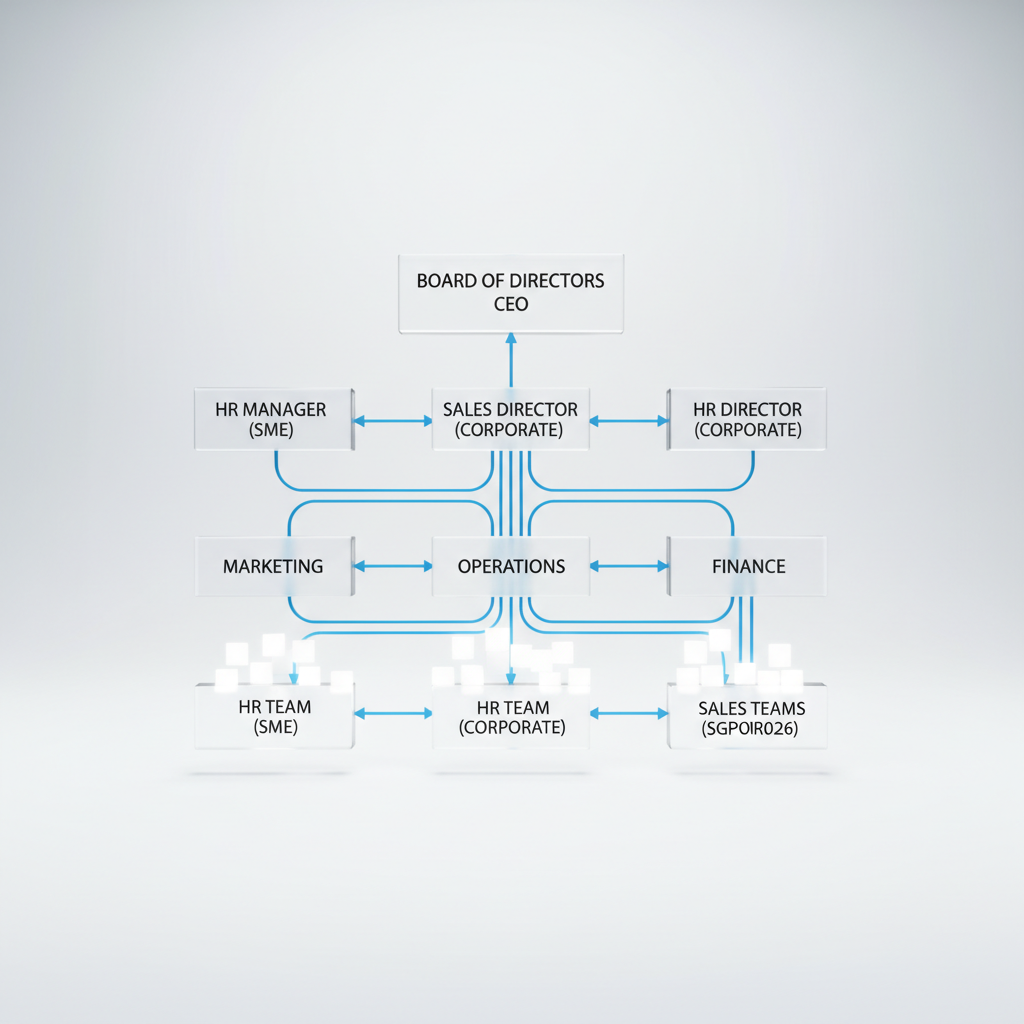
Delve into where the HR Manager and HR Director roles typically sit within their respective organisational hierarchies, their access to leadership, and the reporting structures that define their influence and decision-making power. Understanding these structural variations is crucial, particularly when examining the distinct Differences between the SMEs’ HR Manager and the Corporates’ HR Director in sale field in singapore. In the vibrant and competitive Singaporean sales landscape, the efficacy of HR support directly impacts business success, yet the operational models for delivering this support vary significantly based on company size and corporate structure. These disparities shape not only daily tasks but also the strategic impact HR can have on attracting, developing, and retaining top sales talent.
1. Proximity to C-Suite & Strategic Influence
The organisational structure profoundly dictates an HR professional’s access to senior leadership and, consequently, their strategic influence. For an HR Manager in a Singaporean SME, reporting lines are often remarkably short, typically to the Managing Director, CEO, or a key business owner. This direct line of communication means intimate involvement in daily operations and business challenges, frequently participating in strategic discussions, albeit from a tactical perspective. Their influence is broad and generalist; they often serve as the sole HR voice, directly advising on everything from sales team recruitment strategies to employee welfare and compliance. This direct access allows for swift decision-making but can also mean a reactive rather than proactive strategic approach due to operational demands. The immediacy of this role presents one of the clearest Differences between the SMEs’ HR Manager and the Corporates’ HR Director in sale field in singapore.
Conversely, a Corporate HR Director in a large organisation, especially within Singapore’s dynamic sales sector, typically sits within a more layered hierarchy. They might report to a Chief Human Resources Officer (CHRO), a regional Head of HR, or a Business Unit CEO. While their C-suite access is structured through formal meetings or strategic project groups, their influence is deeply strategic, focusing on long-term talent management, organisational development, and policy formulation aligned with global or regional business objectives. They lead discussions on large-scale initiatives, such as designing comprehensive compensation plans for the sales force or implementing company-wide talent development programs. Their strategic input is often a synthesis of data, best practices, and foresight, contributing to broader organisational goals rather than immediate operational needs. This structured, strategic approach highlights a fundamental difference in how HR leadership operates across business scales.
2. HR Department Size & Support Staff
The scale of the HR department is a significant differentiator. An HR Manager in an SME often operates as a solitary generalist, or with a very small team. This means responsibility for the entire HR spectrum – from drafting sales role job descriptions, conducting interviews, onboarding new hires, managing payroll, handling employee relations issues, to overseeing performance reviews and ensuring compliance with Singaporean labor laws. Their role is hands-on and operational, requiring vast knowledge and the ability to juggle multiple responsibilities. Lacking dedicated support staff, they often rely on external vendors for specialised services or must become proficient in these areas themselves. This wide-ranging operational requirement defines a core aspect of the Differences between the SMEs’ HR Manager and the Corporates’ HR Director in sale field in singapore, particularly concerning time allocation and strategic focus.
In contrast, a Corporate HR Director leads a much larger, often global or regional, team of specialists. This team might include dedicated sales recruiters, HR Business Partners (HRBPs) assigned to specific sales units, Learning & Development (L&D) professionals, Compensation & Benefits (C&B) experts, and HR administrators. The Director’s role shifts from execution to leadership, delegation, and strategic oversight. They focus on setting HR strategy, mentoring their team, managing complex employee relations cases, and ensuring HR initiatives align with broader business objectives. The luxury of a larger support staff frees the Director from operational minutiae, allowing more time for high-level strategic planning, fostering a talent-rich environment for the sales organization, and navigating complex organisational change. This distinction in team size and structure profoundly impacts the nature of the day-to-day work and the potential for strategic impact.
3. Budgetary Control & Resource Allocation for HR Initiatives
Budgetary control and resource allocation capacity are key indicators of influence and autonomy, revealing another crucial aspect of the Differences between the SMEs’ HR Manager and the Corporates’ HR Director in sale field in singapore. An HR Manager in an SME typically operates with limited independent budgetary authority. HR expenses are often tightly integrated into the overall operational budget, requiring direct approval from the MD or CEO for any significant expenditure. Decisions on investing in new HR software, sales team training, or employee engagement initiatives are often direct discussions with senior leadership, focused on proving immediate ROI and cost-effectiveness. Resource allocation is lean, prioritising essential needs over long-term strategic investments, reflecting the SME’s more constrained financial environment and focus on immediate growth.
Conversely, a Corporate HR Director generally manages a substantial and often multi-faceted HR budget. This budget is usually broken down by function (e.g., recruitment, L&D, C&B, HR technology), granting the Director considerable autonomy to allocate resources within these approved parameters. They are responsible for strategic financial planning, justifying large investments in HR initiatives that support the sales division, such as advanced CRM training, leadership development for sales managers, or sophisticated talent analytics platforms. Their decisions are based on long-term strategic impact, leveraging financial resources to enhance organisational capabilities and secure competitive advantage. They often present business cases to senior leadership or finance committees, demonstrating anticipated returns on HR investments. This difference in budgetary control underscores the varying levels of financial empowerment and strategic long-term planning inherent in each role. For deeper insights into the strategic role of HR in modern organizations, particularly concerning budget and influence, resources like those from the Society for Human Resource Management (SHRM) offer valuable perspectives on global HR best practices.
Skill Sets & Professional Development
The human resources landscape in Singapore presents a dynamic environment, particularly when comparing the essential skills, required expertise, and common professional development trajectories for HR professionals operating within the sales domain of Small and Medium-sized Enterprises (SMEs) versus their counterparts in larger corporate environments. The fundamental Differences between the SMEs’ HR Manager and the Corporates’ HR Director in sales field in Singapore are profound, shaped by organizational scale, operational complexity, and strategic focus.
1. Generalist vs. Specialist HR Expertise
In SMEs, the HR Manager supporting the sales force often embodies the role of a true HR generalist. This individual is typically responsible for the entire spectrum of HR functions, from talent acquisition for sales roles, crafting competitive compensation and benefits packages, managing employee relations, overseeing performance management, to facilitating basic learning and development initiatives specifically tailored for sales teams. Their expertise needs to be broad and hands-on, directly impacting the day-to-day operations and growth of the sales department. They are expected to be agile, quick problem-solvers, and deeply embedded in the business, often working closely with sales leadership to meet immediate talent needs and foster a productive sales culture. This generalist approach demands a comprehensive understanding of HR best practices and the ability to pivot between strategic thinking and tactical execution.
Conversely, within larger corporate environments in Singapore, the HR Director for the sales field typically operates at a more strategic and specialized level. They often lead a team of HR specialists – including talent acquisition managers, compensation and benefits analysts, HR business partners, and learning and development specialists – each focusing on specific areas within the sales function. Their role involves strategic workforce planning, designing scalable talent management frameworks, implementing sophisticated performance analytics, and ensuring global HR policy alignment with local sales strategies. The corporate HR Director’s expertise is deep in strategic HR, focusing on long-term talent pipeline development, succession planning for key sales leadership roles, and leveraging HR insights to drive significant business outcomes for a large, often international, sales force. This specialization allows for greater depth of expertise in specific areas, contributing to a more nuanced and strategically driven HR function.
2. Negotiation & Stakeholder Management Skills
The nature of negotiation and stakeholder management also diverges significantly. For an HR Manager in an SME’s sales division, negotiation might primarily involve securing top sales talent with often limited budgets, managing expectations of a lean leadership team, and mediating individual employee concerns. Their ability to build strong, personal relationships with sales staff and managers is paramount, as they often act as a critical bridge between sales operations and executive management. Effective communication and persuasion are key to navigating resource constraints and ensuring the sales team feels supported and valued.
In contrast, an HR Director in a large corporate sales environment faces a far more intricate web of stakeholders. Their negotiation skills are tested through complex scenarios such as high-value vendor contracts for HR tech or external training providers, and securing buy-in from multiple departmental heads (e.g., legal, finance, marketing) for cross-functional sales initiatives. They must expertly manage the diverse and often conflicting interests of senior leadership, regional sales VPs, and global HR counterparts. Influencing C-suite executives on strategic HR investments for the sales division, navigating international compliance, and ensuring consistent application of policies across diverse sales teams require exceptional political acumen, sophisticated communication strategies, and a proven ability to build consensus across various organizational levels and geographies. According to a report by SHRM (Society for Human Resource Management), strategic HR professionals excel at integrating HR initiatives with overall business objectives, a process heavily reliant on superior stakeholder management.
3. Adaptability to Market Changes & HR Technology Trends
Adaptability is crucial for both, but its manifestation differs. The HR Manager in an SME sales environment needs to be highly agile in responding to immediate local market shifts, competitive pressures for sales talent, and rapid internal adjustments to sales strategies. They often operate with more basic HR Information Systems (HRIS) or even manual processes, requiring them to be highly resourceful and creative in leveraging existing tools. Their professional development might focus on practical skills, short courses on talent acquisition trends, or local employment law updates to ensure compliance and effectiveness in a fast-changing Singaporean job market.
For the corporate HR Director in sales, adaptability extends to understanding and influencing global market trends, navigating complex regulatory landscapes, and driving significant digital transformation within HR. They are expected to be thought leaders in leveraging sophisticated HR technology stacks (e.g., AI-driven recruitment platforms, advanced HR analytics, integrated talent management suites like Workday or SAP SuccessFactors) to optimize sales force effectiveness and efficiency. Their professional development trajectory often includes executive education programs, certifications in HR analytics or digital HR strategy, and participation in international HR forums to stay abreast of global best practices and emerging technologies. They are not just adapting to change but actively shaping the future of HR for the sales function, ensuring it remains competitive and responsive on a global scale.
Challenges & Opportunities in the Singapore Sales Market
Singapore’s dynamic sales industry presents a unique battleground for talent acquisition and retention. For Human Resources (HR) professionals, navigating this landscape requires a deep understanding of local market nuances and strategic agility. The differences between the SMEs’ HR Manager and the Corporates’ HR Director in sale field in singapore are particularly pronounced, influencing everything from recruitment strategies to compliance adherence. While both roles aim to build high-performing sales teams, their resources, challenges, and approaches diverge significantly. This analysis delves into the distinct obstacles and potential advantages faced by these key HR stakeholders when recruiting, managing, and retaining sales talent in the Lion City.

1. Attracting Top Sales Talent in Singapore
The quest for top sales talent in Singapore is fiercely competitive. For an HR Manager in an SME, this often means contending with limited brand recognition and smaller recruitment budgets. They must rely on personal networks, creative sourcing, and the appeal of a close-knit, agile environment where individuals have a broader impact. The challenge lies in convincing experienced sales professionals to join a smaller entity over a larger, more established brand. SMEs often seek versatile salespeople motivated by direct contribution and potential equity.
Conversely, the HR Director in a corporate environment benefits from a strong employer brand, substantial recruitment budgets, and structured career progression. Corporates offer comprehensive benefits, advanced training, and clearer pathways for specialization and promotion. However, they face challenges in managing higher application volumes, ensuring cultural fit across larger teams, and sometimes battling perceptions of bureaucracy. Attracting highly specialized sales roles, like enterprise sales or regional leadership, requires sophisticated recruitment machinery, leveraging global talent networks and headhunters. Understanding the competitive landscape and offering compelling value propositions is critical for both, but the how differs fundamentally depending on the organizational scale. Singapore’s robust job market demands constant innovation in talent acquisition strategies.
2. Retention Strategies in a Competitive Sales Market
Once top talent is acquired, retention becomes the next critical frontier in Singapore’s dynamic sales sector. HR Managers in SMEs often focus on fostering a strong, supportive company culture, offering direct recognition, and providing tailored professional development. Flexible work arrangements and a sense of ownership can be powerful motivators. However, higher turnover risk exists if compensation isn’t competitive or growth opportunities appear limited. SMEs need to be creative with non-monetary incentives and highlight the unique value of working in a leaner, impactful setting. Ensuring a positive employee experience is paramount.
For HR Directors in corporates, retention strategies are typically more structured and multi-faceted. This includes robust compensation plans (competitive base, attractive commissions, performance bonuses), comprehensive health benefits, structured leadership development, and clear internal mobility options, including regional assignments. While they have greater resources, they must combat potential disengagement in larger teams and the allure of rival corporate opportunities. Effective internal communication, regular performance reviews, and robust employee engagement surveys are vital tools. The Ministry of Manpower’s Fair Consideration Framework also influences retention, ensuring fair practices. Tailoring these strategies to address the motivations of sales professionals, often driven by achievement and financial rewards, is crucial for both HR roles, albeit executed through different means.
3. Navigating Regulatory Compliance & Labour Laws in SG
Navigating Singapore’s robust regulatory compliance and labour laws is a non-negotiable aspect of HR management, regardless of company size. Both SME HR Managers and Corporate HR Directors must ensure adherence to the Employment Act, Central Provident Fund (CPF) contributions, foreign worker quotas, and the Fair Consideration Framework. However, the operational burden and resource allocation differ significantly.
An HR Manager in an SME often wears multiple hats, juggling recruitment, payroll, employee relations, and compliance with limited dedicated legal or compliance resources. They typically rely on general HR knowledge, government websites, or external HR consultants to stay updated. The risk of inadvertent non-compliance due to lack of specialized expertise or capacity can be higher. This demands meticulous attention to detail and a proactive approach to understanding evolving regulations, such as those related to flexible work arrangements or retrenchment.
In contrast, HR Directors in corporates are supported by dedicated legal and compliance teams, specialized HR functions, and sophisticated HRIS systems. This allows for a deeper, more granular understanding of complex regulations and the development of robust internal policies aligning with both local laws and global corporate standards. While they have more resources, they must also ensure consistency across diverse business units, manage larger workforces, and navigate more complex employee relations, all while adhering to the strictest interpretations of Singaporean labour law. Both roles share the fundamental responsibility of protecting the organization and its employees by fostering a compliant and ethical work environment, but the scale and depth of their approach are fundamentally shaped by their organizational structure and available resources.
Partner with Shelby Global
You are looking for reliable HR Sevice Suppliers? Contact Shelby Global Now! To connect with verified talents and upgrade your orginization.
—————————————
References
– Global Human Capital Trends | Deloitte Insights: https://www2.deloitte.com/us/en/insights/topics/human-capital-trends.html
– Deloitte’s insights on sales compensation trends: https://www2.deloitte.com/us/en/insights/topics/compensation-incentives/sales-compensation-design-trends-report.html
– Society for Human Resource Management (SHRM): https://www.shrm.org/resources-and-tools/hr-topics/human-resource-management/
– The Importance of Strategic HR Management: https://www.shrm.org/resources-and-tools/hr-topics/employee-relations/pages/the-importance-of-strategic-hr.aspx
– Ministry of Manpower’s Fair Consideration Framework: https://www.mom.gov.sg/employment-practices/fair-consideration-framework