Scope of Responsibilities and Daily Operations
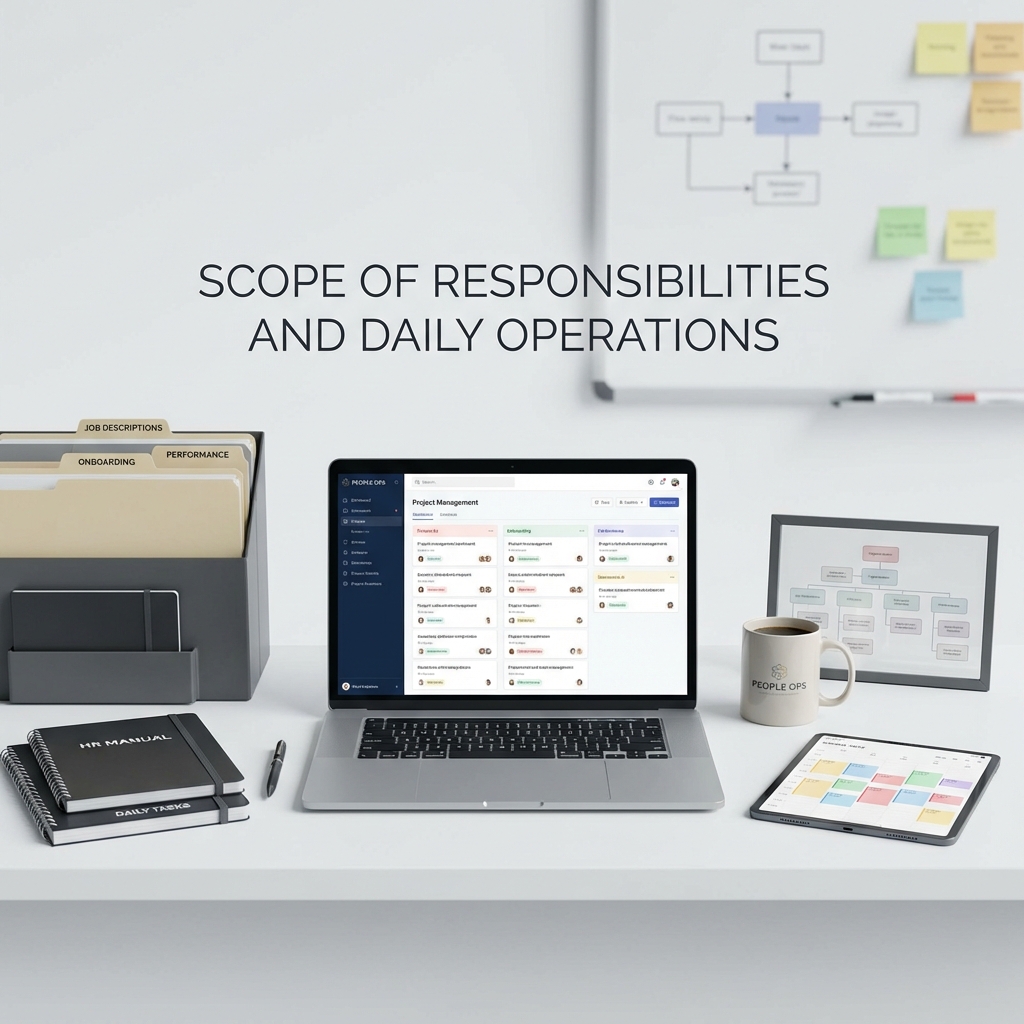
The human resources landscape in Singapore’s dynamic finance sector presents a fascinating dichotomy, particularly when examining the daily operations and strategic oversight between small and medium-sized enterprises (SMEs) and larger corporate environments. The fundamental differences between the SMEs’ HR Manager and the Corporates’ HR Director in finance field in Singapore are stark, reflecting varying organizational structures, resource availability, and strategic imperatives. While an HR Manager in an SME finance firm often navigates a broad spectrum of hands-on, generalist duties, their counterpart in a large corporation typically assumes a more specialized, strategic, and often global HR Director role. This section details the varying breadth and depth of tasks, from day-to-day operational intricacies to high-level strategic planning, highlighting the distinct responsibilities.
1. Recruitment and Talent Acquisition Strategies
For an HR Manager in an SME finance company, recruitment is often a full-cycle, hands-on endeavor. They are typically responsible for everything from drafting job descriptions and posting vacancies to conducting initial screenings, coordinating interviews, and managing offer letters. Their strategies often lean towards direct sourcing, leveraging professional networks, and utilizing cost-effective job portals. The focus is primarily on filling immediate, critical roles within a often leaner budget, making them generalists in the talent acquisition process. Success is measured by the speed and cost-efficiency of hires, ensuring the right fit for a close-knit team culture.
Conversely, a Corporate HR Director in the finance sector operates at a more strategic level. Their role involves developing overarching talent acquisition strategies that align with global business objectives. This includes workforce planning, succession planning, employer branding initiatives, and overseeing specialist recruitment teams. They might engage with executive search firms, implement sophisticated Applicant Tracking Systems (ATS), and analyze recruitment metrics to optimize long-term talent pipelines. Their focus extends beyond immediate hires to building a robust, diverse talent pool capable of driving future growth and innovation across multiple departments or even international offices.
2. Employee Relations and Engagement
The approach to employee relations and engagement also varies significantly. An SME HR Manager typically fosters highly personal and direct relationships with employees due to the smaller team size. They are often the first point of contact for all employee grievances, disciplinary issues, and welfare concerns. Their role involves proactively building a positive company culture, organizing team-building activities, and ensuring open communication channels. Conflict resolution often involves direct mediation and a deep understanding of individual employee circumstances, aiming to maintain harmony within a close-knit environment.
In contrast, a Corporate HR Director manages employee relations through structured frameworks and established policies. While they oversee the general well-being and engagement programs, their involvement in individual cases is often supervisory or advisory, delegating day-to-day issues to HR business partners or ER specialists. Their focus is on developing robust employee engagement strategies, designing comprehensive wellness programs, managing large-scale surveys, and ensuring compliance with labor laws across a diverse workforce. They also play a crucial role in managing complex industrial relations, collective bargaining, and large-scale organizational change, often working closely with legal counsel.
3. HR Policy Development and Implementation
HR Managers in SMEs are responsible for developing and implementing foundational HR policies that ensure compliance with local regulations, such as those set by the Ministry of Manpower (MOM) in Singapore. They often adapt standard templates to suit their organization’s specific needs, focusing on essential areas like leave policies, performance management, and basic codes of conduct. Their implementation is hands-on, involving direct communication and training for all employees, ensuring everyone understands and adheres to the guidelines within a simpler organizational structure.
For Corporate HR Directors, policy development is a far more intricate and strategic process. They are tasked with formulating sophisticated, enterprise-wide HR policies that not only comply with local laws but also align with global corporate standards, industry best practices, and strategic business objectives. This includes developing complex compensation and benefits structures, comprehensive diversity and inclusion policies, robust data protection protocols (e.g., PDPA compliance), and advanced performance management systems. Implementation often involves extensive communication plans, change management strategies, and collaboration with legal, compliance, and departmental heads to ensure seamless integration across a large, often multinational, workforce. Their role is about mitigating risk, driving organizational effectiveness, and shaping the corporate culture through policy design.
In essence, while both roles are critical to an organization’s success in Singapore’s finance sector, the HR Manager in an SME is a versatile generalist, a jack-of-all-trades responsible for the breadth of HR functions. The Corporate HR Director, however, is a strategic specialist, focusing on the depth and sophistication of HR initiatives to drive large-scale organizational success. The differences between the SMEs’ HR Manager and the Corporates’ HR Director in finance field in Singapore truly underscore the diverse demands placed on HR professionals within varying organizational contexts.
Strategic Impact vs. Operational Focus
The human resources function, while universally critical, manifests distinctly across organizations based on size and strategic outlook. In Singapore’s vibrant finance sector, the Differences between the SMEs’ HR Manager and the Corporates’ HR Director illustrate a fundamental divergence between ground-level operational execution and high-level strategic planning. This distinction is crucial for understanding how each role contributes to overarching organizational goals, from daily employee needs to shaping the long-term talent landscape. An SME HR Manager often wears multiple hats, deeply embedded in the business’s daily operations, while a Corporate HR Director typically operates at a macro level, steering talent strategies aligned with complex global or regional objectives. This section examines these roles through the lens of business alignment, data utilization, and their approach to organizational change.
1. ### Alignment with Business Objectives
For SMEs in Singapore’s finance industry, the HR Manager’s role is inherently operational and often reactive, deeply intertwined with immediate tactical objectives. Their primary focus is ensuring smooth daily operations by efficiently managing recruitment, onboarding, payroll, benefits, and basic compliance. Alignment is direct: quickly filling critical roles, resolving employee issues to maintain productivity, and ensuring the workforce meets short-term financial targets. For instance, in a small fintech startup, the HR Manager might source specialized tech talent, ensuring quick turnaround for product development, and managing cultural aspects of a fast-paced environment. Their impact on the bottom line stems from efficient processes and reduced turnover among key staff.
Conversely, the Corporate HR Director in a large financial institution—be it a bank, asset management firm, or insurance giant—operates with a far more strategic mandate. Their alignment is with the enterprise’s long-term vision, market positioning, and global growth strategies. This involves developing sophisticated talent acquisition frameworks, succession planning for executive roles, designing complex compensation structures, and fostering a leadership pipeline capable of navigating international regulations and market shifts. For these directors, HR is a strategic partner, contributing to competitive advantage through proactive workforce planning, talent development supporting new market entry, and cultural transformation programs. Their focus shifts from operational efficiency to strategic effectiveness, ensuring human capital strategy directly fuels sustained profitability and market leadership in a highly competitive finance landscape.
2. ### Data-Driven Decision Making
In the SME environment, HR Managers often rely on readily available, albeit less sophisticated, metrics. This includes basic headcount figures, turnover rates, recruitment speed, and employee feedback gathered through informal channels or simple surveys. Decisions are frequently informed by anecdotal evidence, direct observation, and the manager’s deep understanding of individual employees and team dynamics. While effective in smaller settings due to closer personal relationships and immediate feedback loops, this approach may lack the predictive power or broad applicability for complex strategic planning. The focus remains on reacting to immediate issues and making practical adjustments based on existing resources and perceived needs.
In stark contrast, Corporate HR Directors leverage advanced HR analytics and sophisticated data modeling to drive strategic decisions. They oversee departments that collect and analyze vast quantities of data related to workforce demographics, performance, compensation trends, employee engagement, and talent pipeline health. This enables predictive analytics for workforce planning, identifying future skill gaps, optimizing talent allocation, and assessing the ROI of HR programs. For example, a Corporate HR Director might use advanced analytics to predict future talent needs based on economic forecasts and technological disruptions in the finance industry, or to benchmark compensation against global competitors. This allows for proactive, evidence-based strategic interventions that align with long-term business goals, as highlighted by resources like the Society for Human Resource Management (SHRM) on the growing importance of HR analytics in strategic talent management.
3. ### Change Management and Organizational Development
For an SME HR Manager, change management is typically executed on a smaller, more localized scale. These changes might involve implementing new software, adjusting company policies, or managing the impact of minor restructuring. The process often involves direct communication, hands-on support for employees, and an adaptive approach within a relatively homogeneous culture. Organizational development efforts usually focus on immediate skill development, team building, and ensuring compliance with evolving local regulations. The HR Manager’s close proximity to the workforce allows for swift responses and personalized support during transitions, but the scope of change is generally contained.
The Corporate HR Director, conversely, is at the helm of large-scale organizational change initiatives. This includes leading major cultural transformations, implementing global restructuring, merging acquired entities, or spearheading diversity, equity, and inclusion (DEI) programs across multiple regions and business units. Their role involves strategic communication planning, stakeholder management at executive levels, designing comprehensive training programs, and developing new organizational structures to support long-term strategic objectives. These directors are pivotal in shaping the organization’s future resilience and adaptability, ensuring its human capital strategy can withstand and thrive amidst significant market disruptions and evolving business models in the financial sector. Understanding these broader strategic implications is key to appreciating the comprehensive Differences between the SMEs’ HR Manager and the Corporates’ HR Director in finance field in Singapore, especially concerning their strategic impact on the organization’s future growth and competitive edge.
Financial Acumen and Budgetary Control
In the dynamic and highly regulated financial sector of Singapore, the HR function transcends traditional administrative roles, demanding robust financial acumen and stringent budgetary control. This section delves into the intricate financial responsibilities, compensation structures, and budget management unique to HR professionals within this industry. It specifically highlights the significant differences between the SMEs’ HR Manager and the Corporates’ HR Director in finance field in Singapore, particularly concerning compliance and cost optimization strategies, where HR plays a pivotal role in ensuring both adherence to regulations and fiscal prudence.

1. Compensation and Benefits Management
Compensation and benefits (C&B) management within Singapore’s finance sector is a critical strategic lever for attracting, retaining, and motivating top-tier talent. For HR professionals, this involves a sophisticated understanding of market competitiveness, industry-specific benchmarks, and the complex interplay of base salary, variable bonuses, long-term incentives, and non-monetary benefits. The approach to C&B design and implementation starkly contrasts between smaller and larger entities. An SME’s HR Manager typically has more direct involvement in crafting agile and often personalized compensation packages, directly negotiating with candidates and employees to balance cost efficiency with competitive offerings. Their focus might be on direct financial incentives and building a strong team culture to compensate for scale.
Conversely, a Corporate’s HR Director in a financial institution manages expansive C&B frameworks that are often globally aligned, highly structured, and subject to stringent internal and external scrutiny. This involves sophisticated job grading, performance management systems linked to remuneration, and detailed analysis of executive compensation, often with a focus on risk-aligned pay structures as mandated by regulatory bodies. They leverage advanced data analytics, participate in industry-wide surveys, and work closely with finance departments to model the impact of compensation decisions on the company’s bottom line, ensuring both market competitiveness and regulatory compliance. The sheer volume and complexity of compensation structures, including deferred compensation and clawback provisions, necessitate a deep understanding of financial instruments and risk management principles.
2. HR Budget Allocation and Cost Control
Effective HR budget allocation and rigorous cost control are paramount to the financial health of any organization, particularly within the cost-sensitive finance sector. The HR budget covers a broad spectrum, including recruitment, training and development, HR technology, employee engagement programs, and C&B administration. The scale and scope of managing this budget represent a key difference between the SMEs’ HR Manager and the Corporates’ HR Director.
An SME’s HR Manager often operates with a leaner budget, demanding resourcefulness and a hands-on approach to cost optimization. This might involve directly negotiating with training providers, leveraging free or low-cost recruitment channels, and implementing efficient, yet impactful, employee engagement initiatives. Their focus is on maximizing the return on every HR dollar spent, often acting as a generalist who oversees all budgetary aspects. For a Corporate’s HR Director, budgetary control involves managing significantly larger sums across multiple departments, global regions, and diverse HR functions. This requires strategic financial planning, detailed forecasting, and robust vendor management strategies to achieve economies of scale. They are instrumental in identifying opportunities for cost efficiencies through HR technology adoption, outsourcing non-core functions, and implementing proactive talent management strategies to reduce costly employee turnover. Both roles, however, share the imperative of demonstrating HR’s financial value and contribution to overall business performance.
3. Financial Regulatory Compliance in HR
Compliance is non-negotiable in Singapore’s financial sector, and HR plays a crucial role in navigating a complex web of financial regulatory requirements. This includes adherence to guidelines from the Monetary Authority of Singapore (MAS regulatory framework) regarding ‘fit and proper’ criteria for employees, anti-money laundering (AML) and counter-terrorism financing (CFT) screening during recruitment, and data privacy regulations (PDPA) concerning employee information. Furthermore, HR must ensure compliance with the Ministry of Manpower’s (MOM) employment laws, fair consideration framework, and specific guidelines for foreign talent.
The extent and nature of this compliance burden highlight a significant difference between the SMEs’ HR Manager and the Corporates’ HR Director. An SME’s HR Manager often bears the primary responsibility for understanding and implementing these regulations, frequently relying on external legal counsel or consultants due to limited internal resources. Their challenge lies in keeping abreast of evolving regulations while managing a broad HR portfolio. In contrast, a Corporate’s HR Director operates within a highly sophisticated compliance ecosystem. They work closely with dedicated legal, risk, and compliance departments, often leading teams of HR professionals specializing in compliance. They develop and enforce robust internal policies, conduct regular compliance audits, and implement comprehensive training programs to ensure all employees understand their regulatory obligations. The stakes are incredibly high, as non-compliance can result in severe financial penalties, reputational damage, and even loss of operating licenses for financial institutions, underscoring HR’s critical role in safeguarding the organization’s integrity and long-term viability.
Team Structure and Reporting Lines
The organizational footprint of Human Resources (HR) roles within Singapore’s vibrant finance sector varies significantly between Small and Medium-sized Enterprises (SMEs) and large corporate environments. Understanding these differences between the SMEs’ HR Manager and the Corporates’ HR Director in finance field in Singapore is crucial. This section illustrates typical team sizes, hierarchical structures, and reporting lines, highlighting how these roles adapt to organizational scale and complexity.
1. Team Size and HR Department Structure
In a Singaporean financial SME, the HR function is often lean, with the SME’s HR Manager typically operating as a lone practitioner or leading a very small team of one to three. This generalist role demands expertise across all HR facets: recruitment, payroll, benefits, employee relations, and compliance with local labor laws. Their day-to-day involves hands-on execution of all HR operations, with limited scope for specialization due to the organization’s smaller scale and budget constraints. The focus is primarily on operational efficiency and maintaining a healthy work environment.
Conversely, within a large corporate financial institution, the Corporates’ HR Director presides over a significantly larger, specialized HR department. Team sizes range from five to fifty-plus professionals, structured into various centers of expertise (e.g., talent acquisition, C&B, HRBPs, L&D). The HR Director’s role shifts from hands-on execution to strategic leadership, overseeing multiple HR managers and specialists. They set HR strategy, ensuring its alignment with overall business objectives across diverse business units or global operations. This specialization allows for deeper expertise in complex areas like global mobility and advanced talent analytics, reflecting the evolution of HR into a strategic HR partnership.
2. Reporting to Senior Management/Board
Reporting lines further underscore the fundamental differences between the SMEs’ HR Manager and the Corporates’ HR Director in finance field in Singapore. In an SME, the HR Manager often reports directly to the CEO, Managing Director, or Head of Finance. This direct access to top decision-makers offers unique influence over organizational culture and strategy, even if HR is initially perceived administratively. The HR Manager carries full HR accountability, benefiting from quick decision-making but also facing the challenge of single-handedly driving strategic initiatives.
For a Corporate HR Director, the reporting structure is typically more stratified and formal. They might report to a Chief Human Resources Officer (CHRO), a regional Head of HR, or directly to the CEO/COO in larger setups. As a core member of the senior leadership team or an executive committee, the HR Director frequently engages in board-level discussions. Their mandate is explicitly strategic: to develop and implement HR policies supporting long-term business goals, succession planning, and organizational development. They contribute to overall corporate strategy, leveraging data and insights from their specialized teams to inform critical business decisions and manage complex stakeholder relationships.
3. Cross-functional Collaboration
Cross-functional collaboration patterns also highlight distinctions. The SME HR Manager engages broadly and often informally with all departments. Given the smaller organizational size, they serve as the primary HR point of contact for employees and managers, fostering direct relationships. This direct involvement allows for immediate issue resolution and a deep understanding of daily operational challenges. Collaboration is agile, unburdened by extensive bureaucracy, enabling swift adaptation to changing business needs.
In contrast, the Corporate HR Director’s collaboration is more structured and strategic. They work closely with C-suite executives, legal counsel, finance, and other business unit heads on large-scale strategic projects like M&A integration or global talent initiatives. Their interaction often takes place in formal committees or project teams, focusing on aligning HR initiatives with broader corporate objectives. This high-level engagement ensures HR is a strategic partner in driving organizational performance and shaping corporate culture across diverse and complex functional landscapes, reflecting the sophisticated nature of HR in large financial institutions.
Career Trajectories and Compensation Packages
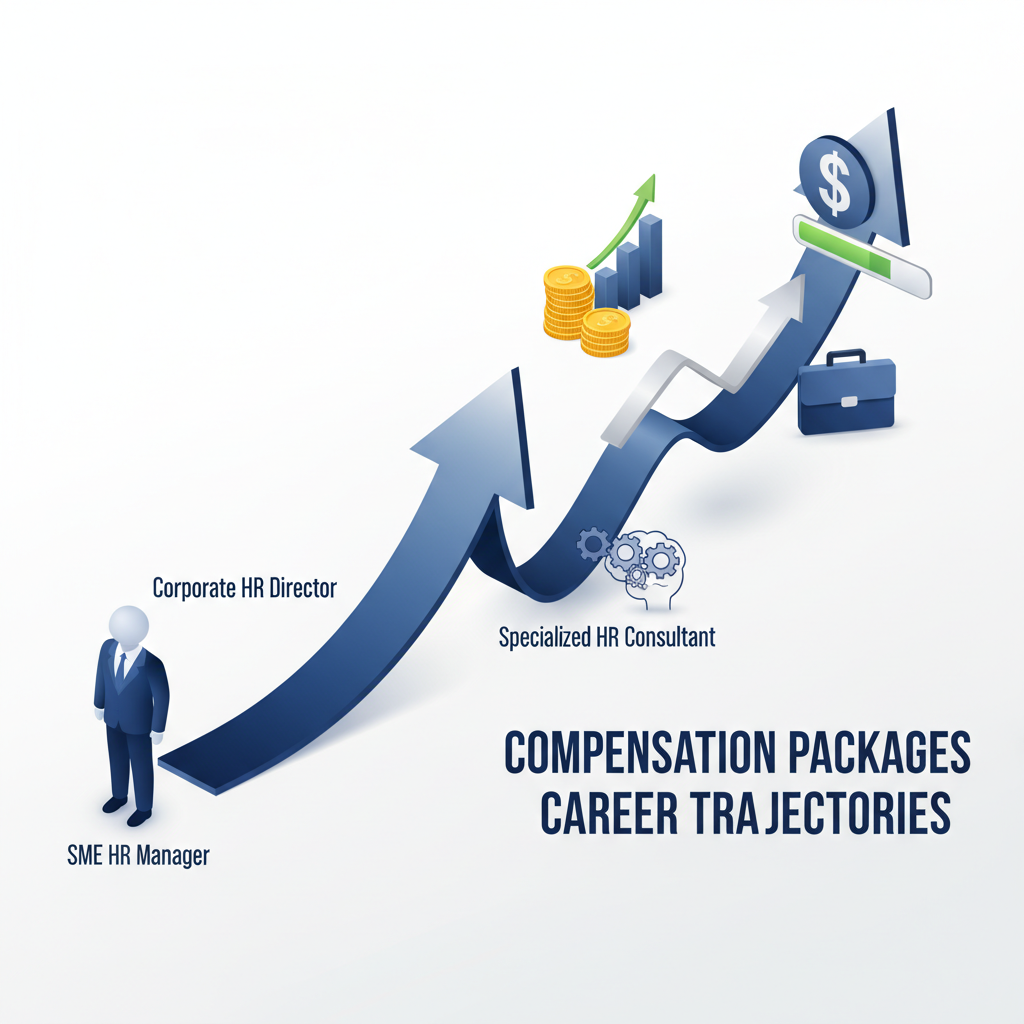
The landscape of Human Resources (HR) in Singapore’s dynamic finance sector presents vastly different career trajectories and compensation packages depending on the organizational context. Aspiring HR professionals often weigh the unique challenges and rewards of working as an HR Manager in Small and Medium-sized Enterprises (SMEs) against the strategic influence and comprehensive remuneration of an HR Director in large multinational corporations. This comparison will delve into the distinct paths, growth opportunities, and typical remuneration structures, offering insights into the evolving demands of HR careers in Singapore’s financial hub. Understanding these differences between the SMEs’ HR Manager and the Corporates’ HR Director in finance field in Singapore is crucial for strategic career planning. We will explore HR career paths in Singapore finance and the varying HR compensation in Singapore finance.
-
Salary Expectations and Benefits
The most immediate distinction between an HR Manager in an SME and an HR Director in a large corporate within Singapore’s finance sector lies in their compensation packages. An HR Manager in an SME typically operates as a generalist, overseeing the full spectrum of HR functions from recruitment and onboarding to payroll, employee relations, and basic compliance. Due to the leaner structures and often tighter budgets of SMEs, their salary ranges tend to be more modest. While specific figures vary based on the SME’s size and profitability, an HR Manager might expect a base salary ranging from SGD 4,500 to SGD 8,000 per month. Benefits packages, though present, may be less extensive, often including standard health insurance and annual leave, with fewer elaborate perks like significant performance bonuses, stock options, or executive health screenings. The emphasis is often on hands-on operational delivery rather than strategic leadership.
Conversely, an HR Director in a large corporate finance institution commands a significantly higher remuneration package, reflecting their strategic role, extensive experience, and the complexity of managing HR for thousands of employees across multiple business units or even regions. These roles are pivotal in shaping organizational culture, driving talent strategy, and ensuring compliance with stringent financial regulations. Base salaries for HR Directors in large corporates can range from SGD 12,000 to SGD 25,000 per month, often supplemented by substantial annual bonuses (which can be a significant percentage of the base), long-term incentives like stock options, comprehensive health and wellness programs, robust retirement plans, and other executive perks. The Ministry of Manpower Singapore offers general guidance on employment practices and wages, though specific HR Director salaries in finance are often benchmarked by specialized recruitment firms. The total compensation package is designed to attract and retain top-tier strategic talent capable of navigating complex global financial markets.
-
Professional Development Opportunities
Professional development also presents a divergence. HR Managers in SMEs often gain broad, hands-on experience across all HR disciplines. Their learning is typically self-driven, relying on external workshops, industry seminars, and professional certifications to fill knowledge gaps. They become adept problem-solvers, often wearing multiple hats, which builds a strong generalist foundation. However, opportunities for formal, structured leadership development programs or specialized training unique to the finance sector might be limited by resource constraints. The exposure is deep within the specific SME but might lack the breadth of exposure to diverse business lines or international HR practices found in larger organizations.
For HR Directors in large corporates, professional development is often structured, intensive, and highly specialized. These organizations invest heavily in their senior leaders, offering access to executive leadership programs, advanced certifications in areas like HR analytics, M&A HR, or global mobility, and opportunities to lead cross-functional or international projects. Mentorship from senior executives is common, and many HR Directors are encouraged to pursue advanced degrees or executive education. The scale and global reach of large corporates provide unparalleled exposure to sophisticated HR technologies, complex regulatory environments, and diverse talent challenges, fostering continuous growth and specialization in cutting-edge HR practices relevant to the finance industry.
-
Future Growth and Industry Specialization
The long-term career trajectory for an HR Manager in an SME often involves a move towards larger SMEs, specializing in a particular HR function (e.g., compensation & benefits, talent acquisition), or transitioning into a specialist role within a larger corporate. Their generalist background makes them versatile, but to advance significantly, they might need to gain deeper expertise in a specific area or seek roles with greater strategic scope. Some may even leverage their holistic understanding to venture into HR consulting.
An HR Director in a large corporate, especially within the finance sector, typically has a clearer path to higher-level strategic roles. This can include ascending to regional or global HR leadership positions, becoming a Chief People Officer (CPO), or even moving into general management roles. Their specialization might deepen into areas like financial services regulatory compliance HR, risk management HR, or supporting complex global mergers and acquisitions. The scale of operation provides opportunities to influence organizational strategy at the highest levels and shape the talent agenda for an entire region or global business unit. The “Differences between the SMEs’ HR Manager and the Corporates’ HR Director in finance field in Singapore” are not just about present roles, but about vastly different future possibilities, emphasizing strategic influence for the latter.
In conclusion, while both roles contribute significantly to their respective organizations, the HR Manager in an SME in Singapore’s finance sector thrives on operational breadth and hands-on problem-solving with a foundational compensation package. In contrast, the HR Director in a large corporate is a strategic leader, driving complex talent initiatives with a premium compensation and benefits structure, and a clear path towards top-tier executive leadership. The choice between these paths hinges on an individual’s career aspirations, desired impact, and preferred working environment.
Partner with Shelby Global
You are looking for reliable HR Sevice Suppliers? Contact Shelby Global Now! To connect with verified talents and upgrade your orginization.
—————————————
References
– Employment Act – Ministry of Manpower Singapore: https://www.mom.gov.sg/employment-practices/employment-act
– HR analytics in strategic talent management: https://www.shrm.org/resources-and-tools/hr-topics/talent-acquisition/pages/what-is-hr-analytics.aspx
– MAS regulatory framework: https://www.mas.gov.sg/regulation/regulatory-framework
– The evolution of the HR operating model: From HR services to strategic HR: https://www2.deloitte.com/us/en/insights/focus/human-capital-trends/2017/hr-operating-model-hr-services-strategic-hr.html
– Ministry of Manpower Singapore: https://www.mom.gov.sg/employment-practices/salary-and-wages