
The Foundation: Core HR Team Size and Scope
In Vietnam’s dynamic and rapidly expanding entertainment sector, the effectiveness of human resources management is paramount to an organization’s success. However, the Differences between the SMEs’ HR Structure and the Corporates’ HR Structure in Entertainment field in vietnam are stark, fundamentally shaping their operational capacity and strategic reach. While both strive for optimal talent management, their pathways are dictated by scale, resources, and overarching business objectives.

1. Lean vs. Layered: HR Team Composition
For small and medium-sized enterprises (SMEs) in the Vietnamese entertainment landscape, HR departments often embody a ‘lean’ structure. This typically means a very small team, sometimes even a single HR manager or administrative assistant, juggling a multitude of responsibilities. Their agility is a significant advantage, allowing for rapid decision-making and direct communication. However, this lean approach can stretch resources thin, limiting depth of expertise for complex HR challenges like sophisticated talent acquisition strategies or comprehensive workforce planning. The focus often remains on immediate, day-to-day needs and compliance.
Conversely, large corporations operating in Vietnam’s entertainment industry, such as major film studios or broadcast networks, boast a ‘layered’ HR team composition. These departments are significantly larger, often structured with multiple levels of management and specialized units. This allows for a more robust and segmented approach to HR functions, with teams dedicated to specific areas. The hierarchical nature ensures clear reporting lines and accountability, but can sometimes lead to slower decision-making. Nevertheless, the sheer volume of personnel and complexity of operations necessitate a comprehensive HR infrastructure to maintain order, ensure scalability, and support extensive growth.
2. Generalist vs. Specialist Roles
The distinction between HR roles is one of the most pronounced differences between the SMEs’ HR structure and the corporates’ HR structure in the entertainment field in Vietnam. In SMEs, the HR professional is typically a generalist, a jack-of-all-trades responsible for nearly every facet of human resources. This includes recruitment, onboarding, payroll processing, basic training coordination, employee relations, and fundamental HR compliance. Their versatility is crucial for managing diverse operational capacity needs with limited personnel. While this offers a holistic view, it may limit the ability to delve into highly specialized or strategic areas with significant depth.
Large entertainment corporations, on the other hand, employ a brigade of HR specialists. These professionals possess deep expertise in specific HR domains. For instance, dedicated talent acquisition teams focus solely on recruitment strategies and employer branding; compensation & benefits specialists design intricate pay structures; learning & development experts craft bespoke training modules; and HR business partners align HR initiatives directly with specific business units’ goals. This specialization allows for a higher degree of precision, innovation, and strategic impact, elevating the overall employee experience and organizational effectiveness. Every aspect of the employee journey is handled by an expert, from initial recruitment to long-term career development.
3. Strategic vs. Operational Focus
The core focus of HR also diverges significantly. For many Vietnamese entertainment SMEs, the HR function is predominantly operational. Day-to-day tasks of ensuring payroll is processed, leaves are managed, and basic legal compliance is met consume the majority of HR’s time and resources. While vital, this operational emphasis often leaves little room for strategic foresight or long-term human capital development. HR’s role is frequently perceived as administrative, reacting to immediate needs rather than proactively shaping the workforce for future challenges and opportunities.
In contrast, large corporations view HR as a critical strategic partner. While operational tasks are efficiently handled by specialized teams, a significant portion of HR’s effort is dedicated to strategic initiatives. This includes workforce planning, organizational development, succession planning, fostering a robust company culture, and aligning human capital strategies with overarching business objectives. For these entities, HR is not merely about managing people; it’s about leveraging human potential to achieve competitive advantage and drive sustainable growth. This strategic emphasis ensures HR contributes directly to the company’s long-term vision, adapting to market shifts and talent trends. As the role of HR continues to evolve globally, becoming increasingly strategic, large Vietnamese entertainment corporations are at the forefront of this transformation, integrating HR deeply into their executive decision-making processes.
Talent Acquisition and Development Strategies
In Vietnam’s dynamic and rapidly expanding entertainment sector, the approaches to attracting, hiring, and nurturing talent diverge significantly between Small and Medium-sized Enterprises (SMEs) and large corporations. These differences between the SMEs’ HR structure and the corporates’ HR structure in the entertainment field in Vietnam are primarily dictated by resource availability, brand power, and the scale of operations, profoundly shaping their respective HR strategies and impact on talent acquisition and talent development.
1. Recruitment Challenges & Methods
SMEs in Vietnam’s entertainment sector face unique recruitment challenges. Lacking the extensive financial resources and established brand recognition of larger entities, they often struggle to attract top-tier talent directly. Their methods typically lean heavily on personal networks, internal referrals, and targeted social media outreach. They might employ agile talent scouts or rely on direct appeals to individuals with niche skills, such as specialized video editors, unique content creators, or specific performing artists. The hiring process is often more intimate and informal, allowing for a quicker assessment of cultural fit within a smaller team. These enterprises prioritize passion, adaptability, and the ability to wear multiple hats, as team members frequently contribute across various functions.
Conversely, large corporations possess significant advantages in the quest for talent. Their established employer brand, often backed by national or even international recognition, allows them to cast a wider net. They leverage sophisticated Applicant Tracking Systems (ATS), professional recruitment agencies, and participate in high-profile career fairs. Their HR structures include dedicated recruitment teams and substantial budgets for marketing open positions. While they may also utilize internal referrals, their scale demands more standardized and formal processes. Large corporations are better equipped to attract a broader pool of candidates, including those seeking stability, structured career paths, and higher compensation, often targeting established professionals or top graduates from arts and communication academies. Their focus is not just on filling roles but on strategic workforce planning and cultivating a pipeline of future leaders.
2. Onboarding and Integration Processes
The onboarding experience in SMEs in Vietnam’s entertainment sector is typically hands-on and organic. New hires are often integrated quickly into existing projects, learning by doing alongside experienced team members. The emphasis is on immediate productivity and direct mentorship from a founder or a senior colleague. Formal orientation programs are rare, with new employees expected to assimilate quickly into the company culture through direct interaction and observation. This informal approach, while lacking structured training, fosters a strong sense of camaraderie and allows individuals to understand their impact directly within the small team dynamic. The quick integration is crucial for resource-constrained SMEs, where every team member’s contribution is immediately felt.
In contrast, large corporations employ comprehensive and structured employee onboarding programs. These can span several weeks or even months, involving multiple departments. New hires typically undergo formal orientation sessions covering company policies, values, departmental structures, and compliance requirements. Many large entertainment corporations implement ‘buddy systems’ or dedicated HR representatives to guide new employees through their initial period. Training modules, access to e-learning platforms, and cross-functional introductions are common. This thorough process ensures cultural assimilation, provides a clear understanding of career pathways, and reinforces the company’s brand identity. While more resource-intensive, this systematic approach aims to reduce turnover, enhance productivity, and ensure long-term retention of valuable talent.
3. Learning & Development Initiatives
Learning & development within SMEs in Vietnam’s entertainment sector is often pragmatic and opportunistic. Formal L&D departments are uncommon, and training typically occurs through on-the-job experiences, peer-to-peer learning, and direct mentorship from senior staff or founders. SMEs might fund external workshops or short courses for specific skill gaps as needed, but comprehensive, long-term programs are rare due to budget constraints. The focus is on immediate skill enhancement relevant to current projects. Employees are often encouraged to pursue self-directed learning and bring new knowledge back to the team, fostering a culture of continuous improvement through shared experiences. While less structured, this approach can be highly effective in developing adaptable and versatile talent.
Large corporations, leveraging their extensive resources and strong brand power, invest significantly in formal talent development programs. They often have dedicated L&D departments offering a wide array of courses, workshops, and certifications, both in-house and through external providers. These initiatives span technical skills, soft skills, leadership development, and even international exchange programs. E-learning platforms, structured mentorship programs, and clear career progression frameworks are standard. The strategic intent is not just to upskill but to retain talent by offering clear growth paths and fostering a culture of continuous learning and innovation. As highlighted by research on the importance of upskilling, investing in employee growth is critical for long-term competitiveness and adaptation in fast-evolving sectors like entertainment. (The Power of Upskilling – Harvard Business Review). This robust investment in L&D helps large corporations attract ambitious professionals seeking structured career advancement and specialized expertise, reinforcing their position as preferred employers in the entertainment sector Vietnam.
Compensation, Benefits, and Performance Management
Examines the divergent methods used for remuneration, employee perks, and performance evaluation in smaller vs. larger entertainment entities in Vietnam, reflecting their budgetary and structural differences.
The vibrant and rapidly expanding entertainment industry in Vietnam presents a fascinating dichotomy in its human resources management, particularly concerning compensation, benefits, and performance evaluation. The differences between the SMEs’ HR structure and the corporates’ HR structure in the entertainment field in Vietnam are profound, shaped by varying financial capacities, organizational complexities, and strategic objectives. While larger corporations often emulate global HR best practices, smaller and medium-sized enterprises (SMEs) adapt more agile and often personalized approaches to managing their talent.
1. Salary Structures & Incentive Programs
In the realm of employee compensation Vietnam, significant contrasts emerge. Larger entertainment corporations typically boast structured, competitive salary bands for various roles, reflecting extensive market research and a commitment to attracting top talent. Their corporate HR strategies often include robust annual bonus schemes, long-term incentive plans (like stock options or profit-sharing), and clearly defined career progression paths linked to salary increments. This systematic approach aims to ensure fairness, transparency, and consistency across their vast workforce, often referencing reports like the Robert Walters Vietnam Salary Survey & Hiring Advice to benchmark pay scales.
Conversely, SME HR practices in the Vietnamese entertainment HR landscape are often characterized by greater flexibility and a project-based approach. Base salaries might be lower due to HR budget constraints, but employees often receive higher performance-based bonuses directly tied to the success of specific projects or individual contributions. Incentive programs Vietnam for SMEs might include a significant share of project revenue or one-off bonuses for exceptional work. While this can offer high rewards for successful ventures, it can also lead to income instability. For SMEs, the challenge lies in balancing attractive compensation with sustainable financial management, particularly in a volatile industry.
2. Non-Monetary Benefits and Perks
Beyond direct remuneration, the provision of non-monetary benefits also highlights the differences between the SMEs’ HR structure and the corporates’ HR structure in the entertainment field in Vietnam. Large corporations generally offer comprehensive benefits packages that extend well beyond the statutory requirements. These often include extensive health and life insurance, generous paid time off, professional development budgets, gym memberships, subsidized meals, and even transportation allowances. Such perks are integral to their talent retention entertainment strategies, fostering employee loyalty and well-being, and reflecting a long-term investment in their human capital.
For SMEs, the focus shifts to creating a unique work environment and offering benefits that align with their size and culture. While formal benefits might be limited, SMEs often excel in providing intangible perks: greater creative autonomy, a close-knit community feel, direct access to leadership, and opportunities for rapid skill development through diverse role assignments. They might offer flexible working hours, remote work options, or team-building activities that leverage the country’s rich cultural experiences. These personalized benefits, though not always quantifiable, play a crucial role in attracting and retaining talent who value work-life balance and a sense of belonging over extensive corporate packages.
3. Performance Review Systems & Feedback
The approach to performance management Vietnam also varies significantly. Large entertainment corporations typically employ highly formalized and structured performance review systems. These often involve annual or bi-annual reviews, objective key performance indicators (KPIs), 360-degree feedback mechanisms, and sophisticated performance appraisal software. The goal is to provide consistent, measurable feedback, identify training needs, and link performance directly to career progression and rewards. This structured approach, while resource-intensive, supports HR scalability and ensures equitable evaluation across a diverse range of departments and roles.
In contrast, SMEs in the Vietnamese entertainment HR sector tend to adopt more agile and informal performance review processes. Feedback is often immediate, project-specific, and delivered directly by team leaders or founders. While lacking the formality of corporate systems, this direct and continuous feedback can be highly effective in a fast-paced environment, fostering rapid learning and adaptation. Challenges for SMEs lie in ensuring objectivity, maintaining documentation for long-term career planning, and providing structured development opportunities. Their success often hinges on strong interpersonal relationships and a culture of open communication, which are vital for motivating and developing talent without the extensive HR infrastructure of larger entities.
Ultimately, the differences between the SMEs’ HR structure and the corporates’ HR structure in the entertainment field in Vietnam underscore a broader truth: effective HR management is not about a one-size-fits-all solution, but about tailoring strategies to fit organizational scale, budget, and cultural context. Both approaches have their strengths and weaknesses, contributing uniquely to the dynamic and competitive landscape of Vietnam’s entertainment sector.
HR Technology and Compliance Landscape
The entertainment industry in Vietnam is a dynamic and rapidly expanding sector, yet it presents a fascinating dichotomy in its approach to human resources, particularly concerning technology adoption and regulatory adherence. This section delves into the significant Differences between the SMEs’ HR Structure and the Corporates’ HR Structure in Entertainment field in Vietnam, highlighting how these disparities impact operational efficiency, talent management, and crucial risk mitigation strategies across the spectrum from agile small and medium-sized enterprises (SMEs) to well-established corporations.
While large entertainment corporations often boast sophisticated HR infrastructures, SMEs frequently navigate a landscape constrained by limited resources and expertise. This fundamental divergence dictates everything from how employee data is managed to the robustness of their legal compliance frameworks, ultimately shaping their long-term sustainability and competitiveness in a demanding market.
1. HRIS and Digital Tools Adoption
The embrace of HR technology adoption in Vietnam’s entertainment sector varies dramatically. For established corporations, investing in comprehensive Human Resources Information Systems (HRIS) is standard practice. These systems integrate various HR functions, from payroll processing and benefits administration to talent acquisition and performance management. Advanced digital HR tools entertainment companies utilize often include Applicant Tracking Systems (ATS), learning management platforms, and sophisticated analytics dashboards, enabling data-driven decision-making and streamlined workflows. This investment in corporate HRIS advantages allows for greater efficiency, better employee experience, and a stronger competitive edge in attracting top talent.
Conversely, many SMEs in the entertainment industry still rely on manual processes, spreadsheets, or basic, disparate software solutions. The perceived cost and complexity of implementing robust HRIS platforms often present significant SME HR software challenges. While some might use simple digital tools for specific tasks like payroll, a unified, integrated system remains a luxury. This reliance on outdated methods leads to inefficiencies, potential data inconsistencies, and a higher administrative burden, diverting valuable resources that could otherwise be invested in creative projects or talent development.
2. Labor Law Compliance & Risk Management
Navigating Vietnam’s labor code is a critical aspect of HR, and the approach to labor law compliance & risk management also reveals stark contrasts. Large corporations typically employ dedicated legal teams or engage specialized consultants to ensure meticulous adherence to the complex and evolving employment regulations, including those pertaining to contracts, working hours, social insurance contributions, and employee rights. Their corporate compliance strategies are proactive, focusing on robust internal policies, regular audits, and comprehensive training to minimize legal exposure and reputational damage. The emphasis on minimizing HR risk management entertainment for corporates is paramount, given their public profile and potential for high-stakes litigation.
For SMEs, the reality can be quite different. Limited budgets often mean that legal advice is sought reactively rather than preventatively. While they strive for SME regulatory adherence, a lack of in-depth understanding of specific provisions or frequent changes in legislation can lead to unintentional non-compliance. Issues such as improper contract termination, inadequate social insurance contributions, or disputes over intellectual property rights are more prevalent. Non-compliance, even unintentional, can result in significant fines, employee grievances, and irreparable damage to an SME’s brand. Understanding the intricacies of Vietnam’s labor code is vital for all businesses, as highlighted by resources like this comprehensive Vietnam Employment Guide from Baker McKenzie.
3. Data Privacy and Security Practices
In an industry built on personal branding and public image, HR data security Vietnam is increasingly paramount, particularly with the introduction of new data protection regulations. Corporations in the entertainment sector are generally equipped with robust data governance frameworks, advanced cybersecurity measures, and clear policies for handling sensitive employee and talent data. Their approach to corporate data governance includes stringent access controls, encryption, regular security audits, and compliance with national directives such as Decree 13/2023/ND-CP on personal data protection. This commitment to data privacy entertainment industry practices helps build trust with employees and artists, ensuring that personal and contractual information remains confidential and secure.
Conversely, many SMEs face significant challenges in establishing adequate SME data protection. The absence of dedicated IT security personnel, reliance on less secure cloud solutions, or insufficient employee training can leave them vulnerable to data breaches, identity theft, and other cyber threats. The implications of poor data privacy practices extend beyond regulatory fines; they can severely damage an SME’s reputation, erode trust among its talent pool, and expose sensitive information, leading to legal and financial repercussions. The complexities of managing HR and compliance in Vietnam’s entertainment sector, particularly the significant differences in HR structures, underscore the need for strategic planning and informed decision-making for businesses of all sizes.
The contrasting landscapes of HR technology adoption and compliance adherence between SMEs and corporations in Vietnam’s entertainment industry underscore a crucial need for strategic evolution. While corporates leverage their resources for efficiency and robust risk management, SMEs must creatively bridge these gaps to ensure sustainable growth, protect their assets, and compete effectively in a rapidly globalizing market.
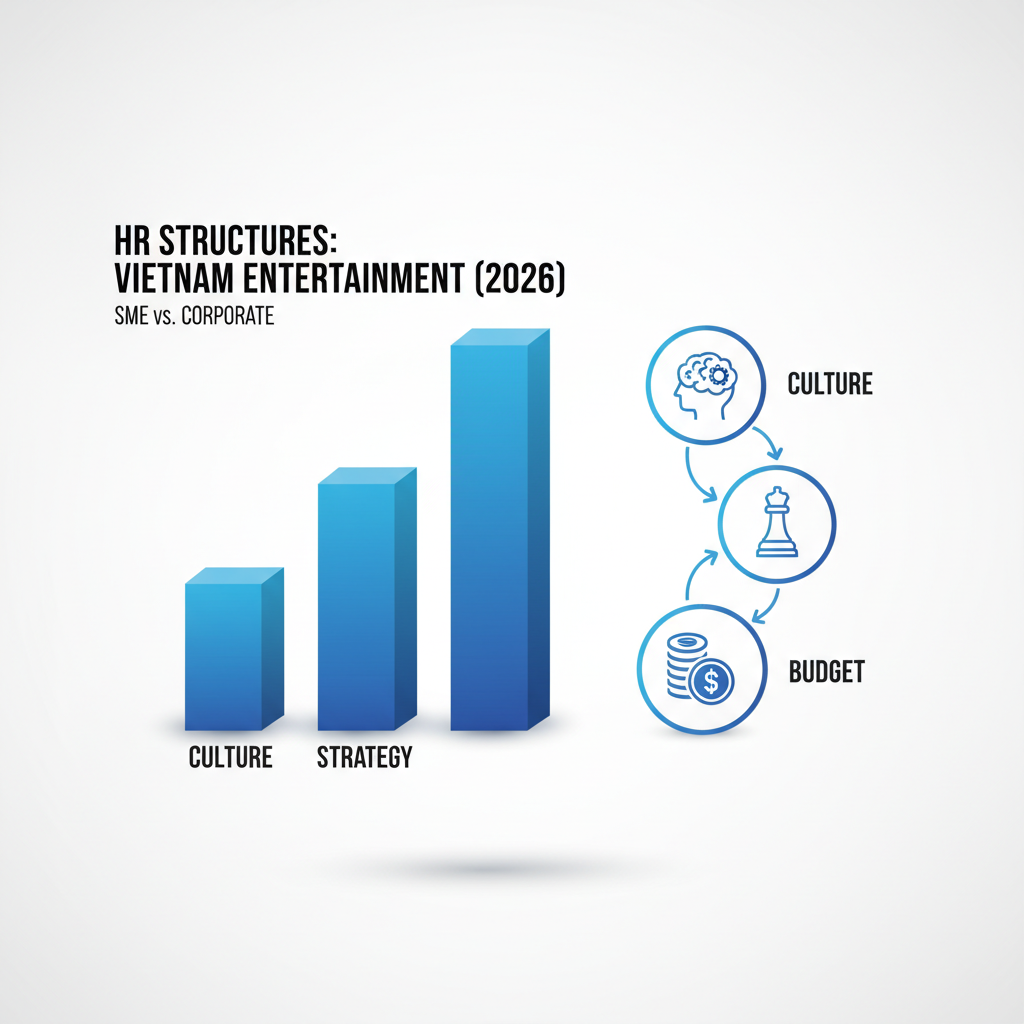
Culture, Strategy, and Budgetary Considerations
The vibrant and rapidly evolving entertainment sector in Vietnam presents a unique landscape for human resources management. From agile startups and small to medium-sized enterprises (SMEs) to established corporate giants, the differences between the SMEs’ HR structure and the corporates’ HR structure in the entertainment field in Vietnam are profound, particularly concerning organizational culture, strategic HR planning, and budget allocation. These distinctions fundamentally redefine HR’s role, influence, and the practical implementation of people strategies, demanding a nuanced understanding of each operational context. Understanding these variations is crucial for anyone navigating the talent landscape within this dynamic industry.
1. Shaping Company Culture
Organizational culture in Vietnamese entertainment companies significantly impacts employee engagement, creativity, and retention. In SMEs, culture often mirrors the founder’s vision, fostered through close-knit teams and informal communication. This organic approach cultivates a strong sense of belonging and flexibility, vital in the fast-paced, project-driven entertainment sector. However, scaling can introduce inconsistencies. HR in SMEs often acts as a culture enforcer by proximity, relying on personal relationships over formal frameworks.
Conversely, large corporations, often with international affiliations, tend to have more formalized, structured cultures. These are shaped by extensive corporate values, mission statements, and standardized HR policies, providing stability and clear brand identity, though potentially stifling creative spontaneity. Corporate HR plays a strategic role, embedding culture through elaborate onboarding, performance management, and internal communication campaigns. They ensure alignment with brand image and long-term business objectives. The pivotal role of organizational culture in driving business success is evident in both models, achieved through vastly different means.
2. Strategic HR Planning & Agility
The approach to strategic HR planning and agility further highlights key differences between the SMEs’ HR structure and the corporates’ HR structure in the entertainment field in Vietnam. For SMEs, HR planning is often highly reactive and agile, driven by immediate project needs and market shifts. Talent acquisition and development are typically ad-hoc, focusing on securing specific skills for upcoming productions. Smaller teams allow rapid strategy adjustments, often without extensive formal processes. HR professionals in SMEs must be broad generalists, quickly pivoting between recruitment, compensation, employee relations, and compliance. This agility is a significant competitive advantage, enabling them to capitalize on fleeting trends.
In contrast, corporate entertainment entities engage in comprehensive, long-term strategic HR planning, involving detailed workforce planning, talent pipeline development, and robust learning programs. These corporations often feature dedicated HR specialists for various functions. While structured, this approach can be less agile than an SME’s lean operation. HR’s influence is more deeply integrated into overall business strategy, directly contributing to long-term growth. For a deeper dive into these structural variations, explore our insights on the Differences between the SMEs’ HR Structure and the Corporates’ HR Structure in Entertainment field in Vietnam.
3. Budget Allocation for HR Functions
Perhaps one of the most tangible differences between the SMEs’ HR structure and the corporates’ HR structure in the entertainment field in Vietnam lies in budgetary considerations. SMEs typically operate with tighter financial constraints, requiring HR functions to be lean and highly efficient. Budgets for recruitment, training, HR technology, and employee benefits are often limited. This necessitates creative solutions, such as leveraging social media for recruitment, internal mentorship for development, or offering non-monetary perks. HR professionals in SMEs maximize impact with minimal resources, often absorbing multiple roles to manage costs.
Corporations, with their larger financial muscle, allocate substantially more resources to HR. This enables investments in advanced HR Information Systems (HRIS), comprehensive employee wellness programs, extensive professional development, and competitive compensation packages. They can engage external consultants for specialized HR projects, conduct thorough market research, and implement sophisticated analytics. This robust budget empowers corporate HR to proactively shape the employee experience and drive strategic initiatives, whereas SME HR often prioritizes essential operational tasks. These differences in financial allocations profoundly impact the scope and sophistication of HR services.
In summary, the Vietnamese entertainment industry exemplifies a stark contrast in HR approaches between SMEs and large corporations. While SMEs thrive on agility, personal connections, and resourcefulness in shaping culture, planning, and budget utilization, corporations leverage structure, formalized processes, and substantial financial backing to achieve their HR objectives. Understanding these differences between the SMEs’ HR structure and the corporates’ HR structure in the entertainment field in Vietnam is not merely academic; it is crucial for HR professionals, business leaders, and aspiring talent to navigate the sector successfully, ensuring effective talent management strategies that align with specific organizational needs and aspirations.
Partner with Shelby Global
You are looking for reliable HR Sevice Suppliers? Contact Shelby Global Now! To connect with verified talents and upgrade your orginization.
—————————————
References
– role of HR continues to evolve globally: https://www.shrm.org/resources-and-tools/hr-topics/strategic-hr/pages/the-evolving-role-of-hr.aspx
– The Power of Upskilling – Harvard Business Review: https://hbr.org/2021/04/the-power-of-upskilling
– Robert Walters Vietnam Salary Survey & Hiring Advice: https://www.robertwalters.com.vn/salary-survey.html
– Vietnam Employment Guide from Baker McKenzie: https://www.bakermckenzie.com/en/sourcebook/topics/employment-law/vietnam
– SHRM: Organizational Culture: https://www.shrm.org/resources-and-tools/hr-topics/organizational-culture