Foundation: Why HR Structure Matters for Sales CEOs
For a newly appointed Sales CEO navigating the dynamic landscape of Vietnamese Small and Medium-sized Enterprises (SMEs), understanding the Human Resources (HR) structure is not merely an administrative task; it’s a strategic imperative. The success of your sales initiatives, market penetration, and ultimately, your company’s bottom line in Vietnam, is inextricably linked to how effectively your HR function operates. This comprehensive guide provides a Step by Step to understand SMEs HR Structure for the fresh the CEO in sale field in vietnam, ensuring you can build a formidable sales force.
HR isn’t just about payroll and hiring; it’s the backbone supporting your sales team’s performance, culture, and long-term viability. In the competitive Vietnamese market, where talent acquisition and retention are constant challenges, a fresh sales CEO must actively engage with and leverage the HR department to achieve ambitious sales targets and foster sustainable growth.

1. Impact on Sales Performance & Culture
The performance of your sales team is a direct reflection of your HR practices. From the moment a salesperson is recruited to their ongoing development and eventual retention, HR plays a pivotal role. Effective talent acquisition ensures you hire individuals with the right skills, mindset, and cultural fit for your sales environment. In Vietnam, where local market knowledge and relationship-building are crucial, HR’s ability to source and vet candidates can significantly accelerate new hires’ ramp-up time.
Beyond hiring, HR designs and implements performance management systems that define clear sales objectives, track progress, and provide constructive feedback. A well-structured compensation and benefits plan, crafted by HR, directly motivates sales personnel, aligning individual rewards with company sales targets. Furthermore, HR is responsible for developing robust training and development programs that equip your sales team with the latest product knowledge, selling techniques, and market insights – vital for success in a rapidly evolving market like Vietnam.
The organizational culture, heavily influenced by HR, profoundly impacts sales morale and productivity. A positive, supportive, and results-driven culture encourages collaboration, ethical conduct, and resilience – qualities essential for a high-performing sales team. Conversely, a weak HR structure can lead to high turnover, low motivation, and ultimately, missed sales opportunities. Understanding these dynamics is the first step for any fresh sales CEO.
2. Bridging Sales & HR Goals for Synergy
For optimal business health, sales and HR goals must be intricately linked and mutually reinforcing. A proactive sales CEO understands that HR is not a separate entity but a strategic partner in achieving sales objectives. This synergy begins with clear communication and collaboration, ensuring that HR strategies directly support the sales roadmap.
For instance, if your sales strategy focuses on expanding into a new geographical region in Vietnam, HR needs to be actively involved in workforce planning, identifying the talent required, and developing appropriate recruitment strategies for that specific area. If sales aims to increase revenue from a particular product line, HR can facilitate specialized training programs or adjust incentive structures to promote sales of that product.
Bridging these goals also involves HR’s role in employee retention. High sales force turnover can be devastating, leading to lost client relationships, increased recruitment costs, and a drain on team morale. By working with HR on engagement initiatives, career pathing, and competitive remuneration, a sales CEO can significantly reduce attrition rates, ensuring a stable and experienced sales force. Embracing strategic human resource management allows HR to become an enabler of sales success, rather than merely a support function.
3. Common HR Challenges in Vietnamese SMEs for Sales Leaders
Vietnamese SMEs, while agile and innovative, often face unique HR challenges that can directly impede sales growth. For a sales CEO, recognizing these hurdles is crucial for effective mitigation. One prevalent challenge is talent acquisition and retention. The demand for skilled sales professionals with strong local networks and language capabilities often outstrips supply, making recruitment competitive and costly. High turnover rates in sales roles are also common, driven by better opportunities or dissatisfaction with compensation and work culture.
Another significant challenge is compliance with Vietnam’s labor laws and regulations, which can be complex and frequently updated. Missteps in this area can lead to costly fines, legal disputes, and reputational damage, distracting from core sales activities. Limited budgets for comprehensive training and development programs are also typical in SMEs, which can hinder the continuous upskilling necessary for a competitive sales force. Furthermore, managing performance and fostering a high-performance culture across diverse demographics and regional nuances within Vietnam requires a nuanced approach that many SME HR departments may struggle to provide without strategic leadership.
By understanding these common HR challenges, a sales CEO can proactively work with their HR team to develop targeted solutions. This might involve advocating for investment in HR technology, implementing creative recruitment strategies, or championing internal training initiatives. Engaging with HR, understanding its structure, capabilities, and limitations, transforms it into a powerful asset that drives not just compliance, but genuine sales excellence and sustainable business growth in Vietnam.
Deconstructing the Typical SME HR Structure in Vietnam
For a fresh CEO stepping into the dynamic sales landscape of Vietnam, understanding the underlying human resources framework within Small and Medium-sized Enterprises (SMEs) is paramount. The HR structure, often fluid and resource-constrained, plays a critical role in attracting, retaining, and developing the talent essential for driving sales growth. This guide offers a Step by Step to understand SMEs HR Structure for the fresh the CEO in sale field in vietnam, providing insights into the operational frameworks and typical functions that power these agile businesses. Deconstructing the typical SME HR structure in Vietnam reveals a blend of lean operations and evolving compliance needs, crucial for sustained success in a competitive market.
-
Lean HR Teams vs. Centralized Departments
In the Vietnamese SME ecosystem, HR departments rarely mirror the expansive, specialized structures found in multinational corporations. Instead, two primary HR models commonly emerge: lean HR teams and, less frequently, more centralized departments. Lean HR teams are the norm, often comprising just one or two individuals, or even handled by an administrative manager or the CEO themselves. Their functions are broad, covering everything from recruitment and payroll to basic employee relations. This model emphasizes agility and cost-effectiveness, critical for sales-focused SMEs that need to allocate resources directly to market penetration and revenue generation. The challenge lies in managing diverse HR demands with limited personnel and specialized expertise.
Conversely, some larger or more established SMEs might evolve towards a slightly more centralized HR department. While still modest in size, this structure allows for a clearer division of labor, perhaps with one person focusing on recruitment and another on compensation and benefits. This centralization often occurs as the sales team expands significantly, requiring more robust support for talent acquisition and performance management. Understanding these HR models is vital for a fresh CEO to appreciate the existing capabilities and identify potential gaps that could impact sales force productivity and retention within the Vietnamese context.
-
Role of HR Generalists & Specialists in SMEs
The backbone of HR in most Vietnamese SMEs is undeniably the HR Generalist. Due to budget constraints and the varied demands of a growing business, one individual often wears many hats. An HR Generalist in an SME might be responsible for end-to-end recruitment for sales roles, onboarding new hires, managing employee records, administering payroll and social insurance, handling basic disciplinary issues, and even contributing to workplace culture initiatives. Their broad skill set is invaluable, making them a central point of contact for employees and management alike. For a sales-driven CEO, effective collaboration with a skilled HR Generalist is crucial for quickly scaling teams and ensuring operational efficiency.
While specialists are rare, their introduction typically signifies growth or a specific strategic need. For instance, as an SME scales, it might consider hiring a dedicated recruiter to handle the high volume of sales talent acquisition, or an HR professional with expertise in performance management systems to optimize sales team productivity. However, these roles are usually integrated within the generalist’s broader responsibilities until the organization reaches a significant size. Recognizing the multi-faceted role of HR generalists & specialists in SMEs is key for a CEO aiming to build a high-performing sales force.
-
Navigating Legal & Compliance Frameworks (Local Labor Laws)
Perhaps one of the most critical and challenging aspects of managing HR in Vietnam, particularly for a sales-focused CEO, is navigating the complex legal and compliance frameworks. Vietnam has a robust and evolving set of labor laws designed to protect employee rights, covering aspects such as employment contracts, working hours, minimum wage, social insurance, health insurance, unemployment insurance, and termination procedures. Non-compliance can lead to significant financial penalties, legal disputes, and reputational damage, all of which can severely hinder sales operations and business growth.
For SMEs, understanding and adhering to these local labor laws is not just a regulatory burden but a strategic imperative. Common pitfalls include improperly drafted employment contracts, incorrect social insurance contributions, and non-adherence to termination protocols. A fresh CEO must ensure their HR function, even if lean, possesses a fundamental understanding of these regulations or has access to expert advice. Resources like the Guide to Employment in Vietnam by Baker McKenzie can offer valuable insights into the intricacies of Vietnamese labor law, helping businesses remain compliant and mitigate risks. Proactive engagement with legal counsel or experienced HR consultants is often a wise investment for SMEs in Vietnam to safeguard their operations and ensure fair and lawful treatment of their workforce.
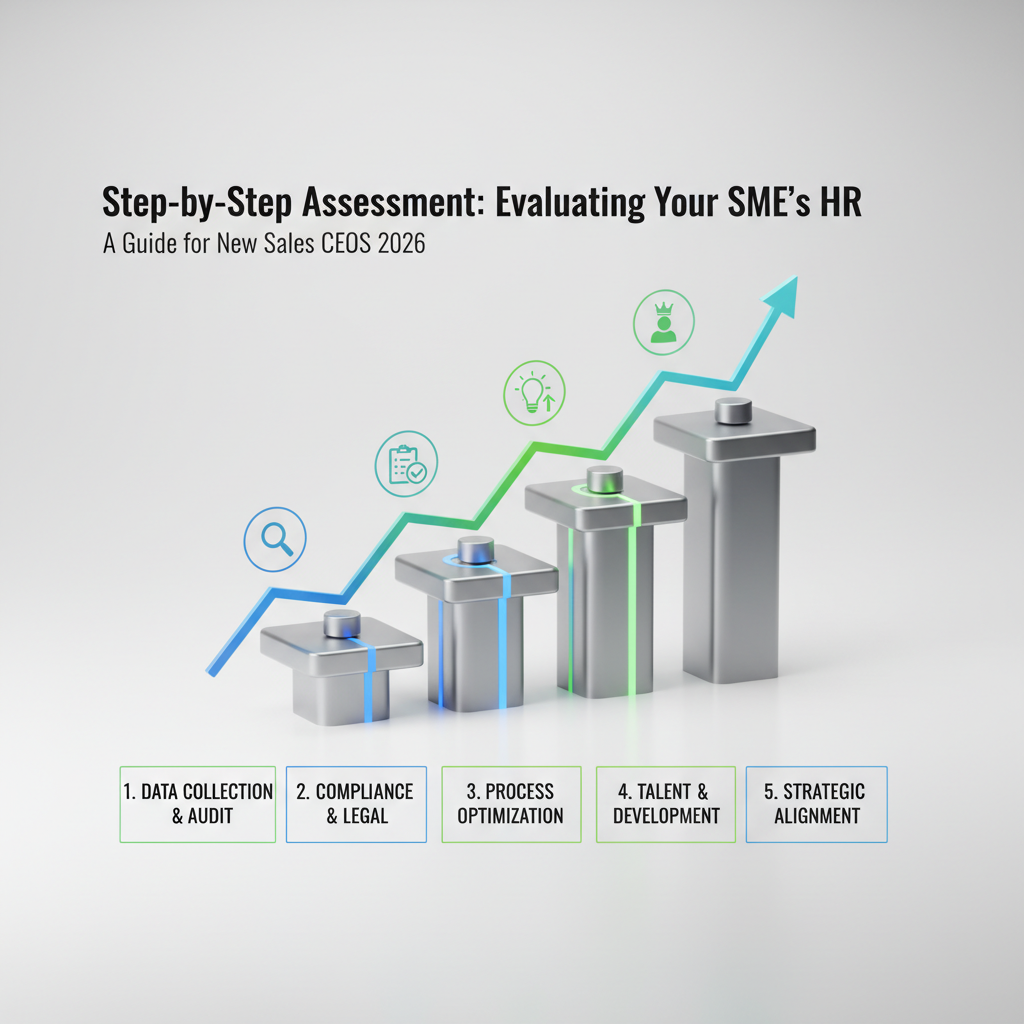
Step-by-Step Assessment: Evaluating Your SME’s HR
As a new CEO, particularly one transitioning from a sales background, understanding the intricate details of your Small and Medium-sized Enterprise (SME)’s Human Resources (HR) structure in Vietnam is paramount. This guide provides a methodical, actionable approach to conduct an internal audit of your current HR setup, identify strengths, weaknesses, and crucial areas for improvement. Effective Step by Step to understand SMEs HR Structure for the fresh the CEO in sale field in vietnam is not just about compliance; it’s about optimizing your most valuable asset: your people. This assessment will equip you with the insights needed to foster a robust, supportive, and compliant HR environment, driving your company’s growth and success in the dynamic Vietnamese market. To achieve a comprehensive understanding, we will systematically explore key HR facets.
1. Interviewing Key Stakeholders (HR, Department Heads)
The initial phase of your HR audit Vietnam SME begins with direct communication. Engage in one-on-one interviews with your HR team, individual department heads (especially sales, given your background), and a selection of long-term employees. The goal is to gather diverse perspectives on current HR operations, challenges, and successes. For the HR team, inquire about their daily operations, technological infrastructure (HR technology SME Vietnam), bandwidth, and perceived pain points in areas like recruitment process Vietnam SME, onboarding, and payroll. Department heads can offer invaluable insights into how HR supports their teams’ productivity, particularly concerning SME talent management Vietnam, performance management, and conflict resolution. Ask about the biggest HR-related hurdles they face in meeting departmental goals, their satisfaction with current support, and any specific needs they believe are unmet. This direct dialogue will help you gauge the effectiveness of current HR practices and identify areas where a new Sales CEO HR strategy Vietnam can make a tangible difference.
2. Reviewing Existing Policies, Procedures & Documentation
Once you’ve gathered anecdotal evidence, it’s time to delve into the formal documentation. Conduct a comprehensive HR policy review Vietnam, scrutinizing everything from employee handbooks, employment contracts, and offer letters to performance appraisal forms, disciplinary procedures, and grievance policies. Pay close attention to compliance with Vietnamese labor laws and regulations, which are frequently updated. Look for clarity, consistency, and fairness across all documents. Are policies clearly communicated? Are they uniformly applied? Identify any outdated procedures, missing documentation, or areas where policies are vague or open to misinterpretation. This review should also encompass compensation structures, benefits packages, and leave policies to ensure they are competitive and equitable. An effective HR department in an SME relies on clear, legally compliant, and up-to-date documentation to protect both the company and its employees. This step is critical for understanding your current Compliance HR Vietnam posture and identifying potential legal or operational risks.
3. Identifying Gaps in Talent Acquisition, Retention & Development
The lifeblood of any successful sales-driven SME is its talent. This stage focuses on evaluating the entire employee lifecycle. For talent acquisition, assess your current recruitment process Vietnam SME: are you attracting the right candidates? Are your employer branding efforts effective? Review time-to-hire, quality-of-hire metrics, and onboarding effectiveness. High turnover rates, especially in sales roles, often signal deficiencies here. Next, analyze employee retention strategies Vietnam. Examine turnover rates by department and tenure. Are your compensation, benefits, and work environment conducive to keeping valuable employees? Explore avenues for enhancing employee engagement Vietnam and job satisfaction. Finally, scrutinize employee development. What training programs are in place? Are there clear career paths and opportunities for growth? Identify skill gaps within your workforce and assess the effectiveness of your HR development plan SME. Consider the presence (or absence) of succession planning SME for key roles and how performance management SME Vietnam integrates with development goals. A robust HR structure empowers employees, minimizes churn, and builds a pipeline for future leadership, directly impacting your company’s long-term sales capabilities and overall Workforce planning Vietnam. By systematically addressing these areas, you can transform your HR from a cost center into a strategic asset.
Optimizing HR to Empower Sales Growth & Talent
For a fresh CEO entering the dynamic sales landscape of Vietnam’s Small and Medium-sized Enterprises (SMEs), understanding and optimizing the HR structure is paramount. The journey to empower sales growth and attract top talent isn’t solely a sales department’s responsibility; it’s intricately woven into the fabric of human resources. HR, when strategically aligned, transcends its traditional administrative role to become a powerful engine for sales force effectiveness, directly contributing to revenue targets and fostering a high-performance culture. This section provides a strategic overview, akin to a Step by Step to understand SMEs HR Structure for the fresh the CEO in sale field in vietnam, highlighting critical strategic HR initiatives to ensure HR actively fuels sales success. By focusing on tailored strategies, CEOs can navigate market specific challenges (Vietnam) and build robust sales teams.
1. Performance Management & Compensation Alignment
Effective sales talent acquisition and retention hinge on a transparent and motivating performance management system. For a fresh CEO, it’s crucial to evaluate existing HR strategy for SMEs to ensure it directly supports sales objectives. This involves defining clear Key Performance Indicators (KPIs) that accurately measure sales activities, outcomes, and customer satisfaction. Beyond simple revenue targets, consider metrics like lead conversion rates, average deal size, and customer retention. A robust system provides invaluable data, allowing for timely feedback and targeted coaching, thereby enhancing employee engagement in sales.
Crucially, compensation plans must be meticulously designed to incentivize desired behaviors and outcomes. A well-structured plan isn’t just about commissions; it encompasses base salary, bonuses, accelerators, and non-monetary recognition. For SMEs in Vietnam, competitive compensation ensures you attract and retain top sales talent. HR plays a pivotal role in researching market benchmarks, designing variable pay structures, and communicating these plans clearly to the sales team. Aligning rewards with strategic sales goals, such as pushing new products or expanding into new territories, can significantly boost sales force effectiveness. Furthermore, HR must ensure fairness and transparency in how performance is assessed and rewarded, fostering trust and motivation across the team. Understanding these intricacies is a key Step by Step to understand SMEs HR Structure for the fresh the CEO in sale field in vietnam. For insights into building effective reward systems, consider reviewing expert advice on modern sales compensation strategies.
2. Tailored Training & Development for Sales Teams
In a rapidly evolving market, continuous learning is non-negotiable for sales professionals. Generic training programs are often insufficient. HR must collaborate closely with sales leadership to develop tailored training programs that address specific skill gaps and market demands. This includes product knowledge, advanced negotiation techniques, objection handling, CRM proficiency, and understanding the nuances of the Vietnamese market. For a fresh CEO, investing in leadership development for sales managers is equally critical, as they are instrumental in coaching and mentoring their teams.
Beyond initial onboarding, ongoing development initiatives, such as workshops, e-learning modules, and peer coaching, are vital for cultivating a high-performance culture. These programs not only equip sales teams with the tools they need to succeed but also demonstrate the company’s commitment to their professional growth, directly impacting talent retention strategies. By fostering a learning environment, HR ensures the sales team remains agile, adaptable, and highly effective. This proactive approach to development is an essential part of the Step by Step to understand SMEs HR Structure for the fresh the CEO in sale field in vietnam, ensuring the sales force is always at its peak.
3. Leveraging HR Technology for Efficiency & Insights
The digital transformation has revolutionized how HR functions can support sales. Implementing appropriate HR technology solutions can streamline administrative tasks, freeing up HR professionals to focus on strategic initiatives. For a fresh CEO, understanding how HR tech integrates with sales operations is key. This includes using applicant tracking systems (ATS) for efficient sales talent acquisition, performance management software to track individual and team goals, and learning management systems (LMS) for delivering scalable sales training programs.
Moreover, HR technology can provide invaluable data-driven insights. By analyzing performance metrics, compensation data, and training completion rates, HR can identify trends, forecast staffing needs, and pinpoint areas for improvement. Integration with CRM systems, where feasible, can offer a holistic view of employee performance linked directly to sales outcomes. For instance, data can reveal that sales representatives who complete specific training modules achieve higher conversion rates, validating the investment in development. This analytical capability transforms HR from a support function into a strategic partner, offering actionable intelligence to the CEO and sales leadership. Mastering the use of these tools is a crucial Step by Step to understand SMEs HR Structure for the fresh the CEO in sale field in vietnam. By embracing HR technology, SMEs can enhance operational efficiency, make informed decisions, and ultimately empower their sales teams to achieve unprecedented growth.
Future-Proofing & Cultural Integration for HR & Sales
This section is crucial for long-term success, especially for a fresh CEO in the sales field navigating the nuances of Vietnamese SMEs. Sustainable growth isn’t just about immediate sales targets; it’s deeply rooted in robust succession planning, proactive talent development, and cultivating a company culture where HR and sales efforts are seamlessly integrated and forward-looking. To truly future-proof an organization, particularly within the dynamic Vietnamese market, understanding and optimizing the HR structure becomes paramount. This guide provides a Step by Step to understand SMEs HR Structure for the fresh the CEO in sale field in vietnam, ensuring strategic alignment between talent management and revenue generation.

1. Succession Planning & Leadership Development
For any SME, especially one focused on sales growth in Vietnam, relying solely on current leadership is a risky gamble. Effective succession planning ensures business continuity and mitigates the impact of unforeseen departures. A fresh CEO needs to prioritize identifying high-potential employees across all departments, particularly within sales and sales support roles. This involves creating structured development programs, mentorship opportunities, and cross-functional training that prepares individuals not just for their next role, but for future leadership challenges. HR plays a pivotal role here, designing frameworks for talent assessment, performance management linked to career progression, and leadership pipeline identification. For a CEO new to the Vietnamese market, understanding the local talent pool’s aspirations and providing clear growth paths is key to retaining top performers and building a resilient leadership team ready to navigate market shifts. Investing in continuous learning, from advanced sales techniques to strategic management, solidifies the leadership bench strength and guarantees a smooth transition when key personnel move on or retire. This proactive approach is a cornerstone for sustainable growth and ensures the organization is never caught off guard.
2. Fostering a Collaborative, Sales-Centric Culture
In many organizations, HR and Sales can operate in silos. However, for a CEO aiming for integrated growth, fostering a culture where HR actively supports sales, and sales understands HR’s strategic value, is non-negotiable. This means HR professionals must understand the sales cycle, the challenges faced by the sales team, and the specific skills required for success. Collaborative initiatives could include HR designing performance incentives that motivate sales teams while aligning with company values, developing onboarding programs tailored for sales new hires that quickly integrate them into the sales process and culture, and facilitating cross-departmental communication channels. Creating a sales-centric culture also involves celebrating sales achievements publicly, not just financial targets but also collaborative successes. It’s about ensuring that every employee, regardless of department, understands their role in contributing to the company’s revenue goals. By breaking down barriers and promoting mutual respect and understanding, the fresh CEO can cultivate an environment where sales efforts are amplified by a supportive, well-aligned HR function, leading to stronger team cohesion and sustained market penetration.
3. Adapting to Evolving Vietnamese Labor Market Trends
Vietnam’s labor market is dynamic, characterized by a young workforce, increasing urbanization, and a growing emphasis on digital skills. For a CEO in the sales field, especially when trying to understand the local labor market dynamics, staying abreast of these trends is vital for talent acquisition, retention, and overall HR strategy. The shift towards a knowledge-based economy demands that HR adapts its recruitment strategies to attract digitally-savvy sales professionals and equips the existing workforce with necessary technological competencies. Furthermore, understanding regional wage differences, the impact of international investments on local talent availability, and changing employee expectations regarding work-life balance and career development are crucial. HR must continuously review compensation and benefits packages to remain competitive, explore flexible work arrangements where feasible, and invest in training programs that bridge skill gaps. For SMEs, this might mean leveraging digital recruitment platforms, partnering with local universities, or offering internships to cultivate future talent. A forward-thinking HR strategy, guided by a CEO who understands these evolving trends, ensures the company can attract and retain the best sales talent, maintaining its competitive edge in a rapidly developing market. This proactive adaptation is key to long-term resilience and market leadership.
Partner with Shelby Global
You are looking for reliable HR Sevice Suppliers? Contact Shelby Global Now! To connect with verified talents and upgrade your orginization.
—————————————
References
– :
– Guide to Employment in Vietnam by Baker McKenzie: https://www.bakermckenzie.com/en/insight/publications/2023/10/guide-to-employment-in-vietnam
– International Labour Organization (ILO) – Vietnam: https://www.ilo.org/global/countries/asia-and-the-pacific/viet-nam/lang–en/index.htm
– How To Design A Sales Compensation Plan: https://www.forbes.com/advisor/business/sales-compensation-plan/
– ILO Report on Vietnam Labor Market Dynamics: https://www.ilo.org/hanoi/information-resources/publications/WCMS_872709/lang–en/index.htm