Understanding AI Agents in Vietnam’s Industrial Landscape
This section defines what AI agents are in an industrial context and their current relevance to Vietnam’s growing production sectors, setting the stage for deeper analysis.
Vietnam’s rapid industrialization and emergence as a global manufacturing hub necessitate the adoption of cutting-edge technologies to maintain competitiveness and foster sustainable growth. Among these, AI agents are emerging as transformative tools, fundamentally changing how production processes operate. Understanding how AI agents effect to production field in Vietnam is crucial for businesses looking to enhance their capabilities, streamline operations, and prepare for the future of smart manufacturing.
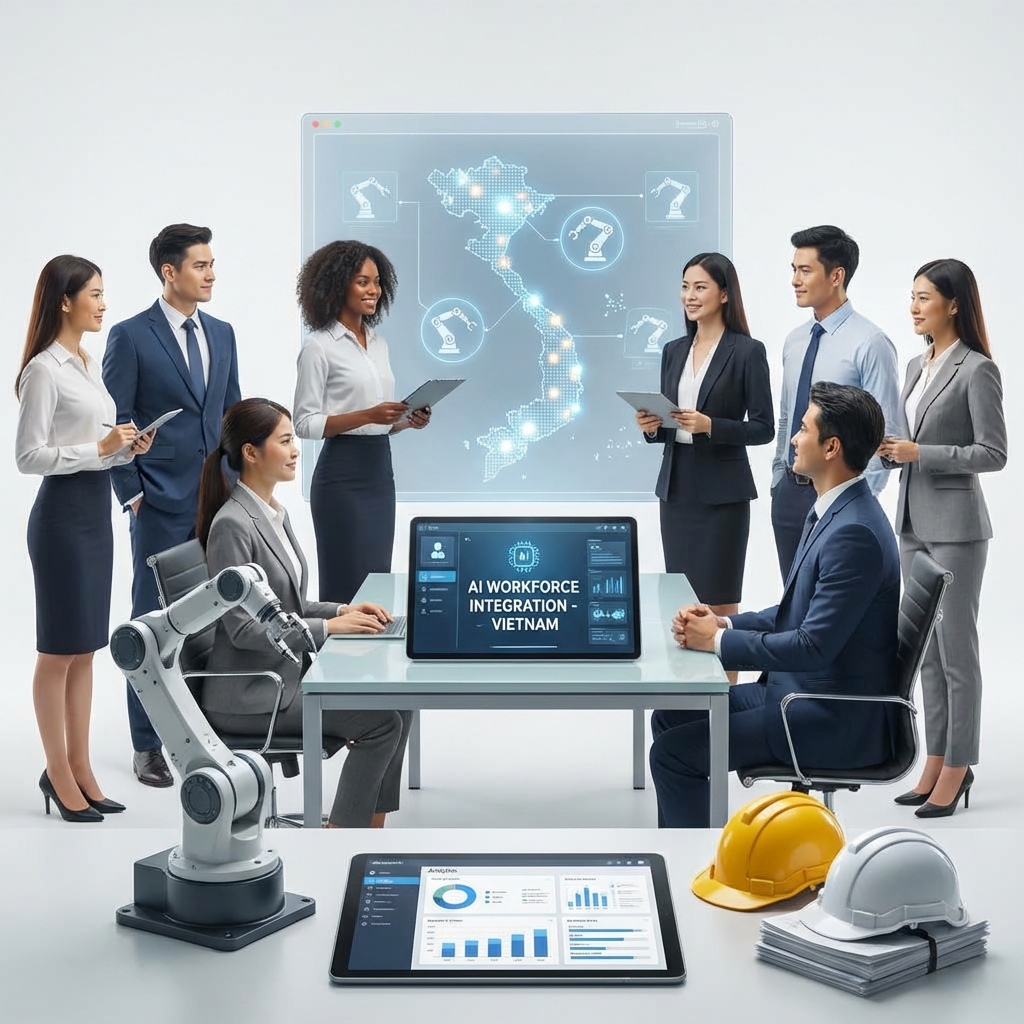
1. What Exactly Are AI Agents and Their Core Functions?
At its core, an AI agent is an autonomous entity, typically a software program, that perceives its environment through sensors (real or virtual) and acts upon that environment through effectors. In an industrial context, these agents are designed to perform specific tasks, analyze complex data, and make informed decisions without constant human intervention. Their core functions are diverse and directly impact the efficiency and effectiveness of production:
- Data Analysis and Pattern Recognition: AI agents excel at processing vast amounts of data from machinery, sensors, and operational logs, identifying patterns, anomalies, and trends that human operators might miss. This capability is vital for predictive maintenance, allowing companies to anticipate equipment failures before they occur, minimizing downtime and reducing operational costs.
- Automated Decision-Making: From optimizing inventory levels to adjusting production parameters in real-time, AI agents can make rapid, data-driven decisions. This significantly boosts production efficiency and ensures optimal resource allocation, a critical aspect for smart manufacturing initiatives.
- Task Automation and Robotics Integration: AI agents can control and coordinate robots and automated machinery, orchestrating complex assembly lines, material handling, and quality inspection processes. This level of industrial automation is key to scaling production and improving consistency.
- Quality Control and Assurance: By continuously monitoring product quality through computer vision and sensor data, AI agents can detect defects early, preventing faulty products from moving down the line and enhancing overall quality control optimization.
2. Types of AI Agents Applicable to Vietnamese Manufacturing
The application of AI agents in Vietnamese manufacturing spans various types, each suited for different levels of complexity and autonomy:
- Reactive Agents: These are the simplest form, directly mapping states to actions without any internal model of the world or complex reasoning. In manufacturing, a reactive agent might be programmed to stop a machine immediately if a critical sensor reading exceeds a threshold. They are excellent for specific, high-speed responses.
- Deliberative Agents: More sophisticated, deliberative agents maintain an internal model of their environment, allowing them to plan, evaluate consequences, and make decisions based on goals. For instance, a deliberative agent could manage an entire production schedule, optimizing for throughput, minimizing energy consumption, and ensuring supply chain efficiency by coordinating with logistics agents.
- Multi-Agent Systems (MAS): This involves multiple AI agents collaborating to achieve a common goal that is too complex for a single agent. Imagine a factory floor where different agents manage individual machines, conveyor belts, and material flow, all communicating to achieve a seamless production run. MAS are pivotal for complex robotics integration and managing intricate supply chains across various stakeholders. These systems empower data-driven decision making at an enterprise level.
These diverse types allow Vietnamese industries, from textiles to electronics assembly, to strategically implement AI solutions that match their specific needs, aiming for reduced operational costs reduction and improved throughput.
3. Key Technologies Driving AI Integration in Production Processes
The successful deployment of AI agents in industrial settings relies heavily on the convergence of several foundational technologies:
- Machine Learning (ML): The backbone of AI, ML algorithms enable agents to learn from data, identify patterns, and make predictions or classifications. Supervised learning is used for defect detection (trained on labeled images), while reinforcement learning can optimize robotic movements for maximum production efficiency.
- Computer Vision: Crucial for visual inspection and quality control, computer vision systems allow AI agents to “see” and interpret images and videos. This is invaluable for automated product inspection, identifying assembly errors, and ensuring compliance with quality standards.
- Internet of Things (IoT): IoT devices, including smart sensors and connected machinery, provide the vital data stream that AI agents need to perceive their environment. Real-time data on temperature, pressure, vibration, and energy consumption fuels the agents’ analytical capabilities for everything from predictive maintenance to process optimization.
- Cloud and Edge Computing: While cloud computing offers scalable processing power for training complex AI models, edge computing allows AI agents to perform real-time data processing and decision-making directly on the factory floor, reducing latency and ensuring immediate responses. This synergy is crucial for achieving truly responsive industrial automation.
- Big Data Analytics: The ability to process and derive insights from the massive datasets generated by modern factories is fundamental. AI agents leverage big data analytics to uncover hidden patterns, forecast demand, and optimize resource allocation, leading to significant operational costs reduction.
By leveraging these integrated technologies, Vietnamese manufacturers can effectively implement AI agents, leading to significant advancements in factory automation, operational intelligence, and ultimately, a more competitive industrial landscape. This also impacts workforce skill development, as new roles emerge for managing and optimizing these advanced systems.
Transformative Impact on Productivity and Efficiency
Vietnam’s manufacturing and production sectors are experiencing a profound transformation, spearheaded by the adoption of Artificial Intelligence (AI) agents. These intelligent systems are not merely technological upgrades but strategic enablers, driving unprecedented levels of operational efficiency and delivering significant productivity gains across diverse industries. From traditional textiles to high-tech electronics and food processing, AI agents are reshaping workflows, optimizing resource utilization, and fundamentally altering how AI agent effect to production field in Vietnam. Their integration marks a critical step in the nation’s digital transformation journey, positioning Vietnamese enterprises to compete more effectively on the global stage by streamlining various production processes.
-
Automating Routine Tasks and Enhancing Operational Flow
One of the most immediate and tangible impacts of AI agents in Vietnam’s production field is the automation of routine, repetitive, and time-consuming tasks. In factories across the country, AI-powered robots and software agents are now handling everything from data entry and inventory management to quality control inspections and assembly line operations. This automation significantly reduces human error, accelerates processing times, and ensures a higher degree of precision and consistency. For instance, in textile factories, AI agents can monitor fabric quality in real-time, identifying defects faster than the human eye. In electronics assembly, robotic arms guided by AI ensure precise component placement, enhancing product reliability. By offloading these mundane yet critical tasks, human workers are freed to focus on more complex problem-solving, innovation, and strategic planning, thereby enhancing overall operational flow and increasing throughput. This shift not only boosts manufacturing sector Vietnam productivity but also improves job satisfaction and worker safety.
-
Predictive Maintenance and Reducing Downtime in Factories
Unplanned machinery downtime can be a crippling blow to production schedules and profitability. AI agents offer a revolutionary solution through predictive maintenance. By continuously analyzing real-time data collected from sensors embedded in machinery – such as temperature, vibration, pressure, and power consumption – AI algorithms can detect subtle anomalies that indicate impending equipment failure. This allows maintenance teams in Vietnamese factories to schedule repairs proactively during planned downtimes, rather than reactively after a breakdown has occurred. The result is a dramatic reduction in unscheduled interruptions, extended lifespan of costly equipment, and significant savings on maintenance costs. This proactive approach ensures continuous production continuity and maximizes output, contributing to significant productivity enhancements and bolstering the competitiveness of smart factories Vietnam. The shift from reactive to predictive maintenance embodies a core principle of operational streamlining through AI.
-
Optimizing Resource Allocation and Energy Consumption
Resource optimization and energy efficiency are crucial for both profitability and environmental sustainability, particularly in a rapidly industrializing nation like Vietnam. AI agents excel in this domain by analyzing vast datasets related to production schedules, raw material availability, energy prices, historical consumption patterns, and even weather forecasts. Leveraging these insights, AI can dynamically adjust production parameters to minimize waste and optimize the use of raw materials, labor, and energy. For example, AI-powered energy management systems in factories can predict demand and optimize power usage, reducing peak load charges and overall energy costs. In agricultural processing, AI can fine-tune irrigation and fertilization based on real-time soil and climate data, minimizing resource waste. This intelligent allocation not only leads to substantial cost reductions for businesses but also supports Vietnam’s broader sustainability goals by reducing the industrial carbon footprint. These productivity gains are essential for responsible and efficient growth.
In conclusion, the integration of AI agents is fundamentally transforming Vietnam’s production field by enhancing speed, accuracy, and efficiency across all operational facets. From automating mundane tasks and ensuring uninterrupted production through predictive maintenance, to optimizing the use of precious resources, AI agents are delivering tangible benefits. They are not merely tools for incremental improvements but strategic enablers that empower Vietnamese industries to achieve higher levels of output, reduce costs, and operate more sustainably, ultimately driving the nation towards a more competitive and technologically advanced industrial future.
AI Agent Effects on Quality Control and Innovation
The manufacturing landscape in Vietnam is undergoing a profound transformation, driven significantly by the adoption of artificial intelligence (AI) agents. These intelligent systems are not merely tools but strategic partners, revolutionizing traditional quality control paradigms and igniting unprecedented levels of innovation across the production field. From textiles and electronics to automotive components and agriculture, AI agents are reshaping operations, promising enhanced efficiency, reduced waste, and a heightened competitive edge for Vietnamese enterprises on the global stage. Exploring how AI agents effect to production field in Vietnam reveals a future where precision, speed, and adaptability become the new benchmarks of industrial success. This shift towards smart factories Vietnam is pivotal for sustainable growth, leveraging industrial AI applications to navigate complex production challenges and unlock new possibilities for manufacturing excellence, further solidifying AI in manufacturing Vietnam.
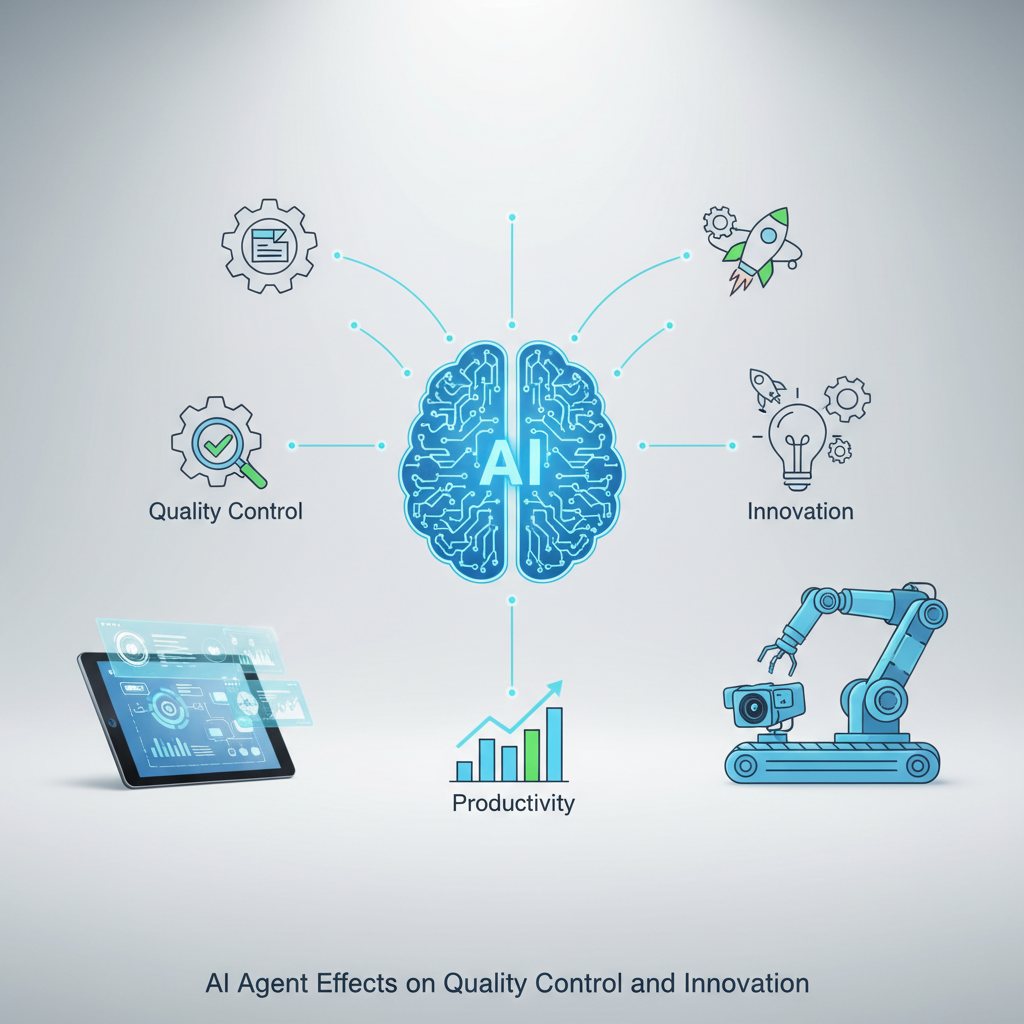
1. Advanced Defect Detection and Quality Assurance Systems
One of the most immediate and impactful contributions of AI agents in Vietnam’s production field is their ability to elevate defect detection and quality assurance to unparalleled levels. Traditional quality control methods, often manual and prone to human error, are being supplanted by AI-driven systems capable of real-time, high-precision inspection. AI agents, equipped with computer vision and machine learning algorithms, can scrutinize products on assembly lines with incredible speed and accuracy, identifying microscopic flaws, inconsistencies, or deviations from specifications that would be invisible to the human eye. For instance, in electronics manufacturing, AI can detect faulty solder joints or misplaced components, while in garment production, it can identify fabric imperfections or stitching errors before they escalate. This proactive approach significantly reduces rework, minimizes material waste, and ensures a consistently higher product standard. Furthermore, these systems contribute to predictive maintenance Vietnam, analyzing sensor data from machinery to forecast potential failures before they occur, thus preventing costly downtime and maintaining continuous production flow. The integration of AI-driven quality control not only bolsters product reliability but also safeguards brand reputation, ensuring that Vietnamese-made goods meet stringent international benchmarks. According to a report by Deloitte, the application of AI in manufacturing quality control is expected to yield substantial improvements in defect reduction and operational efficiency globally, a trend Vietnam is rapidly embracing. The precision offered by these AI agents is instrumental in achieving superior production efficiency AI, making quality control a predictive rather than reactive process.
2. Accelerating Product Development and Design Cycles
Beyond quality control, AI agents are proving to be powerful catalysts for accelerating product development and design cycles, fostering unprecedented innovation with AI agents. In a competitive global market, the speed at which new products can be conceived, designed, and brought to market is a critical differentiator. Generative design AI, a cutting-edge application, allows engineers to define design parameters and constraints, after which AI algorithms automatically generate hundreds or thousands of optimal design variations. This drastically shortens the ideation phase, enabling rapid prototyping and iterative improvements. For example, in the automotive sector, AI can design lighter yet stronger components, while in consumer goods, it can optimize product ergonomics and aesthetics based on simulated user feedback. Moreover, AI agents can analyze vast datasets of market trends, consumer preferences, and material properties to inform design decisions, ensuring that new products are not only innovative but also align with market demand. This capability enhances production efficiency AI by minimizing trial-and-error in the design phase and speeding up the overall development pipeline. The ability of smart factories Vietnam to leverage AI for rapid design iterations means companies can respond more agilely to market shifts, introducing innovative products faster and gaining a significant competitive advantage. This acceleration is crucial for companies seeking to strengthen their automation in Vietnam production capabilities and innovate at scale.
3. Personalization and Customization in Mass Production
The consumer demand for personalized and customized products has presented a formidable challenge to traditional mass production models. However, AI agents are making mass customization a tangible reality for Vietnamese manufacturers. By analyzing individual customer data, purchasing patterns, and real-time feedback, AI can enable production lines to dynamically adjust and create tailored products without compromising the efficiency of mass production. This includes everything from bespoke apparel and customized electronic devices to personalized food products. AI-driven supply chain AI Vietnam solutions play a crucial role here, optimizing logistics and inventory management to handle the increased complexity of varied product lines. AI agents facilitate flexible manufacturing systems that can seamlessly switch between different product specifications, managing diverse orders and raw material requirements with precision. This level of adaptability not only boosts customer satisfaction but also opens new revenue streams and market segments for businesses. The integration of AI in manufacturing Vietnam, particularly for personalization, allows companies to move beyond one-size-at-all strategies, catering to niche markets and individual preferences at scale. This capability is a cornerstone of smart factories Vietnam, demonstrating how automation in Vietnam production is evolving to meet sophisticated market demands, thereby transforming how goods are produced and consumed across the nation.
Workforce Dynamics and Economic Implications for Vietnam
Vietnam, a nation rapidly integrating into the global economy, stands at the precipice of a significant transformation driven by Artificial Intelligence (AI) agents. The profound AI impact on labor markets is not merely a theoretical discussion but a palpable reality that will reshape the nation’s workforce dynamics and economic trajectory. Understanding how AI agent effect to production field in vietnam is crucial for policymakers, businesses, and individuals alike, as it will determine the country’s success in navigating this new technological era. While concerns about job displacement are valid, the opportunities for enhanced productivity, new job creation, and boosting global competitiveness are equally compelling, positioning Vietnam for robust economic growth Vietnam. This section will delve into these intricate dynamics, exploring the dual nature of AI’s influence.
1. Reshaping Job Roles: Automation vs. Human Collaboration
The advent of AI agents inevitably brings discussions of job displacement, particularly in sectors characterized by repetitive and predictable tasks. In automation in manufacturing, for instance, AI-powered robots and smart systems can perform assembly, quality control, and logistics more efficiently, potentially reducing the need for manual labor. Similarly, roles in data entry, customer service, and administrative support are susceptible to significant changes. However, this isn’t a simple equation of replacement. Instead, AI fosters human-AI collaboration, where agents augment human capabilities rather than outright substitute them. This shift necessitates new job roles focusing on AI development, maintenance, supervision, and ethical oversight. The future of work in Vietnam will increasingly involve humans working alongside intelligent machines, creating demand for professionals who can manage, train, and troubleshoot AI systems. This transformation is pivotal to understanding the broader impact of artificial intelligence on Vietnam’s production capabilities. For a deeper dive into how this technological shift is specifically altering industrial processes, explore more on How AI agent effect to production field in vietnam. This shift not only changes existing roles but also generates job creation in AI related fields, such as data analytics, machine learning engineering, and AI ethics specialists, transforming the landscape of employment.
2. Addressing Skill Gaps Through Training and Education Initiatives
To harness the full potential of AI and mitigate displacement risks, Vietnam must proactively address the evolving skill requirements. The traditional educational framework needs significant reform to prepare a future-ready workforce. New skills critical for success in an AI-driven economy include digital literacy, complex problem-solving, critical thinking, creativity, and emotional intelligence—skills that AI struggles to replicate. Upskilling Vietnamese workforce through targeted skill development programs is paramount. The government, in collaboration with educational institutions and private enterprises, needs to invest in vocational training, reskilling programs for displaced workers, and integrating AI-specific curricula into schools and universities. Initiatives could range from short-term certification courses in data science and machine learning to comprehensive university degrees in AI engineering. By nurturing a workforce proficient in both technical and soft skills, Vietnam can ensure its population thrives amidst rapid technological change and accelerates its overall Vietnam’s digital transformation. Such proactive measures are vital for Vietnam to continue its impressive economic trajectory, as highlighted by various international assessments of its evolving economy and workforce needs. The World Bank, for instance, provides insightful perspectives on Vietnam’s overarching digital transformation journey, emphasizing the urgency of these educational reforms.
3. Boosting Vietnam’s Competitiveness in the Global Market
Beyond individual job roles, AI agents offer a powerful lever for enhancing Vietnam’s overall economic competitiveness. By driving AI-driven productivity across various sectors, from agriculture to manufacturing and services, AI can reduce operational costs, optimize supply chains, and accelerate innovation. Vietnamese businesses adopting AI can achieve higher efficiency, produce higher-quality goods, and bring new products and services to market faster. This increased efficiency and innovation capacity will make Vietnam a more attractive destination for foreign direct investment, drawing companies seeking advanced production capabilities and a skilled, adaptable workforce. Furthermore, AI can enable Vietnam to move up the global value chain, shifting from labor-intensive manufacturing to higher-value-added industries, potentially creating niche markets for specialized AI applications or services. This strategic adoption of AI is critical for sustaining economic growth Vietnam and ensuring the nation remains competitive in a rapidly evolving global landscape, cementing its position as a key player in the regional and international arena. The strategic integration of AI acts as a catalyst, propelling Vietnam towards a more advanced, diversified, and resilient economy.
Challenges, Opportunities, and Future Outlook by 2026
Vietnam stands at a pivotal juncture in its technological evolution, with the rapid rise of AI agents poised to significantly redefine its industrial landscape. The question of How AI agent effect to production field in vietnam is no longer hypothetical but a pressing reality, bringing with it a complex interplay of challenges and unprecedented opportunities. By 2026, the nation aims to harness AI’s transformative power, navigating hurdles related to infrastructure, policy, and talent while capitalizing on its vibrant digital economy and strategic governmental initiatives. The journey towards widespread AI adoption in Vietnam in production environments will be characterized by strategic investments, adaptive policy-making, and a commitment to nurturing a future-ready workforce, setting the stage for significant digital transformation Vietnam.
1. Overcoming Infrastructure Limitations and Data Security Concerns
While Vietnam has made significant strides in digital connectivity, the widespread deployment of sophisticated AI agents in production still faces considerable infrastructure limitations. Reliable, high-speed internet across all industrial zones, robust cloud computing capabilities, and stable energy grids are fundamental prerequisites. Many enterprises, particularly SMEs, may lack the foundational IT infrastructure to seamlessly integrate complex AI systems, demanding substantial initial investment. Furthermore, the exponential growth of data generated and processed by AI agents amplifies concerns regarding data security regulations Vietnam. Protecting sensitive production data, intellectual property, and ensuring compliance with evolving data privacy regulations is paramount. Establishing stringent cybersecurity frameworks, implementing advanced encryption techniques, and fostering a culture of data governance will be crucial to building trust and accelerating AI technology trends Vietnam adoption. Addressing these foundational challenges is not just about technology; it’s about creating a secure and scalable environment for intelligent automation.
2. Government Policies and Investment in AI Research & Development
Recognizing the strategic importance of AI, the Vietnamese government has articulated a proactive National Strategy on AI, aiming to position the country as a regional AI hub by 2030. This ambitious government AI strategy outlines plans for significant investment in AI research & development, fostering a robust ecosystem for innovation. Initiatives include establishing national AI centers, allocating funds for academic and industrial research projects, and promoting public-private partnerships. A key focus is on AI workforce development, with plans to upgrade educational curricula, offer specialized training programs, and attract top AI talent. Such policies are designed to bridge the skill gap and ensure that Vietnam has the human capital necessary to design, deploy, and maintain advanced AI systems. These governmental pushes are critical catalysts, providing the necessary direction and resources to accelerate AI adoption in Vietnam across various sectors.
3. Emerging Sectors Primed for AI Agent Domination in Vietnam
By 2026, several key sectors in Vietnam are expected to experience transformative changes due to the widespread implementation of AI agents. Manufacturing automation is undoubtedly at the forefront. Smart factories Vietnam, equipped with AI-powered robots, predictive maintenance systems, and quality control agents, will become more common, optimizing production lines, reducing waste, and improving efficiency. The logistics sector is another prime candidate for AI in logistics disruption, where AI agents can optimize route planning, warehouse management, inventory forecasting, and even autonomous last-mile delivery. The burgeoning e-commerce market will also see significant growth through e-commerce AI agents personalizing customer experiences, automating customer service, and enhancing fraud detection. Beyond these, sectors like agriculture (precision farming), healthcare (diagnostic assistance), and finance (fraud detection, algorithmic trading) are also ripe for AI integration. The combined impact across these industries will not only boost productivity but also foster new business models and drive economic growth, illustrating the profound How AI agent effect to production field in vietnam.
In conclusion, Vietnam’s trajectory towards integrating AI agents into its production field by 2026 is one of dynamic growth tempered by significant developmental challenges. Overcoming infrastructure and data security hurdles, bolstered by strong governmental support and investment in R&D, will be crucial. The focus on developing a skilled AI workforce and targeting high-impact sectors like manufacturing and logistics positions Vietnam to leverage AI for sustainable economic development and to strengthen its position in the global digital economy.
Partner with Shelby Global
You are looking for reliable HR Sevice Suppliers? Contact Shelby Global Now! To connect with verified talents and upgrade your orginization.
—————————————
References
– Predictive Maintenance – McKinsey: https://www.mckinsey.com/capabilities/quantumblack/our-insights/predictive-maintenance-making-it-work-for-you
– McKinsey Report: The Economic Potential of Generative AI: https://www.mckinsey.com/capabilities/quantumblack/our-insights/the-economic-potential-of-generative-ai-the-next-productivity-frontier
– The AI-powered factory: The future of manufacturing: https://www2.deloitte.com/us/en/insights/focus/industry-4-0/ai-in-manufacturing-smart-factory.html
– Vietnam: Digital Transformation for Prosperity and Inclusion: https://www.worldbank.org/en/country/vietnam/publication/digital-transformation-for-prosperity-and-inclusion
– National Strategy on AI: https://vietnamnews.vn/economy/1676678/viet-nam-targets-becoming-ai-hub-by-2030.html