
Understanding AI Agents in Singapore’s F&B
The culinary landscape in Singapore, renowned for its vibrant hawker culture and sophisticated dining scene, is perpetually evolving. Facing unique challenges such as high operational costs, labor shortages, and an increasingly discerning customer base, the Food & Beverage (F&B) sector is turning towards advanced technological solutions. Among these, AI agents are poised to fundamentally reshape how AI agent effect to Food & Beverage field in singapore, offering unprecedented opportunities for efficiency, personalization, and innovation. These intelligent systems are more than just automation; they are autonomous entities designed to perceive, analyze, and act within their environment to achieve specific business objectives.

1. What are AI Agents and Their Core Functions?
At its core, an AI agent is a software or hardware entity that operates autonomously to achieve a set of goals. Unlike simple programs that follow rigid instructions, AI agents possess a degree of intelligence, allowing them to perceive their environment through sensors (e.g., data inputs, camera feeds), process that information, make decisions, and then execute actions through effectors (e.g., sending commands, triggering robots, displaying information). In the context of Singapore’s F&B, these agents are designed to enhance various aspects of restaurant operations, from front-of-house customer interactions to back-of-house inventory management.
Their core functions are diverse and impactful:
- Automation of Repetitive Tasks: AI agents can manage order taking, reservation systems, and customer inquiries, freeing up human staff for more complex, high-value tasks.
- Data Analysis and Predictive Insights: By analyzing vast amounts of sales data, customer preferences, and even external factors like weather, agents can predict demand, optimize pricing, and suggest personalized menu items.
- Personalized Customer Experiences: From tailored recommendations based on past orders to proactive assistance during dining, AI agents can create a seamless and highly individualized customer journey.
- Operational Optimization: This includes intelligent inventory management to minimize waste, dynamic staffing recommendations based on predicted footfall, and even optimizing kitchen workflows to reduce preparation times.
- Quality Control and Consistency: Using computer vision, AI agents can monitor food preparation processes, ensuring adherence to recipes and quality standards.
2. Current Landscape of AI Adoption in Singapore F&B
Singapore, with its ambitious Smart Nation initiative and strong governmental push for digitalization, is fertile ground for AI adoption in F&B. The sector has already seen a steady increase in technological integration, driven by the persistent labor crunch and the desire for enhanced productivity. Many establishments have implemented QR code ordering systems, digital payment solutions, and basic customer relationship management (CRM) software. However, the shift towards more sophisticated, autonomous AI agents is still in its nascent stages but accelerating rapidly.
The current landscape is characterized by:
- Government Support: Initiatives from agencies like Enterprise Singapore and IMDA provide grants and support for F&B businesses to adopt automation and digitalization solutions, aiming to boost productivity and reduce reliance on manpower. This strong emphasis on technology is vital as the Singapore F&B sector increasingly turns to tech to overcome manpower crunch.
- Pilot Programs and Early Adopters: Some larger F&B chains and innovative start-ups are piloting advanced AI solutions, such as robotic baristas, automated food delivery robots in smart buildings, and AI-driven predictive analytics for supply chain optimization.
- Focus on Customer Experience: Chatbots are becoming more common for handling reservations and inquiries, while AI-powered recommendation engines are beginning to appear in online ordering platforms.
- Challenges Remain: High initial investment costs, the need for skilled talent to implement and manage AI systems, and concerns about data privacy and job displacement are ongoing hurdles that Singapore’s F&B industry must navigate.
3. Key Technologies Powering AI Agents in Food Service
The intelligence and capabilities of AI agents in the F&B sector are underpinned by a combination of cutting-edge technologies that work in concert to deliver sophisticated solutions:
- Machine Learning (ML): This is perhaps the most critical component, enabling agents to learn from data without explicit programming. ML algorithms are used for demand forecasting, personalized marketing, fraud detection, and optimizing inventory levels based on sales patterns and external factors.
- Natural Language Processing (NLP): Essential for human-agent interaction, NLP allows agents to understand, interpret, and generate human language. This powers intelligent chatbots for customer service, voice-activated ordering systems, and sentiment analysis from customer feedback.
- Computer Vision: AI agents equipped with computer vision can “see” and interpret visual information. In F&B, this is applied to quality control (e.g., checking food presentation, freshness), inventory monitoring (e.g., recognizing stock levels on shelves), and even customer flow analysis to optimize seating arrangements.
- Robotics: While not all AI agents are embodied in robots, robotics provides the physical means for agents to act in the physical world. Robotic arms for automated cooking, robotic waiters for delivery, and automated dishwashing systems are physical manifestations driven by underlying AI agent logic.
- Internet of Things (IoT): IoT devices, such as smart sensors in kitchen equipment, refrigerators, and delivery vehicles, provide real-time data to AI agents. This data allows agents to monitor conditions (e.g., temperature, humidity), track ingredient freshness, and manage energy consumption, ensuring optimal operational environments.
- Cloud Computing: The vast processing power and storage required for complex AI models and large datasets are provided by cloud platforms. This ensures scalability, accessibility, and robust data management for F&B businesses of all sizes, making advanced AI solutions more attainable.
By leveraging these integrated technologies, AI agents offer a powerful toolkit for Singapore’s F&B businesses to innovate, overcome operational hurdles, and deliver exceptional value to their customers in an increasingly competitive market.
Streamlining Operations and Boosting Efficiency
The culinary landscape in Singapore’s vibrant Food & Beverage (F&B) sector is undergoing a profound transformation, thanks to the strategic deployment of Artificial Intelligence (AI) agents. These intelligent systems are revolutionizing daily operations, driving unprecedented levels of efficiency, and significantly boosting profitability. From meticulously managing intricate inventory systems to optimizing complex supply chain logistics and automating kitchen workflows, AI agents are proving to be indispensable tools. Understanding how AI agent effect to Food & Beverage field in singapore is crucial for businesses aiming to stay competitive and innovative in this rapidly evolving market.
1. Automated Inventory Management & Waste Reduction
One of the most immediate and impactful applications of AI in F&B operations is in inventory management. AI agents equipped with machine learning capabilities are designed to track every ingredient, from raw materials to finished products, in real-time. By analyzing historical sales data, seasonal trends, expiry dates, and even fluctuating supplier prices, these systems can accurately predict future demand for each item. This predictive power enables F&B establishments to optimize their ordering processes, ensuring that kitchens are always stocked with precisely what they need, exactly when they need it.
The benefits extend far beyond mere stock control. Automated inventory systems drastically reduce human error, minimize over-ordering, and proactively identify slow-moving or nearing-expiry items. This targeted approach is critical for combatting food waste – a significant economic and environmental challenge for the industry. By cutting down on spoilage and discarded ingredients, businesses not only improve their bottom line but also contribute to greater sustainability. This precision in inventory management, powered by AI, ensures a leaner operation, enhances cash flow, and supports more environmentally responsible practices throughout the F&B supply chain in Singapore.
2. Predictive Analytics for Demand Forecasting & Menu Optimization
AI’s analytical prowess is fundamentally changing how F&B businesses understand their customers and plan their offerings. Predictive analytics, driven by advanced AI algorithms, can process vast amounts of data – including past sales records, customer reviews, social media trends, local events, public holidays, and even weather patterns – to generate highly accurate demand forecasts. This intelligence helps restaurants, cafes, and hotels anticipate peak periods, popular dishes, and customer preferences with remarkable precision.
For menu optimization, AI agents recommend adjustments based on ingredient availability, cost-effectiveness, and predicted popularity. They can identify which dishes are profitable and in high demand versus those that are less appealing or too costly to produce. Furthermore, AI can assist in dynamic pricing strategies, suggesting optimal price points for items based on real-time demand and competitor pricing, thereby maximizing revenue. This capability extends to personalized recommendations for diners, enhancing the customer experience and fostering loyalty. The ability to fine-tune menus and forecast demand accurately significantly reduces operational guesswork, leading to more strategic purchasing, efficient resource allocation, and ultimately, a more responsive and profitable business model for Singapore’s F&B players.
3. Smart Kitchens, Robotics, and Workflow Automation
The physical heart of any F&B establishment – the kitchen – is also experiencing a technological renaissance through AI and robotics. Smart kitchens leverage AI to orchestrate complex workflows, from ingredient preparation to cooking and plating. Robotic systems, guided by AI, are increasingly performing repetitive or precision-intensive tasks, such as frying, baking, chopping, or even complex beverage mixing. These automated assistants ensure consistent quality, reduce the likelihood of human error, and free up human staff to focus on more creative and customer-facing roles.
Beyond robotics, AI agents contribute to workflow automation by optimizing staff scheduling based on predicted demand, managing equipment maintenance schedules, and monitoring food safety parameters in real-time. Intelligent sensors and cameras can detect potential issues like cross-contamination or improper cooking temperatures, alerting staff immediately. This level of automation not only boosts the speed and efficiency of food preparation and service but also significantly enhances hygiene standards and food quality consistency. For F&B businesses in Singapore, adopting smart kitchen technologies and workflow automation is not just about cutting labor costs; it’s about elevating operational excellence, ensuring a superior product, and providing faster, more reliable service to customers, thereby solidifying their position in a competitive market.
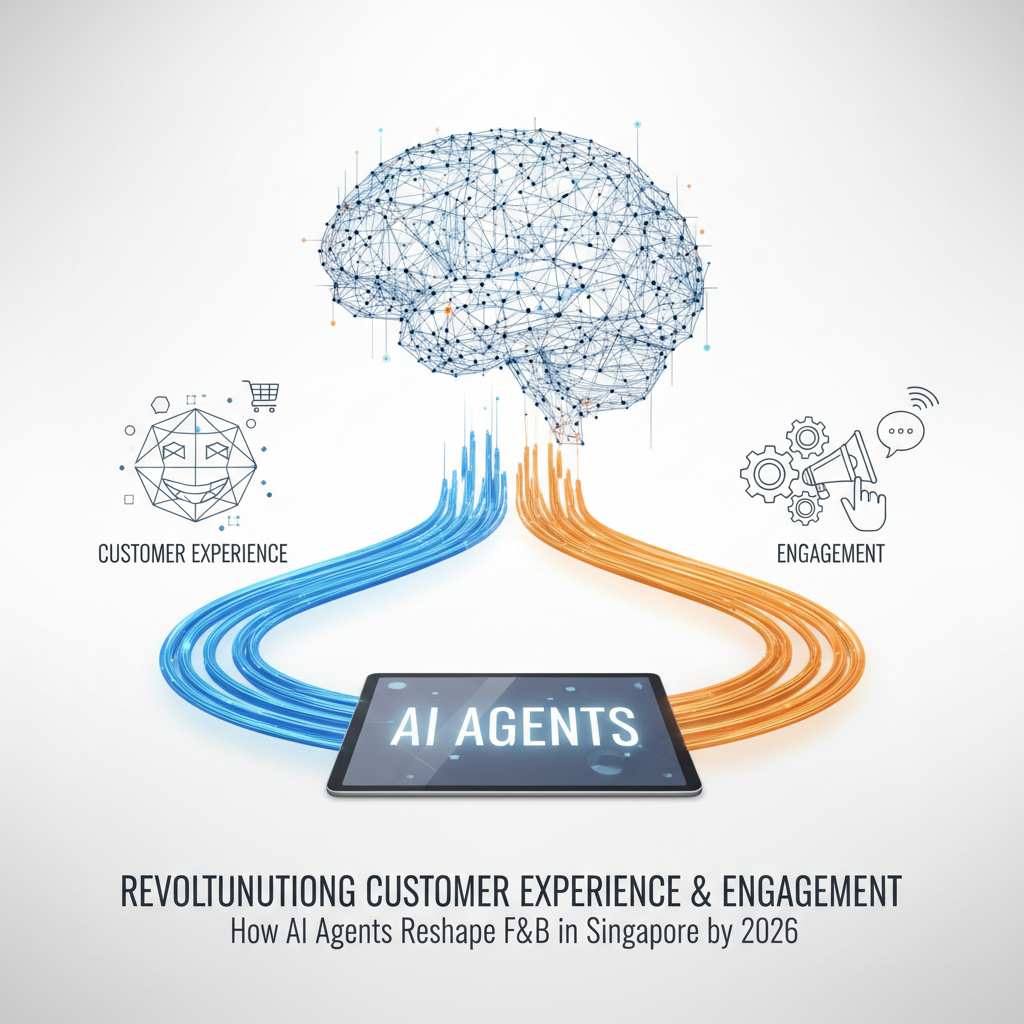
Revolutionizing Customer Experience & Engagement
In Singapore’s vibrant and competitive Food & Beverage (F&B) scene, How AI agent effect to Food & Beverage field in singapore has emerged as a transformative force, profoundly impacting customer interactions and personalizing dining experiences. From hawker centers embracing digital solutions to high-end restaurants seeking operational efficiency, AI agents are reshaping how consumers engage with eateries across the island. By leveraging data, automation, and predictive analytics, these intelligent systems are not just streamlining operations but are actively enhancing customer satisfaction, fostering loyalty, and driving new standards of service excellence in the F&B sector.
-
Personalized Recommendations and Loyalty Programs
AI agents are revolutionizing customer experience by moving beyond generic service to offer hyper-personalized recommendations. By analyzing past orders, dietary preferences, and even real-time browsing behavior, AI can suggest dishes and beverages that perfectly match individual tastes. For instance, a diner who frequently orders vegetarian options might receive prompts for new plant-based specials, while a coffee enthusiast could be alerted to limited-edition roasts. This level of personalization not only elevates the dining experience but also significantly boosts customer engagement. Furthermore, AI plays a crucial role in designing and managing sophisticated loyalty programs. Instead of one-size-fits-all rewards, AI can identify high-value customers and tailor exclusive offers, discounts, or early access to new menus, encouraging repeat visits and fostering stronger brand affinity. This data-driven approach ensures that loyalty initiatives are more effective, resonate deeply with customers, and provide tangible value back to the F&B establishment.
-
AI-Powered Chatbots for Ordering and Customer Support
The ubiquity of AI-powered chatbots is transforming how F&B businesses handle ordering and customer support in Singapore. These intelligent virtual assistants offer 24/7 availability, allowing customers to place orders, make reservations, or inquire about menu items at their convenience, without human intervention. This capability is particularly beneficial in a fast-paced environment like Singapore, where diners expect instant responses and seamless service. Chatbots can efficiently manage multiple queries simultaneously, reducing wait times and improving overall service efficiency. Moreover, with advanced natural language processing, they can handle complex requests, process payments, and even offer upsells or cross-sells based on the conversation context. This not only frees up human staff to focus on more intricate customer interactions and in-person service but also significantly enhances customer satisfaction through quick, accurate, and consistent support across various digital platforms.
-
Seamless Digital Ordering and Delivery Logistics
AI agents are pivotal in creating a seamless digital ordering and delivery ecosystem, a critical component of modern F&B operations, especially in a digitally-savvy city-state like Singapore. From intuitive mobile apps to sophisticated online platforms, AI streamlines the entire ordering process, making it faster and more user-friendly. Beyond the front-end, AI algorithms are at the heart of optimizing complex logistics, from managing inventory and predicting demand to orchestrating efficient delivery routes. By analyzing traffic patterns, weather conditions, and driver availability, AI can dynamically adjust delivery schedules, ensuring timely arrivals and minimizing operational bottlenecks. This not only reduces delivery costs and operational inefficiencies for businesses but also significantly improves the customer experience by providing accurate delivery estimates and reducing wait times. The impact of AI in revolutionizing the food industry extends to ensuring freshness and quality from kitchen to doorstep, cementing its role as an indispensable tool for F&B success.
As Singapore’s vibrant Food & Beverage (F&B) sector increasingly embraces the transformative potential of AI agents, it’s crucial to acknowledge that this journey is not without its complexities. While AI promises unprecedented efficiency and personalized customer experiences, navigating potential hurdles is paramount for ensuring responsible adoption and achieving sustainable growth. Understanding how AI agents effect the Food & Beverage field in Singapore involves a comprehensive look at both the opportunities and the challenges, particularly concerning data privacy, ethical considerations, and the necessary evolution of the workforce. Addressing these areas proactively will solidify Singapore’s position as a leader in intelligent F&B innovation, driving not just commercial success but also contributing to broader societal goals like sustainability and food security.
-
Data Security, Privacy, and Ethical AI Considerations
The deployment of AI agents in Singapore’s F&B sector inherently involves the collection and processing of vast amounts of sensitive data, ranging from customer purchasing habits and dietary preferences to supply chain logistics and employee performance. This raises critical concerns regarding data security and privacy. F&B establishments must implement robust cybersecurity frameworks to protect against breaches, unauthorized access, and cyber threats that could compromise operational integrity and customer trust. Adherence to Singapore’s Personal Data Protection Act (PDPA) is non-negotiable, requiring transparent data collection practices, clear consent mechanisms, and secure storage protocols for all personally identifiable information.
Beyond security, ethical AI considerations are vital. Businesses must ensure that AI algorithms are developed and deployed without inherent biases that could lead to unfair practices, such as discriminatory pricing or prejudiced recommendations. Transparency in how AI agents make decisions, coupled with explainability frameworks, builds trust among consumers and employees alike. Singapore has been proactive in this space, developing comprehensive guidelines such as the Model AI Governance Framework, which provides practical guidance for organizations in designing and deploying AI solutions responsibly. Embracing these frameworks is key to fostering an environment where AI innovation thrives ethically and sustainably, safeguarding consumer interests while harnessing technology’s full potential. Organizations can refer to resources from authorities like the Infocomm Media Development Authority (IMDA) for guidance on responsible AI development.
-
Workforce Reskilling and Job Transformation
One of the most significant challenges and opportunities presented by AI agent adoption in F&B is its impact on the workforce. While initial concerns often gravitate towards job displacement, a more nuanced perspective reveals a profound transformation of roles and responsibilities. AI agents are designed to automate repetitive, routine, and data-intensive tasks, freeing human employees to focus on higher-value activities that require creativity, critical thinking, empathy, and complex problem-solving. This includes enhanced customer service interactions, bespoke menu creation, strategic operational planning, and managing the AI systems themselves.
To successfully navigate this transition, a concerted effort in workforce reskilling and upskilling is essential. Singapore’s SkillsFuture initiative, alongside industry-led training programs, will play a crucial role in equipping F&B professionals with the competencies required for the AI-driven future. These skills include data literacy, AI system management, robotics maintenance, digital marketing, and advanced customer relationship management. By investing in their human capital, F&B businesses can transform potential job losses into opportunities for career advancement, fostering a more skilled, engaged, and adaptable workforce ready to leverage AI as a powerful tool rather than perceive it as a threat. This symbiotic relationship between human talent and AI technology is central to understanding how AI agents effect the Food & Beverage field in Singapore, propelling it towards a more productive and innovative future.
-
AI’s Role in Sustainable F&B Practices and Food Security
Beyond operational efficiency, AI agents hold immense potential to contribute significantly to sustainable F&B practices and enhance food security, critical priorities for Singapore. Food waste is a persistent global challenge, and AI can dramatically reduce it by optimizing inventory management through precise demand forecasting, smart procurement strategies, and dynamic pricing models that minimize spoilage. Similarly, AI-powered systems can monitor and optimize energy consumption in kitchens and dining areas, leading to substantial reductions in utilities and a smaller carbon footprint.
In the broader context of food security, AI agents can bolster supply chain resilience and transparency. By analyzing vast datasets from farm to fork, AI can predict potential disruptions, optimize logistics routes to reduce fuel consumption, and ensure traceability of ingredients, fostering consumer trust and supporting ethical sourcing. For a nation like Singapore that relies heavily on food imports, AI also plays a role in fostering local food production, such as in controlled environment agriculture (CEA) or vertical farms. AI-driven precision agriculture can optimize resource use (water, nutrients, light), maximize yields, and ensure consistent quality, thereby contributing to self-sufficiency and mitigating reliance on volatile global supply chains. By integrating AI into these critical areas, Singapore’s F&B sector can lead the charge in creating a more environmentally responsible, resource-efficient, and food-secure future.
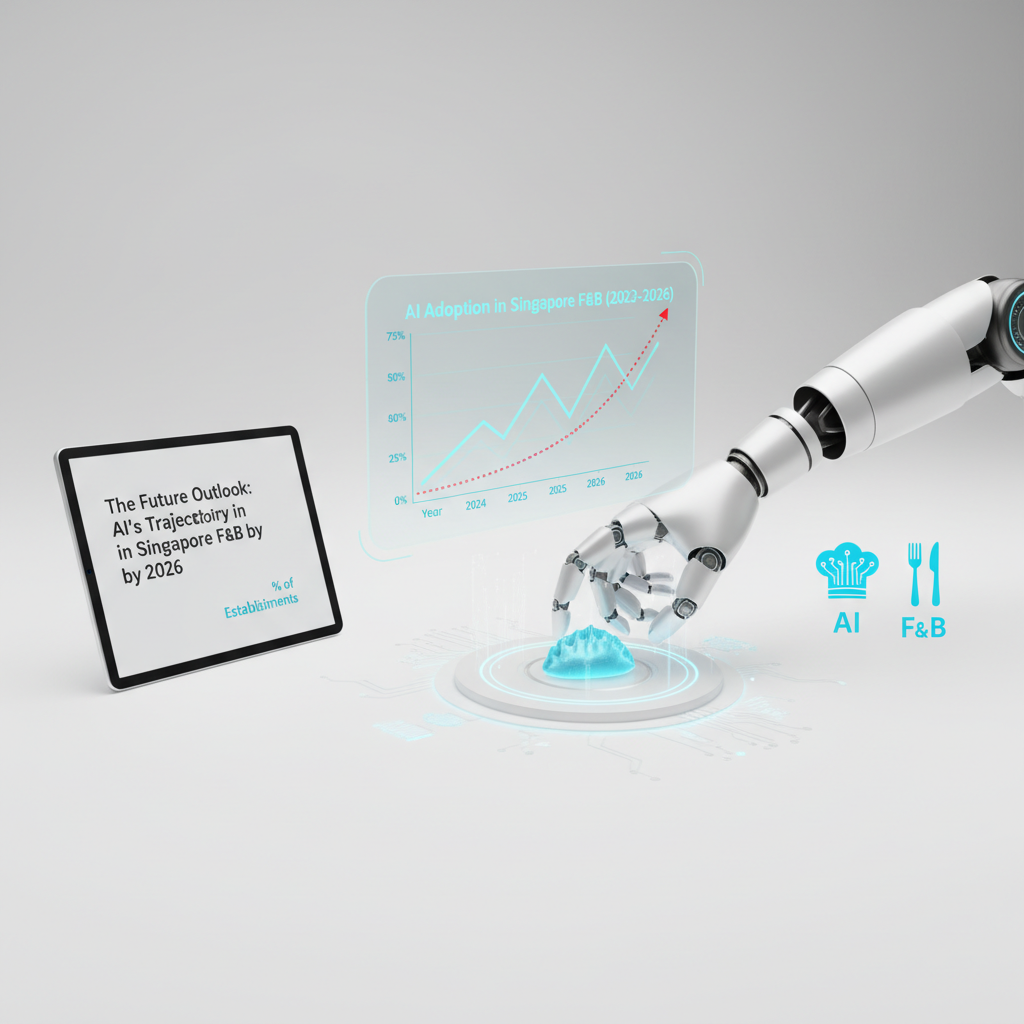
The Future Outlook: AI’s Trajectory in Singapore F&B by 2026
As Singapore rapidly embraces its Smart Nation vision, the Food & Beverage (F&B) sector stands on the cusp of a transformative era driven by Artificial Intelligence (AI). By 2026, AI agents are projected to profoundly reshape operational efficiencies, customer experiences, and business models across the island nation’s diverse culinary landscape. This projection delves into the significant changes and potential growth areas for AI agent integration, examining emerging trends, robust government support, and the long-term societal impacts as AI becomes an indispensable ingredient in Singapore’s F&B success story. Understanding how AI agents effect the Food & Beverage field in Singapore is crucial for businesses aiming to thrive in this rapidly evolving environment.
1. Emerging AI Innovations and Industry Trends
The next few years will witness a surge in sophisticated AI applications within Singapore’s F&B sector. Predictive analytics, for instance, will move beyond basic inventory management to intelligent demand forecasting, anticipating customer preferences, seasonal shifts, and even local event impacts to minimize food waste and optimize stock levels. AI-powered personalization will become a cornerstone of customer engagement, with AI agents analyzing past orders, dietary restrictions, and even real-time emotional cues to offer tailored menu recommendations, promotions, and dining experiences both in-store and online. Imagine a virtual sommelier suggesting wine pairings based on your meal choice and past preferences, or an AI-driven kiosk remembering your regular coffee order before you even speak.
Robotic automation will expand from simple tasks to more complex operations. Autonomous kitchen assistants will handle repetitive tasks like chopping, stirring, and even precise plating, enhancing consistency and reducing reliance on manual labor, a critical factor given Singapore’s tight labor market. Delivery robots and drones, already piloted in some areas, are expected to become more widespread, optimizing last-mile delivery logistics and efficiency. Furthermore, advanced AI-driven chatbots and virtual assistants will provide seamless customer service, handling reservations, queries, and feedback with greater speed and accuracy, freeing human staff to focus on more complex, high-touch interactions. These innovations collectively aim to boost productivity, reduce operational costs, and elevate the overall dining experience, addressing pressing industry challenges like labor shortages and rising costs.
2. Government Initiatives and Ecosystem Support for AI in F&B
Singapore’s government is a proactive catalyst in fostering AI adoption across all sectors, and F&B is no exception. Initiatives spearheaded by agencies like the Infocomm Media Development Authority (IMDA) and Enterprise Singapore (ESG) provide critical support through grants, funding schemes, and capability development programs. These programs aim to lower the barrier for F&B SMEs to invest in AI solutions, offering subsidies for technology adoption, training for employees in AI-related skills, and access to mentorship. The “Food Services Industry Digital Plan” by IMDA, for example, outlines a clear roadmap for businesses to embrace digital solutions, including AI, at various stages of their growth. Furthermore, Singapore’s commitment to developing its AI ecosystem, as detailed in Singapore’s National AI Strategy, ensures a conducive environment for innovation, attracting global AI talent and fostering local startups that specialize in F&B technologies. Regulatory sandboxes for testing new technologies and data governance frameworks also play a vital role in building trust and ensuring ethical AI deployment, crucial for consumer acceptance and industry stability.
3. Long-Term Economic and Societal Impact on Singapore’s Food Industry
The widespread integration of AI agents by 2026 will have profound long-term economic and societal ramifications for Singapore’s F&B industry. Economically, AI is poised to unlock significant productivity gains, leading to lower operating costs, optimized resource allocation, and ultimately, higher profit margins for businesses. New business models, such as highly automated “dark kitchens” or personalized subscription meal services driven by AI, will emerge, diversifying the F&B landscape. Singapore’s F&B sector will also enhance its global competitiveness, attracting foreign investment and positioning the nation as a hub for culinary innovation and smart F&B operations.
Societally, while concerns about job displacement are valid, the trajectory suggests a shift rather than outright elimination of roles. AI will automate mundane, repetitive tasks, allowing human workers to transition into higher-value roles focusing on creativity, customer relations, and technology management. This necessitates significant investment in upskilling and reskilling the F&B workforce, a challenge that government and industry partners are actively addressing through various training programs. Consumer expectations will also evolve, with demands for hyper-personalization, efficiency, and transparency becoming standard. Ethical considerations, including data privacy, algorithmic bias in recommendations, and the human element of dining, will remain paramount. Successfully navigating these complexities will ensure that AI enhances, rather than diminishes, the rich culinary experience that Singapore is renowned for, fostering a future where technology and tradition coexist harmoniously.
Partner with Shelby Global
You are looking for reliable HR Sevice Suppliers? Contact Shelby Global Now! To connect with verified talents and upgrade your orginization.
—————————————
References
– Singapore F&B sector turns to tech to overcome manpower crunch: https://www.businesstimes.com.sg/singapore/singapore-fnb-sector-turns-tech-overcome-manpower-crunch
– How AI can help reduce food waste across the supply chain: https://www.weforum.org/agenda/2023/10/ai-food-waste-supply-chain-restaurants/
– :
– IMDA AI Governance Framework: https://www.imda.gov.sg/programme-listing/artificial-intelligence-and-data/ai-governance
– Singapore’s National AI Strategy: https://www.smartnation.gov.sg/initiatives/national-ai-strategy