Revolutionizing Personalized Travel Planning
The travel landscape is undergoing a profound transformation, driven by advancements in Artificial Intelligence. Gone are the days of generic travel packages and tedious manual research. Today, AI agents are revolutionizing personalized travel planning, offering unprecedented customization tailored to individual preferences, budgets, and spontaneous whims. From inspiration to booking, AI redefines what’s possible, particularly in vibrant destinations like Vietnam, where bespoke experiences are increasingly sought after. Understanding how AI agents affect the travels field in Vietnam is crucial for both travelers and industry.
1. AI-driven itinerary creation and optimization
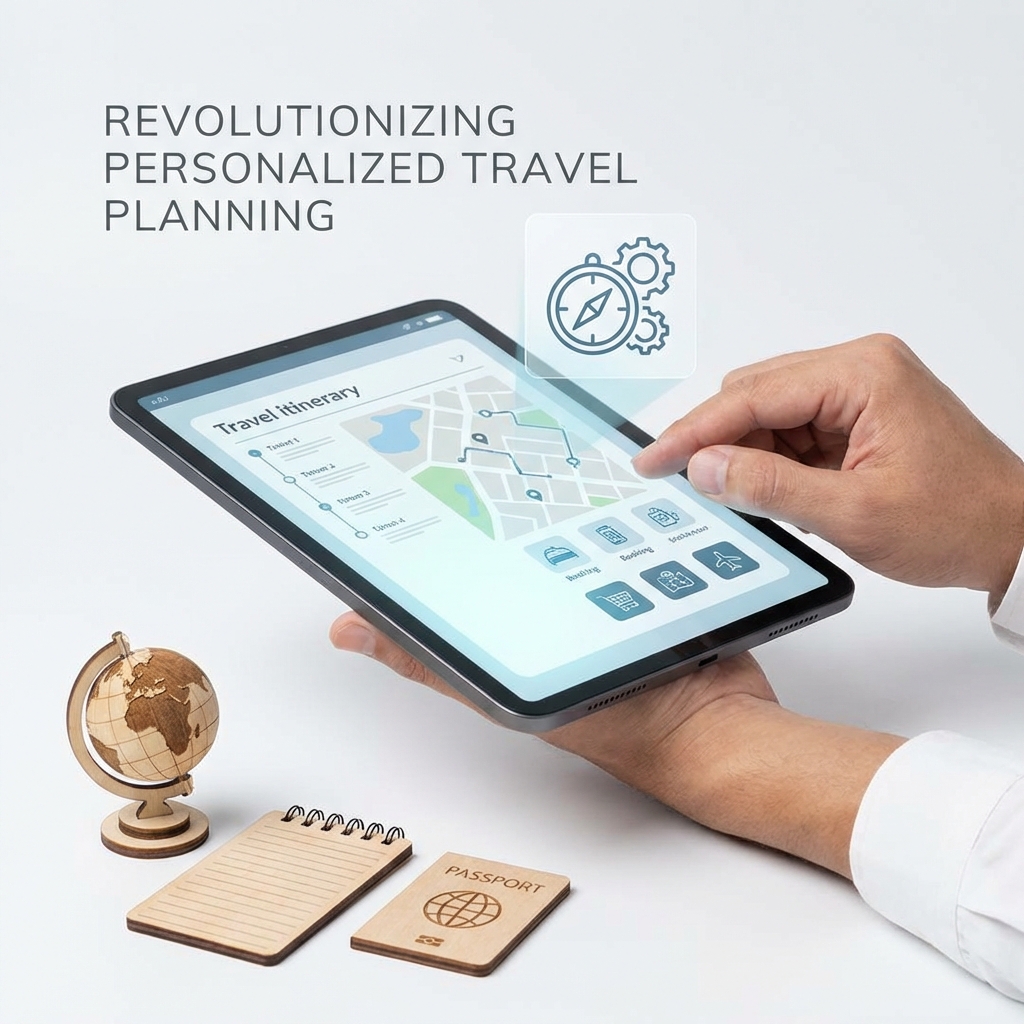
One significant impact of AI agents on the travel sector, especially in destinations like Vietnam, is their ability to craft and optimize highly personalized itineraries. Leveraging vast datasets of travel patterns, user reviews, local attractions, weather forecasts, and real-time events, AI algorithms design bespoke travel plans aligning perfectly with a traveler’s interests. For instance, an AI agent can learn a traveler prefers cultural immersion over nightlife, then suggest tailored routes through Hanoi’s Old Quarter or trekking paths in Sapa. The profound impact of AI agents on the travels field in Vietnam is particularly evident in how these systems dynamically adjust plans. If a flight is delayed or an attraction closed, the AI instantly re-routes, reschedules, and suggests alternatives, minimizing disruption. This ensures every moment is accounted for, allowing travelers to experience Vietnam’s rich heritage and natural beauty without planning stress.
2. Seamless flight and accommodation booking efficiency
Beyond itinerary creation, AI agents dramatically enhance flight and accommodation booking efficiency. The sheer volume of options across countless airlines and platforms can be overwhelming. AI streamlines this by autonomously searching, comparing, and analyzing thousands of data points in real-time. Whether identifying cost-effective flight routes to Da Nang, securing the best hotel deals in Ho Chi Minh City, or finding unique boutique stays in Hoi An, AI does the heavy lifting. These intelligent systems consider factors such as preferred airlines, loyalty programs, layover times, and specific room amenities, presenting only the most relevant and optimized choices. For travelers to Vietnam, this efficiency translates into significant time savings and reduced booking friction. The ability of AI to handle complex logistical requirements, from multi-city flights to connecting different types of accommodation, truly demonstrates how AI agent effect to travels field in Vietnam, making the entire booking process remarkably fluid and stress-free.
3. Dynamic pricing and real-time deal alerts
One of the most tangible benefits for budget-conscious travelers is AI’s capacity for dynamic pricing and real-time deal alerts. AI algorithms constantly monitor global travel markets, tracking price fluctuations for flights, hotels, and tour packages. By analyzing historical data, current demand, seasonal trends, and competitor pricing, AI can predict price movements with remarkable accuracy. This allows AI agents to notify travelers immediately when prices drop for desired routes or accommodations in Vietnam, or advise booking quickly if prices are expected to rise. This sophisticated approach to pricing reflects broader trends in the digital transformation of tourism globally, as detailed by the UNWTO’s insights on tourism technology. For those exploring Vietnam, this means opportunities to snag incredible deals, making premium travel experiences more accessible. This intelligent price tracking is a game-changer, empowering travelers to make informed decisions and optimize their travel budget effectively.
In conclusion, AI agents are transformative partners in personalized travel. By offering unparalleled customization in itinerary planning, streamlining booking processes, and providing intelligent pricing insights, they are fundamentally altering how we discover and experience the world. For the vibrant travels field in Vietnam, AI promises an era of highly tailored, efficient, and deeply rewarding journeys.
Enhancing In-Destination Experiences
Once travelers set foot in the captivating landscapes of Vietnam, the journey transforms from planning to experiencing. Here, Artificial Intelligence (AI) agents play a pivotal role in refining the in-destination experience, acting as intelligent companions that ensure a smoother, richer, and more personalized adventure. From navigating bustling city streets to discovering hidden culinary gems, AI agents are revolutionizing how AI agents affect the travels field in Vietnam, offering unparalleled personalized travel experiences and seamless support throughout their stay.
1. Real-time local recommendations for attractions and dining
AI agents excel at understanding individual preferences and delivering highly relevant suggestions in real-time. Leveraging advanced algorithms and vast databases of local information, these intelligent assistants can analyze a traveler’s past interests, current location, time of day, and even local weather conditions to recommend the perfect attraction or dining spot. Imagine an AI agent suggesting a serene coffee shop in Hanoi’s Old Quarter just when you’re looking for a quiet afternoon break, or recommending an authentic street food vendor serving the best pho in Ho Chi Minh City based on your dietary preferences and a desire for local flavors. This level of local insights goes beyond generic guidebook entries, offering access to hidden gems and experiences often missed by tourists. It significantly enhances traveler satisfaction by tailoring every moment to their unique desires, ensuring that each recommendation feels like a personal discovery rather than a pre-programmed suggestion.
2. Multilingual AI guides and instant translation for cultural immersion
One of the most significant barriers to deep cultural immersion for international travelers is language. Vietnamese, with its tonal complexities, can be challenging. AI agents equipped with multilingual capabilities act as invaluable bridges, providing instant translation for spoken words, written signs, and restaurant menus. This not only facilitates basic communication but also allows travelers to engage more meaningfully with local communities, understand cultural nuances, and truly appreciate the richness of Vietnamese heritage. Beyond mere translation, these AI guides can explain local customs, etiquette, and historical context of sites, transforming a simple visit into an educational and profoundly immersive experience. For instance, an AI guide can instantly translate a conversation with a local artisan in Hoi An or explain the significance of a traditional ceremony observed in Hue, fostering deeper connections and a richer understanding of Vietnam’s vibrant culture.
3. Proactive assistance for navigation and emergency situations
Navigating an unfamiliar country, especially one with a unique urban layout like Vietnam, can be daunting. AI agents offer seamless navigation support, providing real-time directions, traffic updates, and public transport options. They can proactively alert travelers to potential delays, suggest alternative routes, or even guide them to nearby points of interest or essential services like ATMs or pharmacies. More critically, AI agents significantly boost safety features by offering proactive assistance in emergency situations. In the event of a medical issue, lost passport, or other unforeseen circumstances, an AI agent can instantly provide critical information such as contact details for local emergency services, embassy information, or nearby hospitals, and even assist in communicating with local authorities through instant translation. This instant support provides immense peace of mind, ensuring travelers feel secure and well-supported throughout their Vietnamese adventure. The increasing sophistication of AI in travel is transforming every aspect of the journey, as highlighted by industry analysis on The Impact of Artificial Intelligence on the Travel Industry.
In conclusion, AI agents are not just tools; they are evolving into indispensable companions for travelers in Vietnam. By providing personalized recommendations, breaking down language barriers, and offering proactive assistance, these intelligent systems are elevating the in-destination experience, making it more accessible, enjoyable, and profound. As AI technology continues to advance, its role in shaping the future of travel in Vietnam will only become more integrated and impactful, promising an even more enriched journey for every visitor.
Transforming Customer Service & Support
The travel industry in Vietnam is witnessing a profound transformation in customer service and support, driven by the advent of artificial intelligence (AI) agents. These sophisticated AI tools are not merely automating tasks; they are redefining how travel companies in Vietnam engage with their customers, from the moment a traveler considers a trip to long after their return. By providing instant, intelligent, and personalized interactions, AI agents are significantly enhancing the overall travel experience, addressing the core question of how AI agent effect to Travels field in vietnam, particularly in customer-facing roles. This shift is improving efficiency, boosting customer satisfaction, and setting new benchmarks for service excellence across the Vietnamese travel landscape.
1. 24/7 AI Chatbot Support for Instant Queries
One of the most immediate and impactful benefits of AI agents in Vietnam’s travel sector is the provision of round-the-clock support. AI-powered chatbots are now the first point of contact for countless travelers, offering instant answers to a wide array of pre-trip inquiries. Whether it’s a tourist in Hanoi needing to know visa requirements for a specific nationality, a local in Ho Chi Minh City checking flight availability, or a traveler abroad asking about local attractions and weather, AI chatbots deliver immediate, accurate information. This 24/7 availability is crucial in an industry where travel plans can change unexpectedly and inquiries can arise at any hour, transcending time zone differences. By handling high volumes of routine questions, these chatbots reduce the workload on human customer service teams, significantly cutting down wait times and ensuring that customers receive the assistance they need without delay. This capability directly contributes to an improved customer experience, highlighting the growing trend within the rapidly expanding global chatbot market.
2. Personalized Pre- and Post-Trip Communication
Beyond instant query resolution, AI agents are revolutionizing personalization in travel communication. Prior to a trip, AI can analyze a traveler’s booking history, preferences, and even their browsing behavior to offer highly relevant recommendations. For instance, an AI agent might suggest specific tours in Da Nang that align with a customer’s stated interests in culture or adventure, provide timely updates on local events in Hue, or offer personalized packing lists based on forecasted weather conditions for their destination in Vietnam. This proactive and tailored communication ensures travelers feel understood and valued, significantly enhancing their pre-trip excitement and preparedness. Post-trip, AI continues its engagement by automating feedback collection, sending personalized thank-you notes, and even suggesting future travel destinations or experiences based on their past journey. Such personalized interactions foster customer loyalty and encourage repeat business, making travel experiences in Vietnam more memorable and seamless.
3. Efficient Resolution of Common Travel Issues
AI agents are proving invaluable in efficiently resolving common travel issues that often consume significant human resources. From assisting with flight changes and booking modifications to providing initial guidance on lost luggage or processing simple refund requests, AI can handle many predictable scenarios with speed and accuracy. In Vietnam, this means that if a domestic flight is delayed, an AI agent can quickly inform affected passengers, offer alternative options, or guide them through the rebooking process. For common billing inquiries or frequently asked questions about hotel amenities, AI can provide immediate answers, preventing frustration and streamlining the customer journey. By automating these routine problem-solving tasks, AI agents free up human customer service representatives to focus on more complex, nuanced, or emotionally charged issues that require empathy and critical thinking. This strategic delegation not only improves the efficiency of operations for Vietnamese travel companies but also ensures that every customer concern, simple or complex, receives optimal attention, ultimately leading to higher customer satisfaction and a more robust travel support system.
Operational Optimization for Travel Businesses
The Vietnamese travel sector, a vibrant and rapidly expanding industry, is undergoing a profound transformation driven by the integration of Artificial Intelligence (AI) agents. From bustling hotels to intricate tour operations and dynamic airlines, AI is revolutionizing internal processes, ushering in an era of unprecedented efficiency and enhanced service delivery. Understanding How AI agent effect to Travels field in vietnam is crucial for businesses aiming to stay competitive and provide superior experiences in a globalized market. This section will delve into the internal impact of AI, highlighting its role in streamlining operations and boosting overall productivity across the Vietnamese tourism landscape. The adoption of advanced travel technology is not just about keeping pace; it’s about setting new benchmarks for operational excellence.
1. Automated Back-Office Tasks and Resource Management
AI agents are fundamentally changing the backbone of travel businesses by automating a myriad of repetitive yet critical back-office functions. In hotels, this includes everything from managing reservations and room allocations to processing payments and handling guest check-ins/check-outs, freeing up human staff to focus on more complex guest interactions. Tour operators benefit from AI-powered systems that automate itinerary creation, supplier bookings, and even visa processing, significantly reducing manual errors and processing times. Airlines leverage AI for automated baggage handling, crew scheduling optimization, and even routine maintenance alerts. This AI-powered automation extends to inventory management for supplies and amenities, ensuring that resources are always available when needed and minimizing waste. The efficiency gains are substantial, directly contributing to lower operational costs and a smoother workflow. Furthermore, AI systems can monitor various operational parameters in real-time, providing actionable insights for proactive adjustments, thereby enhancing overall operational excellence.
2. Predictive Analytics for Demand Forecasting and Staffing
One of the most impactful applications of AI in Vietnamese travel businesses is its capacity for advanced predictive analytics. AI agents analyze vast datasets, including historical booking patterns, seasonal trends, public holidays, weather forecasts, and even social media sentiment, to generate highly accurate demand prediction models. For hotels, this translates into optimized pricing strategies and intelligent allocation of promotional offers, maximizing occupancy and revenue. Tour operators can anticipate popular destinations or tour packages, allowing them to pre-book resources and allocate guides more effectively. Airlines utilize these insights to adjust flight schedules, optimize seat pricing, and manage fuel consumption more efficiently. Beyond demand, AI also plays a critical role in strategic staffing. By forecasting peak and off-peak periods, AI systems can recommend optimal staff levels for various departments, ensuring adequate human resources are available without incurring unnecessary labor costs. This data-driven approach minimizes overstaffing during slow periods and prevents understaffing during busy times, leading to improved service quality and significant revenue growth. Experts emphasize that AI’s analytical prowess significantly improves forecasting accuracy, leading to better resource allocation across various sectors, including the dynamic travel industry. For a deeper dive into how AI is accelerating innovation in this field, insights from leading consultancies like Deloitte highlight its transformative potential. This sophisticated analysis moves businesses from reactive to proactive strategies, making operations more resilient and responsive.
3. Improved Marketing Personalization and Customer Segmentation
AI agents are transforming how Vietnamese travel businesses approach marketing, moving away from broad campaigns to highly targeted, personalized strategies. By analyzing customer data—such as past bookings, browsing history, preferences, and feedback—AI can create granular customer segments. This allows hotels to offer bespoke room upgrades or amenity packages, tour operators to recommend personalized itineraries, and airlines to suggest relevant flight deals or loyalty program benefits. The result is a much higher conversion rate and increased customer satisfaction. AI-powered chatbots and virtual assistants, which fall under the umbrella of AI agents, play a crucial role in enhancing customer engagement. These tools can interact with customers 24/7, answering queries, providing recommendations, and even facilitating bookings, all while collecting valuable data to refine personalization efforts further. This level of tailored communication not only makes customers feel valued but also significantly boosts brand loyalty and repeat business. The ability of AI to process and interpret complex behavioral data allows travel companies to create dynamic marketing campaigns that adapt in real-time, ensuring messages are always relevant and timely. For more insights on How AI agent effect to Travels field in vietnam, specifically in enhancing customer interactions and marketing strategies, visit our detailed analysis. This personalized approach is key to thriving in the competitive digital age.
Challenges, Ethics, and Future Outlook
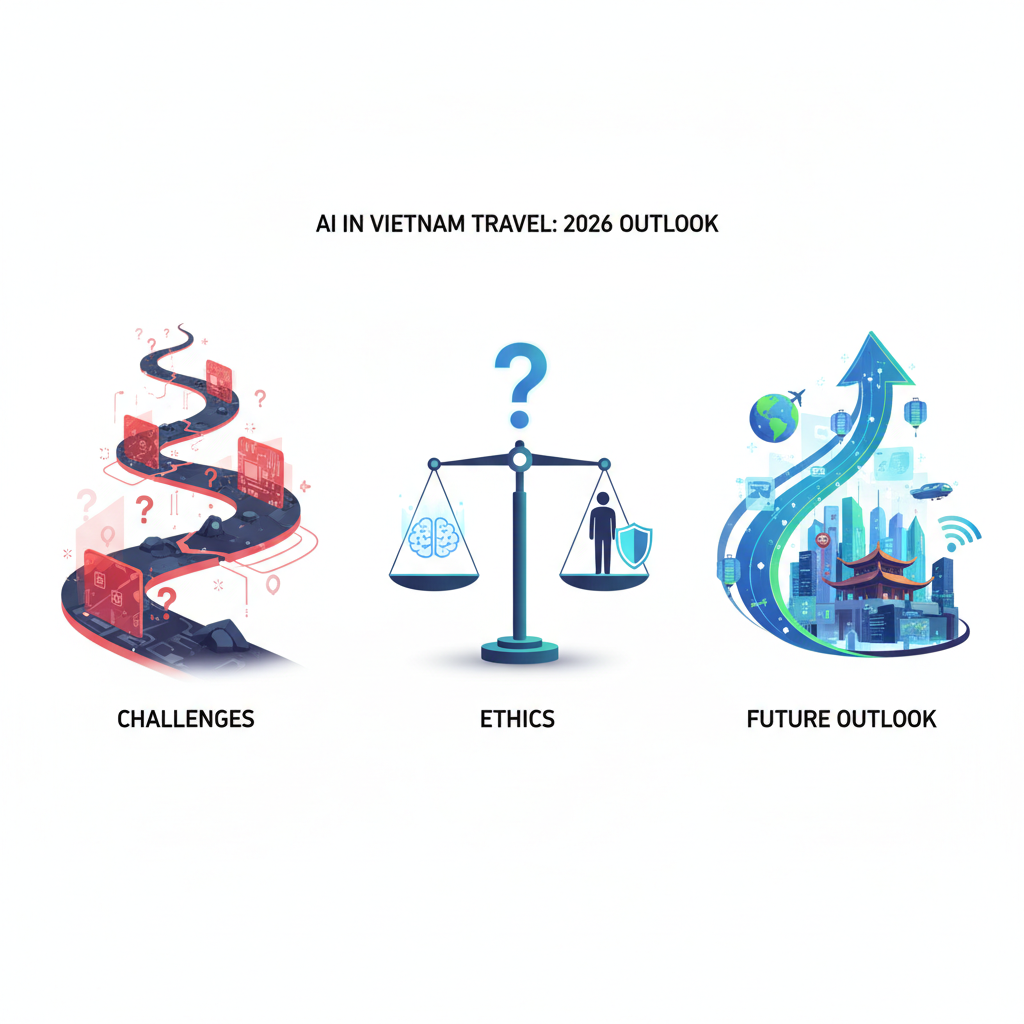
While the integration of AI agents promises to revolutionize Vietnam’s travel sector, enhancing efficiency and personalization, it also casts a significant shadow of potential downsides and complex ethical considerations. Understanding these challenges is crucial for fostering responsible and sustainable AI adoption. As AI continues to reshape industries globally, Vietnam’s unique cultural landscape and developing economy present specific nuances regarding how AI agent effect to Travels field in vietnam, demanding careful navigation.
1. Job displacement concerns in traditional roles
One of the most pressing concerns surrounding the widespread adoption of AI agents in Vietnam’s travel sector is the potential for job displacement. Roles traditionally held by humans, such as reservation agents, front desk staff, entry-level tour guides, and even some administrative positions in hotels and travel agencies, could be significantly impacted. AI-powered chatbots can handle booking queries, provide instantaneous information, and manage customer service interactions around the clock, potentially reducing the need for human intervention. This shift could lead to job losses, particularly among less-skilled workers, raising socio-economic questions for the Vietnamese workforce.
However, this challenge also presents an opportunity for upskilling and reskilling. The focus needs to shift towards creating new roles that complement AI—roles that require uniquely human skills like complex problem-solving, empathy, creative content creation for travel experiences, and managing AI systems. Government initiatives and private sector collaborations will be essential to provide training programs, ensuring that the local workforce can adapt to the evolving demands of an AI-driven tourism industry. The key is not to replace human jobs entirely but to augment them, allowing humans to focus on higher-value tasks that enhance visitor experiences rather than repetitive ones. According to a report by the International Labour Organization (ILO), while AI automates tasks, it also creates new job categories requiring novel skills, highlighting a transformative rather than purely substitutive impact on labor markets.
2. Data privacy and security implications for travelers
The efficacy of AI agents in providing personalized travel experiences heavily relies on collecting vast amounts of traveler data—from booking preferences and dietary restrictions to location history and spending habits. This intensive data collection raises significant data privacy and security implications. Travelers might become wary of sharing personal information, especially given the rising global concerns over data breaches and misuse. In Vietnam, where digital literacy and awareness of data protection laws might still be developing, ensuring robust safeguards is paramount.
Travel companies deploying AI agents must adhere to stringent data protection protocols, including encryption, secure storage, and transparent policies regarding data usage. Compliance with international data protection standards, even if local regulations are still evolving, will build trust. Travelers need to be fully informed about what data is collected, how it’s used, and their rights to access or delete their information. Any breach could not only damage a company’s reputation but also erode traveler confidence in AI-driven services across the entire sector. Implementing AI responsibly means prioritizing traveler privacy and establishing a secure digital environment where personal data is protected against unauthorized access and exploitation.
3. Maintaining authentic cultural experiences amidst AI integration
A core appeal of traveling to Vietnam lies in its rich culture, vibrant traditions, and genuine human interactions. There’s a valid concern that over-reliance on AI agents might inadvertently dilute or standardize these authentic cultural experiences. For instance, if all recommendations are algorithmically generated based on popular trends, unique local gems or less-traveled cultural sites might be overlooked. Moreover, interactions with AI chatbots, while efficient, lack the nuanced understanding, spontaneity, and human warmth that local guides or vendors provide, which are often central to an immersive cultural journey.
The challenge lies in striking a balance. AI should be a tool to enhance, not replace, genuine human connection and cultural immersion. This could involve AI agents providing background information before a cultural event, suggesting less-known local eateries, or translating on-the-spot, allowing for deeper engagement rather than acting as the sole interface. Encouraging AI development that prioritizes local content creators and cultural experts to feed authentic data into the systems can prevent homogenization. The goal should be to leverage AI to unlock deeper, more personalized, and accessible cultural experiences, ensuring that the distinctive spirit of Vietnam remains at the forefront of its tourism offerings, augmented by technology rather than diminished by it.
Future Outlook
Despite these challenges, the future outlook for AI agents in Vietnam’s travel sector remains overwhelmingly positive, provided a strategic and ethical approach is adopted. Future developments will likely see AI agents becoming even more sophisticated, offering hyper-personalized itineraries, real-time crisis management during travel disruptions, and predictive analytics for sustainable tourism planning. Imagine AI agents seamlessly integrating with smart city initiatives, guiding tourists through traffic-optimized routes to cultural sites, or even offering language immersion experiences through AI-powered conversational tools.
Furthermore, AI can play a pivotal role in promoting sustainable tourism practices by identifying eco-friendly accommodations, managing resource consumption in hotels, and even monitoring visitor impact on sensitive natural sites. The responsible development of AI, coupled with robust regulatory frameworks and continuous investment in human capital, will ensure that Vietnam harnesses the full potential of this technology. By proactively addressing the ethical considerations and focusing on augmentation over replacement, AI agents can elevate Vietnam’s travel industry to new heights, delivering unparalleled experiences while preserving its cherished cultural integrity and fostering inclusive growth.
Partner with Shelby Global
You are looking for reliable HR Sevice Suppliers? Contact Shelby Global Now! To connect with verified talents and upgrade your orginization.
—————————————
References
– UNWTO’s insights on tourism technology: https://www.unwto.org/tourism-and-technology
– The Impact of Artificial Intelligence on the Travel Industry: https://www.hospitalitynet.org/opinion/4106260.html
– Chatbot market size worldwide 2023-2032: https://www.statista.com/statistics/994464/chatbot-market-size-worldwide/
– Accelerating AI in Travel | Deloitte: https://www2.deloitte.com/us/en/pages/consumer-business/articles/accelerating-ai-in-travel-industry.html
– International Labour Organization (ILO) Report on AI and Work: https://www.ilo.org/global/research/WCMS_906800/lang–en/index.htm