
The Evolving Landscape of AI in SEO
Overview of how AI is currently impacting SEO and what key shifts are anticipated in the near future, setting the stage for 2026.

The integration of Artificial Intelligence (AI) into Search Engine Optimization (SEO) is a fundamental transformation, rapidly reshaping how businesses achieve online visibility. AI is becoming an indispensable tool, from optimizing content to predicting future search trends. As we approach 2026, the pace of AI innovation promises even more profound changes, demanding a proactive and adaptive approach for digital success. Understanding current applications and anticipating future shifts is crucial for staying ahead in this dynamic environment.
-
Current AI Applications in SEO (e.g., keyword research, content)
AI’s impact on SEO is already extensive. In keyword research, AI algorithms excel at identifying semantic relationships, long-tail variations, and user intent often missed by traditional tools. AI-powered tools analyze vast datasets of queries, understand natural language patterns, and uncover emerging topics, providing richer insights beyond simple keywords. This enables more precise targeting and the discovery of untapped niche opportunities.
For content creation and optimization, AI acts as a powerful co-pilot. AI writers can generate initial drafts, summarize complex information, or personalize content at scale. AI-driven optimization tools analyze existing content for readability, sentiment, topic depth, and semantic relevance, suggesting improvements to align with search engine algorithms and user expectations. This includes identifying content gaps and ensuring comprehensive topic coverage. Furthermore, AI assists in technical SEO audits by quickly identifying issues like crawlability problems and site speed bottlenecks, recommending solutions faster than manual processes. In analytics, AI provides predictive insights, forecasting traffic trends and identifying anomalies for data-driven strategic adjustments. The pervasive nature of AI has already redefined efficiency and effectiveness for SEO teams. As aptly described by Search Engine Journal, “AI is not just a tool; it’s a strategic partner that empowers SEO professionals to achieve more precise targeting, improved content quality, and superior search visibility.”
-
Anticipated Paradigm Shifts by 2026 (e.g., algorithm complexity)
Looking towards 2026, the landscape of AI in SEO will undergo even more significant paradigm shifts. Search engine algorithms are expected to become far more sophisticated and adaptive, moving beyond simple keyword matching to a deeper understanding of intent, context, and user experience. Google’s continuous advancements with models like MUM and future iterations will enable algorithms to process information across various modalities (text, images, video) and provide more nuanced answers to complex queries. This will push SEO beyond mere keyword stuffing towards a focus on truly comprehensive, authoritative, and helpful content that addresses the full user journey.
Hyper-personalization will become the norm, with AI tailoring search results based on inferred user preferences, previous interactions, and even emotional context. The “one-size-fits-all” approach to SEO will become obsolete, replaced by strategies emphasizing diverse content formats and dynamic delivery. The rise of conversational AI interfaces will also transform how users interact with search, making voice search and natural language queries more dominant. SEO professionals will need to optimize for answers and direct responses, not just organic listings. AI will play a greater role in real-time indexing and understanding new content, potentially shortening the time for fresh information to rank. The challenge will be adapting to algorithms that are constantly learning and evolving, requiring continuous monitoring and flexible strategies. To explore these future challenges and prepare your strategies, you might want to consider future-proofing your SEO strategies.
-
Why Staying Ahead with AI is Crucial for SEO Professionals
For SEO professionals, embracing and mastering AI is no longer optional; it’s a critical imperative for survival and success. Those who fail to integrate AI into their workflows risk being outpaced by competitors leveraging these technologies for superior efficiency, deeper insights, and more effective strategies. Staying ahead means more than just using AI tools; it involves understanding the underlying principles, learning prompt engineering for optimal AI output, and developing the critical thinking skills to validate and refine AI-generated insights.
The competitive advantage offered by AI is multifaceted. It enables professionals to automate repetitive tasks, freeing up valuable time for strategic planning, creative problem-solving, and deeper data analysis. AI can unlock predictive capabilities, allowing businesses to anticipate market shifts and user behavior, enabling proactive rather than reactive SEO. Furthermore, proficiency in AI tools and methodologies enhances a professional’s value, making them indispensable in an increasingly data-driven and automated industry. Those who can effectively blend their SEO expertise with AI capabilities will be the architects of future digital success, ensuring their relevance in the rapidly evolving digital ecosystem.
AI-Powered Content Creation and Optimization
In today’s fast-evolving digital landscape, where content is paramount, Artificial Intelligence (AI) has emerged as a transformative force. AI tools are revolutionizing content generation, enhancing quality, optimizing for search engines, and boosting user engagement. This shift enables businesses to produce content at scale and craft highly relevant, personalized experiences, fundamentally reshaping modern digital marketing strategies.
-
Generative AI for High-Quality Content
Generative AI, powered by sophisticated large language models (LLMs), has dramatically altered content creation. These advanced tools rapidly produce high-quality textual content: blog posts, articles, social media updates, email newsletters, and product descriptions. Generative AI reduces manual effort, helps businesses overcome writer’s block, maintain consistent brand voice, and scale content output without compromising quality.
Beyond long-form content, AI excels at generating concise, impactful elements critical for SEO and user experience. This includes optimized meta descriptions enticing clicks, compelling headlines, and structured FAQ sections. AI’s ability to analyze vast data identifies patterns, suggests keywords, improves readability, and ensures content adheres to best practices for both search engines and human readers, making content more discoverable and engaging.
-
Personalized Content Experiences with AI-driven Insights
One-size-fits-all content is fading, replaced by a demand for hyper-personalized experiences. AI is at the forefront, utilizing sophisticated algorithms to analyze immense volumes of user data – including browsing history, purchase behavior, demographics, and real-time interactions. These AI-driven insights empower marketers to understand individual user preferences, pain points, and interests with unparalleled precision.
Armed with this intelligence, AI systems dynamically tailor content delivery, ensuring each user receives information most relevant and valuable. Examples include personalized product recommendations, customized email campaigns with targeted offers, and dynamic website content adapting to a visitor’s profile. This personalization enhances user experience, fosters stronger connections, and significantly improves engagement, conversion rates, and customer loyalty.
-
AI for Content Audits, Performance Analysis, and Gaps
Effective content strategy involves continuous evaluation and optimization. AI tools are indispensable for comprehensive content audits and performance analyses. They swiftly scan entire content libraries, identifying outdated information, broken links, duplicate content, and areas for SEO or readability improvement. Automating this laborious process frees up valuable human resources for strategic initiatives.
Furthermore, AI-powered analytics delve deep into content performance metrics: organic search rankings, traffic sources, bounce rates, and conversion paths. By cross-referencing this data with competitor analysis and trending topics, AI accurately pinpoints content gaps – opportunities for new content to address unanswered user queries or underserved market segments. AI also provides actionable recommendations for optimizing existing content, suggesting keywords, improving structure, and proposing new topic clusters. This data-driven approach ensures content investments yield maximum ROI, keeping businesses competitive and agile.
The integration of AI into content creation and optimization workflows marks a pivotal moment in digital marketing. From generating high-quality text at scale and delivering personalized experiences to conducting meticulous audits and uncovering strategic opportunities, AI empowers businesses to elevate their content, drive superior search engine performance, and cultivate stronger audience relationships.
Advanced Technical SEO with Artificial Intelligence
Exploring how AI will enhance technical SEO aspects, including site audits, crawl budget optimization, and user experience signals for better rankings. The landscape of Search Engine Optimization is continually evolving, and perhaps no area is undergoing a more profound transformation than technical SEO, thanks to the integration of Artificial Intelligence. Historically, technical SEO involved laborious manual checks and reactive problem-solving. Today, AI-driven tools are poised to revolutionize this domain, offering unprecedented efficiency, depth of analysis, and predictive capabilities. By leveraging AI, SEO professionals can move beyond merely identifying problems to understanding their root causes, anticipating future issues, and implementing proactive, data-informed solutions that significantly impact a site’s visibility and user experience.
1. AI for Enhanced Site Audits and Error Detection
Traditional site audits, while critical, are often time-consuming and can sometimes overlook intricate issues buried within vast amounts of data. Artificial Intelligence fundamentally transforms this process by automating and deepening the scope of technical analysis. AI-powered auditing tools can crawl websites exponentially faster than human counterparts, processing millions of data points to identify a wide spectrum of errors. This includes common issues like broken links, redirect chains, and duplicate content, but extends to more complex problems such as canonicalization inconsistencies, indexation errors, hreflang conflicts, and even JavaScript rendering issues that might impact search engine bots.
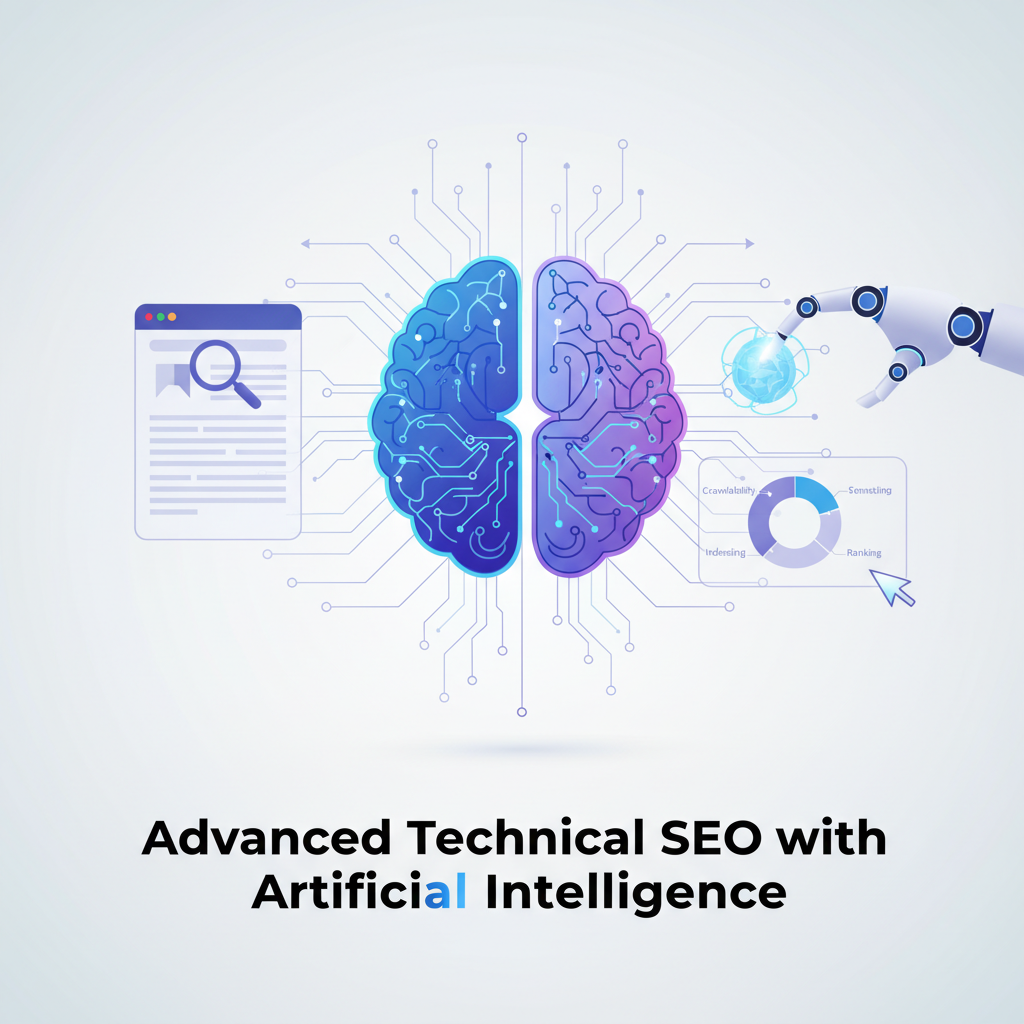
What sets AI apart is its ability to not just flag errors but also to understand their potential impact and suggest specific, prioritized solutions. Through machine learning algorithms, AI can detect subtle patterns and anomalies that indicate underlying architectural flaws or systemic issues. For instance, it can identify why certain pages struggle with crawlability despite appearing well-linked, or pinpoint pages with low search intent matching based on user behavior and SERP analysis. This enhanced error detection capability allows SEOs to focus their efforts on high-impact fixes, drastically improving site health and search engine efficiency. An image illustrating this concept is provided below:
2. Optimizing Core Web Vitals and User Experience with AI Insights
User experience has become a paramount ranking factor, with Google’s Core Web Vitals serving as key metrics. AI offers a powerful ally in optimizing these vital signals. By analyzing vast datasets of user interaction, AI can pinpoint precise bottlenecks affecting Largest Contentful Paint (LCP), Interaction to Next Paint (INP), and Cumulative Layout Shift (CLS). This goes beyond simple page speed tests; AI can identify specific elements, scripts, or server configurations contributing to slow load times or layout shifts across different devices and network conditions.
Furthermore, AI can analyze qualitative user experience signals, correlating on-site behavior (bounce rates, time on page, conversion paths) with technical performance. For example, it might identify that a high bounce rate on mobile devices is not just due to slow loading but also to confusing navigation specific to that viewport, or that certain page elements are causing user frustration. With these insights, AI can recommend targeted optimizations, such as suggesting optimal image compression ratios without quality loss, identifying inefficient CSS/JavaScript, or even proposing A/B tests for layout changes that enhance user engagement. This proactive optimization of UX, driven by intelligent analysis, translates directly into improved crawl budget efficiency, higher rankings, and better conversion rates.
3. Predictive Analytics for Proactive Technical SEO Issue Resolution
Perhaps one of the most transformative applications of AI in technical SEO is its ability to leverage predictive analytics. Instead of reacting to problems after they’ve impacted rankings or user experience, AI can forecast potential issues before they materialize. By continuously monitoring website performance, server logs, user behavior trends, and even external factors like anticipated algorithm updates, AI can identify precursors to technical issues.
For instance, an AI system might predict increased server load during peak traffic times and recommend scaling resources proactively, or it could detect a subtle decline in crawl frequency on specific sections of a site, signaling potential crawl budget inefficiencies or indexation problems before they become critical. It can also anticipate content decay by analyzing engagement metrics and recommending timely updates or refreshes. Moreover, AI can learn from historical data to understand how specific changes to website architecture or content might affect future performance, allowing SEOs to model the impact of their decisions. This proactive stance, powered by machine learning, transforms technical SEO from a reactive maintenance task into a strategic, foresight-driven discipline, ensuring continuous improvement and minimizing the risk of ranking drops. To learn more about how intelligent systems can bolster your digital strategy, you can explore our resources on AI SEO strategy.
Understanding AI’s Impact on Ranking Factors
The search engine optimization landscape is in constant flux, primarily driven by advancements in artificial intelligence. What were once straightforward keyword matching exercises have evolved into complex algorithmic interpretations of user intent, content quality, and website experience. Search engines like Google now leverage sophisticated AI models—RankBrain, BERT, MUM, and generative AI—to process information and deliver the most relevant results. This deep AI integration means traditional ranking factors are being re-evaluated and augmented by new signals measuring true value and context. For SEOs, comprehending this shift isn’t just about staying competitive; it’s about fundamentally rethinking how content is created, optimized, and presented to meet the higher bar set by AI-driven algorithms. Adapting requires a deep dive into AI’s capabilities and its implications for search visibility.
1. AI’s Role in Interpreting User Intent and Semantics
One of AI’s most significant transformations in search is its unparalleled ability to interpret user intent and semantic meaning. Modern AI algorithms don’t just look at query words; they strive to understand the underlying need, context, and potential follow-up questions. This involves complex natural language processing (NLP) techniques that decipher synonyms, implied meanings, and differentiate between homonyms. For example, “apple” could refer to the fruit or the tech company; AI uses contextual cues from other query words, search history, and location to determine intent.
This deep semantic understanding necessitates that content creators move beyond simple keyword stuffing. The focus must be on creating comprehensive, topically relevant content addressing a user’s entire journey. Websites providing rich, interconnected information, anticipating user questions, and offering thorough answers will be favored. AI analyzes relationships between concepts, rewarding content that demonstrates expertise and covers a topic exhaustively from various angles. This shift demands a content strategy centered on answering questions, solving problems, and providing genuine value, aligning with the nuanced layers of user intent AI can now discern.
2. New Ranking Signals Driven by Machine Learning (e.g., E-E-A-T, UX)
As AI grows more sophisticated, new ranking signals driven by machine learning are taking precedence. The most prominent is E-E-A-T (Experience, Expertise, Authoritativeness, Trustworthiness). The addition of “Experience” underscores Google’s commitment to prioritizing real-world insights. AI algorithms are trained to identify and reward content demonstrating genuine experience, backed by verifiable expertise, published on authoritative domains, and presented trustworthily. Signals like author bios, credentials, external citations, and the website’s history and reputation play crucial roles. Google’s guidelines on quality content and E-E-A-T provide extensive detail on these principles.
Beyond content quality, user experience (UX) has also emerged as a critical AI-driven ranking factor. Machine learning models analyze user interaction signals, including bounce rate, dwell time, click-through rates, and Core Web Vitals (e.g., loading speed, interactivity, visual stability). A fast, mobile-friendly, easy-to-navigate website providing a seamless user journey signals to AI that it offers a positive experience, indicating higher quality and relevance. AI interprets positive UX metrics as indicators of user satisfaction, making them powerful ranking signals. Websites designed with user convenience and satisfaction in mind—clear calls to action, intuitive layouts, accessible design—will perform better in an AI-dominated search environment.
3. Adapting Strategies for Evolving Algorithm Updates and AI Influence
The constant evolution of AI means SEO strategies can no longer be static. Adaptation is key. SEOs must embrace continuous learning, staying abreast of algorithm updates and broader AI development trends. This involves shifting from reactive keyword-centric optimizations to proactive, holistic strategies focused on user value and technical excellence.
Firstly, investing in truly high-quality, comprehensive content that showcases E-E-A-T is paramount. This means hiring subject matter experts, conducting thorough research, and presenting information engagingly and accessibly. Secondly, technical SEO and UX optimization are even more critical. Ensuring fast load times, mobile responsiveness, clear site architecture, and excellent Core Web Vitals are non-negotiable. Regular audits and A/B testing for design and content effectiveness provide significant advantages.
Furthermore, leveraging structured data and schema markup helps AI better understand your content’s context and relationships, improving its ability to serve relevant queries. Building a strong brand presence and fostering online mentions contribute to authoritativeness and trustworthiness—signals AI values. Finally, monitoring user behavior metrics through analytics offers invaluable insights for iterative improvements. By focusing on helpfulness, user satisfaction, and technical robustness, SEOs can future-proof their strategies against AI’s ever-evolving influence. To explore more about how AI is shaping digital marketing strategies, you can find more resources on our site. The future of SEO is deeply intertwined with AI, demanding a more sophisticated, user-centric, and technically sound approach.
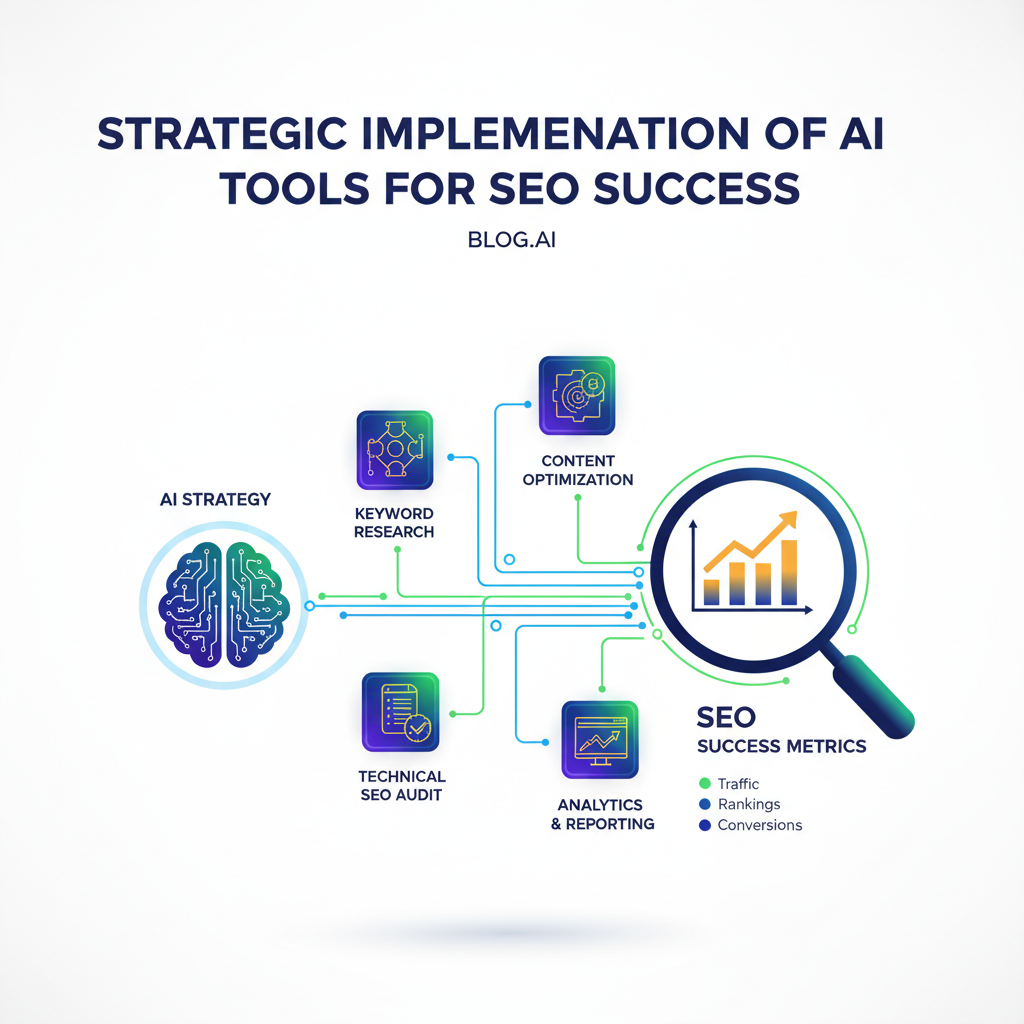
In the rapidly evolving landscape of digital marketing, the strategic implementation of Artificial Intelligence (AI) tools has become not merely an advantage but an absolute necessity for achieving profound SEO success. AI is fundamentally transforming traditional SEO practices, moving beyond manual, time-consuming tasks to enable unprecedented data-driven insights, automate complex processes, and foster powerful predictive capabilities. This paradigm shift empowers businesses to craft significantly more effective, efficient, and future-proof SEO strategies, ultimately leading to higher rankings, increased organic traffic, and a superior return on investment in an increasingly competitive digital arena.
By intelligently integrating AI into their SEO workflow, marketers can gain unparalleled competitive intelligence, streamline the often-arduous process of keyword research, personalize user experiences at scale, and develop dynamic content strategies that resonate deeply and authentically with target audiences. The practical advice outlined within this section focuses specifically on leveraging cutting-edge AI technologies to maximize operational efficiency, automate repetitive tasks, and achieve demonstrably better results in the constantly shifting world of search engine optimization. AI empowers SEO professionals to move from reactive adjustments to proactive, foresight-driven optimization.
1. Top AI Tools for Keyword Research and Analysis in 2026
The foundation of any successful SEO strategy undeniably lies in robust keyword research, and AI is revolutionizing this critical process beyond recognition. In 2026, advanced AI tools go far beyond simply identifying high-volume keywords; they delve deep into semantic relationships, accurately predict user intent with remarkable precision, and unearth long-tail opportunities that even the most experienced human analysts might easily overlook. These sophisticated tools utilize advanced Natural Language Processing (NLP) to understand the intricate context, emotional nuances, and implicit meanings within search queries, allowing for a far more comprehensive and accurate picture of precisely what your target audience is searching for.
Modern AI-powered keyword research platforms can analyze colossal datasets, including competitor keyword portfolios, emerging trending topics, and even complex conversational search patterns, to suggest highly relevant and previously untapped keywords. They excel at grouping related keywords by explicit and implicit intent (informational, navigational, commercial, transactional), thereby empowering content creators to develop laser-focused content that aligns perfectly with diverse user needs. This sophisticated analysis ensures that your content addresses the full spectrum of user queries, significantly improving your chances of ranking for highly profitable terms and driving consistently qualified organic traffic.
2. Leveraging AI for Competitor Analysis and Market Insights
Understanding your competitive landscape is paramount, and AI significantly elevates both the depth and speed of competitor analysis to an unprecedented level. Instead of manually sifting through competitor websites, analyzing their backlink profiles, or estimating their content strategy, AI tools can rapidly process and analyze colossal amounts of data to reveal profound strategic insights. These tools can precisely identify critical content gaps on your site when compared to top-ranking competitors, meticulously analyze their backlink acquisition strategies, and even predict their next strategic moves based on extensive historical data and emerging market signals. Beyond direct competitors, AI can also provide broad market insights, identifying niche opportunities, emerging audience segments, and shifts in user sentiment across entire industries.
AI-driven competitor analysis can pinpoint exactly which SERP features your rivals are dominating, dissect their content’s readability, engagement metrics, and overall topical authority, and detect subtle shifts in market trends long before they become widely apparent to manual observation. This powerful predictive capability allows you to anticipate competitive challenges with greater accuracy and proactively adjust your SEO strategies to maintain or gain a competitive edge. By understanding your competitors’ strengths and weaknesses in granular detail, coupled with broader market intelligence, you can develop a far more agile, resilient, and effective strategy to consistently outperform them in search rankings. It’s crucial to understand how AI is changing SEO and impacting market dynamics to stay ahead.
3. Developing an AI-Driven SEO Roadmap for Long-Term Success
Integrating AI into your SEO efforts is not a mere one-time setup; it absolutely requires a continuous, evolving, and strategic roadmap for sustained long-term success. An effective AI-driven SEO roadmap typically begins with a comprehensive initial audit of your current digital presence, meticulously identifying specific areas where AI can deliver the most significant and measurable impact. This crucial first step involves carefully selecting the right suite of AI tools—ranging from predictive analytics for sophisticated content planning and topic clustering to automated reporting and advanced anomaly detection for granular performance monitoring—and then seamlessly integrating them into your existing operational workflow and team structure.
The roadmap must inherently emphasize continuous learning, iterative improvement, and rapid adaptation. AI models perform optimally when consistently fed with fresh, high-quality data and benefit from regular human feedback, allowing them to progressively refine their predictions, enhance their accuracy, and optimize their recommendations over time. It’s imperative to regularly review AI-generated insights, rigorously test new strategies based on these insights, and utilize the resulting performance data to further train and improve your AI systems. This iterative, data-feedback loop ensures that your SEO strategy remains exceptionally agile, highly responsive to algorithm updates, and consistently optimized for peak performance. By adopting a proactive, comprehensive, and AI-centric approach, businesses can construct a resilient and extraordinarily effective SEO framework designed for sustained organic growth and undeniable market leadership well into the future.
Partner with Shelby Global
You are looking for reliable HR Sevice Suppliers? Contact Shelby Global Now! To connect with verified talents and upgrade your orginization.
—————————————
References
– How AI Is Changing SEO: https://www.searchenginejournal.com/ai-in-seo/446223/
– AI Content Creation: A Guide To AI Tools For SEO: https://www.searchenginejournal.com/ai-content-creation/492576/
– :
– Google’s guidelines on quality content and E-E-A-T: https://developers.google.com/search/docs/fundamentals/how-search-works/ranking-results#quality-content-e-e-a-t
– How AI Is Changing SEO: 7 Key Shifts: https://www.searchenginejournal.com/how-ai-is-changing-seo/481977/