
Introduction to the FMCG Job Market in Vietnam
The Fast-Moving Consumer Goods (FMCG) sector in Vietnam stands as a dynamic and rapidly expanding pillar of the national economy. Characterized by evolving consumer preferences, increasing disposable incomes, and a youthful demographic, Vietnam’s FMCG landscape offers a fertile ground for both established multinational corporations and agile local enterprises. For professionals seeking career growth and employers aiming to attract top talent, a nuanced understanding of the current salary landscapes is not just beneficial but essential. This comprehensive introduction sets the stage, highlighting the vibrant nature of Vietnam’s FMCG sector and underscoring the critical importance of a clear and current salary range report of jobs in FMCG companies in Vietnam for navigating this competitive market effectively.

1. Why Vietnam’s FMCG Sector is Booming
Vietnam’s remarkable economic trajectory over the past few decades has fueled an unprecedented boom in its FMCG sector. Several converging factors contribute to this vibrant growth. Firstly, a large and increasingly affluent population—approaching 100 million people with a median age in the early 30s—presents a vast consumer base hungry for a diverse array of goods, from packaged foods and beverages to personal care products and household essentials. Urbanization continues at a rapid pace, shifting consumption patterns and creating new demand centers. Secondly, rising disposable incomes empower consumers to spend more on premium products and convenience-driven solutions. This upward mobility fuels demand for higher-quality and branded goods. Thirdly, the government’s pro-business policies, coupled with robust infrastructure development, have made Vietnam an attractive destination for foreign direct investment (FDI), particularly in manufacturing and distribution, further bolstering the FMCG ecosystem. Global players are actively expanding their presence, intensifying competition but also driving innovation and employment opportunities. Digital transformation is also playing a significant role, with e-commerce and online grocery platforms rapidly gaining traction, reshaping how consumers shop and how companies operate. This confluence of demographic, economic, and technological forces positions Vietnam’s FMCG market as one of the most exciting and promising in Southeast Asia, creating a constant demand for skilled professionals across various functions. The growth is not just in volume but also in sophistication, with consumers increasingly valuing health, sustainability, and brand experience. This dynamism directly impacts the demand and compensation for FMCG jobs Vietnam. An authoritative source, like a report from the World Bank or a reputable consulting firm, often validates this strong economic growth.
2. Purpose and Scope of This Salary Report
In a market as buoyant and competitive as Vietnam’s FMCG sector, accurate and up-to-date salary information is invaluable. This salary range report of jobs in FMCG companies in Vietnam serves as a critical resource for both job seekers and employers. For professionals, it offers transparency into market rates, helping them benchmark their skills and experience against industry standards, negotiate effectively, and make informed career decisions. Understanding typical FMCG jobs Vietnam compensation for roles in sales, marketing, supply chain, human resources, and finance, among others, empowers individuals to strategically plan their career trajectories. For employers, this report provides crucial insights for talent acquisition and retention strategies. In a tight labor market where skilled professionals are highly sought after, competitive compensation packages are essential to attract and keep top performers. The report aids companies in setting fair and equitable salary structures, ensuring compliance with market expectations, and minimizing turnover. By providing detailed breakdowns across various job functions, experience levels, and company types (multinational vs. local, large vs. SME), this report aims to offer a comprehensive overview. Its scope covers key roles from entry-level positions to senior management within the FMCG value chain, offering a holistic view of the remuneration landscape. It’s designed to be a pragmatic tool for anyone operating within or looking to enter Vietnam’s vibrant FMCG job market.
3. Key Factors Shaping FMCG Compensation
Several interdependent factors influence salary ranges for FMCG jobs in Vietnam. Understanding these elements is crucial for both setting and assessing compensation. Firstly, Experience and Skill Set are paramount. Highly specialized roles, such as those in digital marketing analytics, advanced supply chain management, or product innovation, command higher salaries due to their specific expertise and demand. Seniority also plays a significant role, with managerial and leadership positions offering substantially more than entry-level roles, reflecting greater responsibility and strategic impact. Secondly, the Type and Size of Company significantly impact compensation. Multinational corporations (MNCs) typically offer more competitive salary packages, robust benefits, and structured career development paths compared to local companies or smaller enterprises, owing to their global compensation policies and deeper financial resources. However, local companies often provide faster progression and broader exposure. Thirdly, Location is a key differentiator. FMCG jobs Vietnam in major metropolitan areas like Ho Chi Minh City and Hanoi generally offer higher salaries to offset the higher cost of living and to attract talent to these competitive hubs. Regional roles or positions in secondary cities might have different compensation structures. Fourthly, Industry Sub-sector can also influence pay. Segments like premium personal care or high-tech food processing might offer different compensation scales compared to more commoditized segments. Lastly, Market Demand and Talent Scarcity are critical. Roles for which there is high demand and a limited supply of qualified candidates—e.g., e-commerce specialists, data scientists, or brand managers with proven track records in digital transformation—will naturally command higher salaries. Economic conditions, inflation rates, and prevailing labor laws also contribute to the overall compensation environment, making a current salary range report of jobs in FMCG companies in Vietnam indispensable for accurate benchmarking.
General Salary Ranges Across Major FMCG Functions
Understanding the compensation landscape is crucial for both job seekers and employers in Vietnam’s dynamic Fast-Moving Consumer Goods (FMCG) sector. This section delves into the average salary expectations across various key departments within FMCG companies, offering a foundational understanding of compensation levels and what influences them. Whether you’re looking for a comprehensive salary range report of jobs in FMCG companies in vietnam or simply want to gauge market rates, this overview provides insights into the typical pay structures across different job families.
1. Sales and Marketing Salary Overview
Sales and Marketing functions are the lifeblood of any FMCG company, directly impacting revenue and brand visibility. Consequently, compensation in these areas is often performance-driven and can vary significantly based on experience, company size, and specific product categories (e.g., food & beverage, personal care, home care). Entry-level roles, such as Sales Executives or Marketing Assistants, typically command salaries ranging from 8,000,000 VND to 15,000,000 VND per month. Mid-level positions, like Brand Managers, Key Account Managers, or Trade Marketing Specialists, can expect to earn between 25,000,000 VND and 50,000,000 VND. Senior roles, including Marketing Directors, National Sales Managers, or Head of E-commerce, often see compensation packages exceeding 70,000,000 VND, potentially reaching 150,000,000 VND or more, especially in multinational corporations. Factors such as a strong track record, digital marketing proficiency, e-commerce experience, and the ability to manage large teams or complex portfolios significantly boost earning potential within these roles.
2. Supply Chain and Operations Compensation
The Supply Chain and Operations departments are pivotal for ensuring efficient production, distribution, and logistics, directly impacting cost-effectiveness and product availability. Roles in this domain include Supply Chain Planners, Logistics Coordinators, Production Supervisors, and Procurement Specialists. Junior positions usually offer salaries from 10,000,000 VND to 18,000,000 VND. As professionals gain experience and take on more responsibility, such as Supply Chain Managers, Production Managers, or Warehouse Managers, their remuneration can range from 28,000,000 VND to 60,000,000 VND. At the senior executive level, roles like Head of Supply Chain or Operations Director in major FMCG firms can command upwards of 75,000,000 VND to 130,000,000 VND or even higher, particularly if they oversee complex international supply chains or implement large-scale operational improvements. Expertise in areas like lean manufacturing, demand forecasting, international logistics, and supplier relationship management are highly valued and contribute to a more competitive salary range report of jobs in FMCG companies in Vietnam‘s supply chain sector.
3. Finance, HR, and IT Salary Insights
Support functions like Finance, Human Resources (HR), and Information Technology (IT) are indispensable for the smooth functioning and strategic growth of any FMCG enterprise. Compensation in these areas reflects the strategic importance and specialized skills required. For Finance, entry-level accountants or financial analysts typically earn between 10,000,000 VND and 18,000,000 VND. Mid-level roles like Senior Accountants, Financial Controllers, or HR Business Partners can expect 25,000,000 VND to 55,000,000 VND. For IT, roles such as IT Support Specialists or Junior Data Analysts generally start around 12,000,000 VND to 20,000,000 VND. Senior positions, including Finance Directors, HR Directors, or IT Managers/CIOs, command significantly higher salaries, often from 70,000,000 VND to 120,000,000 VND, and sometimes exceeding 150,000,000 VND in large multinationals. Specialized skills in financial planning & analysis (FP&A), talent acquisition, HR transformation, cybersecurity, ERP system implementation, and data analytics are particularly valuable. These specialized capabilities are increasingly reflected in the salary range report of jobs in FMCG companies in Vietnam, indicating a growing demand for strategic professionals across all support functions.
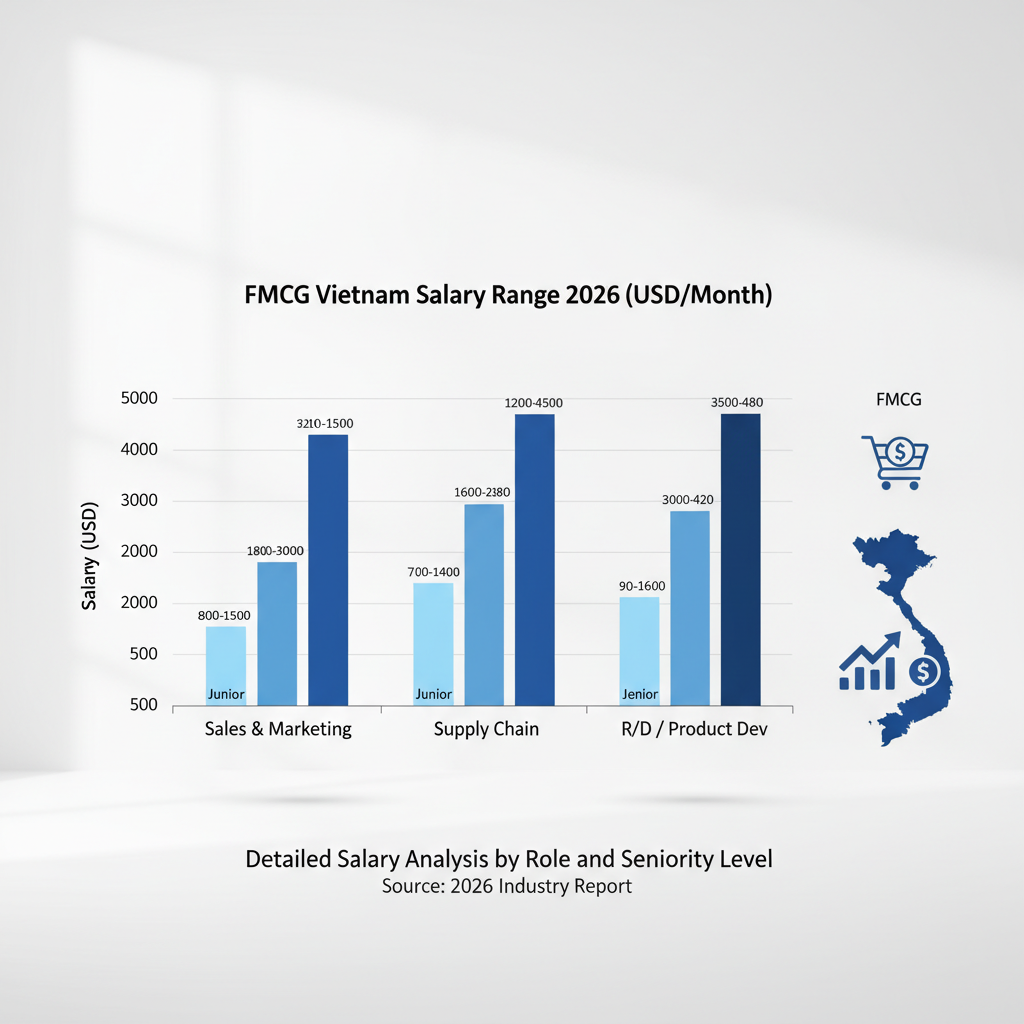
Detailed Salary Analysis by Role and Seniority Level
Dive deeper into specific job titles, outlining the typical salary ranges based on experience, responsibility, and management level within different FMCG specializations. Understanding the compensation landscape in Vietnam’s dynamic Fast-Moving Consumer Goods (FMCG) sector is crucial for both aspiring professionals and experienced leaders. This detailed analysis provides a comprehensive overview, helping individuals benchmark their career trajectory and enabling companies to formulate competitive compensation strategies.
1. Entry to Mid-Level Professional Salaries
For those embarking on their journey in the FMCG industry in Vietnam, entry-level positions offer foundational experience and competitive starting salaries. Roles such as Sales Executive, Marketing Assistant, Junior Brand Manager, and Supply Chain Coordinator typically see initial compensation ranging from VND 8 million to VND 15 million per month. These figures can vary based on the company’s size, its market presence (local vs. multinational), and the specific product category. For example, a Junior Brand Manager at a leading multinational might start at the higher end, especially if they possess relevant internships or a strong academic record.
As professionals gain 2-5 years of experience, transitioning into mid-level roles like Brand Executive, Key Account Executive, or Senior Supply Chain Analyst, their salaries generally increase to VND 15 million to VND 25 million per month. At this stage, performance metrics, demonstrated leadership potential, and the ability to handle increased responsibilities significantly influence pay raises. Proficiency in English, strong analytical skills, and a proven track record of contributing to team objectives are often rewarded. For a more granular breakdown, refer to a comprehensive salary range report of jobs in FMCG companies in Vietnam, which provides up-to-date insights across various functions and experience levels.
2. Managerial and Senior Leadership Compensation
The compensation structure for managerial and senior leadership roles in Vietnam’s FMCG sector reflects a significant leap, commensurate with the heightened responsibilities and strategic impact these positions entail. Managers, such as Brand Managers, Sales Managers, and Production Managers, typically command salaries ranging from VND 30 million to VND 60 million per month. At this level, candidates are expected to possess at least 5-8 years of relevant experience, with a proven ability to lead teams, manage budgets, and achieve departmental goals. Performance bonuses, company car allowances, and health insurance are often standard components of their remuneration packages.
For senior leadership roles, including Marketing Directors, National Sales Managers, and Country Managers, salaries can range from VND 80 million to well over VND 150 million per month, often supplemented by substantial annual bonuses, stock options, and other long-term incentives. These roles demand extensive industry experience (10+ years), exceptional leadership capabilities, strategic vision, and a track record of driving significant business growth and profitability. The ability to navigate complex market dynamics and spearhead innovation is highly valued. The continuous growth of Vietnam’s economy, as highlighted by reports such as the World Bank Vietnam Economic Update, creates a robust environment where such high-calibre leadership is in constant demand across the FMCG landscape.
3. Specialized Roles: R&D, Digital, and E-commerce Pay
The FMCG industry is rapidly evolving, with increasing investments in innovation and digital transformation. This has led to a growing demand for specialized skills, particularly in Research & Development (R&D), Digital Marketing, and E-commerce, often accompanied by premium compensation.
R&D professionals, such as Food Scientists and Product Development Specialists, play a critical role in bringing new products to market. With 3-7 years of experience, their salaries can range from VND 20 million to VND 45 million per month, reflecting the specific technical expertise, scientific background, and innovation capabilities required. Those with advanced degrees or highly specialized skills in areas like sustainable packaging or novel ingredients can command even higher compensation.
In the digital realm, roles like Digital Marketing Specialists, E-commerce Managers, and Data Analysts are becoming indispensable. A Digital Marketing Specialist with 2-5 years of experience can expect salaries from VND 18 million to VND 35 million, while an E-commerce Manager, responsible for driving online sales and strategy, might earn between VND 35 million and VND 60 million per month. These roles are often tied to performance-based incentives related to online traffic, conversion rates, and digital campaign ROI. The competitive nature of online retail in Vietnam, coupled with the scarcity of highly skilled professionals in these niche areas, ensures that these roles remain highly compensated within the broader FMCG compensation framework.
Influencing Factors on FMCG Salary in Vietnam 2026
Uncover the critical elements that impact salary figures, including company size, type (MNC vs. local), geographic location, and in-demand skills relevant to the 2026 market.
The Fast-Moving Consumer Goods (FMCG) sector in Vietnam continues its dynamic trajectory, fueled by a burgeoning middle class, increasing disposable incomes, and rapid digitalization. For professionals and employers, understanding the intricate factors influencing salary structures is paramount, especially looking towards 2026. While fundamental supply and demand principles remain, specific nuances within the Vietnamese market significantly shape compensation packages. This analysis delves into key determinants affecting the salary range report of jobs in FMCG companies in Vietnam, offering crucial insights for strategic career planning and talent acquisition.
1. Impact of Company Size and Type (MNC vs. Local)
One of the most significant differentiators in FMCG salaries in Vietnam is the type and size of the employing company. Multinational Corporations (MNCs) typically set the benchmark for compensation. With extensive resources, these global players often adhere to international pay scales, offering higher base salaries and comprehensive benefit schemes, including robust health insurance. Their structured frameworks attract and retain top-tier talent, leading to more attractive remuneration across all levels. Advanced training programs and clearer career progression also add non-monetary value.
Conversely, local Vietnamese FMCG companies, while increasingly sophisticated, generally offer slightly lower base salaries. However, this gap is narrowing for highly sought-after positions. Local companies often compensate with more flexible work environments, faster decision-making, and direct impact. Remuneration structures might lean more towards performance-based bonuses, allowing high achievers to significantly boost overall earnings. A comprehensive salary range report of jobs in FMCG companies in Vietnam would highlight these disparities, showcasing how an MNC role might command a higher base, though total compensation could align with significant performance bonuses at local firms.
2. Geographic Salary Variations (HCMC, Hanoi vs. Others)
Location remains a powerful determinant of FMCG salaries in Vietnam, with a palpable premium in the country’s two major economic hubs: Ho Chi Minh City (HCMC) and Hanoi. These Tier 1 cities are operational epicenters for most major FMCG players, housing headquarters, primary distribution networks, and largest consumer bases. The higher cost of living necessitates higher compensation. Consequently, positions in sales, marketing, and supply chain within HCMC and Hanoi typically offer salaries 10-20% higher than equivalent roles in Tier 2 cities or provincial areas.
Beyond cost of living, intense competition for skilled talent in HCMC and Hanoi also drives salaries upwards. The concentration of companies creates a dynamic job market, where professionals can leverage multiple opportunities. In contrast, while FMCG consumption in secondary cities like Da Nang, Can Tho, or Hai Phong is growing, the talent pool might be smaller. Salaries in these regions reflect this, though they often provide better purchasing power balance. Strategic roles, like regional sales managers, might see base salary adjustments but could include generous travel and housing allowances. Understanding these regional nuances is crucial for both employers and professionals.
3. Premium Skills and Industry Demand
As the Vietnamese FMCG landscape evolves, certain skills are emerging as critical differentiators, commanding premium salaries in 2026. Digital transformation and shifting consumer behaviors are reshaping job descriptions. Skills in digital marketing, particularly expertise in e-commerce platforms (like Shopee, Lazada, Tiki), social media advertising, and data-driven campaign optimization, are highly coveted. Professionals leveraging analytics for actionable consumer insights are also in high demand as companies strive to personalize marketing and predict market trends.
Furthermore, advancements in supply chain management, particularly integrating technology for efficiency and resilience, are crucial. Expertise in logistics automation, predictive inventory management, and sustainable supply chain practices will be exceptionally valuable. The growing focus on sustainability and ESG principles means individuals with experience in developing sustainable business practices are increasingly sought after. Finally, strong capabilities in data science and business intelligence, enabling companies to interpret vast datasets for strategic decisions, are becoming indispensable. These specialized skills, combined with strong leadership, place candidates in a strong negotiating position, often commanding salaries significantly above market average as highlighted in any comprehensive salary range report of jobs in FMCG companies in Vietnam. The demand for these future-proof skills is projected to intensify, reflecting Vietnam’s economic development and integration, a trend supported by various authoritative economic reports on Vietnam’s robust growth.
Career Growth and Future Salary Projections in FMCG
Look ahead at career progression paths and forecast future salary trends, offering advice for professionals seeking to maximize their earning potential in Vietnam’s FMCG industry. Vietnam’s dynamic Fast-Moving Consumer Goods (FMCG) sector continues to be a powerhouse of economic activity, offering robust career opportunities and competitive compensation. As the market evolves, understanding career progression paths and future salary trends becomes crucial for professionals aiming to climb the corporate ladder and maximize their earning potential in this vibrant industry.

1. Emerging Roles and Growth Opportunities
The landscape of FMCG in Vietnam is rapidly transforming, driven by digital adoption, evolving consumer preferences, and an increased focus on sustainability. This shift is creating a demand for new, specialized roles that command higher salaries. Professionals can expect significant growth opportunities in areas such as E-commerce, Data Analytics, Digital Marketing, and Supply Chain Optimization. For instance, roles like E-commerce Manager, Digital Brand Manager, and Data Scientist are becoming indispensable, requiring a blend of traditional FMCG knowledge and cutting-edge digital skills. Sustainability roles, such as CSR (Corporate Social Responsibility) or Sustainability Managers, are also on the rise as companies increasingly prioritize ethical practices and environmental impact, appealing to a growing segment of conscious consumers in Vietnam.
Career progression often follows a clear path from entry-level positions (e.g., Sales Executive, Marketing Assistant) to mid-management (Brand Manager, Key Account Manager) and eventually to senior leadership roles (Marketing Director, Country Manager). However, the emerging roles offer accelerated growth for those who can adapt and acquire relevant competencies. Investing in upskilling in areas like AI-driven consumer insights, omnichannel marketing strategies, and advanced supply chain technologies will position professionals at the forefront of the FMCG industry in Vietnam, opening doors to more senior and lucrative positions.
2. Strategies for Salary Negotiation and Advancement
Maximizing earning potential in the FMCG industry requires a proactive approach to career planning and salary negotiation. One of the most effective strategies is thorough market research. Understanding the current salary range report of jobs in FMCG companies in Vietnam is paramount before any negotiation. Reputable recruitment agencies and industry reports often provide valuable insights into compensation benchmarks for various roles and experience levels.
Beyond market knowledge, demonstrating quantifiable achievements is key. Professionals should meticulously document their contributions, especially those that directly impacted revenue growth, cost savings, or market share expansion. When negotiating, frame your value proposition in terms of these tangible results. Continuous skill development is also critical. Acquiring new certifications in digital marketing, project management, or leadership can significantly enhance your market value. Networking with industry leaders and mentors can provide invaluable guidance and open doors to advanced opportunities. Furthermore, be prepared to articulate your career aspirations and how your current role aligns with the company’s strategic goals, showcasing your potential for future leadership and contribution. For individuals seeking rapid advancement in the FMCG industry in Vietnam, proactively taking on cross-functional projects and demonstrating leadership potential early on can significantly influence salary reviews and promotion opportunities.
3. Outlook for FMCG Compensation in the Next 3-5 Years
The outlook for FMCG compensation in Vietnam over the next 3-5 years remains positive, driven by sustained economic growth, a burgeoning middle class, and increasing foreign direct investment into the sector. Experts predict that Vietnam’s economy will continue its robust trajectory, as highlighted by reports such as Vietnam’s Economy: GDP, Outlook, Forecast, and Investment, which will translate into higher consumer spending and, consequently, greater demand for FMCG products and the talent to support their production and distribution. While inflation and global economic uncertainties might present challenges, the underlying strength of Vietnam’s domestic market is expected to cushion these impacts.
Salary increases are anticipated across all levels, with specialized and senior roles experiencing the most significant jumps. For entry-level and mid-career professionals, annual increments are likely to be in line with or slightly above the national average inflation rate, coupled with performance-based bonuses. Senior executives and those in niche functions like AI-driven analytics or supply chain innovation can expect substantial packages, including attractive base salaries, performance incentives, and comprehensive benefits. Companies are increasingly looking for top-tier talent to navigate competitive markets, and they are willing to offer premium compensation to secure and retain these individuals. The salary range report of jobs in FMCG companies in Vietnam will likely show an upward trend, especially for roles that are critical for digital transformation and sustainable business practices. To stay competitive, professionals must continuously evaluate their skills against industry demands and be prepared to negotiate based on their unique value proposition and market benchmarks.
Partner with Shelby Global
You are looking for reliable HR Sevice Suppliers? Contact Shelby Global Now! To connect with verified talents and upgrade your orginization.
—————————————
References
– World Bank Vietnam Economic Overview: https://www.worldbank.org/en/country/vietnam/overview
– Talentnet Salary Report Vietnam: https://www.talentnet.vn/en/research/salary-report
– World Bank Vietnam Economic Update: https://www.worldbank.org/en/country/vietnam/overview
– Authoritative Economic Reports on Vietnam’s Robust Growth: https://www.worldbank.org/en/country/vietnam/overview
– Vietnam’s Economy: GDP, Outlook, Forecast, and Investment: https://www.vietnam-briefing.com/news/vietnam-economy-gdp-outlook-forecast-investment.html/