
The Evolving Landscape of Consulting Talent Acquisition
The global consulting industry continues its robust expansion, driven by unprecedented technological shifts, economic uncertainties, and complex regulatory environments. While demand for expert strategic advice soars, the challenge of finding and attracting high-caliber management consultants has intensified dramatically. Firms are grappling with a dynamic talent market, making the art of how to effectively headhunt management consultants more critical and complex than ever before. This evolving landscape necessitates a sophisticated, nuanced approach to talent acquisition, moving beyond traditional recruitment methods to encompass strategic foresight and deep market understanding.

1. Post-pandemic talent market shifts and demands
The aftermath of the global pandemic instigated a profound realignment in the labor market, significantly impacting how firms headhunt management consultants. The ‘Great Resignation’ – or more accurately, the ‘Great Reevaluation’ – saw professionals reassessing career priorities, demanding greater flexibility, purpose-driven work, and enhanced work-life balance. This shift has transitioned the market from employer-driven to candidate-driven, placing a premium on competitive compensation packages, robust company culture, and tangible career development opportunities. Consulting firms now face increased competition not just from peer firms but also from corporate internal strategy departments and tech giants offering comparable challenges with potentially better work-life integration. Recruiters must not only identify top talent but also effectively articulate a compelling value proposition that resonates with these new candidate expectations, highlighting how a firm can meet their evolving professional and personal aspirations. According to McKinsey & Company, understanding the reasons behind employee attrition is key to effective talent acquisition in this new environment.
2. Rise of specialized consulting niches and expertise
The complexity of modern business challenges has fueled the proliferation of highly specialized consulting niches. From AI ethics and sustainable finance to advanced digital transformation and cybersecurity resilience, clients now seek consultants with deep, granular expertise rather than broad generalist capabilities. This trend presents a unique challenge for those looking to headhunt management consultants. The talent pool for these niche experts is inherently smaller and often already well-embedded in lucrative roles. Finding individuals who possess both the profound technical or industry-specific knowledge and the refined client-facing skills characteristic of top-tier consultants requires a targeted, almost surgical approach. Headhunters must possess a sophisticated understanding of these evolving domains, not just to identify suitable candidates but also to engage them meaningfully about opportunities that align with their specialized skill sets and career trajectories, ensuring a perfect fit for complex engagements.
3. Impact of remote work and global talent pools on headhunting
The widespread adoption of remote and hybrid work models has dramatically reshaped the geographical boundaries of talent acquisition. While opening access to a vastly expanded global talent pool, this shift also intensifies competition, as firms can now potentially recruit from anywhere in the world. For headhunters, this means navigating diverse regulatory environments, varying compensation expectations across regions, and the complexities of cultural integration within geographically dispersed teams. The ability to effectively headhunt management consultants now involves leveraging advanced digital tools for global outreach and assessment, understanding different market dynamics, and crafting value propositions that appeal to an international audience. Furthermore, while the physical location barrier is reduced, the challenge of fostering a cohesive team culture and ensuring seamless collaboration across time zones and diverse backgrounds has become paramount, requiring recruitment strategies that consider not just individual skill but also remote compatibility and cultural fit.
In this dynamic environment, the ability to strategically headhunt management consultants demands more than just traditional recruitment tactics. It requires a forward-thinking, adaptive, and deeply informed approach that considers market shifts, niche specializations, and the globalized nature of talent. Firms that excel in this evolving landscape will be those that invest in sophisticated talent intelligence, cultivate robust networks, and offer truly compelling opportunities designed for the modern consulting professional.
Identifying Your Ideal Management Consultant Profile
Defining the specific skills, experience, and cultural fit required for your unique consulting needs and projects is paramount to successful project outcomes. In today’s complex business landscape, simply finding a management consultant isn’t enough; you need the right one. This section guides you through a methodical process to precisely define and then effectively headhunt management consultants who are not just skilled, but perfectly aligned with your strategic objectives and organizational ethos. The success of your critical initiatives hinges on this precision, making the identification phase as crucial as the execution itself.
To truly optimize your investment in external expertise, it’s vital to move beyond generic job descriptions and delve into a granular understanding of what your project demands. This proactive approach ensures you attract top-tier talent capable of delivering tangible, impactful results. By systematically evaluating technical prowess, industry insight, and interpersonal dynamics, you can significantly mitigate risks and accelerate project velocity, ultimately securing the expertise that drives transformative change for your organization.
1.
Defining project-specific skill sets and technical requirements
The first step in pinpointing your ideal management consultant involves a rigorous examination of the project’s technical demands. This goes far beyond general management acumen. Does your project require deep expertise in data analytics, cloud migration, supply chain optimization, or perhaps change management within a highly regulated industry? Clearly articulate the specific methodologies (e.g., Agile, Lean Six Sigma), tools (e.g., Salesforce, SAP, Tableau), and frameworks that the consultant must be proficient in. For instance, a digital transformation project will demand consultants with proven experience in digital strategy, user experience design, and robust technology implementation skills, rather than generalist strategists.
Create a detailed project brief or statement of work that outlines the precise deliverables, timelines, and the technical environment in which the consultant will operate. This clarity is indispensable when you seek to headhunt management consultants with the exact technical capabilities required. Assess their prior engagements for direct relevance, looking for quantifiable achievements that reflect mastery of these specific skill sets. A consultant’s ability to demonstrate practical application of these skills, rather than just theoretical knowledge, is a critical differentiator.
2.
Assessing industry expertise and thought leadership potential
Beyond technical skills, industry-specific knowledge is a non-negotiable asset. A consultant who understands the nuances, challenges, and competitive landscape of your sector can hit the ground running, requiring minimal ramp-up time and offering insights that generalists simply cannot provide. Whether you operate in FinTech, healthcare, manufacturing, or retail, look for consultants with a demonstrated track record of success within your specific industry vertical. This allows them to quickly grasp your business context, identify sector-specific opportunities, and navigate regulatory complexities with ease. They bring an invaluable external perspective informed by direct experience, anticipating pitfalls and leveraging best practices unique to your domain.
Furthermore, evaluating a consultant’s thought leadership potential is key. Are they simply executing tasks, or can they challenge conventional thinking, introduce innovative approaches, and help shape your strategic direction? Look for evidence of publications, speaking engagements, patents, or a strong professional network within their industry. This indicates a consultant who not only understands current trends but is also actively contributing to the evolution of their field. Their capacity for critical thinking skills and strategic foresight can provide a significant competitive advantage, transforming your engagement from mere problem-solving to true strategic partnership.
3.
Cultural alignment, soft skills, and leadership qualities evaluation
The most technically brilliant management consultant can still fail if they lack cultural alignment or essential soft skills. Integration into your existing teams, fostering collaboration, and influencing stakeholders are paramount to project success. Evaluate their communication style – are they articulate, persuasive, and empathetic? Assess their ability to actively listen, resolve conflicts, and adapt to varying organizational dynamics. These soft skills are crucial for knowledge transfer, gaining internal buy-in, and ensuring the sustainability of the changes they help implement. A consultant must be able to navigate complex interpersonal landscapes, build rapport, and inspire confidence across all levels of your organization.
Furthermore, strong leadership qualities are indispensable. Can they effectively guide project teams, mentor internal staff, and manage diverse stakeholder expectations? Look for individuals who demonstrate integrity, resilience, and a proactive approach to problem-solving. Behavioral interview questions, situational assessments, and thorough reference checks can reveal these critical attributes. When you headhunt management consultants, remember that their ability to integrate seamlessly, lead effectively, and foster a collaborative environment is often as important as their technical prowess. A consultant who aligns with your company culture can become a true extension of your team, driving not just project success but also enhancing internal capabilities and fostering a positive working environment.
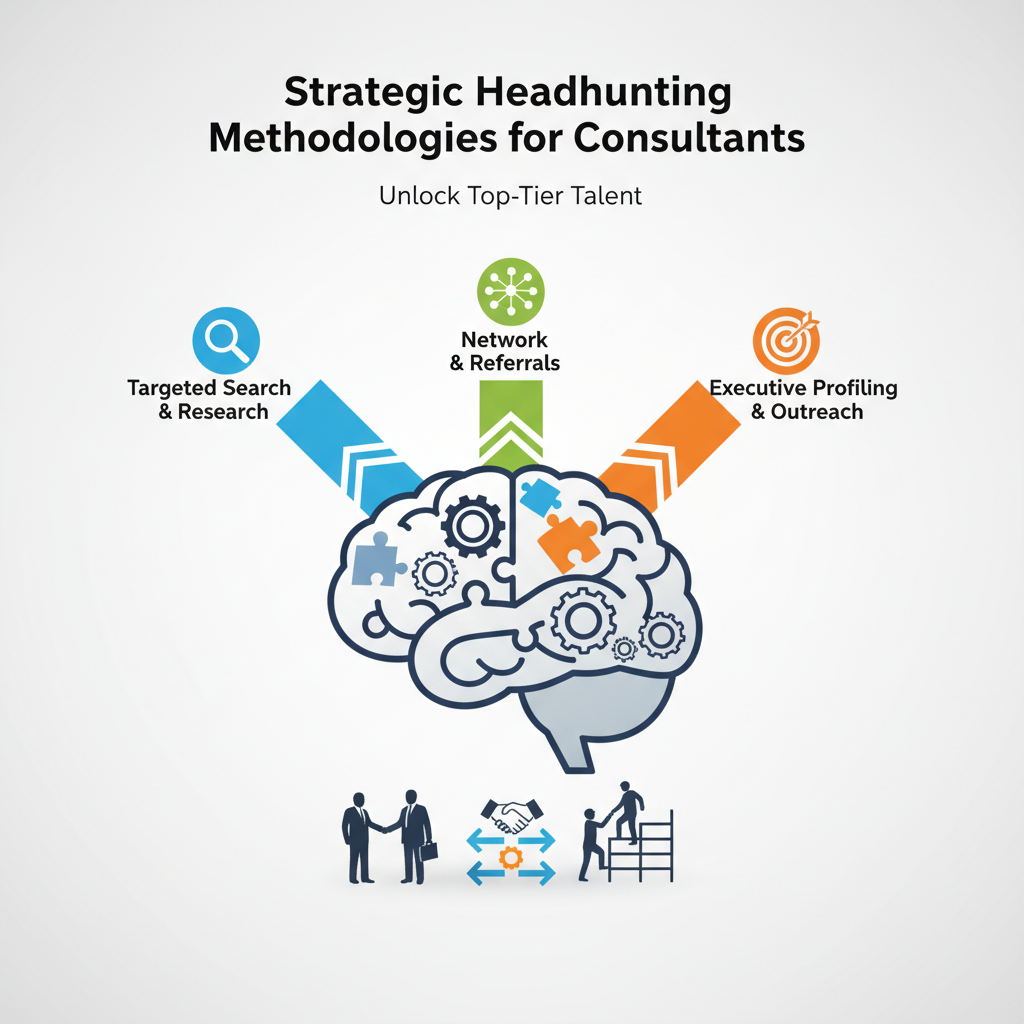
Strategic Headhunting Methodologies for Consultants
Outlines effective approaches and tools for proactively sourcing and engaging top-tier management consultant candidates.
In the fiercely competitive landscape of management consulting, securing top-tier talent is paramount to a firm’s success. The ability to headhunt management consultants with precision and discretion is not merely a recruitment function but a strategic imperative. This involves a nuanced understanding of market dynamics, candidate motivations, and the adoption of sophisticated methodologies to attract and retain the industry’s brightest minds. This section delves into the advanced strategies essential for proactively identifying, engaging, and securing elite consulting professionals, focusing on tailored approaches that yield superior results.
1. Leveraging executive search firms vs. in-house talent acquisition teams
The decision to partner with an executive search firm or rely on an internal talent acquisition team is a critical strategic choice when seeking to headhunt management consultants. Each approach presents distinct advantages and limitations. Executive search firms bring unparalleled expertise, deep industry networks, and a proven track record in sourcing high-calibre, often passive, candidates. They excel in highly confidential searches, offer extensive market intelligence, and can dedicate significant resources to a specific mandate, thereby accelerating the time-to-hire for critical roles. Their specialized consultants understand the unique demands and culture of the consulting world, enabling them to articulate a compelling value proposition to potential candidates.
Conversely, in-house talent acquisition teams offer cost-effectiveness and a profound understanding of the firm’s culture and values, potentially leading to better cultural fit. They can foster long-term relationships with potential hires and build a sustainable talent pipeline. However, internal teams may lack the extensive external network or the dedicated bandwidth required for highly specialized or senior-level consultant searches. For roles demanding niche expertise or requiring a global reach, a strategic partnership with an executive search firm often proves invaluable. According to Harvard Business Review, companies often underutilize the full potential of executive search firms, highlighting the importance of clear communication and strategic alignment from the outset to maximize the return on investment.
2. Advanced LinkedIn and professional network strategies for passive candidates
A significant portion of top-tier management consultant candidates are not actively seeking new opportunities; they are passive candidates deeply embedded within their current successful roles. Engaging these individuals requires sophisticated strategies beyond traditional job postings. LinkedIn, particularly its Recruiter and Sales Navigator platforms, serves as an indispensable tool. Advanced Boolean search strings, coupled with targeted keyword optimization, enable talent acquisition professionals to identify consultants with specific project experience, industry focus, and academic backgrounds. However, merely identifying candidates is not enough.
Effective engagement involves leveraging professional networks, including alumni associations, industry-specific groups, and direct referrals. Cultivating relationships with influential figures within the consulting ecosystem can open doors to warm introductions. Furthermore, thought leadership and personal branding on platforms like LinkedIn can attract passive candidates by showcasing the hiring firm’s innovative projects, leadership, and culture. Proactive monitoring of competitor movements and industry trends also provides valuable insights for identifying potential talent pools and future leaders. The key lies in strategic, consistent, and value-driven outreach that respects the candidate’s current professional standing and offers genuinely compelling reasons to explore new horizons.
3. Confidential outreach, relationship building, and candidate engagement tactics
Confidentiality is paramount when approaching management consultants, especially those in senior or sensitive roles. Initial outreach must be discreet, professional, and highly personalized, demonstrating a clear understanding of the candidate’s profile and potential fit. Generic messages are easily discarded; a well-researched, customized approach that highlights mutual value is essential. The goal is to initiate a dialogue, not to immediately sell a position. Building a long-term relationship, even if there isn’t an immediate role, is a crucial tactic. Top consultants often move when the right opportunity aligns with their career aspirations, not just for financial incentives. Therefore, understanding their long-term goals, project preferences, and cultural compatibility is vital.
Engagement tactics should focus on showcasing the unique aspects of the hiring firm: its distinctive culture, challenging projects, opportunities for professional growth, and the impact consultants can make. Providing insight into the firm’s strategic vision and leadership can be particularly compelling. Regular, thoughtful follow-up, offering valuable industry insights or networking opportunities, helps maintain engagement without being overly aggressive. The entire process, from initial contact to offer acceptance, should be managed with transparency, respect, and a commitment to providing an exceptional candidate experience, solidifying the firm’s reputation as an employer of choice in the competitive world of consulting.
Crafting a Compelling Offer and Candidate Experience
This section focuses on how to attract and secure desired consultants through competitive offers and a positive, engaging recruitment journey.
Successfully attracting top-tier headhunt management consultants requires more than just identifying talent; it demands a strategic approach to both the compensation package and the entire candidate experience. In today’s competitive market, firms must distinguish themselves not only through challenging projects but also through a clear commitment to their consultants’ professional growth and well-being. A holistic strategy that combines an enticing offer with an exceptional journey from first contact to acceptance is paramount for securing the best in the field.
1.
Structuring attractive compensation and benefits packages for consultants
For elite management consultants, compensation extends far beyond base salary. A truly competitive offer package must be meticulously crafted to reflect the high value these professionals bring. This includes a robust base salary benchmarked against industry leaders, significant performance-based bonuses tied to individual and firm success, and potentially equity or profit-sharing opportunities to foster a sense of ownership. Beyond direct monetary rewards, a comprehensive benefits package is crucial. This encompasses top-tier health, dental, and vision insurance, generous retirement plans (e.g., 401k matching), and substantial paid time off (PTO). Furthermore, consider unique perks that appeal to this demographic, such as stipends for professional development, executive coaching, wellness programs, and flexible work arrangements that acknowledge their demanding schedules. Demonstrating an understanding of their lifestyle and career aspirations through a well-rounded package is key to differentiating your firm and making your offer irresistible.
2.
Highlighting growth opportunities, project impact, and firm culture
While compensation opens the door, it’s the promise of a fulfilling career that truly closes the deal for ambitious consultants. Firms must articulate a clear path for professional development, showcasing opportunities for continuous learning, mentorship from senior leaders, and rapid career progression. Highlight the caliber and complexity of projects consultants will be involved in, emphasizing the direct impact their work will have on high-profile clients and industries. Consultants are driven by the desire to solve complex problems and see tangible results; communicate how your firm empowers them to achieve this. Equally important is the firm’s culture. Emphasize values such as collaboration, innovation, intellectual curiosity, diversity, and inclusion. Provide authentic insights into the daily life, team dynamics, and leadership philosophy. Top talent often seeks environments where they feel valued, can contribute meaningfully, and align with the firm’s ethos. According to Forbes, factors beyond salary, like growth potential and work environment, significantly influence top talent’s career decisions, making these elements critical selling points for any firm looking to attract leading management consultants.
3.
Streamlining the interview process and creating a positive candidate experience
The recruitment journey itself is a powerful reflection of your firm’s professionalism and respect for talent. An overly long, disjointed, or opaque interview process can quickly deter even the most interested candidates. Strive for efficiency and transparency: clearly outline the stages of the interview process, provide timely updates, and stick to committed timelines. Ensure that interviewers are well-trained, prepared, and capable of engaging in insightful, two-way conversations, not just interrogations. Treat candidates as potential colleagues from the outset, offering a welcoming and respectful environment. Personalize interactions, provide constructive feedback where appropriate, and be responsive to their questions. A positive candidate experience not only enhances your firm’s employer brand but also sets the tone for a successful working relationship. Even if a candidate doesn’t accept an offer, a well-managed process leaves them with a favorable impression, potentially turning them into future clients or referral sources. In the highly competitive landscape of headhunt management consultants, every touchpoint matters, making a streamlined, human-centered approach indispensable.
Onboarding and Integrating New Management Consultants
Successfully integrating new management consultants into your team is paramount for maximizing their immediate contribution and ensuring their long-term impact. The strategic investment in headhunt management consultants pays off when new talent is not just hired but effectively onboarded and integrated into the organizational fabric. This process moves beyond mere administrative tasks, focusing on cultural assimilation, strategic alignment, and accelerated productivity to foster a cohesive and high-performing consulting practice.

1. Developing a Structured and Supportive Onboarding Program
A robust onboarding program is the cornerstone of successful consultant integration. It provides a clear roadmap, ensuring new hires quickly understand the firm’s culture, values, operational procedures, and client engagement methodologies. Beyond initial paperwork, a structured program should include:
- Pre-boarding Communications: Engaging with consultants before their start date, sharing company insights, and preparing them for their first day.
- Comprehensive Orientation: Introducing them to key stakeholders, departmental functions, and essential technological platforms. This includes deep dives into proprietary tools, research databases, and communication protocols.
- Cultural Immersion: Actively communicating the firm’s unique culture, ethical standards, and collaborative spirit. Providing opportunities to interact with various team members, from partners to junior associates, helps new consultants understand the firm’s operational ethos and unspoken rules.
- Knowledge Transfer: Facilitating access to a repository of case studies, project templates, and best practice guides. A well-designed onboarding process ensures that new management consultants feel supported and equipped to tackle complex challenges from day one. Effective onboarding significantly reduces turnover and boosts productivity, making it a critical investment for consulting firms seeking to retain top talent.
2. Assigning Initial Projects, Mentors, and Performance Goals
Strategic assignment of initial projects is crucial for building confidence and demonstrating value. New consultants should be placed on projects that align with their expertise while offering opportunities for growth and exposure to different aspects of the firm’s work. This approach balances leveraging their existing skills with pushing them to acquire new ones.
- Mentorship Program: Pairing new consultants with experienced mentors provides invaluable guidance, support, and a direct channel for questions and concerns. Mentors can help navigate corporate politics, understand client nuances, and offer career development advice.
- Clear Performance Goals: Establishing measurable, achievable, relevant, and time-bound (SMART) performance goals for the first 30, 60, and 90 days. These goals should focus on tangible contributions to projects, assimilation into team dynamics, and proficiency in core consulting skills.
- Early Engagement: Encouraging active participation in client meetings, internal strategy sessions, and thought leadership initiatives from the outset. This fosters a sense of ownership and accelerates their understanding of client challenges and firm solutions.
3. Measuring Early Performance, Facilitating Team Integration, and Continuous Development
The onboarding journey doesn’t end after the initial few weeks; it’s an ongoing process of assessment, integration, and development. Regular feedback mechanisms are essential for monitoring progress and addressing any challenges proactively.
- Regular Performance Reviews: Implementing structured check-ins and formal reviews to discuss performance against established goals. This provides opportunities for constructive feedback, recognition of achievements, and course correction where necessary. Metrics might include client feedback, project deliverable quality, team collaboration effectiveness, and adherence to firm processes.
- Team Integration Strategies: Actively fostering social and professional integration through team-building activities, informal gatherings, and cross-functional projects. Encouraging new consultants to lead internal initiatives or join firm committees can also accelerate their network building and sense of belonging.
- Continuous Learning & Development: Identifying and addressing skill gaps through targeted training programs, workshops, and access to online learning platforms. Providing a clear career progression path within the firm motivates consultants and reinforces their commitment. A culture of continuous learning ensures that consultants remain at the forefront of industry trends and consulting methodologies, maximizing their long-term value to the firm and its clients. Regular talent mapping and development plans are vital for retaining the top headhunt management consultants who are often sought after in a competitive market.
By prioritizing a structured onboarding process, supportive mentorship, clear goal setting, and continuous development, firms can ensure that new management consultants not only integrate seamlessly but also quickly become invaluable assets, contributing significantly to the firm’s success and client satisfaction.
Partner with Shelby Global
You are looking for reliable HR Sevice Suppliers? Contact Shelby Global Now! To connect with verified talents and upgrade your orginization.
—————————————
References
– The Great Attrition is making hiring harder. Are you searching in the right places?: https://www.mckinsey.com/capabilities/people-and-organizational-performance/our-insights/the-great-attrition-is-making-hiring-harder-are-you-searching-in-the-right-places
– Harvard Business Review article on Critical Thinking: https://hbr.org/2019/07/why-critical-thinking-is-important
– Harvard Business Review: https://hbr.org/2012/03/is-your-company-getting-the-mo
– What Top Talent Looks For In A New Job (Beyond Salary): https://www.forbes.com/sites/carolinecastrillon/2021/04/18/what-top-talent-looks-for-in-a-new-job-beyond-salary/
– The True Cost Of Poor Onboarding (And How To Fix It): https://www.forbes.com/sites/forbeshumanresourcescouncil/2021/08/11/the-true-cost-of-poor-onboarding-and-how-to-fix-it/?sh=74271891583d