
In the rapidly evolving digital landscape of Southeast Asia, Malaysia stands out as a critical hub for technology investment and talent development. As IT companies scale operations within the region, establishing robust contractual frameworks is paramount. Navigating the nuances of Legal HR terms & conditions for IT field in malaysia ensures that both employers and high-value tech talent are protected under the Malaysian Employment Act 1955 and relevant industrial relations precedents.
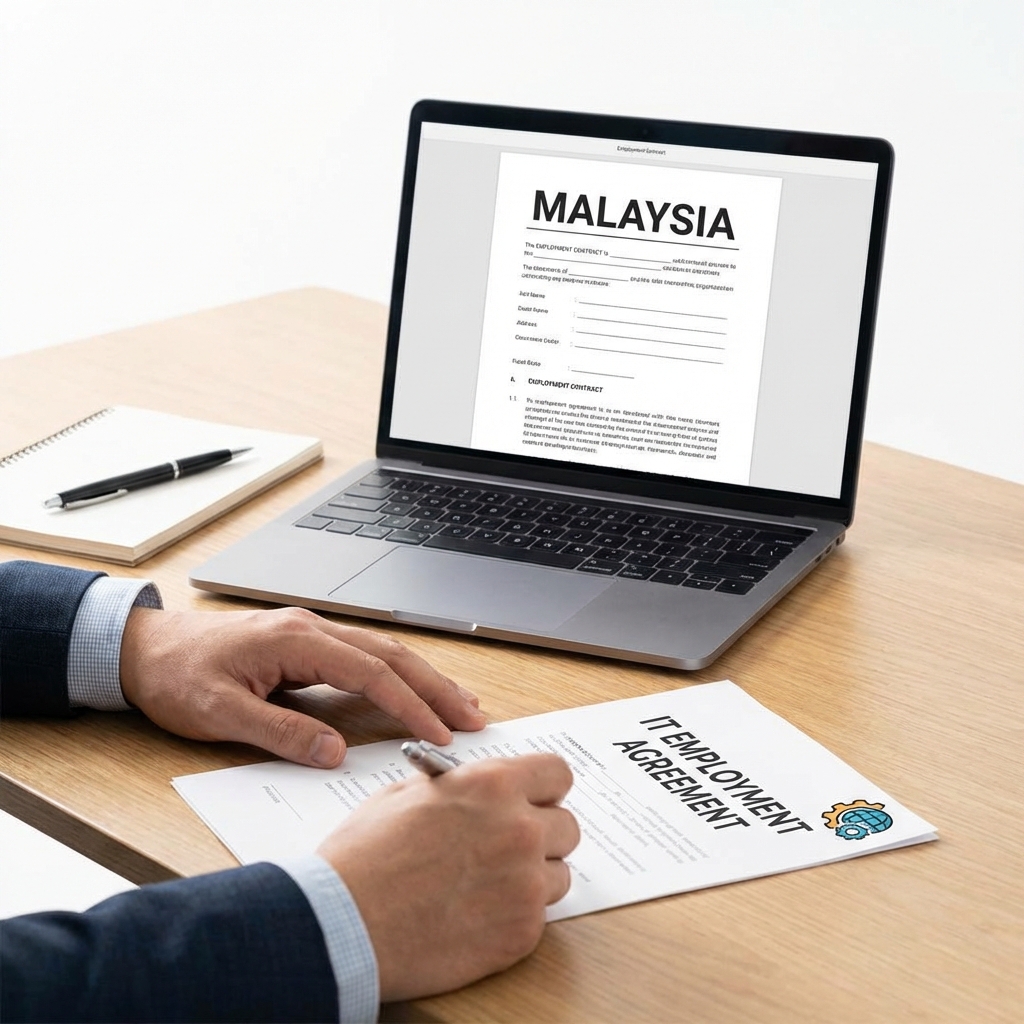
A well-drafted IT employment contract must balance the dynamic nature of software development, cybersecurity, and data analytics with statutory compliance. Failure to properly define these terms can lead to significant liabilities, especially regarding intellectual property rights and cross-border working arrangements.
1. Probationary Periods and Confirmations
In Malaysia, the probationary period is a critical phase for IT employers to assess the technical proficiency and cultural fit of new hires. While the Employment Act does not mandate a specific duration for probation, industry standards typically range from three to six months. It is imperative that the contract explicitly states the length of this period and the criteria for confirmation.
For IT roles, confirmation should be contingent upon the successful completion of specific technical assessments or the delivery of key project milestones. Employers should ensure the offer letter clearly outlines the notice period applicable during the probationary period versus post-confirmation status. Crucially, employers must provide formal written notification of confirmation or extension before the probationary period expires to avoid the legal implication that the employee has been automatically confirmed.
2. Working Hours & Overtime for Tech Staff
The Malaysian Ministry of Human Resources regulates working hours, generally capped at 45 hours per week. However, the IT sector often operates on non-traditional schedules, particularly for DevOps, support engineers, or global deployment teams. Contracts must clearly define “normal working hours” while providing flexibility for the operational realities of the tech industry.
The distinction between employees eligible for overtime (OT) and those in managerial or executive positions who may be exempt is vital. For IT staff earning below the threshold set by the First Schedule of the Employment Act, companies are obligated to pay overtime rates for work performed beyond the contractual hours. To remain compliant, employment agreements should utilize a clear ‘Flexi-Hours’ clause that explicitly details how on-call duties or urgent system maintenance are compensated, ensuring that any deviation from standard hours adheres to statutory requirements.
3. Remote Work and Telecommuting Policies
Post-pandemic, the demand for remote work in Malaysia’s IT sector remains high. When incorporating remote work into employment contracts, employers must address data security and equipment management. The legal agreement should contain clauses that clarify the employee’s responsibility regarding the protection of proprietary data and compliance with the Personal Data Protection Act (PDPA) 2010 while working from off-site locations.
Contracts must explicitly state the jurisdiction of the employment relationship, particularly if the employee is working from a different state or country. Furthermore, defining the “home office” as an extension of the workplace allows employers to enforce safety standards and equipment usage policies. By establishing a clear telecommuting framework, IT firms can mitigate risks related to employee misclassification and data breaches while fostering a modern, flexible work environment that attracts top-tier talent.
In conclusion, structuring employment contracts within the Malaysian tech ecosystem requires a proactive approach. By meticulously defining the terms of engagement—from probation to remote work policies—companies can mitigate legal risks while positioning themselves as employers of choice in an increasingly competitive digital landscape.
Data Protection & Non-Disclosure Agreements
In the rapidly evolving digital landscape of Malaysia, protecting organizational data and intellectual property (IP) is paramount for IT firms. Navigating the complex interplay between employment contracts and national privacy laws is essential for maintaining a competitive edge. Employers must incorporate robust Legal HR terms & conditions for IT field in malaysia into their documentation to ensure comprehensive protection.
1. PDPA Compliance in the IT Sector
The Personal Data Protection Act 2010 (PDPA) is the cornerstone of data privacy in Malaysia. For IT companies, which routinely handle vast amounts of sensitive client information and employee data, compliance is not optional. When employees join a firm, their employment contracts must explicitly state how they are expected to handle personal data in accordance with the Personal Data Protection Commissioner Malaysia guidelines. Employers should implement clear clauses that mandate strict confidentiality regarding the processing, storage, and disposal of data. Failure to adhere to these standards can result in significant legal liabilities and reputational damage. Therefore, onboarding processes must include mandatory training on PDPA obligations, ensuring that every developer, analyst, and IT support staff member understands their personal responsibility under the law.
2. Drafting Valid Non-Disclosure Agreements
A well-drafted Non-Disclosure Agreement (NDA) is a critical defensive tool in the IT sector. It protects trade secrets, proprietary algorithms, and sensitive client information from unauthorized disclosure. When formalizing Legal HR terms & conditions for IT field in malaysia, it is vital that the NDA is reasonable in scope, duration, and geographic reach. Courts in Malaysia may strike down agreements that are too broad or act as an unreasonable restraint of trade. To remain enforceable, an NDA must clearly define what constitutes confidential information and specify that this obligation survives the termination of employment. Employers should ensure that these agreements are signed prior to the commencement of work and revisited periodically as roles evolve or as employees gain access to more sensitive data.
3. Protecting Software Intellectual Property
Intellectual property is the lifeblood of most IT enterprises. Protecting software code, design schematics, and unique technical methodologies requires specific provisions within employment contracts. Under the Copyright Act 1987 in Malaysia, works created by employees in the course of their employment are generally owned by the employer. However, relying solely on statutory protection is risky. IT contracts should explicitly include “work-for-hire” clauses, clarifying that all inventions, software code, and documentation developed by the employee using company resources or during company time remain the exclusive property of the firm. Furthermore, these clauses should mandate that the employee agrees to assist the company in registering patents or copyrights for such inventions if necessary, both during and after their term of employment. By reinforcing these legal structures, companies can effectively mitigate the risks of IP theft and ensure their technical assets remain secure.
Non-Compete & Restraint of Trade Clauses
In the rapidly evolving Malaysian technology sector, talent retention is a primary concern for employers. However, the legal framework governing restrictive covenants is stringent. When drafting Legal HR terms & conditions for IT field in malaysia, companies must navigate the balance between protecting trade secrets and respecting an individual’s right to earn a livelihood. Understanding the enforceability of these clauses is essential for maintaining compliant employment contracts.

1. Section 28 of the Contracts Act 1950
The cornerstone of Malaysian law regarding restraints of trade is Section 28 of the Contracts Act 1950. This statute explicitly states that every agreement by which anyone is restrained from exercising a lawful profession, trade, or business of any kind is to that extent void. Unlike some jurisdictions where a ‘reasonableness’ test applies to non-competes, Malaysia maintains a strict stance: post-employment non-compete clauses are generally considered void and unenforceable.
For IT companies, this means that a clause prohibiting a software developer from joining a competitor after resignation will likely be struck down by the courts. The legislature prioritizes the freedom of mobility for employees, particularly in technical fields where specialized skills are highly sought after. Employers attempting to enforce such clauses often find that they provide a false sense of security, as the courts consistently favor the employee’s right to work.
2. Effective Non-Solicitation Rules
Given the difficulty of enforcing traditional non-competes, many Malaysian tech firms have shifted their focus to robust non-solicitation clauses. While a broad restraint of trade is void, the courts have shown greater willingness to uphold reasonable non-solicitation agreements. These clauses typically prevent former employees from poaching clients, suppliers, or other employees from their previous firm for a defined period.
To increase the likelihood of enforceability, these clauses must be narrowly drafted. They should be limited in duration (typically 6 to 12 months) and scope. For instance, a clause that prevents an engineer from contacting specific existing clients they handled directly is more likely to be upheld than a blanket ban on contacting any company within the entire IT sector. HR departments must ensure these clauses are precise, avoiding overly broad language that could be interpreted as an indirect restraint of trade.
3. Implementing Garden Leave Properly
Garden leave serves as a strategic alternative to non-compete clauses in the Malaysian tech landscape. Under a garden leave arrangement, the employee remains employed and continues to receive their salary but is instructed not to attend the office, access company systems, or contact clients during their notice period. Because the employee is technically still on the payroll, the restriction does not fall under the prohibition of Section 28 of the Contracts Act 1950.
Implementing this requires clear contractual provisions. The employment contract must expressly provide for the right to place the employee on garden leave. This period is highly effective for IT employers, as it allows the firm to transition projects, revoke access to proprietary code, and mitigate the risk of the employee taking sensitive information to a competitor. However, HR teams must be mindful that keeping an employee on the payroll is a cost-intensive strategy, and it should be reserved for roles involving high-level trade secrets or critical business intelligence.
Termination Policies & Severance Guidelines
In the fast-paced IT sector of Malaysia, managing workforce transitions requires a deep understanding of the Employment Act 1955. Whether dealing with performance issues or business restructuring, employers must strictly adhere to the established Legal HR terms & conditions for IT field in malaysia to mitigate litigation risks and maintain organizational reputation.
1. Establishing Just Cause and Excuse
Under Malaysian labor law, an employer cannot simply terminate an employee without conducting a formal process. To avoid claims of Unfair Dismissal, the employer must establish “just cause or excuse.” For IT professionals, this typically involves documented evidence of consistent underperformance, breach of non-disclosure agreements (NDAs), or gross misconduct like intellectual property theft. Employers are mandated to hold a Domestic Inquiry (DI) to allow the employee to respond to allegations. The DI process is a critical safeguard; it ensures that the decision-making process is transparent, objective, and compliant with the principles of natural justice. Without a formal DI, any subsequent dismissal is often deemed procedurally unfair by the Industrial Court, even if the substantive grounds for dismissal were valid.
2. Mandatory Notice Period Requirements
The Employment Act 1955 outlines the minimum notice periods required to terminate an employment contract in the absence of a specific agreement. Generally, the notice period depends on the employee’s length of service: four weeks for those employed less than two years, six weeks for those employed between two and five years, and eight weeks for those employed for five years or more. However, many IT employment contracts in Malaysia specify longer notice periods to account for the complexity of project handovers and knowledge transfers. If an employee is terminated for misconduct, the employer may choose to dismiss them without notice, provided that a thorough investigation has taken place. Conversely, if an employer wishes to expedite the exit, they may opt to pay “wages in lieu of notice,” which is equivalent to the salary the employee would have earned during the notice period.
3. Severance & Retrenchment Compensation
When IT firms downsize due to project completion or technological shifts, they must handle retrenchment with extreme care. Following the Employment (Termination and Lay-Off Benefits) Regulations 1980, employers are required to pay termination benefits to eligible employees. These benefits are usually calculated based on years of service: 10 days’ wages for every year of service for employees with less than two years of service, 15 days’ wages for those with two to five years, and 20 days’ wages for those with more than five years. While these are statutory minimums, many IT companies in Malaysia provide more generous packages to ensure a smooth transition and to maintain their employer brand. Failure to pay these benefits within seven days of the termination date can result in legal penalties. Companies must also notify the Department of Labour via the PK Form at least 30 days before retrenchment takes effect, ensuring that the entire procedure is documented and legally compliant.
Employee Benefits & Statutory Contributions
Navigating the complex landscape of employment law is crucial for tech companies operating within Malaysia. As the digital economy grows, businesses must prioritize compliance with local labor regulations to avoid penalties and foster a stable, productive workforce. Understanding the Legal HR terms & conditions for IT field in malaysia is essential for founders and HR managers to ensure that both the company and its employees are protected.
1. EPF, SOCSO, and EIS Fundamentals
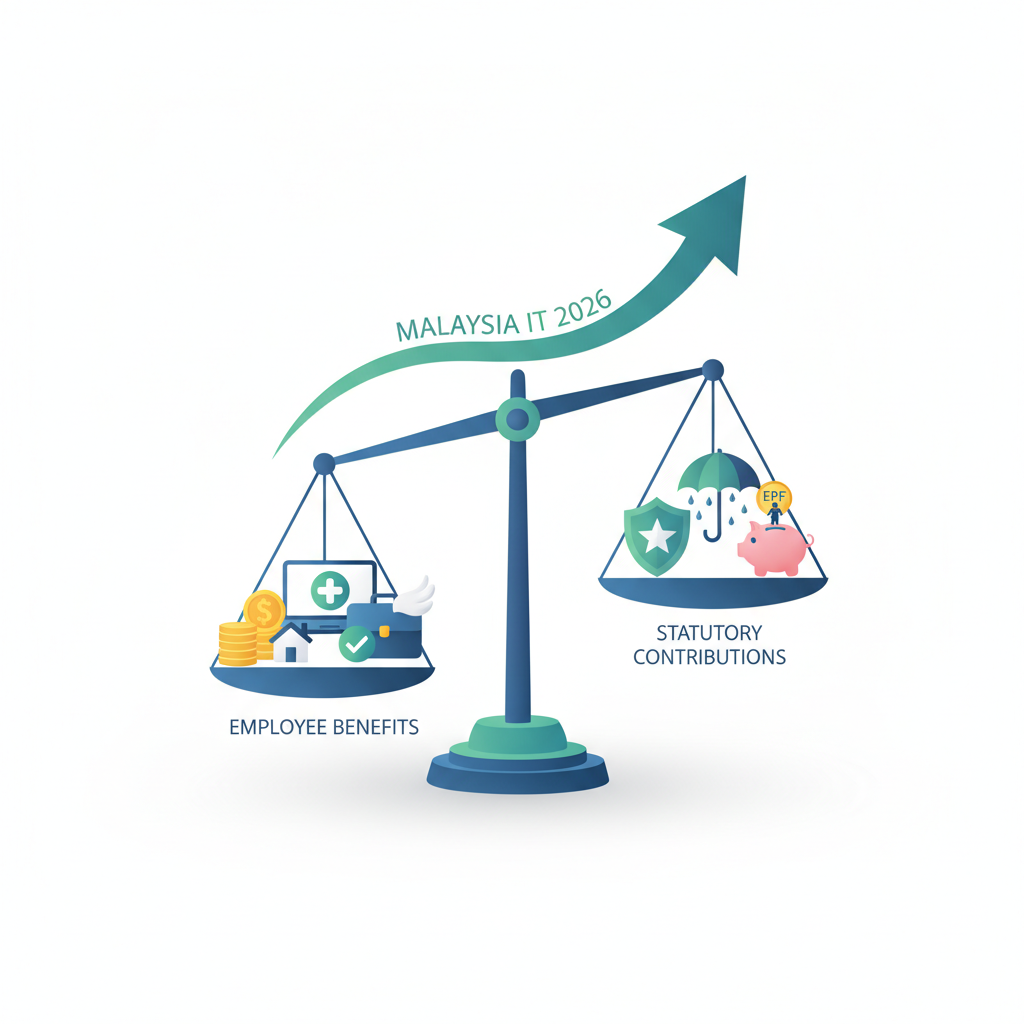
In Malaysia, every employer is legally obligated to contribute to three primary statutory funds for all eligible employees. These contributions ensure financial security and social safety nets for the workforce. The Employees Provident Fund (EPF) serves as a retirement savings plan where both the employer and employee contribute a percentage of the monthly wage. Failure to remit these funds accurately can result in severe legal repercussions.
Furthermore, companies must register employees with the Social Security Organization (SOCSO) and the Employment Insurance System (EIS). SOCSO provides coverage for work-related injuries, illnesses, or deaths, while EIS acts as a financial safety net for employees who lose their jobs, assisting them during the search for new employment. For IT companies, maintaining precise payroll software that automatically calculates these deductions is the best practice for ensuring adherence to current legislative mandates.
2. Mandatory Annual Leave Accruals
Under the Employment Act 1955, employees are entitled to minimum annual leave based on their length of service. For the technology sector, where project deadlines are tight and talent retention is a primary concern, many companies offer “above-market” leave packages. However, it is vital to know that the law sets the absolute floor. According to the Ministry of Human Resources, employees are entitled to 8 days for less than two years of service, 12 days for two to five years, and 16 days for five years or more.
Employers must maintain transparent records of leave accrual and usage. Within the IT field, it is common to provide “unlimited leave” or “flexible time-off” policies; however, HR professionals must ensure that even in these cases, the legal minimum entitlement is strictly tracked and honored. Any unused leave that is converted to pay or carried forward must also adhere to company policy and employment contracts, provided it does not violate statutory requirements.
3. Medical and Health Insurance Mandates
While the Employment Act mandates that employers provide sick leave and hospitalization leave to their staff, it does not explicitly mandate private health insurance for all employees. However, for a tech company in Malaysia, providing comprehensive medical benefits has become a standard condition to attract and retain top-tier software engineers, developers, and data scientists. Employers are required to pay for the medical examination fees if a company-directed health check is requested, and they must provide paid medical leave once a doctor certifies an illness.
Beyond the basics, many IT firms choose to include Group Hospitalization and Surgical (GHS) insurance and Group Personal Accident (GPA) coverage as part of their total rewards strategy. By positioning health benefits as a core component of the employee value proposition, firms not only comply with the fundamental duty of care but also significantly reduce the risk of burnout. Ensuring that your employment contracts clearly outline these medical benefits is a vital part of the overall legal compliance strategy, providing clarity to both the employer and the employee from day one.
Partner with Shelby Global
You are looking for reliable HR Sevice Suppliers? Contact Shelby Global Now! To connect with verified talents and upgrade your orginization.
—————————————
References
– Ministry of Human Resources Malaysia: https://www.mohr.gov.my/
– Personal Data Protection Commissioner Malaysia: https://www.pdp.gov.my/
– Contracts Act 1950: https://www.commonlii.org/my/legis/consol_act/ca1950112/
– Ministry of Human Resources Malaysia: https://www.mohr.gov.my/
– Ministry of Human Resources Malaysia: https://www.mohr.gov.my/