
Scope of Responsibilities & Strategic Impact
In Malaysia’s vibrant and rapidly expanding IT sector, the role of Human Resources is undergoing a significant evolution, particularly when comparing Small and Medium-sized Enterprises (SMEs) with larger corporations. The breadth and depth of HR duties diverge dramatically, moving from a generalized, often reactive stance in SMEs to a highly specialized, strategic function in corporates. Understanding these differences between the SMEs’ HR Manager and the Corporates’ HR Director in IT field in Malaysia is crucial for appreciating their respective contributions to business success and talent development.
While an SME’s HR Manager typically juggles a multitude of tasks with limited resources, serving as an all-encompassing HR generalist, a Corporate HR Director operates within a highly structured environment, focusing on long-term strategy, specialized functions, and large-scale talent initiatives. This distinction is especially pronounced in the fast-paced, competitive IT landscape where attracting, retaining, and developing top talent is paramount.

1. Operational vs. Strategic Imperatives in IT Talent Management
For an HR Manager in a Malaysian IT SME, the focus is predominantly operational. Their day-to-day responsibilities revolve around immediate needs: swiftly recruiting IT professionals for specific project requirements, managing basic compensation and benefits, conducting performance reviews, and ensuring compliance with local labour laws. IT talent management in an SME context is often reactive, driven by urgent project demands and aimed at filling immediate skill gaps. The emphasis is on keeping the business running smoothly and efficiently with the available resources.
Conversely, a Corporate HR Director in a large IT firm operates with a distinctly strategic imperative. Their role extends far beyond day-to-day administration to encompass proactive talent acquisition strategies, including employer branding, developing robust talent pipelines for critical IT roles, and implementing sophisticated compensation frameworks that may include equity and performance bonuses. They are responsible for succession planning for key technical and leadership positions, designing comprehensive leadership development programs for IT leaders, and leveraging workforce analytics to anticipate future skill requirements. Their approach to IT talent management is proactive, data-driven, and aligned with the overarching business strategy, influencing long-term growth and innovation.
2. End-to-End HR Functions in SMEs vs. Specialized Departments in Corporates
The HR Manager in an SME is truly a jack-of-all-trades, managing the entire end-to-end HR functions. From the moment a junior developer is hired, through onboarding, benefits administration, payroll processing, performance management, employee relations, and even handling offboarding, a single HR professional or a very small team may oversee it all. This requires broad knowledge across all HR domains and exceptional adaptability, but often limits the depth of expertise in any single area.
In contrast, a Corporate HR Director in a large IT enterprise oversees a multifaceted HR department composed of specialized teams. These typically include dedicated departments for Talent Acquisition, Compensation & Benefits, Learning & Development, HR Business Partners aligned with IT units, and HR Information Systems (HRIS). The Director’s role involves setting overarching HR policies, ensuring alignment with global or regional HR strategies, and guiding these specialist teams. They leverage deep expertise in specific HR disciplines, often focusing on strategic partnerships with business leaders, while delegating operational execution to their specialist teams. This allows for greater efficiency, consistency, and depth in HR service delivery.
3. Driving Business Outcomes: Direct Impact on IT Projects
The impact of an SME’s HR Manager on driving business outcomes, particularly concerning IT projects, is often direct and tactical. Their effectiveness is measured by their ability to quickly source and onboard the right IT personnel, resolve immediate team conflicts, maintain morale, and ensure compliance. Their swift action can directly prevent project delays or mitigate operational risks, making their contribution immediately visible to project success through resource availability and team cohesion.
For a Corporate HR Director, the impact is strategic, systemic, and focused on long-term organizational health and competitiveness. They are instrumental in developing frameworks that provide agile HR support for complex IT projects, fostering a culture of continuous innovation, and implementing strategies to reduce attrition among critical IT skills. Their initiatives ensure that the organization has a sustainable talent pipeline, is prepared for future technological shifts (such as AI or cybersecurity), and can scale its IT capabilities effectively. These strategic contributions directly influence the corporate IT functions’ long-term success, competitiveness, and overall business growth, as highlighted in reports on global human capital trends, ensuring the workforce is equipped to meet future challenges. For insights into broader HR shifts influencing such roles, authoritative reports like the Deloitte Global Human Capital Trends provide a valuable perspective.
Organizational Structure & Reporting Lines
The intricate tapestry of organizational structures within Malaysian IT companies presents a fascinating study, particularly when examining the distinct roles of HR professionals. The Differences between the SMEs’ HR Manager and the Corporates’ HR Director in IT field in Malaysia are not merely a matter of title but reflect fundamental variations in team size, reporting hierarchies, and strategic influence. These distinctions are shaped by the company’s scale, operational complexity, and its overall strategic outlook towards human capital management.
-
Lean HR Teams in IT SMEs: The Generalist Approach
In the vibrant ecosystem of Malaysian IT Small and Medium-sized Enterprises (SMEs), HR departments are typically lean, often comprising a single HR Manager or a small, agile team. This structure necessitates a highly adaptable individual who embodies the essence of a generalist. An HR Manager in an IT SME is a jack-of-all-trades, handling the full spectrum of human resources functions. Their HR generalist responsibilities often include end-to-end recruitment, onboarding, payroll processing, benefits administration, employee relations, basic training and development, and ensuring compliance with local labor laws. They typically report directly to the CEO, COO, or a general manager, serving more as an operational support function rather than a strategic partner in core business decisions. While they are crucial for maintaining operational HR efficiency, their influence on executive-level strategic planning, particularly concerning IT roadmap or product development, is often indirect and reactive, primarily focusing on immediate personnel needs and problem-solving.
-
Multi-Tiered HR Departments in Corporate IT Giants
Conversely, Malaysia’s corporate IT giants, often multinational corporations or large local enterprises, boast multi-tiered and highly specialized HR departments. Here, the HR Director sits at the apex of a broader organizational structure, overseeing various specialized HR functions. These departments are typically segmented into distinct units focusing on areas like talent acquisition, compensation and benefits, learning and development, HR business partnering, HR information systems (HRIS), and organizational development. Each unit is staffed by specialists who manage specific aspects of the employee lifecycle. The HR Director’s role is therefore less about day-to-day operational tasks and more about strategic oversight, policy formulation, and ensuring alignment of HR strategies with overall business objectives. They lead larger teams of HR professionals, fostering expertise and depth in each specialized domain, thereby enabling more comprehensive and sophisticated human capital strategies tailored for a large and diverse IT workforce.
-
Direct Influence on Executive Decisions and IT Leadership
The level of influence exerted by HR roles within their respective organizational frameworks differs significantly. In an IT SME, the HR Manager’s influence is often transactional and focused on maintaining a healthy work environment, with limited direct input into strategic business or IT decisions. Their voice might be heard on matters of immediate employee welfare or basic talent sourcing but rarely shapes the long-term strategic direction of the IT department or the company as a whole. However, the HR Director in a corporate IT giant operates at a vastly different altitude. They are typically part of the executive leadership team, reporting directly to the CEO or CHRO, and hold a significant portfolio in shaping the company’s future. This role involves substantial influence on high-level decisions such, strategic HR initiatives. They are a critical strategic HR partnership, working hand-in-hand with IT leadership to develop workforce planning strategies, talent retention programs, succession planning for key tech roles, and fostering a culture that drives innovation. Their decisions directly impact organizational effectiveness, talent pipelines, and the company’s ability to adapt to rapid technological changes, thereby serving as a direct and indispensable partner in guiding the IT giant’s strategic trajectory.
Budget, Resources, and Technology Adoption
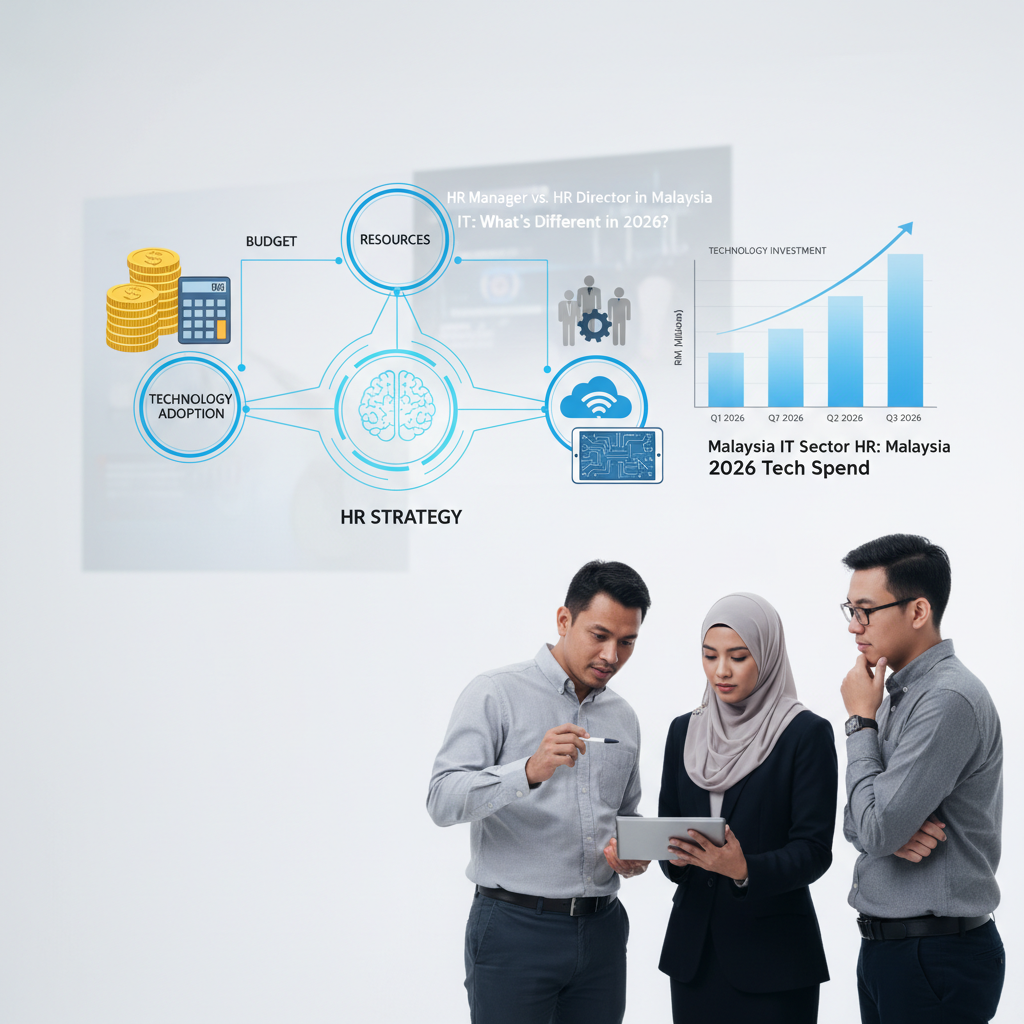
In the dynamic and competitive landscape of Malaysia’s IT sector, the effectiveness of an HR department is profoundly shaped by the budget, resources, and technological tools at its disposal. This section delves into the critical disparities in access to financial resources, technological infrastructure, and external partnerships available to HR professionals, highlighting the distinct challenges and opportunities faced by HR in small and medium-sized enterprises (SMEs) versus large corporations. Understanding these Differences between the SMEs’ HR Manager and the Corporates’ HR Director in IT field in malaysia is crucial for comprehending their strategic capabilities, operational efficiencies, and ultimately, their impact on talent management and business growth.
-
Navigating Resource Constraints in SME IT HR
For HR managers in Malaysian IT SMEs, operating within strict resource constraints is a daily reality. Financial limitations often mean smaller budgets for everything from recruitment campaigns and HR software to professional development and employee benefits. This scarcity necessitates a highly agile and innovative approach. SME HR professionals frequently find themselves relying on manual processes, basic spreadsheet systems, or free/low-cost online tools for tasks like payroll, leave management, and applicant tracking. The absence of sophisticated HR Information Systems (HRIS) or dedicated HR technology teams means the HR manager often wears multiple hats, handling administrative duties alongside strategic functions, which can limit proactive talent initiatives. Attracting top IT talent can also be a significant hurdle; without the brand recognition or extensive benefit packages of larger firms, SMEs must differentiate themselves through unique company culture, flexible work arrangements, or accelerated growth opportunities. External partnerships, though vital, are often sought on a pro-bono or low-cost basis, such as collaborations with local universities for internships or leveraging government grants for training programs. The focus is on maximizing impact with minimal outlay, demanding creativity and resourcefulness in every HR function.
-
Leveraging Advanced HR Tech & Analytics in Corporate Settings
In stark contrast, HR Directors in large Malaysian IT corporations benefit from substantially larger budgets, enabling significant investment in cutting-edge HR technology and sophisticated analytics. These organizations typically deploy integrated HRIS platforms (e.g., SAP SuccessFactors, Workday, Oracle HCM Cloud) that streamline recruitment, onboarding, performance management, learning & development, and payroll across multiple geographies. Access to advanced HR technology solutions not only enhances operational efficiency but also provides a wealth of data for strategic decision-making. Corporations can invest in AI-driven applicant tracking systems, predictive analytics for workforce planning and attrition risk, and robust employee engagement platforms. A dedicated HR technology team or strong IT department support ensures seamless implementation, customization, and maintenance of these systems. This technological prowess allows corporate HR to shift from transactional tasks to strategic initiatives, using data to inform talent acquisition strategies, optimize compensation structures, and enhance the overall employee experience. The ability to leverage such strategic HR technology investments is a game-changer, providing insights that directly impact business outcomes and competitive advantage. More on the strategic role of HR technology can be found on SHRM’s resources.
-
Investment in Talent Development and IT Skill Enhancement
The disparity in resources also profoundly impacts talent development and IT skill enhancement strategies. SMEs, with their constrained budgets, often prioritize immediate skill gaps, relying heavily on internal mentoring, on-the-job training, or readily available online courses. While effective for immediate needs, this approach can limit long-term career planning and access to specialized, high-cost certifications crucial in the rapidly evolving IT sector. Collaboration with industry associations or government-subsidized programs becomes essential to bridge these gaps. For corporate HR Directors, the landscape is entirely different. They have the financial muscle to invest in comprehensive, structured learning and development programs. This includes sponsoring employees for prestigious IT certifications (e.g., AWS, Azure, Google Cloud, Cybersecurity certifications), leadership development academies, internal training centers, and partnerships with leading external training providers. These investments are not merely about skill enhancement; they are strategic moves to foster a highly skilled workforce, reduce reliance on external hiring for critical roles, and cultivate a strong employer brand that attracts and retains top-tier IT professionals. The ability to offer clear career progression paths supported by robust training budgets is a key differentiator, creating a significant competitive advantage in a talent-scarce market. Understanding these fundamental Differences between the SMEs’ HR Manager and the Corporates’ HR Director in IT field in malaysia provides context to their operational models and strategic contributions.
Talent Acquisition & Development in IT
Examines the unique challenges and approaches to attracting, retaining, and developing IT talent, considering the scale and employer branding of SMEs versus corporates.
The rapidly evolving landscape of information technology presents unique hurdles for organisations seeking to attract and retain top talent. In Malaysia, this challenge is further amplified by the dynamic nature of its digital economy and the distinct operational frameworks of Small and Medium Enterprises (SMEs) versus large corporations. The fundamental differences between the SMEs’ HR Manager and the Corporates’ HR Director in IT field in Malaysia significantly shape their respective strategies for IT talent management Malaysia. While SMEs often grapple with limited resources and brand visibility, corporates leverage scale and established structures to build robust talent pipelines. Navigating these complexities requires tailored approaches in employer branding, recruitment tactics, and continuous professional development.
1. Attracting Niche IT Talent: SME Employer Branding Challenges
SMEs in Malaysia face an uphill battle competing for highly sought-after IT professionals. Lacking extensive brand recognition and often the remuneration packages of larger corporations, an SME’s HR Manager, typically a generalist, must employ creative, agile strategies. Their employer branding efforts often hinge on showcasing a unique work culture, offering greater autonomy, faster career progression paths, and the opportunity for IT professionals to have a direct, tangible impact on the business. This means highlighting flexible work arrangements, a tight-knit team environment, and diverse project exposure – selling points that resonate with a segment of the IT workforce valuing impact over prestige. The challenge lies in effectively reaching this niche IT talent without a massive marketing budget. The HR Manager must be resourceful, leveraging professional networks, local tech communities, and direct outreach. Overcoming these HR challenges in IT Malaysia for SMEs requires a hands-on, personalised approach, where the HR Manager articulates the company’s unique value proposition.
2. Scalable Recruitment Strategies for Corporate IT Growth
In contrast, Corporate HR Directors in Malaysia, often leading dedicated talent acquisition teams, benefit from established employer brands and significantly larger budgets. Their focus shifts towards developing scalable recruitment strategies capable of supporting large-scale IT growth and expansion. This includes robust university partnership programmes, engaging with global talent pools, and utilising advanced Applicant Tracking Systems (ATS) to streamline recruitment for hundreds of applicants. A corporate HR strategy IT typically involves structured graduate programmes, internal mobility schemes, and strategic partnerships with recruitment agencies specialising in IT roles. The HR Director’s role is more strategic and oversight-oriented, ensuring the talent pipeline aligns with long-term organisational goals and addresses present and future skill demands. They focus on building sophisticated frameworks for candidate assessment, ensuring consistency across diverse recruitment campaigns. This systematic approach allows corporates to absorb talent at scale, a key differentiator from the more bespoke hiring prevalent in SMEs.
3. Continuous Learning & Upskilling for IT Professionals
Regardless of company size, the rapid pace of technological change mandates continuous learning and upskilling for all IT professionals. The approaches, however, differ markedly. For SMEs, IT skill development in Malaysia often takes a more informal, on-the-job learning route, supplemented by online courses, mentorship, and attendance at local tech meetups or workshops. The SME HR Manager’s role is to identify critical skill gaps and source cost-effective training solutions that provide immediate value, encouraging peer-to-peer learning and cross-functional project exposure. For corporates, continuous learning is usually a more structured and heavily invested affair. Corporate HR Directors oversee comprehensive learning and development (L&D) programmes, offering access to high-end certifications, specialised external training, e-learning platforms, and internal academies. These initiatives are often tied to career progression frameworks, ensuring clear pathways for growth and that the company maintains a competitive edge. Addressing the critical skills gap in the digital economy requires proactive and strategic investment in continuous learning, whether through formal programmes or agile, self-directed initiatives.
Conclusion
The journey of IT talent acquisition and development in Malaysia is marked by distinct challenges and opportunities for SMEs and corporates alike. The differences between the SMEs’ HR Manager and the Corporates’ HR Director in IT field in Malaysia underscore the varying strategic priorities and operational realities. While SMEs thrive on agility, unique culture, and direct impact, corporates leverage scale, structured processes, and robust resources. Both, however, share the common goal of nurturing a skilled IT workforce capable of driving innovation and sustained growth in an increasingly digital world. Understanding these nuances is paramount for crafting effective HR strategies that attract, retain, and continuously develop the indispensable IT talent pool of the nation.
Career Trajectories & Future Outlook (2026)
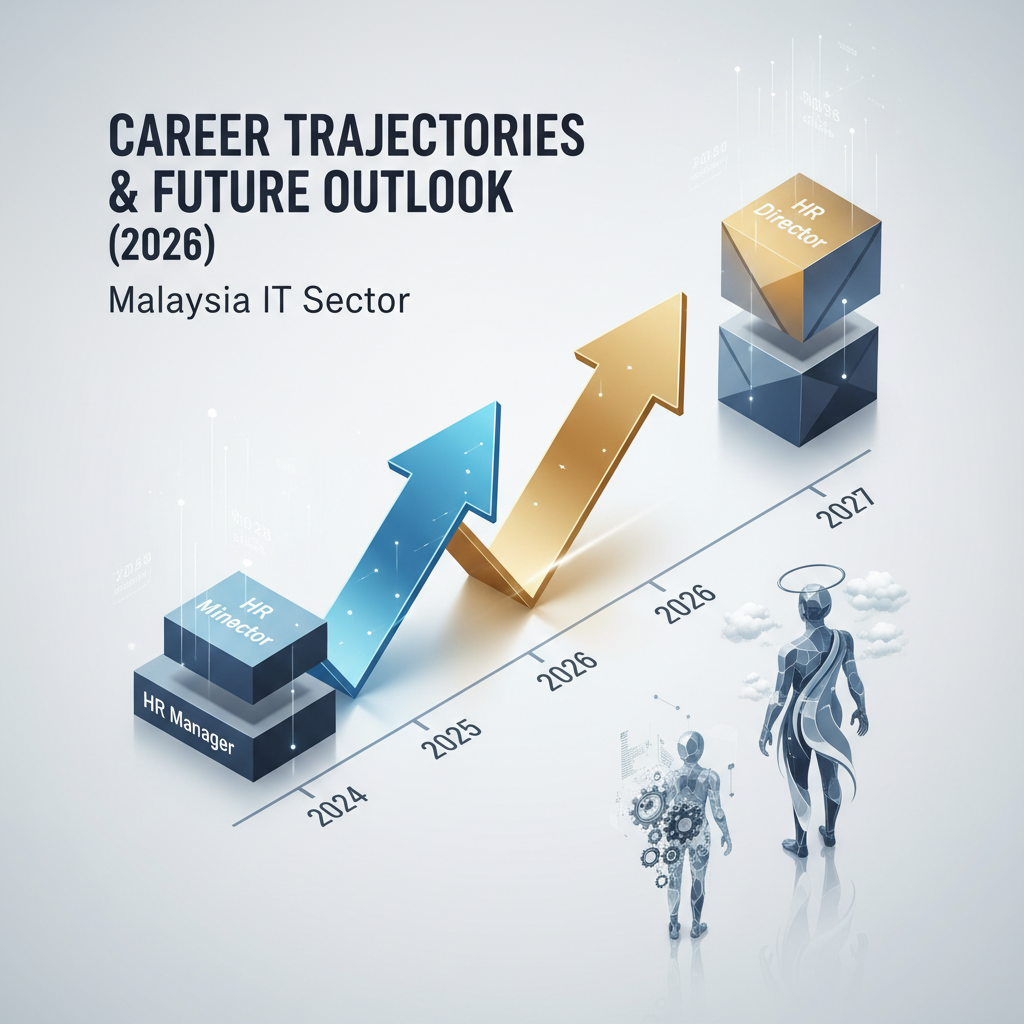
The Malaysian IT sector is booming, and with its rapid evolution comes a dynamic landscape for Human Resources professionals. By 2026, the roles of HR Managers in IT SMEs and HR Directors in Malaysian corporate IT will have further diverged, each demanding unique skill sets and offering distinct career trajectories. Understanding the Differences between the SMEs’ HR Manager and the Corporates’ HR Director in IT field in malaysia is crucial for aspiring and current HR professionals aiming to navigate this exciting future.
1. Pathways for HR Managers in Growing IT SMEs
HR Managers in growing IT Small and Medium-sized Enterprises (SMEs) are often the architects of their organization’s people strategy. By 2026, their role will remain highly operational yet increasingly strategic, focusing on agility, rapid talent acquisition, and fostering a strong company culture amidst expansion. Career paths for these professionals typically involve deep immersion in various HR functions: from building robust recruitment pipelines for specialized tech roles to developing scalable performance management systems and fostering employee engagement in fast-paced environments. Growth opportunities include transitioning to a Head of HR position within a larger, more established SME, specializing in niche areas like HR Information Systems (HRIS) or Learning & Development, or even moving into a regional HR role as the SME expands internationally within Southeast Asia.
The evolving demands necessitate HR Managers to be adept at digital HR tools, data-driven decision-making, and proactive talent management. They must be hands-on problem-solvers, capable of adapting quickly to technological shifts and market demands, while continuously enhancing the employee experience to attract and retain top IT talent.
2. Executive Leadership & Global Opportunities for HR Directors
For HR Directors in Malaysian corporate IT, 2026 heralds an era of heightened executive leadership and global influence. Unlike their SME counterparts, these leaders operate at a macro level, shaping organizational strategies that impact thousands of employees across diverse business units and often multiple geographies. Their career trajectory points towards becoming a Regional HR Director, Vice President of HR, or even a Chief People Officer (CPO), playing a pivotal role in the C-suite. Global opportunities are abundant, with potential for international assignments or leading multi-country HR initiatives for global IT corporations headquartered in Malaysia or with significant operations there.
The demands on these HR Directors are multifaceted: championing large-scale change management initiatives, leveraging advanced HR analytics for strategic workforce planning, driving diversity, equity, and inclusion (DEI) agendas, and navigating complex regulatory landscapes. They must possess exceptional leadership, negotiation, and strategic foresight to align HR initiatives with overarching business objectives and contribute directly to market leadership and innovation.
3. Adapting to Future IT HR Trends and Workforce Demands
Both HR Managers in IT SMEs and HR Directors in corporate IT will need to adapt significantly to emerging trends and workforce demands by 2026. The continued rise of Artificial Intelligence (AI) and automation in HR processes, the normalization of hybrid and remote work models, and a pronounced shift towards skills-based hiring will redefine talent acquisition and development. Employee well-being, mental health support, and fostering a sustainable work environment will become paramount for both talent attraction and retention.
Future-focused HR professionals in IT, irrespective of their organizational scale, must cultivate strong digital literacy, embrace agile methodologies, and develop an analytical mindset. They need to understand how technology can augment human capabilities and make HR processes more efficient and personalized. Staying informed on macro-economic shifts and global talent trends, as highlighted by reports such as Deloitte’s Global Human Capital Trends, will be essential for strategic planning and mitigating future workforce challenges. Continuous learning, adaptability, and a human-centric approach will be the hallmarks of successful HR careers in Malaysia’s vibrant IT sector.
Partner with Shelby Global
You are looking for reliable HR Sevice Suppliers? Contact Shelby Global Now! To connect with verified talents and upgrade your orginization.
—————————————
References
– :
– The Evolving Role of HR in Malaysia: A Strategic Partner for Business Growth – HRD Asia: https://www.hrdmag.com/my/news/general/the-evolving-role-of-hr-in-malaysia-a-strategic-partner-for-business-growth/265432
– HR Technology’s Role in Business Strategy: https://www.shrm.org/resources-and-tools/hr-topics/technology/pages/hr-technologys-role-in-business-strategy.aspx
– critical skills gap in the digital economy: https://www.pwc.com/my/en/future-of-work.html
– Deloitte’s Global Human Capital Trends: https://www2.deloitte.com/us/en/pages/human-capital/articles/human-capital-trends.html