
Scope of Responsibilities and Influence
The vibrant and rapidly expanding medical sector in Vietnam presents a unique landscape for human resources professionals. From the agile operations of a Small and Medium-sized Enterprise (SME) clinic to the extensive structures of a large corporate hospital group, the role and influence of HR differ significantly. Understanding these disparities is crucial for both aspiring HR practitioners and organizational leaders navigating the complexities of talent management, compliance, and strategic growth within the Vietnamese healthcare industry. This section highlights the distinct differences between the SMEs’ HR Manager and the Corporates’ HR Director in medicine field in Vietnam, detailing their primary functions and breadth of influence.

While both roles manage human capital, their scope, challenges, and strategic imperative diverge sharply. An HR Manager in an SME often acts as a generalist, directly involved in every facet of the employee lifecycle, whereas a Corporate HR Director orchestrates a specialized team, focusing on high-level strategy and organizational development. These distinctions are shaped by factors such as organizational size, resource availability, and the complexity of regulatory environments like Vietnam’s evolving labor laws, which demand constant adaptation.
1. Operational vs. Strategic Focus
The most striking contrast lies in the operational versus strategic orientation of these roles. For an HR Manager in a Vietnamese medical SME, the daily work is heavily operational. Responsibilities typically encompass recruitment, payroll, benefits, employee relations, and basic compliance with local labor regulations. Often, they are the sole HR professional or lead a very small team, deeply involved in tactical execution. Their focus is on keeping immediate operations smooth, addressing urgent staffing needs, and maintaining a compliant and harmonious workplace with limited resources. Strategic planning, if it occurs, is usually short-term and reactive, driven by immediate business requirements like filling a critical doctor’s position or managing a sudden increase in patient volume.
Conversely, a Corporate HR Director in a large Vietnamese medical corporation operates at a much higher, strategic level. While their team handles operational tasks, the Director’s primary focus is on aligning HR initiatives with the organization’s overarching business objectives. This involves long-term talent management strategies, succession planning for key medical and administrative roles, organizational development, and fostering a robust corporate culture across multiple departments or facilities. They are instrumental in shaping human capital strategies that support significant corporate goals, such as expanding into new provinces or launching specialized medical services. Their influence extends to C-suite discussions, where they provide insights on workforce analytics and future talent needs, ensuring the medical enterprise has the human talent to achieve its ambitious growth targets.
2. Departmental Structure and Team Size
The structural differences in HR departments clearly indicate the scale and complexity of responsibilities. In an SME medical clinic or small hospital in Vietnam, the HR ‘department’ might consist of just one HR Manager, occasionally supported by an assistant. This generalist role lacks the specialized depth that comes with larger teams. The flat structure means direct involvement in all employee-related matters, fostering close relationships but potentially leading to burnout due to the breadth of responsibilities.
In contrast, a Corporate HR Director in a major medical group oversees a sophisticated and often multi-tiered HR department. This department typically comprises specialized sub-teams, each dedicated to a specific HR function: Talent Acquisition (recruiting diverse medical and administrative staff), Compensation and Benefits (designing competitive packages), Learning and Development (providing continuous training), Employee Relations, and HR Information Systems (HRIS). Each sub-team has managers and specialists, allowing deep expertise and advanced HR programs. The Corporate HR Director’s role is more about leadership, coordination, and ensuring these specialized functions work cohesively to support the vast workforce of a large medical enterprise, often spread across multiple locations.
3. Budgetary Control and Resource Allocation
The financial resources available to HR departments profoundly impact their capacity and scope of influence. An HR Manager in an SME medical setting typically operates within tight budgetary constraints. Resources for advanced HR software, professional development programs, or sophisticated employee wellness initiatives are often limited. Resource allocation is usually reactive, driven by immediate necessities, requiring creativity and cost-effectiveness. Investing in high-end recruitment tools or comprehensive talent analytics platforms is often not feasible, necessitating more traditional and labor-intensive approaches to HR management.
Conversely, a Corporate HR Director wields significantly greater budgetary control and access to resources. They secure substantial investments in cutting-edge HR technologies, comprehensive learning systems, robust compensation and benefits, and extensive employee well-being programs. Resource allocation is strategic, aimed at fostering a competitive employer brand, enhancing employee engagement, and developing a resilient workforce capable of meeting the future demands of the medical sector. This enables the Corporate HR Director to implement sophisticated HR strategies that provide a significant competitive advantage in the highly competitive Vietnamese medical landscape, ultimately supporting the organization’s long-term sustainability and growth objectives.
Key Challenges and Pressures Unique to Each Role
Examining the distinct hurdles and demands faced by HR Managers in SMEs and HR Directors in large corporations within Vietnam’s medical field reveals a landscape shaped by organizational scale, resource availability, and strategic imperatives. While both roles are critical to an organization’s success, the nature of their challenges and the approaches required to overcome them present significant differences between the SMEs’ HR Manager and the Corporates’ HR Director in medicine field in vietnam.
1. Talent Acquisition & Retention (Limited Resources vs. Niche Specialization)
For an HR Manager in a Vietnamese medical SME, talent acquisition and retention are often characterized by inherent resource constraints. SMEs typically operate with smaller budgets, making it challenging to compete with larger corporations on salary and benefits packages. Attracting highly skilled doctors, specialized nurses, or experienced medical technicians often relies heavily on local networks, personal referrals, and the promise of a more intimate, family-like work environment. The brand recognition of an SME is also a significant factor; without a widely known name, attracting top-tier talent from a national pool becomes a formidable task. Retention strategies in SMEs often focus on fostering a strong sense of community, offering diverse responsibilities to promote skill development, and providing direct access to leadership. However, limited opportunities for vertical career progression and fewer formal training programs can make long-term retention difficult against offers from more established entities. Moreover, ensuring compliance with Vietnam’s labor laws while managing these limitations adds another layer of complexity.
Conversely, HR Directors in large medical corporations face a different set of formidable talent challenges. While they may possess greater financial resources and brand prestige, their focus shifts to acquiring and retaining highly specialized professionals for niche roles, often amidst intense competition both domestically and internationally. This includes recruiting surgeons with rare expertise, research scientists, or medical administrators capable of managing large, complex operations. The scale of recruitment is also vast, requiring sophisticated applicant tracking systems, extensive national and international recruitment campaigns, and partnerships with medical universities. Retention for large corporations involves developing intricate career pathways, comprehensive leadership development programs, and competitive performance-based incentives. Managing a large workforce means addressing diverse generational needs, maintaining high employee morale across multiple departments or hospital branches, and combating the allure of global opportunities. Furthermore, ensuring a steady pipeline of successors for critical leadership roles, especially in a rapidly evolving medical landscape, demands foresight and strategic planning.
2. Policy Implementation & Enforcement
In Vietnamese medical SMEs, HR Managers are often generalists, juggling multiple HR functions including policy creation, implementation, and enforcement. This means they frequently operate without dedicated legal teams or extensive HR technology infrastructure. Policies might be less formalized, adapting quickly to immediate needs or changing regulations. The challenge lies in ensuring these policies are compliant with Vietnam’s stringent labor laws and Ministry of Health regulations, often requiring the HR Manager to be personally well-versed in legal nuances. Enforcement in SMEs can be more direct and personal, given the smaller workforce, but this also means navigating potential interpersonal dynamics when enforcing disciplinary actions or sensitive workplace rules. Balancing the need for structured policies with the agile, often informal culture of an SME requires a delicate touch and robust understanding of both legal requirements and organizational realities.
For HR Directors in large medical corporations, policy implementation and enforcement are exercises in complexity and scale. They must navigate a multi-layered organizational structure, often with various departments, hospital sites, or even regional operations, each potentially having unique operational needs. The HR Director is responsible for ensuring uniform policy application across the entire entity, requiring clear communication strategies, comprehensive training programs for managers, and robust HR Information Systems (HRIS). Policies must not only comply with Vietnamese labor law but also potentially adhere to international accreditation standards (e.g., JCI) and industry-specific regulations. Enforcement is highly structured, involving formal disciplinary processes, clear grievance procedures, and close collaboration with legal departments. The HR Director also plays a crucial role in advising executive leadership on policy risks, regulatory changes, and their impact on a large, diverse workforce, often necessitating a deep understanding of governance and risk management within the medical sector. Staying updated with WHO’s commitment to Vietnam’s health sector and local regulatory updates is paramount.
3. Employee Engagement & Culture Building
Building employee engagement and a positive culture within a Vietnamese medical SME is often a hands-on, grassroots effort for the HR Manager. The close-knit nature of smaller teams can foster a strong sense of belonging, where the HR Manager directly influences the workplace atmosphere through personal interactions and informal initiatives. Challenges include limited budgets for elaborate engagement programs, necessitating creative, cost-effective solutions like team-building activities, recognition of individual milestones, or direct feedback channels. Ensuring professional development paths can be tricky without extensive internal training departments, often relying on external courses or mentorship opportunities. The culture in an SME is often organic, heavily influenced by the founder or key leaders, and the HR Manager’s role is to formalize positive aspects while addressing any informal practices that might hinder professionalism or growth, all while nurturing a supportive environment conducive to patient care.
In large medical corporations, the HR Director’s approach to employee engagement and culture building is necessarily strategic and systematic. The primary challenge is maintaining a cohesive and positive culture across a vast and diverse workforce, often spanning multiple specialties and locations. This requires designing scalable engagement programs, fostering robust internal communication channels, and empowering departmental leaders to champion cultural values. Initiatives include structured performance management systems, comprehensive wellness programs, corporate social responsibility activities, and large-scale recognition events. The HR Director must also focus on leadership development to ensure managers throughout the organization are equipped to inspire and motivate their teams. Cultivating a culture of continuous learning, innovation, and ethical practice is crucial, especially in a sector like medicine where quality of care is paramount. Overcoming potential silos between departments and ensuring every employee feels valued and connected to the overarching mission of the organization demands sophisticated strategies and a deep understanding of organizational psychology and change management principles.
Strategic Impact and Decision-Making Authority
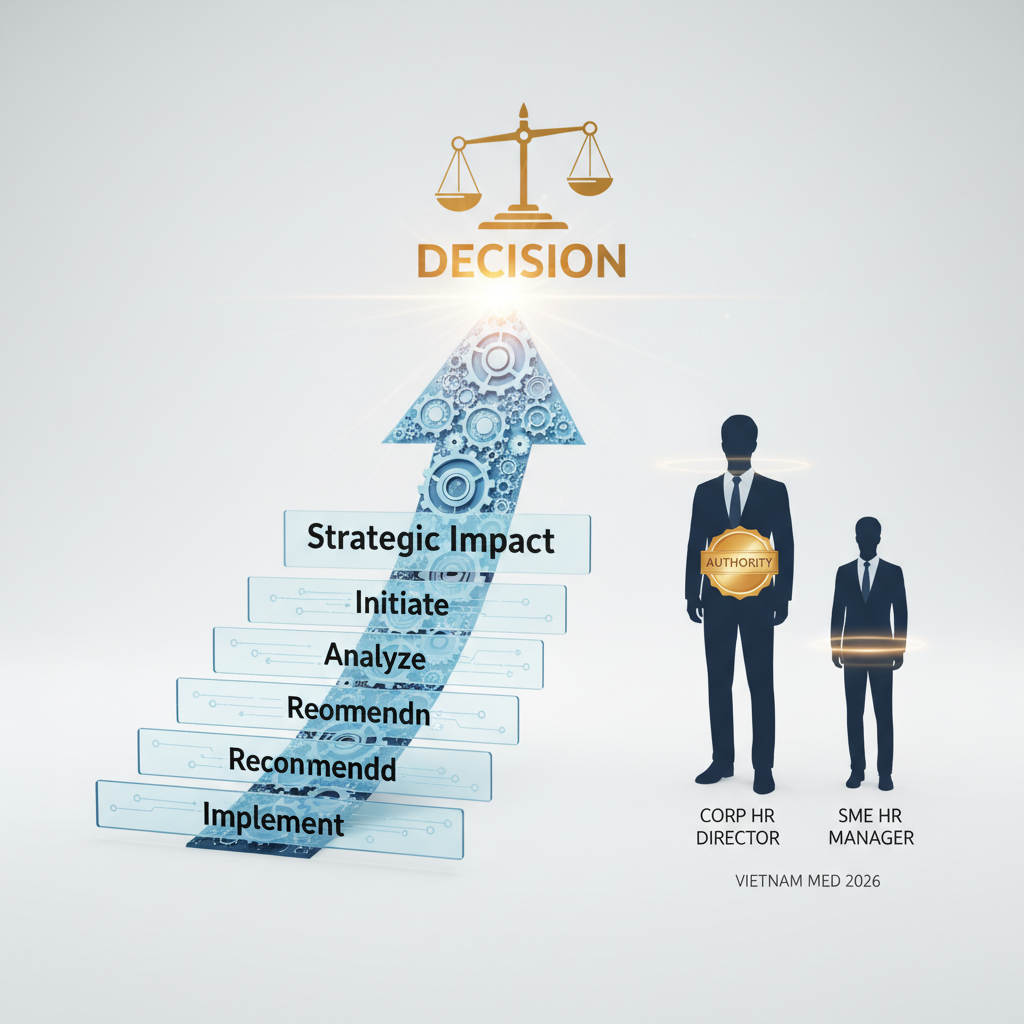
The trajectory of human resources within Vietnam’s dynamic medical sector reveals a distinct divergence in strategic impact and decision-making authority between small medical businesses (SMEs) and large healthcare corporations. The Differences between the SMEs’ HR Manager and the Corporates’ HR Director in medicine field in Vietnam are profound, largely dictated by organizational scale, resource allocation, and strategic complexity. While SME HR Managers often operate with a broad, hands-on mandate, focusing on immediate operational needs, HR Directors in large corporations function as pivotal strategic partners, shaping long-term organizational trajectories and human capital strategy. This contrast highlights the evolving recognition of HR as a strategic function, moving beyond administrative tasks to become a core driver of competitive advantage and sustainable growth, especially as highlighted by organizations like the Society for Human Resource Management (SHRM), which underscores that strategic human resource management is paramount for organizational effectiveness.
1. Role in Business Growth and Expansion
In small medical businesses, the HR Manager’s role in growth and expansion is typically reactive and execution-focused. They are instrumental in facilitating recruitment processes as the business scales, ensuring compliance with local labor laws, and managing the integration of new staff. Their strategic input might be limited to advising on the practical feasibility of new hires or talent availability within the local market, primarily operating as an implementer of growth decisions made by the business owner or a small leadership team. For instance, if a private clinic plans to open an additional branch, the HR manager ensures new staff are hired and onboarded efficiently, adhering to existing policies. The focus is often on meeting immediate staffing demands rather than proactively shaping market entry or long-term workforce planning.
Conversely, HR Directors in large healthcare corporations are central to proactive strategic growth and expansion initiatives. They are deeply involved from the conceptualization stage of mergers and acquisitions, new market entries, or the development of new service lines. Their expertise in comprehensive workforce planning, talent integration strategies, organizational culture assessment, and change management is indispensable. A corporate HR Director might lead due diligence for an acquisition, evaluate human capital assets, design integration strategies, and manage cultural assimilation to ensure seamless business continuity and strategic alignment. They are pivotal in forecasting future skill requirements, developing robust talent pipelines, and formulating competitive compensation and benefits strategies across a vast and diverse network, thereby directly influencing the corporation’s sustainable growth trajectory.
2. Influence on Organizational Design
The HR Manager in a small medical business holds a practical, yet often limited, influence on organizational design. Design decisions in SMEs frequently evolve organically out of operational necessity and the direct purview of the owner. The HR manager might propose minor adjustments to reporting lines to enhance team efficiency or formalize job descriptions for clarity within a small, often flat, hierarchy. For example, they might recommend structuring roles to improve patient flow in a clinic. However, large-scale structural redesigns are uncommon and, if they occur, are usually driven by external market shifts or the direct mandate of the business owner, with HR largely advising on implementation rather than conceptualization.
In contrast, HR Directors in large healthcare corporations exert substantial influence over organizational design, acting as strategic architects of the workforce. They collaborate extensively with executive leadership to craft structures that directly support strategic objectives, foster innovation, and optimize operational efficiency across complex, multi-site organizations. This encompasses everything from designing new departmental structures for specialized units (e.g., telehealth, genomics) to implementing matrix reporting lines to boost cross-functional collaboration. They spearhead initiatives such as workforce optimization, critical leadership succession planning, and the establishment of shared service centers. Their decisions on organizational design profoundly impact communication channels, decision-making hierarchies, career progression, and overall organizational agility, leveraging sophisticated HR analytics to ensure alignment with future growth and regulatory compliance.
3. Data-Driven HR Analytics and Reporting
For the HR Manager in a small medical business, data-driven HR analytics and reporting are typically foundational and focused on immediate operational requirements. They track essential metrics such as headcount, basic turnover rates, payroll costs, and fundamental compliance data. Reporting is often ad-hoc, generated in response to specific requests from the owner or for regulatory filings. Analysis usually involves simple spreadsheets to identify basic trends, like a spike in recruitment costs or attendance issues. While these insights are valuable for daily operations and addressing urgent concerns, they rarely extend to sophisticated predictive analytics or complex strategic modeling, primarily due to constraints in HR technology, resources, and specialized expertise.
Conversely, HR Directors in large healthcare corporations champion advanced data-driven HR analytics and reporting as a critical component of strategic decision-making. They oversee dedicated HR analytics teams or utilize sophisticated HR information systems (HRIS) to systematically collect, analyze, and interpret vast quantities of human capital data. Beyond traditional metrics, this includes advanced analytics related to employee engagement, performance correlation, diversity & inclusion metrics, talent pipeline health, and the return on investment (ROI) of various HR programs. Reports are comprehensive, often presented via dynamic dashboards, informing executive decisions on talent development investments, predicting future staffing shortages, optimizing benefits structures, and assessing the impact of organizational changes on productivity. The HR Director leverages these deep insights to proactively identify strategic opportunities, mitigate risks, and unequivocally demonstrate HR’s tangible value to the corporation’s overall financial and operational success.
Required Skill Sets and Qualifications
The dynamic landscape of Vietnam’s medical sector demands distinct competencies from its human resources leaders. While both the HR Manager in an SME and the HR Director in a large corporation are pivotal, their required skill sets, qualifications, and operational focus diverge significantly. Understanding these differences between the SMEs’ HR Manager and the Corporates’ HR Director in medicine field in Vietnam is crucial for talent acquisition and career progression. Each role necessitates a unique blend of expertise, leadership, and communication tailored to its organizational scale.
-
Generalist vs. Specialist Expertise
For an SME HR Manager in Vietnam’s medical sector, a robust generalist background is paramount. Often a sole practitioner, they require hands-on proficiency across all HR functions: talent acquisition, compensation and benefits, employee relations, and compliance with local healthcare labor laws. Expertise must be broad, adaptable, managing payroll, basic HR policy development, and conflict resolution. A Bachelor’s in HR or Business Administration, often with local labor law certifications, highlights practical knowledge.
Conversely, a Corporate HR Director in a large medical enterprise operates within a specialized framework. While foundational HR understanding is essential, their role is strategic, overseeing multiple specialist teams (e.g., Talent Acquisition, Organizational Development). They require deep expertise in workforce planning, succession management, and designing complex compensation structures for diverse medical professionals. Focus shifts from execution to strategy formulation, policy governance, and leveraging HR analytics. Advanced degrees like an MBA or Master’s in HR, coupled with extensive strategic HR leadership experience within large healthcare systems, are commonly sought.
-
Leadership and Management Acumen
The leadership demands on an SME HR Manager are characterized by direct operational oversight. They implement HR initiatives, manage daily operations, and guide employees through processes. Their acumen focuses on efficient execution, solving immediate HR challenges, and fostering a productive environment within a smaller setting. They support front-line managers and employees, serving as a primary contact for HR queries. This requires strong organizational skills, effective prioritization, and a hands-on approach, ensuring HR processes are streamlined and supportive of medical facility operations.
In contrast, a Corporate HR Director’s leadership and management acumen are inherently strategic and multi-faceted. They lead large, diverse HR teams, often across various locations. This involves cultivating a high-performance HR culture, mentoring specialist HR managers, and developing future HR leaders. Their leadership extends beyond the HR department, influencing executive boards and participating in overall business strategy. They must possess exceptional change management capabilities, guiding the organization through mergers or significant policy shifts. This role demands a leader who articulates a compelling HR vision, garners buy-in from senior stakeholders, and aligns HR initiatives with complex corporate objectives.
-
Negotiation and Communication Skills
For the SME HR Manager, negotiation and communication skills are vital for direct, daily interactions. This includes negotiating salary and benefits with candidates, mediating employee disputes, and clearly communicating HR policies to a smaller workforce. Their communication style needs to be accessible, empathetic, and persuasive, building trust and fostering positive employee relations within a close-knit SME medical facility. They engage directly with employees on sensitive matters, requiring discretion and strong interpersonal skills, also liaising with local government bodies for compliance.
The Corporate HR Director, however, operates at a higher strategic level of negotiation and communication. Responsibilities involve high-stakes negotiations with labor unions, collective bargaining, and complex discussions with executive leadership regarding restructuring or compensation frameworks. They must possess sophisticated presentation and influencing skills to articulate complex HR strategies and their business impact to diverse stakeholders, including board members and legal counsel. Communication involves crafting corporate-wide announcements, managing public relations related to HR issues, and navigating intricate regulatory environments within the Vietnamese medical sector. Their ability to communicate vision, resolve high-level conflicts, and represent organizational interests is paramount.
Career Trajectories and Growth Opportunities
The human resources landscape within Vietnam’s medical sector presents a dynamic array of career trajectories and professional development avenues. Whether operating within a nimble Small and Medium-sized Enterprise (SME) or a sprawling corporate healthcare conglomerate, HR professionals are instrumental in shaping organizational success and employee well-being. The growth opportunities, however, vary significantly, reflecting the scale, structure, and strategic priorities of these distinct environments. Understanding these nuances is crucial for HR professionals charting their career paths and for organizations seeking to attract and retain top talent in this critical industry.

1. Internal Mobility and Promotion Pathways
Internal mobility and promotion pathways are markedly different between SMEs and corporate medical settings in Vietnam. In SMEs, the HR team is typically smaller, often consisting of a single HR Manager or a small generalist team. Growth in such an environment often entails an expansion of responsibilities rather than a vertical climb through numerous hierarchical layers. An HR Manager in an SME might transition from handling core administrative tasks to overseeing recruitment, compensation, training, and even aspects of organizational development, essentially becoming a strategic business partner wearing multiple hats. Promotions might involve a title change to ‘Senior HR Manager’ or ‘Head of HR,’ signifying a broader scope and greater influence, but the opportunity for deep specialization is limited.
Conversely, corporate medical settings offer more structured and often clearer vertical promotion pathways. Large hospitals, pharmaceutical companies, or medical device corporations typically have dedicated departments for various HR functions: Talent Acquisition, Compensation & Benefits, Learning & Development, HR Business Partnering, and HR Operations. An HR professional might start as an HR Specialist in a specific area, progress to an HR Executive, then an HR Business Partner, and eventually an HR Manager or even an HR Director for a specific business unit or function. The path often involves developing deep expertise in a specialized domain, with opportunities to lead larger teams and influence strategic decisions across a more complex organizational structure. For instance, an HR Business Partner in a corporate setting could aspire to become an HR Director, overseeing talent strategies for an entire division or region, a position that requires extensive leadership and strategic acumen.
2. External Market Value and Transition Options
The external market value and transition options for HR professionals also diverge based on their experience in SMEs versus corporate environments. An HR Manager from an SME in the medical field often brings invaluable generalist experience, demonstrating adaptability and a hands-on approach across the full spectrum of HR functions. This broad skill set makes them attractive to other SMEs looking for a comprehensive HR leader or to larger organizations seeking mid-level HR professionals who can handle diverse challenges. Their practical, direct impact experience is a strong selling point, particularly for organizations valuing agility and efficiency.
On the other hand, an HR Director or even an HR Manager with a background in a large corporate medical entity typically commands a higher external market value due to their specialized expertise, experience with complex organizational structures, and often, exposure to international best practices. These professionals are well-positioned for senior HR roles in other large corporations, multinational companies entering the Vietnamese market, or even consulting firms specializing in human capital. Their experience in navigating corporate politics, managing large teams, and implementing sophisticated HR systems is highly sought after. They are also often equipped with a deeper understanding of compliance, governance, and strategic HR planning critical for large-scale operations. For an insightful look into regional trends influencing such transitions, consider reports from leading consultancies such as EY on HR and People Advisory in Vietnam, which often highlight the evolving demands on HR leaders in dynamic markets.
3. Professional Development and Upskilling Needs
Continuous professional development and upskilling are paramount for HR professionals in Vietnam’s medical sector, irrespective of their organizational setting. However, the specific needs and focus areas tend to differ. For those in SMEs, the emphasis is often on practical, immediate-impact skills. This includes mastering local labor laws, effective recruitment techniques, performance management for smaller teams, and cost-effective training initiatives. They often benefit from workshops and short courses that provide actionable insights and tools to manage a broad range of HR responsibilities efficiently. Digital HR tools, even basic ones, can significantly enhance their productivity.
In corporate environments, professional development typically leans towards more strategic, leadership-focused, and specialized training. HR professionals in these settings are expected to delve deeper into areas like talent analytics, organizational design, change management, advanced compensation strategies, and global HR compliance. Leadership development programs, certifications (e.g., SHRM, CIPD), and postgraduate studies in HR or business administration are common pathways. The need to understand and implement sophisticated HR technologies, data-driven decision-making, and contribute to overall business strategy is significantly higher. For HR professionals navigating this complex landscape, understanding the nuanced differences between the SMEs’ HR Manager and the Corporates’ HR Director in medicine field in Vietnam is key to tailoring their upskilling efforts effectively. Both settings increasingly demand proficiency in HR technology, data analytics, and an understanding of employee well-being and engagement strategies, reflecting the evolving nature of the HR profession globally.
Partner with Shelby Global
You are looking for reliable HR Sevice Suppliers? Contact Shelby Global Now! To connect with verified talents and upgrade your orginization.
—————————————
References
– Vietnam: Labour Law and Social Insurance System for Foreign Employees in 2024: https://www.vietnam-briefing.com/news/vietnam-labour-law-social-insurance-system-foreign-employees-2024/
– WHO commits to continue supporting Viet Nam’s health sector: https://www.who.int/vietnam/news/detail/20-07-2022-who-commits-to-continue-supporting-viet-nam-s-health-sector
– Strategic Human Resources Management: https://www.shrm.org/resources-and-tools/hr-topics/strategic-hr
– Vietnam HR Challenges – SHRM: https://www.shrm.org/resources-and-tools/hr-topics/global-hr/pages/vietnam-hr-challenges.aspx
– EY HR and People Advisory in Vietnam: https://www.ey.com/en_vn/people/hr-and-people-advisory