
Decoding HR Needs for Malaysian Finance SMEs
As a CEO navigating the dynamic landscape of Malaysia’s financial sector, I’m acutely aware that the success of our Small to Medium-sized Enterprises (SMEs) hinges not just on astute financial management, but crucially, on robust human resources. The unique challenges we face in a market dominated by larger, established institutions demand a tailored approach to talent acquisition, development, and retention. Understanding and implementing effective HR structures for SMEs the CEO in finance field in malaysia isn’t merely an administrative task; it’s a strategic imperative that directly impacts our growth trajectory and regulatory compliance. This section explores the specific HR hurdles and strategic requirements for finance SMEs in Malaysia, seen through the eyes of leadership.

-
Distinguishing SME HR from larger corporations
The HR function within a Malaysian finance SME operates in a fundamentally different ecosystem compared to its counterparts in multinational banks or large financial conglomerates. Unlike larger corporations with dedicated departments for recruitment, compensation & benefits, training, and employee relations, SMEs often find these roles consolidated, perhaps even handled by an individual wearing multiple hats, or the CEO themselves. Our agility is our strength, but it can also be a vulnerability in HR. We lack the economies of scale, the brand recognition that attracts top-tier talent automatically, and the extensive resources for elaborate training programs or competitive salary benchmarks. For a CEO, this means a more hands-on approach is required, focusing on fostering a strong company culture, providing clear career paths even in a flatter hierarchy, and leveraging every employee’s potential. Building effective HR structures for SMEs the CEO in finance field in malaysia necessitates creativity and strategic thinking to maximize limited resources, ensuring our HR practices are both compliant and conducive to growth.
-
Specific talent requirements in finance (e.g., regulatory compliance, fintech skills)
The finance sector, regardless of size, is inherently complex and heavily regulated. For Malaysian finance SMEs, this translates into a critical need for highly specialized talent. Regulatory compliance is not negotiable; hiring individuals with a deep understanding of Bank Negara Malaysia (BNM) guidelines, Anti-Money Laundering (AML) laws, and other relevant financial regulations is paramount. Any misstep can result in severe penalties, tarnishing our reputation and financial stability. Beyond compliance, the rapid evolution of financial technology (fintech) demands skills that were barely on our radar a decade ago. We need professionals proficient in data analytics, cybersecurity, blockchain, AI, and digital payment systems. Attracting and retaining such niche expertise is a significant challenge when competing with larger firms offering more attractive compensation packages and perceived career stability. We must strategically position our SMEs as agile environments where individuals can have a greater impact, gain diverse experience rapidly, and contribute directly to innovation. According to insights on Malaysian economic trends, the demand for digitally savvy talent continues to outpace supply, making strategic HR a competitive differentiator for SMEs.
-
Challenges of limited resources and budget allocation for HR
Perhaps the most pervasive challenge for a CEO overseeing HR structures for SMEs the CEO in finance field in malaysia is the perennial constraint of limited resources and budget. Every ringgit spent on HR is a ringgit that could potentially go into product development, marketing, or direct operational costs. This often leads to underinvestment in critical HR functions like comprehensive training programs, advanced HR software, or even a fully dedicated HR professional. Recruitment budgets are tight, limiting access to expensive headhunters or extensive advertising campaigns. Furthermore, offering highly competitive salaries and benefits comparable to large corporations is often unfeasible. This economic reality forces us to be innovative: exploring government grants for training, leveraging professional networks for recruitment, fostering internal talent development, and focusing on non-monetary benefits like work-life balance, flexible arrangements, and a strong sense of purpose. It’s about doing more with less, ensuring every HR initiative delivers tangible value and supports our overarching business objectives. For effective resource allocation, CEOs must carefully weigh the immediate operational needs against the long-term strategic benefits of a robust HR function, understanding that human capital is ultimately our most valuable asset. A recent report on SME growth in Malaysia highlighted that strategic investment in human capital is a key driver for sustainable competitive advantage. The Department of Statistics Malaysia’s reports on SME performance often underscore the importance of human capital development, even amidst resource constraints.
Top HR Structure Models for Finance SMEs in Malaysia
For CEOs of Small and Medium-sized Enterprises (SMEs) in Malaysia’s dynamic finance sector, the strategic choice of an HR structure is not merely an administrative decision but a critical determinant of business success, talent retention, and regulatory compliance. Navigating Malaysian labor laws and the specialized needs of financial services demands a thoughtful approach to HR. This section explores various practical HR organizational models tailored for Malaysian finance SMEs, dissecting their pros and cons to empower CEOs in making an informed decision that aligns with their growth ambitions and operational realities.
1. Fully Outsourced HR (PEO, HR consultants)
In a fully outsourced HR model, your finance SME entrusts virtually all HR functions—from payroll processing and benefits administration to recruitment, compliance, and employee relations—to an external provider, such as a Professional Employer Organization (PEO) or an HR consulting firm. This model is particularly appealing for startups and smaller SMEs in the finance sector looking to minimize overheads and access specialized expertise without maintaining a large internal HR team.
Pros for Malaysian Finance SMEs:
- Access to Expertise: Gain immediate access to a team of HR specialists well-versed in Malaysian employment law (e.g., Employment Act 1955, EPF, SOCSO contributions) and best practices, crucial for a highly regulated industry like finance.
- Cost Efficiency: Significantly reduce operational costs by eliminating salaries, benefits, and training for an in-house HR team, often leveraging provider economies of scale.
- Focus on Core Business: Allows the CEO and leadership team to concentrate on strategic financial operations, client acquisition, and product development, rather than getting bogged down in HR intricacies.
- Risk Mitigation: Transfers much of the compliance burden and potential legal risks to the external provider, vital for adherence to finance industry regulations.
Cons for Malaysian Finance SMEs:
- Less Control & Customization: May lead to a standardized approach that doesn’t fully align with your unique company culture or specific strategic HR initiatives.
- Potential for Impersonal Experience: Employees might feel a disconnect with an external HR contact, potentially impacting morale and the speed of issue resolution.
- Data Security Concerns: Entrusting sensitive employee data to a third party requires robust due diligence on their security protocols and privacy policies.
- Dependency: High reliance on the external provider means your HR functions are subject to their service quality and business continuity.
For finance SMEs aiming for rapid growth and requiring robust compliance from day one, fully outsourced HR solutions can provide a strong foundation without heavy initial investment.
2. Hybrid HR Models (e.g., HR Generalist + outsourced payroll)
A hybrid HR model offers a flexible middle ground, combining an internal HR presence with strategic outsourcing of specific functions. For Malaysian finance SMEs, this often means employing a lean in-house HR generalist or administrator to handle daily employee relations, onboarding, and cultural initiatives, while outsourcing complex or high-volume tasks like payroll processing, benefits administration, specialized recruitment, or legal HR advice to external experts.
Pros for Malaysian Finance SMEs:
- Balance of Control & Expertise: Maintain an internal HR presence for culture building and direct employee support, while leveraging external specialists for functions requiring deep, up-to-date knowledge (e.g., tax, legal, complex benefits).
- Cost Optimization: Cost-effective, outsourcing only functions where external expertise is more efficient than hiring dedicated specialists.
- Cultural Alignment: An internal HR generalist reinforces company culture and values, crucial within the finance industry.
- Scalability: Easily scale outsourced services up or down based on business needs without permanent staffing adjustments, offering flexibility as the SME grows.
Cons for Malaysian Finance SMEs:
- Coordination Challenges: Requires effective communication and clear delineation of responsibilities between internal HR and external providers to avoid gaps or overlaps.
- Potential for Fragmentation: If not well-managed, HR processes can become fragmented, leading to inconsistencies in employee experience or policy application.
- Requires Internal Competence: The internal HR generalist must be competent enough to manage vendor relationships and ensure seamless integration of services.
This model suits growing finance SMEs in Malaysia that value an internal HR touchpoint but recognize the efficiencies and specialized knowledge that outsourcing specific functions can bring, particularly for compliance-heavy tasks like payroll and benefits within the finance sector.
3. Lean In-house HR Departments (e.g., single HR manager/administrator)
A lean in-house HR department typically involves one or a very small team of HR professionals responsible for all HR functions within the finance SME. This model is often adopted by larger SMEs or those with a strong desire for direct control over all HR processes and a deep integration of HR with business strategy. A single HR manager or administrator in Malaysia would be responsible for recruitment, payroll coordination, employee relations, performance management, and ensuring compliance with local labor laws.
Pros for Malaysian Finance SMEs:
- Full Control & Customization: Allows for complete control over HR strategies, policies, and employee experiences, ensuring deep alignment with the company’s specific financial industry objectives and culture.
- Deep Cultural Integration: An in-house HR team can intimately understand and foster the company culture, playing a crucial role in talent development and retention specific to the finance field.
- Immediate Employee Support: Provides employees with direct, immediate access to HR support, fostering a sense of belonging and responsiveness.
- Confidentiality: Greater control over sensitive employee data and company strategic information, which is critical in the finance industry.
Cons for Malaysian Finance SMEs:
- Higher Cost: Higher fixed costs for salaries, benefits, and training, significant for an SME.
- Limited Expertise: Limited expertise across HR specializations (e.g., compensation, legal compliance, niche finance talent acquisition) can lead to gaps.
- Scalability Challenges: As the SME grows, a lean in-house team can quickly become overwhelmed, requiring additional hires which adds cost and complexity.
- Burnout Risk: A single HR person can face significant workload and stress, especially if they are responsible for all aspects of HR.
For Malaysian finance SMEs that prioritize direct cultural stewardship, robust data control, and have a stable, predictable HR demand, a lean in-house department can be highly effective, provided the HR professional is highly competent and well-supported.
The optimal HR structure for a finance SME in Malaysia isn’t one-size-fits-all. CEOs must carefully weigh their budget, growth projections, risk tolerance, and strategic priorities when deciding. Whether choosing full outsourcing for efficiency, a hybrid model for balance, or a lean in-house department for control, the goal remains the same: to build an HR framework that supports business objectives, complies with local regulations, and attracts and retains top talent in Malaysia’s competitive financial landscape. Evaluating these HR structures for SMEs the CEO in finance field in malaysia critically will pave the way for sustainable growth.
Malaysian HR Compliance & Legal Framework for SMEs
For CEOs of finance SMEs in Malaysia, navigating the complex landscape of human resources compliance is not merely an administrative task but a critical strategic imperative. Non-compliance can lead to hefty fines, reputational damage, and significant operational disruptions, all directly impacting the bottom line and investor confidence. This section focuses on the essential legal and regulatory aspects of HR in Malaysia that finance SMEs must meticulously adhere to, ensuring robust compliance and effectively mitigating risks. Understanding these frameworks is crucial for establishing sound HR structures for SMEs, vital for the CEO in the finance field in Malaysia, providing a stable foundation for growth.
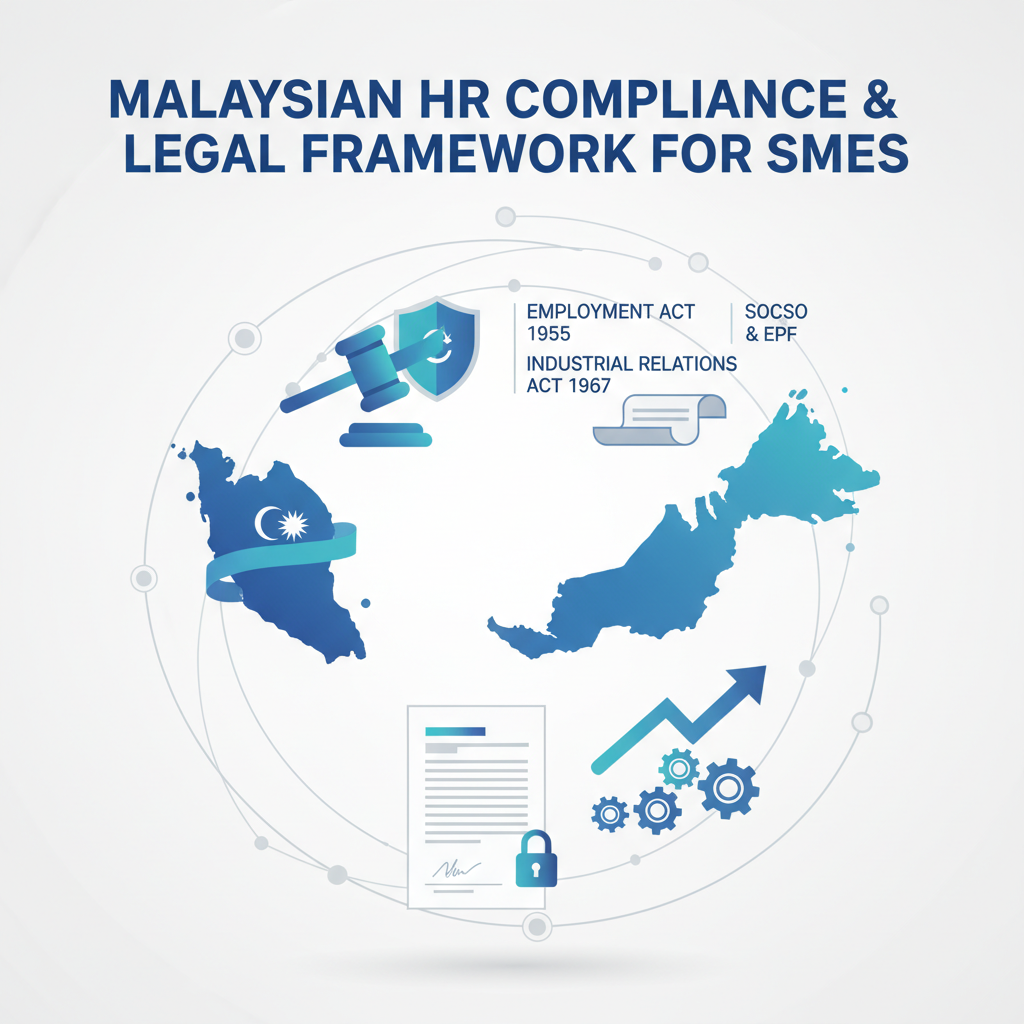
1. Employment Act 1955 and recent amendments (e.g., 2022 Act)
The bedrock of Malaysian employment law is the Employment Act 1955 (Act 265). Historically, it primarily covered employees earning below a certain threshold or those engaged in manual labour. However, significant amendments, notably the Employment (Amendment) Act 2022, have drastically expanded its scope to cover *all* employees, irrespective of their wages, with certain exceptions for specific provisions. For finance SMEs, this means a universal application of core employee rights and employer obligations. Key areas impacted include reduced working hours (from 48 to 45 hours per week), extended maternity leave (to 98 days), and paternity leave (7 days), along with provisions for statutory holidays, annual and sick leave. The amendments also introduced flexible working arrangements, prohibition of forced labour, and enhanced protections against discrimination and sexual harassment, alongside stricter regulations on termination of employment. CEOs must ensure their HR policies and employment contracts are fully updated to reflect these changes, as failure to comply can lead to legal challenges, penalties, and a negative impact on employee morale and retention.
2. EPF, SOCSO, EIS contributions and employer obligations
Beyond the Employment Act, finance SMEs in Malaysia must meticulously manage statutory contributions to safeguard employee welfare. These include the Employees Provident Fund (EPF), the Social Security Organisation (SOCSO), and the Employment Insurance System (EIS). EPF is a compulsory retirement savings scheme, requiring both employer and employee contributions based on monthly wages. SOCSO provides social protection benefits for employees in case of accidents or occupational diseases, governed by the Employees’ Social Security Act 1969. The Employment Insurance System (EIS), introduced in 2018 under the Employment Insurance System Act 2017, offers financial assistance and re-employment services to employees who lose their jobs. Employers are legally obligated to register employees, calculate and deduct correct contributions monthly, and remit them by specific deadlines. Oversight can result in fines, interest on arrears, and even criminal prosecution. Establishing clear internal controls and processes for these contributions is paramount for minimizing compliance risk and ensuring employees receive their rightful benefits, fundamental for responsible HR structures for finance SMEs.
3. Data privacy (PDPA) and confidentiality in finance HR operations
Given the sensitive nature of financial operations, data privacy and confidentiality are particularly critical within finance SMEs. The Personal Data Protection Act 2010 (PDPA) governs the collection, processing, and storage of personal data in commercial transactions. For HR, this means handling employee personal information—such as NRIC numbers, bank details, medical records, and performance appraisals—with extreme care. CEOs must implement robust data protection policies, secure data storage solutions, and provide comprehensive training to HR staff on PDPA compliance. This includes obtaining explicit consent for data collection, ensuring data accuracy, limiting data retention periods, and safeguarding against unauthorized access or breaches. The financial sector often has additional industry-specific regulations regarding data handling, making strict adherence even more vital. Beyond legal compliance, maintaining strict confidentiality builds trust with employees and protects proprietary company information, both crucial for the integrity and stability of a finance firm. Negligence can lead to significant fines, lawsuits, and a severe breach of public trust, requiring vigilant oversight by the CEO.
In conclusion, for CEOs steering finance SMEs in Malaysia, a proactive and thorough approach to HR compliance is indispensable. From understanding the nuanced changes in the Employment Act to meticulously managing statutory contributions and upholding stringent data privacy standards, each element plays a vital role in ensuring legal adherence, mitigating financial and reputational risks, and fostering a productive, secure work environment. Embedding robust HR structures for SMEs is not just about ticking boxes; it’s about building resilience and sustainability for your financial enterprise in Malaysia.
The Finance CEO’s Strategic Role in HR Development
In the dynamic and highly regulated finance sector, the role of a CEO extends far beyond traditional financial oversight. A truly effective finance CEO understands that human capital is the ultimate differentiator and a critical driver of sustainable growth. By actively championing and integrating human resources (HR) strategy with overarching business objectives, the CEO can transform an organisation’s capabilities, foster innovation, and secure a competitive edge. This proactive engagement is particularly crucial for financial institutions in markets like Malaysia, where evolving regulatory landscapes and a competitive talent pool demand agile and strategic HR structures for SMEs. The CEO in finance field in Malaysia must therefore view HR as a strategic partner, not merely an administrative function, to effectively drive organisational success and robust talent management.
1. Aligning HR strategy with financial goals and growth projections
The astute finance CEO recognises that every HR initiative carries financial implications and, conversely, can significantly impact financial performance. Aligning HR strategy with financial goals means ensuring that talent development programs, compensation structures, benefits packages, and workforce planning are all designed to support the organisation’s bottom line and growth projections. For instance, investing in upskilling employees in digital finance, AI, or cybersecurity directly contributes to future revenue streams and reduces reliance on expensive external consultants. Performance management systems must be tied to key performance indicators (KPIs) that reflect both individual contribution and organisational financial targets, fostering a culture of accountability and results.
A CEO in the finance sector must work closely with the Head of HR to develop robust HR structures for SMEs the CEO in finance field in malaysia that are agile enough to adapt to market shifts and regulatory changes while remaining cost-effective. This involves strategic workforce planning, optimising staffing levels to manage operational costs, and implementing attractive incentive schemes that motivate high performance without disproportionately impacting profitability. By clearly communicating how HR initiatives contribute to financial health – whether through enhanced productivity, reduced turnover costs, or improved client satisfaction leading to revenue growth – the CEO solidifies HR’s position as a value-adding strategic partner, indispensable to achieving long-term financial stability and expansion.
2. Cultivating a strong company culture in a regulated environment
In the finance industry, where trust, integrity, and compliance are paramount, cultivating a robust and ethical company culture is a strategic imperative championed by the CEO. A strong culture acts as an internal compass, guiding employee behaviour and decision-making, especially within a heavily regulated landscape. The CEO sets the tone from the top, embodying the core values and communicating them consistently throughout the organisation. This involves not only formal policies and training programs on ethics, anti-money laundering (AML), and data privacy, but also fostering an environment where employees feel empowered to speak up about concerns without fear of retaliation.
HR plays a pivotal role in translating the CEO’s vision into actionable cultural programs, from onboarding processes that instill core values to leadership development initiatives that embed ethical decision-making. In a regulated environment, a proactive culture of compliance can mitigate risks, prevent costly fines, and safeguard the institution’s reputation. For instance, fostering transparency and open communication can help identify potential regulatory breaches early, allowing for timely corrective action. The CEO’s consistent emphasis on integrity and accountability, reinforced through HR practices, ensures that the organisation not only meets its regulatory obligations but also builds enduring trust with clients and stakeholders. As Deloitte highlights in their insights on the future of work in financial services, culture and purpose are increasingly vital in attracting and retaining talent.
3. Leveraging HR for effective talent acquisition and retention in finance
The finance sector is in a perpetual war for talent, competing for skilled professionals in areas ranging from traditional banking to fintech, data science, and ESG investing. The CEO’s active involvement in talent acquisition and retention strategies, supported by a strong HR function, is critical. This means going beyond competitive compensation to build an employee value proposition (EVP) that resonates with high-potential candidates. A CEO can champion initiatives such as flexible work arrangements, comprehensive learning and development pathways, mentorship programs, and a clear vision for career progression.
For financial institutions, particularly SMEs in Malaysia, attracting top-tier talent requires a compelling narrative about impact and growth opportunities. The CEO can directly participate in key hires, act as a brand ambassador to attract talent, and ensure that the organisation’s commitment to diversity, equity, and inclusion (DEI) is not just a policy but a lived experience. Retention strategies are equally vital, focusing on employee engagement, recognition, and continuous professional development. Regular check-ins, performance feedback, and opportunities for internal mobility, facilitated by HR, help in retaining valuable employees who might otherwise be lured away by competitors. By empowering HR to implement innovative recruitment technologies and data-driven retention analytics, the CEO ensures that the organisation is not only attracting the best but also nurturing and keeping them engaged for long-term success in a competitive landscape.
Implementing & Scaling HR Structures for SME Growth
For a CEO leading a finance SME in Malaysia, establishing robust and scalable HR structures is a strategic imperative. As your financial institution expands, managing human capital complexities demands proactive implementation and thoughtful adaptation of your HR framework. This ensures efficiency, fosters a positive work environment, and future-proofs your business against dynamic market shifts.
The journey from startup to enterprise necessitates a well-defined approach to HR structures for SMEs, especially for the CEO in the finance field in Malaysia. This section provides actionable insights for implementation, leveraging technology, and future-proofing your HR strategies to support continuous business expansion.
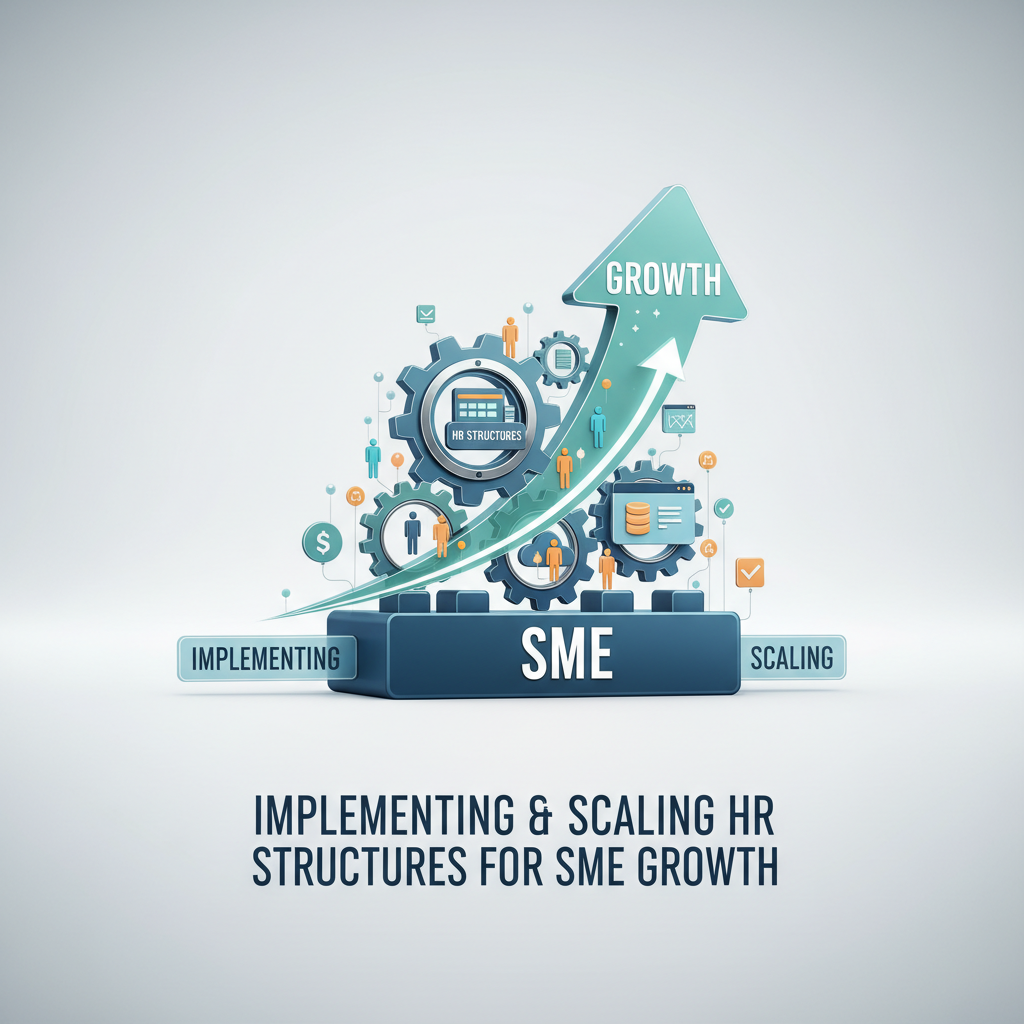
1. Step-by-step guide to HR structure implementation for new SMEs
Laying a solid foundation is crucial. The initial HR structure should be lean yet comprehensive, supporting immediate needs while allowing for future expansion. Here’s a pragmatic step-by-step guide:
- Define Roles and Responsibilities: Clearly outline job descriptions for every position, differentiating roles like financial analysts, accountants, and compliance officers. This prevents overlap and enhances accountability.
- Establish Core HR Policies: Develop foundational policies for employment contracts, working hours, leave, code of conduct, and disciplinary procedures. These must align with Malaysian labor laws, such as the Employment Act 1955.
- Implement Onboarding Processes: A structured onboarding program is vital for integrating new hires. This includes orientation, systems access, and team introductions, boosting productivity and retention.
- Set Up Compensation & Benefits: Research competitive salary benchmarks within the Malaysian finance sector. Create a fair and transparent structure, including basic salary, performance bonuses, and mandatory benefits like EPF and SOCSO.
- Develop Performance Management Basics: Start with simple goal setting and regular feedback loops. This will evolve into more formal appraisal systems as your SME grows, but initially focus on clear expectations.
2. Technology and HRIS solutions for efficient SME HR management
Manual HR processes quickly become cumbersome. Investing in Human Resources Information Systems (HRIS) is a game-changer for efficiency and accuracy, especially for a CEO in the finance sector where data integrity is paramount.
- Centralized Data & Automation: An HRIS centralizes employee data (personal details, contracts, payroll) and automates processes like payroll, tax deductions, and leave management, ensuring compliance with local regulations.
- Streamlined Operations: Employees can apply for leave and managers can approve through the system, simplifying tracking. Recruitment modules (ATS) handle digital offer letters and electronic onboarding, streamlining hiring.
- Analytics and Reporting: Gain insights into workforce trends, turnover rates, and payroll costs. This data empowers strategic decision-making for staffing and HR policy. When selecting an HRIS, consider scalability, ease of use, security, and integration with existing finance software. Choosing the right HRIS can significantly enhance operational efficiency and strategic HR management.
3. Future-proofing HR: adapting to industry changes and business expansion
The financial landscape in Malaysia constantly evolves. For your HR structures to remain effective, they must be agile and forward-thinking.
- Scalability of Structures: As your SME expands, HR must evolve from a generalist approach to more specialization. Plan for hiring dedicated HR specialists for recruitment, compensation, or talent development.
- Talent Development & Retention: In a competitive finance market, attracting and retaining top talent is critical. Implement continuous learning programs, mentorship, and clear career paths. Invest in skills development to keep your workforce engaged with emerging financial technologies.
- Agile Performance Management: Move beyond basic appraisals to a comprehensive system with regular check-ins, 360-degree feedback, and alignment with strategic business goals. This fosters a high-performance culture.
- Proactive Policy Adaptation: Regularly review all HR policies to ensure relevance, compliance with the latest Malaysian labor laws, and alignment with your company’s growth and cultural values. Anticipate changes in regulations and market trends to adapt proactively.
By diligently implementing these HR structures for SMEs, the CEO in the finance field in Malaysia can build a resilient, efficient, and adaptable workforce, poised to navigate growth and capitalize on future opportunities in the dynamic financial sector.
Partner with Shelby Global
You are looking for reliable HR Sevice Suppliers? Contact Shelby Global Now! To connect with verified talents and upgrade your orginization.
—————————————
References
– Department of Statistics Malaysia – SMEs Performance: https://www.dosm.gov.my/v1/index.php?r=column/cthemeByCat&cat=154&public_data=1
– outsourced HR solutions: https://www.shrm.org/resources-and-tools/hr-topics/human-resource-outsourcing/pages/default.aspx
– Employment Act 1955 (Act 265): https://www.mohr.gov.my/index.php/en/component/content/article/18-akta-undang-undang/104-employment-act-1955-act-265?Itemid=437
– Deloitte insights on the future of work in financial services: https://www2.deloitte.com/us/en/pages/financial-services/articles/future-of-work-in-financial-services.html
– Choosing an HRIS: What to Know: https://www.shrm.org/resources-and-tools/hr-topics/technology/pages/choosing-an-hris-what-to-know.aspx