
Why HR Tools are Crucial for Malaysia’s Travel Sector
Malaysia’s travel sector, a cornerstone of its economy, is renowned for its vibrant culture, stunning landscapes, and diverse attractions. However, beneath this dynamic exterior lies an industry grappling with unique operational complexities. From managing a multicultural workforce to adapting to fluctuating tourist demands and stringent regulatory landscapes, the challenges faced by human resources departments in this sector are profound. In this high-stakes environment, where employee satisfaction directly impacts customer experience, the adoption of sophisticated HR tools applications for the travel field in Malaysia is not merely an advantage but a fundamental necessity for sustainable growth and competitiveness.
The post-pandemic recovery has injected new vitality but also new demands, requiring businesses to be more agile, efficient, and employee-centric than ever before. Traditional HR practices often fall short in addressing the fast-paced nature and intricate needs of hotels, airlines, tour operators, and hospitality services. Modern HR tools provide the technological backbone for streamlining operations, enhancing employee engagement, and ensuring compliance, thereby empowering the sector to not only navigate its inherent complexities but also to capitalize on emerging opportunities.
1. Addressing high staff turnover and retention challenges
The travel and hospitality industry is notoriously plagued by high staff turnover, a global issue amplified in Malaysia by factors like demanding working hours, seasonal employment, and often perceived limited career progression opportunities. This constant churn incurs significant costs related to recruitment, training, and lost productivity, directly impacting service quality and customer satisfaction. Advanced HR tools offer powerful solutions to combat this challenge.
Integrated platforms can facilitate more efficient talent acquisition by automating candidate screening and onboarding processes, ensuring a smoother start for new hires. Furthermore, these tools enable robust performance management systems, allowing for continuous feedback, goal setting, and recognition programs that boost morale and engagement. Learning and development modules within HR platforms can offer accessible training and upskilling opportunities, demonstrating clear pathways for career growth and fostering a sense of loyalty. By leveraging data analytics provided by these tools, HR departments can identify patterns in turnover, pinpointing specific departments or roles at risk, and implement targeted retention strategies, turning insights into actionable improvements.
2. Managing diverse workforce demographics and multilingual needs
Malaysia’s multicultural fabric is beautifully reflected in its travel sector workforce, comprising individuals from various ethnic backgrounds, nationalities, and language proficiencies. While this diversity is a strength, it also presents unique HR challenges, particularly concerning communication, cultural understanding, and ensuring equitable treatment. Bridging these gaps effectively is crucial for fostering an inclusive work environment and cohesive teams.
Modern HR tools are instrumental in managing this diversity. Centralized communication platforms can support multilingual content delivery, ensuring that important announcements, policies, and training materials are accessible to all employees, regardless of their primary language. Employee self-service portals empower individuals to update their personal information, access payslips, and manage leave requests in their preferred language, reducing administrative burden and improving satisfaction. Furthermore, HR analytics can help monitor diversity metrics, ensuring fair representation and opportunities across different demographic groups, thereby reinforcing a culture of inclusion and respect that is vital for a service-oriented industry.
3. Ensuring compliance with local labor laws and industry regulations
Operating within Malaysia’s legal framework requires meticulous adherence to local labor laws, including the Employment Act 1955, minimum wage regulations, statutory contributions like EPF and SOCSO, and specific industry-related health and safety protocols. Non-compliance can lead to hefty fines, legal disputes, reputational damage, and operational disruptions – consequences that the travel sector, highly dependent on public trust, can ill afford.
HR tools, particularly Human Resources Information Systems (HRIS) and integrated payroll systems, are indispensable for maintaining compliance. These systems automate the calculation of wages, overtime, and statutory contributions, minimizing human error. They provide centralized record-keeping for employee contracts, attendance, leave, and disciplinary actions, ensuring that all documentation is accurate, up-to-date, and easily retrievable for audits. Furthermore, many HR platforms include features that automatically update with changes in labor laws, providing alerts and guidance to ensure that policies and practices remain compliant. This proactive approach significantly reduces legal risks, allowing travel businesses to focus on delivering exceptional experiences rather than grappling with regulatory complexities.
In conclusion, the dynamic and intricate nature of Malaysia’s travel sector mandates a strategic shift towards robust HR solutions. By effectively addressing high staff turnover, embracing workforce diversity, and ensuring unwavering compliance, HR tools empower businesses to cultivate a productive, engaged, and legally sound workforce. Investing in these applications is not just about streamlining HR functions; it’s about building a resilient foundation for sustained success in one of Malaysia’s most vital industries.
Key HR Tool Categories for Travel Businesses in Malaysia
The dynamic and customer-centric nature of the travel industry in Malaysia demands robust and specialized HR solutions. From managing diverse teams across various locations to navigating peak seasons and ensuring compliance with local labor laws, Malaysian travel companies face unique challenges. Leveraging the right HR tools – applications for Travels field in Malaysia is not just about efficiency; it’s about enhancing employee experience, improving service delivery, and ultimately driving business growth. This section delves into essential HR software categories particularly relevant for travel businesses, helping them streamline operations and empower their workforce.
1. Payroll and Time & Attendance systems for flexible work schedules
For travel businesses, managing payroll and employee attendance is complex. Staff often work irregular hours, shifts, or across multiple locations – from airport counters to tour sites. Manual methods are error-prone and time-consuming, especially when factoring in overtime, travel allowances, commissions, and compliance with Malaysia’s Employment Act 1955. Modern payroll and time & attendance systems address these intricacies.
These sophisticated HR applications for travel companies automate the entire process, accurately calculating wages, deductions, and statutory contributions (EPF, SOCSO, EIS). Key features include flexible shift scheduling, mobile clock-in/out with geo-fencing for remote staff, and automated leave management. Such systems ensure transparency, reduce administrative burden, and minimise compliance risks, allowing HR teams to focus on strategic initiatives. The ability to handle diverse work arrangements seamlessly is paramount for maintaining employee morale and operational efficiency in a sector defined by flexibility.
2. Recruitment and Applicant Tracking Systems (ATS) for talent acquisition
Attracting and retaining the right talent is crucial in Malaysia’s competitive travel industry, where excellent customer service, multilingual skills, and destination knowledge are highly prized. Recruitment for roles from travel consultants to tour operators requires a streamlined approach. Applicant Tracking Systems (ATS) are indispensable HR tools for travel businesses in this regard.
An ATS centralizes the entire recruitment pipeline, from posting job advertisements across various platforms to managing applications, screening resumes, scheduling interviews, and extending offers. These systems often incorporate AI-driven matching to identify candidates with specific skills or experience relevant to the travel sector, like GDS proficiency or language fluency. By automating repetitive tasks, ATS platforms significantly reduce time-to-hire, enhance candidate experience, and ensure a fair hiring process. This allows Malaysian travel companies to build a strong talent pool, secure top-tier professionals, and adapt quickly to staffing needs during peak travel seasons or business expansion.
3. Performance Management and Learning & Development platforms for upskilling
The travel landscape constantly evolves, influenced by new technologies, destinations, and customer preferences. To stay competitive, Malaysian travel companies must foster a culture of continuous learning and performance improvement. Performance Management (PM) and Learning & Development (L&D) platforms are vital HR tools – applications for Travels field in Malaysia that support this evolution.
Performance management systems facilitate regular goal setting, continuous feedback, 360-degree reviews, and objective performance appraisals. For a travel business, this means setting clear targets for sales, customer satisfaction, and operational efficiency, while providing constructive feedback. Paired with L&D platforms, these tools empower employees to enhance skills. L&D platforms offer a centralized hub for online courses, training modules, and certifications relevant to the travel industry – from advanced booking systems and destination knowledge to sales techniques and crisis management. Investing in employee upskilling initiatives, as highlighted by global HR trends, is critical for fostering engagement, reducing turnover, and ensuring staff possess current knowledge to deliver exceptional travel experiences. These integrated platforms ensure performance is consistently monitored, recognized, and improved, driving individual growth and business success.
Specific Applications of HR Tools in Travel Operations
The dynamic and customer-centric nature of the travel industry, particularly in vibrant markets like Malaysia, demands highly efficient operational processes and an exceptional employee experience. HR tools are no longer mere administrative aids; they are strategic assets that directly impact everything from flight crew scheduling to guest service quality. By optimizing human resource functions, these tools enhance operational efficiency, elevate the employee journey, and ultimately improve customer satisfaction within the unique context of travel operations.
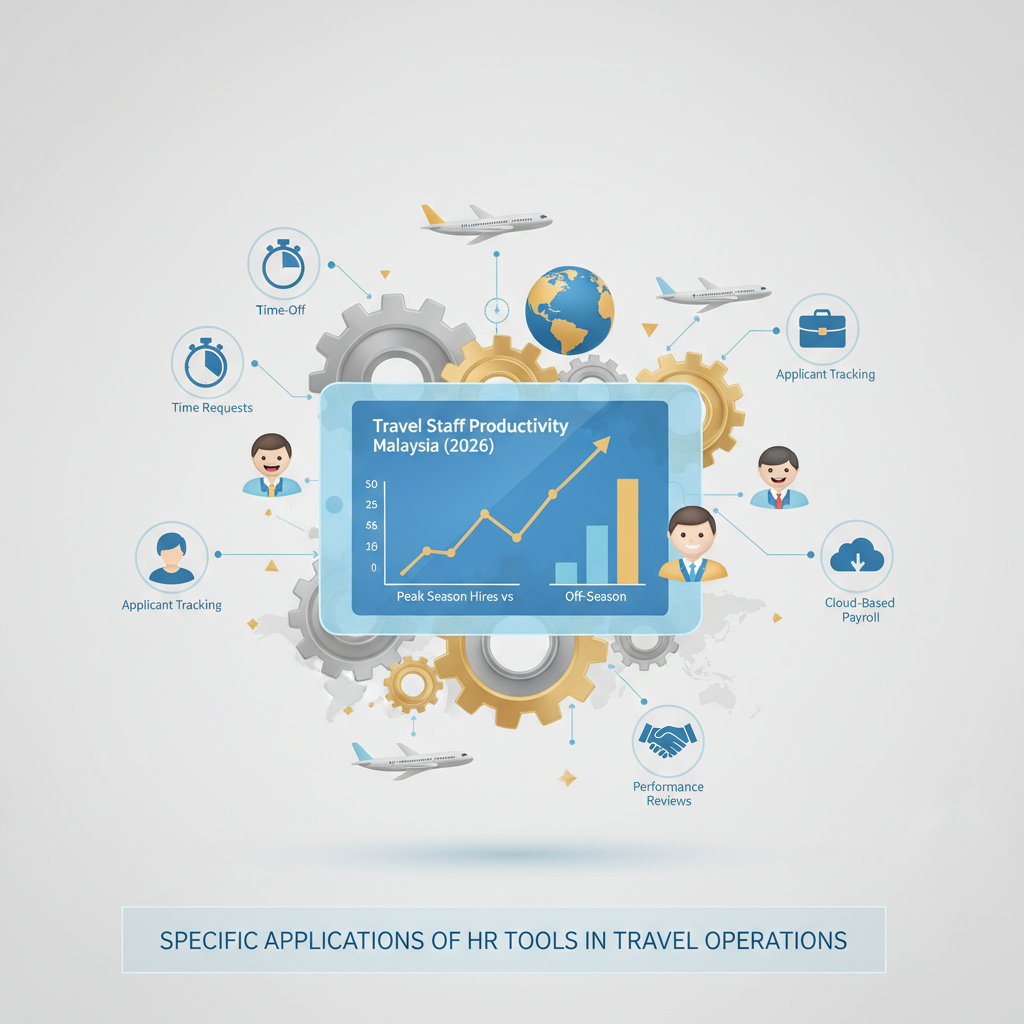
Understanding the critical role of HR tools – applications for Travels field in Malaysia is paramount for businesses looking to gain a competitive edge. From managing a distributed workforce of tour guides and agents to ensuring seamless hotel operations, integrated HR solutions offer transformative benefits.
1. Streamlining leave and shift management for travel agents and guides
For travel agencies and tour operators, efficient management of leave and shifts for agents and guides is crucial. These roles often involve irregular hours, peak season demands, and varying client needs. Traditional manual systems are prone to errors, lead to scheduling conflicts, and consume valuable time that could be spent on customer-centric activities. HR tools equipped with advanced scheduling features allow managers to create optimal rosters, track employee availability, and process leave requests with ease. This automation minimizes understaffing or overstaffing, ensures compliance with labor laws, and provides agents and guides with better visibility into their schedules, reducing stress and improving work-life balance. For instance, in a Malaysian context, managing multiple language-speaking guides across different tour routes becomes significantly simpler, ensuring the right talent is available at the right time for diverse tourist groups.
2. Enhancing talent acquisition and onboarding for hospitality staff
The hospitality sector, a cornerstone of the travel industry, faces persistent challenges in attracting and retaining skilled staff, from front desk personnel to culinary experts. HR tools revolutionize talent acquisition by offering Applicant Tracking Systems (ATS) that streamline the hiring process from initial application to final offer. These systems can filter candidates based on specific skills, experience, and language proficiency, essential for the multicultural demands of Malaysian hospitality. Beyond hiring, comprehensive onboarding modules within HR platforms ensure new hires are quickly integrated into the company culture and equipped with necessary training. This rapid and effective onboarding reduces time-to-productivity, improves employee retention rates, and ensures that hospitality staff are ready to deliver exceptional service from day one. A well-onboarded employee is more engaged and better prepared to provide memorable experiences for guests, directly impacting the hotel’s reputation and customer loyalty.
3. Facilitating remote work and cross-location collaboration for distributed teams
The global nature of the travel industry often necessitates distributed teams, including remote sales agents, destination specialists, and support staff working across different cities or even countries. HR tools are instrumental in enabling seamless remote work and fostering collaboration. Cloud-based HR platforms provide a centralized hub for communication, document sharing, performance management, and HR inquiries, regardless of geographical location. This is particularly vital for travel companies in Malaysia with offices in Kuala Lumpur, Penang, and Sabah, needing to coordinate effectively. Features like integrated video conferencing, shared project spaces, and digital performance reviews help maintain team cohesion and productivity. Furthermore, HR tools ensure that remote employees feel connected and supported, offering access to training materials, company policies, and peer interaction portals. This capability is not just about convenience; it’s about maintaining operational continuity and fostering a unified team culture, which is critical for delivering consistent service across all touchpoints in the travel journey.
Choosing the Right HR Tools for Your Malaysian Travel Company
In Malaysia’s competitive travel industry, effective HR management is paramount. Your people are your most valuable asset. The right HR tools – applications for Travels field in malaysia can streamline operations, enhance employee experience, and ensure compliance. Selecting appropriate HR software demands careful consideration, especially with Malaysia’s unique legal landscape. This guide outlines essential factors to ensure your HR technology investment yields maximum returns.
1.
Assessing scalability, integration capabilities, and user-friendliness
First, assess scalability. Travel companies face staffing fluctuations, from seasonal hires to expansion. Your HR system must seamlessly accommodate these changes without compromising performance or incurring excessive costs, ensuring your HR infrastructure grows with your company.
Integration capabilities are equally vital. Travel companies use specialized systems like booking engines, CRM, payroll, and time-tracking. A robust HR solution must offer seamless integration to avoid data silos and manual entry. For example, integrating with payroll automates salary processing. Look for APIs or pre-built connectors for smooth data flow, creating a unified operational ecosystem.
Finally, user-friendliness is key. An intuitive interface is crucial for HR professionals managing onboarding and reviews, and for employees using self-service portals for payslips and leave. An easy-to-use system reduces administrative burden and increases adoption. Without it, the system’s potential benefits will be undermined.
2.
Considering local support, data security, and compliance with Malaysian regulations
For Malaysian travel companies, local context matters. Prioritize vendors offering strong local support who understand Malaysian business practices and provide timely assistance. This is vital for troubleshooting, training, and ongoing optimization, ensuring help is readily available in your time zone.
Data security is non-negotiable. HR systems handle sensitive employee data. Your chosen HR tool must employ robust security measures like encryption, multi-factor authentication, and regular audits. Crucially, ensure compliance with Malaysia’s Personal Data Protection Act (PDPA) 2010. Breaches lead to severe penalties. For official PDPA information, refer to the Attorney General’s Chambers of Malaysia.
Furthermore, compliance with Malaysian labor laws is paramount. The HR system must accurately calculate EPF, SOCSO, EIS, and income tax (LHDN) contributions. It should also facilitate adherence to the Employment Act 1955 regarding working hours, leave, and termination. Automating these compliance aspects protects your company from legal pitfalls and ensures operational integrity.
3.
Budgeting and calculating ROI for HR technology investments
HR technology represents a significant investment, demanding careful budgeting and clear ROI understanding. Factor in initial licensing/subscription fees, plus costs for implementation, customization, training, maintenance, and support. Analyze vendor pricing models (e.g., per-user, module-based) to fit your company’s size and growth, and be aware of hidden costs.
Calculating ROI involves quantifying both tangible and intangible benefits. Tangible benefits include reduced administrative overhead (e.g., less time on payroll, leave management), decreased compliance fines, and lower employee turnover. Intangible benefits, though harder to measure, are valuable: improved employee morale, enhanced data accuracy, better decision-making, and a stronger employer brand.
Compare total investment with quantifiable savings and benefits over time. A well-chosen HR system improves efficiency, reduces errors, and fosters an engaged workforce, directly impacting your bottom line. Prioritize solutions with a strong value proposition and clear ROI for long-term success in the Malaysian travel sector.
Choosing the right HR tools for your Malaysian travel company is a strategic decision impacting operational efficiency, employee satisfaction, and regulatory compliance. By diligently assessing scalability, integration, user-friendliness, local support, data security, compliance, and thoroughly budgeting for ROI, you can make an informed choice that propels your company towards sustained success in Malaysia’s dynamic travel landscape.
The Future of HR Tech in Malaysia’s Travel Industry by 2026
Malaysia’s vibrant travel industry, a cornerstone of its economy, is on the cusp of a significant transformation driven by advancements in HR technology. As the sector navigates evolving customer demands and a competitive global landscape, the adoption of sophisticated HR tools is no longer a luxury but a strategic imperative. By 2026, we anticipate a dynamic shift, where cutting-edge HR applications will redefine how Malaysian travel businesses attract, manage, and retain their workforce, ensuring operational efficiency and an unparalleled employee experience. This forward-looking perspective explores the emerging trends and innovations poised to reshape HR in the Malaysian travel sector.
1. The rise of AI and automation in HR processes for efficiency
Artificial Intelligence (AI) and automation are set to revolutionize HR processes, significantly boosting efficiency across the Malaysian travel industry. By 2026, AI-powered recruitment platforms will streamline talent acquisition, from intelligent resume screening to candidate matching, drastically reducing time-to-hire for roles ranging from hotel staff to tour guides. Chatbots will handle initial applicant queries, improving candidate experience and freeing up HR professionals for more strategic tasks. Furthermore, automation will extend to payroll processing, leave management, and performance reviews, minimizing manual errors and ensuring compliance. Predictive analytics, a subset of AI, will empower travel businesses with data-driven insights for workforce planning, helping forecast staffing needs during peak seasons and optimize resource allocation. This focus on intelligent automation will allow HR to become a more strategic partner, moving beyond administrative duties to drive business growth in Malaysia’s travel sector.
2. Increased focus on employee well-being and engagement platforms
Recognizing that a healthy and engaged workforce is critical for success, especially in a service-oriented industry like travel, Malaysian businesses will increasingly invest in comprehensive employee well-being and engagement platforms. By 2026, these platforms will integrate various features, including mental health support resources, flexible work arrangement tools, and continuous feedback mechanisms. Travel sector employees, often working varied hours and facing unique stressors, will benefit immensely from easily accessible resources that promote work-life balance and psychological safety. Gamified training modules and peer recognition systems embedded within these platforms will foster a culture of appreciation and continuous development, crucial for retaining skilled personnel. This strategic shift towards prioritizing employee holistic well-being will lead to higher job satisfaction, reduced turnover, and ultimately, enhanced service quality for tourists visiting Malaysia. These sophisticated HR tools are essential for cultivating a resilient and loyal workforce.
3. Prevalence of cloud-based solutions and mobile HR accessibility
The ubiquity of cloud computing will be a defining characteristic of HR technology in Malaysia’s travel industry by 2026. Cloud-based HR Information Systems (HRIS) offer unparalleled scalability, data security, and accessibility, making them ideal for businesses with multiple locations or a largely remote workforce. This shift enables real-time data access, facilitates seamless integration with other business systems, and ensures compliance with evolving data protection regulations. Coupled with cloud solutions, mobile HR accessibility will become non-negotiable. Employees, particularly those on the front lines of the travel industry, will manage their schedules, apply for leave, access training modules, and communicate with HR directly from their smartphones. Managers will approve requests and monitor team performance on the go. This mobile-first approach enhances convenience, boosts productivity, and ensures that critical HR functions are available anytime, anywhere. Businesses in Malaysia seeking advanced HR tools – applications for Travels field in malaysia will find cloud solutions particularly beneficial for enhancing operational fluidity and employee empowerment across the diverse and dynamic travel sector.
In conclusion, the next few years will usher in a transformative era for HR in Malaysia’s travel industry. The strategic adoption of AI and automation for efficiency, a heightened focus on employee well-being and engagement, and the pervasive use of cloud-based and mobile HR solutions will collectively redefine how human capital is managed. These advanced HR tools are not merely technological upgrades; they represent a fundamental shift towards a more agile, employee-centric, and data-driven approach, positioning Malaysian travel businesses for sustainable growth and a leading edge in the global tourism market by 2026.
Partner with Shelby Global
You are looking for reliable HR Sevice Suppliers? Contact Shelby Global Now! To connect with verified talents and upgrade your orginization.
—————————————
References
– Employment Act 1955 summary by ILO: https://www.ilo.org/dyn/natlex/natlex4.detail?p_lang=en&p_isn=68735&p_country=MYS&p_classification=01.03
– Deloitte’s Human Capital Trends: https://www2.deloitte.com/us/en/insights/topics/human-capital-trends/2023/global-human-capital-trends-trust.html
– Why a Strong Onboarding Process Is Critical for Employee Retention | SHRM: https://www.shrm.org/resources-and-tools/hr-topics/talent-acquisition/pages/why-a-strong-onboarding-process-is-critical-for-employee-retention.aspx
– Attorney General’s Chambers of Malaysia – Personal Data Protection Act 2010: https://www.agc.gov.my/agcportal/uploads/files/Publications/LOM/EN/Act%20709%20-%20Personal%20Data%20Protection%20Act%202010.pdf
– Deloitte Global Human Capital Trends: https://www2.deloitte.com/us/en/insights/topics/talent/global-human-capital-trends.html