
Understanding the Unique HR Landscape of Vietnam’s Entertainment Industry
Vietnam’s entertainment industry is experiencing explosive growth, fueled by a young, tech-savvy population and increasing disposable income. From vibrant music scenes and burgeoning film productions to competitive e-sports and digital content creation, this sector presents a dynamic yet complex environment for human resources professionals. Navigating this fast-paced world requires a nuanced understanding of its specific challenges and opportunities, particularly when it comes to leveraging effective HR tools and applications for the entertainment field in Vietnam. HR professionals must adapt quickly, employing innovative strategies to manage talent, ensure compliance, and foster a creative, productive workforce.
1. Fluid workforce and project-based hiring complexities
Unlike traditional corporate structures, the entertainment industry often operates on a project-by-project basis, necessitating a highly fluid workforce. Film crews, music producers, event organizers, and content creators are frequently assembled for specific productions, disbanding once the project concludes. This inherently project-based hiring model introduces significant HR complexities. Companies need robust systems for rapid recruitment, onboarding, and offboarding, often managing a mix of full-time staff, freelancers, and short-term contractors simultaneously. Effective HR tools – applications for Entertainment field in Vietnam are crucial here, enabling efficient talent pooling, contractor management, and streamlined payroll for diverse employment types. The challenge lies in maintaining a stable talent pipeline while ensuring compliance with labor laws for varying contract lengths and worker classifications. HR must also develop agile compensation and benefits packages that attract and retain top talent, even for temporary roles, understanding that reputation and network are paramount in this interconnected industry.
2. Talent retention challenges for artists and creative professionals
The entertainment sector thrives on creativity and unique talent, making talent retention an ongoing battle for HR. Artists, performers, writers, and technical specialists are often driven by passion, recognition, and the opportunity to work on exciting projects, rather than just traditional remuneration. The demand for skilled creative professionals frequently outstrips supply, leading to high mobility and intense competition among production houses and studios. HR strategies must extend beyond competitive salaries to include career development paths, opportunities for creative expression, intellectual property rights management, and a supportive work environment. Building a strong employer brand that resonates with creative individuals is vital. Implementing performance management systems tailored to creative outputs, offering mentorship programs, and fostering a culture of innovation can significantly improve retention rates. Furthermore, HR professionals need to be adept at managing the unique expectations and career trajectories of these highly individualistic professionals, ensuring their well-being and continued engagement within the dynamic entertainment landscape.
3. Navigating local labor laws and cultural nuances
Operating within Vietnam’s entertainment industry requires a meticulous understanding of the country’s labor laws and deep appreciation for its cultural nuances. Vietnam’s legal framework for employment can be intricate, encompassing regulations on contract types, working hours, social insurance, and termination procedures, all of which apply differently to full-time employees versus project-based contractors or freelancers. Staying compliant is paramount to avoid legal disputes and reputational damage. HR professionals must be well-versed in these regulations and continuously update their knowledge as laws evolve. Moreover, cultural sensitivity plays a significant role in managing a Vietnamese workforce. Understanding local communication styles, hierarchical structures, holiday observances (such as Tet), and work-life balance expectations is crucial for effective talent management and fostering a harmonious workplace. For instance, the emphasis on collective harmony and respect for elders can influence team dynamics and decision-making processes. Leveraging HR tools – applications for Entertainment field in Vietnam that are customizable to local regulations and support multi-language capabilities can greatly assist in streamlining HR operations while respecting cultural specificities. For comprehensive guidance on Vietnam’s rapidly evolving labor market, consulting authoritative legal resources is essential for all HR practitioners.
In conclusion, the HR landscape of Vietnam’s entertainment industry is characterized by its vibrancy, rapid growth, and unique operational demands. From managing a highly flexible workforce and retaining top creative talent to meticulously navigating local labor laws and cultural intricacies, HR professionals face a multifaceted challenge. However, with the right strategies, a deep understanding of the local context, and the effective deployment of specialized HR tools – applications for Entertainment field in Vietnam, HR can be a powerful strategic partner, driving success and sustainability within this exciting and dynamic sector.
Essential HR Tools for Talent Acquisition and Onboarding
The dynamic and project-centric nature of the entertainment industry in Vietnam demands highly efficient and adaptable human resource management. From blockbuster film productions to engaging game development, success hinges on swiftly identifying, recruiting, and integrating top-tier talent. In this rapidly evolving landscape, leveraging the right HR tools – applications for Entertainment field in vietnam is not just an advantage; it’s a necessity. These specialized software solutions streamline the entire talent lifecycle, from initial outreach to full integration, ensuring that creative projects and companies in Vietnam can secure the best human capital efficiently and compliantly. This section delves into critical HR technology that empowers entertainment firms to master talent acquisition and onboarding, enhancing their operational agility and strategic growth.
1. Applicant Tracking Systems (ATS) for Specialized Skills
In an industry where niche talents are paramount, traditional recruitment methods often fall short. Entertainment projects demand a diverse array of highly specialized skills, from VFX artists and sound engineers to game designers and scriptwriters. Robust Applicant Tracking Systems (ATS) are therefore indispensable. For the Vietnamese entertainment sector, an effective ATS must go beyond basic keyword matching, offering advanced capabilities to parse and analyze diverse application formats, including video portfolios and creative submissions. Such systems can leverage AI to identify specific skill sets, assess cultural fit for collaborative projects, and even predict success potential.
An ATS tailored for creative industries in Vietnam helps HR teams manage a high volume of diverse applications with unparalleled efficiency. It automates initial screening, filters candidates based on project requirements, and provides a centralized database for all talent pools, including crucial freelance networks. These systems often integrate with specialized industry platforms, expanding the reach for hard-to-find talent. By streamlining candidate communication, scheduling, and tracking, an ATS ensures HR time is spent engaging with top prospects rather than administrative tasks, making it a cornerstone among effective HR tools – applications for Entertainment field in vietnam. This strategic talent management software is vital for securing extraordinary talent for Vietnam’s thriving creative scene.
2. Digital Onboarding Platforms for Diverse Contract Types
The entertainment industry thrives on a flexible workforce, including full-time employees, project-based contractors, freelancers, and gig workers. Each contract type brings unique administrative requirements, leading to potentially cumbersome onboarding. Digital onboarding platforms are transformative in this context, offering a centralized, paperless solution for integrating new team members, regardless of employment status or location. These platforms are critical for ensuring a seamless start and establishing a strong connection from day one.
For entertainment companies in Vietnam, digital onboarding automates the distribution and collection of all necessary documentation, including local labor contracts, NDAs, and project guidelines. These platforms ensure compliance with Vietnamese labor laws and industry-specific regulations, significantly reducing legal risks. They provide customizable workflows that adapt to different roles and contract types. Beyond paperwork, effective platforms facilitate cultural integration by providing access to company policies, team directories, and essential resources, crucial for remote hiring solutions. This focus on a positive employee experience platform from the outset is vital for retention. By simplifying administrative burdens, these digital solutions are indispensable HR tools – applications for Entertainment field in vietnam that support rapid team assembly and ensure new talent is productive from day one, fostering loyalty and efficiency.
3. Compliance and Background Check Tools for Creative Fields
The entertainment industry operates within a complex web of legal and ethical considerations, from protecting intellectual property and ensuring data privacy to safeguarding vulnerable populations. For entertainment businesses in Vietnam, navigating these regulations demands specialized assistance. Dedicated compliance and background check tools are therefore non-negotiable HR tools – applications for Entertainment field in vietnam. These platforms automate the often-arduous process of verifying candidate information and ensuring legal adherence, mitigating significant risks.
These sophisticated tools offer comprehensive background checks tailored to creative roles, including verifying professional credentials, conducting criminal record checks for roles involving public trust, and performing social media checks for public-facing positions. Crucially, all checks are conducted legally and ethically, respecting local privacy laws. Beyond pre-employment screening, many platforms provide ongoing compliance management, helping companies stay updated with evolving Vietnamese labor laws, IP rights, and data protection. Integrating these tools streamlines the process of ensuring a safe and legally sound working environment. By automating verification and offering robust capabilities, entertainment companies can protect their reputation, avoid costly legal penalties, and ensure peace of mind, making them essential components of a modern HR tools – applications for Entertainment field in vietnam ecosystem. For further insights into integrated HR solutions, explore our resources on HR tools – applications for Entertainment field in vietnam.
Optimizing Performance Management and Employee Engagement
The vibrant and fast-paced entertainment industry in Vietnam presents a unique set of challenges and opportunities for Human Resources. Managing a diverse workforce, often operating on project-based timelines with highly creative and specialized roles, demands innovative approaches to performance management and employee engagement. Traditional HR models often fall short in capturing the dynamism of this sector. This is where specialized HR tools – applications for Entertainment field in vietnam become indispensable, providing the infrastructure to track performance, deliver constructive feedback, and cultivate a motivated, engaged team across production houses, studios, event organizers, and talent agencies.
1. Performance review platforms adapted for project cycles
In an industry defined by project lifecycles rather than rigid annual structures, traditional performance reviews can feel outdated and irrelevant. Whether it’s a film production, a music album launch, or a major live event, teams form, execute, and disband or reconfigure frequently. This necessitates performance management software that is flexible, agile, and aligned with project-based work. Modern platforms enable continuous feedback loops, allowing managers and peers to provide real-time input throughout a project’s duration, not just at its conclusion. Features such as customizable review templates, goal setting tied to project milestones, and integrated dashboards for tracking individual and team contributions are crucial.
These specialized tools facilitate mid-project check-ins, allowing for immediate course correction and skill development. Post-project reviews can then focus on lessons learned, best practices, and actionable insights for future endeavors. This approach ensures that feedback is timely, relevant, and directly applicable to the work being done, fostering a culture of continuous improvement. For entertainment companies in Vietnam, adopting such systems means moving beyond generic solutions to platforms that understand the ebb and flow of creative projects, ensuring that every team member, from sound engineers to visual artists, receives targeted support and recognition that drives their growth and overall project success.
2. Feedback and communication tools for creative teams
Creative teams thrive on collaboration, open communication, and the free exchange of ideas, yet they also require structured feedback to refine their craft and align with project visions. Generic communication platforms often lack the specificity needed for creative feedback, while formal HR processes can stifle spontaneity. Specialized feedback systems bridge this gap, offering intuitive interfaces for creative professionals to give and receive constructive input. These HR tools – applications for Entertainment field in vietnam facilitate not just upward and downward feedback, but also crucial peer-to-peer feedback, which is vital in collaborative environments where team members often rely on each other’s expertise.
Beyond structured reviews, informal communication tools integrated into these platforms encourage continuous dialogue. Features like instant messaging, shared digital whiteboards, and robust file-sharing capabilities become central to daily operations. Furthermore, many contemporary employee engagement platforms incorporate pulse surveys and recognition modules, allowing leaders to gauge team sentiment regularly and acknowledge outstanding contributions publicly. This creates an environment where team members feel heard, valued, and empowered to contribute their best work. For the diverse entertainment workforce in Vietnam, fostering such an open and responsive communication culture is paramount for innovation, problem-solving, and maintaining high levels of motivation amidst intense creative demands.
3. Learning & Development (L&D) solutions for skill enhancement
The entertainment industry is in a perpetual state of evolution, driven by technological advancements, changing audience preferences, and emerging content formats. To remain competitive and foster long-term talent retention, entertainment companies in Vietnam must invest significantly in continuous skill enhancement. Specialized L&D solutions are not merely about offering training; they are about creating personalized growth pathways that align with both individual aspirations and organizational needs. These L&D solutions go beyond generic courses, providing access to industry-specific workshops, masterclasses led by seasoned professionals, and virtual reality training for technical skills like cinematography, sound design, or animation software proficiency.
Modern platforms integrate skill assessments, identify knowledge gaps, and recommend tailored learning modules. They can track completion rates, measure skill improvement, and even connect employees with internal or external mentors. For a workforce that spans artists, technicians, producers, writers, and marketers, having access to a comprehensive and adaptive learning ecosystem is critical. It empowers individuals to stay abreast of the latest trends, master new tools, and cultivate a growth mindset. By proactively enhancing the capabilities of their teams, entertainment organizations in Vietnam ensure they have the versatile talent pool needed to innovate, produce high-quality content, and adapt to future industry shifts, ultimately contributing to a more engaged and resilient workforce. Robust HR tools that facilitate this continuous learning are not just an advantage, but a necessity.
Streamlining Payroll, Benefits, and HR Administration
In Vietnam’s vibrant and rapidly expanding entertainment industry, managing human resources goes beyond traditional practices. The dynamic nature of talent contracts, unique compensation structures, and evolving regulatory landscape demands robust and specialized HR tools – applications for the Entertainment field in Vietnam. This section highlights how advanced applications facilitate efficient and compliant compensation, benefits management, and seamless general HR operations, crucial for any thriving entertainment entity.
Effectively navigating the complexities of payroll for a diverse workforce, ensuring fair and accurate artist royalty distribution, and maintaining meticulous HR data are paramount. Without the right HR tools, organizations risk compliance issues, administrative bottlenecks, and a diminished ability to attract and retain top talent. Let’s explore the essential systems that are transforming HR administration in this unique sector.
1.
Integrated payroll systems for varying contract types
The entertainment industry in Vietnam is characterized by a multifaceted workforce, ranging from full-time employees and project-based contractors to freelance artists, short-term crew members, and seasonal staff. Each group often comes with distinct contractual agreements, payment schedules, and tax obligations, making payroll an intricate challenge. Entertainment payroll software in Vietnam must therefore be highly adaptable, capable of managing diverse scenarios seamlessly. Integrated payroll systems are designed to automate calculations for salaries, wages, bonuses, overtime, and deductions, ensuring accuracy and timeliness, irrespective of contract duration or type. These systems can handle complex variations such as daily rates for extras, weekly payments for production crew, or monthly salaries for administrative staff, all while factoring in local labor laws concerning social insurance contributions, health insurance, and personal income tax. Furthermore, robust reporting capabilities provide clear audit trails, simplify financial reconciliation, and significantly reducing administrative burden and errors for HR compliance in Vietnam’s entertainment operations.
2.
Managing artist royalties and intellectual property rights
One of the most distinctive and complex aspects of HR administration within the entertainment sector is the management of artist royalties and intellectual property (IP) rights. Unlike standard compensation, royalties are often performance-based, tied to usage, distribution, or sales of creative works (music, film, literary content, performances). Manually tracking these entitlements across various platforms and territories is not only time-consuming but also prone to inaccuracies, leading to potential disputes and mistrust. Specialized modules or dedicated artist management systems Vietnam within HR platforms are essential here. These tools provide comprehensive frameworks for registering IP, tracking usage data, calculating royalty payments based on agreed-upon percentages or fixed fees, and distributing funds accurately and transparently to artists, writers, composers, and other rights holders. They ensure that creative talent is fairly compensated for their work, protecting their economic rights and fostering a positive working relationship. Such systems also uphold legal obligations related to intellectual property, helping organizations adhere to national and international IP laws and contribute to global payroll compliance in Vietnam, safeguarding both artists’ and the company’s interests.
3.
HRIS platforms for data management and reporting
At the core of efficient HR administration lies a comprehensive Human Resources Information System (HRIS). For the entertainment industry in Vietnam, an HRIS serves as a centralized hub for all employee-related data, streamlining operations from onboarding to offboarding. These platforms manage a wide array of information, including personal details, employment history, performance reviews, training records, time-off requests, and benefits administration Vietnam details. By consolidating data, HRIS platforms eliminate silos, reduce manual data entry, and minimize the risk of inconsistencies. Beyond mere data storage, modern HRIS solutions offer powerful reporting and analytics capabilities. HR professionals can generate custom reports on workforce demographics, compensation trends, compliance metrics, and talent retention, providing invaluable insights for strategic decision-making. Features like self-service portals empower employees to update their personal information, access pay stubs, and request leave, freeing up HR staff for more strategic initiatives. Furthermore, an HRIS enhances security and confidentiality of sensitive employee data, ensuring adherence to data protection regulations. A robust HRIS is fundamental for any entertainment entity seeking to optimize HR functions, improve efficiency, and ensure administrative tasks are handled with precision and compliance.
In conclusion, the judicious adoption of advanced HR tools — from integrated payroll systems handling complex contracts and specialized modules for royalty management to comprehensive HRIS platforms for data governance — is indispensable for the Vietnamese entertainment industry. These applications not only streamline operations and enhance efficiency but also ensure regulatory compliance, foster talent satisfaction, and provide strategic insights, positioning companies for sustainable growth and success.
Future Trends: AI, Automation, and Analytics in Entertainment HR
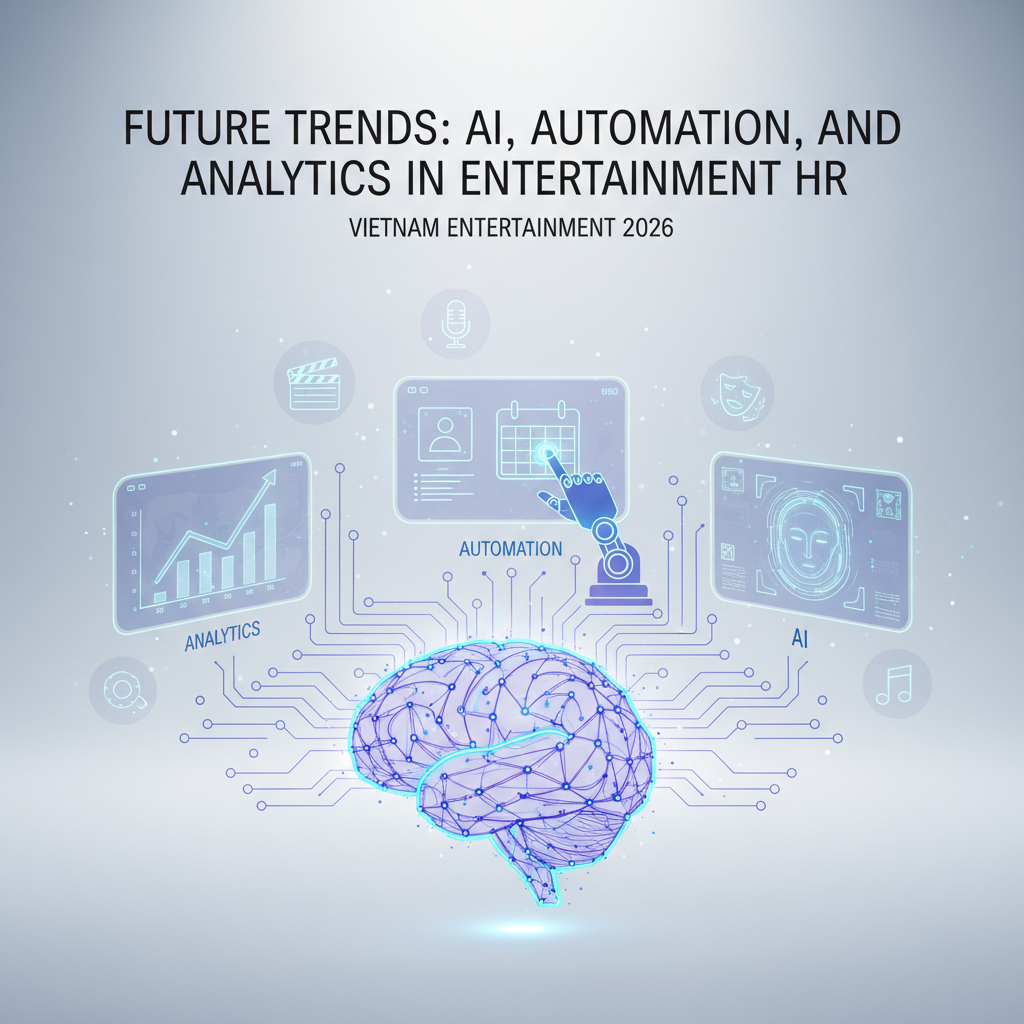
Looks ahead at emerging technologies and how they will shape HR practices, offering predictive insights and increased efficiency in Vietnam’s entertainment industry by 2026.
The vibrant and rapidly evolving entertainment industry in Vietnam is poised for a significant transformation in its human resources landscape. As the sector continues to grow, attracting and retaining top talent becomes paramount. By 2026, HR departments will increasingly leverage cutting-edge HR tools – applications for Entertainment field in vietnam, embracing artificial intelligence (AI), automation, and advanced analytics to optimize operations, enhance decision-making, and create a more strategic workforce. These technological advancements are not merely about efficiency; they are about fostering an environment where creativity thrives, and talent is perfectly aligned with opportunity.
1. AI-driven talent matching and scheduling optimization
AI is set to revolutionize how entertainment companies in Vietnam identify, recruit, and deploy talent. Traditional, manual recruitment processes are time-consuming and prone to human bias. AI-powered platforms can analyze vast datasets, including resumes, portfolios, and project histories, to intelligently match candidates with specific roles, projects, or even team dynamics. This goes beyond keyword matching; AI can assess soft skills, cultural fit, and potential for growth, ensuring a more holistic and accurate talent acquisition process. For instance, an AI system could identify a freelance animator with a unique style perfectly suited for an upcoming animated film project, even if their resume doesn’t explicitly list “film animation specialist.” This demonstrates the growing impact of AI in entertainment HR.
Beyond recruitment, AI will significantly enhance scheduling and resource allocation, a perennial challenge in the project-based entertainment sector. Imagine a major concert production requiring intricate coordination of hundreds of staff, artists, technicians, and venues. AI algorithms can optimize schedules in real-time, considering availability, skill sets, contractual obligations, and even geographical logistics. This not only minimizes conflicts and delays but also ensures that the right talent is in the right place at the right time, maximizing operational efficiency and reducing costly downtime. Predictive AI can even forecast potential scheduling conflicts or talent shortages, allowing HR teams to proactively address issues before they impact production. This shift towards smart talent management through AI in HR will empower Vietnamese entertainment firms to manage their dynamic workforces with unprecedented agility.
2. Automation of routine HR tasks for efficiency
The administrative burden often associated with HR departments can divert valuable resources from strategic initiatives. Automation is the key to unlocking this potential, transforming routine, repetitive tasks into streamlined, error-free processes. In Vietnam’s entertainment industry, this means automating onboarding procedures for new hires, managing payroll and benefits administration, handling leave requests, and ensuring compliance with labor laws. Chatbots, for example, can provide instant answers to common HR queries, reducing the need for direct HR intervention and allowing employees to get information quickly and efficiently.
Furthermore, automated workflows can manage contract renewals, performance review reminders, and training enrollment, freeing up HR professionals to focus on more strategic aspects like talent development, employee engagement, and fostering a positive workplace culture. This increase in efficiency is not just about cost savings; it’s about reallocating human capital to areas that directly impact employee satisfaction and organizational growth. By automating these foundational elements, HR teams can transition from transactional administrators to strategic partners, enabling a more agile and responsive HR function for the unique demands of the entertainment sector. This embrace of HR automation Vietnam will be critical for scaling operations efficiently.
3. Predictive analytics for workforce planning and retention
The future of HR in Vietnamese entertainment will be data-driven. Predictive analytics transforms historical and real-time data into actionable insights, enabling HR leaders to anticipate future workforce needs and proactively address potential challenges. By analyzing performance metrics, employee feedback, engagement surveys, and even market trends, HR can develop sophisticated models to forecast talent demand for upcoming projects or identify skill gaps that need to be addressed through training or recruitment. For instance, if data suggests a rising demand for virtual reality content creators, HR can start building a pipeline of such talent well in advance.
Crucially, predictive analytics will play a vital role in talent retention. By identifying patterns and indicators associated with employee turnover (e.g., declining engagement scores, lack of career progression, recent changes in team structure), HR can intervene proactively with targeted retention strategies. This could involve personalized development plans, mentorship opportunities, or adjustments to compensation and benefits. Understanding why employees stay and why they leave will allow entertainment companies to cultivate an environment that fosters loyalty and minimizes the costly impact of high turnover. This application of predictive analytics workforce tools will move HR from reactive problem-solving to proactive strategic planning, ensuring a stable and high-performing talent pool essential for the dynamic entertainment landscape. These advanced talent management solutions will become indispensable.
In conclusion, the integration of AI, automation, and analytics is set to redefine HR practices in Vietnam’s entertainment industry by 2026. These advanced HR tools – applications for Entertainment field in vietnam will create a more efficient, data-driven, and employee-centric HR function. From smarter talent matching and streamlined administrative tasks to proactive workforce planning and retention strategies, technology will empower HR professionals to be strategic enablers of growth and innovation, ensuring the industry continues to thrive on its most valuable asset: its people.
Partner with Shelby Global
You are looking for reliable HR Sevice Suppliers? Contact Shelby Global Now! To connect with verified talents and upgrade your orginization.
—————————————
References
– Vietnam Labor Law Handbook by Baker McKenzie: https://www.bakermckenzie.com/en/insight/publications/2023/10/vietnam-labor-law-handbook
– Choosing the Right ATS: https://www.shrm.org/resources-and-tools/hr-topics/technology/pages/how-to-choose-the-right-applicant-tracking-system.aspx
– SHRM on Performance Management: https://www.shrm.org/resources-and-tools/tools-and-samples/hr-qa/pages/performance-management.aspx
– Vietnam Global Payroll Compliance Update: https://www.globalpayrollassociation.com/news/vietnam-global-payroll-compliance-update
– Deloitte: AI in HR Trends: https://www2.deloitte.com/us/en/insights/topics/human-capital-trends/2024/ai-in-hr.html