
The Unique HR Challenges in Vietnam’s Film Industry
Explores the specific human resource complexities and demands faced by film production companies and studios operating within Vietnam’s vibrant but challenging creative sector.
Vietnam’s film industry is experiencing a dynamic resurgence, marked by increasing domestic and international collaborations, a growing pool of talented creators, and a keen appetite for engaging cinematic narratives. However, behind the glamour of the silver screen lies a complex landscape of human resource challenges. Managing talent in a sector defined by project-based work, diverse contractual agreements, and the imperative to comply with evolving local labor laws requires specialized expertise and robust HR infrastructure. Film production companies in Vietnam often grapple with unique demands that traditional HR models are ill-equipped to handle, highlighting the critical need for advanced HR tools – applications for Films field in Vietnam.

1. Navigating Project-Based Freelance Talent Pools
The very nature of film production is episodic and project-oriented, relying heavily on a transient workforce of freelancers. From directors and cinematographers to makeup artists and set designers, a significant portion of a film crew comprises independent contractors hired for the duration of a specific project. This creates substantial HR hurdles. Production companies must constantly engage in talent acquisition, sourcing, vetting, and onboarding new individuals for each project. Maintaining a comprehensive database of qualified freelance talent, tracking their availability, past performance, and specific skill sets becomes paramount. Without effective HR tools – applications for Films field in Vietnam, this process can be incredibly time-consuming and inefficient, leading to delays and increased operational costs. Furthermore, managing the expectations and integration of a constantly shifting workforce, while fostering a cohesive and productive environment, requires sophisticated HR management strategies and platforms capable of handling flexible staffing models.
2. Managing Diverse Crew Contracts and Payments
Another significant challenge stems from the sheer diversity of contractual arrangements and payment structures within a single film production. A typical crew might include full-time administrative staff, long-term contractors, short-term project-based freelancers, and part-time specialists, each with unique terms and conditions. This mosaic of employment relationships complicates payroll processing, benefits administration, and compliance. Ensuring timely and accurate payments to a large, often dispersed, and rapidly changing workforce is a logistical nightmare without proper systems. HR teams must manage varying daily rates, overtime calculations, per diems, and expense reimbursements, all while adhering to local financial regulations. The demand for specialized HR software solutions that can automate these complex payment workflows and provide clear visibility into contractual obligations is immense. Such applications streamline administrative burdens, reduce errors, and ensure financial transparency across all levels of production.
3. Adhering to Vietnamese Labor Laws and Regulations
Operating within Vietnam requires a thorough understanding and strict adherence to the country’s labor laws and regulations. The Vietnamese Labor Code, which undergoes periodic revisions, dictates crucial aspects such as working hours, minimum wages, social insurance contributions, severance pay, and termination procedures. For film production companies, the complexities are amplified by the freelance-heavy nature of the industry. Distinguishing between genuine independent contractors and employees (for whom social insurance contributions and other benefits are mandatory) is a critical legal tightrope walk. Misclassification can lead to significant penalties and legal disputes. Furthermore, ensuring workplace safety, managing foreign talent visas and work permits, and complying with local health and safety standards for film sets are continuous responsibilities. HR departments must stay abreast of all legal updates and ensure that all contractual agreements and operational practices are fully compliant. Utilizing specialized HR and compliance tools becomes indispensable for mitigating legal risks and safeguarding the company’s reputation.
In conclusion, the unique HR challenges in Vietnam’s film industry — from managing dynamic freelance talent pools and complex contracts to ensuring stringent legal compliance — underscore the urgent need for tailored HR solutions. Investing in advanced HR tools – applications for Films field in Vietnam is not merely an operational luxury but a strategic imperative. These tools empower production companies to streamline processes, enhance efficiency, reduce costs, and, most importantly, foster a supportive and legally compliant environment for the creative talent that drives Vietnam’s cinematic future. By embracing modern HR technology, the industry can better navigate its complexities, allowing creative visions to flourish unhindered by administrative bottlenecks.
Core HR Tool Categories for Film Production Teams
The exhilarating world of film production, from the bustling streets of Hanoi to the picturesque landscapes of Da Lat, operates on a unique cadence. Unlike traditional corporate structures, the film industry in Vietnam and globally is characterized by project-based workforces, intense schedules, and a constant flux of talent. Effectively managing human resources in such a dynamic environment is paramount for a project’s success, efficiency, and legal compliance. Fortunately, a suite of specialized HR tools has emerged to address these unique challenges, streamlining operations from the initial casting call to the final wrap party. These applications for the film field in Vietnam are critical for navigating the complexities of pre-production casting, on-set management, and post-production talent retention.
Understanding and implementing the right HR tools and applications specifically designed for the film field in Vietnam can dramatically enhance productivity, reduce administrative burdens, and ensure a seamless production flow. Let’s delve into the core categories of HR software that are most relevant to the fast-paced, talent-driven film industry.
1. Applicant Tracking Systems (ATS) for Casting & Crew Recruitment
In film production, talent acquisition goes far beyond a typical corporate hiring process. It involves sourcing a diverse array of professionals, from lead actors and background artists to highly specialized crew members like cinematographers, sound engineers, production designers, and special effects artists. An Applicant Tracking System (ATS), tailored for the film industry, becomes an indispensable asset here. These systems allow production teams to efficiently manage a massive influx of applications, audition tapes, portfolios, and résumés.
A film-centric ATS can host a vast database of talent, categorized by skill sets, experience levels, past projects, and availability. It facilitates seamless collaboration between casting directors, producers, and department heads, enabling them to review submissions, schedule auditions, and track candidate progress in real-time. For the Vietnamese film industry, an ATS can help tap into local talent pools while also integrating international talent databases for co-productions, ensuring compliance with local labor laws and visa requirements. This not only speeds up the recruitment process but also ensures that the best possible talent is secured for every role, contributing significantly to the artistic and technical quality of the final production.
2. Payroll and Expense Management for Project-Based Workforces
One of the most complex aspects of film production HR is managing payroll and expenses for a workforce that is inherently project-based and often fluid. Crew sizes fluctuate dramatically, contracts vary from daily rates to weekly or lump-sum payments, and expenses like per diems, travel, accommodation, and equipment rentals are constant. Traditional payroll systems often struggle with this level of dynamic complexity, making specialized payroll and expense management software a critical HR tool for film projects.
These dedicated systems are designed to handle variable pay rates, intricate overtime calculations (often necessitated by long shoot days), union regulations (where applicable), and diverse tax implications across different contract types. For films produced in Vietnam, the software must also be adept at navigating local tax laws, social insurance contributions, and currency conversions if international crew members are involved. Beyond just salaries, integrated expense management features allow for real-time tracking, approval, and reimbursement of production-related expenditures, providing a clear financial overview and preventing budget overruns. By centralizing these functions, production companies can ensure accuracy, transparency, and compliance, significantly reducing the administrative burden and potential for disputes inherent in managing dynamic, project-based teams.
3. Time & Attendance Tracking for On-Set Operations
Time is a critical commodity on a film set, directly impacting budgets and production schedules. Accurate time and attendance tracking is not just for payroll; it’s essential for safety, compliance, and efficient resource allocation. On-set operations often involve long hours, remote locations, and constantly shifting schedules, making traditional manual timekeeping methods prone to errors and inefficiencies.
Modern time and attendance tracking software, often accessible via mobile apps with geo-fencing capabilities or even biometric solutions, allows crew members to clock in and out accurately from their specific locations. This ensures precise records for calculating working hours, break times, and overtime, crucial for complying with labor laws and minimizing disputes. For the Vietnamese film industry, where productions can take place in diverse and sometimes remote settings, these HR tools provide unparalleled transparency and control. They help prevent “ghost employees” from being paid, ensure that crew members are not over-worked to the point of exhaustion (a significant safety concern), and provide real-time data on labor costs for each production phase. This digital transformation in timekeeping not only streamlines payroll processing but also offers valuable insights into operational efficiency and cost management on set, driving overall project success.
Advanced HR Functionalities for Modern Film Studios
The Vietnamese film industry is experiencing a dynamic resurgence, demanding not only creative brilliance but also operational excellence. To truly gain a competitive edge in talent management, communication, and overall efficiency, Vietnamese film companies must embrace sophisticated HR tools – applications for Films field in vietnam. These advanced platforms move beyond basic administrative tasks, offering a strategic approach to nurturing and managing the unique workforce of a film studio, from pre-production to post-production, including crucial aspects like payroll integration and compliance management. By leveraging these powerful HR tools, studios can streamline complex processes, foster a collaborative environment, and ensure they attract, develop, and retain the best creative and technical talent.

1. Performance Management & Feedback for Creative Teams
Traditional annual reviews often fall short for the project-driven, collaborative, and often highly subjective nature of creative roles within a film studio. Modern HR tools offer dynamic performance management systems tailored for creative teams. These systems facilitate continuous feedback mechanisms, moving away from rigid hierarchies to embrace 360-degree feedback, peer recognition, and frequent check-ins. For directors, writers, actors, and various crew members, these tools enable goal setting that aligns with project milestones and artistic vision, rather than generic KPIs. Features include progress tracking against project deliverables, confidential peer reviews, and real-time acknowledgment systems that boost employee engagement tools. This iterative approach allows for immediate course correction, supports personal and professional growth, and ensures that talent management software is genuinely fostering an environment where creative excellence can thrive. By providing consistent and constructive feedback, studios can cultivate a culture of continuous improvement and innovation essential for groundbreaking cinema.
2. Skill Matrix and Talent Development Platforms
The film industry operates on highly specialized skills, and identifying, tracking, and developing these competencies is paramount. Advanced HR tools incorporate robust skill matrix functionalities that allow studios to map the unique skill sets of their entire workforce – from cinematographers and sound designers to editors and VFX artists. This comprehensive view helps in strategic project planning, identifying skill gaps analysis, and ensuring the right talent is deployed for specific roles. Beyond identification, integrated learning management systems (LMS) provide tailored development pathways. These platforms can host a library of industry-specific courses, workshops, and certifications, enabling continuous upskilling and reskilling. Studios can design personalized learning journeys for individuals, addressing identified gaps or preparing them for future roles, crucial for effective succession planning. By investing in these talent development platforms, film companies ensure they maintain a highly skilled and adaptable workforce, ready to meet the evolving demands of film production and harness new technologies.
3. Remote Workforce Collaboration & Communication Tools
Film production is inherently distributed, with teams often working across different locations – on-set, in post-production houses, or remotely across geographies. The modern film studio relies heavily on effective remote workforce collaboration and communication tools to ensure seamless operations. These advanced platforms go beyond simple messaging, offering integrated project management features, secure file sharing for large media files, virtual meeting capabilities with high-fidelity audio-visuals, and centralized communication hubs. For instance, crew scheduling systems can be integrated, allowing for real-time updates and communication regarding call times, locations, and logistical changes, which are critical in a fast-paced production environment. Furthermore, digital onboarding processes for new crew members, regardless of their physical location, ensure a smooth and compliant integration into the team. Robust communication tools are vital for maintaining team cohesion, facilitating creative discussions, and ensuring that all stakeholders are aligned, regardless of where they are working. This enhances operational efficiency and flexibility, allowing studios to tap into a global talent pool. Effective HR strategies are crucial for success in hybrid and remote work models, emphasizing the need for tools that bridge geographical divides and foster a connected, productive workforce.
By adopting these advanced HR tools – applications for Films field in vietnam, Vietnamese film studios can transcend traditional operational hurdles. They can optimize talent management, foster a culture of continuous feedback, develop a highly skilled workforce, and facilitate seamless collaboration across distributed teams. Ultimately, these strategic HR functionalities pave the way for greater innovation, efficiency, and a stronger competitive position in the global film landscape, ensuring a vibrant future for Vietnamese cinema powered by data analytics for HR.
Top HR Tools & Platforms Transforming Vietnam’s Film Sector
Vietnam’s film industry is experiencing a vibrant renaissance, marked by a surge in local productions, international collaborations, and a growing global audience. This dynamic growth brings complex HR challenges, from managing diverse project-based teams and vast freelancer networks to ensuring compliance and efficient talent acquisition. To navigate this evolving landscape, modern HR tools – applications for Films field in vietnam are becoming indispensable. These HR technology Vietnam film solutions offer strategic advantages, streamlining operations and empowering the workforce. They are about fostering a more agile, transparent, and productive environment for every aspect of film production HR software, from pre-production to post-delivery. Adopting digital HR solutions Vietnam is paramount for studios aiming for sustained success and efficiency in talent management film industry. The right HR solutions tackle unique demands, ensuring seamless coordination and compliance for project-based HR software.
1. Integrated HRIS for Comprehensive Workforce Management
For a burgeoning industry like Vietnam’s film sector, establishing a robust foundation for workforce management cinema is critical. Integrated Human Resource Information Systems (HRIS) offer a centralized platform consolidating all HR functions, moving beyond fragmented spreadsheets. An HRIS for film studios can manage employee data, payroll solutions Vietnam film, benefits administration, performance management, and learning & development. This integration is crucial for the film industry, where teams are often assembled for specific projects, requiring rapid onboarding, precise contract management, and adherence to local labor laws.
The benefits are multi-fold: increased efficiency through HR automation creative sector, reduced administrative burden, and enhanced data accuracy, leading to better strategic decision-making. For Vietnamese production companies, an HRIS ensures compliance tools film industry are embedded, helping navigate complex regulations related to social insurance, personal income tax, and labor contracts. It allows HR professionals to focus more on talent management film industry strategies, fostering positive work environments, and nurturing creative potential, rather than getting bogged down by clerical tasks. Such systems provide a holistic view of the workforce, crucial for managing both permanent staff and long-term project teams effectively.
2. Specialized Freelancer Management Systems (FMS)
The backbone of the film industry, both globally and in Vietnam, is its extensive network of freelancers, contractors, and gig workers – from cinematographers to sound engineers. Managing this fluid workforce presents unique challenges that traditional HR systems often fail to address. This is where specialized Freelancer Management Systems (FMS) step in as essential HR tools for the gig economy.
An FMS streamlines the entire freelancer lifecycle, from sourcing and onboarding to contract management, time tracking, invoicing, and payment processing. For Vietnamese film production, this means faster talent acquisition for specific roles, ensuring documentation compliance with local regulations, and providing timely and accurate payments – key factors in attracting and retaining top talent. Freelancer platforms film production facilitate clear communication, dispute resolution, and performance feedback, fostering stronger relationships. They also provide crucial insights into contractor spend and utilization, enabling better budgeting. These gig economy HR tools are invaluable for managing a diverse and dynamic talent pool, often juggling multiple projects simultaneously, ensuring efficiency and compliance.
3. Cloud-Based Solutions for Scalability and Accessibility
The transient and often remote nature of film production makes accessibility and scalability paramount for HR operations. Cloud HR platforms offer the flexibility and reach that on-premise solutions cannot match. With cloud HR for media, production teams, regardless of their physical location – be it on set in a remote province, in a post-production studio in Ho Chi Minh City, or collaborating internationally – can access critical HR information and functionalities from any device with an internet connection. This includes everything from viewing pay stubs and requesting leave to accessing training modules.
The advantages extend beyond mere accessibility. Cloud-based HR software as a service Vietnam solutions are inherently scalable, easily expanding or contracting to meet the fluctuating demands of film projects without significant upfront infrastructure investments. This pay-as-you-go model is highly cost-effective for an industry characterized by project-based peaks and troughs. Furthermore, reputable cloud providers offer robust security protocols and regular updates, ensuring data integrity and compliance with evolving privacy standards. Mobile HR solutions film crews can use directly from their smartphones or tablets further enhance productivity and engagement, making HR processes seamless and integrated into their daily work. This approach aligns perfectly with the agile demands of the Vietnamese film industry, supporting its rapid expansion and diverse operational needs with modern HR tech solutions.
Implementing HR Tech: Best Practices for Vietnamese Film Producers
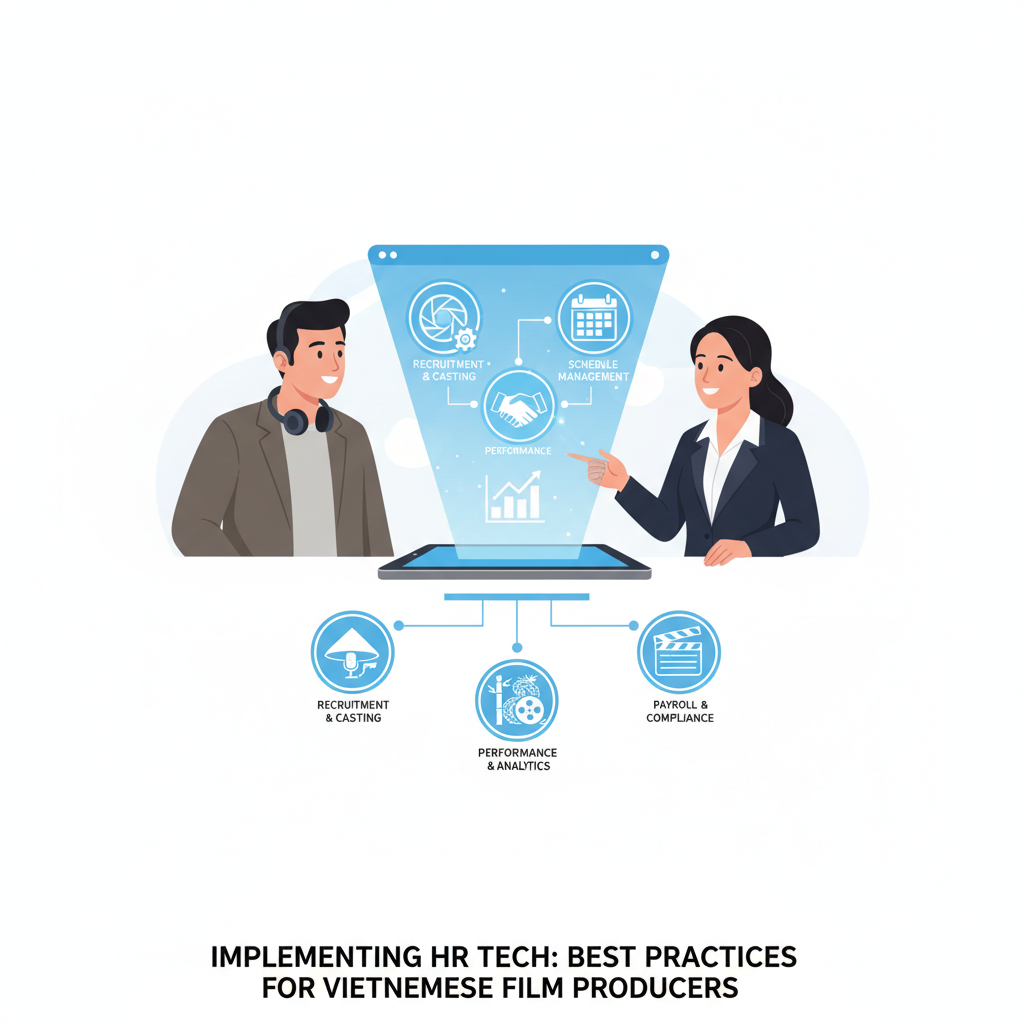
The dynamic Vietnamese film industry, with its blend of artistic creativity and demanding production schedules, presents a unique landscape for human resources management. As studios and production houses scale up, manual HR processes can become bottlenecks, hindering efficiency and talent retention. Adopting the right HR tools – applications for Films field in vietnam is no longer a luxury but a strategic imperative. This section provides actionable advice and strategic considerations for film companies looking to adopt or upgrade their HR technology stack in Vietnam’s unique cultural and business context, ensuring a smooth transition and maximum impact on operational excellence and talent management.
1. Ensuring Data Security and Privacy Compliance
In the digital age, handling sensitive employee information is critical for film producers implementing HR tech. Compliance with both international best practices and Vietnam’s Decree 13/2023/ND-CP on personal data protection is non-negotiable. This decree significantly tightens regulations around data collection, processing, and storage.
Key considerations:
- Vendor Due Diligence: Choose HR tech providers with robust cybersecurity frameworks, ISO 27001 certification, and clear data residency policies. Inquire where your data will be stored, ideally locally or compliant with cross-border transfer regulations.
- Access Controls & Encryption: Implement strict role-based access controls to ensure only authorized personnel view sensitive data. Ensure all data, both in transit and at rest, is encrypted using industry-standard protocols. Regular audits of access logs are crucial.
- Employee Consent & Training: Clearly communicate data collection purposes to your crew and obtain explicit consent. Conduct mandatory data privacy training for all employees, emphasizing their roles in protecting personal and company data.
- Incident Response: Develop and regularly test a data breach response plan to mitigate potential damages and ensure swift communication with affected parties and authorities, as required by law. For general data protection standards, GDPR Info provides comprehensive insights.
Prioritizing data security not only protects your employees but also safeguards your company’s reputation and avoids hefty legal penalties.
2. User Adoption Strategies for Creative and Technical Crews
The film industry’s workforce is highly specialized and often non-traditional. Crew members are frequently on location, project-based, and less accustomed to desk-bound administrative tasks. Successful HR tech adoption hinges on catering to these unique characteristics.
Effective strategies:
- Intuitive User Interface (UI) & Mobile Access: Select HR systems with clean, user-friendly interfaces that require minimal training. Mobile accessibility is paramount, allowing crews to access schedules, submit leave requests, or view payslips from anywhere.
- Tailored Training Programs & Pilot Programs: Avoid one-size-fits-all training. Develop short, engaging tutorials or workshops specific to different crew roles. Roll out the new HR tech in phases, starting with a smaller, enthusiastic group to gather feedback and make adjustments.
- Highlighting Benefits: Clearly articulate how the new system will make their lives easier. For instance, explaining how automated scheduling tools can prevent double bookings or how digital performance management systems offer clearer career development paths.
- Cultural Sensitivity & Continuous Support: Ensure the software is available in Vietnamese and accounts for local HR practices. Establish clear channels for ongoing support (e.g., dedicated helpdesk, FAQs) and regularly solicit feedback to identify pain points.
Ultimately, making the HR tech a tool that genuinely supports their work rather than an additional burden is key to widespread adoption among creative and technical talent.
3. Measuring ROI and Future Trends in Film HR Technology
Justifying the investment in HR technology requires a clear understanding of its return on investment (ROI). While some benefits, like reduced administrative burden, are tangible, others, such as improved employee engagement and retention, are equally critical but harder to quantify.
Key ROI metrics for film producers:
- Efficiency Gains & Cost Reductions: Track time saved on manual tasks (payroll processing, leave management, onboarding). Measure savings from reduced errors, lower printing costs, and optimized resource allocation through better scheduling.
- Talent Acquisition & Retention: Monitor time-to-hire, offer acceptance rates, and employee turnover rates. Effective HR tech can streamline recruitment and enhance the employee experience, directly impacting retention in a competitive industry.
- Compliance Adherence & Employee Satisfaction: Calculate reduced risks of non-compliance fines through automated policy enforcement. Utilize surveys and feedback mechanisms facilitated by HR platforms to gauge crew morale and satisfaction with HR services.
Future Trends: The landscape of HR tech is rapidly evolving, and Vietnamese film producers should keep an eye on:
- AI and Machine Learning: For predictive analytics in talent management (identifying retention risks), personalized learning paths, and automating routine HR inquiries.
- Integrated Platforms: A move towards single, comprehensive HRIS (Human Resources Information Systems) that unify all HR functions (from talent acquisition to payroll and learning management) rather than disparate systems.
- Enhanced Analytics: Deeper insights into workforce demographics, skill gaps, and project performance to inform strategic decision-making.
By strategically implementing and continuously evaluating HR technology, Vietnamese film producers can foster a more efficient, compliant, and engaged workforce, ready to bring captivating stories to life on screen.
Partner with Shelby Global
You are looking for reliable HR Sevice Suppliers? Contact Shelby Global Now! To connect with verified talents and upgrade your orginization.
—————————————
References
– :
– The Adaptable Organization: The rise of agile talent: https://www2.deloitte.com/us/en/insights/topics/talent/agile-talent-management-future-of-work.html
– Navigating the Future of Work: The Role of HR in Hybrid and Remote Environments: https://www.forbes.com/sites/forbeshumanresourcescouncil/2023/10/05/navigating-the-future-of-work-the-role-of-hr-in-hybrid-and-remote-environments/?sh=2422791e25e1
– HR tools for the gig economy: https://hbr.org/2020/05/the-new-rules-of-engagement-for-the-gig-economy
– GDPR Info: https://gdpr-info.eu/