
Understanding Singapore’s IT Talent Landscape & Market Benchmarks
For IT CEOs navigating Singapore’s dynamic and highly competitive technology sector, attracting and retaining top tech talent presents both significant challenges and unique opportunities. The city-state, a hub for innovation and digital transformation, demands a sophisticated approach to talent management, particularly when it comes to salary budget optimizing manners for the CEO of IT field in Singapore. Understanding the intricacies of the local IT talent landscape, from supply-demand dynamics to global economic impacts on compensation, is crucial for maintaining a competitive edge and ensuring sustainable growth. This deep dive will explore how leaders can strategically manage their compensation frameworks to secure the best minds in the industry, focusing on vital talent acquisition strategies and talent retention strategies amidst a global tech talent scarcity.

1. Current State of IT Talent Supply and Demand in Singapore
Singapore’s ambition to be a Smart Nation has fueled an insatiable demand for IT professionals across various specializations, from AI and cybersecurity to cloud computing and data science. This robust demand often outstrips the local supply of skilled IT workforce development, leading to a significant tech talent crunch. Companies are vying for a limited pool of highly skilled individuals, making talent acquisition strategies more challenging than ever. The government’s initiatives, such as the TechSkills Accelerator (TeSA) programme, aim to bridge this gap, but the need for niche skills continues to intensify. CEOs must look beyond traditional recruitment methods, considering strategies like upskilling existing employees, investing in continuous learning platforms, and exploring global talent pools while managing immigration and relocation complexities. Understanding the critical skill gaps and projecting future talent needs are paramount for effective workforce planning and securing a resilient IT team in Singapore’s thriving digital economy.
2. Key Salary Benchmarks and Industry Standards for Tech Roles
In Singapore, IT salary trends are influenced by a multitude of factors, including specialized skills, years of experience, company size, and industry sector. To remain competitive, IT CEOs must have a finger on the pulse of current tech compensation benchmarks. Data from reputable salary guides and industry reports consistently shows upward pressure on wages for roles in high-demand areas like Artificial Intelligence, Machine Learning, DevOps, and Cybersecurity. For instance, a Senior Software Engineer might command significantly higher competitive remuneration than a few years ago. Benchmarking salaries against industry standards is not just about matching offers; it’s about strategizing how to allocate the salary budget effectively to attract and retain high-performing individuals. This often involves a mix of base salary, performance bonuses, equity options, and comprehensive benefits packages. Effective salary budget optimizing manners for the CEO of IT field in Singapore involves a holistic view of total rewards, ensuring that compensation aligns with both market expectations and the company’s financial health. Regular review of these benchmarks is crucial for adapting to the fast-evolving market and ensuring long-term talent retention.
3. Impact of Global Economic Trends on Local IT Compensation
Singapore’s open economy means its IT talent market is highly susceptible to global economic trends. Factors such as inflation, interest rate hikes, and geopolitical uncertainties can directly influence local IT compensation structures. In periods of economic slowdown, companies might become more cautious with salary increments, while in robust economic climates, the fight for talent can drive wages even higher. The rise of remote work and the global talent market have also introduced new dynamics. Singaporean companies now compete not just with local firms but also with international companies offering competitive packages and the flexibility of remote roles, potentially impacting the cost of living Singapore. This means IT leaders must consider global compensation trends when crafting their local offers, even for roles traditionally based in Singapore. Managing the economic impact on salaries requires foresight and adaptability. CEOs should implement flexible compensation models that can adjust to economic shifts while still offering attractive packages. Strategies might include variable pay components, retention bonuses, and investing in employee well-being programs to enhance overall job satisfaction, which can be just as valuable as salary in securing and retaining the best digital transformation Singapore talent.
Strategic Salary Budget Allocation & Cost-Efficiency
Description: Explore effective methods for allocating salary budgets to maximize impact, reduce unnecessary expenditure, and ensure long-term financial health.
For a CEO of an IT field in Singapore, mastering salary budget optimizing manners is not merely about cutting costs; it’s about strategic investment. In Singapore’s dynamic and competitive tech landscape, attracting and retaining top talent requires a sophisticated approach to compensation that balances financial prudence with the need for innovation and growth. Effective IT salary allocation in Singapore ensures the company remains agile, competitive, and fiscally sound, while fostering a highly motivated workforce. This involves a keen understanding of market trends, employee value propositions, and the long-term strategic goals of the organization. Let’s delve into critical strategies for achieving this balance.
1. Prioritizing Roles: Critical vs. Support Functions for Budget Focus
A fundamental step in strategic compensation for the IT sector is to clearly delineate between critical, revenue-generating, or core technical roles and essential support functions. In Singapore’s thriving IT industry, roles such as senior software engineers, cybersecurity specialists, data scientists, and AI/ML experts are often in high demand and directly contribute to product development, innovation, and competitive advantage. These positions typically command higher market rates due to scarcity and direct impact on business outcomes.
Therefore, a significant portion of the salary budget for IT companies in Singapore should be strategically directed towards attracting and retaining individuals in these critical roles. This might involve offering above-market base salaries, competitive sign-on bonuses, or accelerated career progression paths. Conversely, while support functions (e.g., administrative staff, general IT support not directly involved in core product development) are vital for operational efficiency, their compensation structures can be managed differently. Exploring options like outsourcing certain non-core functions, leveraging shared services, or optimizing internal processes can lead to substantial savings, allowing more budget to be funneled into high-impact roles. This targeted approach ensures that every dollar spent on compensation generates maximum strategic value for the organization, directly impacting innovation and market leadership.
2. Leveraging Variable Pay and Performance-Based Incentives
Implementing a robust variable pay structure is a highly effective salary budget optimizing manner for the CEO of an IT field in Singapore. Unlike fixed salaries, variable pay—such as bonuses, commissions, profit-sharing, and stock options—directly links employee compensation to individual, team, or company performance. This approach not only motivates employees to achieve specific, measurable goals but also provides significant flexibility in the overall IT budget for compensation. In periods of strong performance, payouts increase, rewarding success. During leaner times, variable costs naturally decrease, helping to safeguard the company’s financial health.
For IT roles, performance metrics can be clearly defined: project completion rates, code quality, successful product launches, achievement of R&D milestones, customer satisfaction scores for support teams, or even revenue targets for sales engineers. By tying a portion of compensation to these tangible outcomes, companies foster a high-performance culture where employees are incentivized to drive business success. This strategy is particularly effective in Singapore’s fast-paced tech environment, where agility and measurable results are paramount. It transforms a fixed cost into a performance-driven investment, aligning employee financial success with the company’s profitability and growth objectives.
3. Cost-Effective Employee Benefits and Non-Monetary Perks
Beyond the direct cash compensation, a holistic approach to employee welfare through thoughtful benefits and non-monetary perks can significantly enhance employee value proposition without drastically escalating fixed salary costs. These elements are crucial for employee retention in Singapore’s IT sector and can differentiate an employer in a competitive talent market. Examples include flexible work arrangements (remote work options, compressed workweeks), comprehensive health and wellness programs, professional development opportunities (certifications, workshops, mentorship), and generous paid time off.
Non-monetary recognition programs, such as peer-to-peer awards, public acknowledgements, or career advancement opportunities, are also highly valued and have a powerful impact on morale and engagement. According to research on employee recognition, such programs can significantly boost job satisfaction and reduce turnover, proving to be a cost-effective alternative to continuous salary hikes. For instance, Harvard Business Review highlights the hidden benefits of employee recognition programs, noting their ability to improve employee retention and overall engagement. By investing in these strategic perks, companies create a positive work environment, foster loyalty, and enhance their employer brand, ultimately reducing the costly cycle of recruitment and training, and contributing to long-term financial stability.
Attracting and Retaining Top IT Talent Beyond Base Salary
In the highly competitive and rapidly evolving landscape of the IT sector, securing and retaining high-performing professionals demands more than just a generous paycheck. For the CEO of IT field in Singapore, understanding salary budget optimizing manners is crucial, particularly when faced with escalating salary expectations. This section explores non-monetary strategies and holistic compensation packages that empower organizations to attract and keep top IT talent without solely relying on ever-increasing base salaries. By focusing on a broader value proposition, companies can cultivate an environment where IT professionals not only excel but also choose to stay long-term.

1. Crafting a Compelling Employee Value Proposition (EVP)
A robust Employee Value Proposition (EVP) is the cornerstone of effective talent attraction and retention. It encompasses all the benefits an employee receives in exchange for their skills, capabilities, and experience — extending far beyond just salary. A compelling EVP communicates why an organization is a great place to work, highlighting its unique culture, mission, opportunities, and overall employee experience. For a CEO of IT field in Singapore, crafting a distinct EVP can differentiate their company from competitors who might only offer slightly higher pay.
Key elements of a strong EVP include a clear company vision and mission, a positive and inclusive work culture, opportunities for meaningful work, effective recognition programs, and a commitment to employee well-being. By actively defining and consistently communicating these elements, companies can attract individuals who resonate with their values and vision. This not only aids in initial recruitment but also fosters a sense of belonging and loyalty, making employees less susceptible to poaching by higher-bidding rivals. Optimizing the salary budget means investing in these intangible assets that yield long-term returns in talent stability and productivity.
2. The Role of Professional Development and Career Growth Opportunities
IT professionals are driven by innovation and continuous learning. Offering robust professional development and clear career growth opportunities is a powerful non-monetary incentive that often outweighs marginal salary differences. This includes access to cutting-edge training, industry certifications, mentorship programs, and opportunities to work on diverse and challenging projects. Organizations that invest in their employees’ growth demonstrate a commitment to their long-term success, fostering loyalty and engagement.
Consider, for instance, providing budgets for relevant certifications (e.g., AWS, Azure, Cybersecurity, PMP) or supporting attendance at industry conferences. Creating clear career paths, allowing for lateral moves, and promoting from within are also critical. According to insights from Deloitte’s Human Capital Trends, organizations that prioritize continuous learning and development are better positioned to retain top talent and adapt to future skill requirements. This strategic investment in human capital allows a CEO of IT field in Singapore to utilize their salary budget more efficiently, knowing that skilled and motivated employees are more likely to stay and contribute significantly.
3. Flexible Work Arrangements and Remote Compensation Models
The post-pandemic landscape has firmly cemented flexible work arrangements as a critical component of a modern compensation package. Offering options such as remote work, hybrid models, or flexible hours provides employees with greater autonomy and work-life balance, which are highly valued attributes, especially among tech talent. This flexibility can be a powerful differentiator, particularly in a dense urban environment like Singapore where commuting and work-life integration can be significant concerns.
For IT leaders, embracing flexible work models can also lead to significant salary budget optimizing manners. By reducing reliance on expensive office spaces and potentially tapping into a wider talent pool outside major metropolitan areas, companies can reallocate resources. When considering remote compensation models, it’s important to establish fair and transparent policies that account for differences in cost of living while maintaining equity across the workforce. This approach not only enhances employee satisfaction and well-being but also broadens recruitment horizons, allowing companies to secure top talent regardless of geographical constraints, ultimately fostering a more resilient and adaptable IT team.
Data-Driven Decision Making & HR Tech Integration
Utilize analytics and human resources technology to inform and optimize salary budget decisions, ensuring transparency and better outcomes.
In today’s dynamic IT landscape, particularly for a CEO leading operations in a competitive hub like Singapore, the strategic allocation of salary budgets is paramount. It’s no longer sufficient to rely on traditional methods; instead, adopting advanced data-driven approaches and integrating cutting-edge HR technology is essential for salary budget optimizing manners for the CEO of IT field in Singapore. This approach not only ensures financial prudence and cost optimization but also significantly enhances talent retention and attraction. By leveraging robust analytics, IT companies can gain unparalleled insights into compensation strategy, workforce analytics, and market competitiveness, transforming salary expenditure from a cost center into a strategic investment. This section explores how modern HR technology adoption empowers leaders to make transparent, equitable, and highly effective compensation decisions, ultimately driving business success and employee engagement.
1. Implementing Robust Compensation Analytics Tools and Dashboards
The foundation of smart salary budget management lies in robust compensation analytics. For an IT CEO in Singapore, deploying specialized tools and interactive dashboards provides a comprehensive view of salary structures, performance-based pay, and overall compensation strategy. These platforms consolidate vast amounts of data, offering actionable insights into internal equity and external market competitiveness. By integrating data from various sources, including HRIS, performance management systems, and external salary benchmarking reports, organizations can identify discrepancies, pinpoint areas of overspending or underpayment, and ensure their compensation packages are aligned with industry standards and compliance regulations.
These tools empower HR and leadership teams to conduct detailed analyses of current salary levels against market data, assess the impact of different pay structures, and model various compensation scenarios. This level of granular insight is crucial for making informed decisions about adjustments, promotions, and bonus allocations, ensuring that every dollar spent on compensation contributes effectively to talent retention and overall business objectives. Furthermore, interactive dashboards offer real-time visibility into key metrics, allowing for agile responses to market shifts and internal talent needs. This proactive approach to managing compensation is a cornerstone of modern HR technology adoption, enabling strategic HR leadership to influence business outcomes directly.
2. Predictive Modeling for Future Salary Expenditure and Workforce Planning
Beyond understanding current compensation landscapes, the ability to forecast future salary expenditure is critical for sustainable growth and budget allocation. Predictive modeling, powered by advanced analytics, allows IT companies in Singapore to anticipate future talent needs, model the financial impact of various workforce planning scenarios, and proactively optimize their salary budget. This involves analyzing historical data, industry trends, and economic indicators to predict salary inflation, turnover rates, and the cost of talent acquisition for specialized IT roles.
For a CEO striving for effective salary budget optimizing manners for the CEO of IT field in Singapore, predictive models can simulate the effects of different compensation policies, such as introducing new bonus schemes or adjusting salary bands based on skill demand. This foresight enables proactive budget allocation, mitigating potential financial surprises and allowing the organization to secure top talent without overextending resources. It supports strategic workforce planning by identifying potential skill gaps and the associated costs of filling them, ensuring that the company maintains its competitive edge in a rapidly evolving technological environment. This strategic use of data helps in foreseeing the impact of growth plans, mergers, or market shifts on compensation, making the budget more resilient and adaptable.
3. Leveraging HRIS for Efficient Payroll Management and Reporting
A robust Human Resources Information System (HRIS) is the backbone for efficient payroll management and comprehensive reporting, directly impacting salary budget optimization. An integrated HRIS streamlines critical HR processes, from onboarding and employee data management to timekeeping and payroll processing. For an IT company in Singapore, where compliance regulations and data security are paramount, an advanced HRIS ensures accuracy in payroll distribution, reduces administrative burden, and minimizes errors that can lead to significant financial repercussions or legal issues.
Beyond mere efficiency, a modern HRIS offers powerful reporting capabilities, providing leadership with clear, consolidated data on compensation costs, benefits expenditure, and employee demographics. This allows for meticulous tracking of the ROI on HR tech and human capital, enabling executives to assess the effectiveness of their salary budget decisions. Integrating payroll with other HR functions within the HRIS also enhances data integrity and provides a single source of truth for all employee-related information. This comprehensive approach to strategic human capital management facilitates better auditing, ensures compliance with local labor laws, and supports transparent communication regarding compensation practices. By centralizing data and automating processes, an HRIS frees up HR professionals to focus on strategic initiatives rather than transactional tasks, further enhancing the organization’s ability to make data-driven decisions that optimize the salary budget.
By embracing these data-driven strategies and HR tech integrations, IT CEOs in Singapore can move beyond reactive budgeting to a proactive, strategic approach that maximizes value from every compensation dollar, fostering a motivated workforce and sustainable business growth.
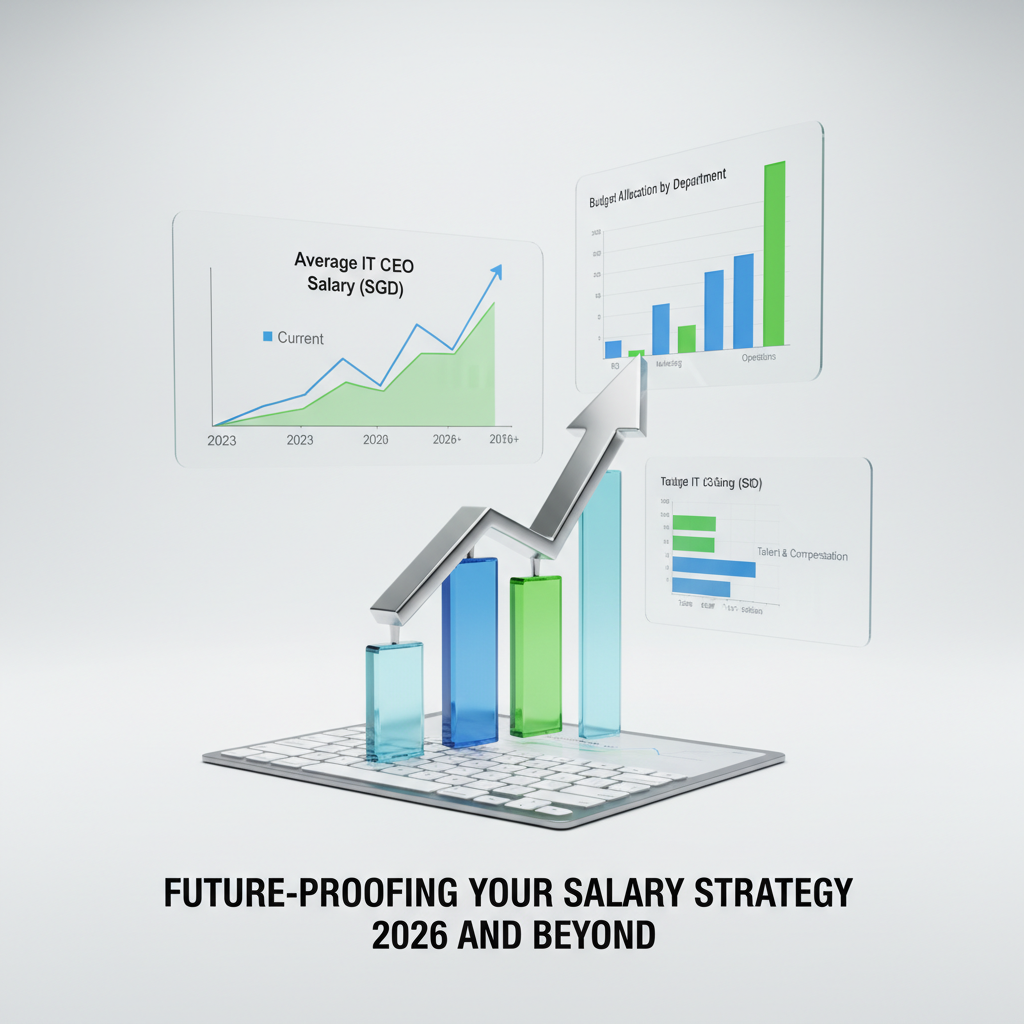
Future-Proofing Your Salary Strategy for 2026 and Beyond
As the Chief Executive Officer of an IT firm in Singapore, the landscape of talent acquisition and retention is constantly evolving. Preparing for upcoming market shifts, regulatory changes, and emerging tech trends is paramount to ensure long-term salary budget sustainability and competitiveness. This strategic foresight is critical for salary budget optimizing manners for the CEO of IT field in Singapore, ensuring your organization remains an employer of choice in a highly competitive regional and global market.
The pace of technological advancement, coupled with dynamic economic conditions and a shifting workforce, necessitates a proactive rather than reactive approach to compensation. By understanding and anticipating these factors, IT leaders can design salary strategies that attract top-tier talent, maintain equitable internal pay structures, and adhere to fiscal responsibility, ultimately driving innovation and growth.
1. Anticipating Emerging Tech Roles and Their Compensation Needs
The technological frontier continually expands, giving rise to new specializations that demand niche skills and, consequently, higher compensation. For IT CEOs in Singapore, it’s imperative to identify these nascent roles before they become mainstream and drive up talent costs. Consider the burgeoning fields of artificial intelligence (AI) ethics and governance, quantum computing specialists, advanced cybersecurity architects, and Web3 developers. These roles often command premium salaries due to their scarcity and strategic importance.
To effectively anticipate these needs, cultivate strong ties with industry accelerators and academic institutions. Regularly review global tech compensation benchmarks, not just local ones, to understand the trajectory of these specialized roles. Implement a flexible compensation framework that allows for rapid adjustments for critical skills, perhaps incorporating project-based bonuses or equity options. Developing clear career paths for these roles, coupled with continuous upskilling initiatives for your existing workforce, can mitigate the long-term impact of talent scarcity and exorbitant compensation demands.
2. Adapting to Evolving Singaporean Labor Laws and Regulations
Singapore’s reputation as a business-friendly hub is underpinned by its clear, albeit evolving, regulatory framework. For IT leaders, staying abreast of changes in labor laws, fair employment practices, and benefit mandates is non-negotiable for sound salary and remuneration management. The Ministry of Manpower (MOM) frequently updates guidelines concerning wage practices, CPF contributions, flexible work arrangements, and progressive wage models. Changes in these areas can directly impact your salary budget and operational compliance.
Future changes might include enhanced protections for gig workers, further refinements to the Tripartite Guidelines on Fair Employment Practices (TGFEP), or new mandates for employee well-being. A robust compliance strategy involves regular audits of current compensation structures, proactive engagement with legal counsel specializing in Singaporean labor law, and continuous training for HR and management teams. Integrating compliance checks into your payroll systems can help prevent costly penalties and uphold your company’s ethical standing, contributing significantly to sustainable salary budget optimizing manners.
3. Building a Resilient and Agile Compensation Philosophy
A static compensation philosophy is ill-suited for the dynamic IT sector. For 2026 and beyond, IT CEOs in Singapore must cultivate a compensation philosophy that is both resilient against economic shocks and agile enough to adapt to rapid market shifts. This involves moving beyond mere base salaries to embrace a holistic total rewards approach, encompassing not just monetary compensation but also benefits, career development opportunities, work-life balance initiatives, and a positive organizational culture.
Consider implementing performance-based pay structures that align individual and team contributions with company success, utilizing metrics relevant to the IT field, such as project completion rates or innovation output. Regular market benchmarking, perhaps bi-annually rather than annually, can ensure your offerings remain competitive. Furthermore, explore innovative compensation models like deferred compensation, stock options for key personnel, or even skills-based pay where specific certifications are rewarded directly. Transparency in compensation philosophy, coupled with clear communication, fosters trust and helps employees understand the value of their total rewards package, making it a critical component of salary budget optimizing manners for the CEO of IT field in Singapore.
In conclusion, future-proofing your salary strategy for the IT sector in Singapore requires a comprehensive, forward-looking approach. By anticipating emerging roles, adapting to regulatory changes, and establishing an agile compensation philosophy, IT CEOs can ensure their organizations not only survive but thrive in the competitive global tech arena.
Partner with Shelby Global
You are looking for reliable HR Sevice Suppliers? Contact Shelby Global Now! To connect with verified talents and upgrade your orginization.
—————————————
References
– :
– the hidden benefits of employee recognition programs: https://hbr.org/2012/11/the-hidden-benefits-of-employee-recognition-programs
– Deloitte’s Human Capital Trends: https://www2.deloitte.com/us/en/insights/focus/human-capital-trends/2020/learning-in-the-flow-of-work.html
– Strategic Human Capital Management: https://www.mercer.com/our-thinking/career/human-capital-strategies.html
– salary and remuneration management: https://www.mom.gov.sg/employment-practices/salary-and-remuneration



































































































