
Overview of Vietnam’s IT Landscape & Economic Drivers
Vietnam has rapidly emerged as a dynamic hub in Southeast Asia’s digital economy, fueled by an ambitious government, a young, tech-savvy population, and significant foreign investment. This section sets the stage by exploring Vietnam’s current IT status and the multifaceted economic factors propelling its impressive growth and ambitious digital transformation journey. The nation is not just adopting technology but actively shaping its future as a competitive player in the global technology landscape, making understanding the market demand trend report of IT field in vietnam crucial for stakeholders.

1. Current State of Vietnam’s Digital Economy
Vietnam’s digital economy is experiencing exponential growth, consistently outperforming regional averages. Driven by a burgeoning middle class, widespread internet penetration, and high mobile adoption rates, the country has become a fertile ground for digital innovation. Key sectors like e-commerce boom, fintech innovations, and digital payments are leading this charge, profoundly altering consumer behavior and business operations. The nation’s youthful demographic, with a strong inclination towards digital platforms, ensures a continuous supply of early adopters and a vibrant domestic market for new technologies. This environment fosters a robust tech sector growth, attracting both local and international players. From online retail to ride-hailing and food delivery, digital services are deeply integrated into daily life, contributing significantly to the national GDP. Furthermore, the demand for advanced cybersecurity solutions and the adoption of cloud computing adoption are on the rise as businesses scale up their digital operations, highlighting a sophisticated evolution within the country’s digital landscape. This dynamic ecosystem paints a clear picture of Vietnam’s rapidly maturing digital economy.
2. Key Government Initiatives & Policies for Tech Growth
The Vietnamese government plays a pivotal role in nurturing the nation’s technology aspirations through strategic government policies and ambitious initiatives. Central to this vision is the National Digital Strategy, aiming to accelerate digital transformation across all sectors and position Vietnam as a high-income, digitally advanced nation by 2045. This strategy emphasizes investing heavily in digital infrastructure development, including 5G networks and data centers, to create a robust foundation for future innovation. Crucially, there’s a strong focus on cultivating a highly skilled workforce through educational reforms, vocational training, and partnerships with technology firms. Initiatives also support the burgeoning startup ecosystem Vietnam, offering incentives, funding, and incubators to foster local innovation in areas like AI development and fintech innovations. Policies promoting open data, e-government services, and the digital transformation of small and medium-sized enterprises (SMEs) further underscore the government’s commitment to creating an inclusive and competitive digital environment. These proactive measures are instrumental in creating a conducive environment for sustained technology investment and growth.
3. Impact of Foreign Direct Investment (FDI) on IT Sector
Foreign Direct Investment (FDI) has been a crucial catalyst in supercharging Vietnam’s IT sector, injecting both capital and expertise into the economy. Major global tech giants, attracted by a cost-effective and skilled workforce, political stability, and favorable trade agreements, have established significant operations in the country. This influx of FDI in IT has been instrumental in developing advanced digital infrastructure development and fostering high-value IT services market, particularly in software development outsourcing. Companies like Samsung, Intel, and LG have invested billions, creating numerous jobs and accelerating the transfer of technology and management know-how. This has significantly boosted Vietnam’s economic competitiveness on the global stage, transforming it into a preferred destination for manufacturing and R&D in electronics and software. The presence of these international firms also elevates local industry standards, encourages innovation, and stimulates the growth of domestic tech companies. According to the World Bank, Vietnam’s economic growth remains resilient, with FDI being a key driver, further cementing the nation’s position as an attractive investment destination in the digital age. This synergy between foreign capital and local talent is vital for the continued expansion and sophistication of Vietnam’s digital economy.
Emerging Technologies Driving Demand (2024-2026)
The Vietnamese IT market is experiencing a dynamic shift, fueled by rapid digital transformation across industries. This section delves into the specific technological advancements and platforms that are not only creating unprecedented new opportunities but also profoundly shaping the skill requirements for IT professionals in Vietnam from 2024 to 2026. Understanding these market demand trend report of IT field in vietnam insights is crucial for businesses and individuals aiming to stay competitive in this fast-evolving landscape.
1. Artificial Intelligence & Machine Learning Adoption Trends
Artificial Intelligence (AI) and Machine Learning (ML) are no longer futuristic concepts but active drivers of innovation in Vietnam. From optimizing supply chains and enhancing customer service to powering sophisticated analytics, AI is permeating various sectors. Businesses are increasingly investing in AI solutions to automate processes, gain predictive insights, and personalize user experiences. This surge in adoption creates substantial demand for professionals skilled in data science, ML engineering, natural language processing, and computer vision. Key sub-keywords like AI, Machine Learning, and AI ethics are becoming central to discussions about developing responsible and effective solutions. The talent gap in these specialized areas means that expertise in building, deploying, and maintaining AI models is highly sought after, pushing IT professionals to upskill rapidly to meet these evolving demands.
2. Cloud Computing, Big Data, and Data Analytics Expansion
The widespread adoption of Cloud Computing continues to redefine IT infrastructure in Vietnam, offering scalability, flexibility, and cost-efficiency. This fundamental shift is intrinsically linked to the explosion of Big Data. Organizations are generating vast amounts of information, necessitating robust solutions for storage, processing, and, most importantly, analysis. The demand for Cloud Computing specialists, particularly those proficient in major cloud platforms (AWS, Azure, GCP), as well as DevOps practices for continuous integration and deployment, is accelerating. Moreover, the ability to extract actionable insights from Big Data through advanced Data Analytics techniques is paramount. Roles like data analysts, data engineers, and data architects are in high demand, equipped to handle complex datasets and contribute to strategic decision-making. Cloud security is also a rapidly growing concern, creating specific opportunities for professionals who can secure cloud environments and data.
3. Cybersecurity & Blockchain’s Growing Importance and Demand
As digital transformation accelerates, so does the sophistication of cyber threats, making Cybersecurity a critical imperative for every organization in Vietnam. The protection of sensitive data, intellectual property, and critical infrastructure against breaches is non-negotiable. This drives immense demand for cybersecurity specialists, including ethical hackers, security architects, incident response analysts, and compliance officers. Companies are prioritizing investments in robust security frameworks and talent to mitigate risks. Concurrently, Blockchain technology, while still in its nascent stages of widespread adoption compared to AI or Cloud, is gaining traction, particularly in finance, supply chain management, and intellectual property. The transparency, immutability, and decentralization offered by blockchain applications are compelling for specific use cases. As Vietnam explores digital currencies and secure ledger systems, expertise in blockchain development, smart contracts, and distributed ledger technology will see incremental growth, preparing the driving digital transformation in Vietnam for future technological shifts. These advancements collectively underscore the dynamic and high-opportunity landscape of the Vietnamese IT market.
Key Growth Sectors & Talent Hotspots
Vietnam’s technology landscape is undergoing a remarkable transformation, solidifying its position as a dynamic hub for innovation and digital development in Southeast Asia. As businesses across all scales increasingly embrace digital solutions, the demand for specialized IT talent continues to surge. This section delves into the market demand trend report of IT field in Vietnam, highlighting the industries experiencing significant growth and the critical roles and expertise most sought after by employers.
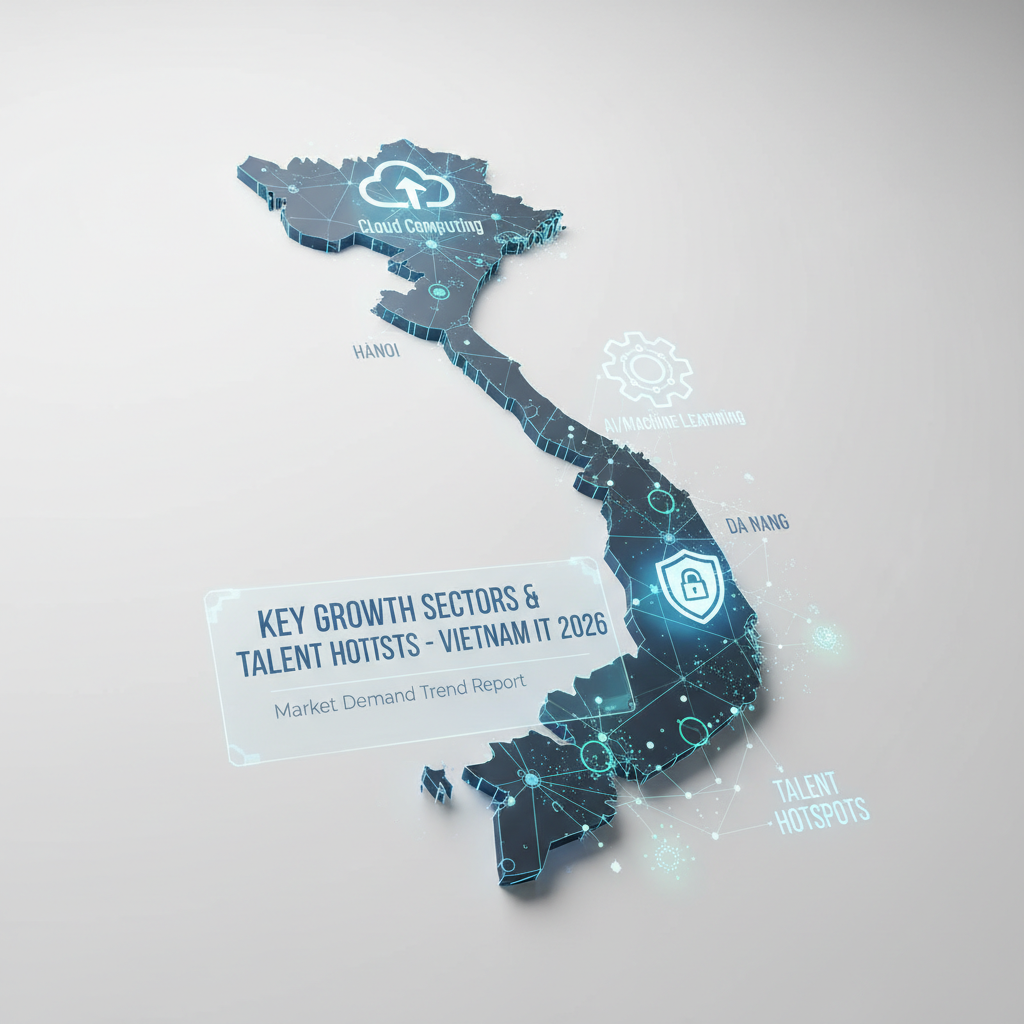
1. FinTech, E-commerce, and Digital Transformation in Enterprises
The convergence of financial services with advanced technology has propelled FinTech to the forefront of Vietnam’s digital evolution. Driven by a young, tech-savvy population and increasing smartphone penetration, digital payments, mobile banking, and peer-to-peer lending are growing exponentially. This sector demands professionals skilled in blockchain, data analytics for fraud detection and personalized services, and robust cybersecurity protocols. E-commerce similarly continues its upward trajectory, fueled by shifting consumer behaviors and online shopping convenience. Companies invest heavily in user experience, supply chain optimization, and personalization, creating high demand for cloud infrastructure, microservices, and API development experts. Beyond these, digital transformation is sweeping traditional enterprises. Manufacturing, retail, and logistics adopt IoT, AI, and big data to streamline operations, enhance customer engagement, and foster data-driven decision-making. This necessitates IT professionals capable of integrating legacy systems, managing ERP, and developing custom software. Adaptability, problem-solving, and business process understanding alongside technical prowess are key.
2. Gaming, EdTech, and Healthcare Tech Sector Boom
While FinTech and E-commerce capture headlines, other specialized tech sectors also show robust growth. Vietnam’s vibrant gaming industry is globally recognized for its creative output, driving demand for game developers (front-end, back-end), 3D artists, animators, and QA testers. The rise of AR/VR in gaming further amplifies the need for immersive technology development skills. EdTech (Education Technology) is rapidly expanding, accelerated by shifts towards online learning. E-learning platforms, interactive content, and online tutoring are flourishing, generating a need for instructional designers, platform engineers, and AI specialists to personalize learning. Simultaneously, Healthcare Tech is an emerging area for innovation. Hospitals and providers leverage technology for EHR, telemedicine, remote monitoring, and AI-powered diagnostics. This necessitates professionals with expertise in health informatics, patient data security, medical device software, and big data analytics for public health. The growth of Vietnam’s digital economy broadly supports these specialized sectors.
3. Demand for Software Developers, Data Scientists, and UI/UX Designers
At the core of all burgeoning sectors is an unyielding demand for foundational IT roles. Software Developers remain the most sought-after professionals, encompassing web (front-end, back-end, full-stack), mobile (iOS, Android), cloud engineers, and DevOps specialists. Proficiency in modern programming languages like Python, JavaScript, Java, C#, Go, and frameworks such as React, Angular, Node.js, Spring Boot is highly valued. The ability to work with cloud platforms (AWS, Azure, Google Cloud) and implement CI/CD pipelines is crucial. Data Scientists and Data Analysts are also in extremely high demand as businesses increasingly rely on data for strategic decision-making and predictive analytics. Expertise in statistical modeling, machine learning algorithms, big data technologies (Hadoop, Spark), and visualization tools (Tableau, Power BI) is essential. These professionals uncover insights from vast datasets, drive business intelligence, and create AI solutions. Finally, UI/UX Designers play a pivotal role in ensuring intuitive, engaging, and user-friendly digital products. Their skills in user research, wireframing, prototyping, information architecture, and visual design are critical for seamless customer experiences across web and mobile. As Vietnam’s digital economy matures, user-centric design intensifies, making these roles indispensable across sectors.
Challenges & Opportunities in the IT Market
Vietnam’s IT sector stands at a pivotal juncture, brimming with potential while navigating a complex landscape of hurdles. The nation’s ambitious stride towards becoming a prominent regional tech hub necessitates a keen understanding of these dynamics. A comprehensive exploration of the market demand trend report of IT field in vietnam reveals both the pressing challenges and the expansive opportunities that shape its future, impacting everything from digital transformation Vietnam initiatives to the flourishing start-up ecosystem Vietnam.
1. Talent Shortage & Skill Gap Analysis in Key Areas
One of the most critical hurdles for Vietnam’s IT industry is the persistent talent shortage and a widening skill gap. While the volume of IT graduates is increasing, the quality and specialization often fall short of the rapidly evolving demands revealed by any market demand trend report of IT field in vietnam for advanced proficiencies. There’s a particular deficit in high-demand areas such as artificial intelligence, blockchain, cloud computing adoption, and robust cybersecurity solutions. Educational institutions frequently struggle to keep pace with global technological advancements, leading to a mismatch between academic output and industry needs for modern IT workforce development. This situation creates a significant bottleneck for companies aiming for high-value software outsourcing projects and internal innovation requiring specialized skills.
This skill gap, however, presents a significant opportunity for strategic intervention. Enhanced collaboration between industry players and academic institutions can foster relevant curriculum development, internships, and mentorships tailored for tech talent acquisition. Government support for STEM education and attractive incentives for professionals in critical areas are vital to bolster IT workforce development. Furthermore, robust upskilling programs and reskilling initiatives for existing professionals can quickly address immediate needs. Attracting returning Vietnamese talent from overseas, coupled with strategic partnerships that bring in foreign direct investment IT and expertise, can help bridge immediate gaps and elevate the overall proficiency of the local workforce, propelling Vietnam’s capabilities in R&D investment and cutting-edge technology.
2. Infrastructure Development & Bridging the Digital Divide
Robust ICT infrastructure forms the indispensable backbone of a thriving digital economy. While Vietnam has achieved considerable progress in internet penetration, particularly in urban centers, significant disparities persist. Rural and remote areas often lag in access to high-speed internet, reliable data centers Vietnam, and advanced digital services, contributing to a substantial digital divide. This inequity not only limits economic opportunities for a significant portion of the population but also hinders the nationwide adoption of digital transformation Vietnam initiatives and the widespread growth of emerging technologies that rely on ubiquitous, robust connectivity. Ensuring energy reliability and the development of state-of-the-art, secure data centers Vietnam remain critical challenges that require substantial foresight and investment.
The Vietnamese government’s strong commitment to e-government initiatives and the development of smart cities Vietnam offers a powerful impetus for crucial infrastructure upgrades. Significant investments in 5G networks, fiber optics, and secure, energy-efficient data centers Vietnam are imperative. Public-private partnerships can accelerate the deployment of advanced ICT infrastructure, ensuring equitable access across the country. Bridging the digital divide will unlock vast new market demand trend report of IT field in vietnam opportunities, foster innovation in underserved regions, and facilitate the widespread adoption of technologies like IoT and AI. This aligns perfectly with Vietnam’s vision for smart cities Vietnam and its ambition to solidify its position in the global digital economy. As Vietnam’s digital economy continues its rapid growth, sustained infrastructure development becomes even more critical.
3. Global Competition & Market Penetration Strategies for Local Firms
Vietnamese IT firms operate within an intensely competitive global arena, facing fierce rivalry from established international players and agile regional competitors, particularly in the lucrative software outsourcing domain and innovative product development. Scaling up to compete globally demands substantial R&D investment, sophisticated marketing strategies, and a nuanced understanding of diverse international market entry strategies. Many local firms, especially small and medium-sized enterprises (SMEs), frequently lack the resources, international experience, and brand recognition necessary to effectively penetrate and sustain a presence in lucrative overseas markets. Therefore, access to an up-to-date market demand trend report of IT field in vietnam is crucial for identifying viable niches and competitive advantages.
Despite these challenges, local firms possess distinct advantages, including cost-competitiveness, a strong work ethic, and growing technical proficiency. Strategic alliances and joint ventures with international partners can provide invaluable access to new technologies, capital, and global distribution channels. Focusing on niche markets where Vietnamese expertise can truly shine—such as specialized AI applications, FinTech solutions, or MedTech innovations—can be an effective market entry strategy. Government support through trade promotion programs, export incentives, and initiatives that foster a vibrant start-up ecosystem Vietnam can significantly empower local firms to expand their global footprint. Furthermore, leveraging insights from a detailed market demand trend report of IT field in vietnam is vital for local businesses to identify emerging opportunities, attract venture capital tech Vietnam, and tailor their offerings to meet specific international client needs, thereby strengthening their position in the global IT landscape and enhancing overall IT workforce development for future growth.
Future Outlook & Strategic Recommendations
The Vietnamese IT sector stands at a pivotal juncture, poised for remarkable expansion and global influence. This section delves into a forward-looking perspective on the burgeoning IT field in Vietnam, offering actionable advice to empower IT professionals, guide businesses, and inform policymakers. Understanding the nuanced market demand trend report of IT field in vietnam is crucial for navigating this dynamic landscape successfully. The nation’s rapid digital transformation, fueled by robust government initiatives and increasing foreign direct investment, paints a promising picture for the future.
1. Projections for IT Spending, Investment, and Revenue Growth
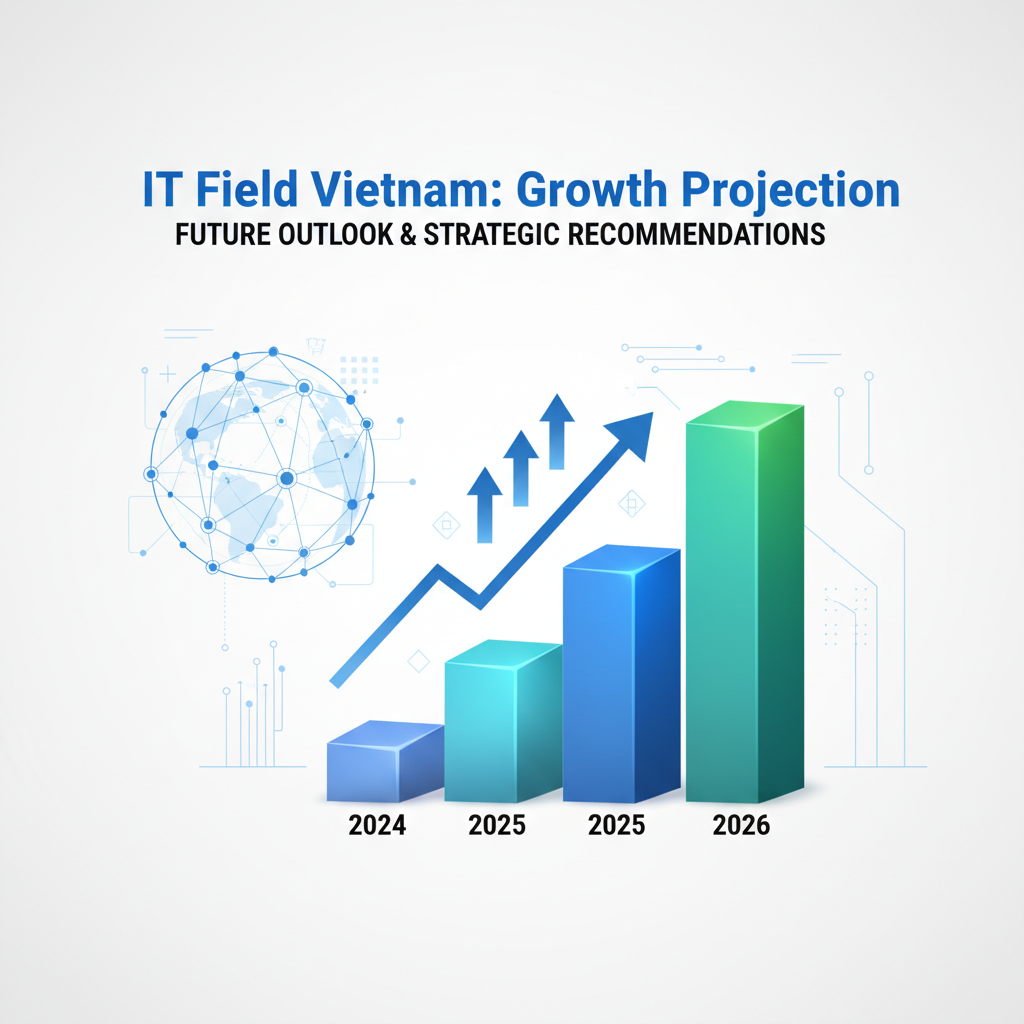
Vietnam’s IT market is projected to experience sustained, vigorous growth in the coming years. IT spending is anticipated to surge across both public and private sectors, driven by the accelerating adoption of advanced technologies. Key drivers include heightened demand for cloud computing solutions, significant investments in cybersecurity infrastructure, and the widespread integration of AI adoption across various industries. Revenue growth in the IT sector will be substantially boosted by increasing IT services export, particularly in software development and Business Process Outsourcing (BPO). This growth is further supported by a thriving startup ecosystem that continues to attract venture capital and foster innovation. The country’s strong economic fundamentals and strategic focus on becoming a regional tech hub underpin these optimistic projections. Furthermore, the push for e-commerce growth and the expansion of fintech services are creating new revenue streams and investment opportunities within the IT landscape, solidifying Vietnam’s position as an attractive market for tech enterprises.
2. Recommendations for IT Professionals & Businesses to Thrive
For IT professionals and businesses operating in Vietnam, adaptability and continuous skill development are paramount. Professionals must prioritize acquiring expertise in cutting-edge areas such as data analytics, artificial intelligence, machine learning, and advanced cybersecurity. Focusing on niche specializations like IoT development or blockchain technology will also provide a competitive edge. The emphasis on talent development should extend beyond technical skills to include project management, communication, and critical thinking, ensuring a well-rounded skilled workforce. Businesses, meanwhile, should invest heavily in R&D investment to foster innovation and develop proprietary solutions. Strategic partnerships, both domestic and international, can facilitate knowledge transfer and market access. Embracing agile methodologies and a customer-centric approach will be vital for delivering high-quality, relevant IT products and services. To stay competitive, companies should continuously monitor the evolving market demand trend report of IT field in vietnam and align their offerings accordingly. Vietnam’s commitment to creating a favorable business environment is highlighted by its consistent efforts to streamline regulations and support tech innovation.
A deep dive into the specific dynamics of the Vietnamese IT market reveals fascinating insights. For a comprehensive overview, consider reviewing this detailed analysis on Vietnam’s IT sector growth from the World Bank. The continuous evolution of technology demands that businesses remain agile and proactive. For further granular data and in-depth analysis on the sector, explore the most recent market demand trend report of IT field in vietnam.
3. Long-term Vision for Vietnam’s IT Hub Status in Southeast Asia
Vietnam’s ambition to become a leading IT hub in Southeast Asia is well within reach, underpinned by a clear long-term vision. This vision encompasses fostering a robust tech innovation ecosystem, attracting top-tier foreign direct investment, and nurturing a highly skilled workforce. Government policies are increasingly geared towards creating a conducive environment for technological advancement, including incentives for R&D investment and support for tech startups. Key to this vision is the continued expansion of IT services export, positioning Vietnam as a reliable and competitive outsourcing destination. The focus will also be on developing indigenous technology capabilities, moving beyond basic outsourcing to become a center for advanced software development and product innovation. By prioritizing education, digital infrastructure development, and international collaboration, Vietnam aims to rival established tech hubs in the region. The sustained digital transformation across all sectors will not only elevate the domestic market but also enhance Vietnam’s appeal as a destination for global tech companies looking for a strategic base in Asia. This commitment ensures that Vietnam’s IT sector will continue to be a powerhouse of growth and innovation.
Partner with Shelby Global
You are looking for reliable HR Sevice Suppliers? Contact Shelby Global Now! To connect with verified talents and upgrade your orginization.
—————————————
References
– World Bank, Vietnam’s economic growth remains resilient: https://www.worldbank.org/en/country/vietnam/overview
– driving digital transformation in Vietnam: https://www.pwc.com/vn/en/insights/digital-transformation-vietnam-driving-skills-investment.html
– Vietnam Digital Economy Outlook: https://www.worldbank.org/en/country/vietnam/publication/vietnam-digital-economy-report-2023
– Vietnam’s Digital Economy Continues Rapid Growth: https://www.worldbank.org/en/news/press-release/2023/11/08/vietnam-s-digital-economy-continues-rapid-growth
– Vietnam Economic Overview – World Bank: https://www.worldbank.org/en/country/vietnam/overview