
Foundation: Understanding the Vietnamese IT SME Landscape
For a new CEO stepping into Vietnam’s vibrant and rapidly evolving IT sector, understanding the intricate landscape of Small and Medium-sized Enterprises (SMEs) is paramount. This foundational insight is crucial for developing an effective HR strategy, especially when looking at a Step by Step to understand SMEs HR Structure for the fresh the CEO in IT field in vietnam. The Vietnamese IT market presents unique opportunities and challenges, making a deep dive into its HR dynamics indispensable for sustained growth and success. From navigating talent acquisition in Vietnam to fostering a robust company culture, new leaders must grasp the local context.

1. Definition and Characteristics of IT SMEs in Vietnam
In Vietnam, IT SMEs typically encompass companies with less than 250 employees and annual revenue below VND 100 billion (approx. USD 4.3 million), though these figures can vary slightly depending on the specific government decree. These entities are the backbone of Vietnam’s booming digital economy, often characterized by agility, innovation, and a strong focus on specific technology niches. Common characteristics include:
- Technological Specialization: Many IT SMEs in Vietnam specialize in areas like custom software development, mobile app creation, AI/ML solutions, blockchain, or fintech. This specialization allows them to carve out a competitive edge despite their size.
- Young Workforce: The Vietnamese IT workforce is notably young and digitally native, eager to learn and adapt to new technologies. This creates a dynamic environment but also poses challenges related to experience gaps and high expectations for career progression.
- Lean Operations: Often operating with lean teams and limited resources, these companies prioritize efficiency. This impacts their HR structure, which might be less formalized than larger corporations, requiring fresh CEOs to be adaptable in their approach to HR best practices in IT Vietnam.
- Entrepreneurial Culture: Many IT SMEs originate from entrepreneurial ventures, fostering a culture of innovation, flexibility, and strong team bonds. This can be a powerful retention tool if managed correctly.
- Growth Ambition: Despite being SMEs, most harbor ambitious growth plans, often eyeing regional or international expansion, which necessitates scalable HR strategies and robust workforce development for Vietnam tech.
Understanding these fundamental characteristics is the first crucial step in a Step by Step to understand SMEs HR Structure for the fresh the CEO in IT field in vietnam, laying the groundwork for effective HR management and providing invaluable fresh CEO HR insights.
2. Common Growth Stages and Business Models in Vietnamese IT SMEs
Vietnamese IT SMEs generally traverse identifiable growth stages, each bringing distinct HR structure challenges and opportunities. A CEO guide for IT SMEs in Vietnam must account for these evolutionary phases:
- Startup Phase (0-2 years): Characterized by small, often founder-led teams. HR is typically informal, handled by founders or operations managers. The focus is on attracting initial talent, often through personal networks and shared vision. Employee engagement in IT Vietnam is high due to close-knit teams, but managing HR in IT SMEs at this stage is about survival and securing key technical expertise.
- Growth Phase (2-7 years): As projects scale and client bases expand, teams grow rapidly. This phase demands more formalized HR processes, including structured recruitment in Vietnam IT, performance management, and basic compensation frameworks. The business models IT Vietnam HR often shift from purely project-based to a mix of outstaffing, product development, or retainer services. Companies might specialize further or seek external investment, leading to more complex Vietnamese IT SMEs HR challenges.
- Maturity Phase (7+ years): Larger SMEs develop more sophisticated HR functions, focusing on talent retention strategies in Vietnam, leadership development, and establishing a strong, scalable company culture in IT Vietnam. They may operate multiple business units (e.g., custom development, product development, consulting) and often pursue international markets. HR strategy for tech SMEs at this stage becomes highly strategic, aligned with long-term business goals.
Common business models include IT outsourcing (outstaffing, dedicated teams), product development (SaaS, mobile apps), and niche consulting services. Each model dictates different talent profiles and HR needs, making a flexible HR structure IT Vietnam critical.
3. Unique HR Challenges: Talent Acquisition, Retention, and Culture in IT
New CEOs in Vietnamese IT SMEs face a distinct set of HR challenges that require nuanced understanding and strategic solutions:
- Intense IT Talent Acquisition Vietnam Competition: The demand for skilled IT professionals far outstrips supply. Tech giants and well-funded startups compete fiercely, offering competitive salaries and benefits. SMEs often struggle to match these offers, necessitating creative recruitment strategies focusing on growth opportunities, work-life balance, and unique company culture. This is a primary challenge for Vietnamese IT SMEs HR.
- Talent Retention Strategies Vietnam: High turnover rates are a constant concern. Employees, especially junior and mid-level, are frequently poached or seek new opportunities for faster career progression or higher compensation. Effective retention requires more than just salary; it involves robust career development paths, continuous learning opportunities, engaging projects, and a supportive work environment.
- Building and Maintaining Company Culture in IT Vietnam: While many Vietnamese IT SMEs begin with a strong, informal culture, scaling up can dilute it. A fresh CEO must actively shape and embed values, communication practices, and employee engagement IT Vietnam initiatives to maintain a cohesive and productive environment. This includes fostering psychological safety and celebrating successes.
- Skill Gaps and Workforce Development: Rapid technological changes mean skills quickly become outdated. SMEs must invest in continuous learning and upskilling programs to ensure their teams remain competitive. This also touches on managing HR in IT SMEs to identify future skill needs.
- Compensation and Benefits Expectations: Vietnamese IT professionals, particularly those in senior roles, have high expectations for compensation and non-monetary benefits. SMEs must strike a balance between competitive packages and sustainable business operations, often innovating with flexible benefits or equity options.
Addressing these unique challenges effectively requires a strategic and proactive HR approach, ensuring that the human capital is not just managed but empowered, which is central to any CEO guide for IT SMEs in Vietnam and truly understanding the Step by Step to understand SMEs HR Structure for the fresh the CEO in IT field in vietnam.
Core Components of SME HR Structure in IT
Dive into the essential building blocks of any HR department within an IT SME, detailing their functions and typical setups while considering local compliance.
For a fresh CEO stepping into Vietnam’s dynamic IT landscape, understanding the foundational HR structure is paramount. This guide clarifies essential components, enabling effective talent management and compliance from day one. Building a robust HR framework is critical for sustained growth, especially in a competitive market where skilled IT professionals are highly sought after.
1. Key HR Functions: Recruitment, Compensation & Benefits, L&D, Employee Relations
A well-rounded HR department performs several critical functions to support an IT SME’s objectives:
- Recruitment & Staffing: In Vietnam’s booming IT sector, attracting top talent is a constant challenge. This function involves defining job roles, sourcing candidates (online platforms, tech communities), interviewing, and making offers. For an IT SME, understanding niche technical skills and local salary expectations is key. Efficient recruitment ensures your company brings in the right engineers and developers to drive innovation.
- Compensation & Benefits (C&B): Competitive C&B packages are crucial for attracting and retaining IT professionals. This function focuses on designing salary structures, performance-based bonuses, health insurance, social insurance contributions (as mandated by Vietnamese law), and other perks. It requires staying updated on market trends for IT salaries in Vietnam and ensuring compliance with local labor regulations. A strategic C&B plan boosts employee morale and reduces turnover.
- Learning & Development (L&D): The IT industry evolves rapidly, making continuous learning indispensable. L&D initiatives include identifying skill gaps, organizing training programs (technical certifications, soft skills), mentoring, and promoting continuous improvement. Investing in L&D ensures your IT team remains at the forefront of technology, directly impacting productivity and innovation.
- Employee Relations (ER): This function fosters a positive and productive work environment. It encompasses conflict resolution, grievance handling, performance management, and disciplinary actions. Effective ER strategies promote open communication, uphold company values, and manage workplace issues promptly, contributing to high employee satisfaction and retention.
2. Typical HR Department Setup: Generalist vs. Specialist Models for SMEs
The structure of an HR department in an IT SME typically evolves with company growth:
- Generalist Model (Common for Smaller SMEs): Initially, many IT SMEs in Vietnam operate with a lean HR team, often a single HR generalist. This individual handles all key functions – recruitment, payroll, basic benefits, and employee relations. This model is cost-effective and suitable for companies with fewer than 50-100 employees, where task volume doesn’t yet warrant a dedicated specialist. The HR generalist acts as a strategic partner, deeply embedded in daily operations.
- Specialist Model (For Growing SMEs): As an IT SME scales, demands for specific HR functions increase. A company hiring dozens of developers monthly might need a dedicated Technical Recruiter. Managing complex compensation for a larger workforce could necessitate a C&B specialist. This transition often involves adding specialists while retaining a generalist who oversees overall HR strategy. For a fresh CEO, starting with a skilled HR generalist or outsourcing initial functions might be the most pragmatic first step. Understanding the full scope of an Step by Step to understand SMEs HR Structure for the fresh the CEO in IT field in vietnam helps in making these critical staffing decisions.
3. Navigating Basic Legal & Compliance for HR in Vietnam’s IT Sector
Compliance with Vietnam’s labor laws is non-negotiable for any SME. Ignoring regulations leads to significant penalties, reputational damage, and operational disruptions. Key areas for IT SMEs include:
- Labor Code of Vietnam: This legislation governs employment relationships, working conditions, and termination. Understand provisions for employment contracts (must be in writing), probationary periods, working hours (standard 48 hours/week), and annual leave.
- Social, Health, and Unemployment Insurance (SHUI): Employers and employees must contribute. HR is responsible for accurate calculation, timely payment, and proper registration.
- Personal Income Tax (PIT): HR ensures proper calculation and deduction from salaries and timely submission.
- Foreign Employee Management: Hiring expatriate IT professionals requires additional compliance for work permits and temporary residence cards.
- Data Protection: HR must ensure compliance with Vietnamese regulations regarding employee data.
Staying abreast of legislative changes is crucial. Consulting with legal experts or HR consultants specializing in Vietnamese labor law is highly recommended. For detailed insights into recent updates, refer to authoritative sources on Vietnam’s New Labour Code: Key Amendments for Businesses. Proactive compliance protects your SME and fosters trust among your employees.
Step-by-Step HR Structure Assessment for New IT CEOs
Stepping into the role of a new CEO, especially in the dynamic IT sector of Vietnam, demands a comprehensive understanding of every facet of the business. Among the most critical yet often overlooked areas is Human Resources. A robust HR framework is the backbone of any successful tech company, driving talent acquisition, retention, and overall organizational effectiveness. This guide provides a practical, actionable approach for a new IT CEO to evaluate their company’s existing HR framework, identify gaps, and understand current operational effectiveness, focusing on a Step by Step to understand SMEs HR Structure for the fresh the CEO in IT field in vietnam.
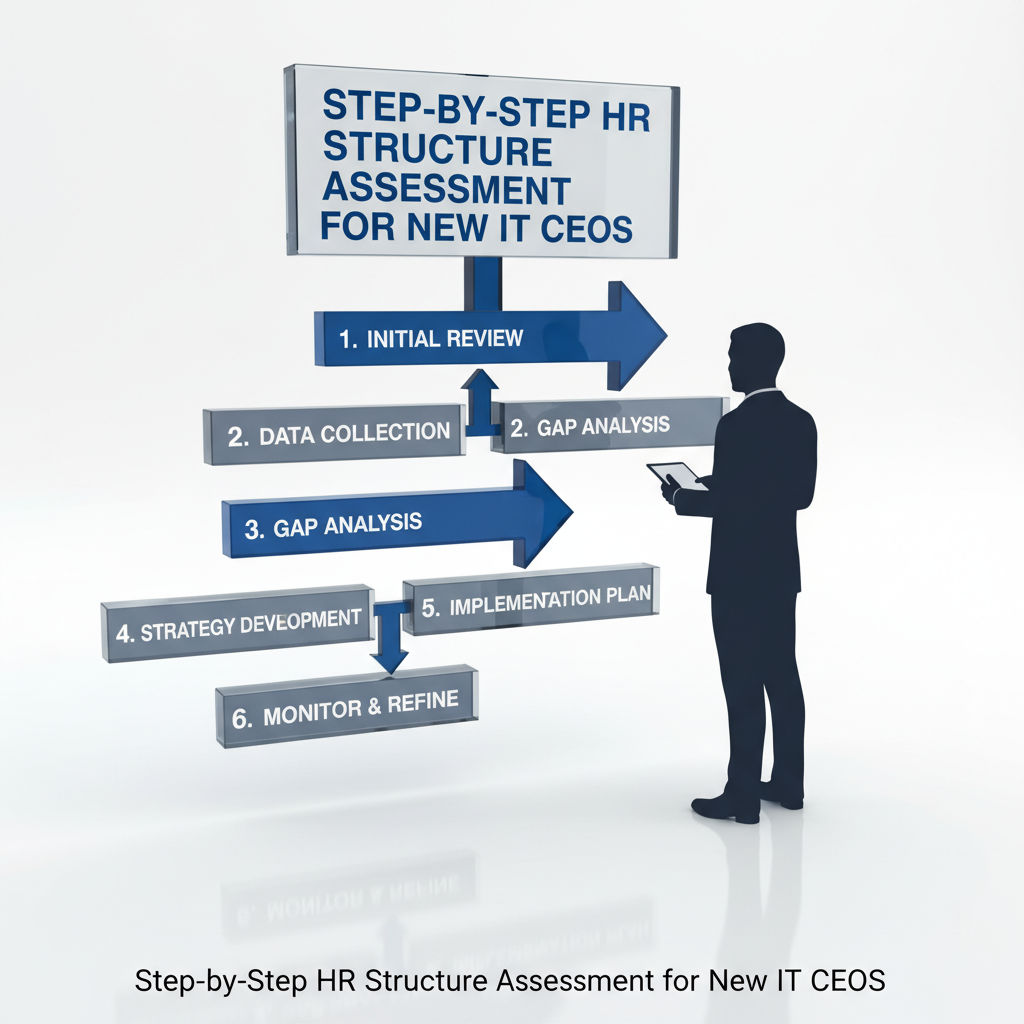
1. Conducting an Initial HR Audit and Gap Analysis (e.g., processes, policies)
The first critical step for any new CEO is to perform a thorough HR audit. This isn’t just about compliance; it’s about establishing a baseline for future improvements and strategic alignment. Begin by reviewing all existing HR documentation, including employee handbooks, contracts, job descriptions, performance review templates, compensation policies, and training materials. Pay close attention to recruitment and onboarding processes: How are new hires attracted, screened, and integrated into the team? For IT SMEs in Vietnam, common areas for scrutiny include the clarity of employment contracts in line with Vietnamese labor law, the consistency of performance management systems, and the fairness of compensation and benefits structures.
A comprehensive audit also involves analyzing HR data. Look at key metrics such as turnover rates (overall and by department/role), time-to-hire, training completion rates, and employee satisfaction survey results (if available). Compare these internal benchmarks against industry standards for IT companies in Vietnam and global best practices. The gap analysis will then highlight discrepancies between your current HR practices and desired outcomes, revealing areas where processes are inefficient, policies are outdated, or crucial functions are entirely missing. For instance, are there clear policies for intellectual property protection relevant to tech development? Is there a defined process for handling employee grievances?
2. Identifying Current HR Strengths, Weaknesses, and Opportunities for Improvement
Once the audit provides a factual overview, the next step is to synthesize this information into a clear understanding of the HR function’s inherent strengths, prevailing weaknesses, and untapped opportunities. Strengths might include a strong company culture, a highly engaged HR team member, or effective local recruitment strategies that consistently attract quality talent. A new IT CEO might find that the current HR team excels at fostering a collaborative environment, crucial for successful project delivery in tech. These strengths should be leveraged and built upon.
Conversely, weaknesses often manifest as bottlenecks or inefficiencies. This could be anything from a lack of automated HR systems (HRIS), leading to manual data entry errors, to inconsistent application of policies across departments. For a growing IT SME in Vietnam, a significant weakness might be the absence of a structured career development framework, hindering employee retention. Identifying these weaknesses is crucial for targeted intervention. Furthermore, every weakness presents an opportunity. For example, the lack of an HRIS creates an opportunity to invest in technology that streamlines operations, enhances data analytics, and improves the employee experience. Opportunities for improvement also extend to strategic areas like enhancing employer branding to attract top-tier tech talent, developing leadership programs, or aligning HR initiatives more closely with the company’s long-term business objectives, such as expanding into new markets or developing innovative products. Understanding these elements is key to building an effective HR strategy.
3. Engaging Stakeholders: Interviews with Employees, Managers, and Founders on HR Perceptions
While data and documentation provide the ‘what,’ stakeholder engagement provides the invaluable ‘why’ and ‘how.’ A new CEO must directly engage with employees, managers, and founders to gather qualitative insights into their perceptions of HR. This step is vital for understanding the lived experience of HR practices within the organization. Conduct confidential one-on-one interviews or focus groups with a representative sample of employees from various departments and seniority levels. Ask about their satisfaction with HR services, their understanding of company policies, perceived fairness of processes, and opportunities for growth and development. Do employees feel heard and supported by HR?
Similarly, interview line managers about the effectiveness of HR support for their teams. Do they receive adequate assistance with recruitment, performance management, and conflict resolution? Are they equipped with the tools and training necessary to manage their teams effectively? Their feedback will highlight operational challenges and areas where HR might be failing to meet business needs. Finally, engage with the company’s founders and senior leadership to understand the historical context of HR decisions, the strategic intent behind existing policies, and their vision for the HR function’s future contribution to the business. This holistic feedback from all levels will not only validate or challenge audit findings but also uncover underlying issues, cultural nuances, and potential resistance to change. Synthesizing these diverse perceptions will paint a comprehensive picture of the current HR landscape and pave the way for informed, strategic improvements in the HR structure.
Optimizing & Building a Robust HR Strategy for Growth
A fresh CEO in the IT field in Vietnam, especially in an SME, faces unique challenges and opportunities. Understanding and optimizing the HR structure is paramount for sustainable growth. This section offers a Step by Step to understand SMEs HR Structure for the fresh the CEO in IT field in vietnam, guiding you through developing and implementing improvements that align with business objectives, foster innovation, and cultivate a positive, high-performing work environment. Your HR strategy isn’t just about administrative tasks; it’s a strategic pillar that directly impacts your company’s ability to attract, develop, and retain the tech talent essential for success in a competitive market.
1. Aligning HR Strategies with Overall Business Goals and IT Industry Trends
For an IT SME in Vietnam, HR is not merely a support function but a strategic partner. The first step for any new CEO is to ensure that HR initiatives are inextricably linked to the company’s overarching business objectives. Are you aiming for aggressive market expansion, product innovation, or operational efficiency? Your HR strategy must directly support these goals. This involves understanding the current IT landscape in Vietnam, including market demand for specific skills, competitive salary benchmarks, and emerging technologies that could reshape your talent needs. For example, if your business aims to leverage AI, your HR strategy must focus on attracting or upskilling talent with AI expertise.
Furthermore, monitoring global and local IT industry trends is crucial. The rise of remote and hybrid work models, the increasing demand for niche skills like cybersecurity or data science, and the importance of diversity and inclusion are all factors that should inform your HR strategy. By proactively adapting to these trends, your HR department can become a catalyst for innovation and resilience, rather than just a reactive responder. This strategic alignment ensures that every HR dollar spent and every program implemented directly contributes to the company’s bottom line and future viability. A truly effective HR strategy considers not just today’s needs but anticipates tomorrow’s challenges, particularly in a fast-evolving sector like IT.
2. Developing a Targeted Talent Acquisition and Retention Strategy for IT Professionals
Attracting and retaining top IT talent in Vietnam is fiercely competitive. Your HR strategy must include a comprehensive and targeted approach. This begins with building a compelling employer brand that resonates with tech professionals. What makes your company unique? Is it a culture of innovation, opportunities for rapid career advancement, a commitment to work-life balance, or competitive compensation and benefits? Clearly articulate your Employee Value Proposition (EVP).
Your acquisition strategy should extend beyond traditional job boards. Explore specialized tech platforms, industry events, university partnerships, and professional networks. Consider implementing a robust referral program, as trusted recommendations often yield high-quality candidates. For retention, focus on creating an engaging and supportive work environment. This includes competitive salaries, performance-based bonuses, and comprehensive health benefits tailored to the needs of modern professionals. Beyond financial incentives, foster a culture of respect, transparency, and psychological safety. Offer flexible work arrangements where feasible, as this is a highly valued perk in the tech world. Regular stay interviews and robust onboarding processes can also significantly reduce early attrition. The goal is to make your company not just a place to work, but a place where IT professionals want to grow their careers. For deeper insights into current trends, the 2024 Deloitte Global Human Capital Trends report emphasizes that focusing on the worker-employer relationship and personalized employee experience is paramount for talent retention in the current market, underscoring the need for tailored strategies beyond one-size-fits-all approaches.
3. Implementing Effective Performance Management Systems and Employee Development Programs
Once you’ve acquired talent, nurturing it is key. A modern performance management system moves beyond annual reviews to embrace continuous feedback, coaching, and goal setting. For IT professionals, this might involve agile performance reviews aligned with project cycles, peer feedback mechanisms, and clear metrics for technical contributions. The system should be transparent, fair, and focused on development rather than just evaluation. Set clear, measurable objectives (OKRs or KPIs) that link individual performance directly to team and company goals.
Complementing this, robust employee development programs are vital for growth and retention. Tech skills evolve rapidly, so provide opportunities for continuous learning through workshops, online courses, certifications, and mentorship programs. Encourage cross-functional projects to broaden skill sets and foster collaboration. Establish clear career paths for technical and leadership roles, demonstrating to employees how they can advance within the company. Invest in leadership development for your team leads and managers, as they play a critical role in employee engagement and performance. By fostering a culture of continuous learning and growth, you not only enhance individual capabilities but also build a more skilled, adaptable, and resilient workforce capable of driving your IT SME’s success in Vietnam.
Implementing these strategic HR improvements is a continuous journey, not a one-time project. By aligning HR with business objectives, aggressively pursuing and retaining top talent, and investing in continuous development, a fresh CEO can transform their HR function from administrative overhead into a powerful engine for innovation and sustainable growth in the dynamic IT landscape of Vietnam.
Future-Proofing HR in Vietnamese IT SMEs 2026
The rapidly evolving landscape of Vietnam’s IT sector presents unique challenges and unparalleled opportunities for small and medium-sized enterprises (SMEs). As the nation continues its digital transformation journey, HR departments within these agile IT firms must look beyond day-to-day operations and strategically future-proof their practices to ensure sustainable growth and competitive advantage by 2026 and beyond. This foresight is critical for new CEOs entering the Vietnamese IT field, who need a clear roadmap to navigate HR complexities and build robust organizational structures. Understanding the nuances of HR within this dynamic environment requires a comprehensive approach, encompassing technology, legal compliance, and cultural development. For a fresh CEO, it’s essential to embark on a Step by Step to understand SMEs HR Structure for the fresh the CEO in IT field in vietnam, grasping how strategic HR contributes directly to business success and talent retention in this competitive market.
1. Adapting to Digital Transformation and HR Technology Adoption (HR Tech Stack)
The bedrock of future-proofed HR in Vietnamese IT SMEs lies in embracing digital transformation and judiciously adopting HR technology. By 2026, manual HR processes will be largely obsolete, replaced by integrated HR Tech Stacks that streamline everything from recruitment and onboarding to performance management and payroll. SMEs must invest in scalable solutions that can grow with their company, considering cloud-based HRIS (Human Resources Information Systems), applicant tracking systems (ATS), and sophisticated learning management systems (LMS). These tools not only enhance efficiency but also provide valuable data analytics, enabling HR to make data-driven decisions regarding talent acquisition, employee engagement, and workforce planning. Implementing AI-powered tools for resume screening, chatbots for employee queries, and predictive analytics for turnover risk are no longer luxuries but necessities. This strategic adoption of technology empowers HR to shift from administrative tasks to more strategic initiatives, directly impacting employee experience and operational excellence. According to Deloitte’s “Future of HR Technology Trends” insights, the continuous evolution of HR tech demands proactive exploration and integration for competitive advantage. This crucial step is part of the Step by Step to understand SMEs HR Structure for the fresh the CEO in IT field in vietnam, ensuring that operational efficiency and future growth are underpinned by robust technological infrastructure.
2. Navigating Evolving Vietnamese Labor Laws and Global HR Best Practices
Maintaining compliance with Vietnamese labor laws while simultaneously integrating global HR best practices is a delicate balance that HR in IT SMEs must master. The Vietnamese legal framework is continuously updated to reflect economic changes and international labor standards. HR professionals must stay abreast of amendments to the Labor Code, social insurance regulations, and policies concerning foreign workers, remote work, and data privacy (such as GDPR-like principles potentially emerging locally). Beyond compliance, integrating global best practices—such as performance-based compensation models, flexible work arrangements, and robust employee grievance procedures—can significantly enhance an SME’s employer brand and attract top-tier talent. Regular audits of HR policies, coupled with continuous training for HR staff and managers on legal updates and ethical considerations, are paramount. For a burgeoning IT company, understanding the intricacies of both local compliance and international benchmarks is critical for expansion and reputation. This includes ensuring fair contracts, competitive benefits, and a workplace that respects employee rights, setting a strong foundation for a sustainable and ethical business. These 16 key considerations are vital for any CEO looking to establish a resilient HR framework.
3. Fostering a Culture of Innovation, Diversity, Equity, and Inclusion (DEI)
In the competitive landscape of Vietnamese IT, fostering a culture of innovation, diversity, equity, and inclusion (DEI) is not just a moral imperative but a strategic business advantage. An innovative culture encourages employees to experiment, take calculated risks, and contribute fresh ideas, which is vital for an IT SME operating in a fast-changing technological environment. HR plays a pivotal role in cultivating this by designing reward systems for innovation, promoting cross-functional collaboration, and providing platforms for idea generation. Simultaneously, a robust DEI strategy ensures that the company attracts a wider pool of talent, benefiting from diverse perspectives and experiences. This includes proactive recruitment strategies to reduce unconscious bias, creating inclusive workplace policies, and fostering an environment where all employees feel valued, respected, and empowered to contribute their unique insights. Diversity in gender, age, background, and thought processes fuels creativity and problem-solving, directly impacting a company’s ability to innovate and compete globally. Equity ensures fair opportunities and treatment for all, while inclusion guarantees every voice is heard. Integrating these principles from the outset is a cornerstone for any CEO aiming to build a dynamic and resilient IT enterprise in Vietnam, providing a clear Step by Step to understand SMEs HR Structure for the fresh the CEO in IT field in vietnam that champions progressive workplace values.
Partner with Shelby Global
You are looking for reliable HR Sevice Suppliers? Contact Shelby Global Now! To connect with verified talents and upgrade your orginization.
—————————————
References
– Vietnam’s Digital Economy on Track for Record US$50 Billion in 2025: https://www.aseanbriefing.com/news/vietnams-digital-economy-on-track-for-record-us50-billion-in-2025/
– Vietnam’s New Labour Code: Key Amendments for Businesses: https://www.vietnam-briefing.com/news/vietnams-new-labour-code-key-amendments-for-businesses.html/
– SHRM: Developing Effective HR Strategies: https://www.shrm.org/resources-and-tools/hr-topics/talent-acquisition/effective-hr-strategies
– 2024 Deloitte Global Human Capital Trends report: https://www2.deloitte.com/us/en/insights/topics/talent/global-human-capital-trends.html
– Future of HR Technology Trends | Deloitte Insights: https://www2.deloitte.com/us/en/insights/topics/human-capital-trends/2023/future-of-hr-technology-trends.html