Understanding Malaysia’s Logistics Landscape & Salary Drivers
Malaysia’s logistics sector is a critical pillar of its economic development, facilitating trade, manufacturing, and the burgeoning e-commerce market. The dynamics within this industry profoundly influence the Salary Defining Strategy for all job titles in logistics field in malaysia. As companies navigate a competitive global landscape, understanding the intricate interplay of market forces, economic indicators, and regional nuances becomes paramount for attracting and retaining top talent. This section explores the current state of the logistics industry in Malaysia, identifying key economic factors and market forces that influence salary structures across various roles, from logistics coordinators to supply chain managers, freight forwarding specialists, and warehouse management professionals. We’ll delve into the latest Malaysia logistics salary trends, providing insights into the evolving logistics job market Malaysia and critical aspects of supply chain salaries Malaysia, including considerations for logistics talent acquisition Malaysia, and the overall logistics industry outlook Malaysia.

1. Current Growth & Challenges in Malaysian Logistics
The Malaysian logistics sector is experiencing robust growth, primarily fueled by the expansion of e-commerce, government investments in infrastructure (like ports and highways), and the country’s strategic position in global supply chains. This growth creates demand for skilled professionals across various segments, from those influencing freight forwarding salaries Malaysia to those in warehouse management salaries Malaysia. Initiatives such as the National Logistics and Trade Facilitation Masterplan aim to enhance efficiency and connectivity. However, this promising outlook is tempered by significant challenges. A persistent talent shortage, particularly in specialized areas like cold chain logistics salaries Malaysia and logistics technology salaries Malaysia, is a major hurdle. The industry also grapples with the need for greater digitalization and automation to keep pace with global standards, impacting the demand for specialized skills. Furthermore, the push towards sustainable logistics adds another layer of complexity, influencing operational costs and skill requirements. According to MIDA, the Malaysian Investment Development Authority, the sector is continuously being modernized to support key industries, reflecting both opportunities and the need for significant investment in infrastructure and human capital. For a comprehensive overview of these developments, refer to MIDA’s Overview on Malaysia’s Transport & Logistics Sector. This dynamic environment directly affects the Salary Defining Strategy for all job titles in logistics field in malaysia, as firms must balance competitive compensation with operational viability to secure the right expertise for roles spanning from logistics coordinator salary Malaysia to last-mile delivery salaries Malaysia and beyond.
2. Economic Indicators Impacting Logistics Salaries (e.g., inflation, GDP)
Macroeconomic factors play a decisive role in shaping Malaysia logistics salary trends. The nation’s Gross Domestic Product (GDP) growth directly correlates with business activity and trade volumes, subsequently influencing demand for logistics services and the ability of companies to offer competitive wages. A robust GDP often translates to higher profits, allowing for better logistics manager salary Malaysia and attractive packages for specialists. Conversely, economic slowdowns can lead to tighter budgets and more conservative salary adjustments. Inflation is another critical factor; as the cost of living increases, employees naturally expect higher wages to maintain their purchasing power. This impacts the real value of supply chain salaries Malaysia and puts pressure on employers to adjust compensation. Furthermore, government policies, such as minimum wage mandates and labor laws, directly set a baseline for entry-level positions and ripple through the entire salary structure. The global economic climate, including trade tensions and commodity prices, also indirectly affects Malaysian logistics by influencing import/export volumes. Companies must regularly engage in salary benchmarking logistics Malaysia to ensure their compensation packages remain competitive amidst these fluctuating economic landscapes. For a deeper dive into formulating effective compensation frameworks, explore strategies on how to build a comprehensive Salary Defining Strategy for all job titles in logistics field in malaysia. This holistic approach ensures that talent acquisition and retention efforts are aligned with market realities and economic shifts.
3. Regional vs. Urban Salary Disparities
A significant aspect of Malaysia logistics salary trends is the notable disparity between urban centers and more rural or less developed regions. Major economic hubs like the Klang Valley (Kuala Lumpur, Selangor), Penang, and Johor Bahru, which are home to key industrial zones, ports, and international airports, typically offer higher salaries across all logistics roles, including those in e-commerce logistics salaries Malaysia and specialized cold chain logistics salaries Malaysia. This is primarily due to several factors: the higher cost of living in these urban areas, a greater concentration of multinational corporations and advanced logistics operations, and intense competition for skilled talent. Professionals in these regions often benefit from a wider array of opportunities and more sophisticated roles, commanding a premium for their expertise. For example, a logistics manager salary Malaysia in Kuala Lumpur could be significantly higher than that for a similar role in a smaller town. Conversely, while job opportunities might be fewer and salaries generally lower in less urbanized areas, the cost of living is also considerably lower, potentially offering a different value proposition and work-life balance. Understanding these regional differences is crucial for any effective Salary Defining Strategy for all job titles in logistics field in malaysia, ensuring that compensation packages are localized and competitive within their specific markets. The “skills premium logistics Malaysia” is often more pronounced in urban settings where demand for cutting-edge capabilities and experience is highest.
The Malaysian logistics landscape is dynamic, shaped by global trends, domestic policies, and regional economics. Developing a sound Salary Defining Strategy for all job titles in logistics field in malaysia requires a nuanced understanding of these factors, from the current growth drivers and challenges to the influence of macroeconomic indicators and pronounced urban-rural salary disparities. By strategically aligning compensation with market realities and the evolving demands of the industry, businesses can secure the talent necessary to thrive in this vital sector.
Market Benchmarking & Data-Driven Compensation
To attract and retain top talent in Malaysia’s dynamic logistics sector, a robust salary defining strategy for all job titles in logistics field in Malaysia is paramount. This isn’t merely about paying employees; it’s about making data-driven decisions that align with market realities, company objectives, and employee expectations. Effective market benchmarking ensures your organization offers competitive pay, mitigating high turnover and enhancing your employer brand. Understanding current Malaysia logistics salary trends and logistics compensation Malaysia allows companies to optimize their remuneration packages, covering roles from logistics coordinator pay Malaysia to senior procurement manager salary Malaysia. A strategic approach to supply chain salary benchmarks Malaysia is crucial for long-term success, ensuring your organization remains an attractive employer in a competitive market for market rate logistics jobs Malaysia.
1. Sources for Logistics Salary Data in Malaysia (Surveys, Consultancies, Job Boards)
Establishing a competitive pay structure begins with comprehensive data collection. Organizations must tap into reliable sources to understand competitive pay logistics Malaysia. These sources provide the foundational data for an informed salary defining strategy for all job titles in logistics field in Malaysia:
- Specialized Salary Surveys: These are arguably the most authoritative sources. Reputable HR consultancies like Mercer, Aon, and Korn Ferry conduct annual or biennial salary surveys, often segmented by industry, company size, and specific roles. While these can be an investment, they provide granular data, including base salaries, bonuses, and benefits, for positions ranging from warehouse manager salary Malaysia to freight forwarder salary Malaysia. Local Malaysian HR firms might also offer relevant logistics-specific reports, detailing the current logistics industry salary report Malaysia.
- Compensation Consultancies: Beyond surveys, specialized compensation consultants can provide bespoke analysis, helping companies interpret data and develop tailored compensation structures. They possess deep insights into Malaysia logistics salary trends and emerging trends like compensation for roles in e-commerce logistics salary Malaysia and last-mile delivery compensation Malaysia.
- Online Job Boards and Recruitment Agencies: Platforms like JobStreet, LinkedIn, and specialized logistics recruitment agencies offer a pulse on current market demand and advertised salary ranges. While less precise than formal surveys, they provide real-time insights into what competitors are offering for roles such as transportation manager salary Malaysia or customs broker salary Malaysia. This data can be particularly useful for entry-level to mid-level positions and for gauging immediate Malaysia logistics salary trends. Recruitment agencies, in particular, often have proprietary data from placements, making them valuable partners.
- Industry Associations: Local logistics and supply chain associations often compile or commission salary reports specific to the Malaysian market, offering aggregated data that reflects the broader logistics industry salary report Malaysia.
- Government Labor Statistics: While less specific to logistics roles, national labor statistics can provide macro-level economic context and average wage growth across sectors, aiding in overall compensation strategy.
2. Analyzing Competitor Compensation Strategies
Understanding what competitors offer is pivotal for a strong salary defining strategy for all job titles in logistics field in Malaysia. This analysis goes beyond simple salary figures and delves into the entire remuneration package to ensure your supply chain salary benchmarks Malaysia are truly competitive.
- Direct Competitors: Identify companies that compete for similar talent in the Malaysian logistics sector. These might be other 3PLs, shipping lines, manufacturing firms with large internal logistics departments, or even burgeoning e-commerce giants. Collect data on their advertised salaries, benefits (e.g., health insurance, provident fund contributions, annual leave, flexible work options), and incentive structures for roles like inventory control salary Malaysia.
- Indirect Competitors: Consider companies outside your immediate sector that may recruit individuals with transferable logistics skills. For example, a data analyst in a tech firm might be an indirect competitor for a logistics planner with strong analytical capabilities, impacting the perception of logistics compensation Malaysia.
- Benchmarking Methodologies: Use methodologies like “pay grades” or “salary bands,” which define a range of pay for a particular job or group of jobs. This allows for flexibility while maintaining internal equity. For instance, a warehouse manager salary Malaysia might fall within a specific band, allowing for progression based on experience and performance.
- Total Rewards Approach: Competitor analysis should extend to total rewards – encompassing not just base pay, but also variable pay (bonuses, commissions), benefits (health, wellness, retirement), work-life programs, and career development opportunities. A robust total rewards package can differentiate your company even if base salaries are marginally lower than a competitor’s. This holistic view is crucial for roles with high demand, such as those in e-commerce logistics salary Malaysia, where talent might prioritize growth opportunities and a strong employer brand.
3. Factoring in Company Size, Revenue, and Industry Segment
Market benchmarking isn’t a one-size-fits-all approach. The specific context of your organization significantly influences your capacity and strategy for compensation, shaping your salary defining strategy for all job titles in logistics field in Malaysia and impacting Malaysia logistics salary trends across various roles.
- Company Size and Revenue: Larger organizations with higher revenues typically have greater capacity to offer more generous compensation packages, including higher base salaries, richer benefits, and more substantial bonuses. Smaller and medium-sized enterprises (SMEs) in Malaysia’s logistics sector, while potentially having tighter budgets, can differentiate themselves through non-monetary benefits, unique culture, or rapid career progression. This dynamic impacts pay for roles like transportation manager salary Malaysia; a manager at a global logistics giant will likely earn more than one at a local start-up.
- Industry Segment: The specific segment within logistics also plays a vital role. For example, a company specializing in high-value cold chain logistics might offer different compensation for a procurement manager salary Malaysia compared to a general freight forwarding company due to specialized skill requirements and profit margins. Similarly, the boom in e-commerce logistics salary Malaysia reflects the rapid growth and competitive nature of that specific segment. The last-mile delivery compensation Malaysia segment, often characterized by high volume and operational intensity, has its own unique pay structures. Data from sources like Statista’s reports on logistics and transportation industry in Malaysia can offer macro-level insights into industry growth and potential salary capacity, influencing your approach to supply chain salary benchmarks Malaysia.
- Geographic Location: While the focus is on Malaysia, specific regions within Malaysia (e.g., Klang Valley vs. smaller states) can have varying living costs and local market rates, influencing the overall logistics compensation Malaysia.
- Talent Scarcity: Roles requiring highly specialized skills or those experiencing a talent shortage will naturally command higher salaries. For example, professionals with expertise in supply chain digitization or advanced analytics for inventory control salary Malaysia may have more negotiating power regardless of company size. This directly impacts your ability to offer competitive pay logistics Malaysia.
By meticulously gathering data from diverse sources, analyzing competitor strategies, and contextualizing this information within your organization’s unique profile, you can develop a sophisticated and effective salary defining strategy for all job titles in logistics field in Malaysia that attracts and retains the best logistics talent.
Crafting a Tailored Salary Structure for Logistics Roles
In the dynamic and increasingly crucial logistics sector of Malaysia, attracting and retaining top talent hinges significantly on a well-designed and equitable Salary Defining Strategy for all job titles in logistics field in malaysia. A robust salary structure goes beyond mere compensation; it details the process of designing a robust and equitable salary structure that considers job complexity, required skills, and career progression within the logistics field. It serves as a strategic framework, ensuring internal fairness, external competitiveness, and ultimately, the operational efficiency and success of the entire supply chain. Developing such a strategy requires a methodical approach, taking into account the unique demands of roles ranging from warehouse operators and transport coordinators to complex supply chain managers and customs officers.
1. Job Evaluation Methods for Logistics Positions (e.g., point factor, grading)
The foundation of any equitable salary structure lies in thoroughly evaluating each logistics position. This process helps to determine the relative worth of jobs within an organisation, ensuring that roles requiring higher levels of skill, responsibility, effort, and working conditions are compensated appropriately. Two common and effective methods for logistics roles are the point factor system and job grading.
- Point Factor System: This method involves identifying key compensable factors (e.g., problem-solving complexity, required technical skills, accountability for assets, physical demands, communication skills) and assigning points to each factor based on the degree to which it is present in a specific job. For example, a Supply Chain Director might score high on problem-solving complexity and accountability, while a Forklift Operator would score higher on physical demands and operational skills. Summing these points provides a quantitative measure of a job’s value. This analytical approach offers transparency and helps to justify pay differences across various logistics roles, such as customs officers handling intricate regulations versus last-mile delivery drivers.
- Job Grading (or Classification): This method involves grouping similar jobs into grades or classifications based on their overall responsibilities, duties, and complexity. Jobs are typically compared against a set of predetermined criteria or benchmark jobs. For instance, all entry-level warehouse positions might fall into Grade 1, while supervisory roles like Warehouse Team Leader might be in Grade 3, and senior management roles like Logistics Operations Manager in Grade 6. This qualitative method is often simpler to implement for smaller organisations or for establishing broad categories, providing clear career progression paths within logistics operations roles.
Regardless of the method chosen, consistent application is key to establishing internal equity, ensuring that similar work is compensated similarly and that differences in pay are justifiable based on objective criteria.
2. Defining Pay Grades and Salary Bands
Once jobs have been evaluated and their relative worth established, the next step is to group them into pay grades and define salary bands for each grade. Pay grades are clusters of jobs with similar evaluated values, while salary bands set the minimum, midpoint, and maximum pay for all jobs within a particular grade. This structure provides flexibility for individual salary adjustments based on experience, performance, and market conditions.
To ensure external competitiveness, organisations must conduct thorough market benchmarking. This involves comparing their proposed salary ranges against industry averages for similar logistics job titles in Malaysia, leveraging data from reputable salary surveys and reports. Understanding what competitors are paying for roles like a “Warehouse Manager Salary” or a “Transport Coordinator Pay” is crucial for attracting and retaining talent. For insights into market rates and industry standards, employers often refer to comprehensive guides such as the Hays Asia Salary Guide, which provides valuable data for the Malaysian job market.
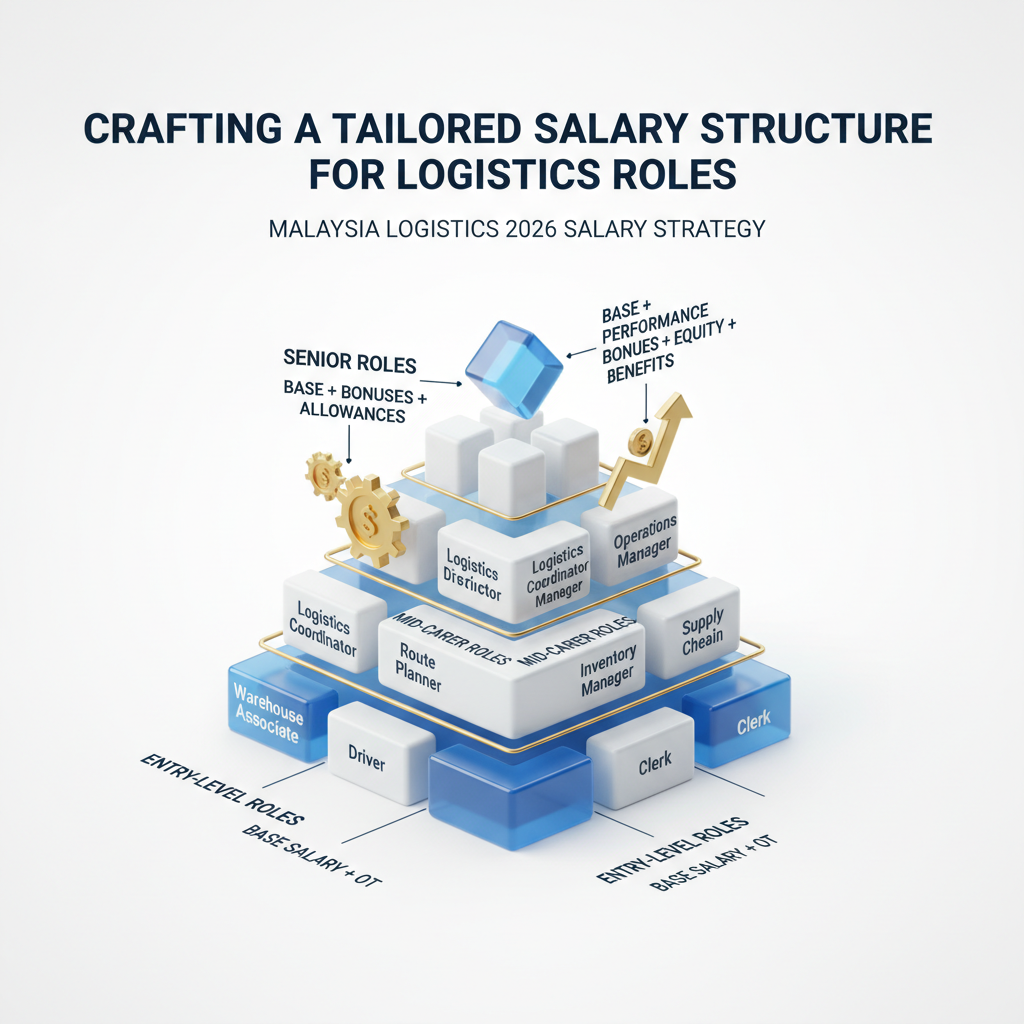
When defining salary bands, it’s common to have an overlap between adjacent grades, allowing for internal promotions without drastic salary jumps and accommodating high-performing individuals who might earn more than the minimum of the next grade. The midpoint of each band typically reflects the market rate for a fully competent performer in that role. This systematic approach ensures fair compensation practices across the organisation, providing clear growth opportunities and managing compensation costs effectively.
3. Integrating Performance-Based Incentives & Bonuses
While a robust base salary structure provides stability, integrating performance-based incentives and bonuses is vital for motivating logistics professionals and aligning individual contributions with organisational goals. Variable pay components encourage higher productivity, improved quality, and strategic thinking across the supply chain. These incentives can be tied to a variety of metrics relevant to the logistics field, offering a powerful tool for talent retention logistics.
Examples of performance metrics for logistics roles include:
- Operational Efficiency: On-time delivery rates, inventory accuracy (e.g., for warehouse manager salary), vehicle utilisation, and cost reduction per unit.
- Quality and Safety: Reduction in damaged goods, adherence to safety protocols, and compliance with regulatory standards (e.g., for customs officer salary Malaysia).
- Customer Satisfaction: Delivery lead time, order fulfilment rates, and customer feedback scores.
- Strategic Contributions: Successful implementation of new technologies, process improvements, or significant cost savings initiatives for a logistics operations manager.
Bonuses can be individual, team-based, or organisation-wide, offering flexibility to reward different levels of contribution. An annual bonus tied to overall company performance or a specific project bonus for achieving a critical logistics milestone can significantly enhance total compensation. By clearly linking pay to measurable outcomes, companies can foster a high-performance culture, drive continuous improvement, and ensure that their logistics compensation strategy effectively supports business objectives. This integrated approach not only makes the compensation package more attractive but also ensures that the Salary Defining Strategy for all job titles in logistics field in malaysia truly incentivises excellence and long-term commitment.
Talent Acquisition, Retention & Compensation Strategy
In Malaysia’s rapidly evolving and highly competitive logistics market, attracting, recruiting, and retaining top talent presents a significant challenge. A well-defined Salary Defining Strategy for all job titles in logistics field in malaysia is not merely an operational necessity but a strategic imperative. This comprehensive approach to compensation can be leveraged to overcome critical talent shortages, address emerging skill gaps, and ensure a robust, high-performing workforce. By meticulously planning and implementing an effective remuneration structure, logistics companies can secure their competitive edge, foster employee loyalty, and drive sustainable growth in a dynamic economic landscape.
1. Attracting Talent with Competitive Base Salaries
The foundation of any successful talent acquisition strategy in the Malaysian logistics sector begins with offering competitive base salaries. In a market where skilled professionals are highly sought after, particularly for roles such as supply chain managers, logistics coordinators, warehouse specialists, and last-mile delivery experts, a compelling offer is crucial. Companies must engage in thorough market benchmarking to understand current compensation trends and ensure their salary scales are not just on par, but ideally, slightly above industry averages. This proactive stance in setting competitive compensation packages is the primary driver for talent attraction. By clearly communicating the value proposition of these roles and the associated remuneration, logistics firms can significantly enhance their recruitment strategies, drawing in qualified candidates who might otherwise opt for competitors. A transparent and equitable remuneration structure also builds trust and demonstrates a commitment to valuing employees from the outset, which is vital in the challenging logistics market Malaysia faces.
2. Retaining Key Employees Through Comprehensive Compensation Packages
Beyond initial attraction, the long-term success of a logistics enterprise hinges on effective employee retention. While a strong base salary is a crucial starting point, it is a comprehensive compensation package that truly fosters loyalty and reduces costly turnover. This package extends beyond the monthly paycheck to include a variety of incentives and benefits designed to reward performance and commitment. Key components often include performance incentives such as annual bonuses, profit-sharing schemes, and performance-based commission structures that directly link individual and team contributions to company success. Furthermore, a robust benefits package – encompassing health insurance, retirement plans (like EPF contributions), life insurance, and even wellness programs or flexible work arrangements – significantly enhances job satisfaction. Investing in career development opportunities, such as professional certifications, leadership training, and clear promotion paths, also plays a critical role. When employees see a future with the company and feel valued, their employee engagement naturally increases, strengthening talent management efforts and ensuring critical skills remain within the organization.
3. Addressing Skill Gaps with Targeted Pay & Training
The logistics industry is in constant evolution, driven by technological advancements like automation, AI, and data analytics. This creates persistent skill gaps within the existing workforce. An intelligent salary strategy can proactively address these gaps through targeted pay and strategic investment in skill development. For instance, specialists in digital supply chain management, logistics data analytics, or warehouse automation technicians, who possess niche and high-demand skills, should be offered premium compensation reflective of their unique value. This not only attracts external experts but also incentivizes internal employees to acquire these critical competencies. Companies should couple targeted pay with structured training and upskilling programs. Offering educational subsidies, internal training academies, or partnerships with vocational institutions can equip the current workforce with future-proof skills. Furthermore, implementing pay transparency within defined career ladders can motivate employees to pursue professional growth, knowing their efforts will be fairly rewarded. Effective workforce planning, which anticipates future skill needs, is essential to align training initiatives with the Salary Defining Strategy for all job titles in logistics field in malaysia, ensuring a continuous supply of skilled talent ready to meet the industry’s demands and maintain operational excellence.
Future-Proofing Your Logistics Salary Strategy for 2026 and Beyond
The Malaysian logistics sector is at the cusp of a transformative era, driven by rapid technological advancements, evolving consumer expectations, and a global push towards sustainability. For businesses aiming to attract and retain top talent, a proactive Salary Defining Strategy for all job titles in logistics field in Malaysia is not just beneficial, but essential for future relevance and competitiveness. This section delves into emerging trends and challenges, offering guidance on adapting compensation frameworks to remain ahead of the curve as we approach 2026 and beyond.

-
Anticipating Industry Shifts and Their Salary Implications
Malaysia’s strategic location and burgeoning e-commerce market are positioning it as a key logistics hub in Southeast Asia. This dynamic environment is creating significant shifts in demand for various roles. The ongoing infrastructure developments, such as the East Coast Rail Link (ECRL) and expansions of major ports, are enhancing connectivity and efficiency, thereby reshaping supply chains. These developments necessitate a re-evaluation of traditional job roles and the creation of new specialized positions. For instance, the rise of cold chain logistics due to increased demand for fresh produce and pharmaceuticals, alongside the boom in last-mile delivery for e-commerce, is driving demand for specific skill sets and impacting e-commerce logistics compensation.
Organisations must conduct regular reviews of their logistics salary trends Malaysia 2026 to ensure their remuneration packages reflect market value for these evolving roles. A flexible Salary Defining Strategy for all job titles in logistics field in Malaysia must account for the increasing complexity of cross-border operations and the need for professionals skilled in international trade regulations and customs compliance. As the Malaysian logistics sector outlook points towards greater specialisation, competitive logistics pay structures will be crucial for talent retention logistics Malaysia. This foresight is vital for businesses to secure the expertise needed to navigate these exciting yet challenging changes, ensuring their workforce remains a competitive asset.
-
Impact of Automation, AI, and Green Logistics on Job Values
The rapid integration of technology is fundamentally altering the logistics landscape, directly influencing job values and compensation. Automation impact on logistics salaries is significant; encompassing robotics in warehousing, automated guided vehicles (AGVs), and drone delivery systems, it is set to reduce the need for certain manual labour tasks. However, it concurrently generates new high-value roles in areas like system maintenance, data analysis, and robotics programming. Similarly, AI in logistics job market is transforming decision-making, with artificial intelligence and machine learning optimising routes, predicting demand, and streamlining inventory management. Professionals adept at leveraging these AI tools to derive actionable insights will command higher salaries, reflecting their strategic contribution to digital transformation logistics careers.
Beyond technology, the imperative for sustainability is giving rise to green logistics salary Malaysia considerations. As global pressure mounts for businesses to reduce their carbon footprint, expertise in sustainable supply chain salaries, eco-friendly warehousing practices, and emissions reporting is becoming increasingly valuable. Roles like sustainability managers and green supply chain consultants are emerging, and their compensation will reflect the strategic importance of ESG (Environmental, Social, and Governance) compliance. Companies that embed these future-focused roles into their workforce planning logistics Malaysia and reflect their value in compensation will be better placed to meet both regulatory requirements and consumer expectations. This means adjusting pay scales to recognise the specialised knowledge required for these transformative areas.
-
Preparing for Future Skill Demands (e.g., data analytics, sustainable logistics)
The future success of a logistics enterprise hinges on its human capital’s ability to adapt and acquire new competencies. The most significant shift in skill demands is towards analytical and strategic thinking, moving away from purely operational tasks. Data analytics in logistics pay is set to soar as companies increasingly rely on big data to optimise operations, identify efficiencies, and inform strategic decisions. Professionals who can interpret complex datasets, utilise predictive modelling, and implement data-driven solutions will be indispensable. Furthermore, with the growing emphasis on environmental responsibility, skills in sustainable logistics salaries will be in high demand, covering areas like lifecycle assessment, carbon footprint reduction, and circular economy principles, defining future logistics jobs Malaysia.
Beyond these technical specialisations, vital soft skills such as digital literacy, problem-solving, change management, and cross-functional collaboration will also command a premium. To bridge the looming logistics skill gap Malaysia, companies must invest heavily in upskilling logistics professionals and reskilling programs. A robust Salary Defining Strategy for all job titles in logistics field in Malaysia should incorporate incentives for continuous learning and professional development, ensuring employees are equipped for future roles. The World Economic Forum’s “Future of Jobs Report 2023” underscores the rapid pace of change in required job skills globally, highlighting the urgency for continuous learning. Companies that proactively invest in their employees’ future capabilities will not only retain valuable talent but also foster a resilient and future-proof workforce.
Partner with Shelby Global
You are looking for reliable HR Sevice Suppliers? Contact Shelby Global Now! To connect with verified talents and upgrade your orginization.
—————————————
References
– MIDA’s Overview on Malaysia’s Transport & Logistics Sector: https://www.mida.gov.my/industries/services/transport-logistics/
– Statista’s reports on logistics and transportation industry in Malaysia: https://www.statista.com/forecasts/389028/logistics-and-transportation-revenue-in-malaysia
– Hays Asia Salary Guide: https://www.hays.com.my/salary-guide
– 2024 Salary Budget Planning Report Malaysia: https://www.willistowerswatson.com/en-MY/Insights/2023/11/2024-salary-budget-planning-report-malaysia
– World Economic Forum’s “Future of Jobs Report 2023”: https://www.weforum.org/publications/future-of-jobs-report-2023/