
Understanding the Landscape: Retail SMEs & Salary Challenges in Malaysia

Understanding the unique landscape of Malaysian retail Small and Medium Enterprises (SMEs) is crucial for dissecting the complexities of salary management and budget allocation. Unlike larger corporations with extensive HR departments and financial buffers, these smaller entities navigate a dynamic market often characterized by fluctuating consumer demands, intense competition, and a unique socio-economic fabric. Crafting Optimized Salary Budget Structures for SMEs in retail companies in Malaysia is not merely an HR task but a strategic imperative that directly impacts operational sustainability and growth. This section will delve into the specific challenges these businesses face, setting the stage for more effective salary planning and budget optimization strategies.
-
Current economic climate and its impact on retail SMEs
Malaysia’s economic environment presents a multifaceted challenge for retail SMEs. Post-pandemic recovery has been accompanied by significant inflationary pressures, impacting both the cost of goods and consumer purchasing power. The rise in the Consumer Price Index (CPI) and general cost of living means employees naturally expect higher wages to maintain their living standards. Concurrently, operational costs for businesses, including rent, utilities, and raw materials, have also surged, putting a squeeze on already thin profit margins. This creates a challenging dilemma: SMEs must balance the need to offer competitive salaries to attract and retain talent against shrinking profitability and increased overheads. Furthermore, shifts in consumer behavior, such as a greater preference for online shopping and value-for-money products, necessitate adaptability from traditional retail models, often requiring investment in new technologies or marketing strategies. Such investments leave less room in budgets for salary increments, making the development of strategic compensation plans even more critical. According to recent reports, while Malaysia’s economic environment is expected to remain resilient, SMEs often require more targeted support to navigate these pressures effectively.
-
Common salary budgeting pitfalls for Malaysian retail businesses
Even with the best intentions, many Malaysian retail SMEs fall into predictable salary budgeting traps that hinder their growth and talent retention efforts. A primary pitfall is the lack of a data-driven approach. Instead of benchmarking against industry standards, regional averages, or competitor offerings, businesses often rely on ad-hoc decisions, historical figures, or gut feelings that may no longer be relevant in a rapidly evolving market. Another significant oversight is underestimating the true cost of an employee. Beyond the basic salary, employers are legally obligated to contribute to statutory funds like the Employees Provident Fund (EPF), Social Security Organization (SOCSO), and potentially the Human Resources Development Fund (HRDF) – not to mention other benefits like annual leave, sick leave, and potential bonuses. Failing to factor these into the initial budget can lead to unforeseen financial strain. Furthermore, many SMEs adopt a reactive budgeting strategy, only adjusting salaries when faced with high turnover or competitor offers, rather than proactively planning for market shifts. This short-sightedness often prevents the implementation of truly Optimized Salary Budget Structures for SMEs in retail companies in Malaysia, ultimately hindering long-term financial health and effective talent management.
-
Importance of competitive compensation in employee retention for SMEs
In the highly competitive retail landscape, employee retention is paramount, and competitive compensation plays a pivotal role, even for SMEs with more limited resources compared to larger enterprises. High employee turnover can be incredibly costly, encompassing direct expenses related to recruitment, onboarding, and training new staff, as well as indirect costs such as lost productivity during the transition period and potential damage to customer relationships. For retail businesses, consistent and experienced staff are crucial for maintaining brand image, ensuring high-quality customer service, and upholding operational efficiency. When employees feel undervalued or perceive their compensation to be significantly below market rates, they are far more likely to seek opportunities elsewhere. Competitive compensation doesn’t necessarily mean offering the highest salaries, but rather providing a compensation package (which can include benefits, work-life balance initiatives, and clear growth opportunities) that is perceived as fair, equitable, and valuable within the industry. By prioritizing fair remuneration, retail SMEs can cultivate a stable, motivated workforce, reduce the financial burden of high turnover, and ultimately enhance their long-term profitability and customer loyalty, contributing significantly to their ability to create sustainable and Optimized Salary Budget Structures for SMEs in retail companies in Malaysia.
Core Components of an Optimized Salary Budget Structure
In the dynamic and competitive landscape of Malaysia’s retail sector, particularly for Small and Medium-sized Enterprises (SMEs), a sophisticated approach to compensation is no longer a luxury but a necessity. Moving beyond mere basic pay, an Optimized Salary Budget Structures for SMEs in retail companies in malaysia encompasses a holistic view of total compensation, strategically designed to attract, retain, and motivate top talent while ensuring financial sustainability. This section delves into the fundamental elements that constitute an effective and optimized salary budget, focusing on total compensation packages relevant for retail SMEs in Malaysia.
1. Base Salary, Commission, and Performance-Based Incentives in Retail
The cornerstone of any compensation package is the base salary, providing employees with a stable and predictable income. For retail SMEs, establishing competitive base salaries is crucial to attract talent in a bustling market. However, in a sales-driven environment like retail, base salaries alone are often insufficient to drive peak performance. This is where variable pay components, such as commissions and performance-based incentives, play a pivotal role in creating comprehensive total compensation packages.
Commissions, typically a percentage of sales generated, directly link an employee’s effort to their earnings, making them a powerful motivator for sales associates. Structuring commission schemes requires careful consideration to ensure fairness, transparency, and alignment with business objectives. For example, tiered commission structures can reward higher sales volumes, encouraging consistent peak performance. Beyond individual sales, performance-based incentives can extend to store-level targets, customer satisfaction scores, or team-based bonuses. These incentives should be tied to clear, measurable Key Performance Indicators (KPIs) that directly impact the retail outlet’s success. Implementing robust performance management systems allows SMEs to track these KPIs effectively, providing employees with regular feedback and ensuring that rewards truly reflect contributions. This multi-faceted approach to direct pay not only incentivizes high performance but also fosters a results-oriented culture, crucial for the growth of retail SMEs.
2. Employee Benefits: Health Insurance, Leave, and Welfare Programs
Beyond the direct monetary components, a truly optimized salary budget must incorporate a thoughtful array of retail employee benefits. These non-cash elements significantly enhance the value proposition for employees, contributing to their overall well-being and job satisfaction. For SMEs, offering competitive benefits can be a key differentiator in attracting and retaining talent, often compensating for limitations in base salary compared to larger corporations.
Health insurance, for instance, is a highly valued benefit in Malaysia. Providing medical cards, hospitalization coverage, or even basic outpatient benefits can alleviate financial burdens on employees and their families, fostering a sense of security and loyalty. Equally important are structured leave policies, including annual leave, sick leave, and statutory maternity/paternity leave, all compliant with Malaysian labor laws. Beyond the statutory minimums, progressive SMEs might consider offering additional compassionate leave or flexible work arrangements where feasible, demonstrating a commitment to work-life balance.
Furthermore, welfare programs can significantly boost morale and engagement. This might include employee discounts on store products, opportunities for professional development and training, staff wellness initiatives, or team-building activities. These programs, while not directly increasing an employee’s take-home pay, contribute significantly to the overall attractiveness of the employment package and the company culture. Customizing these benefits to meet the specific needs and demographics of the workforce within Malaysian retail SMEs can yield substantial returns in terms of employee retention and productivity.
3. Statutory Contributions and Compliance in Malaysia (EPF, SOCSO, EIS)
A non-negotiable and critical component of any salary budget structure in Malaysia involves statutory contributions and strict compliance with local regulations. Failing to adhere to these mandates can result in severe penalties and reputational damage for retail SMEs. The three primary statutory contributions employers must account for are the Employees Provident Fund (EPF), the Social Security Organization (SOCSO), and the Employment Insurance System (EIS).
The EPF is a compulsory savings scheme for private-sector employees, designed to provide retirement benefits. Both employers and employees contribute a percentage of the employee’s monthly salary. SOCSO provides social security protection to employees against employment injuries, occupational diseases, and invalidity, with contributions also shared between employer and employee. Lastly, the EIS, administered by SOCSO, offers temporary financial assistance to Malaysian employees who lose their jobs, along with re-employment services. Compliance involves accurate calculation, timely deduction from employee wages, and prompt remittance of both employer and employee contributions to the respective authorities.
Understanding and meticulously budgeting for these statutory contributions is vital for accurate financial planning and ensuring legal compliance. It’s not merely an expense but a critical investment in employee welfare and adherence to national labor laws, forming an indispensable part of an Optimized Salary Budget Structures for SMEs in retail companies in malaysia. Proactive management of these obligations ensures that retail SMEs operate ethically and legally, safeguarding both the business and its valuable workforce.
In conclusion, an optimized salary budget for retail SMEs in Malaysia is a multi-faceted strategy encompassing competitive direct pay, comprehensive employee benefits, and unwavering statutory compliance. By carefully balancing these components, businesses can create a compelling total compensation package that not only attracts and retains high-calibre talent but also drives sustained performance and contributes to the long-term success and growth of the enterprise.
Strategies for Effective Salary Budgeting and Allocation
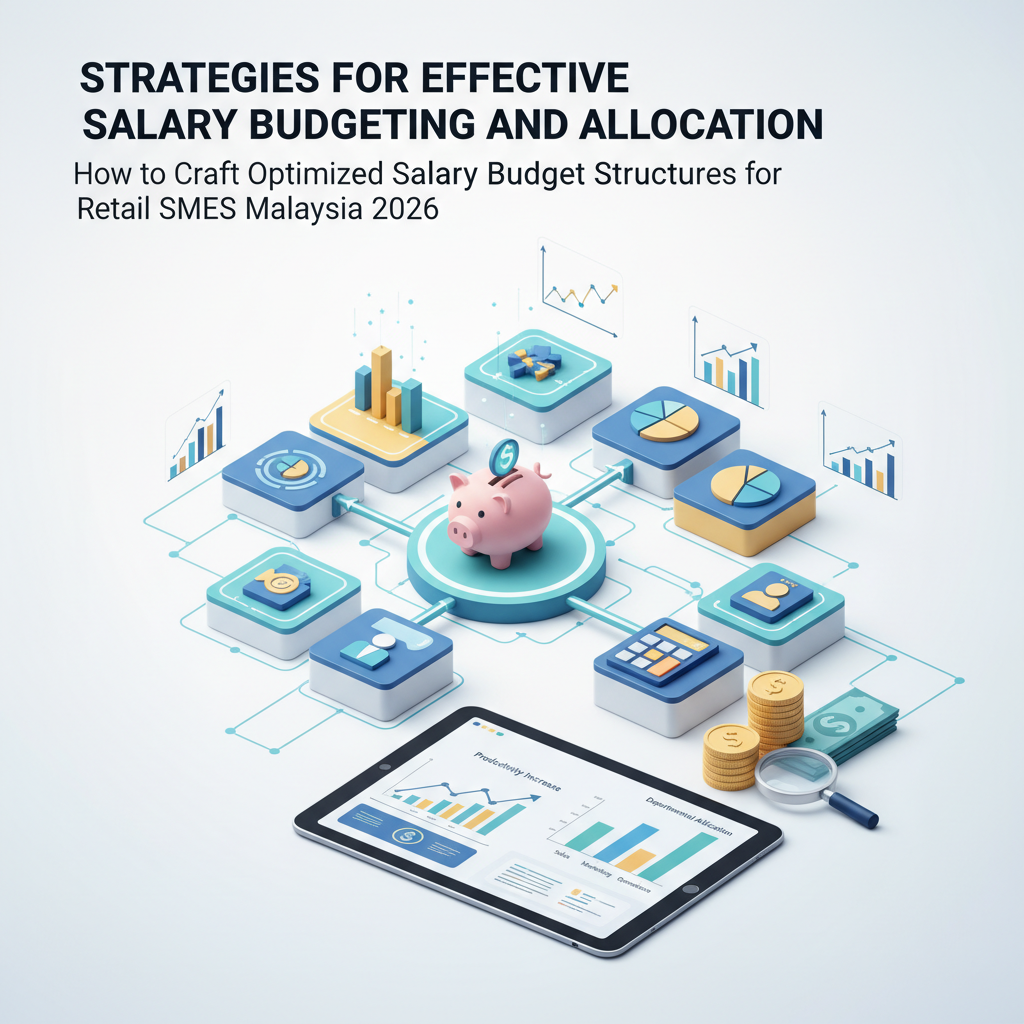
In the dynamic landscape of Malaysia’s retail sector, Small and Medium-sized Enterprises (SMEs) face the intricate challenge of managing their salary budgets efficiently. Beyond mere cost control, effective salary budgeting and allocation for retail companies in Malaysia demand a strategic approach that balances cost-effectiveness with fairness and employee motivation. This section delves into actionable strategies and best practices for SMEs to build, implement, and manage their salary budgets, ensuring they are not only competitive but also foster a productive and engaged workforce. Developing Optimized Salary Budget Structures for SMEs in retail companies in Malaysia is crucial for sustainable growth and talent retention.
1.
Market benchmarking and salary surveys for the Malaysian retail sector
A fundamental step in crafting an effective salary budget is understanding the prevailing market rates. For Malaysian retail SMEs, this means conducting thorough market benchmarking and leveraging salary surveys specific to the sector and region. Ignoring market data can lead to either overspending on compensation or, more commonly, underpaying, which results in high employee turnover and difficulty attracting qualified talent. SMEs should regularly participate in or purchase salary reports from reputable HR consultancies or industry associations. These surveys provide crucial insights into compensation ranges for various roles, from sales associates and store managers to administrative staff, allowing businesses to align their pay scales competitively. Factors such as location (e.g., urban vs. rural), company size, and specific retail niche (e.g., fashion, electronics, F&B) can significantly influence these benchmarks. By accurately benchmarking, retail salary Malaysia SMEs can ensure their compensation packages are fair, competitive, and strategically positioned to attract and retain top talent without inflating operational costs unnecessarily. For example, understanding the median salary for a retail supervisor in Kuala Lumpur compared to Johor Bahru is critical for localized budgeting decisions. An authoritative source like the JobStreet Malaysia Salary Guide can offer valuable insights into current market remuneration trends.
2.
Implementing pay-for-performance models and incentive structures
To further optimize salary budgets and boost productivity, Malaysian retail SMEs should consider implementing pay-for-performance models and robust incentive structures. This approach directly links a portion of an employee’s compensation to their individual or team performance, aligning employee goals with business objectives. For retail environments, this could involve commissions based on sales targets, bonuses for achieving customer satisfaction scores, or profit-sharing schemes for store managers who exceed revenue goals. Such models not only motivate employees to perform at their best but also ensure that salary expenditure is directly contributing to the company’s bottom line, making it a highly cost-effective strategy. Beyond monetary incentives, non-cash rewards like recognition programs, career development opportunities, or flexible working arrangements can also form part of a comprehensive incentive package, addressing various employee needs and enhancing overall job satisfaction. The key is to design clear, measurable, and fair performance metrics that employees understand and believe they can achieve. These strategic employee incentives Malaysia are vital for driving sales, improving customer service, and ultimately increasing profitability, demonstrating effective SME compensation strategies.
3.
Scenario planning and budget flexibility for growth or economic downturns
The retail sector, particularly in Malaysia, is susceptible to economic fluctuations, shifts in consumer behavior, and unexpected market changes. Therefore, an effective salary budget must incorporate elements of scenario planning and flexibility. SMEs should develop multiple budget scenarios – optimistic (growth), realistic (stable), and pessimistic (downturn) – to anticipate potential impacts on their workforce and financial resources. During periods of growth, the budget should allow for strategic investments in talent acquisition to support expansion, competitive pay adjustments to retain key employees, and potentially increased performance incentives. Conversely, in an economic downturn, a flexible budget allows for quick adjustments, such as temporary hiring freezes, reduced overtime, or re-evaluating non-essential benefits, without resorting to drastic measures like mass layoffs which can severely impact morale and long-term stability. This proactive approach ensures that salary allocations remain sustainable and adaptable, safeguarding the business’s financial health while minimizing disruption to employees. Regularly reviewing and adjusting the budget based on market conditions and business performance is paramount for maintaining resilient Optimized Salary Budget Structures for SMEs in retail companies in Malaysia, allowing businesses to navigate uncertainties with greater confidence and strategic foresight.
Leveraging Technology and Data for Smarter Budgeting
In the dynamic retail landscape of Malaysia, small and medium-sized enterprises (SMEs) face increasing pressure to optimize every aspect of their operations, especially when it comes to managing one of their largest expenses: salaries. Moving away from traditional, often manual, budgeting methods, modern SMEs are now embracing technology and data analytics to construct more efficient and Optimized Salary Budget Structures for SMEs in retail companies in malaysia. This strategic shift empowers them to make informed decisions, accurately track expenses, and forecast future salary needs with unprecedented precision and efficiency. By integrating sophisticated tools, retail SMEs can transform their financial planning from a reactive chore into a proactive, data-driven strategy, ensuring sustainability and competitive advantage in a tight market.
1. HRIS and Payroll Software Solutions for SMEs in Malaysia
For Malaysian retail SMEs, the adoption of Human Resources Information Systems (HRIS) and dedicated payroll software is no longer a luxury but a fundamental necessity. These integrated solutions centralize all employee-related data, from hiring to retirement, providing a single source of truth for HR and finance departments. Specifically tailored for the complexities of the Malaysian labor market, these systems automate the intricate calculations required for statutory contributions such as EPF (Employees Provident Fund), SOCSO (Social Security Organization), and EIS (Employment Insurance System), alongside income tax deductions (PCB). By streamlining these processes, SMEs drastically reduce the risk of human error, ensuring compliance with local regulations and avoiding costly penalties. Furthermore, modern HRIS platforms offer modules for attendance tracking, leave management, and performance evaluations, all of which feed crucial data directly into salary budgeting. This holistic approach provides real-time insights into labor costs, helping management understand the true cost of their workforce and make data-backed decisions for salary adjustments or hiring plans. The right software solution acts as the backbone for efficient HR operations, laying the groundwork for truly Optimized Salary Budget Structures for SMEs in retail companies in malaysia.
2. Data Analytics for Compensation Review and Strategic Adjustments
Beyond mere data storage, the power of modern HR technology lies in its analytical capabilities. By harnessing data analytics, retail SMEs can move beyond basic reporting to conduct in-depth compensation reviews. This involves analyzing various metrics such as salary benchmarks against industry standards (crucial for attracting and retaining talent in a competitive sector like retail), employee performance data, turnover rates, and the impact of benefits packages on overall compensation costs. For example, analytics can identify departments with higher than average turnover due to uncompetitive salaries, allowing for targeted adjustments rather than broad, costly increases. It also enables the implementation of performance-based pay models, aligning compensation with employee productivity and business objectives. Furthermore, data analytics provides valuable insights for forecasting future salary needs. By analyzing historical trends, projected growth, and anticipated inflation rates, SMEs can build robust financial models that predict future payroll expenses accurately. This forward-looking approach is vital for long-term strategic planning, allowing businesses to allocate resources effectively and develop truly strategic compensation plans that support growth while maintaining fiscal responsibility. This analytical depth is key to formulating Optimized Salary Budget Structures for SMEs in retail companies in malaysia.
3. Automation in Payroll Processing and Compliance Reporting
The automation offered by contemporary payroll systems significantly transforms how retail SMEs handle their most sensitive financial operations. Automating payroll processing ensures that salaries are calculated accurately and disbursed on time, every time, drastically reducing administrative burden and freeing up valuable HR and finance personnel. These systems automatically factor in deductions, allowances, bonuses, and overtime, minimizing manual calculations prone to error. Crucially for Malaysian businesses, automation extends to compliance reporting. Generating accurate and timely reports for regulatory bodies like LHDN (Inland Revenue Board), EPF, SOCSO, and EIS can be complex and time-consuming. Automated systems simplify this by generating pre-filled forms and reports directly from the consolidated data, ensuring that SMEs meet their statutory obligations without hassle. This not only mitigates compliance risks but also provides an auditable trail of all transactions, offering peace of mind during inspections. The efficiency gained through automation allows businesses to reallocate resources towards more strategic initiatives, such as talent development or customer engagement, further contributing to overall business growth and profitability. The shift to automated, digital processes is supported by global trends towards digitalization, as highlighted by various reports on HR technology adoption and its benefits across industries. By integrating these advanced technological solutions, retail SMEs in Malaysia can achieve unparalleled accuracy and efficiency, thereby establishing highly effective Optimized Salary Budget Structures for SMEs in retail companies in malaysia.
Future-Proofing Your Salary Budget: Trends and Outlook for 2026
The landscape for Malaysian SMEs, particularly in the competitive retail sector, is continuously evolving. As we look ahead to 2026, a proactive approach to salary budgeting is not just an advantage—it’s a necessity for sustained growth and profitability. Businesses must navigate a dynamic environment encompassing economic shifts, regulatory updates, and changing workforce expectations. Crafting optimized salary budget structures for SMEs in retail companies in Malaysia requires foresight, strategic planning, and an understanding of upcoming trends. This section explores key factors that will shape compensation strategies, offering actionable insights for SMEs to remain competitive and ensure their salary budgets are not only sustainable but also attractive to top talent.
-
Impact of minimum wage changes and living wage discussions in Malaysia
Minimum wage adjustments are a recurring feature of Malaysia’s economic policy. For 2026, SMEs in retail must closely monitor these discussions, as potential increases significantly impact operational costs. While the current minimum wage provides a baseline, ongoing debates around a “living wage” are gaining traction, pushing employers to consider remuneration reflecting actual cost of living. This isn’t merely a compliance issue; it’s strategic. Proactively factoring potential increases into their optimized salary budget structures for SMEs in retail companies in Malaysia can avoid sudden budgetary shocks. This requires reviewing existing pay scales, understanding implications for entry-level positions, and exploring ways to absorb costs without compromising profitability. SMEs should also consider productivity-linked wage systems or performance incentives. Staying informed on these changes is crucial. For a deeper understanding of the Malaysian minimum wage outlook, businesses should consult reliable economic reports.
-
Shift towards hybrid work models and its compensation implications for retail
While retail traditionally relies on in-person interactions, hybrid work models are gaining traction even for non-customer-facing roles within retail SMEs. This shift introduces complexities for compensation. How do you remunerate employees working both from home and the office/store? Should geographical location influence salary for remote workers? For optimized salary budget structures for SMEs in retail companies in Malaysia, this means reassessing traditional pay scales. Companies might need to consider location-based pay or offer home office allowances. Flexibility itself can be a powerful non-monetary benefit, allowing more creative salary fund allocation. SMEs must also ensure fairness between employees who can work hybrid and those who cannot. Transparent communication and clear policies on hybrid work and its compensation implications will be vital for maintaining morale and attracting talent.
-
Attracting and retaining Gen Z talent: beyond just salary considerations
Gen Z, now a significant portion of the workforce, brings distinct expectations beyond traditional salary figures. While competitive pay remains important, this generation prioritizes work-life balance, growth opportunities, strong company culture, social responsibility, and meaningful work. For retail SMEs aiming for optimized salary budget structures, this means a holistic approach to total rewards. Instead of simply increasing base salaries, businesses should explore offering robust training (e.g., in digital marketing), flexible working hours, mental health support, and clear career progression paths. Creating an inclusive, purpose-driven environment where Gen Z feels valued and empowered can be more powerful than a marginal salary increase. SMEs can leverage their agility to offer personalized development plans and faster growth. Understanding and catering to these preferences will be key to building a loyal and productive Gen Z workforce for retail companies in Malaysia. Focusing on non-monetary benefits helps optimize compensation without solely relying on higher salaries, making their talent strategy more sustainable.
Navigating the future of salary budgeting for SMEs in Malaysia’s retail sector demands adaptability, foresight, and a focus on financial prudence and employee well-being. By proactively addressing potential minimum wage changes, thoughtfully integrating hybrid work models, and understanding Gen Z’s evolving expectations, retail SMEs can develop truly optimized salary budget structures for SMEs in retail companies in Malaysia. This strategic approach ensures compliance and financial stability, cultivating a competitive edge in attracting and retaining talent essential for sustainable growth in 2026 and beyond. A well-structured salary budget is a powerful tool for future-proofing your business.
Partner with Shelby Global
You are looking for reliable HR Sevice Suppliers? Contact Shelby Global Now! To connect with verified talents and upgrade your orginization.
—————————————
References
– Malaysia’s economy to remain resilient but SMEs need more support: https://www.thestar.com.my/business/business-news/2023/12/28/malaysias-economy-to-remain-resilient-but-smes-need-more-support
– Employee Benefits Trends in Malaysia: https://www.mercer.com.my/en/our-thinking/articles/employee-benefits-trends-malaysia.html
– JobStreet Malaysia Salary Guide: https://www.jobstreet.com.my/career-resources/salary-guide
– HR technology adoption and its benefits across industries: https://www.humanresourcesonline.net/topics/hrtech
– Malaysian minimum wage outlook: https://www.thestar.com.my/news/nation/2023/12/18/malaysias-minimum-wage-what-to-expect-in-2024-and-beyond