
Understanding Singapore’s Production Landscape & Wage Dynamics
Singapore’s dynamic economic landscape, characterized by advanced manufacturing and a strategic global supply chain position, presents unique opportunities and challenges for Small and Medium-sized Enterprises (SMEs) in the production sector. Navigating compensation strategies is crucial for their viability. For SMEs, developing Optimized Salary Budget Structures for SMEs in production field in Singapore isn’t just about cost management; it’s a strategic investment in human capital. These businesses face a dual challenge: maintaining competitiveness in a high-cost environment while attracting and retaining skilled talent amidst evolving wage dynamics and a tight labour market. The intricate interplay of local economic policies, global market forces, and demographic shifts profoundly impacts how SMEs approach employee compensation in Singapore. Understanding these foundational elements is the first step towards crafting sustainable and attractive wage models that empower SMEs to thrive. The production sector demands careful consideration of productivity-linked wages, skills development, and the overall value proposition offered to the workforce, setting the stage for effective salary budget management.

1. Current Wage Trends and Inflation in Singapore
Singapore’s labour market continuously evolves, with wage trends significantly influenced by domestic policies and global economic conditions. Recent years have seen steady upward wage trajectory, driven by government initiatives for higher-skilled work, productivity improvements, and a tight labour supply. However, this growth often parallels inflationary pressures, directly impacting real purchasing power. The Ministry of Manpower (MOM) frequently reports on these trends, underscoring the need for businesses to keep pace with market expectations. For SMEs in production, maintaining existing salary structures is often insufficient. They contend with rising operating costs, including rental and raw materials, further straining salary budgets. The challenge lies in crafting fair wage practices for SMEs that not only comply with regulations but also offer attractive compensation packages reflecting the current cost of living and industry benchmarks. This requires a nuanced understanding of economic indicators, like the Consumer Price Index (CPI) and average wage growth rates, to forecast future salary demands. Without a proactive approach to understanding and responding to these current wage trends, SMEs risk falling behind, jeopardizing operational stability and growth. Monitoring these dynamics is key to developing sustainable salary models for the production workforce.
2. Impact of Global Supply Chains on Local Production Salaries
The intricate web of global supply chains plays a significant, often indirect, role in shaping local production salaries in Singapore. As an open economy, Singapore’s manufacturing and production sectors are deeply integrated into international trade. Disruptions in these global supply chains – due to geopolitical events, natural disasters, or pandemics – can have ripple effects on local operational costs, demand, and consequently, wage dynamics. For instance, increased global demand for specific manufactured components can drive up local production volumes, raising demand for skilled labour and subsequently wages. Conversely, a slowdown in global trade or shifts in manufacturing hubs can exert downward pressure on local Singapore manufacturing salaries. Furthermore, the imperative for local production companies, including SMEs, to remain cost-competitive globally often dictates salary increase boundaries. While larger multinational corporations might absorb higher labour costs, SMEs must meticulously balance competitive compensation with operational efficiency for long-term sustainability. This requires a strategic approach to managing global supply chain wage effects, understanding how external pressures translate into internal remuneration policies, and seeking cost-effective salary structures without compromising talent quality.
3. Challenges for SMEs in Attracting & Retaining Talent
Small and Medium-sized Enterprises (SMEs) in Singapore’s production sector face formidable challenges in attracting and retaining skilled talent. This struggle is compounded by competition from larger multinational corporations (MNCs) that often offer more attractive remuneration packages, better career progression, and extensive training. While SMEs are vital to Singapore’s economy, they frequently operate with tighter budgets, making it difficult to match MNC benefits. The perception that production roles offer limited career advancement or are less technologically advanced can further deter potential candidates, especially younger, digitally-savvy individuals. Consequently, SMEs contend with high employee turnover and a constant need for costly recruitment. To mitigate these issues, SMEs need compelling value propositions beyond basic salaries. This includes focusing on positive work culture, skills development opportunities, flexibility, and recognizing employee contributions. Crucially, crafting optimized salary budget structures for SMEs in production field in Singapore becomes paramount. It involves innovative compensation approaches, such as performance-based incentives, profit-sharing schemes, and comprehensive benefits tailored to workforce needs. Effective talent attraction for SMEs and robust production talent retention strategies are not merely about increasing salaries but about holistic employee compensation that aligns with business capacity while fostering loyalty and commitment. Addressing these challenges requires a strategic and forward-thinking approach to ensure a skilled and motivated production workforce.
Foundations of an Optimized Salary Budget Structure
For small and medium-sized enterprises (SMEs) in the vibrant production field in Singapore, an optimized salary budget structure is not merely an administrative necessity; it’s a strategic imperative. A robust and fair salary framework is crucial for balancing critical business goals with the imperative of employee satisfaction. In a competitive market, strategic investment in human capital through well-thought-out compensation ensures talent retention Singapore, drives productivity, and ultimately contributes to sustainable growth. This foundation moves beyond mere cost control, establishing a framework that strategically invests in the workforce, ensuring competitive compensation and fostering a high-performing environment.
1. Conducting Comprehensive Salary Benchmarking in Singapore
The cornerstone of any effective salary framework for SMEs in the production field is comprehensive and accurate salary benchmarking in Singapore. This process involves systematically comparing your organization’s pay rates against those of competitors and industry averages. For companies in the production field, understanding Singapore manufacturing pay scales is paramount to ensure a fair salary framework Singapore. Without precise benchmarking, businesses risk either overpaying, which impacts cost-effective compensation and profitability, or underpaying, which leads to difficulties in attracting and retaining skilled talent, severely affecting employee satisfaction strategies. Leveraging current market data is essential for an optimized salary budget structure.
The process of benchmarking requires access to reliable, up-to-date data specific to the Singaporean market and the production sector. This includes considering factors like job roles, required skills, experience levels, and geographical location within Singapore. Reputable sources, such as comprehensive salary guides published by leading recruitment agencies or HR consulting firms, provide invaluable insights. For instance, the Robert Half Singapore Salary Guide offers critical data points that help SMEs align their compensation packages with market realities. This systematic approach ensures that your Singapore SME salary budget is competitive, informed, and supports overall salary structure optimization, making your company an attractive employer in the local market.
2. Designing Transparent Compensation Strategies
Transparency in compensation is a powerful tool for fostering trust and enhancing employee satisfaction strategies within your production enterprise. A clear and transparent compensation strategy involves openly communicating how pay decisions are made, what factors influence salary levels, and the criteria for salary adjustments and promotions. For HR strategy SMEs, this means developing clear pay bands, job grades, and performance review processes that are understood by all employees. When employees comprehend the rationale behind their pay, it cultivates a sense of fairness and reduces speculation, directly contributing to employee engagement and business goal alignment.
Beyond simply sharing salary ranges, designing transparent strategies involves clearly outlining the entire compensation package, including base pay, benefits, bonuses, and opportunities for professional development. This openness contributes significantly to talent retention Singapore and improves overall workplace morale. It addresses potential compliance Singapore labor law issues by ensuring fair practices. A well-communicated, transparent system acts as a key component of compensation best practices, demonstrating your commitment to equity and building a strong foundation for strategic workforce planning. This approach transforms compensation from a confidential topic into a powerful driver of motivation and trust.
3. Integrating Skill-Based and Performance-Based Pay Models
To further refine an optimized salary budget structure, especially for SMEs in the dynamic production field, integrating skill-based and performance-based pay models can significantly enhance productivity and employee development. Skill-based pay rewards employees for acquiring and demonstrating new competencies and skills that are valuable to the organization’s operations. In a production environment, this could include mastering new machinery, improving technical troubleshooting abilities, or cross-training in different production lines. This model encourages continuous learning and versatility, making the workforce more adaptable and resilient.
Performance-based pay, on the other hand, directly links an employee’s compensation to their individual or team achievements against predefined metrics and objectives. This could involve bonuses for meeting production quotas, improving quality standards, or reducing waste. For the production field compensation, such models directly incentivize high performance and drive tangible results. Implementing these productivity pay models requires clear goal setting, regular feedback, and fair assessment systems. By strategically combining these approaches, SMEs can ensure their investment in salaries directly translates into improved operational efficiency, higher output, and a more engaged workforce. For more detailed insights into developing a comprehensive strategy, exploring resources on Optimized Salary Budget Structures for SMEs in production field in singapore can be highly beneficial.
In conclusion, building an optimized salary budget structure for SMEs in the production field in Singapore is a multifaceted endeavor that requires strategic foresight. By meticulously conducting salary benchmarking, championing transparent compensation strategies, and intelligently integrating skill-based and performance-based pay models, businesses can create a robust framework. This framework not only supports their financial objectives but also cultivates a highly motivated, satisfied, and loyal workforce, ensuring long-term success and competitiveness in Singapore’s challenging economic landscape.
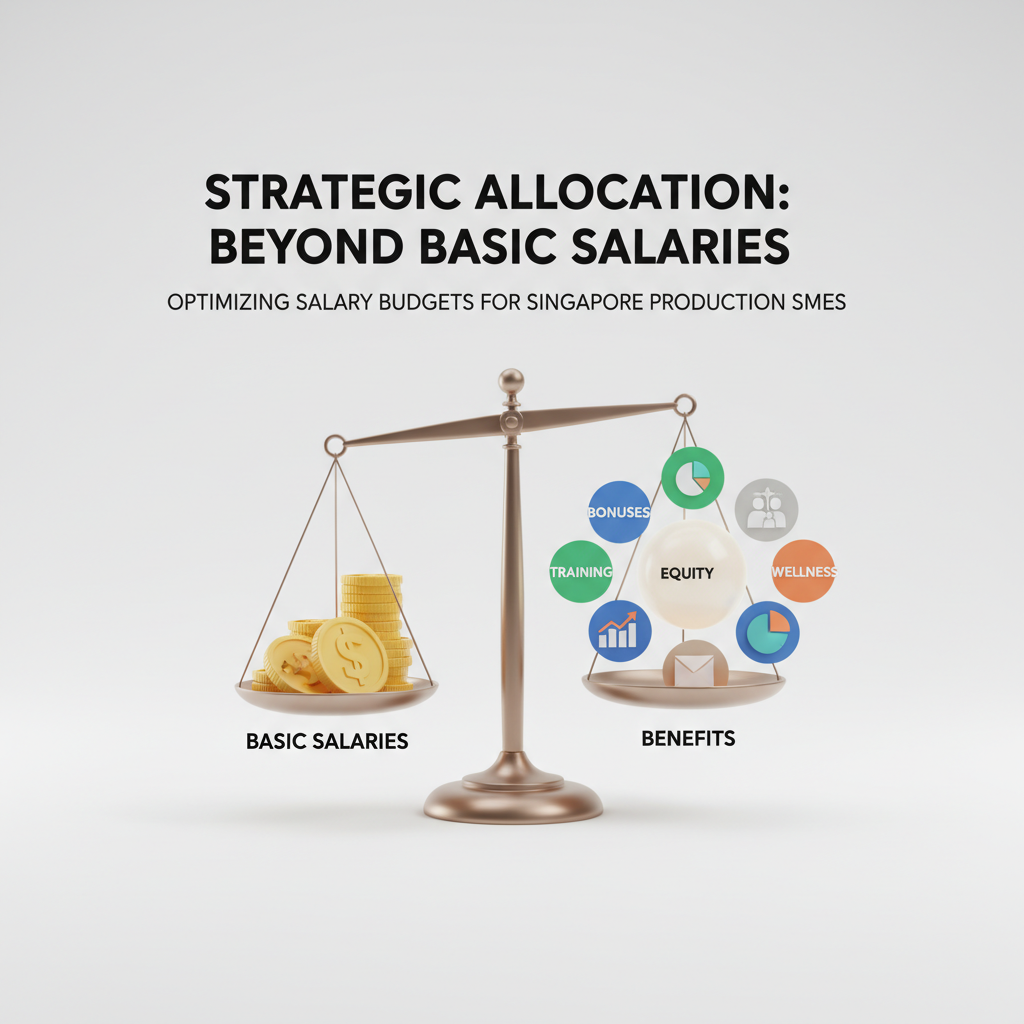
Strategic Allocation: Beyond Basic Salaries
Explores various components of total compensation, including benefits, incentives, and how to optimize them for maximum employee value and cost efficiency within SMEs.
In the competitive landscape of Singapore’s production sector, attracting and retaining skilled talent is paramount for the sustained growth of Small and Medium-sized Enterprises (SMEs). While a competitive basic salary forms the foundation, truly Optimized Salary Budget Structures for SMEs in production field in singapore extend far beyond, encompassing a holistic approach to total compensation. This strategic allocation of resources not only boosts employee morale and loyalty but also drives productivity and ensures cost efficiency, proving that thoughtful investment in your workforce is a powerful strategic advantage.
1. Exploring Employee Benefits Schemes for SMEs
For SMEs in the production field, designing an attractive employee benefits package requires creativity and a deep understanding of what truly matters to your workforce. Beyond statutory requirements outlined by the Ministry of Manpower, Singapore, offering a compelling array of benefits can significantly enhance your employee value proposition. This might include health and wellness programmes, such as subsidised gym memberships or health screening packages, which contribute to a healthier, more productive workforce. Professional development opportunities, like subsidised training courses relevant to the production industry or certifications, can also be a strong draw, signalling an investment in employees’ long-term career growth. Flexible working arrangements, where feasible within a production environment, or enhanced leave policies can also contribute to work-life balance, a key factor in modern talent retention. By carefully curating benefits that align with employee needs and business goals, SMEs can foster a supportive environment that goes beyond mere remuneration. For comprehensive information on statutory requirements and best practices regarding salary and wages in Singapore, employers can refer to authoritative sources such as the Ministry of Manpower (MOM) website.
2. Implementing Productivity Incentives and Bonuses
Directly linking compensation to performance through well-structured incentives and bonuses is a highly effective strategy for boosting productivity and achieving operational excellence in the production sector. For SMEs, this means designing schemes that are clear, measurable, and fair. Individual performance bonuses can reward exceptional output, quality control, or efficiency improvements on the factory floor. Team-based incentives can foster collaboration and encourage collective problem-solving, crucial for integrated production lines. Company-wide profit-sharing or year-end bonuses can align employee interests with overall business success, promoting a shared sense of ownership and accountability. When implementing such schemes, it’s vital to define key performance indicators (KPIs) that are directly relevant to production goals – reducing waste, improving uptime, meeting delivery targets, or exceeding quality benchmarks. Transparency in how incentives are calculated and communicated is essential to maintain trust and motivation. These variable components of pay serve as powerful motivators, driving employees to go the extra mile and directly contributing to the SME’s bottom line.
3. Balancing Fixed vs. Variable Compensation
Striking the right balance between fixed salaries and variable compensation is a critical strategic decision for SMEs aiming for optimal salary budget structures. Fixed compensation, primarily the basic salary, provides employees with stability and security, forming the bedrock of their financial planning. It ensures consistent income regardless of short-term market fluctuations or individual performance dips, which is particularly important in industries like production where output can sometimes be subject to external factors. However, an over-reliance on fixed pay can limit an SME’s flexibility and ability to reward exceptional performance or adapt to changing economic conditions. Variable compensation, including performance bonuses, commissions, or profit-sharing, introduces an element of risk but also offers greater upside potential for high performers and provides the company with more agility in managing payroll costs. For SMEs in production, a balanced approach often involves a solid base salary complemented by variable pay that is tied to achievable production targets, quality metrics, or company profitability. This hybrid model helps manage payroll expenses effectively, allowing the business to scale compensation up during periods of high performance and manage it down during leaner times, all while maintaining employee motivation and a competitive total rewards package. The goal is to create a compensation structure that is sustainable, motivating, and aligns perfectly with the strategic objectives of the SME.
Leveraging Technology & Analytics for Budget Management
In today’s competitive landscape, particularly for Optimized Salary Budget Structures for SMEs in production field in singapore, static, annual budget cycles are becoming obsolete. Modern businesses, especially small and medium-sized enterprises (SMEs) in the dynamic production sector of Singapore, must embrace technology and data-driven approaches to manage their salary expenditures with unparalleled precision and agility. This shift from traditional guesswork to intelligent forecasting and real-time adjustments is crucial for maintaining competitive compensation, ensuring talent retention strategies, and safeguarding financial health. By integrating advanced tools and analytical frameworks, SMEs can move beyond reactive budgeting to proactive, strategic data-driven salary budgeting, optimizing every dollar spent on their most valuable asset: their workforce.
1. Utilizing HR Analytics for Salary Budget Forecasting
The cornerstone of contemporary salary budget management lies in robust HR analytics. For SMEs in the production field, understanding historical data and predicting future trends is paramount. Workforce planning analytics, for instance, allows businesses to analyze past turnover rates, promotion patterns, and recruitment cycles to anticipate future staffing needs and associated salary costs. By leveraging predictive analytics for compensation, companies can forecast salary increments, bonus payouts, and benefits costs with greater accuracy. This involves integrating various data points, including individual performance reviews, market salary benchmarks, and projected inflation rates. Such an approach enables the creation of more realistic and resilient payroll forecasting models, significantly reducing the likelihood of budget overruns or underestimations. Furthermore, HR analytics can help identify areas for cost optimization strategies within the compensation structure, ensuring that salary investments yield maximum returns in terms of productivity metrics and employee engagement. According to a report by Deloitte, organizations that effectively use HR analytics are better positioned to make informed decisions about their human capital investments, leading to improved financial outcomes and strategic alignment. Integrating these insights ensures your data-driven HR strategies are not only reactive but forward-looking.
2. Choosing Effective Budgeting Tools for SMEs
Selecting the right HR technology solutions is vital for streamlining budget processes for SMEs. The market offers a wide array of budgeting software for small businesses designed to cater to varying levels of complexity and integration requirements. For a production SME in Singapore aiming for Optimized Salary Budget Structures for SMEs in production field in singapore, key considerations include scalability, ease of use, and integration capabilities with existing HRIS (Human Resources Information Systems) and payroll platforms. Cloud-based solutions often provide excellent flexibility, allowing for remote access and real-time collaboration among finance and HR teams. These tools can offer features like automated data input, customizable reporting dashboards, and scenario planning functionalities. Some advanced platforms even integrate compensation management tools that allow for detailed analysis of performance-based pay structures and their impact on the overall budget. By investing in the right technology, SMEs can automate tedious manual tasks, reduce human error, and free up valuable time for strategic analysis rather than data compilation. This strategic investment is crucial for transforming raw data into actionable insights for salary planning.
3. Real-time Monitoring and Adjustment Strategies
The true power of technology in budget management comes from its ability to facilitate real-time budget tracking and enable prompt adjustments. Traditional budgeting often involves a fixed annual plan, which quickly becomes outdated amidst market fluctuations, sudden operational changes, or shifts in workforce dynamics. Modern agile budgeting methodologies emphasize continuous monitoring through dynamic dashboards and automated alerts. For a production SME, this means having immediate visibility into actual vs. budgeted salary expenditures, identifying deviations promptly, and understanding their root causes. Advanced tools allow for rapid scenario planning, enabling finance and HR teams to model the impact of different decisions – such as a new hiring initiative, a sudden increase in material costs affecting revenue, or a change in compensation policy – on the salary budget. This continuous feedback loop ensures that the financial planning for production SMEs remains responsive and adaptable. The ability to make informed, real-time adjustments based on granular data is indispensable for maintaining Optimized Salary Budget Structures for SMEs in production field in singapore, ensuring that resources are allocated efficiently to support business goals and sustain competitive advantage.
In conclusion, embracing technology and analytics is no longer an option but a necessity for SMEs in Singapore’s production sector striving for truly Optimized Salary Budget Structures for SMEs in production field in singapore. From predictive HR analytics to robust budgeting tools and dynamic real-time monitoring, these approaches empower businesses to achieve greater financial control, enhance strategic decision-making, and secure their position as attractive employers in a challenging economic environment.
Future-Proofing Your Salary Structure: Compliance & Growth
For Small and Medium-sized Enterprises (SMEs) in Singapore’s dynamic production field, crafting an effective salary structure is not merely an administrative task; it’s a strategic imperative. In an environment characterized by rapid technological advancements, evolving labor laws, and intense competition for skilled talent, the ability to build and maintain Optimized Salary Budget Structures for SMEs in production field in singapore becomes a cornerstone of sustainable growth. This involves not only ensuring strict compliance with local regulations but also fostering a flexible framework that supports long-term talent development, operational efficiency, and adaptability to market shifts. Future-proofing your compensation strategy means anticipating changes, empowering your workforce, and maintaining a competitive edge in a globalized economy.

1. Navigating Singapore Labor Laws and Wage Regulations
Compliance is the bedrock of any robust salary structure in Singapore. The nation boasts a comprehensive set of labor laws designed to protect employees while fostering a conducive business environment. For production SMEs, a deep understanding of the Singapore Employment Act is paramount, covering aspects like hours of work, overtime pay, leave entitlements, and termination processes. Beyond this, companies must meticulously adhere to Central Provident Fund (CPF) contributions, ensuring correct calculations for both employer and employee shares. The Fair Consideration Framework (FCF) also plays a critical role, emphasizing fair hiring practices and preventing discrimination, which indirectly influences salary benchmarking and recruitment strategies.
Failure to comply with these regulations can result in substantial penalties, legal disputes, and significant reputational damage, deterring potential talent and customers. Therefore, regularly reviewing and updating salary policies in line with the latest legislative changes – such as adjustments to the local qualifying salary or sector-specific wage guidelines – is not optional. It’s about proactive risk management and building a foundation of trust and fairness that resonates with employees, enhancing morale and productivity.
2. Aligning Salary Structures with Succession Planning
A truly future-proofed salary structure is intrinsically linked to an organization’s succession planning and long-term talent strategy. For SMEs in the production field, where specialized skills are often critical, retaining experienced personnel and grooming future leaders is vital. Competitive and progressive compensation packages are key tools in this endeavor. Instead of merely offering a flat salary, consider structures that incorporate performance-based incentives, skill-based pay, and clear career progression pathways that are financially attractive.
Aligning salaries with succession planning means identifying critical roles and ensuring their compensation reflects market value and the strategic importance to the company. It involves developing transparent salary bands for different levels and roles, enabling employees to understand their earning potential as they grow within the company. This approach not only motivates employees to upskill and take on greater responsibilities but also provides a clear financial incentive for them to stay and develop their careers internally, thereby securing the organizational knowledge and leadership needed for sustained growth in Singapore’s competitive landscape.
3. Adapting to the Future of Work in Singapore’s Production Sector
The production sector in Singapore is at the forefront of Industry 4.0, characterized by automation, AI, and advanced manufacturing processes. This transformation fundamentally redefines job roles, skill requirements, and, consequently, compensation strategies. Future-proofing your salary structure requires immense flexibility and foresight to adapt to these shifts. Traditional pay models, focused solely on hours worked or manual output, are becoming less relevant as digital skills, data analysis, and advanced machine operation gain prominence.
SMEs must embrace dynamic compensation models that reward continuous learning, reskilling, and adaptability. This could include offering allowances for industry certifications, implementing project-based bonuses for innovation, or tying incentives to successful technology adoption. Furthermore, as the workforce becomes more diverse, with potential for hybrid roles blending on-site production with remote monitoring or data analysis, salary structures need to accommodate these evolving work arrangements fairly. Regular market benchmarking against industry peers, particularly those leveraging advanced technologies, will ensure your Optimized Salary Budget Structures for SMEs in production field in singapore remain attractive and relevant, attracting and retaining the digitally-savvy talent essential for thriving in the future of work.
Partner with Shelby Global
You are looking for reliable HR Sevice Suppliers? Contact Shelby Global Now! To connect with verified talents and upgrade your orginization.
—————————————
References
– fair wage practices for SMEs: https://www.mom.gov.sg/employment-practices/salary-and-wages
– Robert Half Singapore Salary Guide: https://www.roberthalf.com.sg/en/salary-guide
– Ministry of Manpower (MOM) website: https://www.mom.gov.sg/employment-practices/salary-and-wages
– Deloitte Human Capital Trends Report on HR Analytics: https://www2.deloitte.com/us/en/insights/focus/human-capital-trends/2023/human-resources-analytics-report.html
– Employment Act – Ministry of Manpower Singapore: https://www.mom.gov.sg/employment-practices/employment-act