
The Unique Challenges of Vietnam’s Tech Talent Market
Vietnam’s burgeoning tech sector has rapidly emerged as a dynamic hub for innovation and digital transformation. However, for Small and Medium-sized Enterprises (SMEs) operating within this vibrant ecosystem, attracting and retaining top tech talent presents a distinct set of hurdles. Understanding the specific economic and cultural factors influencing salary expectations and talent availability is paramount for developing optimized salary budget structures for SMEs in the technology field in Vietnam. From a rapidly evolving cost of living to intense competition from both local giants and multinational corporations, navigating this landscape requires a strategic and nuanced approach to compensation and benefits.

1. Current Salary Benchmarks for Tech Roles in Vietnam
The baseline for compensation in Vietnam’s tech industry is continually shifting, influenced by global demand for specific skill sets and the country’s own economic trajectory. Tech roles such as Software Engineers, Data Scientists, AI/ML Specialists, and Cybersecurity Analysts are in particularly high demand, driving their salary benchmarks upwards. A recent Vietnam IT Salary Report 2023-2024 by Navigos Search indicated that experienced developers in key cities like Ho Chi Minh City and Hanoi can command salaries comparable to, or even exceeding, those in some other developing Asian markets. For SMEs, staying abreast of these dynamic benchmarks is crucial. Offering below-market rates risks immediate talent loss, while overpaying can strain limited resources. Effective salary benchmarking involves not just looking at raw figures but also considering the experience level, specific tech stack, and the unique value proposition an individual brings. Without a clear understanding of these benchmarks, SMEs struggle to craft competitive offers that both attract qualified candidates and maintain financial sustainability.
2. Impact of Local Economic Growth on Compensation
Vietnam’s impressive economic growth, characterized by rising GDP and an expanding middle class, has a direct and significant impact on compensation expectations within the tech sector. This growth leads to increased domestic spending, rising costs of living, particularly in urban tech hubs, and a general upward pressure on wages across all industries. Tech professionals, often at the forefront of this economic boom, expect their compensation to reflect these broader economic trends. For SMEs, this means that salary budgets need to be recalibrated more frequently to remain competitive. What was considered a good salary a few years ago might now be merely average or even below expectation. Moreover, the increasing cost of housing, transportation, and daily necessities in cities like Ho Chi Minh City and Hanoi directly influences candidates’ minimum salary requirements. SMEs must factor in these local economic realities when designing their compensation packages, understanding that a seemingly high salary on paper might barely cover the living expenses of a skilled professional in a prime location. This continuous upward pressure necessitates flexible and strategic salary planning to ensure they can adapt without jeopardizing long-term viability.
3. Talent Shortages and Competitive Landscape
Despite a robust pipeline of graduates from universities and vocational training centers, Vietnam faces a notable shortage of highly skilled, experienced tech professionals, especially those with advanced specializations or leadership capabilities. This scarcity creates a fiercely competitive landscape where SMEs find themselves vying for talent not only with each other but also with well-funded multinational corporations and large domestic tech giants. These larger entities often offer more attractive salaries, comprehensive benefits packages, and clearer career progression paths, making it challenging for smaller businesses to compete on monetary terms alone. The phenomenon of “talent poaching” is prevalent, where employees are frequently approached with more lucrative offers, leading to high turnover rates for SMEs. To counteract this, SMEs must differentiate themselves beyond just salary. This often involves highlighting unique company culture, opportunities for rapid learning and development, exposure to diverse projects, flexible working arrangements, and a strong sense of purpose or impact. A strategic approach to total rewards, encompassing both monetary and non-monetary benefits, is essential to mitigate the effects of talent shortages and foster loyalty within a highly competitive market.
Crafting a Competitive & Sustainable Salary Structure
Delve into the core elements of designing salary bands, performance-based pay, and equity for long-term viability within a tech SME. In the dynamic Vietnamese tech landscape, an Optimized Salary Budget Structures for SMEs in technology field in vietnam is not merely an HR function; it’s a strategic imperative. Attracting and retaining top-tier talent in a competitive market demands a thoughtful, agile, and transparent approach to compensation. This section explores how tech SMEs can build a salary framework that fosters growth, rewards performance, and ensures long-term sustainability.
1. Defining Base Salary Ranges and Pay Grades
Establishing clear and competitive base salary ranges is the foundational step for any sustainable compensation structure. For tech SMEs in Vietnam, this process begins with rigorous market research. Understanding what competitors, both local and international, are paying for similar roles is crucial. This involves analyzing salary benchmarks for various positions, from entry-level developers to senior engineering managers, specific to the Vietnamese context. Factors like required skills (e.g., Python, AI/ML, cloud computing), experience level, and geographic location (e.g., Hanoi vs. Ho Chi Minh City) significantly influence these benchmarks.
Once market data is gathered, SMEs can begin defining distinct pay grades or salary bands for different roles and levels of responsibility. Each band should have a clearly defined minimum, midpoint, and maximum. The minimum ensures competitiveness for new hires, the midpoint represents a fully proficient performer, and the maximum provides room for growth and recognition of exceptional expertise. Transparency, where appropriate, regarding these ranges can build trust and reduce perceived pay inequity. Regularly reviewing and adjusting these bands – at least annually – is vital to keep pace with the rapidly evolving tech market and inflation rates, ensuring the salary structure remains competitive and fair. This proactive approach helps in maintaining an Optimized Salary Budget Structures for SMEs in technology field in vietnam.
2. Integrating Performance-Based Incentives and Bonuses
While base salaries provide stability, performance-based incentives and bonuses are powerful tools for driving employee motivation, aligning individual efforts with company objectives, and rewarding excellence. For tech SMEs, where innovation and rapid progress are key, these variable pay components are indispensable. This could include individual performance bonuses tied to specific, measurable key performance indicators (KPIs), team bonuses for successful project completion, or even company-wide profit-sharing schemes. The critical element here is clarity: employees must understand precisely what metrics or achievements will trigger a bonus and how their performance will be evaluated.
Effective integration of performance pay requires a robust performance management system. Regular feedback, transparent goal setting, and objective assessment processes are essential to ensure fairness and perceived equity. Bonuses can be structured as annual, quarterly, or project-based payouts, depending on the nature of the work and the company’s financial cycles. Beyond monetary rewards, non-monetary recognition for outstanding performance can also significantly boost morale and loyalty. By linking compensation directly to measurable outcomes, tech SMEs can foster a high-performance culture that propels both individual and organizational success, making their salary structure truly sustainable and competitive.
3. Considering Equity and Stock Options for Key Talent
In the competitive global market for tech talent, particularly within fast-growing SMEs, offering equity or stock options has become a critical component of a comprehensive compensation package. This strategy goes beyond immediate financial reward, transforming employees into stakeholders and aligning their long-term interests with the company’s success. For key talent – such as senior developers, lead engineers, or product managers – equity provides a powerful incentive for retention and commitment, especially when immediate cash compensation might be constrained in a growing startup.
Common forms of equity include stock options, restricted stock units (RSUs), or phantom stock. Each has distinct implications for employees and the company regarding taxation, vesting schedules, and potential payout. A well-designed equity plan should have clear vesting schedules (e.g., 4-year vesting with a 1-year cliff), ensuring that employees are rewarded for continued dedication and contributions over time. This approach not only helps attract top talent who might otherwise gravitate towards larger, more established firms but also instills a sense of ownership and entrepreneurial spirit. By making employees direct beneficiaries of the company’s growth, SMEs can significantly enhance their value proposition and ensure long-term talent retention, as highlighted by expert insights on compensation strategies for emerging companies. For further exploration of strategic compensation, refer to insights from Deloitte’s “Rewarding for growth: Compensation strategies for emerging companies”. Integrating equity into an Optimized Salary Budget Structures for SMEs in technology field in vietnam is a sophisticated move that pays dividends in loyalty and innovation.
Strategic Budgeting and Financial Planning for Salaries
In the dynamic landscape of Vietnam’s burgeoning tech industry, effective financial management, particularly concerning talent remuneration, is paramount for the sustainable growth of Small and Medium-sized Enterprises (SMEs). This section delves into practical approaches for allocating salary budgets, forecasting costs, and managing financial resources effectively within a growing tech SME, with a strong focus on achieving truly Optimized Salary Budget Structures for SMEs in technology field in vietnam. Strategic salary budgeting isn’t merely about setting limits; it’s about prudent investment in human capital, ensuring competitive compensation while maintaining fiscal health and supporting ambitious expansion plans.
1. Forecasting Salary Costs and Budget Allocation Methodologies
Accurate forecasting is the bedrock of strategic salary budgeting. For tech SMEs in Vietnam, this involves more than just extrapolating last year’s figures. It requires a nuanced understanding of market trends, talent demand, and projected company growth. Key methodologies include historical data analysis, where past salary expenditures and growth rates are scrutinized to identify patterns. Beyond this, market-based forecasting becomes critical; regularly benchmarking against industry standards for similar roles in the Vietnamese tech sector ensures salaries remain competitive, attracting and retaining top talent. Predictive analytics, utilizing AI and machine learning tools, can further refine these forecasts by considering various internal and external factors, such as inflation rates, currency fluctuations, and anticipated project demands.
When it comes to budget allocation, several methodologies can be employed. Zero-based budgeting (ZBB) compels departments to justify every expense from scratch, fostering a culture of cost-efficiency and ensuring that every dong allocated to salaries directly supports strategic objectives. Incremental budgeting, while simpler, involves adjusting the previous year’s budget by a certain percentage, often suitable for stable growth periods. Activity-based budgeting (ABB) links salary costs directly to specific activities and outputs, making it particularly useful for project-driven tech companies where resource allocation needs to be granular. Regardless of the method chosen, transparent communication about budget decisions is vital for employee morale and understanding. For comprehensive insights into developing a robust financial framework, exploring resources like Forbes Advisor’s guide on small business budgeting can provide valuable foundational knowledge for tech SMEs navigating complex financial planning.
2. Managing Payroll Overhead and Administrative Expenses
Beyond the base salary, a significant portion of a tech SME’s financial outlay goes into payroll overheads and administrative expenses. These include statutory contributions such as social insurance, health insurance, and unemployment insurance, which are mandatory in Vietnam. Other costs encompass employee benefits (e.g., private health insurance, allowances, performance bonuses), recruitment fees, training and development costs, and the administrative expenses associated with payroll processing itself. Efficient management of these costs is crucial for maintaining an optimized salary budget structure.
To mitigate these overheads, SMEs can explore several strategies. Firstly, optimizing benefit packages to offer what truly matters to employees while controlling costs is key. This might involve flexible benefit plans or partnering with providers for bulk discounts. Secondly, streamlining recruitment processes can reduce agency fees and time-to-hire, directly impacting recruitment-related expenses. Thirdly, investing in internal training can reduce the reliance on external consultants. Lastly, and perhaps most importantly, efficient payroll administration can significantly cut down on errors and associated penalties. This often involves clear internal processes, regular audits, and staying updated with Vietnamese labor laws and regulations to ensure compliance and avoid costly mistakes.
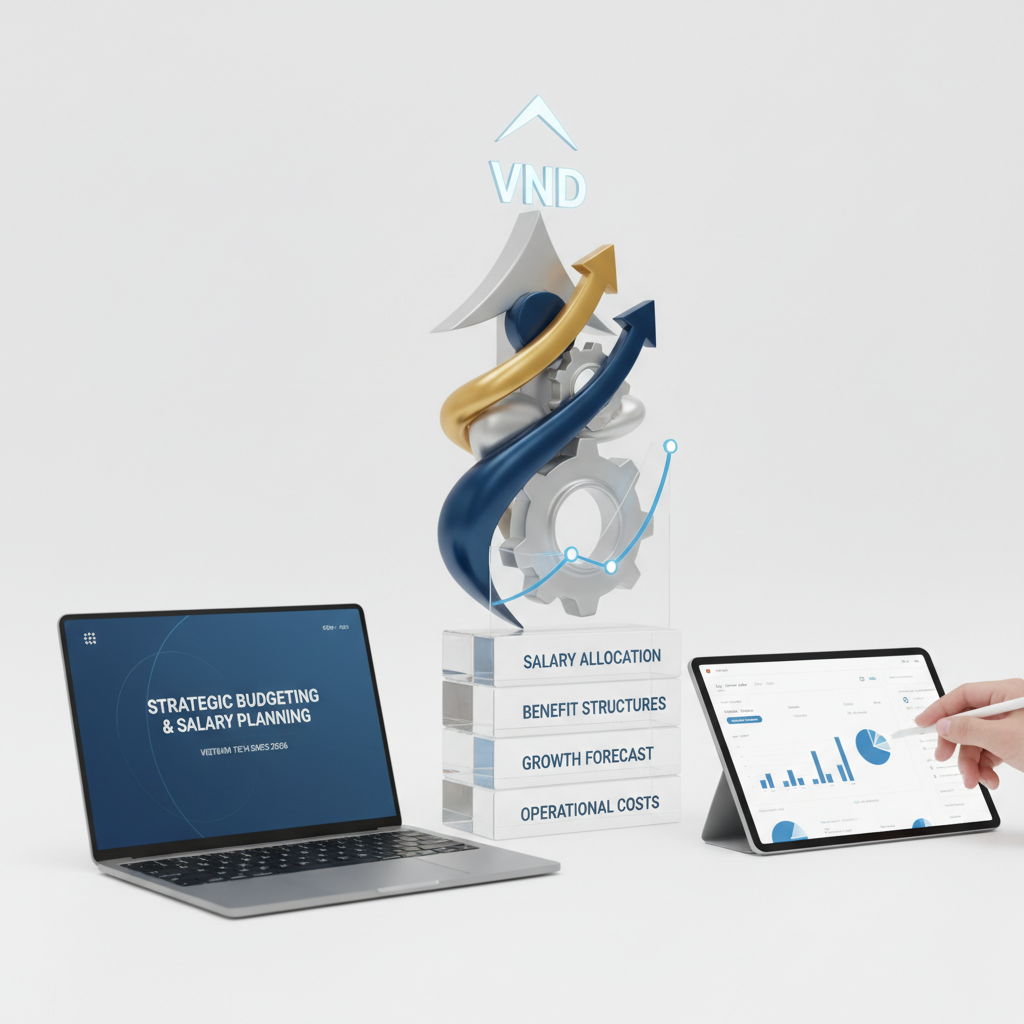
3. Utilizing HR Tech for Budget Tracking and Efficiency
In the digital age, leveraging Human Resources Technology (HR Tech) is indispensable for achieving efficiency and accuracy in salary budgeting and tracking, particularly for rapidly evolving tech SMEs. Integrated HRIS (Human Resources Information Systems) or dedicated payroll software can automate many manual tasks, from calculating salaries and deductions to generating payslips and statutory reports. This automation drastically reduces human error, saves time, and frees up HR and finance teams to focus on more strategic initiatives.
Modern HR Tech solutions offer real-time data dashboards, providing immediate insights into salary expenditure, budget utilization, and forecasted costs. This allows leaders to track financial performance against the budget, identify discrepancies promptly, and make data-driven decisions. For instance, such systems can flag when a department is exceeding its allocated salary budget or identify trends in overtime costs. Furthermore, many platforms offer scenario planning tools, enabling businesses to model the financial impact of different compensation strategies, such as salary increments, new hires, or bonus schemes, before implementation. By integrating with financial planning tools, HR Tech ensures a cohesive view of an organization’s most significant expense: its people. Investing in the right HR Tech is not just about automation; it’s about empowering tech SMEs in Vietnam with the tools to maintain competitive compensation, ensure compliance, and achieve truly optimized salary budget structures, paving the way for sustained growth and innovation.
Beyond Salary: Holistic Compensation & Retention Strategies
In the dynamic and highly competitive landscape of the technology sector, particularly for Small and Medium-sized Enterprises (SMEs) in Vietnam, attracting and retaining top talent extends far beyond the allure of a high paycheck. This section investigates the critical importance of non-monetary benefits, robust professional development opportunities, and a thriving company culture in building a resilient workforce. While an optimized salary budget structure for SMEs in the technology field in Vietnam forms the financial bedrock, it’s the holistic approach to compensation that truly differentiates an employer and secures long-term employee loyalty.
1. Implementing Comprehensive Benefits Packages (Health, Wellness)
For tech professionals, whose work often demands intense focus and long hours, a comprehensive benefits package is no longer a mere perk but a crucial component of their overall well-being and job satisfaction. Beyond standard health insurance, modern tech SMEs in Vietnam are recognizing the value of incorporating holistic wellness programs. This includes mental health support, such as access to counseling services or mindfulness workshops, which can significantly mitigate stress and burnout common in fast-paced tech environments. Physical wellness initiatives, like subsidized gym memberships, ergonomic workstation assessments, or healthy office snacks, demonstrate a genuine commitment to employee health. These benefits not only reduce absenteeism and improve productivity but also send a powerful message to prospective and current employees: their health and personal lives are valued. A study by the Society for Human Resource Management (SHRM) consistently highlights how robust benefits packages are key drivers of employee satisfaction and retention, making them indispensable in the strategy for attracting and keeping top tech talent in Vietnam.
2. Investing in Professional Development and Training
The technology sector is characterized by its rapid evolution, making continuous learning an absolute necessity for professionals to remain relevant and competitive. Tech employees, particularly those with ambition, highly value employers who invest in their growth. For SMEs in Vietnam, this means going beyond basic on-the-job training and providing structured opportunities for skill enhancement. This could involve funding for industry-recognized certifications (e.g., cloud platforms, cybersecurity, AI/ML), subscriptions to online learning platforms, attendance at local and international tech conferences, or even internal mentorship programs where senior engineers guide junior staff. By committing to professional development, companies not only enhance their team’s capabilities and future-proof their workforce but also significantly boost employee morale and loyalty. Employees perceive these investments as a clear path for career progression within the company, reducing the likelihood of them seeking opportunities elsewhere. Such initiatives also cultivate a culture of learning and innovation, which is vital for any tech company aiming for sustained success and market leadership in Vietnam.
3. Fostering a Positive Work Culture and Employee Engagement
Perhaps the most intangible yet profoundly impactful element of holistic compensation is a vibrant and positive work culture. In the tech industry, where problem-solving and collaboration are paramount, a strong culture fosters an environment where creativity thrives, communication is open, and individuals feel valued and respected. For SMEs in Vietnam, cultivating such a culture involves promoting transparency in leadership, encouraging work-life balance, recognizing achievements regularly, and actively soliciting and acting upon employee feedback. Initiatives like team-building events, flexible working arrangements, and open-door policies contribute significantly to employee engagement. When employees feel connected to their company’s mission and values, and believe their contributions are meaningful, they are far more likely to be engaged, productive, and committed for the long term. This deep sense of belonging and psychological safety reduces turnover, even in the face of competitive salary offers from larger corporations. A company culture that prioritizes employee well-being and professional satisfaction ultimately becomes an intrinsic benefit, creating a powerful synergy that attracts and retains the best tech talent.
Future-Proofing Your Salary Budget for 2026 and Beyond
Navigating the dynamic landscape of the Vietnamese tech sector requires foresight, especially when it comes to compensation. For Optimized Salary Budget Structures for SMEs in technology field in vietnam, proactively addressing emerging trends, technological advancements, and regulatory shifts is paramount. This section delves into crucial considerations for Vietnamese tech SMEs aiming to build resilient and competitive salary frameworks that attract and retain top talent in the coming years.

1. Adapting to Remote Work and Hybrid Models
The global shift towards remote and hybrid work models, accelerated by recent events, has profoundly impacted traditional compensation strategies. For Vietnamese tech SMEs, this means re-evaluating geographical pay differentials, remote work allowances, and the overall value proposition beyond just salary. As talent pools expand beyond national borders, competition intensifies, pushing companies to consider location-agnostic pay scales for certain roles or to create specific compensation packages that account for home office expenses, connectivity, and digital wellness programs. Future-proofing your salary budget involves understanding that top-tier talent in tech may prioritize flexibility and work-life balance as much as, if not more than, traditional benefits. This trend also opens opportunities for SMEs to tap into a wider talent pool, potentially accessing highly skilled professionals from less competitive regions, thereby optimizing salary expenditure without compromising quality. Regular surveys and competitor analysis focusing on hybrid compensation structures will be vital for staying competitive in this evolving talent landscape.
2. Anticipating Inflation and Economic Shifts
Vietnam’s rapid economic growth, while generally positive, also brings inflationary pressures that directly impact purchasing power and employee expectations. Planning for 2026 and beyond necessitates a robust understanding of macroeconomic indicators, including inflation rates, currency fluctuations, and global economic slowdowns or upturns. Tech SMEs must build contingency plans into their salary budgets to absorb potential cost-of-living increases, ensuring that real wages remain attractive. This might involve annual salary adjustments tied to inflation indices, offering performance-based bonuses, or introducing non-monetary benefits that enhance employee value without solely relying on base salary increases. Furthermore, regulatory changes related to minimum wage, social insurance contributions, and labor laws are continuously evolving in Vietnam. Staying abreast of these legislative updates and factoring their financial implications into future salary budgets is critical to avoid compliance risks and unexpected costs. A proactive approach to economic forecasting and regulatory monitoring is a cornerstone of sustainable salary management for tech SMEs.
3. Leveraging Data Analytics for Compensation Decisions
In an increasingly data-driven world, reliance on intuitive or anecdotal evidence for salary decisions is no longer sufficient. Emerging trends in HR technology emphasize the power of data analytics in shaping sophisticated compensation strategies. Vietnamese tech SMEs can harness this power by implementing advanced HRIS (Human Resources Information Systems) that track internal pay equity, analyze market benchmarks, predict talent retention risks, and model the impact of different pay structures. By gathering and analyzing data on skill scarcity, performance metrics, employee demographics, and competitor salaries, companies can move beyond reactive adjustments to proactive, evidence-based compensation planning. This not only ensures fairness and transparency but also allows for targeted investments in critical roles or skill sets. Predictive analytics can help identify future talent shortages and the corresponding premium for certain expertise, enabling SMEs to allocate their salary budget more strategically. Embracing these analytical tools is key to developing an agile and responsive salary budget structure capable of adapting to the rapid evolution of the global talent landscape and specific demands within Vietnam’s tech sector.
Partner with Shelby Global
You are looking for reliable HR Sevice Suppliers? Contact Shelby Global Now! To connect with verified talents and upgrade your orginization.
—————————————
References
– Vietnam IT Salary Report 2023-2024 by Navigos Search: https://www.navigossearch.com/insights/vietnam-it-salary-report-2023-2024
– Rewarding for growth: Compensation strategies for emerging companies | Deloitte US: https://www2.deloitte.com/us/en/pages/human-capital/articles/rewading-for-growth-compensation-strategies-for-emerging-companies.html
– Small Business Budget: A Guide For 2024: https://www.forbes.com/advisor/business/small-business-budget/
– Society for Human Resource Management (SHRM): https://www.shrm.org/resources-and-tools/hr-topics/benefits/pages/default.aspx
– World Economic Forum Future of Jobs Report: https://www.weforum.org/reports/the-future-of-jobs-report-2023/