Decoding Singapore’s F&B Labor Market Dynamics
Singapore’s vibrant Food & Beverage (F&B) sector, a cornerstone of its tourism and local lifestyle, faces a complex interplay of challenges and opportunities in talent acquisition and compensation. CEOs in the F&B field are constantly seeking effective salary budget optimizing manners for the CEO of Food & Beverage field in singapore to sustain growth and competitiveness amidst a tight labor market. Understanding the nuances of this environment—from evolving wage regulations to the impact of foreign worker policies—is critical for strategic planning and long-term success.

1. Current Wage Trends & Regulatory Compliance (e.g., Progressive Wage Model)
The F&B sector in Singapore is increasingly shaped by robust regulatory frameworks aimed at uplifting wages and enhancing local employment. A primary example is the Progressive Wage Model (PWM) for the Food Services Sector, which mandates salary increments and career progression pathways for various roles, including food preparation workers, kitchen assistants, and service staff. This model, a critical component of Singapore’s social compact, ensures a baseline wage tied to skills and productivity, moving beyond minimum wage concepts. For F&B CEOs, staying abreast of these wage trends and ensuring full regulatory compliance is not just a legal obligation but also a strategic imperative for employee retention and attraction. Non-compliance can lead to penalties and reputational damage, whereas proactive adoption can position businesses as preferred employers. While the PWM drives up labor costs, it also encourages businesses to invest in training and technology to improve productivity, thereby justifying higher wages and offering a unique opportunity for salary budget optimizing manners for the CEO of Food & Beverage field in singapore through enhanced operational efficiency.
2. Impact of Foreign Worker Quotas on F&B Staffing
Singapore’s reliance on foreign labor, particularly in sectors like F&B, is moderated by stringent foreign worker quotas and levies. These policies aim to manage the overall foreign worker population, encourage the hiring of local talent, and prompt businesses to increase productivity. For F&B operators, these quotas translate into significant constraints on staffing flexibility. The reduced availability of foreign workers, who traditionally filled many operational roles, intensifies competition for local talent and drives up local wage expectations. CEOs must navigate these quotas by optimizing their workforce planning, exploring automation where possible, and investing in local talent development programs. The challenge lies in balancing operational needs with a limited pool of foreign workers, making it essential to streamline recruitment processes for local staff and to offer competitive compensation and career growth to attract them. Strategic manpower planning that aligns with government policies is crucial for sustainable operations, pushing F&B leaders to innovate their talent acquisition and retention strategies.
3. Understanding Talent Shortages and High Turnover Rates
Despite Singapore’s reputation for efficiency, the F&B sector continues to grapple with persistent talent shortages and notoriously high turnover rates. This is driven by several factors: the demanding nature of F&B work (long hours, weekend shifts), a societal perception that often favors office-based careers, and an aging local workforce. High turnover significantly impacts businesses through increased recruitment costs, training expenditures, and diminished service quality. To counteract this, F&B leaders must focus on creating more attractive work environments. This includes fostering positive workplace cultures, offering flexible work arrangements where feasible, and providing clear paths for professional development. Enhancing employee engagement, recognizing good performance, and investing in upskilling initiatives can transform transient jobs into rewarding careers. Addressing these underlying issues is fundamental to not only alleviating talent shortages but also ensuring that investments in compensation and benefits yield long-term returns, ultimately bolstering the salary budget optimizing manners for the CEO of Food & Beverage field in singapore by reducing the hidden costs associated with high attrition.
Strategic Compensation Design for ROI
Explore effective strategies for structuring salary packages that attract top talent while maximizing your budget’s return on investment.
As a CEO in Singapore’s dynamic Food & Beverage (F&B) sector, mastering salary budget optimizing manners for the CEO of Food & Beverage field in singapore is paramount for sustainable growth and competitive advantage. The ability to attract and retain top-tier talent while ensuring a strong return on investment (ROI) from your compensation strategy is a critical differentiator. This involves more than just offering competitive wages; it requires a nuanced approach to F&B compensation Singapore, talent management F&B sector, and robust HR strategies F&B Singapore. Effective workforce planning F&B coupled with strategic wage optimization F&B empowers your business to thrive in a highly competitive market, fostering both employee satisfaction and operational efficiency. Here’s how you can design an ROI-driven salary structures framework for your organization.
1. Benchmarking Against Singapore F&B Industry Standards
To truly excel in salary budget optimizing manners for the CEO of Food & Beverage field in singapore, your first step must be a rigorous evaluation of your current compensation practices against the broader market. Salary benchmarking F&B isn’t merely about matching competitor salaries; it’s about understanding the unique compensation landscape of the Singapore F&B industry. This involves analyzing average salaries for various roles – from front-line service staff to executive chefs and management – along with benefits packages, bonuses, and non-monetary perks. Leveraging reliable data sources such as the Ministry of Manpower’s wage statistics, industry-specific surveys, and comprehensive reports from leading recruitment firms is crucial. For instance, detailed insights can be found in resources like the Hays Singapore Salary Guide, which offers invaluable data on F&B compensation Singapore trends. By meticulously benchmarking, you ensure your offerings are competitive enough to facilitate Singapore F&B talent acquisition without overspending. It helps identify areas where your current structure might be lagging or, conversely, where you might be overcompensating, allowing for precise adjustments that support overall wage optimization F&B and enhance your ability to make data-driven decisions on compensation best practices Singapore. This strategic alignment is vital for both attracting exceptional talent and managing your salary budget optimizing manners for the CEO of Food & Beverage field in singapore effectively.
2. Performance-Based Incentives & Bonus Structures
Moving beyond fixed salaries, incorporating performance-based incentives Singapore F&B and robust bonus structures is a cornerstone of modern, effective compensation design. This strategy directly links employee remuneration to their individual, team, and organizational performance, fostering a culture of accountability and high achievement. For an F&B business, this could translate into various models: individual bonuses tied to customer satisfaction scores or sales targets for front-of-house staff; kitchen team incentives based on food cost efficiency or menu innovation success; or profit-sharing schemes for senior management linked to overall business profitability. Designing these programs requires clear, measurable Key Performance Indicators (KPIs) that align with your strategic objectives, such as reducing waste, improving service speed, or enhancing guest experience. Transparent communication about how these incentives are calculated and awarded is paramount to maintaining trust and motivation. Well-structured incentive programs Singapore F&B not only serve as powerful motivators for employee retention F&B Singapore but also act as a crucial tool for ROI-driven salary structures. They ensure that a significant portion of compensation is earned through demonstrated value creation, turning a fixed cost into a variable one linked to direct business outcomes. This approach significantly aids in executive compensation F&B strategies and supports comprehensive performance management F&B systems, making your salary budget optimizing manners for the CEO of Food & Beverage field in singapore more dynamic and results-oriented.
3. Designing Scalable Salary Bands & Progression Frameworks
A forward-thinking approach to salary budget optimizing manners for the CEO of Food & Beverage field in singapore also involves establishing scalable salary bands and clear progression frameworks. Salary bands define a range of pay for specific job roles or levels, providing transparency, fairness, and internal equity across your organization. These bands should be flexible enough to accommodate various levels of experience and skill within a role while ensuring alignment with market rates established through benchmarking. Coupled with these bands, a well-defined career progression framework outlines the pathways for employees to grow within the company, detailing the skills, experiences, and performance levels required to advance to higher roles and, consequently, higher salary bands. Such frameworks are indispensable for career progression F&B, offering employees a clear vision of their future and fostering long-term commitment. This proactive approach not only supports talent management F&B sector by creating internal growth opportunities but also significantly enhances employee retention F&B Singapore, reducing costly turnover. It minimizes the need for ad-hoc salary negotiations, ensuring consistent application of your salary budget optimizing manners for the CEO of Food & Beverage field in singapore. By implementing clear ROI-driven salary structures that promote fairness and growth, you empower your F&B business to build a stable, motivated workforce, directly contributing to operational excellence and sustained profitability.
Technology and Data-Driven Budget Optimization
Discover how adopting advanced tools and data analytics can lead to more precise and efficient salary budget management.
For CEOs in Singapore’s dynamic Food & Beverage (F&B) sector, mastering salary budget optimizing manners for the CEO of Food & Beverage field in singapore is paramount. In a landscape characterized by fluctuating operational costs, intense competition for talent, and evolving consumer demands, leveraging technology is no longer an option but a strategic imperative. Modern HR technology, combined with robust data analytics, provides unprecedented clarity into workforce costs, productivity, and talent retention. This technological embrace transforms traditional budgeting from a reactive exercise into a proactive, strategic advantage, ensuring optimal allocation of resources while maintaining a competitive edge in attracting and retaining top F&B professionals.

-
Utilizing HR Analytics for Workforce Planning
Effective workforce analytics in F&B is the cornerstone of intelligent data-driven compensation strategies. CEOs can harness HR data to gain deep insights into staffing levels, employee performance, and turnover rates. Tools that analyze historical data on hiring, promotions, and exits enable companies to identify patterns and predict future staffing needs. For the Singapore F&B labor market, where talent acquisition and retention can be challenging, understanding these dynamics is crucial. By leveraging HR analytics, businesses can perform a thorough skill gap analysis F&B, identifying where current capabilities fall short of future demands. This allows for targeted hiring or training initiatives, reducing the need for costly last-minute recruitment drives. Furthermore, analyzing compensation benchmarks against industry standards helps ensure that salaries are competitive, preventing high turnover and the associated recruitment and training costs. This granular view contributes significantly to strategic workforce planning, ensuring that every dollar spent on salaries yields maximum return in productivity and employee satisfaction, thereby directly impacting talent cost management.
-
Automation in Payroll & Compensation Administration
The digital transformation sweeping across industries has profound implications for HR functions, particularly in payroll and compensation. HR technology adoption Singapore offers F&B businesses the opportunity to streamline complex, time-consuming administrative tasks through automation. Modern payroll systems automate salary calculations, tax deductions, benefits administration, and compliance reporting, drastically improving payroll efficiency F&B. This not only reduces human error but also frees up HR personnel to focus on more strategic initiatives, such as employee turnover reduction strategies and developing performance-based budgeting frameworks. Automated systems ensure accuracy and timeliness, critical for maintaining employee morale and adhering to strict labor laws in Singapore. Beyond basic payroll, these platforms can manage variable compensation, bonuses, and commissions, providing real-time visibility into total compensation costs. The integration of such systems significantly enhances operational cost reduction by minimizing administrative overheads and potential penalties arising from errors. This shift toward digital transformation HR is vital for any CEO aiming for peak efficiency in their F&B operations.
-
Predictive Modeling for Future Budget Allocations
Moving beyond reactive budgeting, predictive HR analytics empowers F&B leaders to forecast future salary expenses with remarkable accuracy. By analyzing historical compensation data, market trends, projected growth, and even external economic indicators, advanced software can model various scenarios for future budget allocations. This capability is invaluable for developing robust salary budget optimizing manners for the CEO of Food & Beverage field in Singapore. For instance, predictive models can estimate the impact of minimum wage increases, anticipated staff expansions, or changes in talent market rates on the overall salary budget. This proactive approach allows CEOs to make informed decisions about resource allocation, potential cost-saving measures, or investments in talent development well in advance. Tools providing real-time budget tracking further enhance this capability, allowing for continuous monitoring and adjustment. According to Deloitte’s Human Capital Trends report, organizations leveraging advanced analytics are significantly more likely to achieve their strategic HR goals, underscoring the power of predictive modeling in data-driven decision-making for compensation. This proactive foresight is a key component of strategic workforce planning and ensures that dynamic budgeting is not just a concept, but a tangible practice that supports sustained business growth and profitability.
Beyond Salary: Holistic Rewards & Retention
In Singapore’s dynamic Food & Beverage (F&B) sector, where competition for skilled talent is fierce and operational costs are ever-present, CEOs are increasingly looking beyond mere paychecks to foster a thriving workforce. While competitive salaries remain fundamental, a holistic approach to rewards and retention is paramount for long-term success and strategic growth. This section delves into sophisticated salary budget optimizing manners for the CEO of Food & Beverage field in singapore, emphasizing non-monetary benefits and robust employee engagement strategies that not only boost staff retention Singapore but also contribute significantly to overall budget efficiency. By investing in employees’ overall well-being and professional growth, F&B establishments can cultivate a loyal, productive, and highly motivated team, turning human capital into a distinct competitive advantage and enhancing talent attraction.
1.
Employee Benefits & Wellness Programs (Healthcare, Meals)
Effective salary budget optimizing manners for the CEO of Food & Beverage field in singapore begin with understanding that comprehensive employee benefits extend far beyond basic health insurance. For F&B professionals, often working demanding hours, programs focused on workplace well-being are invaluable. This includes robust healthcare coverage, which is a fundamental expectation, but also extends to practical, industry-specific benefits like nutritious staff meals. Providing quality meals can significantly reduce daily expenses for employees, fostering goodwill and reducing stress, directly impacting staff morale. Beyond the practical, consider introducing mental health support initiatives, such as confidential counseling services or stress management workshops. These initiatives demonstrate a genuine care for employees’ overall health, contributing to a positive work environment and reducing absenteeism. Investing in wellness programs, from discounted gym memberships to ergonomic assessments for kitchen staff, can lead to healthier, happier employees, ultimately boosting productivity and loyalty. These non-monetary incentives are often perceived as highly valuable by employees and can be more cost-effective in the long run than continuous salary increments, forming a key pillar of sustainable compensation strategies.
2.
Career Development & Training Opportunities
In the fast-paced F&B landscape, employees are eager for growth. Offering clear career progression paths and investing in skill enhancement and continuous learning is a powerful retention tool. For a CEO of Food & Beverage field in Singapore, this means developing structured training programs that cater to various roles, from junior culinary staff to front-of-house managers. This could include certified courses in culinary arts, hospitality management, customer service excellence, or even digital marketing for F&B. Providing leadership development opportunities, such as mentorship programs or supervisory training, empowers employees to take on greater responsibilities and see a future within the organization. When employees perceive a clear trajectory for professional growth, their commitment deepens, reducing turnover costs associated with recruitment and onboarding. Furthermore, investing in employee skills not only increases their individual value but also elevates the overall service quality and operational efficiency of the establishment. This proactive approach to talent management is a critical component of optimizing the salary budget, as it fosters a highly skilled and adaptable workforce without relying solely on higher wages.
3.
Creating a Positive Work Culture & Recognition Programs
A truly effective strategy for staff retention Singapore goes beyond tangible benefits to cultivate an environment where employees feel valued, respected, and motivated. Building a positive work culture is paramount. This involves fostering open communication, promoting team building activities, and ensuring transparent feedback mechanisms. Flexible work arrangements, where feasible within the operational demands of F&B, can also significantly improve work-life balance and boost job satisfaction. Crucially, implementing robust performance recognition programs is essential. Celebrating employee achievements, whether through formal awards, public acknowledgment, or even simple, heartfelt thanks, reinforces positive behavior and strengthens loyalty. Recognition doesn’t always have to be monetary; it can be extra time off, a special dining experience, or opportunities to lead new projects. These initiatives, which are central to effective employee engagement strategies, create an emotional connection between the employee and the organization, leading to lower turnover rates and higher job satisfaction. By prioritizing a supportive, appreciative, and engaging workplace, F&B human resources leaders can significantly enhance employee morale and commitment, proving that the most impactful rewards often transcend the salary slip and contribute to a healthier, more productive organization overall.
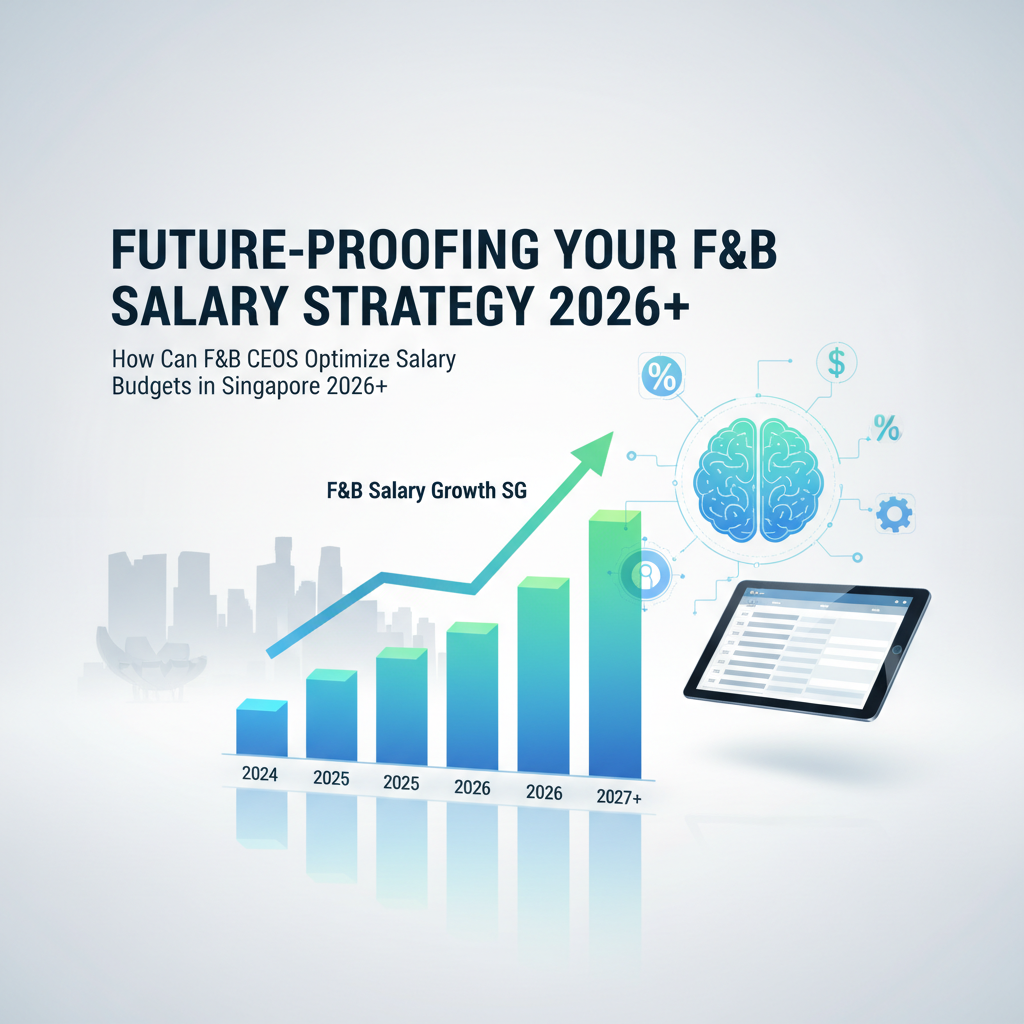
Future-Proofing Your F&B Salary Strategy 2026+
The dynamic Food & Beverage (F&B) landscape in Singapore demands visionary leadership, especially when it comes to compensation. For CEOs, mastering salary budget optimizing manners for the CEO of Food & Beverage field in singapore is not just about meticulous cost control; it’s a strategic investment in talent, operational resilience, and long-term success. As we approach 2026 and beyond, a proactive, adaptive approach to salary strategy will differentiate market leaders from followers, enabling them to navigate complex economic shifts, evolving employee expectations, and the competitive talent war.
1. Anticipating Economic Shifts & Inflationary Pressures
The F&B sector in Singapore is particularly sensitive to global and local economic fluctuations. CEOs must develop strategies that account for potential inflationary pressures, which directly impact employees’ purchasing power and, consequently, their salary expectations. Proactive adjustments, rather than reactive ones, are key to maintaining morale and retention. This involves scenario planning for various economic outlooks and understanding how macro trends will affect your specific segment of the F&B market.
2. Adapting to Evolving Employee Expectations & Gig Economy Trends
Modern workforce demographics, particularly Gen Z and Millennials, prioritize flexibility, work-life balance, and non-monetary benefits alongside competitive pay. The rise of the gig economy further highlights a desire for adaptable working arrangements. F&B businesses must explore incorporating flexible roles, hybrid models where applicable, and comprehensive well-being programs into their total compensation packages to attract and retain top talent in Singapore.
3. Leveraging Technology for Compensation Management
To implement effective salary budget optimizing manners for the CEO of Food & Beverage field in singapore, technology is indispensable. Investing in advanced Human Resources Information Systems (HRIS), AI-driven analytics, and specialized compensation software can streamline payroll, accurately track performance metrics, and provide invaluable data insights. This data allows for fair, transparent, and competitive salary structures, reducing manual errors and increasing efficiency.
4. Integrating ESG Principles into Compensation
Environmental, Social, and Governance (ESG) principles are increasingly vital for corporate reputation and talent attraction. Progressive F&B organizations can integrate ESG metrics into their compensation strategies, linking bonuses or incentives to sustainability targets, diversity and inclusion goals, or community engagement. This not only reinforces company values but also appeals to a workforce that values ethical employers.
5. Navigating Regulatory Changes and Compliance
Singapore’s regulatory landscape for employment, including the Fair Consideration Framework and the Progressive Wage Model (PWM) for various sectors, is dynamic. CEOs must ensure strict adherence to all local labor laws, including minimum wage discussions and employment acts, to avoid penalties, maintain a strong employer brand, and ensure equitable treatment of all staff. Regular legal reviews of compensation practices are essential.
6. Strategic Use of Variable Pay and Performance Incentives
To optimize salary budgets without compromising motivation, strategic use of variable pay is crucial. Implementing performance-based bonuses, commissions, profit-sharing schemes, and other incentives can align employee goals with business objectives. This approach motivates high performance and productivity while offering flexibility in managing fixed labor costs, a critical aspect for F&B operations.
7. Benchmarking Against Competitors & Global Best Practices
Staying competitive in Singapore’s F&B talent market requires continuous benchmarking. Regular participation in salary surveys and analyzing market rates across similar roles and businesses is vital. Furthermore, learning from global best practices in compensation ensures that your offerings are not just competitive locally but also aligned with broader industry trends, attracting a diverse pool of talent.
8. Fostering a Culture of Transparency and Trust
Open communication about salary structures, performance review processes, and career progression pathways builds trust and reduces speculation among employees. A transparent compensation philosophy, where employees understand how their pay is determined and what opportunities exist for growth, is particularly valued by the younger workforce and contributes significantly to employee loyalty and engagement.
9. Investing in Skill Development and Upskilling Initiatives
A forward-thinking salary strategy integrates investment in employee skill development and upskilling. By providing opportunities for continuous learning, F&B businesses enhance their employees’ capabilities, justify higher pay through increased value, and proactively address potential labor shortages. This fosters a growth mindset and positions the company as an employer that invests in its people’s future.
10. Data-Driven Decision Making for Salary Adjustments
Reliance on robust data analytics is paramount for informed salary adjustments. CEOs should leverage insights from performance data, market benchmarks, and employee feedback to assess the Return on Investment (ROI) of compensation packages, identify any pay gaps, and make equitable and effective decisions regarding salary reviews, increments, and promotions. This ensures fair and justifiable compensation practices.
11. Employee Wellness and Benefits as Part of Total Rewards
Beyond the base salary, a comprehensive total rewards package significantly influences talent attraction and retention. This includes robust health benefits, mental wellness programs, flexible working hours, subsidized meals, and other perks. By demonstrating a genuine commitment to employee well-being, F&B organizations can create a more attractive and supportive work environment, improving overall job satisfaction.
12. Succession Planning and Retention Strategies
Competitive salaries and clear career progression pathways are critical components of effective succession planning and talent retention. F&B leaders must integrate compensation structures with long-term career development plans, ensuring that key personnel are adequately rewarded and motivated to stay. This strategic approach minimizes turnover costs and ensures business continuity.
13. Scenario Planning for Economic Volatility
The ability to adapt to unforeseen economic challenges is a hallmark of future-proof salary strategies. F&B CEOs in Singapore should develop contingency plans for various scenarios—economic booms, recessions, or unexpected market disruptions. This involves identifying levers for salary adjustments, benefit modifications, and incentive restructuring to ensure the compensation strategy remains sustainable and responsive.
14. Communicating Value Proposition Beyond Salary
It’s crucial to help employees understand the full scope of their compensation package. Beyond the monthly paycheck, articulate the value of benefits, training opportunities, the work environment, and potential for career growth. Effectively communicating this holistic value proposition reinforces employee loyalty and strengthens the employer brand, showcasing that the company offers more than just a job.
Ultimately, future-proofing your F&B salary strategy in Singapore is about adopting a dynamic, data-driven, and people-centric approach. By embracing foresight and flexibility, CEOs can secure top talent, foster a motivated workforce, and ensure the long-term success and resilience of their businesses in an ever-evolving market.
Partner with Shelby Global
You are looking for reliable HR Sevice Suppliers? Contact Shelby Global Now! To connect with verified talents and upgrade your orginization.
—————————————
References
– :
– Hays Singapore Salary Guide: https://www.hays.com.sg/salary-guide
– Deloitte’s Human Capital Trends report: https://www2.deloitte.com/us/en/insights/focus/human-capital-trends.html
– SHRM: Employee Engagement: https://www.shrm.org/resources-and-tools/hr-topics/employee-relations/pages/employee-engagement-introduction.aspx
– Labour Market Reports – Ministry of Manpower Singapore: https://stats.mom.gov.sg/Pages/Labour-Market-Reports.aspx










































































































![TOP 4 recruitment agency in vietnam 2026 [highlight Shelby Global]](https://shelbyglobal.com.vn/wp-content/uploads/2026/04/TOP-4-recruitment-agency-in-vietnam-2026-highlight-Shelby-Global-1.webp "TOP 4 recruitment agency in vietnam 2026 111")