
Singapore’s Education Sector: A 2026 Overview
Singapore, a global beacon of academic excellence and innovation, continues to fortify its position as a dynamic hub for learning and talent development. The nation’s education sector, characterized by rapid evolution and unwavering commitment to quality, presents a vibrant landscape for professionals across diverse disciplines. As we step into 2026, the demand for skilled educators, innovative EdTech specialists, and dedicated support staff remains robust, driven by both local initiatives and international interest. This comprehensive salary range report of jobs in education companies in Singapore aims to demystify the compensation landscape, offering invaluable insights for job seekers, employers, and policymakers navigating this exciting and competitive market.
The sector’s growth is both quantitative and qualitative, encompassing advancements in pedagogical approaches, technological integration, and a sharpened focus on future-ready skills. From early childhood to higher learning institutions and the burgeoning private education market, Singapore’s commitment to nurturing human capital is unparalleled. Understanding the intricacies of salary structures within this diverse ecosystem is crucial for informed career decisions and fostering sustainable talent acquisition. This report serves as your essential guide, offering a clear snapshot of current compensation trends and future outlooks in one of the world’s most forward-thinking education environments.

1. Growth of EdTech & Traditional Learning
The Singaporean education sector in 2026 presents a compelling narrative of dual growth: the explosive expansion of EdTech alongside the enduring strength of traditional learning. The pandemic significantly accelerated digital transformation, embedding technology deeper into education. This led to a surge in demand for professionals skilled in creating, implementing, and managing digital learning platforms, online curriculum development, and educational data analytics. Roles like instructional designers, learning technology specialists, and education software engineers are now at the forefront, supported by a diverse ecosystem of EdTech companies, from startups to global players.
Concurrently, traditional learning institutions—from kindergartens to universities—continue to thrive. These institutions actively integrate blended learning models, personalized pathways, and competency-based assessments, ensuring relevance. The demand for qualified teachers, academic administrators, and curriculum developers remains consistently high. Emphasis is on educators who foster critical thinking, creativity, and socio-emotional learning, complementing technological advancements. This dual trajectory broadens the array of jobs in education companies in Singapore, appealing to diverse skill sets and career aspirations, from front-line teaching to technological support.
2. Why This Salary Report Matters
In a dynamic and competitive market like Singapore’s education sector, accurate compensation data is essential. This 2026 salary range report of jobs in education companies in Singapore is a critical resource for various stakeholders. For job seekers, it provides transparency, enabling confident negotiation, realistic salary expectations, and identification of competitive remuneration. Whether aspiring to be a lead teacher, EdTech consultant, or education administrator, understanding salary benchmarks empowers career progression and informed transitions.
For employers, this report is an indispensable tool for talent attraction and retention. It aids companies in developing competitive compensation strategies, attracting top-tier talent while managing budgets effectively. In a tight labor market, offering industry-aligned salaries is paramount. It also helps benchmark internal pay structures against the market, fostering fairness and reducing turnover. Policymakers and analysts can leverage this data to understand labor market trends, inform workforce development, and predict future skill requirements, shaping Singapore’s educational future. Ultimately, this report bridges the information gap, promoting fairness, transparency, and strategic decision-making in Singapore’s bustling education job market.
3. Our 2026 Report Methodology
The integrity of any comprehensive salary report hinges on robust, transparent methodology. Our 2026 salary range report of jobs in education companies in Singapore is meticulously compiled using a multi-faceted approach. We conducted extensive primary research, gathering data directly from a broad spectrum of education companies—public institutions, private schools, international schools, tuition centers, and EdTech firms across Singapore. This involved anonymous surveys and in-depth interviews with HR professionals and industry leaders to capture real-time compensation and future outlooks.
Complementing primary data, we integrated secondary research from authoritative sources like government labor statistics and industry reports. For instance, insights from the Singapore Ministry of Manpower’s Labour Market Report provided essential macroeconomic context on employment trends and wage growth, informing our projections. Our methodology also involves sophisticated data analytics, segmenting compensation by job function (e.g., teaching, administration, EdTech development), experience level, company size, and specific skill sets. Each data point undergoes rigorous validation to ensure statistical significance. This granular approach provides a nuanced and dependable overview of salary ranges, equipping all stakeholders with credible information to navigate Singapore’s vibrant education job landscape for 2026 and beyond.
Salary Ranges for Key Roles in Education Companies
Understanding the compensation landscape is crucial for both job seekers and employers navigating Singapore’s vibrant and expanding education sector. This comprehensive salary range report of jobs in education companies in Singapore details the expected compensation for prominent job titles across various functions, providing valuable insights into the market’s demand for talent and competitive salaries. As the education industry in Singapore continues its rapid growth, fueled by strong government support for lifelong learning and a burgeoning EdTech market, the demand for skilled professionals is soaring. This report aims to shed light on the remuneration benchmarks, helping professionals gauge their market value and companies attract top talent.
-
Instructional Design & Content Creation
The core of any effective educational offering lies in its instructional design and content. Professionals in these roles are responsible for developing engaging, effective, and often digital learning experiences. The education sector Singapore has seen a significant surge in demand for these specialists, especially with the shift towards blended and online learning models. Salary ranges here are influenced by experience, specialization (e.g., in gamification, VR/AR, or specific subject matter), and the complexity of the learning platforms used.
- Instructional Designer (Junior/Mid-Level): Expect to earn between S$3,500 and S$6,000 per month. Those with strong EdTech experience or multimedia skills may command higher figures.
- Curriculum Developer: Typically, S$4,000 to S$7,500 per month. Senior curriculum developers, especially those leading teams or specializing in niche areas like STEM or future skills, can exceed S$8,500.
- Content Writer/Editor (Education Focus): Ranges from S$3,000 to S$5,500 per month. Specialization in digital content creation and SEO for educational platforms can push this higher.
These roles are critical for ensuring high-quality educational delivery, and competitive salaries are offered to attract individuals who can innovate and adapt to evolving learning methodologies. The market values those who can translate complex concepts into accessible and engaging learning materials.
-
Teaching, Tutoring & Facilitation
Direct educators remain the backbone of the education industry. This category encompasses a broad spectrum of roles, from online tutors to corporate trainers, all focused on delivering knowledge and skills directly to learners. The job market education Singapore shows a consistent need for qualified and passionate educators across all levels. Compensation benchmarks for these roles vary significantly based on the institution (private academies, corporate training firms, EdTech platforms), subject matter, and level of expertise.
- Online Tutor/Academic Coach: Typically paid hourly, ranging from S$30 to S$80 per hour, depending on the subject (e.g., advanced sciences or test prep can command more) and experience. Full-time equivalent salaries might range from S$3,000 to S$6,000 per month.
- Private Institute Teacher/Trainer: For full-time positions, salaries generally fall between S$3,800 and S$7,000 per month. Highly sought-after teachers with strong track records, particularly in popular subjects or international curricula, can earn upwards of S$8,000.
- Corporate Trainer/Facilitator: Ranges from S$4,500 to S$9,000+ per month. This role often requires a blend of subject matter expertise, strong communication skills, and experience in adult learning methodologies, with a premium for those specializing in leadership development or technical skills.
Professional development is key in these roles, with certifications often leading to higher earning potential. The demand for specialized educators, particularly those comfortable with digital learning tools, continues to grow.
-
EdTech Product, Sales & Marketing
The rise of Education Technology (EdTech) has created a new frontier for career opportunities, requiring a blend of technical acumen, business savvy, and a deep understanding of educational needs. EdTech salaries are often at the higher end, reflecting the specialized skills required. Roles here are pivotal in driving innovation, market penetration, and user engagement for educational platforms and solutions.
- EdTech Product Manager: Commands salaries from S$6,000 to S$12,000+ per month. Those with a proven track record of launching successful educational products and strong technical understanding are highly valued. Experience-based pay is significant here, with senior roles often attracting equity.
- Sales Manager (Education Solutions): Typically, S$5,000 to S$9,000 base salary, plus significant commissions and bonuses, potentially pushing total compensation to S$15,000+ per month for top performers. Strong networking and a deep understanding of the educational institution landscape are critical.
- Marketing Specialist (EdTech): Ranges from S$4,000 to S$7,500 per month. Professionals skilled in digital marketing, content strategy, and user acquisition within the education context are highly sought after. Expertise in SEO and data analytics often leads to higher compensation.
- Business Development Manager (Education): Similar to sales, base salaries are S$5,500 to S$10,000+, with substantial performance-based incentives. These individuals are crucial for forging partnerships and expanding market reach for education companies.
The competitive salaries education companies offer in this segment reflect the fast-paced, innovation-driven nature of the EdTech space. Companies are actively seeking talent that can not only understand education but also leverage technology to scale impact.
Overall, the salary range report of jobs in education companies in Singapore indicates a robust and rewarding job market. While the figures provided are estimates, they reflect the general compensation benchmarks in a dynamic sector. For a more detailed look into specific remuneration trends across various sectors in Singapore, including professional services, you may refer to Hays Singapore’s latest salary guide. For a deeper dive into the specific salary range report of jobs in education companies in Singapore, you can explore resources that provide updated insights into talent demand education and professional development within this thriving industry.
Factors Influencing Education Job Salaries in SG
The education sector in Singapore is dynamic and diverse, offering a wide array of career opportunities from early childhood education to higher learning, EdTech, and corporate training. For professionals seeking to understand their earning potential, or for those planning their career trajectory, comprehending the elements that dictate salary variations is crucial. This section explores the core factors influencing education job salaries in SG, helping professionals accurately assess their market value and strategically navigate their career paths within education companies in Singapore. By examining these determinants, individuals can better position themselves for competitive compensation.
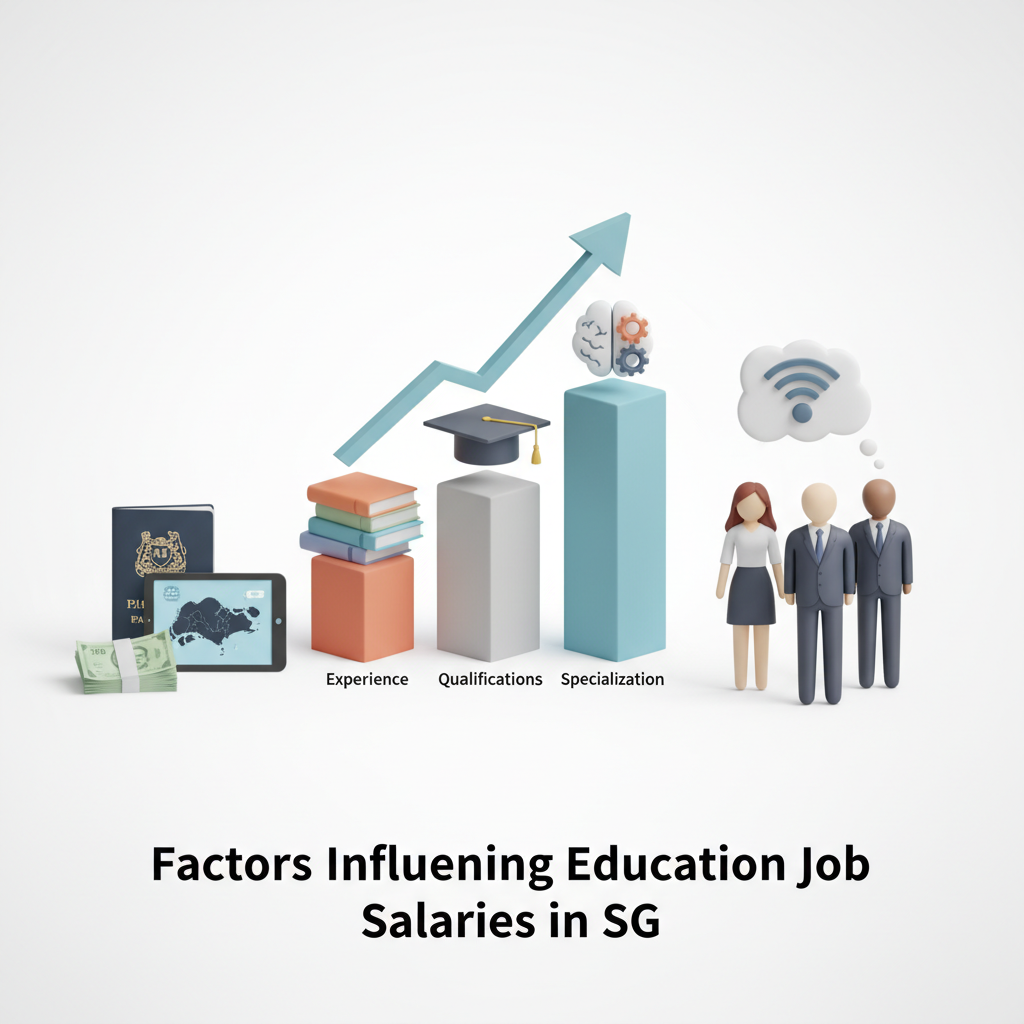
1. Experience, Qualifications & Specialization
The foundation of any competitive salary in the education sector, much like others, is largely built upon an individual’s experience, qualifications, and specialization. Experience plays a pivotal role, with mid-career professionals and senior educators typically commanding higher salaries due to their proven track record, leadership capabilities, and accumulated expertise. Entry-level positions naturally start at a lower band, but rapid progression is often possible with demonstrated performance and skill acquisition.
Qualifications are equally critical. A Bachelor’s degree is often a baseline requirement, but those holding Master’s degrees, PhDs, or specialized certifications (e.g., Post Graduate Diploma in Education (PGDE), certifications in specific pedagogical approaches, or early childhood qualifications) are generally positioned for more advanced roles and better compensation. For instance, university lecturers with doctoral degrees and research publications will undoubtedly earn more than school teachers with a Bachelor’s, although both are highly valued professionals.
Specialization further refines salary expectations. Educators specializing in high-demand areas such as Special Needs Education, STEM subjects (Science, Technology, Engineering, Mathematics), curriculum development for digital learning, or specific foreign languages often see a premium added to their remuneration. The scarcity of talent in these niche areas means employers are willing to offer more competitive packages to attract and retain qualified individuals. Understanding the interplay of these three factors is the first step in deciphering the typical salary range report of jobs in education companies in Singapore.
2. Company Size & Business Model
The organizational structure and operational model of an education company significantly impact the salaries it can offer. Generally, larger institutions and well-established education companies tend to offer more structured and often higher salary scales, coupled with better benefits packages. This includes public sector institutions like MOE schools, polytechnics, and universities, as well as large private international schools and prominent tuition centre chains. Their extensive resources, larger student bases, and often stable funding allow for more robust compensation frameworks.
In contrast, smaller private academies, boutique tuition centers, or nascent EdTech startups might offer slightly lower base salaries, but could compensate with other incentives such as performance-based bonuses, equity options in the case of startups, or greater opportunities for professional development and faster career progression. The business model also plays a crucial role. For-profit entities, especially those with strong market penetration and successful revenue streams, may have more flexibility in offering attractive salaries to secure top talent. Non-profit organizations or government-funded institutions, while offering stability and often excellent benefits, might adhere to more standardized, government-regulated pay scales. International education providers operating in Singapore might also benchmark their salaries against global standards, potentially offering competitive expatriate packages. Therefore, when evaluating a potential role, considering the company’s scale and underlying business model is key to understanding the potential salary range.
3. Market Demand for Niche Skills
The education landscape in Singapore is continually evolving, driven by technological advancements, shifts in pedagogical approaches, and the national agenda for skills development. This dynamism creates specific market demands for niche skills, which directly influence salary levels. Professionals possessing expertise in areas that are currently highly sought-after can command significantly higher salaries.
Key examples of such niche skills include proficiency in EdTech integration and digital learning platforms, data analytics for educational outcomes, curriculum design for AI and robotics, and specialized vocational training. As Singapore pushes towards a “Smart Nation” initiative, educators capable of preparing students for future-ready skills, such as coding, cybersecurity, and design thinking, are in high demand. Bilingual educators, especially those proficient in Mandarin or other regional languages, also find their skills highly valued, particularly in international schools or language academies. The ongoing focus on lifelong learning and adult education also means that trainers and facilitators with corporate training experience or expertise in upskilling/reskilling programs are increasingly sought after. According to the Ministry of Manpower’s latest insights into Singapore’s evolving job market landscape, the demand for specialized roles across various sectors, including education, continues to drive salary growth for specific skill sets. Staying abreast of these trends and investing in continuous professional development can significantly boost an individual’s earning potential within the education sector. For a deeper dive into current remuneration expectations, a comprehensive salary range report of jobs in education companies in Singapore can provide invaluable benchmarks.
Understanding the multifaceted factors that shape education job salaries in Singapore—from individual qualifications and experience to the characteristics of the employing institution and the prevailing market demands for specialized skills—is essential for any professional. By strategically enhancing their skill set, gaining relevant experience, and targeting the right opportunities, educators can maximize their earning potential and secure a rewarding career in Singapore’s vibrant education sector.
Career Progression & Earning Potential in Education
Singapore’s education sector is renowned for its commitment to excellence, offering robust salary range report of jobs in education companies in singapore and diverse pathways for professional growth. Far from being a static career choice, education in Singapore provides ample opportunities for educators to advance their careers, enhance their skills, and significantly boost their earning potential. This section delves into the various strategies and avenues available for professionals looking to build a rewarding and financially stable career within the nation’s dynamic learning landscape, covering everything from classroom roles to leadership positions and specialized fields across various education sector jobs in Singapore.
1. Advancing to Senior Leadership Roles
For many educators, the journey from classroom teacher to a leadership position represents a natural and highly rewarding career progression. Starting as a teacher in Singapore, individuals typically gain invaluable pedagogical experience, classroom management skills, and a deep understanding of student development. With experience, commitment, and often, exemplary performance, opportunities arise for advancement to roles such as Subject Head, Level Head, or Head of Department. These positions involve greater responsibilities in curriculum planning, team management, and strategic initiatives within a school, consequently leading to a significant increase in teacher salary Singapore.
Beyond department-level leadership, the ultimate leadership aspirations for many include becoming a Vice-Principal or Principal. A principal salary Singapore is considerably higher, reflecting the immense responsibility of overseeing an entire educational institution, shaping its vision, managing staff, and ensuring the holistic development of students. These leadership roles education Singapore demand strong leadership acumen, strategic thinking, and the ability to foster a positive learning environment. The Ministry of Education (MOE) provides structured leadership development programmes designed to groom promising educators for these pivotal positions, ensuring a clear trajectory for those aspiring to reach the pinnacle of school administration. Furthermore, opportunities extend to broader education policy jobs Singapore within MOE itself, offering strategic influence on national education frameworks and often commanding competitive salaries based on their scope and impact.
2. Impact of Further Education & Certifications
Investing in further education and professional certifications is a proven strategy to enhance both career progression and earning capabilities within Singapore’s education industry. A Master’s degree in Education (M.Ed), educational leadership, or a related field can open doors to more specialized and higher-paying roles, including curriculum developer salary positions, educational psychologist roles, or even academic research posts in higher education institutions. Specialist diplomas and postgraduate certifications in areas like special education, educational technology, or early childhood education can also provide a distinct competitive edge, directly impacting the early childhood education salary and the overall salary range report for teachers in Singapore. These qualifications demonstrate advanced expertise and a commitment to continuous teacher professional development, making candidates more attractive for roles that demand specialized knowledge.
Singapore’s SkillsFuture initiatives are particularly relevant for educators, providing funding for various courses and workshops that enhance skills and knowledge. Utilizing SkillsFuture for educators can help them acquire certifications in areas like instructional design, data analytics in education, or even specific pedagogical approaches. These skills are highly valued, not only for in-school advancement but also for transitioning into fields such as learning and development specialist salary roles within corporate settings or becoming an education consultant salary earner. The emphasis on continuous learning ensures that educators can adapt to evolving educational landscapes, including the integration of education tech jobs Singapore, thereby securing their long-term earning potential and career relevance.
3. Shifting Roles within Education Sub-sectors
The education industry in Singapore is diverse, offering numerous sub-sectors where educators can leverage their expertise beyond the traditional classroom setting. For instance, a move into curriculum development offers a different kind of impact, focusing on designing learning materials and programs for schools, publishers, or EdTech companies. The demand for education tech jobs Singapore is rapidly growing, with roles ranging from instructional designers to e-learning specialists, often commanding competitive salaries due to specialized skill sets in digital pedagogy and software integration.
Another significant shift can be into private tutoring or operating a tuition centre. While highly dependent on reputation and student base, private tutor earnings Singapore can be substantial, especially for subject matter experts or those with a strong track record. The higher education careers Singapore path, within polytechnics or universities, offers opportunities in lecturing, research, and administration (education administration jobs), often requiring postgraduate qualifications but providing excellent benefits and academic freedom. Furthermore, for those interested in corporate environments, the skills acquired in education are highly transferable to corporate learning and development (L&D) roles. Here, roles like training manager salary Singapore or learning and development specialist salary can be very attractive, focusing on employee upskilling and talent development. International schools in Singapore also present lucrative options, often offering premium compensation packages and diverse teaching environments for qualified educators, broadening the spectrum of the salary range report of jobs in education companies in singapore.
Future Outlook for Education Salaries & Jobs in Singapore
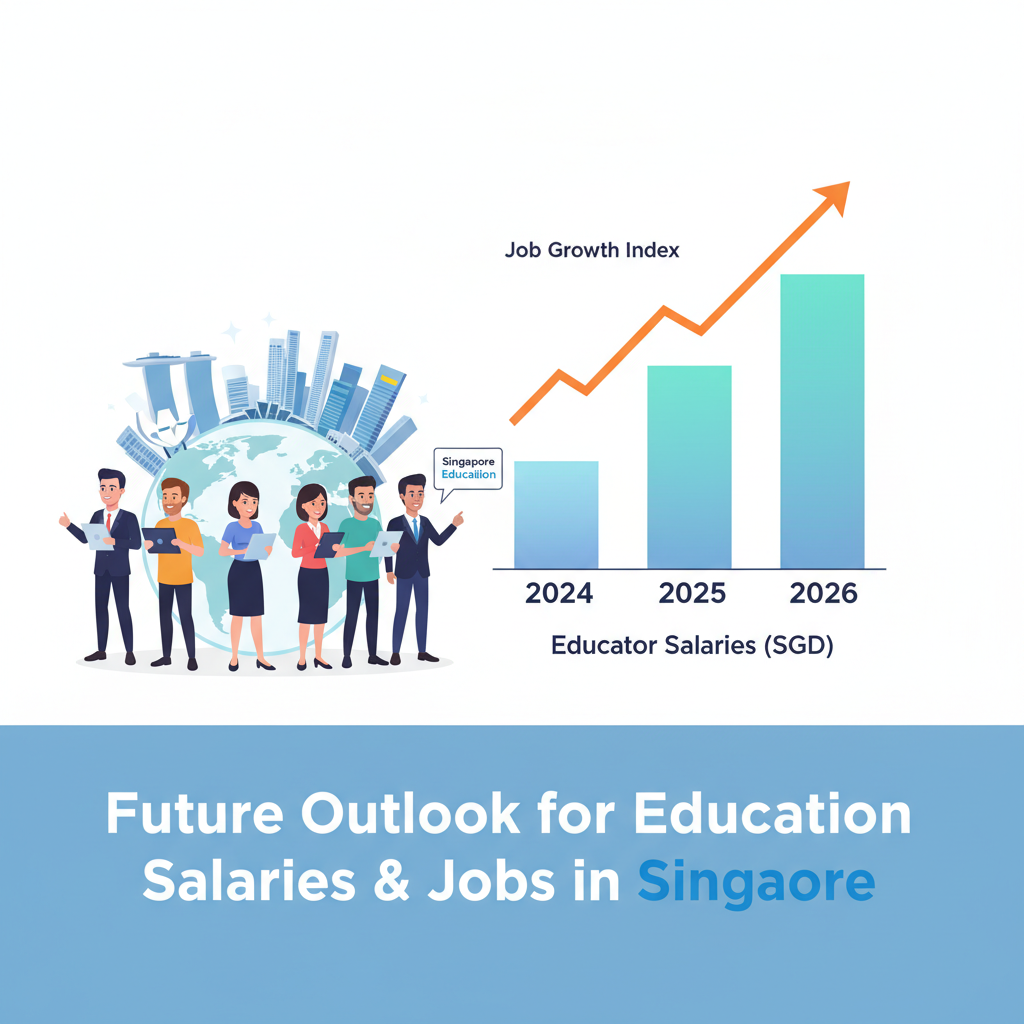
Singapore’s education sector is on the cusp of significant transformation, driven by rapid technological advancements, evolving pedagogical approaches, and a societal shift towards lifelong learning. As we peer into the future beyond 2026, the demand for education professionals will not only persist but also diversify, requiring new skill sets and offering varied career pathways. This forward-looking analysis delves into the emerging trends, technological impacts, and future demand shaping the education job market, providing insights into potential salary trajectories and in-demand roles. Understanding these shifts is crucial for educators, prospective entrants, and education companies alike, especially when considering the latest salary range report of jobs in education companies in Singapore.
-
Influence of AI & Personalised Learning
The integration of Artificial Intelligence (AI) and the push for personalised learning are perhaps the most disruptive forces reshaping the education landscape. Beyond 2026, AI tools will become integral to every facet of learning, from adaptive learning platforms that tailor content to individual student needs to automated assessment and administrative tasks. This paradigm shift will redefine the educator’s role, moving away from being solely content transmitters to facilitators of learning, critical thinkers, and emotional intelligence coaches. Educators adept at leveraging AI for data-driven insights and creating engaging, bespoke learning experiences will be highly sought after. New roles are also emerging, such as AI literacy educators, learning experience designers, and ethical AI specialists within educational institutions and ed-tech companies. Consequently, professionals who can effectively integrate AI into curriculum design and delivery can expect a premium in their salary expectations, reflecting the advanced skills and strategic value they bring to future education jobs in Singapore.
-
Rising Demand for Digital & Data Skills
Beyond AI, the broader digital transformation necessitates a workforce—and by extension, an education system—proficient in a wide array of digital and data skills. The future education sector in Singapore will see a heightened demand for educators who can teach coding, cybersecurity, data analytics, and digital citizenship across all levels. Moreover, administrative and support roles within education companies will require strong digital literacy, including proficiency in learning management systems, data visualization, and cloud computing. The ability to interpret learning analytics to gauge student progress and refine teaching methodologies will be invaluable. This extends beyond traditional classroom settings to roles in ed-tech development, digital curriculum design, and educational data science. Professionals equipped with these critical digital competencies will command competitive salaries, aligning with the growing importance of technology in enhancing educational outcomes and operational efficiency within the Singaporean education market.
-
The Lifelong Learning Economy’s Impact
Singapore’s steadfast commitment to a lifelong learning economy, epitomised by initiatives like SkillsFuture, will profoundly impact the demand for education professionals. As individuals and the workforce continually adapt to new industries and skill requirements, the adult education and corporate training sectors are poised for significant expansion. This creates a burgeoning market for educators specialising in vocational training, reskilling, upskilling, and career counselling. The demand will extend to curriculum developers for micro-credentials, short courses, and industry-specific certifications. Educators with expertise in adult pedagogy, blended learning formats, and industry-relevant experience will find abundant opportunities. The focus will shift towards creating flexible, accessible learning pathways that cater to diverse learner needs throughout their professional lives. This expansion of the learning ecosystem ensures stable demand and competitive salary ranges for educators who are instrumental in fostering continuous professional development and supporting Singapore’s economic agility.
In conclusion, the future outlook for education salaries and jobs in Singapore is characterised by evolution rather than stagnation. While challenges exist, the landscape presents exciting opportunities for adaptable, digitally proficient, and future-ready educators. The emphasis will be on human-centric skills, technological fluency, and a commitment to lifelong learning, mirroring the projections from global reports on future job markets. Educators who embrace these trends and continuously upskill will not only secure their professional relevance but also drive the innovation necessary to shape the next generation of learners in Singapore.
Partner with Shelby Global
You are looking for reliable HR Sevice Suppliers? Contact Shelby Global Now! To connect with verified talents and upgrade your orginization.
—————————————
References
– Singapore Ministry of Manpower’s Labour Market Report: https://www.mom.gov.sg/singapore-labour-market-report
– Hays Singapore’s latest salary guide: https://www.hays.com.sg/salary-guide
– Singapore’s evolving job market landscape: https://stats.mom.gov.sg/Pages/Home.aspx
– Average Teacher Salary in Singapore: https://sg.indeed.com/career-advice/pay-salary/teacher-salary-in-singapore
– :